On this page
- In Brief
- Bali Waterfalls at a Glance
- Two Regions, Two Kinds of Waterfall Day
- The North: Five Canyon and Highland Falls above Lovina
- Central Bali: Five Easier Falls within about an Hour of Ubud
- Why So Many of the Tall Falls Are in the North
- How to Fit Them In: a Stay near Lovina, or a Half-Day from Ubud
- When to Go: Dry Season, in the Morning
- Practical Notes
- FAQ
- Sources
In Brief
The best waterfalls in Bali gather in two regions, the northern highlands above Lovina and central Bali near Ubud. Many of the tallest are in the north. Sekumpul, a group of up to seven falls in a jungle canyon near Lovina, is often called the most beautiful on the island.
Aling-Aling, Banyumala Twin and the Munduk falls lie in the same northern highlands. The central falls are mostly easier to reach, and they include Tegenungan near Ubud, the light-beam canyon of Tukad Cepung and tall, thundering Nungnung.
If you want one waterfall, make it Sekumpul. If you want a half-day from Ubud, the central falls deliver without the long drive.
Bali Waterfalls at a Glance
- Where they are: five in the northern highlands of Buleleng Regency, inland from Lovina, and five in central Bali, within about an hour of Ubud
- The standout: Sekumpul, up to seven drops in one canyon, the tallest 80 metres or more
- Easiest to reach: Tegenungan and Kanto Lampo near Ubud, both short walks
- Best for swimming and jumping: Aling-Aling in the north, with cliff jumps and natural slides
- Most photogenic: Tukad Cepung, a cave canyon lit by midday sun beams
- Entry: paid at the gate, in cash. Carry small notes.
- Best season: dry season, April to October, for firm trails and safe canyon crossings
- Best time of day: morning, for light and smaller crowds
Two Regions, Two Kinds of Waterfall Day
The island's volcanic spine runs through the north and the centre, and a fair number of its falls are worth the drive.
Many of the steepest and highest gather in the northern highlands above Lovina, where the rivers drop off the Bedugul plateau into deep jungle canyons. Access is the catch. The big northern falls ask for a real trek, a guide and a morning start.
The central falls, clustered around Ubud, trade scale for convenience and fit into a half-day. Match the waterfall to the kind of day you want. Most of the northern falls have guides of their own, linked from their entries below.
The North: Five Canyon and Highland Falls above Lovina
Sekumpul: Up to Seven Falls in One Jungle Canyon
Sekumpul is a cluster of up to seven drops set into a steep jungle canyon. The tallest falls 80 metres or more down a fern-covered wall, and the mist reaches you before the falls do.
Getting to the base means a guided descent, a river crossing or two and a real staircase climb back out. Allow at least 90 minutes on site and come early. The local cooperative manages access, and a guide is included in the gate fee.
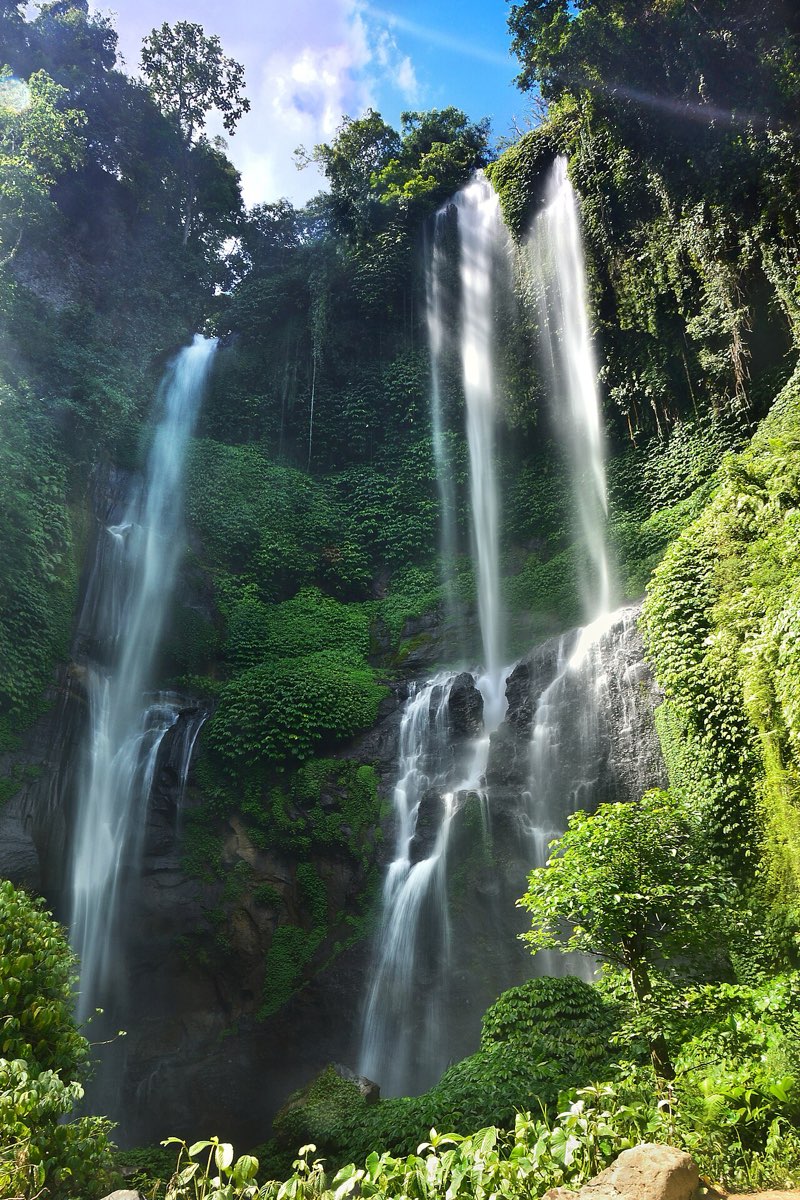 Sekumpul's main falls from the canyon floor. Photo: Putu Andika Panendra / Wikimedia Commons (CC BY-SA 4.0)
Where: Sekumpul village, Buleleng Regency, north Bali, about 45 to 60 minutes inland from Lovina and roughly 3 hours from Ubud or the south. Difficulty: moderate to hard. Full detail is in the Sekumpul waterfall guide.
Aling-Aling: Cliff Jumps and Natural Rock Slides
Aling-Aling is the north's adventure waterfall. Beside the main 35-metre drop, a set of lower falls is rigged for cliff jumping and natural rock slides. A local guide system runs them, includes safety gear and shows you where the water is deep enough.
The jumps step up from a few metres to over ten, and you choose how far you go. Paired with Sekumpul, Aling-Aling makes a single big day of waterfalls out of Lovina.
Where: Sambangan village, near Singaraja, north Bali, roughly 40 minutes from Lovina. Difficulty: moderate, with steep steps and optional jumping. See the Aling-Aling waterfall guide.
Gitgit: a 35-Metre Drop at the End of a Paved Path
Gitgit is the easiest to reach of the well-known northern falls. A paved path leads through clove and coffee plots to a single clean 35-metre drop, with a pool at its base. The walk is short and easy.
Gitgit sits close to the main road between Bedugul and Lovina, so it makes an easy stop on the crossing. It suits families and anyone skipping the harder treks.
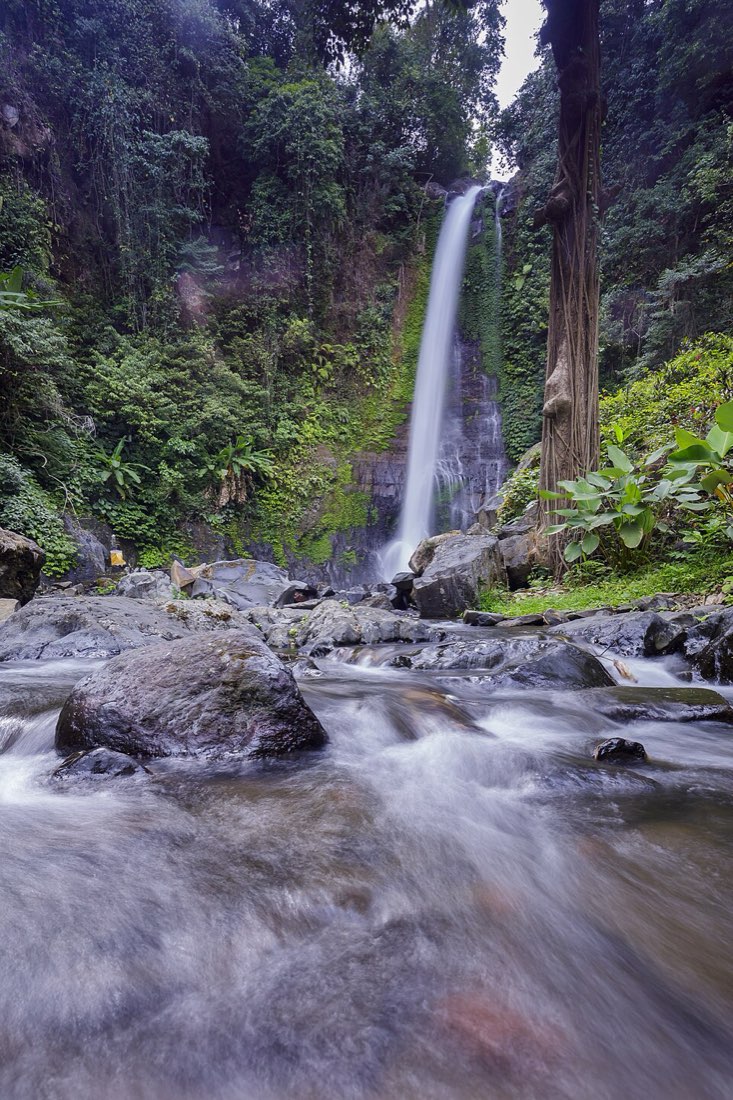 Gitgit's main drop. Photo: Thomas Fuhrmann / Wikimedia Commons (CC BY-SA 4.0)
Where: Gitgit village, on the Bedugul to Singaraja road, north Bali. Difficulty: easy. The Gitgit waterfall guide covers it fully.
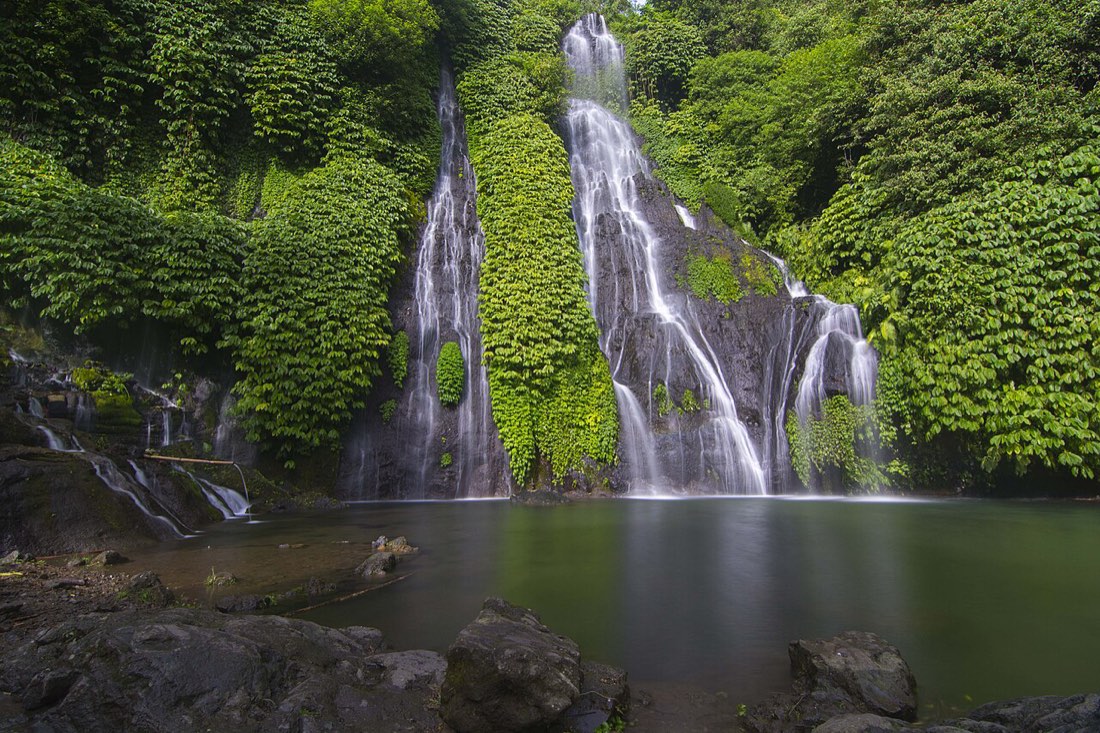
Banyumala Twin Waterfall: Two Cascades and a Pool to Swim In
Banyumala is two parallel cascades pouring side by side into a round pool ringed by green. Mongabay put the pool at about 15 metres across and about chest-deep on an adult. You can swim in the pool, and the site stays calmer than Sekumpul or Gitgit even in season.
The walk down is steep and takes 15 to 30 minutes, with a steady climb back. Banyumala sits near the Bedugul lakes, so it folds easily into a day crossing to the north.
Where: Wanagiri area, near Lake Buyan, central-north Bali, on the route between Bedugul and Munduk. Difficulty: easy to moderate, with a short steep descent.
Munduk and Melanting: Several Falls on One Forest Trail
The Munduk highlands hold a string of falls reached on foot through coffee and clove plantations. The two best known are Munduk Waterfall and the taller Melanting nearby.
Munduk is a cool mountain village and one of the most walkable waterfall areas on the island. You can link several falls on a single forest trail, with no driving between car parks. The altitude keeps the air crisp, the crowds thin out, and the trekking is the point as much as any single drop.
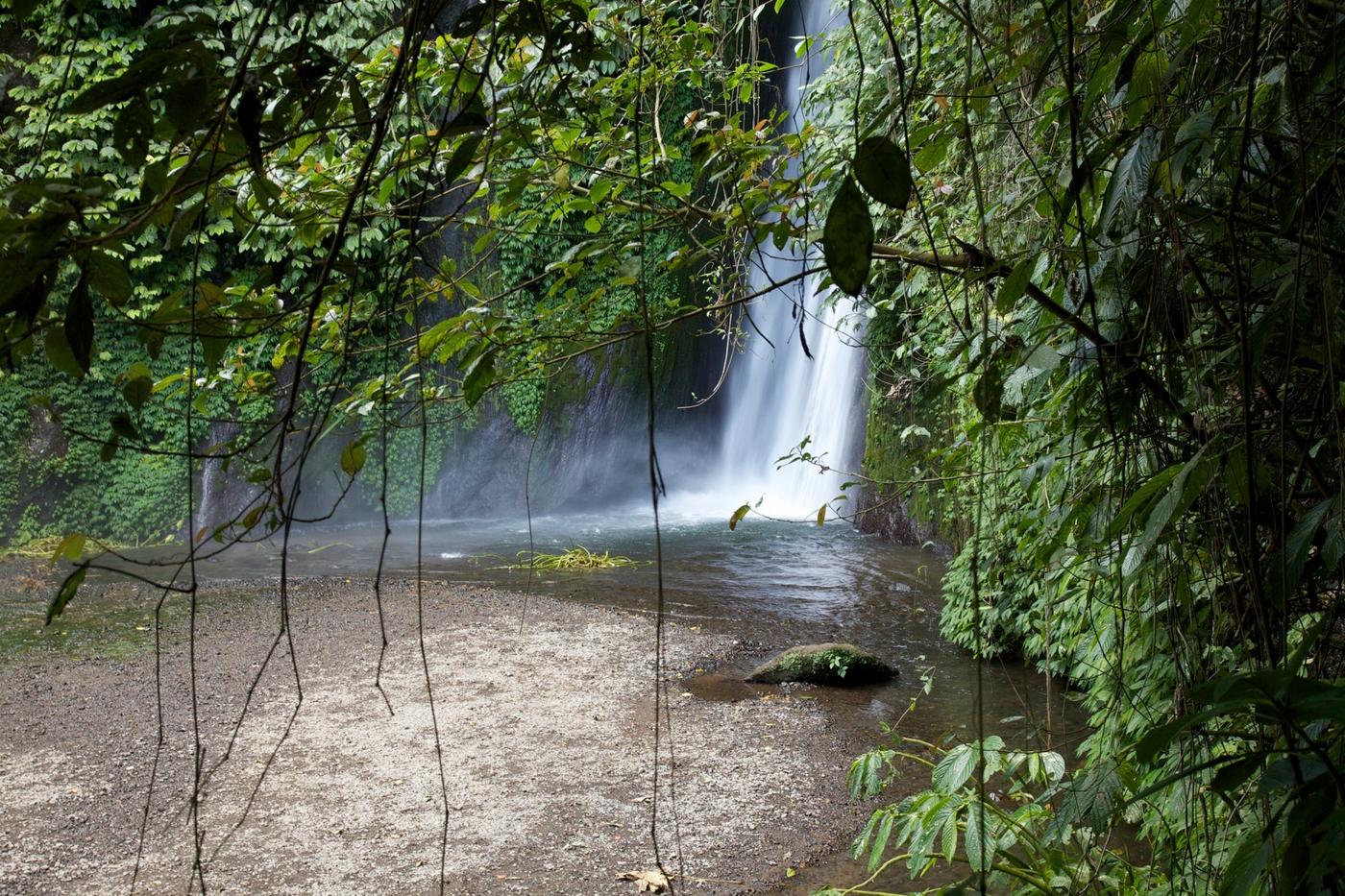 Munduk Waterfall's amphitheater pool. Photo: Jean-Marie Hullot / Wikimedia Commons (CC BY 3.0)
Where: Munduk village, central-north highlands, around 45 minutes from Bedugul. Difficulty: easy to moderate, on walkable trails with some stairs.
The north Bali waterfalls guide maps the full northern run together, with routes between each site.
Central Bali: Five Easier Falls within about an Hour of Ubud
Tegenungan: the Closest Big Waterfall to Ubud and the South
Tegenungan is one of the most visited waterfalls in Bali, and geography explains it. It is the closest big waterfall to the southern resort belt, under 30 minutes from Ubud with no real hike.
A short staircase leads to a broad, powerful curtain of water, with a swimming pool below and a row of cafes and viewpoints above. It gets busy and commercial, so arrive early. For a quick waterfall without a mountain drive, it does the job.
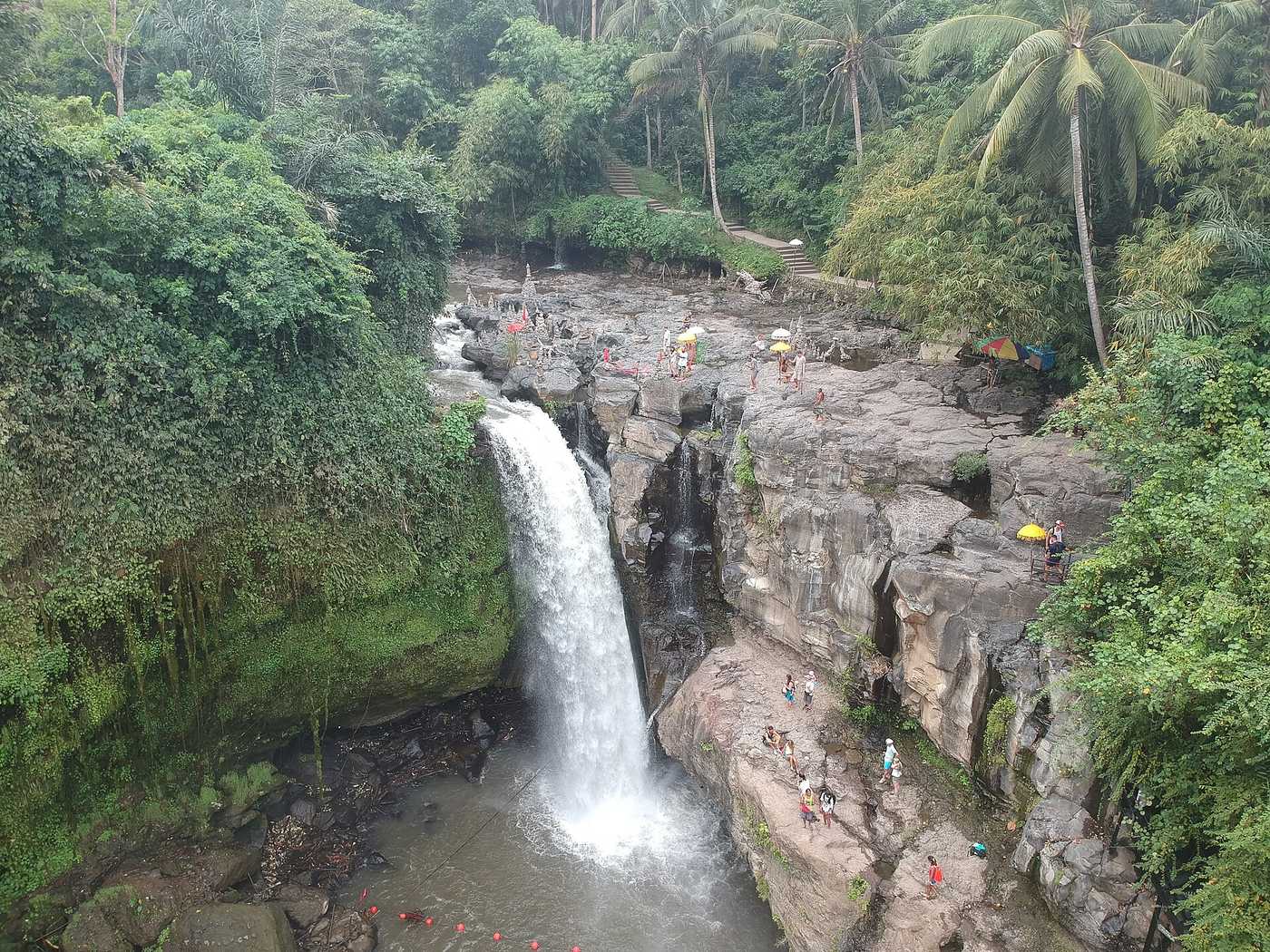 Tegenungan's rock shelf from above. Photo: Magul / Wikimedia Commons (CC BY-SA 4.0)
Where: Kemenuh village, Gianyar Regency, central Bali, about 25 minutes from Ubud. Difficulty: easy.
Tukad Cepung: a Shaft of Light inside a Slot Canyon
Tukad Cepung is the photographer's waterfall. The fall sits inside a slot canyon. From mid-morning to noon, the sun drops through the gap in the rock and throws a shaft of light onto the water.
The approach is a short walk and a wade through a shallow stream into the cave, which is half the appeal. Time your visit for the middle of the morning, and skip it after heavy rain, when the canyon can flood.
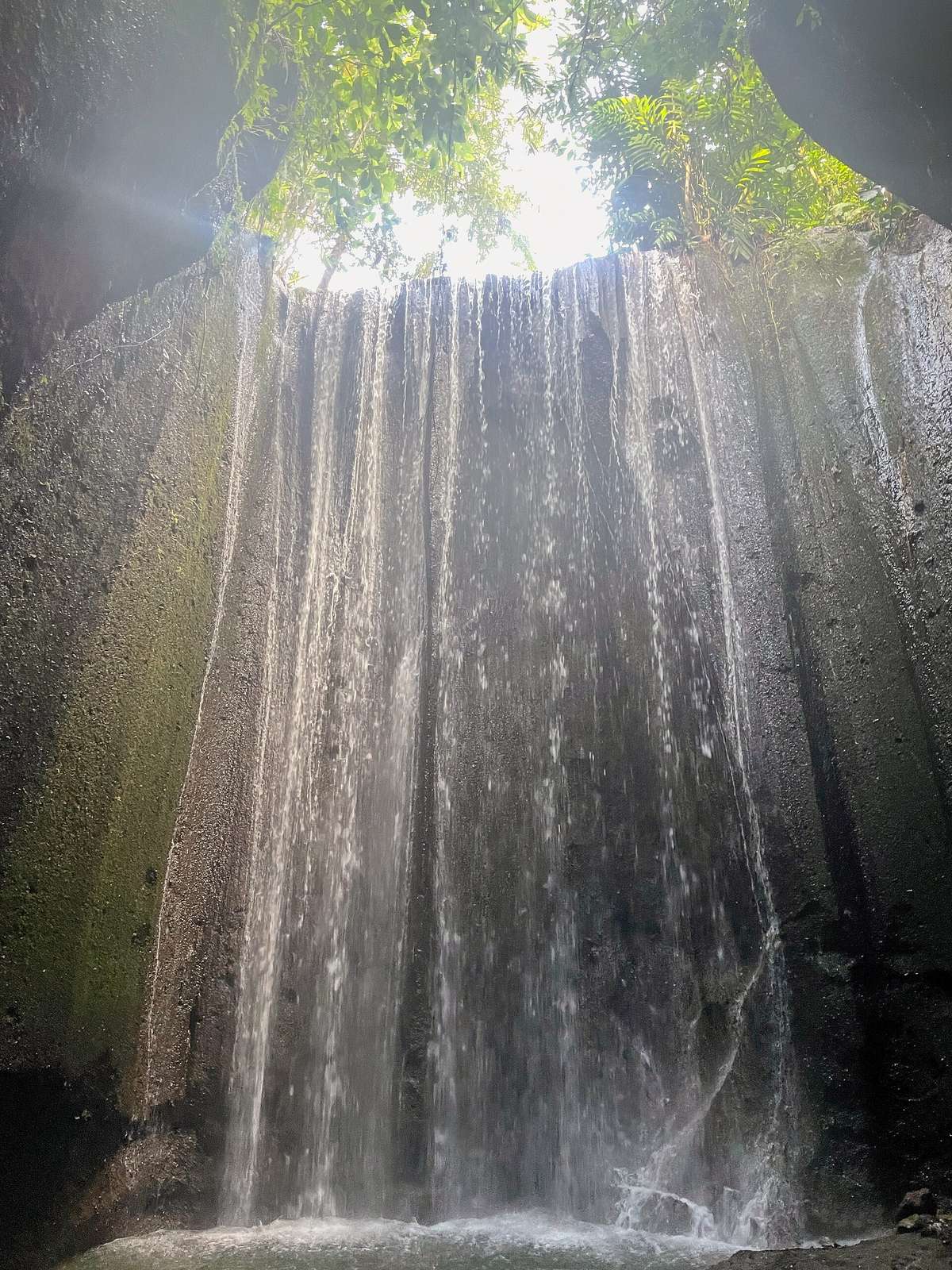 Tukad Cepung inside its slot canyon. Photo: Bex Walton / Wikimedia Commons (CC BY 2.0)
Where: Tembuku, Bangli Regency, central Bali, about 45 minutes from Ubud. Difficulty: easy to moderate, with a stream wade and slippery rock.
Nungnung: a 50-Metre Drop and 500 Steps
Nungnung is the tall, loud one. A single drop of around 50 metres thunders into a churning pool, and the spray carries far enough to soak you at the viewing platform.
The price of that power is the climb, around 500 steps down and the same back up. That makes it the most demanding of the central falls. It sits on the high road between Ubud and Bedugul, so it slots well into a day crossing toward the north.
Where: Plaga, Badung Regency, central highlands, about an hour from Ubud. Difficulty: moderate to hard, with a long stair descent and climb.
Kanto Lampo: a Tiered Cascade You Can Climb Into
Kanto Lampo is a different shape from the rest, a wide, tiered cascade that fans out over a stepped rock face. You can climb partway up into it for the photo many visitors come for.
The pool is shallow and the walk in is short, which makes it one of the easiest and most social waterfalls near Ubud. It is small, so pair it with Tegenungan or Tibumana to fill out an afternoon.
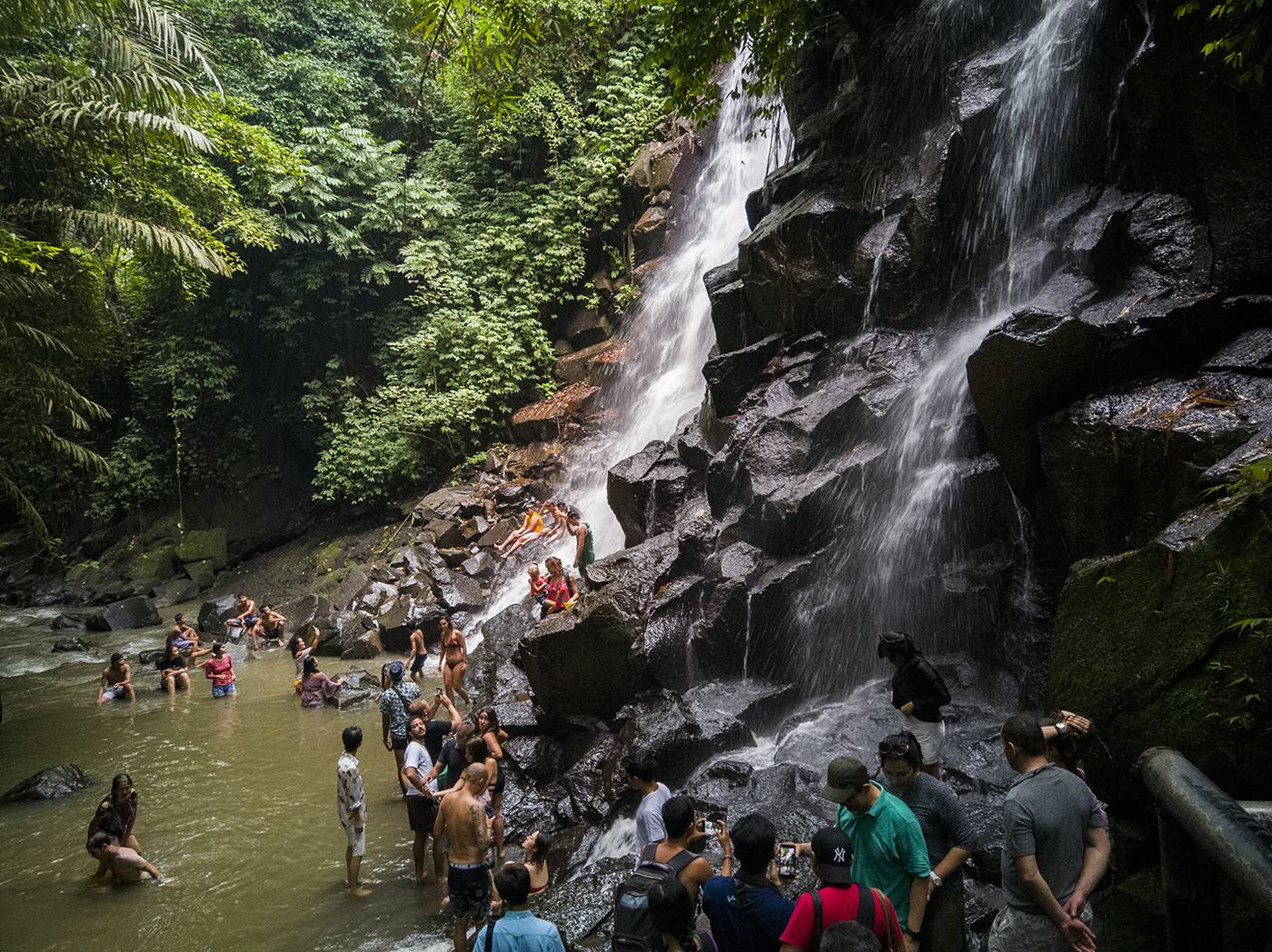 Kanto Lampo's stepped cascade. Photo: Lamacchiacosta / Wikimedia Commons (CC BY-SA 4.0)
Where: Beng village, Gianyar Regency, central Bali, about 30 minutes from Ubud. Difficulty: easy, with a short walk and a light scramble.
Tibumana: a Calm Round Pool for a Morning Swim
Tibumana is the gentle one near Ubud, a single soft curtain falling into a calm round pool in a quiet jungle setting. It stays far less crowded than Tegenungan, and the walk down is short and shaded.
The water is clean and the depth is friendly for casual swimmers, which makes it a favourite for an unhurried morning swim. It adds easily to a central-Bali waterfall loop.
Where: Apuan village, Bangli Regency, central Bali, about 40 minutes from Ubud. Difficulty: easy.
Why So Many of the Tall Falls Are in the North
Geology decides this. Bali's rivers gather height and force as they fall off the northern volcanic plateau toward the Lovina coast. Many of the tall, full and layered falls cluster there as a result.
Sekumpul shows several drops at once, Banyumala runs as a matched pair, and the Munduk valleys hold whole strings of cascades on a single trail. The central falls near Ubud are mostly single drops with short approaches, and they are worth a half-day.
Tegenungan and its neighbours see more visitors because of distance. Many travellers base themselves around Seminyak, Canggu and Ubud, so the central falls win on drive time.
How to Fit Them In: a Stay near Lovina, or a Half-Day from Ubud
Fold the north into a stay, and do not attempt it as a long day return from the south. With a night or two near Lovina, you can cover four of the northern falls without rushing.
Sekumpul and Aling-Aling make one big day. Gitgit is a short stop on the road between Bedugul and Lovina, and Banyumala lies near the Bedugul lakes on the same crossing. The north Bali waterfalls guide maps the routes between them.
From Ubud, Tegenungan, Kanto Lampo and Tibumana make an easy central-Bali loop. Nungnung lies further out, on the high road to Bedugul, so it fits a day when you cross to the north.
When to Go: Dry Season, in the Morning
The dry season, April to October, gives firmer trails, predictable water levels and safe canyon crossings. BMKG, Indonesia's weather agency, publishes a seasonal forecast for the dry and wet seasons, which set trail conditions and water volume.
Go in the morning all year, for the best light and the smallest crowds. After heavy rain, canyon falls like Sekumpul and Tukad Cepung can close on safety grounds.
Practical Notes
- Entry is paid at the gate, in cash, and rates change. Carry small notes and expect separate charges for parking and, at some falls, for a guide or a jump circuit.
- Take a local guide where one is offered. For Sekumpul the regency's own culture and tourism office strongly advises an experienced local guide, and the Aling-Aling jump circuit runs through the site's own guides.
- Go in the morning. Cooler stairs, better light in the canyons, and ahead of the coach traffic.
- Wear shoes with grip. Wet stone and steep steps do most of the injuring here.
- Ask before you swim after rain, and take the guide's answer.
FAQ
What is the best waterfall in Bali? Sekumpul in the north, by many accounts. It is a cluster of up to seven falls in a jungle canyon near Lovina, with the tallest drop 80 metres or more by official figures, and it is often called the most beautiful waterfall on the island. The trade-off is a guided trek down a steep canyon and a real climb back out.
Where are most of Bali's best waterfalls? In the northern highlands of Buleleng Regency, inland from Lovina. The volcanic terrain there produces many of the tallest falls on the island, including Sekumpul, Aling-Aling, Gitgit, Banyumala and the Munduk cascades.
Which Bali waterfall is closest to Ubud? Tegenungan, at around 25 minutes, is the closest major waterfall to Ubud and needs almost no walking. Kanto Lampo and Tibumana are also within about 30 to 40 minutes and make an easy central-Bali loop.
Which waterfall is best for swimming? Banyumala Twin and Tibumana have calm, friendly pools for casual swimmers. Aling-Aling is best if you want cliff jumps and natural slides, run with a local guide for safety. Sekumpul has a cold, clear pool at the base of the main drop.
How much do Bali waterfalls cost to enter? Fees range from a few thousand rupiah at smaller sites to a mid-range cooperative fee at managed falls like Sekumpul and Aling-Aling, where a guide is bundled in. Entry is cash only at the gate, and rates change season to season. Treat whatever your driver quotes as the current rate, and carry small notes.
Do you need a guide for Bali waterfalls? Only at some. Sekumpul and the Aling-Aling jump circuit are managed by local cooperatives, and a guide is required and included in the fee. Most others, including Gitgit, Tegenungan and the central falls, you can visit on your own.
When is the best time to visit waterfalls in Bali? The dry season, April to October, gives firmer trails, predictable water levels and safe canyon crossings. Go in the morning year round for the best light and the smallest crowds. After heavy rain, canyon falls like Sekumpul and Tukad Cepung can close on safety grounds.
Can you see the best waterfalls in one day? The northern falls, yes, if you base near Lovina and start early. Sekumpul and Aling-Aling pair well, with Gitgit added as a short stop. Trying to combine north and central falls in a single day from the south means too much driving and not enough waterfall.
What is the tallest waterfall in Bali? Sekumpul's main drop, at 80 metres or more by official figures, is among the tallest. Nungnung in the central highlands runs about 50 metres in a single powerful drop. Both reward the effort, and both involve a serious stair climb.
Which waterfall is best for photos? Tukad Cepung for the light beams inside the cave canyon, best from around 10am to noon. Kanto Lampo for the tiered rock face you can climb into. Sekumpul for sheer scale across multiple drops.
Are the southern waterfalls better than the northern ones? The southern and central falls are easier to reach and are mostly single, smaller drops. The northern falls are taller and more layered, and they ask for a longer drive and a harder walk. Choose by the day you want, a half-day from Ubud or a stay in the north.
Sources
- Buleleng culture and tourism office, Eksplorasi Keindahan Air Terjun Sekumpul (seven falls, the main drop around 80 metres, the steep access, the advice to take a local guide and to go in the morning), Indonesian, read September 2026
- Sawan district office, Buleleng, Air Terjun Sekumpul (at least seven separate falls in Sawan district, two of them approachable, the stairs and river crossing), Indonesian, read September 2026
- Buleleng Regency, 11 Wisata Air Terjun di Bali (the regency's own round-up of the island's waterfalls, among them Sekumpul, Banyumala, Aling-Aling, Tegenungan and Tibumana), Indonesian, read September 2026
- BMKG, Indonesian Agency for Meteorology, Climatology and Geophysics, seasonal prediction (the dry and wet season forecast that decides trail conditions, water volume and whether a slot canyon is safe), Indonesian, read September 2026
- Mongabay Indonesia, Menengok segarnya Air Terjun Banyumala Bali, 12 August 2018 (the 15 to 30 minute walk, the round pool about 15 metres across and chest-deep on an adult), Indonesian, read October 2026
Read next: the north Bali waterfalls guide for the region's falls in depth, Sekumpul for the best of them, and Aling-Aling for the jumps and slides.



.jpg)
.jpg)
