On this page
- In Brief
- Lovina at a Glance
- Lovina Is a Calm Black-Sand Coast and the Base for the Whole North
- Seven Villages Make Up Lovina, with Kalibukbuk at the Centre
- Dawn Dolphin Trips Are What Lovina Is Known For
- The Sea Is Calm Enough for Easy Swimming, and the Sunsets Are Long
- Things to Do in Lovina: Hot Springs, a Monastery, Waterfalls and a Sunday Market
- Evenings Start on the Beach at Sunset
- Where to Stay: Kalibukbuk to Walk to Dinner, the Hills for a View
- Where to Eat: Grilled Fish and Family Warungs
- Shopping: Minimarkets on the Main Road, Crafts at the Source
- Best Time to Visit: April to October, Most Reliably June to September
- How to Get There: About Three Hours over the Mountains
- Getting Around: a Scooter on the Coast, a Driver for the Hills
- Day Trips from Lovina
- How to Fit It In: Three Nights, or a Week with Day Trips
- Practical Notes
- Staying Longer: Rent First, Then Look at the Land
- FAQ
- Sources
In Brief
Lovina, Bali, is a string of quiet black-sand fishing villages on the north coast, about three hours by car over the mountains from the airport. It is best known for the dawn trips to see wild dolphins. It is also the natural base for the whole north, with waterfalls, hot springs, highlands and diving within an hour or two.
The pace is slow and stays are affordable, so Lovina rewards a few unhurried days more than a single night. Three nights covers the essentials, and a week adds Munduk and Pemuteran.
Lovina at a Glance
- Where it is: North coast, Buleleng Regency, a strip of villages running west from the edge of Singaraja, about 3 hours over the mountains from the airport
- The villages: Pemaron, Tukad Mungga, Anturan, Banyualit, Kalibukbuk, Kaliasem and Temukus, from east to west
- Known for: Dawn wild dolphin trips and a calm black-sand coast
- Vibe: Quiet, low-key and affordable, a base rather than a party town
- The sea: Black volcanic sand, flat and calm, no surf, easy swimming
- How long: 3 nights for the essentials, a week to add Munduk and Pemuteran
- Best time: Dry season April to October (June to September most reliable)
- Getting there: ~3-hour drive from the south, private driver simplest
- Day trips: Sekumpul, Banjar Hot Springs, Munduk, Aling-Aling and Gitgit, the Bedugul lakes, Singaraja, Pemuteran and Menjangan
Lovina Is a Calm Black-Sand Coast and the Base for the Whole North
The sand here is volcanic black, and the sea is flat and calm most of the year. Life moves at the pace of the fishing villages.
Lovina is best known for the wild dolphins that gather offshore at dawn. Many people come for them and stay because so much of the north lies within an hour or two:
- the waterfalls inland
- the hot springs at Banjar
- the highland lakes around Munduk
- the diving off Pemuteran further west, with diving in Lovina itself too
Lovina is a base rather than a party town. It suits travellers who want calm water, fishing-village life and low prices, and it suits longer stays better than weekends.
Seven Villages Make Up Lovina, with Kalibukbuk at the Centre
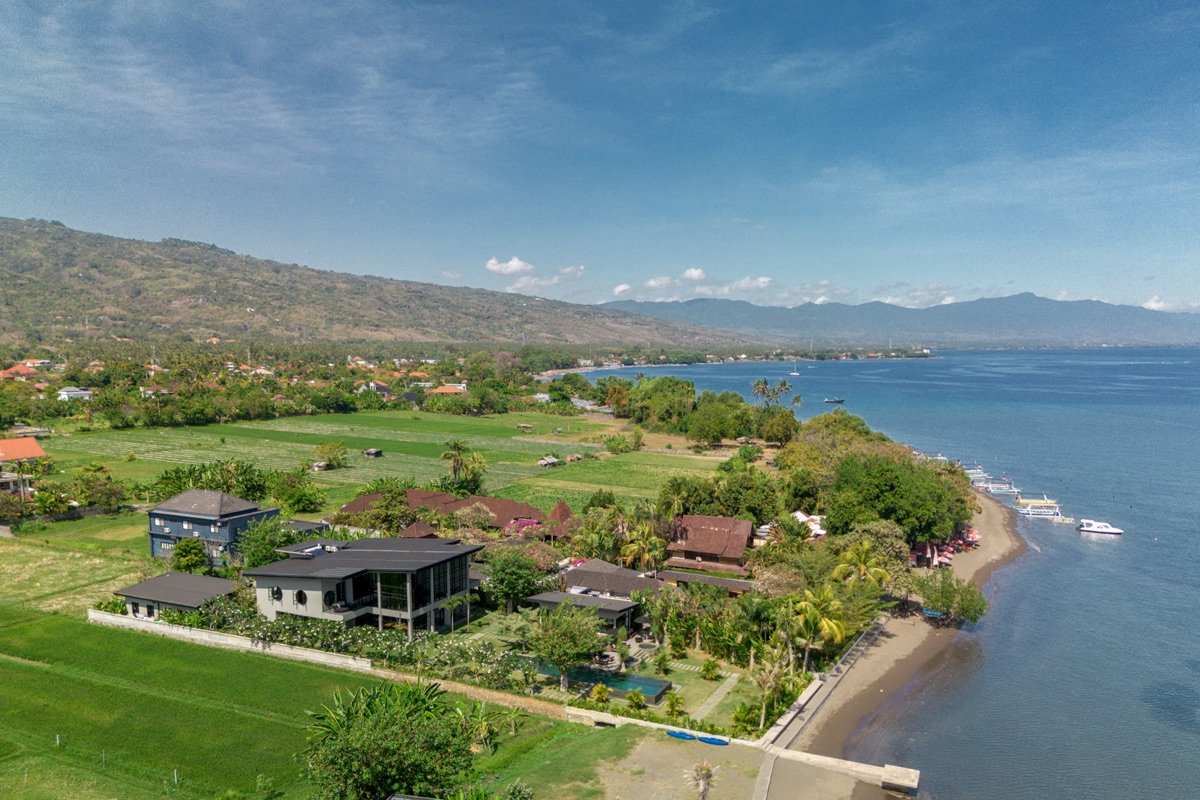
Lovina is the name of a stretch of coast, with several villages along it.
For visitors it runs from about 5 km to about 15 km west of Singaraja (Wikipedia). It takes in seven villages, from Pemaron in the east to Temukus in the west. Each has its own stretch of sand and its own fishing boats pulled up on the beach.
Kalibukbuk is the centre, around the dolphin statue and Jalan Binaria, with most of the restaurants, bars and small hotels. The villages either side of it are quieter. Banjar, with its hot springs and monastery, sits just inland to the west.
The name came before the tourists. Lovina takes its name from a home owned by Pandji Tisna (1908 to 1978), a Regent of Buleleng (Wikipedia). He was one of the pioneers of tourism in Bali in the early 1950s. The guide to Singaraja old town, just east along the coast, tells the fuller story of the writer-king who named it.
Dawn Dolphin Trips Are What Lovina Is Known For
The dawn dolphin trip is the reason many people first hear of Lovina.
Traditional jukung outriggers leave the shore before sunrise and head out to where spinner and bottlenose dolphins feed. On a good morning you see dozens, and on a slow one a few distant fins. The dolphins are wild and nothing is staged, and that uncertainty is part of the trip.
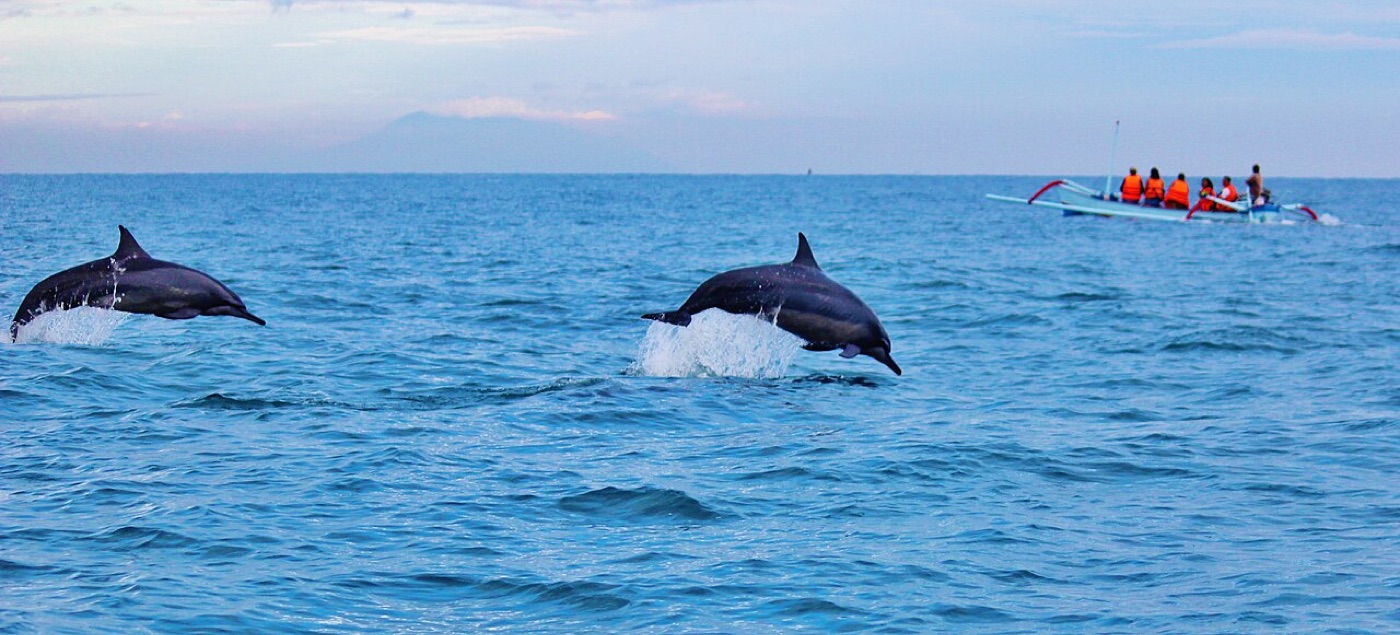 Dolphins leaping off Lovina. Photo: Michelle Maria / Wikimedia Commons (CC BY 3.0)
It is worth doing once, with eyes open about the ethics of the boat traffic. Book the boat the afternoon before, through where you are staying or with a captain on the beach. The complete Lovina dolphins guide covers timing, what to expect, how to choose a boat and the honest questions about it.
The Sea Is Calm Enough for Easy Swimming, and the Sunsets Are Long
Lovina's beaches are black sand from the volcanic coast. The water is unusually calm, with no surf, which makes it some of the easiest swimming in Bali.
The main stretch around Kalibukbuk, marked by the dolphin statue, is the social centre. Quieter sand lies east and west of it.
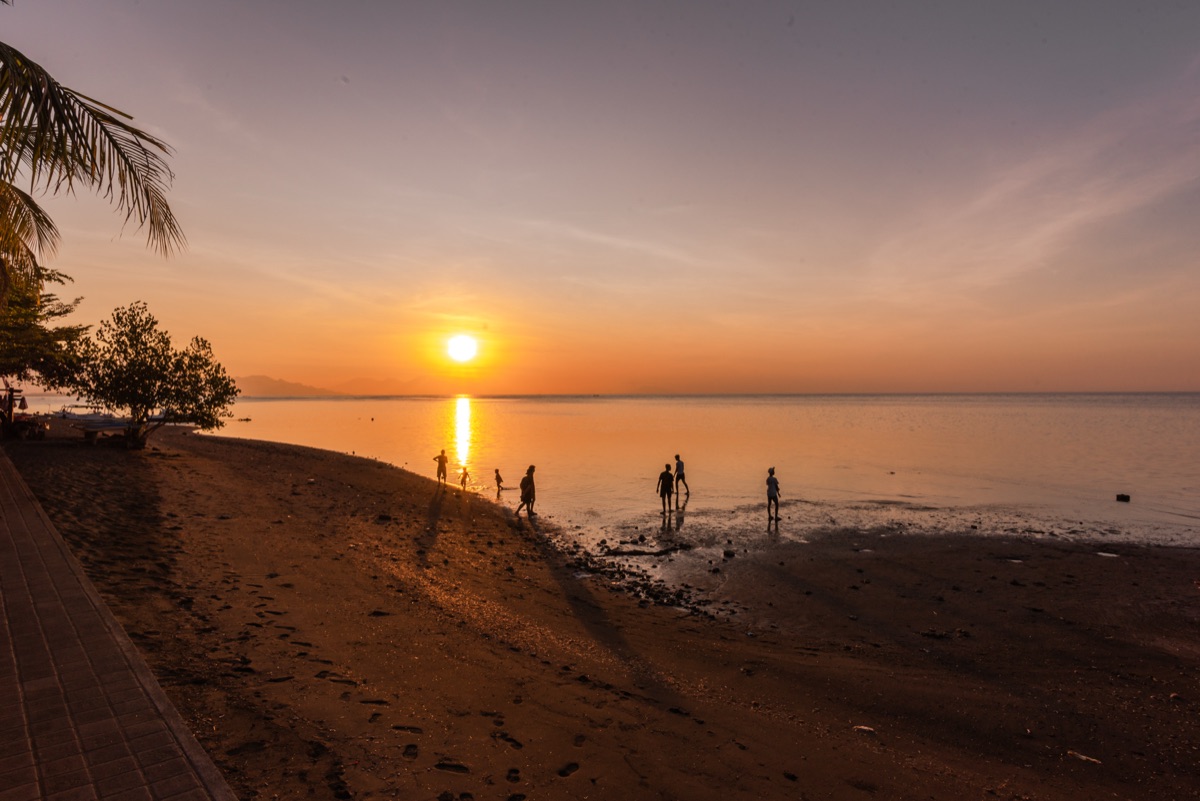 Photo: Palm Living archive.
This is a sunset coast. Lovina faces north over the Bali Sea, so the evening light is long and soft, and many stays end the day with it. The Buleleng tourism office counts a walk along the beach at sunrise or sunset among the main reasons to come (Visit North Bali). Its other reasons are the dolphins, snorkelling and diving on the reef.
The reef is being helped along. Lovina is one of the Bali sites in the Indonesian Coral Reef Garden restoration project (Wikipedia). Local workers installed concrete and metal "bio-rock" structures for new coral to grow on, and a local team looks after a coral nursery.
The Lovina beach guide covers the beach stretch by stretch, and snorkelling in north Bali covers the reef.
Things to Do in Lovina: Hot Springs, a Monastery, Waterfalls and a Sunday Market
Beyond the dolphins and the beach, the short list is this:
- Banjar Hot Springs, sulphur pools fed by carved naga spouts, about 20 minutes west. See the Banjar Hot Springs guide.
- Brahmavihara-Arama, often described as Bali's largest Buddhist monastery, on the hill above Banjar. It began in 1958 as a small circle meditating beside the hot springs and opened on its present site in 1971 (Brahmavihara Arama). See the Brahmavihara-Arama guide.
- The waterfalls inland, from the easy walk at Gitgit to the long trek at Sekumpul and the slides at Aling-Aling. See the north Bali waterfalls guide.
- The Sunday makers' market at Kaliasem, opened by the Buleleng government in July 2025 for the regency's small producers (Buleleng Culture and Tourism Office, in Indonesian). See the Lovina Sunday Market guide.
- A yoga class, a meditation morning or a massage, at the shalas and spas along the coast. See yoga retreats in north Bali and the best spas in north Bali.
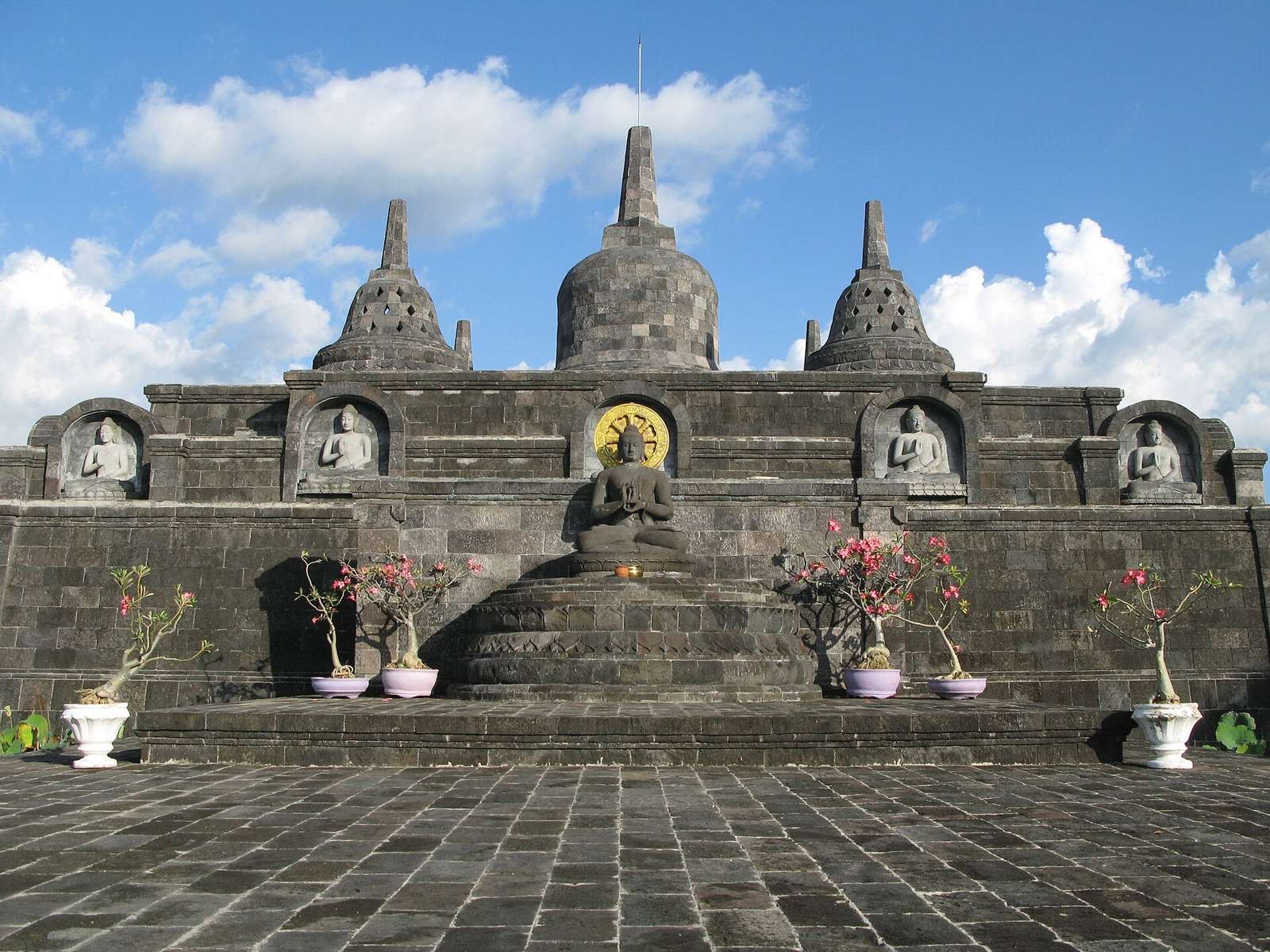 The Borobudur-style stupa terraces at Brahmavihara Arama, the monastery above Banjar. Photo: AnnieGreenSprings / Wikimedia Commons (CC BY 2.0)
The best things to do in Lovina lists all 25, with how to do each well.
Evenings Start on the Beach at Sunset
Walk the sand at Kalibukbuk as the sun goes down, or take a drink at one of the bars and resort terraces along the coast.
Spice Beach Club at Kaliasem describes itself as a sunset spot with live music and a pool by the beach. After dinner, the bars around Jalan Binaria have live music, and the nights are gentle. Sunset drinks in Lovina covers the bars, the terraces and a few further afield.
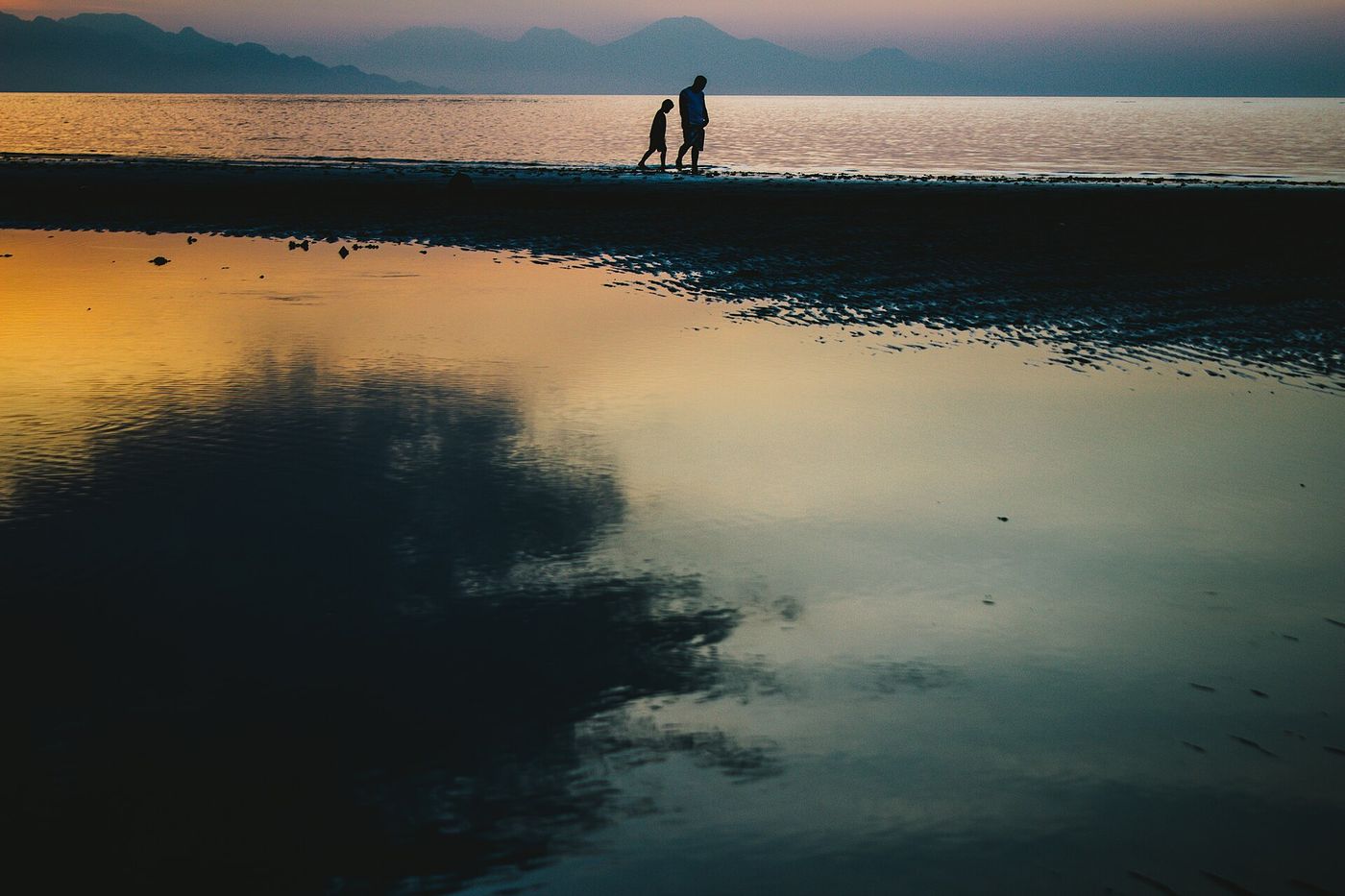 Sunset walk at Lovina at low tide. Photo: Andreia from Lisboa, Portugal / Wikimedia Commons (CC BY 2.0)
For a bigger night, time your visit for the Lovina Festival, held on the beach at Kalibukbuk each year, usually in late July.
Where to Stay: Kalibukbuk to Walk to Dinner, the Hills for a View
Lovina rewards staying a little outside the main strip. The hillside and the quieter eastern beaches trade walking-distance bars for space, views and rice-paddy quiet.
Beachfront rooms, garden bungalows and private villas all come at modest prices. Choose Kalibukbuk if you want to walk to dinner. The eastern villages give you a fishing beach at the door, and the hills behind the coast a view and a pool of your own.
Where to stay in north Bali has the full breakdown. For self-catering with staff, see the best villas in Lovina.
Where to Eat: Grilled Fish and Family Warungs
Food in Lovina runs from beachfront grilled fish caught that day to family warungs cooking Balinese food at local prices. A handful of places have quietly fed visitors for years.
The current picks are in the best restaurants in Lovina guide. For the fish grills, see the best seafood in north Bali, and for a meat-free table, vegetarian and vegan food in north Bali.
Shopping: Minimarkets on the Main Road, Crafts at the Source
Lovina has enough for a holiday, with small shops and minimarkets along the main road and a supermarket for imported groceries.
For cloth, bamboo work and food made in the regency, buy at the source: the Sunday market at Kaliasem and the craft villages around Singaraja. Where to shop in north Bali has the details.
Best Time to Visit: April to October, Most Reliably June to September
The dry season, April to October, brings calmer seas, higher dolphin-sighting rates and clearer mountain views inland. June to September is the reliable window.
The rainy season, November to March, is greener and quieter, with warm afternoons and occasional downpours. Dolphin trips sometimes cancel in rough weather.
Lovina stays warm all year. Records for Singaraja, just along the coast, show little to no rain from June to October and the heaviest rain from December to March (Wikipedia). Even the shoulder months tend to hold up well. The month-by-month picture is in the best time to visit north Bali.
How to Get There: About Three Hours over the Mountains
From the airport or the south, Lovina is roughly a three-hour drive over the central mountains, past the Bedugul lakes. The route is beautiful, and the mountain roads are slow and winding.
A private driver is the simplest option. It lets you stop at the lakes, the lake temple at Ulun Danu Beratan or a waterfall on the way up.
The getting to north Bali guide has the routes, drive times and how drivers are priced. The drivers themselves are in private drivers in north Bali.
Getting Around: a Scooter on the Coast, a Driver for the Hills
The villages are strung along one coast road, so many people get around by scooter or with a hired driver. Kalibukbuk is walkable, and a walk along the sand is often the quickest way between neighbouring beaches.
For the waterfalls, the highlands and Pemuteran, a driver for the day is easier and safer than a scooter on the mountain roads.
Day Trips from Lovina
Everything below is within easy reach for a day:
- Sekumpul Waterfall, one of the most spectacular falls in Bali, about an hour inland.
- Banjar Hot Springs, natural sulphur pools in a jungle garden, 20 minutes west.
- Munduk, highland village, waterfall trails and coffee plantations, about an hour up.
- Aling-Aling and Gitgit, the waterfall cluster on the way to or from the mountains.
- Singaraja, the old capital just east, colonial capital for Bali and the Lesser Sunda Islands from 1849 until 1960 (Wikipedia).
- Bedugul, the lake temple, the Bali Botanic Garden and the Handara Gate, about an hour up the mountain.
- Pemuteran and Menjangan, some of the best diving and snorkelling in Bali, about 90 minutes west. The dive centres and lodges in Pemuteran run the boats out to the island.
The north Bali waterfalls guide ties the inland day trips together.
How to Fit It In: Three Nights, or a Week with Day Trips
Visitors often reach Lovina in one of two ways. Some make it the anchor for three or four days in the north. Others stop on a loop that continues to Munduk and back down to the south.
For a first trip, three nights in Lovina covers the essentials without rushing:
- a dawn dolphin trip
- a waterfall day
- the hot springs
- one slow day by the sea
With a week, the same base opens up Munduk's highlands and Pemuteran's reefs as easy day trips. The 3-day north Bali itinerary and the 7-day version show how the days fit together.
Practical Notes
- Dolphin trips: priced per person and agreed with the captain or through your villa the night before. The dolphins guide covers what to ask.
- Driver from the south: priced as a day hire and agreed before you set off. Your villa can arrange one and will know the going rate.
- ATMs and money: available in Kalibukbuk. Bring cash for warungs and boat trips.
- Getting around: a scooter or a hired driver, since the villages spread along the coast road.
- Connectivity: reliable mobile data and Wi-Fi in the main area, patchier in the hills.
- Temples: cover shoulders and knees. Brahmavihara-Arama lends sarongs at the entrance and asks for silence in its meditation areas (Brahmavihara Arama).
Staying Longer: Rent First, Then Look at the Land
Lovina and the north coast around it suit a quieter, longer life in Bali, and the land behind it is still within reach.
The investing in north Bali guide is the place to start, and long-term rentals in north Bali covers renting first.
FAQ
Is Lovina worth visiting? Yes, if you want a calm, lower-cost side of Bali, with fishing villages on a black-sand coast and a base for the north's waterfalls, hot springs and highlands. It suits a few unhurried days better than a single night.
How many days do you need in Lovina? Three nights covers the dolphins, a waterfall day, the hot springs and a slow day by the sea. A week opens up Munduk and Pemuteran as day trips from the same base.
Is the sea good for swimming? Yes. The water is calm and flat with no surf, which makes it some of the easiest swimming in Bali. The sand is black volcanic sand.
How do you get to Lovina from the airport? About a three-hour drive over the central mountains. A private driver is the easiest option and lets you stop at the Bedugul lakes or a waterfall on the way.
Which part of Lovina should I stay in? Kalibukbuk, the centre, if you want restaurants and bars within walking distance. The villages east and west of it, or the hills behind the coast, if you want quiet, space and a view.
Why is it called Lovina? The name comes from a home owned by Pandji Tisna, a Regent of Buleleng and an early pioneer of tourism in Bali in the 1950s. The whole stretch of coast now carries it.
Sources
- Wikipedia, Lovina Beach (the villages, the extent of the strip, the origin of the name, the coral restoration project), read September 2026
- Wikipedia, Singaraja (colonial capital dates, dry and wet months), read September 2026
- Buleleng Tourism Office, Visit North Bali: Lovina Beach, read September 2026
- Buleleng Culture and Tourism Office, Sunday Market officially opened in Lovina, 6 July 2025, read September 2026 (in Indonesian)
- Brahmavihara Arama, About the Monastery, read September 2026
- Spice Beach Club, home page, read September 2026
Read next: the best things to do in Lovina, the Lovina dolphins, where to stay in north Bali.