
On this page
- In Brief
- Property Ownership in Bali at a Glance
- Leasehold (Hak Sewa): The Simplest Route for a Personal Villa
- In a Lease, the Contract Is the Protection
- Freehold (Hak Milik) Is Reserved for Indonesian Citizens
- PT PMA and Hak Guna Bangunan: The Route for a Rental Business
- A PT PMA Brings Costs and Reporting a Lease Does Not
- Which Structure Suits You
- The Shortcut to Avoid: The Nominee Structure
- How a Nominee Deal Fails, and What to Use Instead
- In North Bali, the Law Is the Same and the Checks Are Local
- Practical Notes
- FAQ
- Sources
In Brief
The short answer to "can foreigners buy property in Bali" is yes. You can hold and use property here, but you cannot own freehold land outright. That rule is the same across all of Indonesia, and it does not change for tourists, retirees or business owners.
There are three legitimate routes. You can lease the land and what sits on it for a fixed term (Hak Sewa). You can run a foreign-owned Indonesian company that holds a right-to-build title (PT PMA with Hak Guna Bangunan). If you marry an Indonesian citizen, freehold becomes possible through them, with its own legal arrangements.
The right route depends on one question: are you buying a home, an income property or a business? Each answer points to a different structure.
Freehold title held personally by a foreigner is not one of the options. It does not exist in Indonesian law, and no amount of paperwork creates it.
Property Ownership in Bali at a Glance
- Leasehold (Hak Sewa): the land and the building for a fixed term, commonly 25 to 30 years across Indonesia. The simplest route for a personal villa or a long-term hold.
- PT PMA with Hak Guna Bangunan: a foreign-owned Indonesian company that holds a right-to-build title. The route for a villa run as a rental business.
- Freehold (Hak Milik): full and permanent ownership, reserved for Indonesian citizens. Possible through an Indonesian spouse, who holds the title.
- The nominee structure: freehold in a local person's name, with a private side agreement. Void under the Basic Agrarian Law.
- Who confirms it: an independent Indonesian notary (notaris), yours and never the seller's.
Leasehold (Hak Sewa): The Simplest Route for a Personal Villa
Leasehold, or Hak Sewa, means you lease the land and the building on it for a fixed term.
You hold the right to use the property, not the underlying title. The Basic Agrarian Law lets a foreigner living in Indonesia hold a Hak Sewa for a building (UU 5/1960, arts. 44 and 45). For many foreigners buying a personal villa or a long-term hold, it is the simplest route.
Lease terms across Indonesia commonly run 25 to 30 years, often with a pre-agreed extension written into the original contract. That extension clause matters more than almost anything else in the deal.
A lease that ends with no agreed renewal mechanism leaves you negotiating from a weak position when the term is up. Sometimes that is against a landowner who knows exactly how much your villa is worth to you.
In a Lease, the Contract Is the Protection
A lease is a private contract under Indonesian law, so its protection is only as strong as its drafting.
There is less statutory backing than buyers tend to expect from their home countries, where leasehold often carries decades of consumer protection. In Bali, five things live or die in that document:
- the term
- the extension terms
- the renewal price or formula
- what happens to the building at lease end
- the right to sublet or sell the remaining lease
Compare the cost per year. The cheapest lease on the market is often the shortest. A 15-year lease at a low price can cost more per year than a 30-year lease at a higher one.
Write in the right to sell. The remaining years of a lease can be sold only if the contract allows it. The Civil Code bars a tenant from handing a lease on to someone else without permission (art. 1559).
With that right written in, the unexpired term is itself an asset. That is why a longer original term holds value better over time.
Freehold (Hak Milik) Is Reserved for Indonesian Citizens
Freehold, or Hak Milik, is full and permanent ownership of the land.
It is the strongest title in Indonesia, and it is reserved for Indonesian citizens. Foreigners cannot hold Hak Milik directly. No visa, marriage-free workaround or company structure lets a foreigner personally hold freehold land.
When a listing says "freehold" to a foreign buyer, read it as a flag to slow down. Ask exactly whose name will appear on the certificate. If the honest answer is "a local person who will hold it for you", that is the nominee arrangement covered further down.
Through an Indonesian spouse. There is one genuine path to Hak Milik involving a foreigner, and it is marriage to an Indonesian citizen. The title is held by the Indonesian spouse, and the foreign spouse does not personally hold it.
Even then, a prenuptial or postnuptial agreement is normally required to keep the asset legally clean. Anyone considering this route needs a notary to structure it properly from the start.
PT PMA and Hak Guna Bangunan: The Route for a Rental Business
A PT PMA is a foreign-owned Indonesian company.
It is the structure for anyone treating property as a business rather than a home, and it is how foreigners legally operate villa rentals in Bali. The company itself can hold a right-to-build title called Hak Guna Bangunan (HGB). That title grants the right to construct and own buildings on the land for a renewable term.
Through the PT PMA, a foreigner can:
- effectively control the property
- run it commercially
- employ staff
- hold a rental licence
- invoice guests legally
For a serious rental operation, it is the cleanest route, and in many cases the only fully compliant one.
A PT PMA Brings Costs and Reporting a Lease Does Not
A PT PMA carries real obligations that a simple lease does not:
- a minimum investment requirement
- annual reporting
- tax filings
- ongoing compliance work
There is a cost to establish it and a running cost to keep it in good standing. Its business number (NIB) and permits are issued through the government's OSS business-licensing portal.
The thresholds are set by regulation rather than by the market. The only figure worth acting on is the one your notary and accountant confirm on the day. Treat any number quoted to you by a seller or an agent as a starting point for that check.
The trade-off is straightforward. A PT PMA costs more to set up and maintain than a lease, and it pays that back in legal standing for a rental business.
If the property is purely a personal home, the company structure is usually more machinery than the situation calls for. If it earns income from guests, it is often the structure that keeps the whole thing legal.
Which Structure Suits You
The match between purpose and structure decides most of the outcome.
- A personal home or a long hold for yourself. Leasehold (Hak Sewa) is usually the right fit. Lower cost, less administration, and no company to maintain. Put the energy into the lease term and the extension clause.
- A villa run as a rental business. A PT PMA holding HGB is the route that keeps the operation legal, licensed, and able to invoice guests. The setup and compliance cost is the price of standing on solid ground.
- A mix of personal use and occasional letting. This is the grey zone where advice matters most. The honest answer depends on how much income is involved and how often, and a notary should weigh in before you commit.
- Buying with an Indonesian spouse. Hak Milik becomes possible through them, structured with a marital property agreement. Get it drafted correctly from the outset.
No structure is "best" in the abstract. The right one matches what you intend to do with the property, confirmed against your real situation by an independent notary.
The Shortcut to Avoid: The Nominee Structure
The nominee structure puts freehold title in a local person's name, while a private side agreement says the foreigner is the "real" owner.
It is marketed as a clever workaround. It is one of the surest ways to lose a property in Bali, and the reason is simple. Indonesian law does not recognise the side agreement.
The Basic Agrarian Law declares void any sale, gift or other act meant to pass freehold to a foreigner, directly or indirectly (art. 26(2)). The land then falls to the State, with no claim on the money already paid.
The title is freehold, held by an Indonesian citizen, and that is what the certificate and the courts see. A nominee arrangement leans on a stack of documents: the loan agreement, the power of attorney, the statement of beneficial ownership. All of them can be ruled void, because the underlying purpose is to circumvent the ban on foreign land ownership.
When that happens, the foreigner has no enforceable claim to the land they paid for.
How a Nominee Deal Fails, and What to Use Instead
The failure modes are not theoretical. The nominee can:
- sell the land
- mortgage it
- refuse to honour the arrangement
- pass away and leave it to heirs who never agreed to anything
- simply stop cooperating
Disputes drag through courts that were never going to side with a structure built to break the law in the first place. People have lost the full value of a villa this way and walked away with nothing.
If a deal only works through a nominee, the deal does not work. Use a lease or a PT PMA. Both are legal, both protect you, and neither depends on the goodwill of someone whose name is on a title you cannot enforce.
In North Bali, the Law Is the Same and the Checks Are Local
The law is identical on the north coast and the south coast.
Leasehold, freehold, PT PMA and the nominee warning all apply the same way around Lovina as they do in Canggu. The difference in the north is the practical texture of a deal.
Family ownership. Land in the north often trades on longer-held family ownership. That can mean cleaner title history in some cases and more complicated inheritance situations in others. Confirming exactly who holds the certificate, and whether all heirs agree to sell, is worth real attention here.
Zoning. This is the other north-specific point that catches buyers. A plot may be zoned agricultural or green, which can make short-term rental impossible to license, regardless of how the ownership is structured. Confirm the zone (zona) before the price.
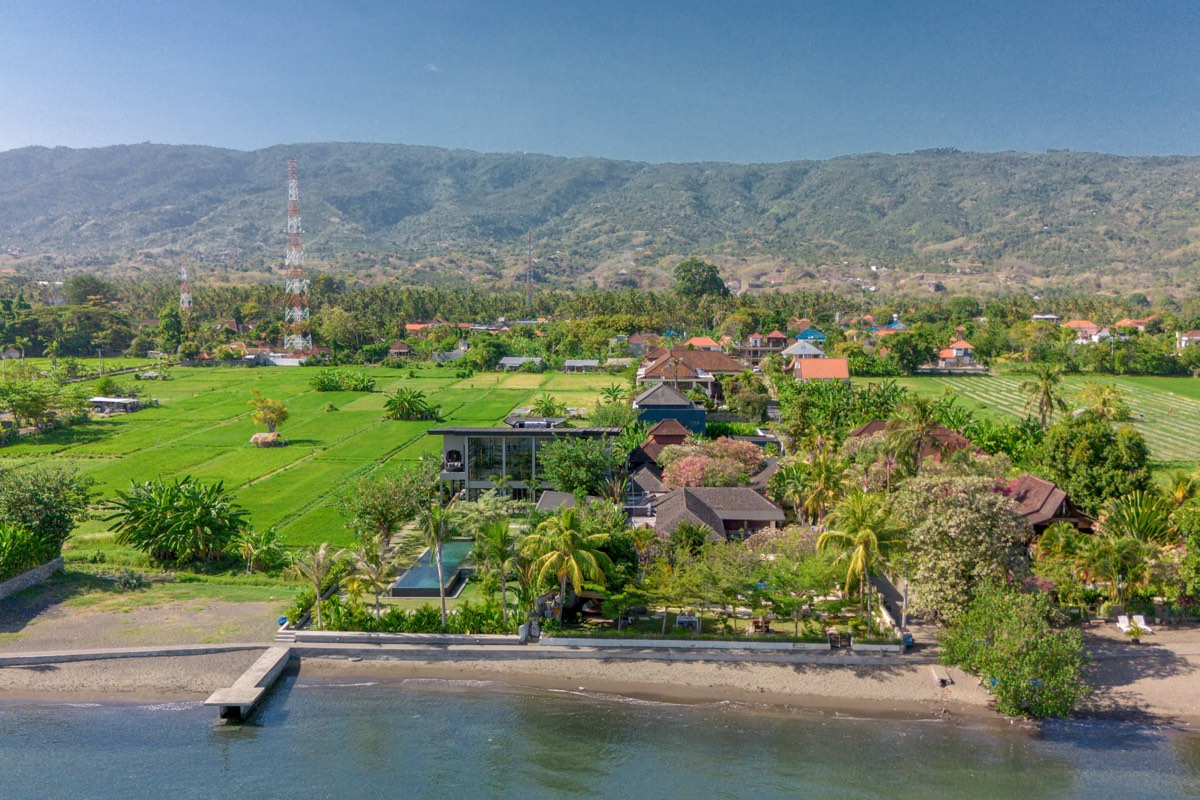 The Lovina coast from the air. Photo: Palm Living archive.
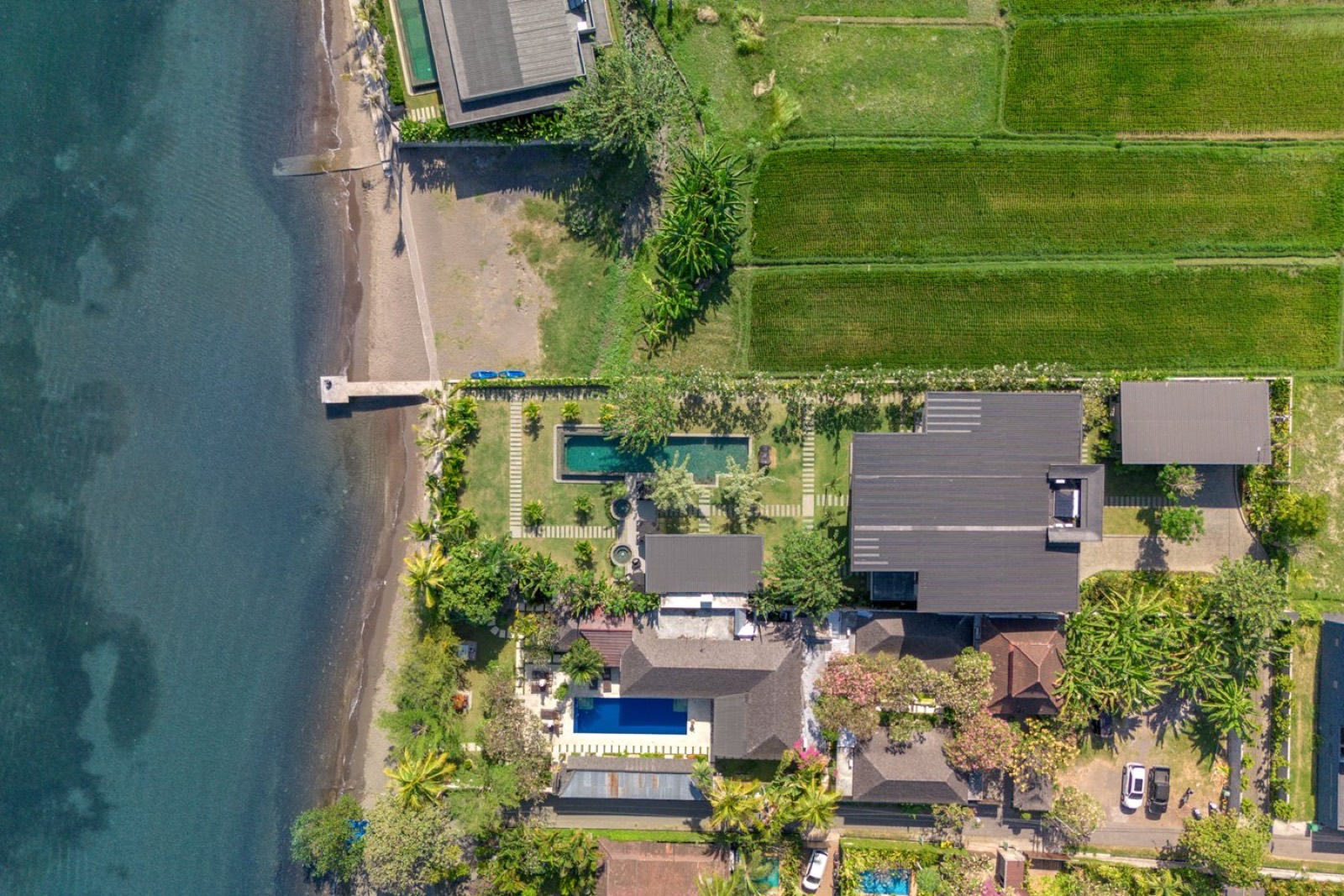 Plots, gardens and rice fields from directly above, on the Lovina shore. Photo: Palm Living archive.
The financial details that change by area are land rates, build costs and realistic yields. They are covered in the investing in north Bali guide, with the area-by-area numbers in land prices in north Bali and build costs in Bali.
For where on the coast the structure question tends to come up most, see best areas to invest in north Bali.
Practical Notes
- Use your own notary (notaris), never the seller's. Independent legal counsel is the cheapest insurance in any Bali property deal.
- Confirm the title type in writing. Hak Sewa (lease), Hak Guna Bangunan (right to build, via PT PMA), Hak Pakai (right of use) or Hak Milik (freehold, Indonesian citizens only). The national land agency's summary of the land rights sets out who may hold Hak Milik, Hak Guna Bangunan and Hak Pakai. Know which you are actually getting.
- Read the lease extension clause first. A renewal mechanism and a pre-agreed price or formula are worth more than a slightly longer headline term.
- Confirm the zoning (zona) for your intended use. A villa you cannot legally rent is a different investment than the one you were sold.
- Never transfer capital against a nominee promise or a handshake. If the structure is not legal, no payment protection makes it safe.
- Lease terms: ask your notary what term and what extension mechanism are normal for the specific plot. Practice differs between villages on this coast, and the headline term matters less than the renewal clause.
- PT PMA thresholds: minimum investment, setup and annual compliance are all set by regulation and change with it. Confirm the current position with your notary and accountant before you budget.
Live listings. Palm Living's villas for sale and plots of land are listed here on Northbound. Take the question of title on any of them to your own notary and lawyer.
FAQ
Can a foreigner buy land in Bali? Not as freehold. Foreigners cannot personally hold Hak Milik (freehold land title) anywhere in Indonesia. They can hold property through a leasehold (Hak Sewa), or through a foreign-owned company (PT PMA) that holds a right-to-build title (Hak Guna Bangunan). Both are legal and enforceable when drafted properly by an independent notary.
What is the difference between leasehold and freehold in Bali? Freehold (Hak Milik) is full, permanent ownership of the land, available only to Indonesian citizens. Leasehold (Hak Sewa) is the right to use the land and building for a fixed term, commonly 25 to 30 years and often extendable, available to foreigners. Freehold is the stronger title. Leasehold is the route open to a foreign buyer for a personal property.
What is a PT PMA in Bali? A PT PMA is a foreign-owned Indonesian company. It can hold a right-to-build title (Hak Guna Bangunan) and legally operate rentals, employ staff, and invoice guests. It is the structure for running property as a business, and it comes with a minimum investment requirement, annual reporting, and tax obligations that a simple lease does not.
Can foreigners own property in Bali in 2026? Yes, through the same legal structures that have applied for years: leasehold (Hak Sewa) or a PT PMA holding Hak Guna Bangunan. Personal freehold ownership by a foreigner remains impossible, and nominee arrangements that pretend otherwise remain a serious risk. Confirm the current rules with an Indonesian notary, since regulations are updated periodically.
How long is a typical Bali leasehold? Lease terms commonly run 25 to 30 years across Indonesia, frequently with a pre-agreed extension built into the original contract. Shorter and longer terms both exist, and the extension clause often matters more than the headline number. Where the contract allows it, the remaining years on a lease can be sold, so a longer term tends to hold its value better.
Sources
- JDIH BPK (Audit Board of Indonesia legal database), PP No. 18 Tahun 2021 tentang Hak Pengelolaan, Hak Atas Tanah, Satuan Rumah Susun, dan Pendaftaran Tanah (the 2021 government regulation on land rights and registration, which replaced the 1996 rules on Hak Guna Usaha, Hak Guna Bangunan and Hak Pakai and the 2015 rule on home ownership by foreigners resident in Indonesia), Indonesian, read September 2026
- Badan Pertanahan Nasional, East Kalimantan regional office, Jenis-Jenis Hak Tanah (each land right under the Basic Agrarian Law: Hak Milik for Indonesian citizens only, Hak Guna Bangunan for citizens and Indonesian legal entities, Hak Pakai open to foreigners under conditions), Indonesian, read September 2026
- Online Single Submission, OSS RBA (the risk-based business-licensing system that issues the business number, NIB, and the permits each activity needs), Indonesian, read September 2026
- JDIH BPK, UU No. 5 Tahun 1960 tentang Peraturan Dasar Pokok-Pokok Agraria (the Basic Agrarian Law: art. 26(2) voids any transfer of Hak Milik to a foreigner and passes the land to the State; arts. 44 and 45 on Hak Sewa for buildings and who may hold it), Indonesian, read September 2026
- Ministry of Law, Jakarta Balai Harta Peninggalan, Kitab Undang-Undang Hukum Perdata (the Civil Code: art. 1559, a tenant may not hand the lease to another without permission), Indonesian, read September 2026
Read next: land prices in north Bali, leasehold vs freehold in Bali, and investing in north Bali.