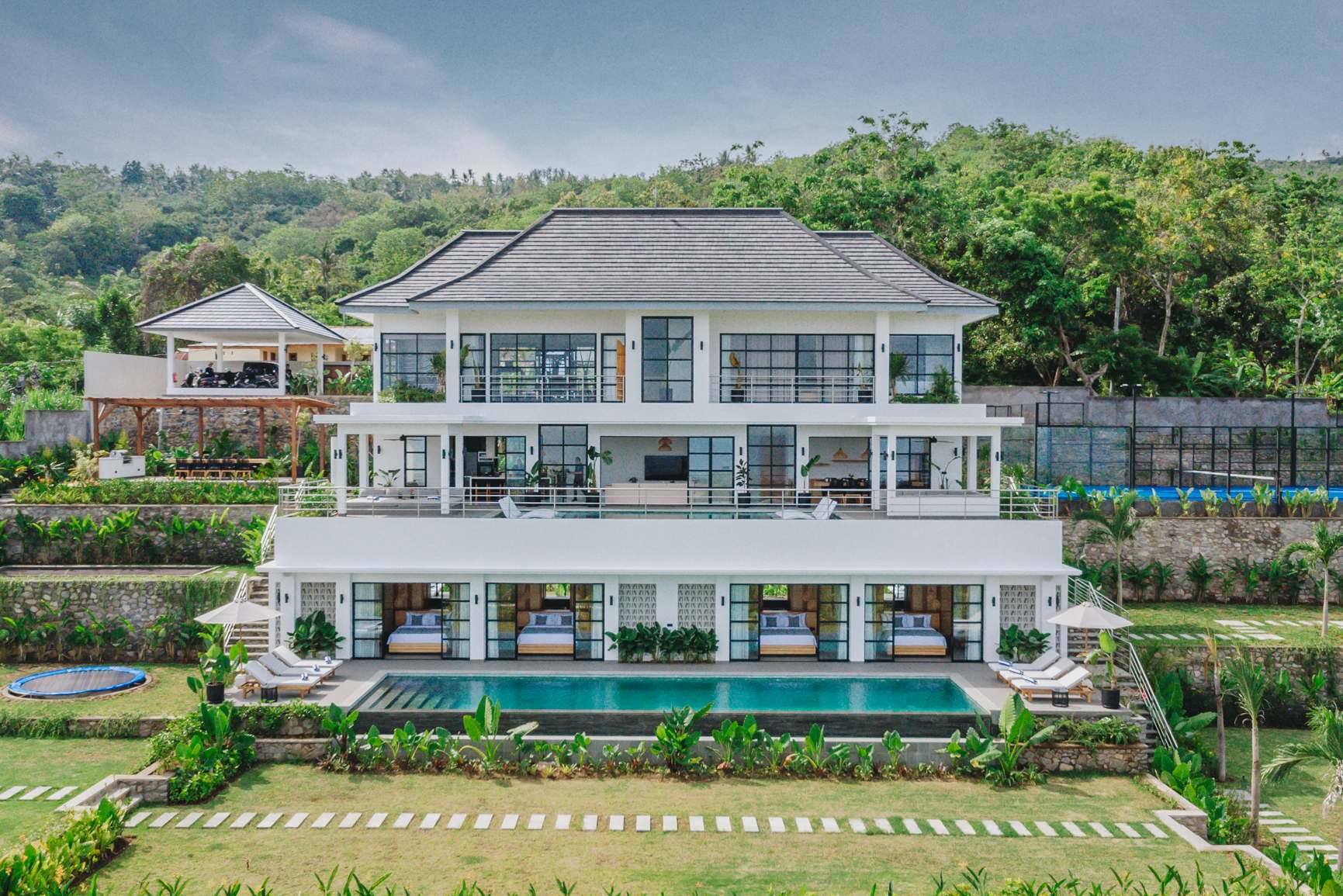
On this page
- In Brief
- Villa Build Costs at a Glance
- Zoning and the PBG Come Before Any Build
- Size and Finish Decide Most of the Budget
- Six Factors Move the Rate, and Finish Moves It Most
- Building in North Bali Tends to Cost Less Than in the South
- Seven Costs the Build Rate Leaves Out
- The Shortcut to Avoid: Budgeting on the Build Rate Alone
- A Villa Build Runs for Many Months, in Six Phases
- Build or Buy: Control Against Speed to Income
- Practical Notes
- FAQ
- Sources
In Brief
The cost to build a villa in Bali is quoted per square metre of built area. The rate climbs in steps with the finish: standard, mid, premium, then a specification with no ceiling.
No rate is printed here, because it moves with the exchange rate, the price of steel and cement, and how busy builders are that season. The rate that counts is the one a builder writes against your plot and your drawings, so get it from two or three of them.
Before work starts, the plot's zoning has to allow a villa, and the building approval (the PBG) has to be in hand. Budget beyond the build rate for the pool, fees, water, power, septic, furnishing and a contingency. On the north coast, land, labour and local materials tend to cost less, though a steep or remote plot can erase the saving.
Villa Build Costs at a Glance
- How a build is priced: per square metre of built area, in steps by finish level
- What moves the rate most: the finish, then size and layout, the pool, site access, materials and landscaping
- Where the real rate comes from: two or three local builders quoting your own drawings
- Pool: a separate line from the build rate, priced by size, depth and finish
- Design and permit fees: quoted by the architect, the structural engineer and the permit agent, outside the build rate
- Water and electricity connection: costed per plot, since mains water and PLN capacity vary by area
- Building approval: the PBG, which replaced the IMB in 2021, in hand before any work
- On completion: the SLF, a certificate of function issued after technical inspection
- Typical build duration: months, not weeks, set by size, finish and the wet season
Build figures specific to the north are marked for local confirmation, because a real quote depends on the plot, the access and the spec.
Zoning and the PBG Come Before Any Build
Two things come before a legal villa build in Bali: zoning that allows it, and the building approval. Both are set in Indonesian regulation.
Zoning sits underneath everything and decides what you may build at all. A plot zoned green or agricultural may never carry a villa, let alone a legal rental.
The building approval is the PBG (Persetujuan Bangunan Gedung). It replaced the older building permit, the IMB (Izin Mendirikan Bangunan), in 2021 under Government Regulation 16 of 2021, as regional permit offices explain. The PBG authorises construction to a set of approved technical drawings, and it has to be in hand before work starts.
A finished villa then needs its certificate of function, the SLF (Sertifikat Laik Fungsi). It is issued after a technical inspection confirms the building is fit for use, as Bali's provincial spatial-planning office sets out.
The exact documents, fees and process change over time and by regency, so confirm the current requirements locally before you budget or build. Permitting and zoning belong with an independent professional and the relevant local office, not with the seller or the contractor alone. Property ownership for foreigners explains how your ownership structure interacts with the right to build.
Size and Finish Decide Most of the Budget
Size and finish set most of the budget before any tiling goes down.
A simple build with local materials sits at one end of the range. An architect-designed villa with imported fittings, a pool and full landscaping sits well above it.
Scale changes the project too. A modest two-bedroom villa of around 150 square metres is a different project from a 400-square-metre house with a 12-metre pool, and the totals reflect that. Each factor in the next section moves one of those two numbers.
Six Factors Move the Rate, and Finish Moves It Most
A rate per square metre is a starting point. These are the factors that move it, in roughly the order they bite.
- Finish level. The single biggest lever. Local terrazzo, standard joinery and Indonesian fittings keep the rate low. Imported stone, bespoke woodwork, designer kitchens and high-end bathrooms can double it. Fix the spec before you compare quotes, so the quotes describe the same villa.
- Size and layout. A larger villa costs more in total but often less per square metre, because fixed costs spread further. Complex layouts, double-height spaces and heavy structural work push the rate back up.
- The pool. A pool is its own line, priced by size, depth and finish. It also brings its own waterproofing, plumbing and ongoing maintenance.
- Site access and slope. A flat plot on a sealed road is cheap to build on. A sloped hillside plot, or one reached by a track too narrow for a truck, adds retaining walls, earthworks and the cost of moving every material by hand. North-coast view plots often sit on slopes, so this matters here.
- Imported or local materials. Local sourcing is the cheaper path and makes later fixes faster. Imported materials raise both the rate and the lead time, and a delayed shipment can stall a build.
- Landscaping and finishing works. Gardens, walls, gates, driveways and outdoor kitchens are easy to leave out of a headline rate and expensive to add at the end.
The pattern holds across the island. The rate buys the shell, and the finish and the site decide the total.
Building in North Bali Tends to Cost Less Than in the South
The north generally builds cheaper than Canggu, Seminyak or Uluwatu, and the reasons are structural more than seasonal.
Labour and local materials tend to cost less here, because demand in the south has pushed both up. The land under the build costs a fraction of south-coast rates, which changes the project budget before construction starts. The area-by-area picture is in land prices in north Bali.
Competition for good contractors is lighter, though the pool of them is smaller. Booking a proven builder early matters more here.
The saving has limits. The north has fewer specialist trades and suppliers on hand, so anything unusual or imported can take longer to source and reach the site. A remote or steep plot can erase the saving if access work runs high.
How far below the south a given finish level comes in is a question for a builder who quotes on both coasts. The case for buying and building on the north coast in the first place is in the investing in north Bali guide.
Seven Costs the Build Rate Leaves Out
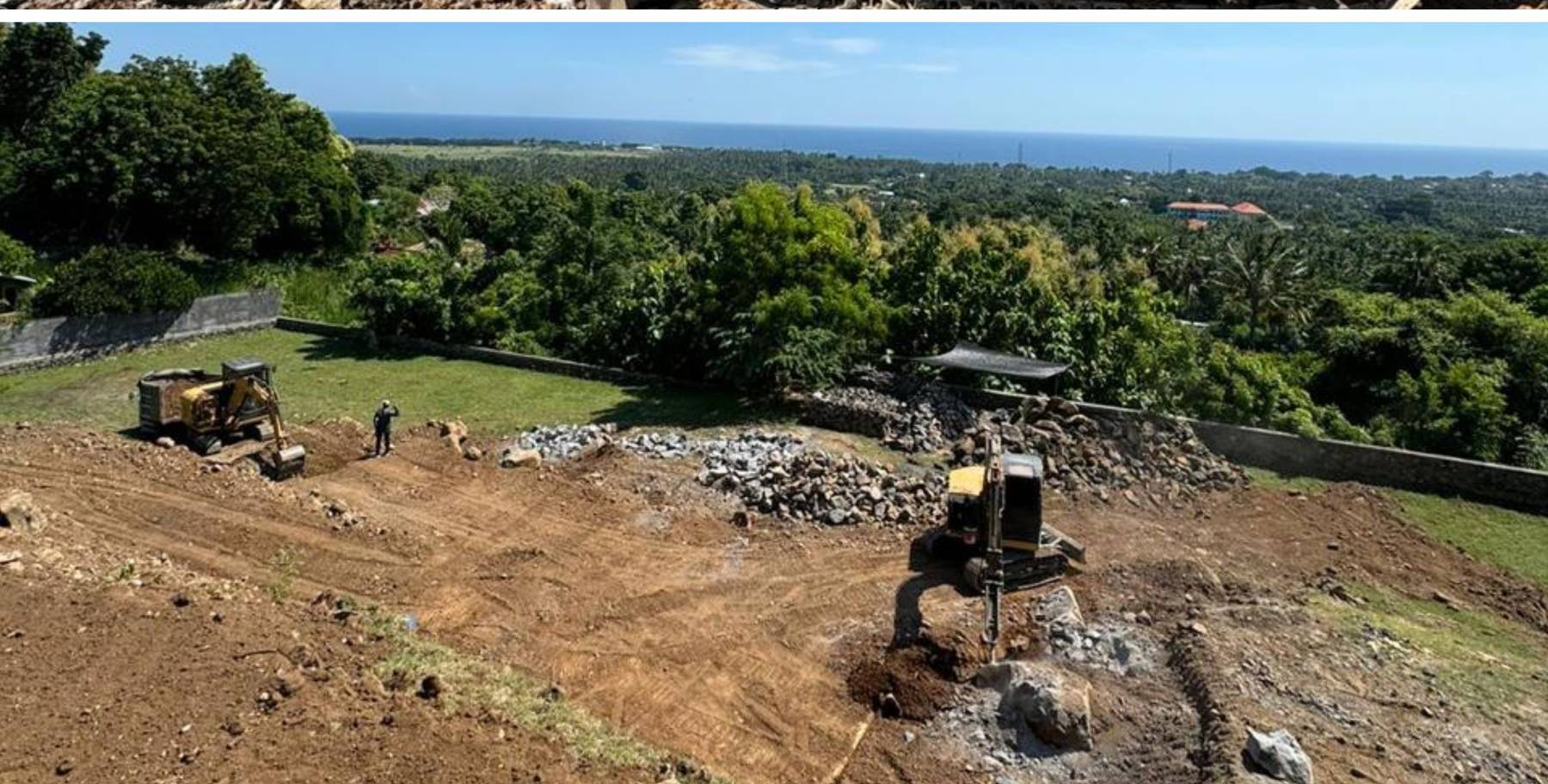 Earthworks on the Villa Sunset plot in the hills above Lovina, before the foundations. Photo: Palm Living.
The build rate covers construction. These are the costs that catch owners after the quote.
- Permit and design fees. Architectural drawings, structural engineering and the permit process carry fees outside the rate per square metre. Your architect and your permit agent quote these separately, so ask for both in writing before you set a budget.
- Site and access works. Retaining walls, earthworks, drainage, and bringing a track up to truck standard. On a sloped or remote north-coast plot, this can be a major line in the budget.
- Water. Mains water does not reach every part of the coast. A bore well, pumps, tanks and filtration may be needed, and the depth and yield of a well vary by site. Confirm the water for your specific plot before you budget, since it varies street by street on this coast.
- Electricity connection. A sufficient PLN connection to the plot, and the capacity upgrade a villa with a pool and air conditioning needs, carry their own cost and lead time.
- Waste and septic. A proper septic or treatment system is required and priced separately.
- Furnishing and fit-out. A finished villa still needs furniture, soft furnishings, kitchen equipment and styling. This is a real budget line, and often underestimated.
- Contingency. Sites surprise people. A sensible build holds a contingency against the unknowns, and on a north-coast slope the unknowns are real.
The Shortcut to Avoid: Budgeting on the Build Rate Alone
The shortcut is treating a headline rate per square metre as the cost of the villa.
It is an easy mistake, because villas are quoted per square metre and the rate is the simplest number to compare. A rate is a starting point, though, and a villa marketed on its build rate alone has left things out.
The true number is the land, the build and the hidden costs, added together. Price the plot first, take the build rate from builders quoting your own drawings, and add the seven costs above line by line.
A Villa Build Runs for Many Months, in Six Phases
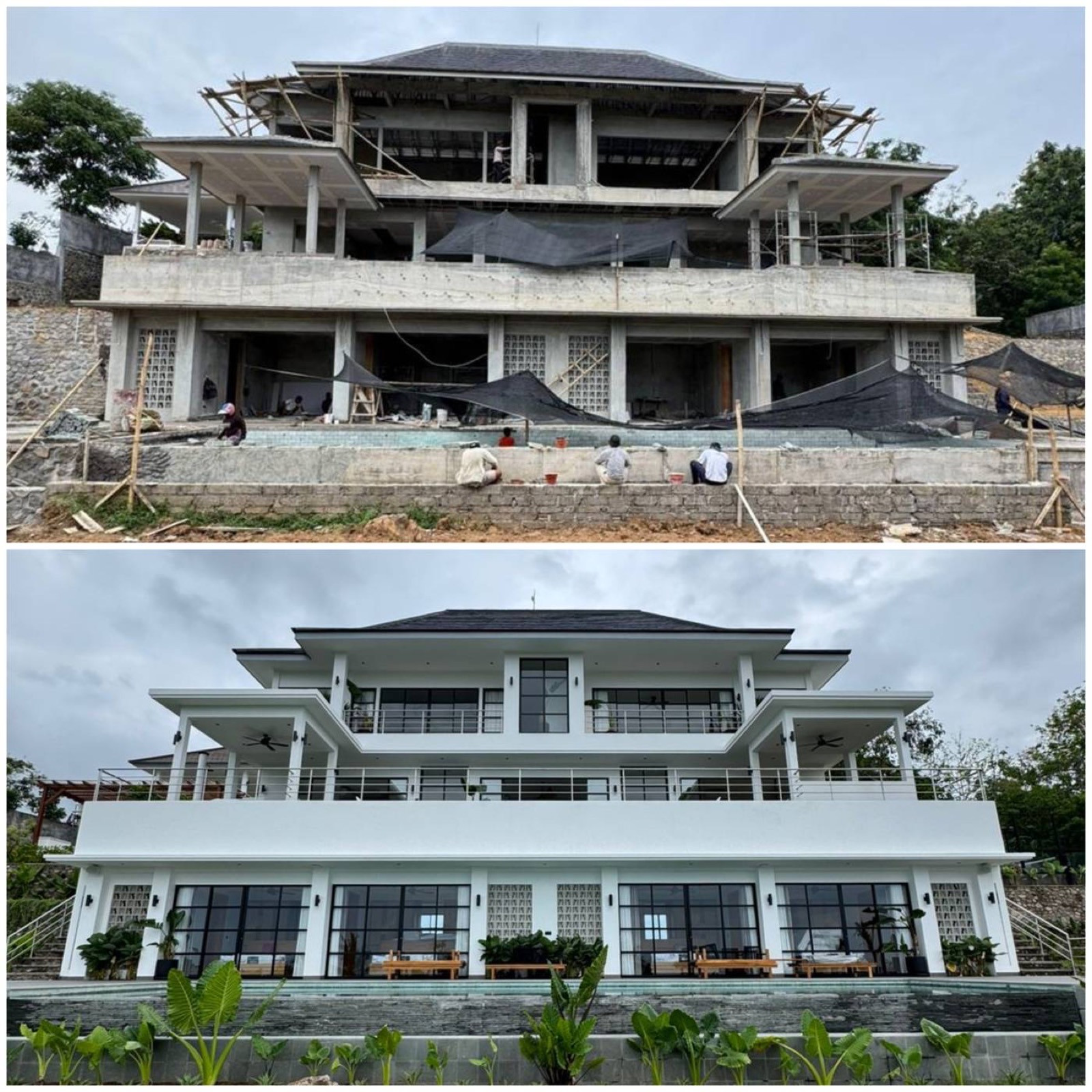 Villa Sunset in the hills above Lovina, as a concrete shell and finished. Photo: Palm Living.
A single villa build in Bali runs for many months from groundbreaking to handover, the length set by size, finish and weather. The work runs in this order.
-
Design and drawings. Design and permitting come first, and they often take longer than owners expect.
-
Permit approval. The PBG has to be in hand before any work on site.
-
Site preparation and foundations.
-
Structure and roof.
-
Services and finishing.
-
Landscaping and snagging.
The wet season slows external and concrete work, so a build that straddles it stretches. Imported materials, a difficult site or a permit delay are the usual reasons a schedule slips. Ask a north-coast builder for the groundbreaking-to-handover range they are currently working to, for the size of villa you have in mind.
Build the timeline with a buffer. A finish date promised to the month, with no allowance for rain or supply delay, is the date a project disappoints you.
Build or Buy: Control Against Speed to Income
Both routes work on the north coast, and the right one depends on what you want and how much you want to manage.
Building gives you the plot you choose, the design you want and a known history for the property, with full control over finish and layout. It costs you time, attention and the patience to manage a project from another time zone, unless you have someone trustworthy on the ground.
Buying an existing or off-plan villa is faster to income and lighter to manage. In return you accept someone else's choices, and you verify their build quality and legal standing for yourself. To see what finished north-coast stock is on offer before you commit to building, Palm Living lists it under villas and houses for sale.
For an investor chasing yield quickly, a well-located existing villa with a track record can be the cleaner path. The north-coast yield picture is in rental yields in north Bali.
Some owners want the right villa on the right plot, and will hold it. For them, building on land bought at early north-coast prices is where the long-term upside sits. The two are different projects, with different demands on your time.
Practical Notes
These costs change, vary by plot, and are north-specific. Confirm each one locally before acting on it.
Start from a real plot. A build budget means little without the land under it. Palm Living lists land for sale in north Bali. Price a plot first, then ask builders for their rate per square metre against it.
With the zoning confirmed, the PBG in hand and two or three quotes in writing, you are building on solid ground.
FAQ
How much does it cost to build a villa in Bali? Villas are priced per square metre, and the rate steps up with the finish level. Any figure printed in a guide dates within a season, so take the rate from builders quoting your own drawings rather than from a headline number. Finish level and build size drive the total more than anything else. See the land prices in north Bali guide for the cost of the plot underneath.
How long does it take to build a villa in Bali? Many months rather than weeks. Ask a north-coast builder for the groundbreaking-to-handover range they are working to for your size and finish, and add design and permitting on top of that beforehand. The wet season slows concrete and external work. Build the schedule with a buffer.
Is it cheaper to build in north Bali? Generally yes. Land, labour and local materials tend to cost less than in the south, which lowers the whole project budget. The saving can shrink on a steep or remote plot where access and site works run high, and specialist or imported materials take longer to source in the north. Current north-versus-south rates are confirmed locally.
Do you need a permit to build a villa in Bali? Yes. A villa needs the correct building approval, currently the PBG (Persetujuan Bangunan Gedung), which replaced the older IMB, plus a certificate of function (SLF) on completion. Zoning must also allow the build. The exact documents and fees change over time and by regency, so confirm current requirements with a local professional before you start.
Is it better to build or buy in Bali? Buying is faster to income and lighter to manage. Building gives you the plot, design and finish you want, and on land bought at early north-coast prices it carries strong long-term upside, at the cost of time and project management. The right answer depends on your timeline and how hands-on you want to be.
Sources
- Audit Board of Indonesia legal database, Government Regulation 16 of 2021 on buildings, read September 2026 (in Indonesian)
- Investment and One-Stop Service Office, South Solok Regency, PBG, the replacement for the IMB, read September 2026 (in Indonesian)
- Bali Provincial Government, TARUBALI, PBG and SLF in the building process, read September 2026 (in Indonesian)
Next: land prices in north Bali for the plot underneath, leasehold vs freehold in Bali for how you hold it, and rental yields in north Bali for what it earns afterwards.