On this page
- In Brief
- Pemuteran at a Glance
- Why Pemuteran Is Worth the Trip: A Calm Bay with Reef at the Beach
- Diving and Snorkelling: A Sheltered Bay That Is Kind to Beginners
- Menjangan Island: Coral Walls Half an Hour Away by Boat
- The Biorock Reefs: Coral the Village Grew Back on Steel Frames
- Where to Stay: Guesthouses, Eco-Resorts and Dive Lodges Along the Bay
- When to Go: April to October, and June to September Above All
- How to Get There: 90 Minutes from Lovina, up to Four Hours from the South
- How to Fit It In: A Base for the Far Northwest
- Practical Notes
- FAQ
- Sources
In Brief
Pemuteran, Bali, is worth the trip for its water. The bay is sheltered and calm for most of the year, so beginners learn to dive here and snorkellers reach the Biorock reefs from the beach. Menjangan Island, often rated one of Bali's best dive sites, is about half an hour away by boat.
The village lies about 90 minutes west of Lovina and three and a half to four hours from the airport. Give it a few unhurried days, and come between June and September for the calmest sea and the clearest water.
Pemuteran at a Glance
- What it is: a small fishing and diving village on a calm bay of black and grey sand
- Where: Bali's far northwest coast, at the edge of West Bali National Park
- Known for: the Biorock reefs in the bay and the boat trip to Menjangan Island
- Who runs the reef project: the village's Karang Lestari foundation, since 2000
- From Lovina: about 90 minutes west along the north coast road
- From the airport: three and a half to four hours by car
- Best months: April to October, with June to September the most reliable
- How long: a few unhurried days
- Bring: cash, as ATMs are limited in the village
Why Pemuteran Is Worth the Trip: A Calm Bay with Reef at the Beach
The draw is the water.
Pemuteran lies along a calm bay where the sand runs black and grey, and people come here to dive and snorkel. The bay holds the Biorock reefs, coral the community rebuilt itself. Menjangan Island is a short boat ride offshore.
The village has no clubs, no traffic and no crowds. Evenings are slow, and many visitors stay longer than they planned.
It suits travellers who want reef, calm water and a quiet base. Pemuteran rewards a few unhurried days, and it pairs well with Lovina, further east along the coast and described in the Lovina area guide.
Diving and Snorkelling: A Sheltered Bay That Is Kind to Beginners
The bay is sheltered and calm for most of the year.
Visibility is good and entry is easy, which makes it one of the gentlest places in Bali to learn, or to dive without current. Beginners can do their first open-water descents here in conditions that forgive mistakes. Experienced divers use the village as a base for the bigger sites offshore.
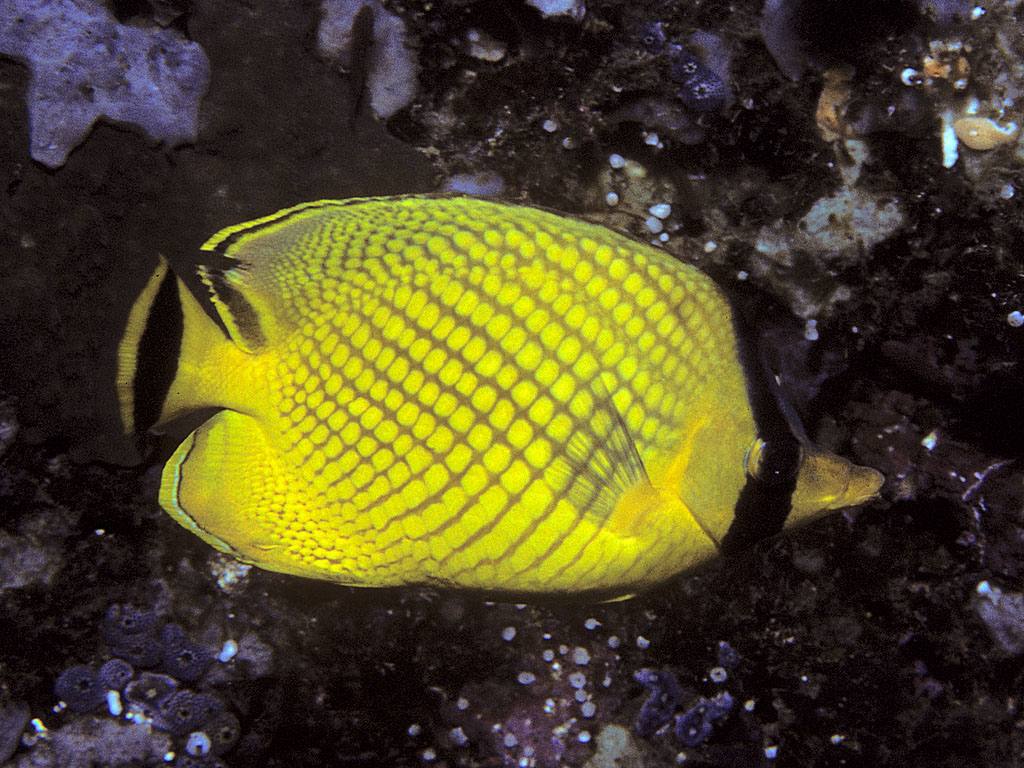 A latticed butterflyfish (Chaetodon rafflesii) on a Pemuteran reef, one of the reef fish divers and snorkellers see in the bay. Photo: Bernard E. Picton / Wikimedia Commons (CC BY-SA 4.0)
Snorkelling is just as good and far easier to organise. You have two ways in:
- From the beach: the Biorock structures sit close to shore, shallow enough to reach with a mask and fins.
- By boat: trips run out to Menjangan for the wall and the deeper reef, booked through the village's dive centres and lodges.
Diving and snorkelling in Pemuteran covers the reefs, how to book the Menjangan trip, dive courses and a typical day on the water. In short, this is some of the best reef diving on the island, and it is calm enough for beginners to join in.
Menjangan Island: Coral Walls Half an Hour Away by Boat
Menjangan is a small uninhabited island off the coast, inside West Bali National Park.
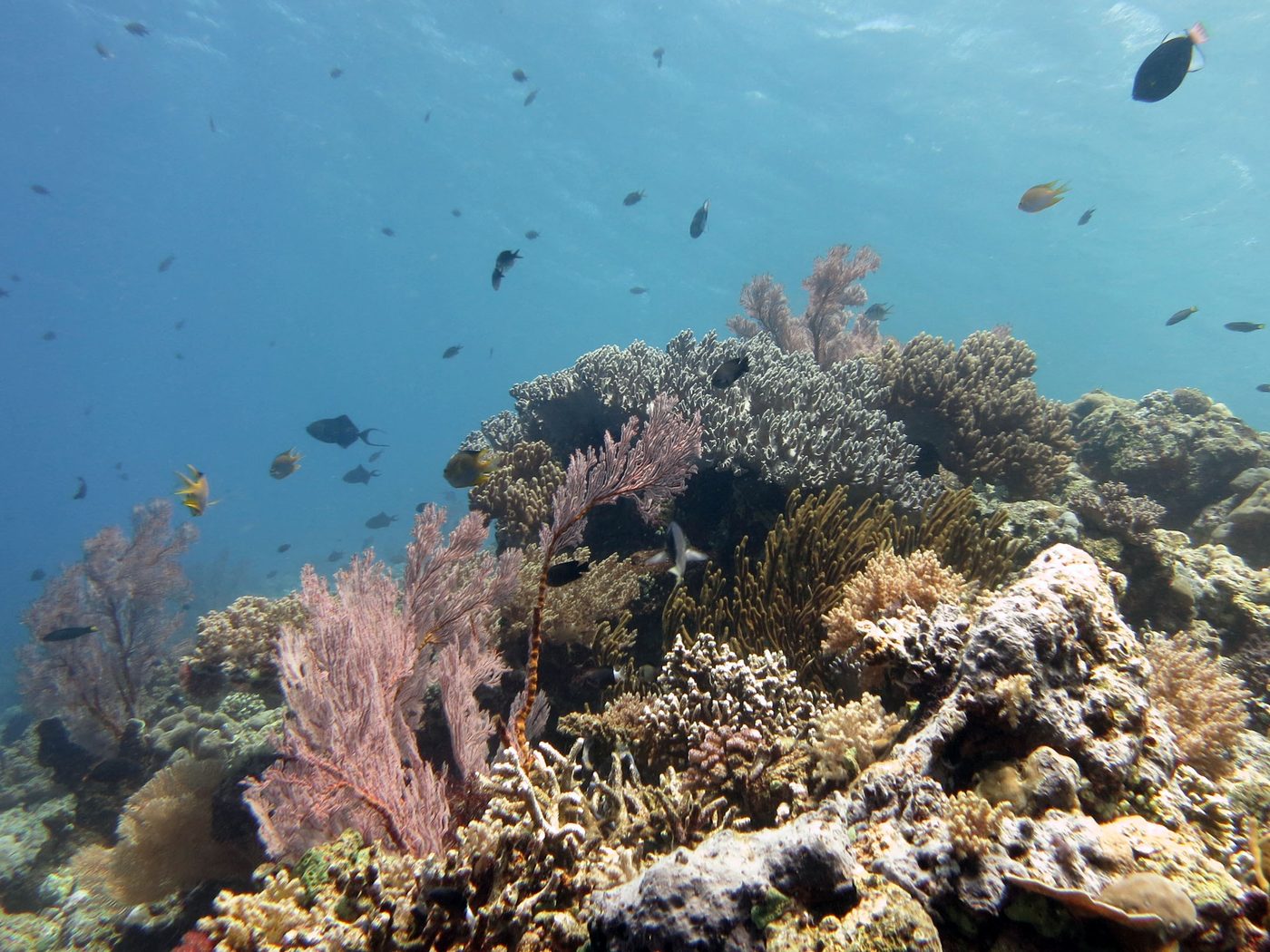 The Coral Garden on Menjangan, sea fans and hard coral in clear water. Photo: Lakshmi Sawitri / Wikimedia Commons (CC BY 2.0)
It is often rated one of the best dive sites in Bali. The name means "deer", after the wild Java deer that swim across to graze there.
The diving is wall diving. Steep, coral-covered drop-offs fall away into deep blue, with overhangs, gorgonian fans and reef fish in numbers the inshore sites cannot match. Visibility is often the best in the region.
Boats reach the island from Pemuteran in roughly half an hour. Because it lies within the national park, you pay park fees on top of the boat and dive charges. The wall sites suit divers, and strong snorkellers who can handle drifting along a drop-off.
As a protected marine area, Menjangan has stayed clean and quiet. The cost is the journey to this far corner of the island, and that distance is what has kept it good. The Menjangan Island guide describes the island itself.
The Biorock Reefs: Coral the Village Grew Back on Steel Frames
The Biorock project in Pemuteran Bay is run by the village's Karang Lestari foundation. By its own account, it is the largest coral reef restoration of its kind anywhere.
Fishing methods and warming water damaged the natural reef decades ago. The village then partnered with marine scientists to grow coral on steel structures placed on the seabed. A low-voltage current runs through the metal, which speeds mineral deposit and coral growth, and the reef has come back around it.
You can snorkel or dive over dozens of these structures just off the beach. They are now thickly grown with coral and busy with fish. Some are shaped as domes, frames or sculptural forms, and the older ones look like natural reef.
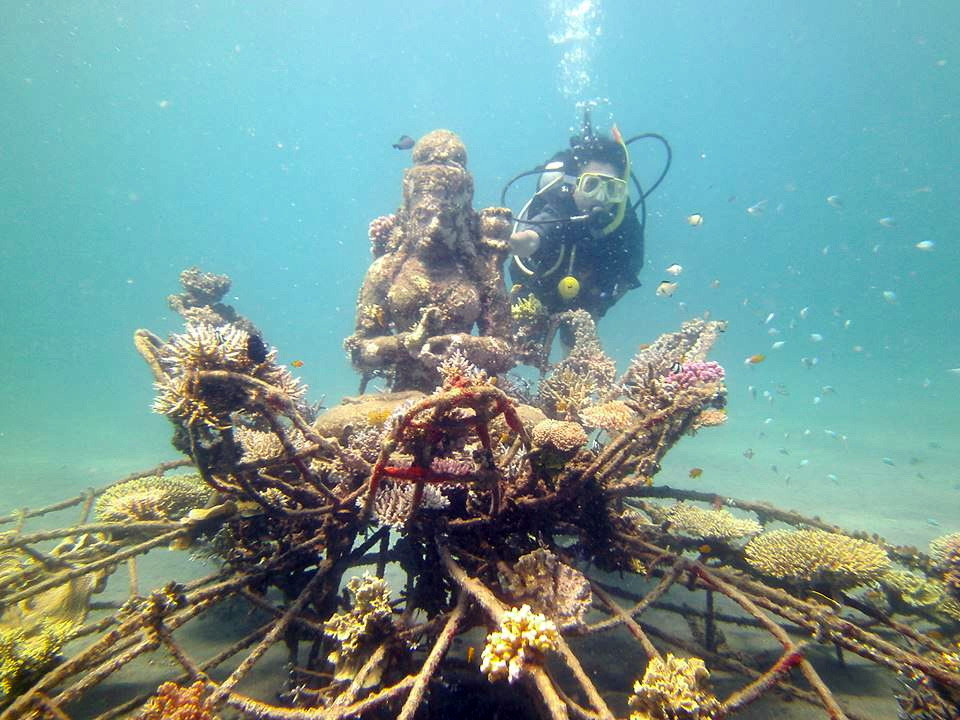 A Biorock structure in Pemuteran bay, coral grown over one of the bay's steel frames. Photo: Ennio morricone / Wikimedia Commons (CC BY-SA 3.0)
The project is community-run. Its money comes from village levies on hotels and dive shops and from local contributions.
It is rare to see restoration this mature and this easy to reach. Few places anywhere let an ordinary swimmer float directly over working reef restoration. For many visitors it becomes the most memorable part of the trip, more than the dive sites offshore.
Where to Stay: Guesthouses, Eco-Resorts and Dive Lodges Along the Bay
Pemuteran's places to stay run from simple guesthouses to a handful of well-regarded eco-resorts and dive lodges.
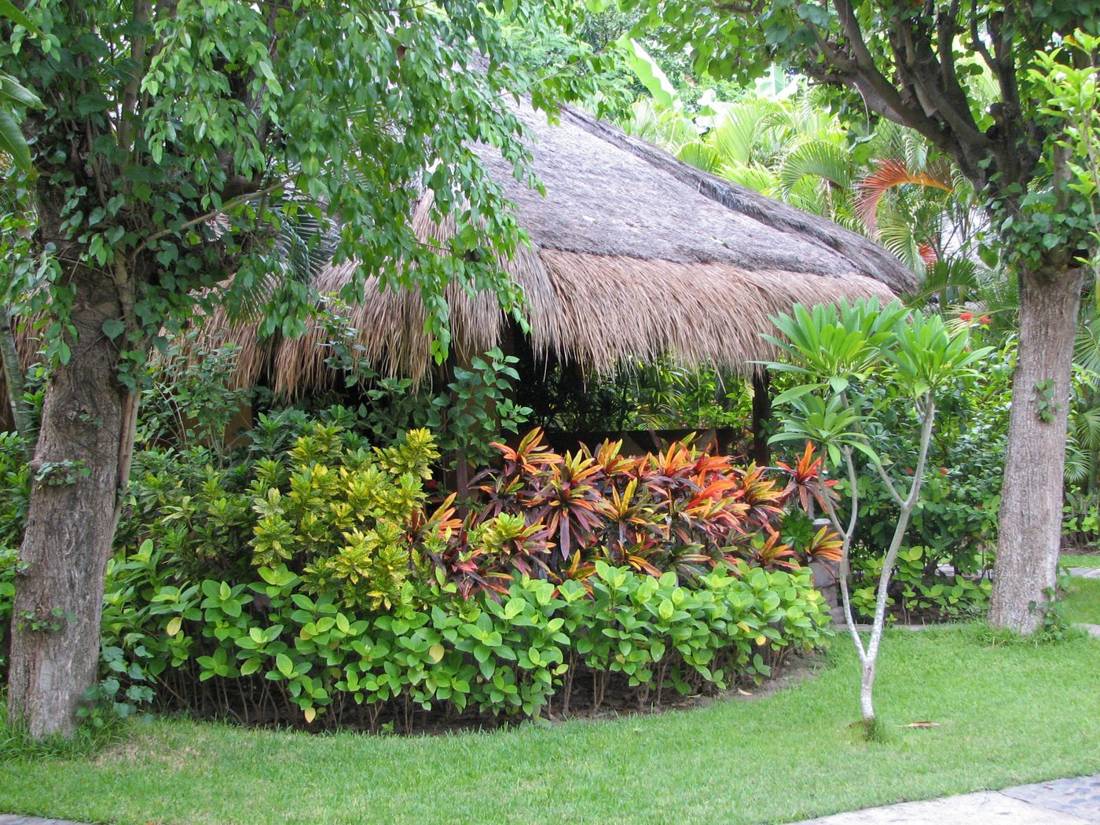 A garden bungalow at Taman Selini Beach Bungalows, Pemuteran. Photo: Eric Bajart / Wikimedia Commons (CC BY-SA 3.0)
Many sit directly on the water, with the reef a short swim from the room. Most cater to divers, with on-site dive shops, gear storage and early breakfasts before the boats leave.
Prices sit well below those of the south coast. The village is small and most of the bay is walkable, so location barely matters. Book ahead in peak diving season, when the better dive lodges fill early.
For self-catering with staff, or a quieter base nearby, the Lovina area guide covers the villas along the north coast.
When to Go: April to October, and June to September Above All
The dry season, April to October, is the prime window, and June to September is the most reliable part of it.
Seas are calm, underwater visibility is at its best and the boats to Menjangan run without weather interruptions. This is when the diving is at its peak and the lodges are busiest.
The rainy season runs from November to March. It brings warmer afternoons, occasional downpours and slightly lower visibility after heavy rain washes runoff into the bay.
Diving still goes on, and the village is quieter and cheaper, though offshore visibility is less dependable. The far northwest is one of the drier corners of Bali all year, so the wet months hold up well here.
For the calmest water and the clearest reef, aim for the heart of the dry season.
How to Get There: 90 Minutes from Lovina, up to Four Hours from the South
Pemuteran sits in Bali's far northwest, and the journey is part of what keeps it quiet.
From Lovina it is about 90 minutes west along the north coast road, which is flat and scenic and hugs the sea for most of the way. From Seminyak, Ubud or the airport, allow three and a half to four hours by car. The time depends on your route and on the traffic over the mountains.
There are two common routes from the south:
- Through the highlands: the road climbs past the Bedugul lakes, drops to the north coast and then runs west.
- Up the west side: the road passes Tabanan and then follows the national park.
A private driver is the simplest option for either route, and lets you break the journey at a waterfall or the lakes. Getting to north Bali has the detailed routes, drive times and driver arrangements.
How to Fit It In: A Base for the Far Northwest
Pemuteran works as a base for the far northwest as much as a destination in itself. Within easy reach:
- Menjangan Island: the main dive and snorkel site, half an hour by boat.
- West Bali National Park: jungle trekking, birdwatching and the rare Bali starling, just inland.
- Lovina: the dolphins and the north coast base, about 90 minutes east.
- The north Bali waterfalls and hot springs: reachable on the drive east toward Lovina and the mountains.
Many visitors make Pemuteran part of a north-coast loop. They pair a couple of diving days here with the dolphins, waterfalls and highlands further east. The North Bali travel guide ties the whole region together.
Most of Palm Living's villas are around Lovina, about 90 minutes east along the coast road. Many visitors split a stay between the two, with Lovina for the dolphins and waterfalls and Pemuteran for the reefs.
Practical Notes
The details below change. Confirm current rates and conditions locally before you go.
- Dive and snorkel costs: Menjangan trips and dive courses are priced separately, and each dive centre sets its own rates.
- Menjangan park fees: the national park charges entry on top of boat and dive fees. Bring cash.
- Biorock contribution: the reef project is funded locally, partly by contributions. Ask your dive shop how to add to it.
- Money: ATMs are limited in the village. Bring cash for dives, fees and warungs.
- Getting around: the bay is walkable. A scooter or driver covers the wider area and the national park.
- Connectivity: mobile data is reliable in the village and patchier inside the park.
- Booking: reserve dive-oriented lodges ahead in peak season, as the good ones fill early.
FAQ
Is Pemuteran worth visiting? Yes, if you come for the water. It offers some of the best reef diving and snorkelling in Bali, in a calm and uncrowded bay. It rewards a few unhurried days and works as a base for Menjangan Island and West Bali National Park.
What is Pemuteran known for? Diving and snorkelling, above all. It is the gateway to Menjangan Island, often rated one of the best dive sites in Bali. It is also home to the Biorock reefs, by the project's own account the largest community coral restoration of its kind. The bay is calm, the sand is black and grey, and the village stays quiet all year.
How do you get to Pemuteran? By road. Pemuteran sits on Bali's far northwest coast, about 90 minutes west of Lovina along the north coast road. From the airport or the south, allow three and a half to four hours. A private driver is the easiest option and lets you stop at the lakes or a waterfall on the way.
Is Pemuteran good for snorkelling? Very good. The Biorock reefs sit close enough to shore to reach from the beach with a mask and fins, and boats run out to Menjangan for deeper reef. The bay is sheltered and calm for most of the year, which makes it some of the easiest snorkelling in Bali.
What is Menjangan Island? A small uninhabited island off Pemuteran, inside West Bali National Park, often rated one of the best dive sites in Bali. The diving is wall diving along steep coral drop-offs, where visibility is often the best in the region. Boats reach it from Pemuteran in about half an hour, and access carries national park fees.
Sources
- Pemuteran Bay Festival, About Biorock: the Karang Lestari coral restoration project (the project's start in 2000, its awards, its local funding and the hotels and dive shops that support it), read September 2026
- Global Coral Reef Alliance, Pemuteran Coral Reef Restoration Project, read September 2026
- Balai Taman Nasional Bali Barat, Umum (Menjangan's dive and snorkel sites inside the park, and Pemuteran as a departure point), read September 2026 (in Indonesian)
- Wikimedia Commons, Snorkeling Pemuteran Bali 2, Ennio morricone, CC BY-SA 3.0
Read next: diving and snorkelling in Pemuteran, the Lovina area guide and the North Bali travel guide.

_(37151012570).jpg)

.jpg)

_-_panoramio.jpg)