On this page
- In Brief
- Working Remotely From North Bali at a Glance
- Step 1: Choose the Visa That Matches Your Work
- Step 2: Get Online With a Telkomsel SIM and a Tested Connection
- Step 3: Pick Where You Work, From Cocoon to Your Own Villa
- Step 4: Base Yourself in Lovina, Then Look Further Out
- Step 5: Meet People Through Classes, the Market and the Dive Crowd
- Daily Life Runs on a Scooter, Cash and Good Insurance
- Practical Notes
- FAQ
- Sources
Last updated: September 2026
In Brief
North Bali digital nomad life suits people who want to work quietly with the sea close by, and who can do without a big coworking scene. Sort the visa first.
Indonesia's immigration directorate lists a remote-worker visa, E33G, for people who live here while working for a company outside Indonesia. The C1 tourist visit visa bars you from selling goods or services, or taking payment from anyone in Indonesia. You apply for both on the official eVisa portal.
The regional immigration office for Buleleng is on the coast road at Pemaron, next to Lovina.
For internet, a Telkomsel SIM gives you mobile data from day one. Whether a rented villa's connection is in the rent varies by house, so test it before you sign. Lovina has one dedicated coworking space, Cocoon, in Anturan. Many people otherwise work from their villa or a cafe.
Base yourself in Lovina or its villages for the services, and read long-term rentals in north Bali before you commit to a house.
Working Remotely From North Bali at a Glance
- Where people base themselves: Lovina and its villages first, then the hills behind it, Munduk and Pemuteran for more quiet
- The visa written for remote work: E33G, the remote-worker visa on the immigration directorate's visa list
- Where you apply: online, on the official eVisa portal
- Nearest immigration office: Kantor Imigrasi Singaraja, on the Seririt to Singaraja road at Pemaron
- Mobile data: Telkomsel, including a tourist starter pack you order online and collect on arrival in Bali
- Home internet: in or out of the rent depending on the house, so test it before you commit
- Coworking: Cocoon Lovina, in Anturan
- Figures on this page: none. Fees, income thresholds and stay lengths change, so read them on the official pages linked below
Step 1: Choose the Visa That Matches Your Work
Your visa decides how long you can stay and what you may do while you are here.
The rules below are how the categories work, as the Directorate General of Immigration describes them. Fees, stay lengths and income thresholds change by regulation, so read them on each official page. The Bali visa guide covers the wider set of options.
For a short trip: the visitor visa
The electronic visitor visa is a single-entry visa for tourism, government visits, business meetings, goods purchasing or transit. Only certain passports are eligible, and the portal lists them.
It suits a first trip to see whether the north works for you. It is not a work visa.
For a longer visit: the C1 visit visa
You apply for the C1 tourist visit visa online, through an account on the eVisa portal, and most passport holders need no sponsor. You can extend the stay online through the same account. The page also states that C1 can be converted to a limited-stay permit.
The page is explicit about what C1 holders may not do. They may not sell goods or services, or receive pay or any other reward for their work from a person or company in Indonesia.
For working remotely: the E33G remote-worker visa
The E33G remote-worker visa is the category written for this, listed in Indonesian as the second-home visa for remote workers. It lets you live in Indonesia while you carry out work for a company outside Indonesia. While your re-entry permit is valid, you can leave and come back.
It is a limited-stay visa. The stay permit it leads to can be extended and converted to other permits.
How it works, from the official page:
- No sponsor. You apply yourself, online, after opening an account on the eVisa portal.
- The documents. A passport with enough validity left, bank statements showing funds to live on, a recent photo, a CV and a travel itinerary.
- The two special requirements. Proof of income from salary or earnings above a minimum annual amount the page sets, and a work agreement with a company established outside Indonesia.
- On arrival, the limited-stay permit and re-entry permit are issued automatically once the officer admits you.
- What you may not do: work outside the terms of the permit, or sell goods or services in Indonesia except where your job requires it.
The current income threshold, the stay length and the fees are on the E33G page itself. Check them there on the day you apply, and use a licensed agent if your situation is anything other than simple.
The immigration office is at Pemaron, next to Lovina
Kantor Imigrasi Singaraja, the regional immigration office, is on the Seririt to Singaraja road at Pemaron. Pemaron is the village at the eastern end of Lovina.
Its own site lists its area as the regencies of Buleleng, Jembrana and Karangasem, so it is the office for anyone living on the north coast. Extensions for the C1 and E33G run online through your eVisa account. The office's site carries its current service hours.
Step 2: Get Online With a Telkomsel SIM and a Tested Connection
Mobile data is the first connection to set up, and you can order it before you fly.
Mobile data. Telkomsel's tourist prepaid card is a SIM starter pack with a data package. You order it online on Telkomsel's site and collect it when you arrive, with your passport. Its registration page for foreigners says pick-up is currently only in Bali and at Mandalika on Lombok, and that the offer needs an unlocked phone.
For a longer stay, Telkomsel's own product list runs from SIMPATI prepaid and by.U digital prepaid to Halo postpaid. The current packages and prices are on its site.
Home internet. Telkomsel also sells IndiHome home internet, the Orbit WiFi modem and EZnet home internet. In a rented villa, whether the connection is in the rent varies from house to house.
Before you commit, ask what the connection is and who deals with the provider when it drops. Run a speed test in the room you will work from. Long-term rentals in north Bali has the full checklist, including checking the mobile signal inside the house.
Keep a backup. A second route to the internet, usually mobile data on your phone, keeps a call going when the house connection drops. Test the signal at your desk as well as the connection.
Step 3: Pick Where You Work, From Cocoon to Your Own Villa
You have three places to work in Lovina: the one coworking space, a cafe or your own villa.
Cocoon Lovina
What it is: A coworking space in Anturan, east of central Lovina. It has no website. Its Instagram account is where it publishes its passes and news.
What they offer, in their own posts:
- Half-day passes with access to all the open workspaces, air conditioning, wifi, coffee and filtered water
- A private office for calls, podcasts and video, with a tripod, microphone and ring light, and room for three or four people
- A collaborative room that also hosts Indonesian language classes and workshops
- A reading corner for a break from the screen
The posts say you can message them or walk in.
What to know: Current passes and prices are posted on the account. Message them before your first visit to confirm the day's hours.
Contact: cocoon.lovina on Instagram · Map
Best for: Calls that need a quiet room, a desk away from the villa, and meeting other people who work online.
Cafes
Some cafes in Lovina and Munduk are comfortable for a few hours with a laptop. The best cafes in north Bali covers them, along with the north's own coffee, grown in the Munduk hills. Treat cafes as a change of scene rather than your only connection.
Your villa
For many people staying a month or more, the villa is the office. Palm Living's long-term rental page lists the villas it offers for long-term rent, from two-bedroom villas in central Lovina to hillside and sea-view houses.
Its villas for rent cover a first month while you look. Ask about the connection and the desk before you book, since a pool does not help a deadline.
Step 4: Base Yourself in Lovina, Then Look Further Out
Lovina has the most services on the north coast, so it is the natural first base.
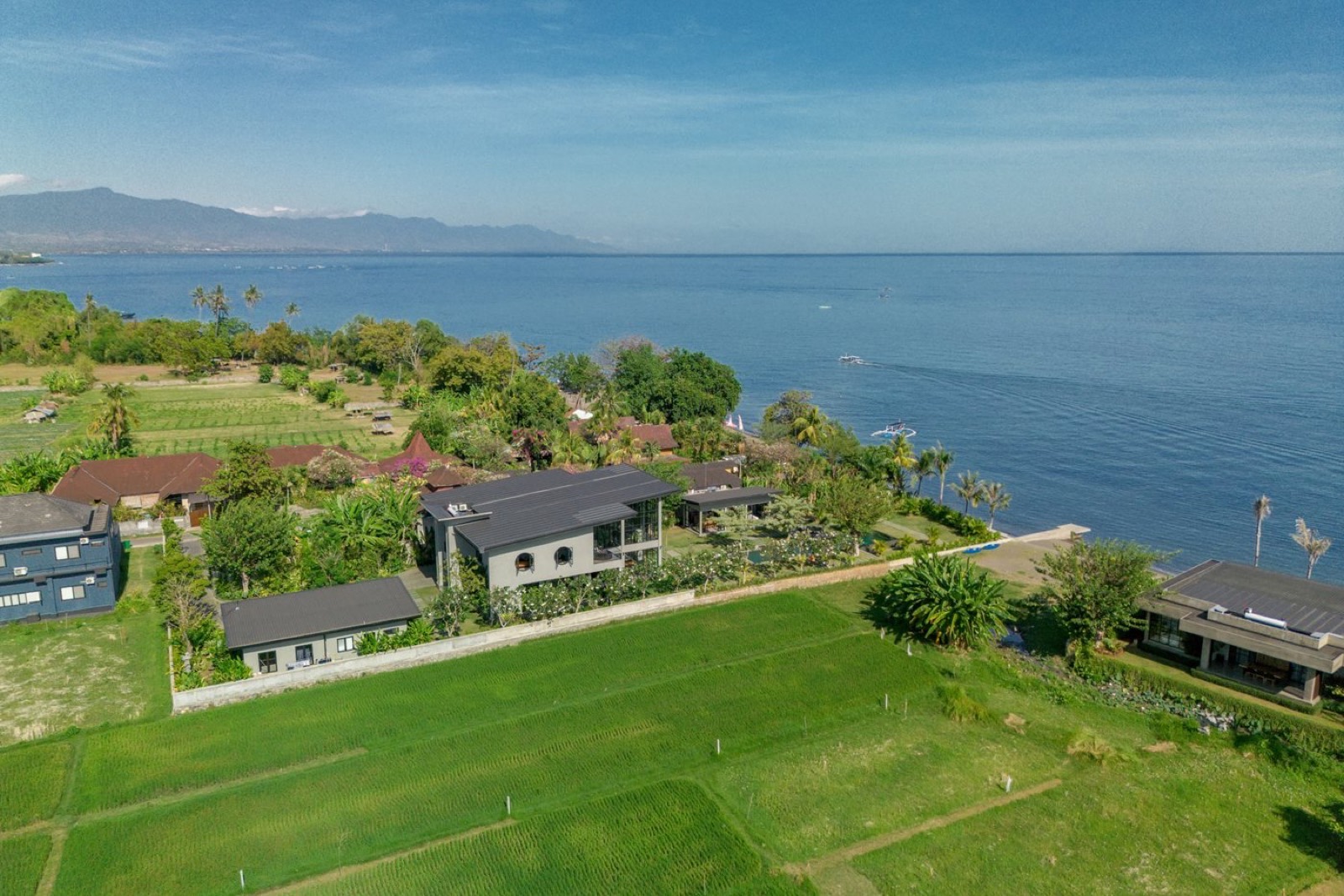 Villa grounds running down to the sea on the Lovina coast, where most of the north's long-stay villas sit. Photo: Palm Living archive.
Lovina and its villages. The immigration office is at Pemaron, and Singaraja, the regional capital, is just to the east. The complete Lovina guide covers the town village by village.
The hills behind Lovina. Space, views and cooler nights, with a drive for almost everything. A scooter or a car becomes part of the budget.
Munduk. Cool air, coffee gardens and mist, a long way from services. It suits people who do not need the town every day. See the Munduk guide.
Pemuteran. A small village at the edge of West Bali National Park, built around diving and the reef. See the Pemuteran guide.
If you have not decided yet, spend the first weeks in Lovina and look from there. Where to stay in north Bali goes area by area, and moving to north Bali covers the wider move.
Step 5: Meet People Through Classes, the Market and the Dive Crowd
The remote-work community in the north is small, and it gathers around a few places:
- Cocoon's classes and workshops
- The Lovina Sunday Market at Kaliasem, a makers' market for Buleleng's small producers, where residents and visitors cross paths (confirm it is on before you go)
- Yoga shalas along the coast and in the hills, which run classes and retreats, listed in yoga retreats in north Bali
- The dive centres at Pemuteran, which have their own crowd, covered in diving and snorkelling at Pemuteran
A few words of Indonesian and Balinese go a long way in a village. Balinese words and phrases is the place to start.
Daily Life Runs on a Scooter, Cash and Good Insurance
Getting around runs on a scooter or a hired driver. Private drivers in north Bali explains how drivers work, and getting to north Bali covers the road from the airport.
Money is cash for warungs and markets, and cards in the larger places. See Bali currency.
Healthcare is clinics and pharmacies locally, with the larger hospitals further away. That is why healthcare in north Bali recommends insurance that covers evacuation.
Practical Notes
- Read the current visa rules on the official immigration visa list and apply only through the official eVisa portal
- Match your visa to the work you do. C1 bars payment from anyone in Indonesia, and E33G is for work for a company abroad
- Order a Telkomsel tourist SIM before you fly, and bring an unlocked phone and your passport to collect it
- Test the villa's internet in the room you will work from, and check the mobile signal there too
- Keep mobile data as a backup connection
- Know where the immigration office is (Pemaron) before you need it
- Agree the internet, the desk and who fixes the connection before you sign a long lease
FAQ
Is north Bali good for digital nomads? It suits people who want to work quietly with the sea close by, and who can do without a big coworking scene. Lovina has the services, one dedicated coworking space and villas let by the month or year. The trade is a smaller community and a longer drive to the south's facilities.
What visa do I need to work remotely from Bali? Indonesia's immigration directorate lists the E33G remote-worker visa for people living in Indonesia while working for a company outside it. It needs no sponsor, requires proof of income above a threshold set on the official E33G page and a work agreement with a foreign company, and is applied for on the eVisa portal. Check the current requirements there before you apply.
Can I work remotely on a tourist visa in Bali? The official page for the C1 visit visa says holders may not sell goods or services or receive pay from any person or company in Indonesia. The E33G exists for people working for a company abroad. Read both official pages and, if your case is unclear, ask a licensed visa agent before you rely on either.
Is there coworking in Lovina? Yes, one dedicated space: Cocoon Lovina in Anturan, which posts half-day passes, a private office for calls and recording, and language classes on its Instagram. Some cafes also work for a few hours. See the best cafes in north Bali.
How good is the internet in north Bali? It depends on the house. Test the villa's connection in the room you will work from before you commit, check the mobile signal there, and keep mobile data as a backup.
Where is the nearest immigration office to Lovina? Kantor Imigrasi Singaraja, on the Seririt to Singaraja road at Pemaron, at the eastern end of Lovina. It covers Buleleng, Jembrana and Karangasem.
How do I get a SIM card in Bali? Telkomsel sells a tourist prepaid card that you order on its website and collect on arrival in Bali, with your passport and an unlocked phone. Current packages are on Telkomsel's site.
Sources
- Directorate General of Immigration, E33G remote-worker (second-home) visa (purpose, no sponsor, documents, special requirements, permits issued on arrival, prohibited activities, online extension), read September 2026 (in Indonesian)
- Directorate General of Immigration, C1 tourist visit visa (purposes, no sponsor for most passports, online extension, conversion, ban on selling goods or services and receiving pay in Indonesia), read September 2026 (in Indonesian)
- Directorate General of Immigration, eVisa portal, visitor visa general information (single entry, permitted purposes, eligible passports), and the list of Indonesian visas, read September 2026 (in English and Indonesian)
- Kantor Imigrasi Kelas II TPI Singaraja, work area and address (Jl. Seririt–Singaraja, Pemaron, covering Buleleng, Jembrana and Karangasem), read September 2026 (in Indonesian)
- Telkomsel, SIM card registration for foreigners (special SIMPATI card, unlocked phone, pick-up in Bali and Mandalika, product list including IndiHome, Orbit and EZnet) and what is the Tourist Prepaid Card, read September 2026 (in English)
- Cocoon Lovina, Instagram account (coworking passes, private office, classes, reading corner), read September 2026 (in English). Location in Anturan from the Google Maps listing that links its Instagram account (R2QH+JPX, Anturan), read September 2026
- Palm Living, long-term rentals and villas for rent, read September 2026 (in English)
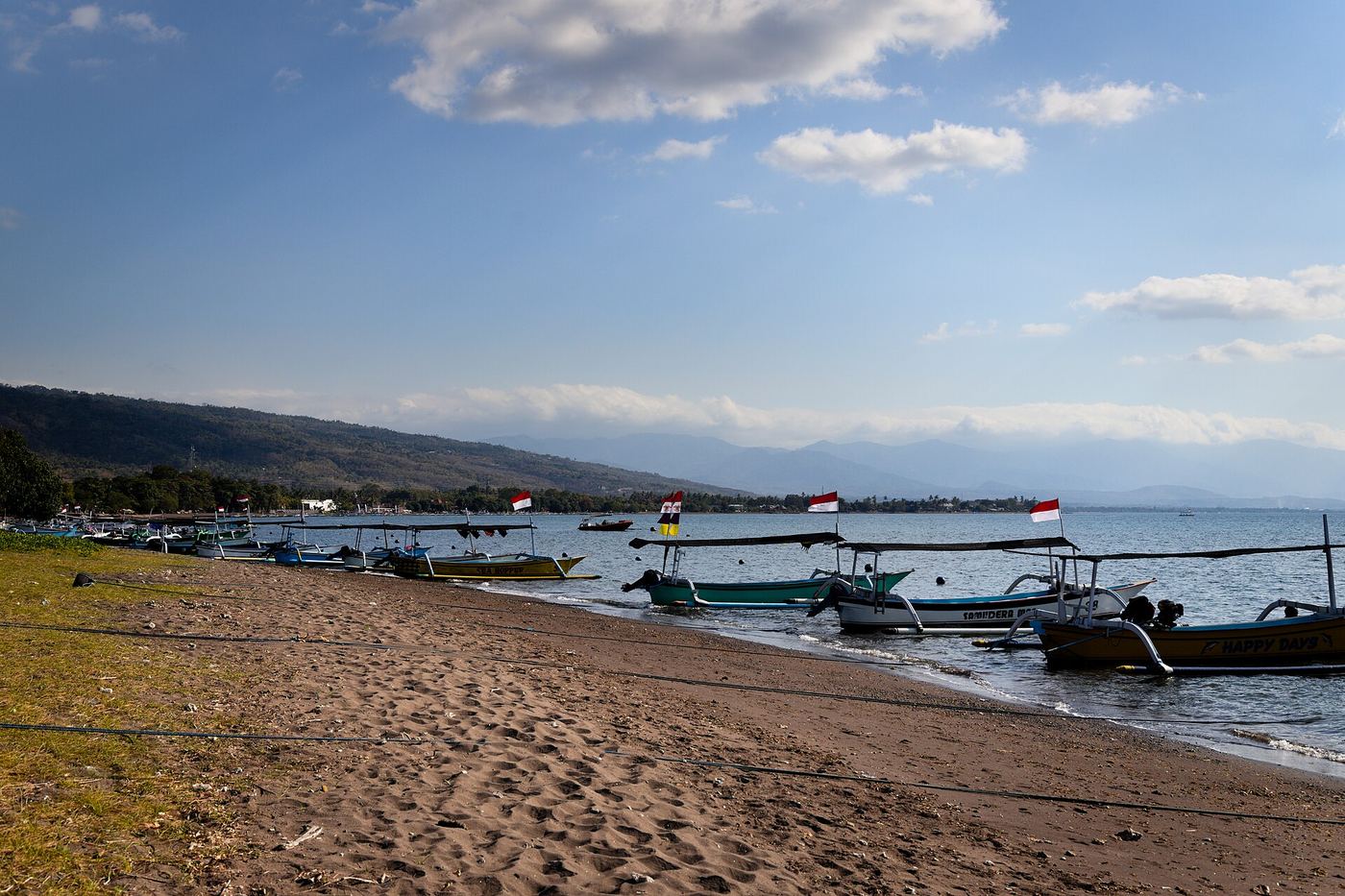
- Enrico Strocchi, Lovina Beach, Wikimedia Commons (CC BY-SA 2.0), photograph
Next: long-term rentals in north Bali, the Bali visa guide, moving to north Bali and the cost of living in north Bali.

.jpg)