On this page
- In Brief
- Bali Visas at a Glance
- Visa on Arrival: The Usual Route for a Short Holiday
- The Visit Visa (C1): A Longer Stay, Arranged in Advance
- The Remote-Worker Visa (E33G): Work for a Company Abroad
- KITAS: The Permit for Living in Bali
- How to Extend Your Stay Without Leaving
- The Shortcut to Avoid: Staying Past Your Date
- Practical Notes
- FAQ
- Sources
In Brief
For a short holiday, the usual Bali visa is a visa on arrival, a tourism entry sorted at the airport. Stay longer than a standard tourist trip and you need a different category. That is a visit visa arranged in advance, the newer remote-worker route, or one of the longer-stay permits for work or retirement.
No single visa covers everyone. The right one depends on how long you plan to stay and what you intend to do here.
Indonesian visa policy changes, and it changes often. Durations and fees move, and so do eligibility and extension rules.
Bali Visas at a Glance
- A short holiday: the visa on arrival (VOA), bought on landing or pre-registered online. Eligible passports are on the official e-VOA page.
- A longer visit: the single-entry visit visa, arranged in advance online. Immigration lists the tourist version as C1, which older guides call B211.
- Working remotely for a foreign company: the E33G remote-worker visa, a limited-stay visa.
- Living here: a KITAS, the limited-stay permit, in work, investor, retirement and family-sponsored types. Every category is in the immigration site's visa list.
- Your passport: valid for at least six months from the day you arrive.
- Overstaying: a daily penalty, and past 60 days deportation and a bar on re-entry.
- Fees and lengths of stay: left to the official pages, because they change.
Visa on Arrival: The Usual Route for a Short Holiday
The visa on arrival, usually shortened to VOA, is the usual route for a short trip.
It is a tourism entry, designed for holidays and short visits rather than work or long stays. You buy it on landing, or pre-register online before you fly.
Citizens of many countries are eligible, though the list is not universal. The official e-VOA page lists the passports that qualify, so check yours before you book anything.
The same page sets one rule worth knowing early. Your passport must be valid for at least six months from the day you arrive.
The fee, the length of stay and whether the visa can be extended are all specifics that move. Confirm them with Indonesian immigration or a visa agent.
The VOA does not allow paid work for an Indonesian employer, or running a local business. It is for tourism. If your plans go beyond a holiday, this is not your visa.
The Visit Visa (C1): A Longer Stay, Arranged in Advance
For a stay longer than a standard tourist trip, the single-entry visit visa is the common next step.
The immigration site lists the tourist version as C1, the category many older guides still call B211. You arrange it in advance rather than on arrival, online through the official eVisa portal.
Most passport holders no longer need a sponsor for it, though plenty of people still hand the paperwork to an agent. It covers longer tourism, family visits and certain non-employment activities, such as attending meetings.
The visit visa typically allows a longer initial stay than the VOA and can often be extended. That is why long-stay travellers and people testing out life here tend to use it. The cost depends on the length of stay, plus the agent's fee if you use one.
It is still not a work visa. The immigration site is explicit that holders may not sell goods or services, or take payment from any person or company in Indonesia.
Whether remote work for an overseas employer fits under it is the kind of detail that shifts. That is why a dedicated remote-worker visa now exists. Confirm before you rely on either.
The Remote-Worker Visa (E33G): Work for a Company Abroad
Indonesia introduced a remote-worker route, sometimes called the digital nomad visa.
It is aimed at people who earn their income from companies based outside the country. The immigration site lists it as the E33G remote-worker visa, a limited-stay visa for carrying out work for a foreign company while living here.
Three specifics have changed since the route launched:
- the eligibility criteria, including any minimum-income requirement
- the length of stay it grants
- how renewal works
Treat any figure you read online with suspicion until an agent confirms it.
KITAS: The Permit for Living in Bali
For longer or more permanent stays, the KITAS is the limited-stay permit many people end up with.
KITAS comes in several types, each with its own conditions:
- Work: generally requires an Indonesian company to sponsor and employ you
- Investor: ties to a company structure
- Retirement: has age and income conditions
- Family-sponsored
- Second home: for people who hold savings or an apartment in Indonesia above a set value, covered in the second home visa guide
The immigration site's visa list sets out every category. These are the routes for anyone building a real life here, including investors and people moving up to the coast for good.
If a long-term move is the plan, the moving to north Bali guide covers the practical side. The legal structure of any property sits separately again.
On that property side, Palm Living's team has worked with buyers and land owners in north Bali for over 24 years, and can give you current information.
The remote-worker route and the KITAS are both more involved than a tourist entry. Both reward getting professional help early rather than improvising at the airport.
How to Extend Your Stay Without Leaving
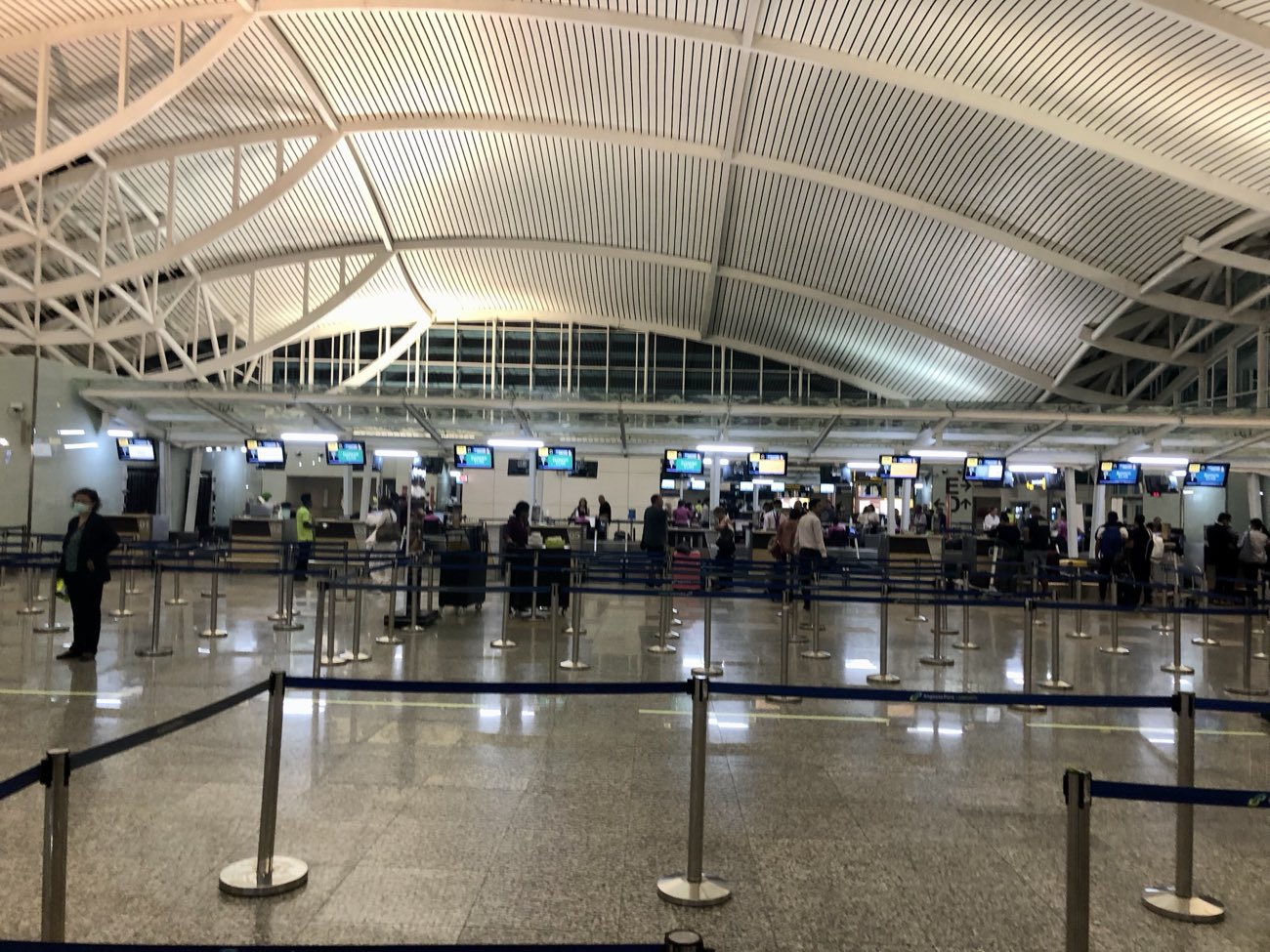 The arrivals hall at Ngurah Rai airport. Photo: Pinterpandai.com / Wikimedia Commons (CC BY-SA 3.0)
Several Bali visas can be extended, which is how many people turn a short trip into a longer one without leaving the country.
The VOA and the visit visa both commonly allow extension. The number of extensions permitted and the process differ between them.
Handle the extension before your current permission expires, in one of three ways:
- online, through your account on the official eVisa portal
- at an immigration office
- through an agent who manages it for you
The timing matters. An extension applied for too late can fail, and a failed extension becomes an overstay. The fee and the lead time you need to allow are worth confirming in advance.
Many long-stay residents use an agent for extensions, to avoid the office queues and the risk of a paperwork mistake. On the north coast, an agent who handles your category cleanly is worth the cost.
The Shortcut to Avoid: Staying Past Your Date
Staying in Indonesia past the date your visa permits is taken seriously.
Overstaying carries a daily penalty. Indonesia's immigration directorate states that anyone who overstays by more than 60 days is deported and barred from re-entry.
The fix is simple:
- know your exact expiry date
- set a reminder well before it
- arrange any extension early
If something has gone wrong and you are close to your limit, speak to a reputable visa agent immediately rather than hoping it resolves itself. Do not improvise with immigration deadlines.
Practical Notes
Where to confirm each detail:
- Which visa you need: depends on length of stay and purpose. Tourism is one category, and longer stays and work are entirely different ones.
- VOA eligibility, fee, duration: Indonesian immigration or a visa agent.
- Visit visa (C1, formerly B211) duration and extensions: the official eVisa portal, or the agent arranging it.
- Remote-worker route eligibility and income threshold: a visa agent, before you count on it.
- KITAS types and conditions: a visa agent, for the type, the sponsor and the validity.
- Extension fees and timing: the immigration office or your agent, well before your permission expires.
- Overstay penalties: Indonesian immigration.
- Your passport: at least six months' validity from the day you arrive.
Use a reputable agent for anything beyond a simple short visit.
For first-time visitors planning the trip itself, the complete north Bali guide covers getting here, where to base yourself, and how the north fits together.
Pick the category that fits your stay, know your dates and extend early, and the rest is simple.
FAQ
Do you need a visa for Bali? Almost certainly, yes. Most visitors need some form of visa to enter Indonesia, and for a short holiday that is usually a visa on arrival. Whether your passport is eligible for the VOA, and what any visa-free arrangement might cover, are details that change by nationality. Confirm your specific case with official Indonesian immigration or an agent before you fly.
How long can you stay in Bali on a tourist visa? A visa on arrival grants a limited tourist stay that can often be extended once, and the longer visit visa allows more time. The exact number of days each one gives, and how many times you can extend, are specifics that move with policy. Plan around the rule in force when you travel, not an old figure.
Is there a digital nomad visa for Bali? Indonesia has introduced a remote-worker route often called the digital nomad visa, aimed at people earning income from companies outside the country. Its eligibility, income requirement, and length of stay have shifted since launch. Confirm the current terms with a visa agent before you count on it.
Can you extend a Bali visa? Often, yes. Both the visa on arrival and the visit visa commonly allow extension, and longer-stay permits renew under their own rules. The number of extensions, the cost, and the process differ by visa type. Timing is critical, because a late application can fail.
What happens if you overstay in Bali? Overstaying carries a daily financial penalty, and longer overstays can lead to deportation and a re-entry ban. The exact penalty and thresholds are set by immigration and can change. The safe move is to know your expiry date and arrange any extension well in advance.
Sources
- Directorate General of Immigration, Electronic Visa on Arrival (e-VOA): general information and eligible countries, read September 2026
- Directorate General of Immigration, C1 tourist visit visa, read September 2026 (in Indonesian)
- Directorate General of Immigration, E33G remote-worker visa, read September 2026 (in Indonesian)
- Directorate General of Immigration, List of Indonesian visas, read September 2026 (in Indonesian)
- Directorate General of Immigration, How immigration handles foreigners who overstay, read September 2026 (in Indonesian)
Before you fly, the Indonesia arrival card is the form to have ready, and it now carries the customs declaration too. The Bali customs declaration guide covers what you can bring in, and Bali currency covers cash on arrival.


.jpg)