On this page
- In Brief
- Cost of Living in North Bali at a Glance
- Why There Is No Price Table Here
- Why Some Costs Sit in the South: the Regency's Own Account
- Step 1. Price the House, the Line That Decides the Budget
- Step 2. Choose Your Kitchen: the Market or the Imported Shelf
- Step 3. Decide How You Get Around, and Count the Trips South
- Step 4. Add the Visa, and the Tourist Levy While You Are a Visitor
- Step 5. Add Health Cover That Includes Evacuation
- Step 6. For Families, Add School Fees
- Step 7. Test the Budget With a Trial Month
- Where to Check Today's Prices
- FAQ
- Sources
Last updated: September 2026
In Brief
The cost of living in north Bali is decided mostly by one choice, the house. Three things move the rent: the size and setting of the house, the length of the lease and what the rent includes.
On the long-term lists published by Palm Living, the same kind of villa is quoted by the month or by the year, in rupiah, euros or US dollars. Staff, water and internet are sometimes in the rent and sometimes out, and electricity is left out on most houses.
After housing come five more lines:
- food, with market and warung cooking against imported goods
- transport, with a scooter against a car and driver
- the visa you stay on
- health insurance
- school fees, for families
Buleleng's own research agency notes that modern tourism facilities here are still limited, and the road south crosses the mountains. That shapes what is on offer here and what you drive south for.
Build your budget from a trial month lived the way you live, using the sources at the end of this page.
Cost of Living in North Bali at a Glance
- The biggest line: rent, set by the house, the setting and the lease length
- What the rent covers: varies by house. Staff, water and internet may be in or out. Electricity is extra on most of Palm Living's long-term listings and included on a few
- Lease length: a year costs less per month than a month-to-month let on the houses quoted both ways
- Currency: rents are quoted in rupiah, euros or US dollars, so the exchange rate moves your costs
- Food: market produce and warung meals against imported groceries
- Transport: a scooter or car of your own, or a driver by the day
- Fixed costs you do not choose: visa fees, the Bali tourist levy for visitors, health insurance
- Families: school fees, set by each school
- Where to check prices: listed in full at the end of this page
Why There Is No Price Table Here
A table of monthly budgets is the part of a cost-of-living page that ages fastest. Rents change with every new lease. The rupiah moves daily against the currencies many newcomers earn in. Fuel prices, visa fees and the tourist levy are all reset from time to time.
A number that was right when it was written becomes a wrong number in someone's relocation plan.
So each section below explains what moves one line of a north Bali budget. It then links the page kept current by the people who set the price. Use them together and you can price your own month in an afternoon.
Why Some Costs Sit in the South: the Regency's Own Account
Buleleng's regional research and innovation agency, BRIDA, describes the gap plainly. Its account makes six points:
- Bali's economic development has concentrated in the south, in Denpasar, Badung, Gianyar and Tabanan, especially in tourism.
- Nearly 80 percent of the island's tourism infrastructure is there, including star hotels, the international airport and entertainment districts.
- The north has lagged because of transport access, investment and tourism infrastructure.
- Incomes per head in the north are much lower.
- The main road links to the south cross heavy mountain terrain by Bedugul or Kintamani.
- Modern tourism facilities in Buleleng are still limited, so international visitors rarely come straight to the north.
For someone living here, that has two sides. The coast is quieter, with fewer international visitors arriving directly. Some things you might want, from specialist healthcare to a choice of international schools, are either not here or come with a drive south.
That drive is a cost of its own. North Bali versus the south sets the two coasts side by side, and moving to north Bali covers who the trade suits.
Step 1. Price the House, the Line That Decides the Budget
Four things about the house decide what you pay: its setting, the lease, what the rent includes and the currency.
The House and Its Setting
Bedrooms, plot size, a private pool and the setting set the starting rent. The setting is beachfront, hillside with a sea view, or village.
Palm Living's long-term rental list runs from two-bedroom villas in central Lovina to hillside houses with an infinity pool. Most of those villas are in the Lovina area. Compare a beachfront, a sea-view and a village house of the same size before you decide which trade is worth it.
The Length of the Lease
The longer you commit, the less you pay per month. Palm Living's long-term listings show it house by house. Where a villa carries both a monthly and a yearly figure, the yearly one works out lower per month.
A monthly let suits a first landing while you look, and several houses on the same list are quoted by the month.
What the Rent Includes
Two houses at the same headline rent can cost very different amounts to live in. On the same listings, one house includes staff, water, internet and electricity. Another includes staff and internet but not water, and a third includes nothing at all. Electricity is outside the rent on most of them.
Ask each owner or agent whether the rent covers the same five things, then compare quotes on that basis:
- staff
- water
- electricity
- internet
- pool and garden upkeep
Staff are a real line when they are not in the rent. Wages are agreed with the staff or the owner, and the religious holiday allowance, THR, is owed under Indonesian labour rules. Long-term rentals in north Bali explains who owes it and links the ministry's rule.
The Currency
Rents on these lists are quoted in rupiah, euros or US dollars, and some listings add a rough conversion into dollars. If you earn in one currency and pay in another, the exchange rate is part of your rent.
Bank Indonesia's exchange-rate pages are the official reference for the rupiah, and Bali currency covers cash, cards and ATMs.
Palm Living's team has worked with buyers and land owners in north Bali for over 24 years, and can give you current information.
Step 2. Choose Your Kitchen: the Market or the Imported Shelf
Food is the line you control most day to day.
The markets sell rice, vegetables, fruit, fish, chicken and spices. A kitchen built around those, plus meals at warungs, costs less than one built around imported cheese, wine and packaged goods. Imported shelf prices also move with the exchange rate.
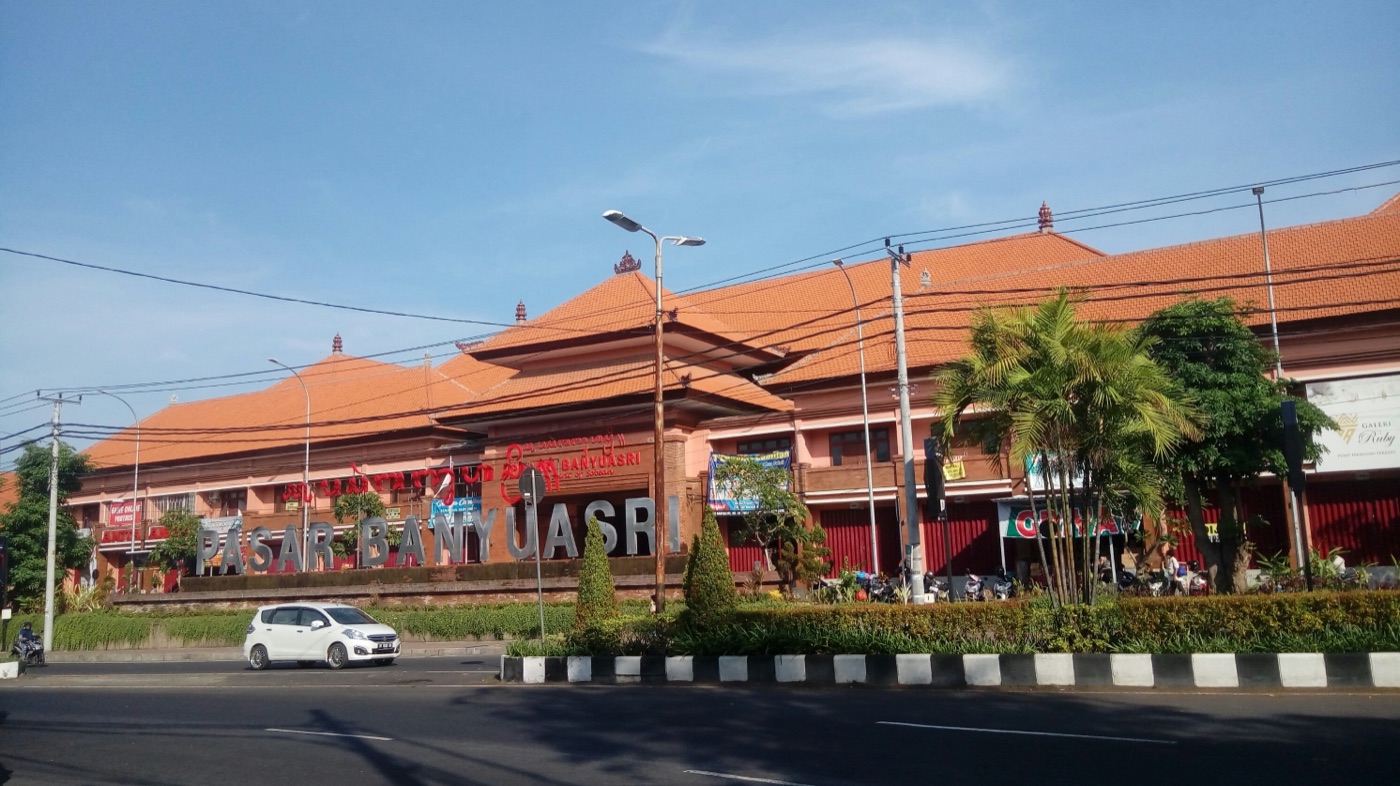 Pasar Banyuasri in Singaraja, where the city does its shopping. Photo: DayakSibiriak / Wikimedia Commons (CC BY-SA 4.0)
The staples are tracked daily. Bank Indonesia's strategic food price information centre, PIHPS, publishes prices for traditional markets, modern shops, wholesalers and producers. You can search it by province and by regency or city, and see what rice, chillies, shallots, eggs, chicken or beef cost in Bali this week.
The markets themselves are covered in Singaraja's old town. For good meals at warung prices on the coast, see the best warungs in north Bali.
Step 3. Decide How You Get Around, and Count the Trips South
People here move by scooter, by car, or with a driver hired by the day.
A scooter is the cheapest. A car of your own, or a driver by the day, costs more and copes better with rain, children and the hills. Private drivers in north Bali explains how drivers are hired and paid.
Fuel prices change from time to time and differ by province. MyPertamina's fuel price page, run by the state oil company, shows the current ones.
Trips south are their own line. The airport is in the far south, and the roads between the coasts cross the mountains by Bedugul or Kintamani, as BRIDA notes. An airport run, hospital visit or shopping trip to the south costs a day, plus a driver or a tank of fuel. Getting to north Bali covers the routes.
Step 4. Add the Visa, and the Tourist Levy While You Are a Visitor
Your visa is a fixed cost, paid per stay or per year. Each category has its own fee, set by regulation and published on the immigration directorate's official pages:
- the visitor visa
- the C1 visit visa, for longer visits
- the E33G remote-worker visa
- the rest of the visa list
If you use an agent, their fee sits on top. The Bali visa guide explains the categories, and the north Bali digital nomad guide covers the remote-worker route.
Visitors also pay Bali's foreign tourist levy. The provincial government's Love Bali FAQ says every international tourist who comes to Bali for tourism pays it. Holders of a stay permit card, KITAS or KITAP, are among those exempt, which matters once you move from visiting to living here.
Step 5. Add Health Cover That Includes Evacuation
Health insurance is a fixed monthly or yearly cost. Insurers price it by your age, the level of cover and whether it includes medical evacuation.
In the north, evacuation cover matters more than usual. Everyday care is local, but the better-equipped hospitals are in the south, a long drive away. Healthcare in north Bali explains where to go for what, and why evacuation cover is the one thing not to skip.
Budget, too, for paying clinics up front and claiming back.
Step 6. For Families, Add School Fees
For families, school fees can be one of the largest lines.
Buleleng has a short list of schools that teach in English, and no international secondary school. After primary, families use the state system, move south or teach at home. Schools in north Bali lists what exists, from each school's own pages, and where to check a school's registration.
Each school sets its own fees, so ask each one for the full list before you compare.
Step 7. Test the Budget With a Trial Month
The figure you can rely on is the one you produce yourself. A trial month gives you that figure in six moves.
-
Take a monthly rental for your first few weeks.
-
Live the way you mean to live. Shop where you would shop, eat where you would eat and drive where you would drive.
-
Write down every payment.
-
At the end of the month, add a twelfth of the yearly costs. Those are the visa, insurance and school fees.
-
Compare the total with what a yearly lease on a house you like would save.
-
Ask everyone for yearly quotes the same way, with the same bedroom count, the same area and the inclusions itemised.
Long-term rentals in north Bali has the checklist of what to ask and what to get in writing. If work is why you are here, the north Bali digital nomad guide covers internet and work.
Where to Check Today's Prices
- Long-term rents and what they include: Palm Living's long-term rentals, with the rent and inclusions house by house
- A first month while you look: Palm Living's villas for rent
- Food staples: Bank Indonesia's PIHPS food prices, by province and city
- Fuel: MyPertamina fuel prices, by province
- Exchange rate: Bank Indonesia
- Visa fees: each category's page on the immigration visa list
- Tourist levy and exemptions: Love Bali
- School fees: each school's own site, linked from schools in north Bali
FAQ
How much does it cost to live in north Bali?
It depends mostly on your house, your lease and what the rent includes. Food, transport, visa, insurance and, for families, schools come after. Rents on the Lovina coast are quoted by the month or by the year, in rupiah, euros or US dollars, with inclusions that vary house by house. The honest answer is the one a trial month produces, and the sources at the end of this page carry today's figures.
Is north Bali cheaper than south Bali?
It is less developed. Buleleng's research agency says Bali's tourism infrastructure is concentrated in the south, incomes in the north are lower and modern tourism facilities are limited. Whether your own budget comes out lower depends on how you live. Compare the same house type and inclusions on listings from both coasts, and count the cost of trips south for what the north lacks.
Is it cheaper to rent monthly or yearly in north Bali?
Yearly. On Palm Living's long-term listings, villas quoted both ways work out cheaper per month on a yearly lease.
What is usually not included in the rent?
Electricity, on most of Palm Living's long-term listings, though a few houses include it. Staff, water and internet vary: some houses include all three, some none. Get the inclusions in writing.
Do residents pay the Bali tourist levy?
The provincial government's Love Bali FAQ says holders of a KITAS or KITAP stay permit card are exempt, and other international visitors pay it. Check the official FAQ for the current list of exemptions.
Where can I check current food and fuel prices?
Bank Indonesia's PIHPS tracks staple food prices by province and city, and MyPertamina lists fuel prices by province.
Sources
- Palm Living, long-term rentals (the villas it offers for long-term rent around Lovina) and villas for rent, read September 2026 (in English)
- Palm Living's own listings on Northbound, long-term rentals (rents quoted per month or per year in rupiah, euros or US dollars, monthly and yearly rates side by side, inclusions house by house, electricity excluded on most), refreshed daily, read September 2026
- Badan Riset dan Inovasi Daerah (BRIDA), Buleleng Regency, Dampak ketimpangan pembangunan Bali Utara dan Selatan (development concentrated in the south, tourism infrastructure, lower incomes in the north, road access over Bedugul or Kintamani, limited modern tourism facilities in Buleleng), posted 19 February 2026, read September 2026 (in Indonesian)
- Bank Indonesia, Pusat Informasi Harga Pangan Strategis Nasional (PIHPS) (daily food prices by market type, province and city) and foreign exchange rates, read September 2026 (in Indonesian and English)
- MyPertamina, fuel price information (fuel prices by province), read September 2026 (in Indonesian)
- Directorate General of Immigration, visitor visa, C1 visit visa, E33G remote-worker visa and the list of Indonesian visas (each category's fee published on its own page), read September 2026 (in English and Indonesian)
- Bali Provincial Government, Love Bali FAQ (who pays the foreign tourist levy, KITAS and KITAP exemption), read September 2026 (in English)
- Arian Zwegers, Lovina, preparing cookies, Wikimedia Commons (CC BY 2.0), photograph
Next: long-term rentals in north Bali, moving to north Bali, and the north Bali digital nomad guide.