On this page
- In Brief
- Healthcare in North Bali at a Glance
- Everyday Care Is Close, Serious Care Is a Drive South
- In an Emergency: Four Steps
- Four Singaraja Hospitals and What Each Offers
- Around Lovina: the Puskesmas and the Apotek
- When to Head South: RSUP Prof. Ngoerah in Denpasar
- Staying Longer: Set Up Your Care Before You Need It
- Practical Notes
- FAQ
- Sources
In Brief
For most care in north Bali, the answer is a Singaraja hospital, a short drive east of Lovina. Singaraja is the main medical centre of the north. Its public hospital, RSUD Kabupaten Buleleng, runs an emergency and trauma service, intensive care and a stroke unit, with 22 outpatient clinics.
Private hospitals in the city include RSU Parama Sidhi, BaliMéd Buleleng and RSU Kertha Usada. They have emergency care or a full range of specialists. Two of them appear on the UK government's list of medical facilities with English-speaking staff.
Around Lovina, the government's community health centre sits on the main road at Tukadmungga, and pharmacies (apotek) handle small things.
For an ambulance, the UK government's advice is to call 118. Carry travel insurance that covers medical evacuation. The UK government warns that serious treatment may not be available in remote areas, and that evacuation can cost tens of thousands of pounds.
Healthcare in North Bali at a Glance
- Public hospital: RSUD Kabupaten Buleleng, Jalan Ngurah Rai, Singaraja
- Private hospitals: among them RSU Parama Sidhi, BaliMéd Buleleng and RSU Kertha Usada, all in Singaraja
- Public clinic near Lovina: Puskesmas Buleleng 2, Tukadmungga, on the main coast road
- Pharmacies: apotek in Lovina, Singaraja and the larger villages
- Ambulance: 118, and police 110 (UK government list of Indonesian emergency numbers)
- Referral hospital for Bali: RSUP Prof. Ngoerah, Denpasar
- Non-negotiable: travel insurance that covers local treatment and medical evacuation
Everyday Care Is Close, Serious Care Is a Drive South
North Bali is rural and quiet, and its healthcare reflects that, with one qualification. Singaraja, the old capital, has a full public hospital and several private ones within a short drive of Lovina.
Everyday problems are well within reach of a clinic or pharmacy:
- a stomach upset
- an ear infection
- a fever
- a scooter graze
For serious or specialist care, the island's referral hospital and the largest private hospitals are in the south around Denpasar. That is a long drive over the mountains, and getting to north Bali has the routes.
The UK government's health advice for Indonesia is blunt. The standard of local care can be poor, and some tests cannot be done reliably. In remote areas you may not be able to get treatment for serious injuries or illness.
That is a reason to be prepared, and the preparation is the right insurance.
In an Emergency: Four Steps
-
Call for an ambulance. The UK government lists 118 for an ambulance and 110 for the police. Ask your villa or a neighbour to make the call if you can. Addresses here are imprecise, so a landmark or a map pin helps.
-
Go to the nearest hospital emergency department. From Lovina that means Singaraja: RSUD Buleleng's emergency and trauma centre, or the emergency units at Parama Sidhi or BaliMéd.
-
Call your insurer's assistance line early. The UK government advises contacting your insurer quickly if you are referred to a medical facility. The insurer arranges and approves evacuation.
-
Keep documents to hand. Passport, insurance details, and a note of allergies and medicines speed everything up.
Bites and scratches. Rabies is present in Bali, in street dogs and in the monkeys around temples. The UK government's advice is to get medical help at once after any bite or scratch. More in dangerous animals in Bali.
Four Singaraja Hospitals and What Each Offers
RSUD Kabupaten Buleleng (public)
This is the regency's own hospital, founded in 1955. It has stood on Jalan Ngurah Rai in Singaraja since 1959, when it became a class C hospital of the health ministry. It was designated a type B hospital in 1997.
Its published list of services runs to 22 outpatient clinics, among them:
- internal medicine, lungs and cardiology
- ear nose and throat, eyes and skin
- neurology, obstetrics and paediatrics
- general, digestive, urological and cancer surgery
- orthopaedics, geriatrics, dentistry and psychology
Behind the clinics sit:
- an emergency and trauma centre
- central operating theatres
- intensive care (ICU), cardiac intensive care (ICCU) and neonatal intensive care (NICU)
- a stroke unit
- haemodialysis and endoscopy
- radiology and laboratories
- physiotherapy and a pharmacy
The hospital works within the national referral network. Its own news pages describe visits from the team at RSUP Prof. Ngoerah in Denpasar, which mentors it in cancer care and in respiratory and tuberculosis services.
Outpatient clinic visits are registered online through the link on its website.
Address: Jl. Ngurah Rai No. 30, Singaraja · Map
RSU Parama Sidhi (private)
A private general hospital on Jalan Ahmad Yani in Baktiseraga, on the Lovina side of Singaraja. Its website lists:
- a 24-hour emergency unit
- a 24-hour laboratory
- digital radiology
- ICU and NICU
- operating theatres
- 14 specialist outpatient clinics, with urology as its flagship service
The UK government's list of medical facilities records English-speaking staff here. It names specialists in:
- anaesthesia, internal medicine and surgery
- obstetrics and gynaecology, and paediatrics
- ophthalmology, and ear nose and throat
- radiology, neurology and orthopaedics
- urology, cardiology and pulmonology
- dentistry
Address: Jl. Ahmad Yani No. 171A, Baktiseraga · Map
BaliMéd Buleleng (private)
A type C private hospital run by PT Dharma Medika Buleleng, open since March 2019. It is accredited at plenary (paripurna) level by KARS, Indonesia's hospital accreditation commission, according to the regency's tourism office listing.
Its website lists an emergency department, surgical services and specialist clinics that can be booked online.
Address: Jl. Gunung Lempuyang No. 9X, Banjar Tegal, Singaraja · Map
RSU Kertha Usada
A general hospital in Singaraja. Its own website did not load when we checked, so we describe it only from the UK government's list of medical facilities. The list records English-speaking staff, all specialisations and accreditation by KARS.
Address: Jl. Cendrawasih No. 5-7, Singaraja · Map
Around Lovina: the Puskesmas and the Apotek
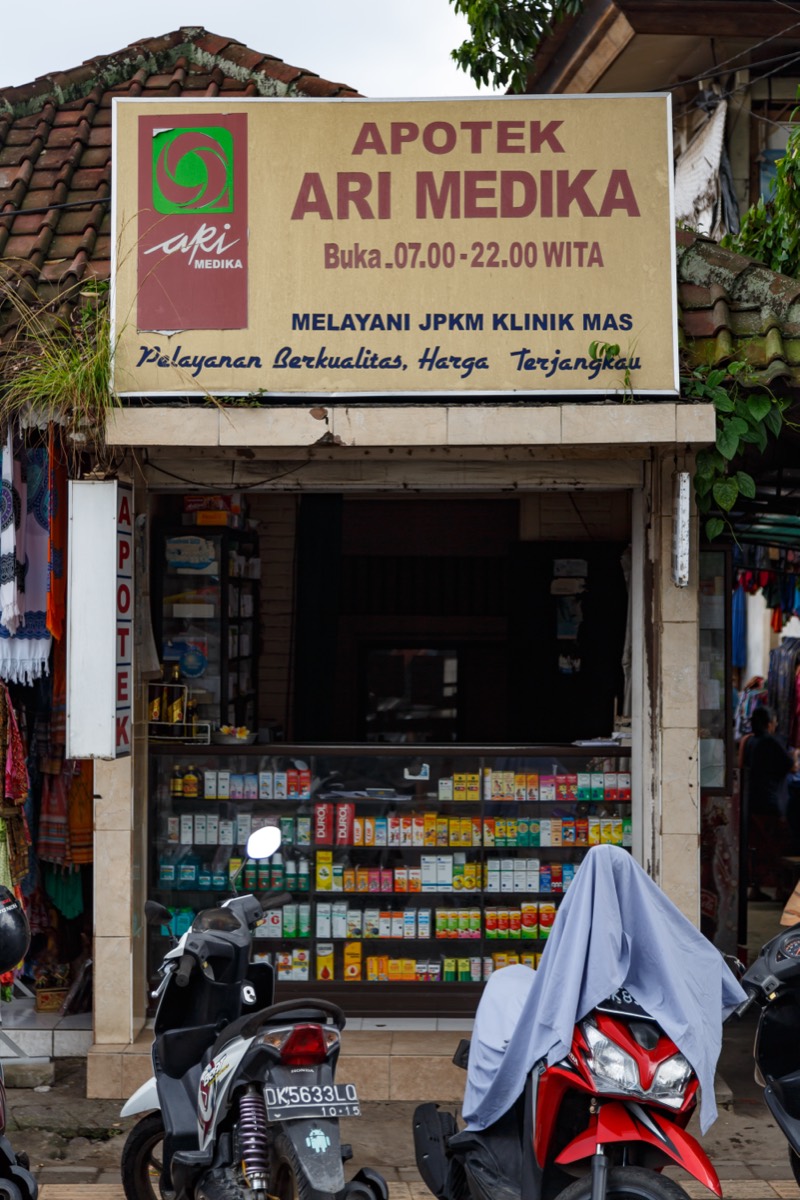
Puskesmas Buleleng 2. Indonesia's sub-districts are served by a puskesmas, a government community health centre overseen by the health ministry. It offers general outpatient care, maternal and child health and immunisation.
The closest to central Lovina is Puskesmas Buleleng 2. The regency lists it on the Singaraja to Gilimanuk road at Tukadmungga, next to Anturan. Map
A puskesmas without beds works mainly as an outpatient clinic and is rarely open after midday. For anything urgent, go to a hospital.
Apotek. A pharmacy, and the first stop for small things. The rules on some medicines in Indonesia differ from those at home, the UK government notes. Bring enough of any medicine you depend on, in its original packaging.
When to Head South: RSUP Prof. Ngoerah in Denpasar
For anything the Singaraja hospitals refer on, the reference is RSUP Prof. Ngoerah in Denpasar, known until 2022 as Sanglah hospital.
It is a Class A teaching hospital run with the medical faculty of Udayana University. It has been the referral teaching hospital for Bali and the neighbouring provinces since 1978.
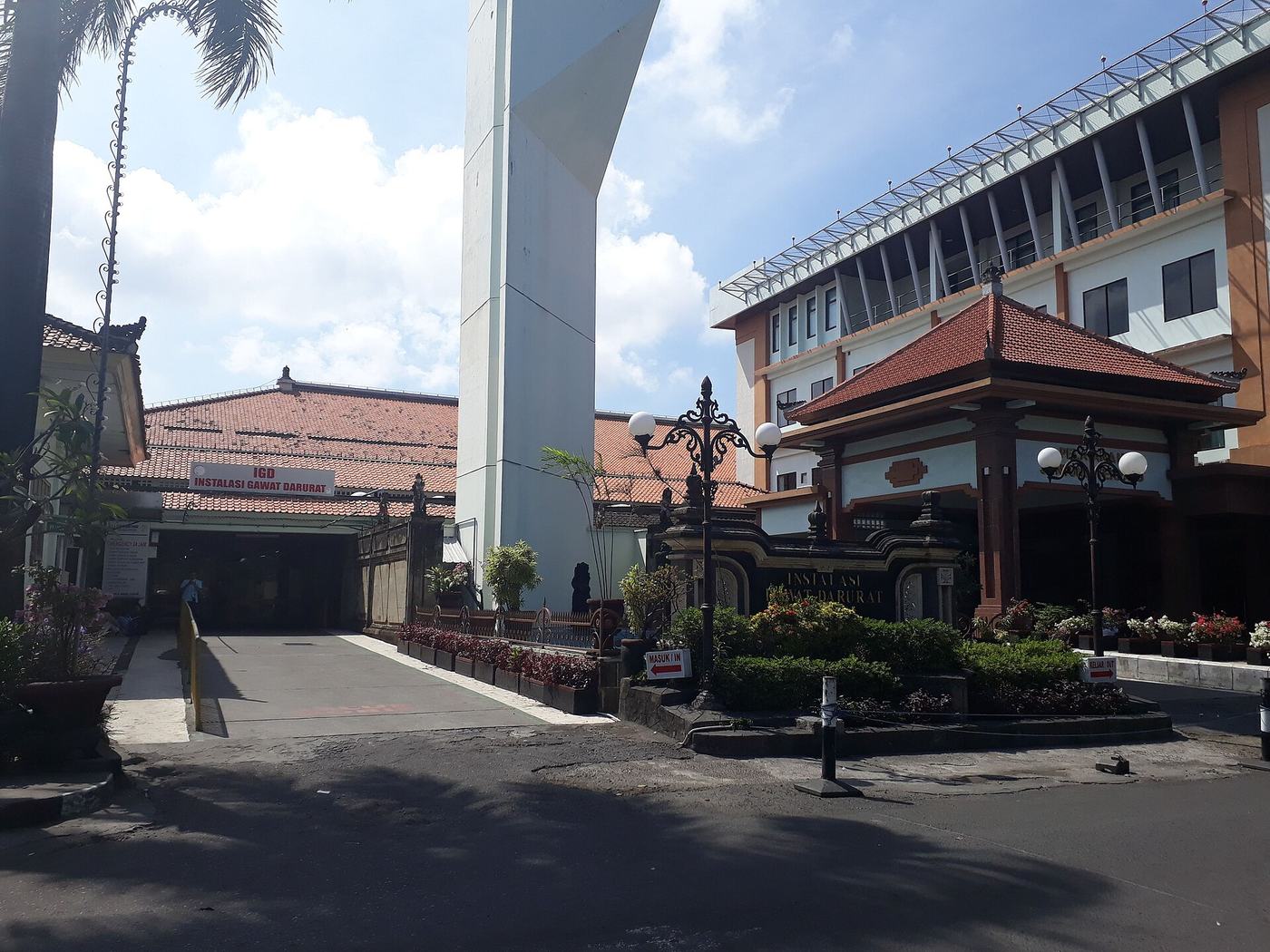 The emergency entrance at Sanglah, now RSUP Prof. Ngoerah, Bali's referral hospital in Denpasar. Photo: Davidelit / Wikimedia Commons (CC BY-SA 4.0)
The UK government's list also names private hospitals in the south with English-speaking staff, among them:
- Bali International Hospital in Sanur
- BIMC in Kuta and Nusa Dua
- Siloam
- the Kasih Ibu group
Your insurer's assistance line will help decide where you go.
Staying Longer: Set Up Your Care Before You Need It
For long stays, the practical pattern is to handle everyday care in Singaraja. Plan anything major with your insurer, in Denpasar or at home. Four things to consider:
- Health insurance with full evacuation cover as a baseline. The UK government notes that evacuation can cost tens of thousands of pounds.
- If you work in Indonesia, the state scheme may apply to you too. BPJS for foreigners explains who must join and what it covers.
- Registering with one hospital's outpatient clinic before you need it. RSUD Buleleng takes online registration for its clinics.
- Knowing your route to Singaraja at night, which feeds into where you base yourself. See moving to north Bali and long-term rentals in north Bali.
For anyone with a serious ongoing condition, weigh the distance to the south's hospitals honestly when choosing where to stay.
Practical Notes
Facilities and services change. Confirm current details with the hospital before you rely on them.
- Everyday care: apotek and the puskesmas near Lovina, and the Singaraja hospitals for a doctor or specialist
- Emergency: 118 for an ambulance. The nearest emergency departments are in Singaraja
- Insurance: must cover local treatment and medical evacuation
- Water: the UK government advises that tap water in Indonesia is not safe to drink. See Bali belly for the illness many visitors meet
- Medicines: bring enough of your own, in original packaging
- Payment: keep every receipt for your insurance claim
FAQ
Is there a hospital in Lovina? Not in Lovina itself. The hospitals are in Singaraja, a short drive east: the public RSUD Kabupaten Buleleng and private hospitals including RSU Parama Sidhi, BaliMéd Buleleng and RSU Kertha Usada. The nearest government community health centre, Puskesmas Buleleng 2, is on the main road at Tukadmungga, next to Anturan.
Which Singaraja hospital has English-speaking staff? The UK government's list of medical facilities in Indonesia records English-speaking staff at RSU Parama Sidhi and RSU Kertha Usada in Singaraja.
Where is the nearest emergency department to Lovina? In Singaraja. RSUD Kabupaten Buleleng runs an emergency and trauma centre, RSU Parama Sidhi lists a 24-hour emergency unit, and BaliMéd Buleleng lists an emergency department.
What is the emergency number in Bali? The UK government lists 118 for an ambulance, 110 for the police and 112 for the fire service in Indonesia. Have your accommodation or a local help with the call and directions.
Do I need travel insurance for north Bali? Yes, and one that covers medical evacuation. The UK government warns that serious treatment may not be available in remote areas and that evacuation can cost tens of thousands of pounds.
Where do serious cases go? To RSUP Prof. Ngoerah in Denpasar, formerly Sanglah hospital, Bali's referral teaching hospital, or to one of the private hospitals in the south, usually as your insurer arranges.
Sources
- RSUD Kabupaten Buleleng, official website, services, history and news of the Prof. Ngoerah mentoring visit, read September 2026 (in Indonesian)
- RSU Parama Sidhi, official website, read September 2026 (in Indonesian)
- BaliMéd Buleleng, official website, and its listing with the Buleleng tourism office, read September 2026 (in Indonesian and English)
- Visit North Bali (Buleleng Tourism Office), Puskesmas Buleleng 2, read September 2026 (in English)
- UK Foreign, Commonwealth & Development Office, Indonesia: medical facilities, for the Singaraja and Denpasar hospitals with English-speaking staff, read September 2026 (in English)
- UK Foreign, Commonwealth & Development Office, Indonesia travel advice: health and getting help, for emergency numbers, insurance, rabies, tap water and medicines, read September 2026 (in English)
- Wikipedia, Prof. Ngoerah Hospital, for its history and referral role, and Puskesmas, for what a community health centre does, read September 2026 (in English)
Related reading: dangerous animals in Bali for bites and stings, Bali belly for the most common illness, and the north Bali travel guide for the rest of the planning. For a base near Singaraja's hospitals, Palm Living's villas for rent are around Lovina.