On this page
- In Brief
- Lovina Dolphins at a Glance
- A Dawn Trip on a Fishing Boat, Out to Wild Dolphins
- Go Before First Light, Ideally in the Dry Season
- What You See: Spinners, Sometimes Bottlenose, and the Sunrise
- Book the Afternoon Before, Through Your Stay or on the Beach
- Choose a Captain Who Cuts the Engine and Lets the Pod Go
- Lovina's Beach Captains Book in Person, Without a Website
- If Dawn Is Too Early: Snorkel, Watch from the Beach or Go West
- Who It Suits: Early Risers Who Choose Their Captain with Care
- How to Fit It In: Dolphins at Dawn, Then the Rest of the Day
- Practical Notes
- FAQ
- Sources
In Brief
The Lovina dolphins are wild spinner and bottlenose dolphins, watched from jukung outriggers that leave the black-sand beach before first light. A trip lasts about two hours and is over by mid-morning. Nothing is guaranteed, since these are wild animals and some mornings the sea is quiet.
Book the afternoon before, through your accommodation or face to face with a captain on the beach. Choose a captain who cuts the engine near the pod instead of chasing it. Buleleng's draft procedures for the boats point the same way: engines off within 25 metres of the dolphins, and no interrupting a pod's path.
The early finish pairs well with the Banjar hot springs or an early run to Sekumpul.
Lovina Dolphins at a Glance
- What it is: a sunrise boat trip to watch wild spinner and bottlenose dolphins off Lovina
- The boats: traditional jukung outriggers, launched from the beach, a small party per boat
- When: before first light, all year. April to October is calmer, and June to September is the peak
- How long: about two hours, back by mid-morning
- Booking: the afternoon before, through your accommodation or a captain on the beach
- Cost: agreed in cash with the captain. A shared boat costs least, a whole boat more
- The rules: engines off within 25 metres, and no interrupting a pod's movement
- Sightings: likely, never guaranteed
A Dawn Trip on a Fishing Boat, Out to Wild Dolphins
The jukung gather at the shore before dawn, while the fishing boats are still coming in.
The trip is Lovina's signature morning, a chance to see wild dolphins in their own waters as the sun rises over the Bali Sea. The dolphins have been here for generations, and so have the boat captains who know their patterns. Visitors are let into a relationship between the local community and the sea.
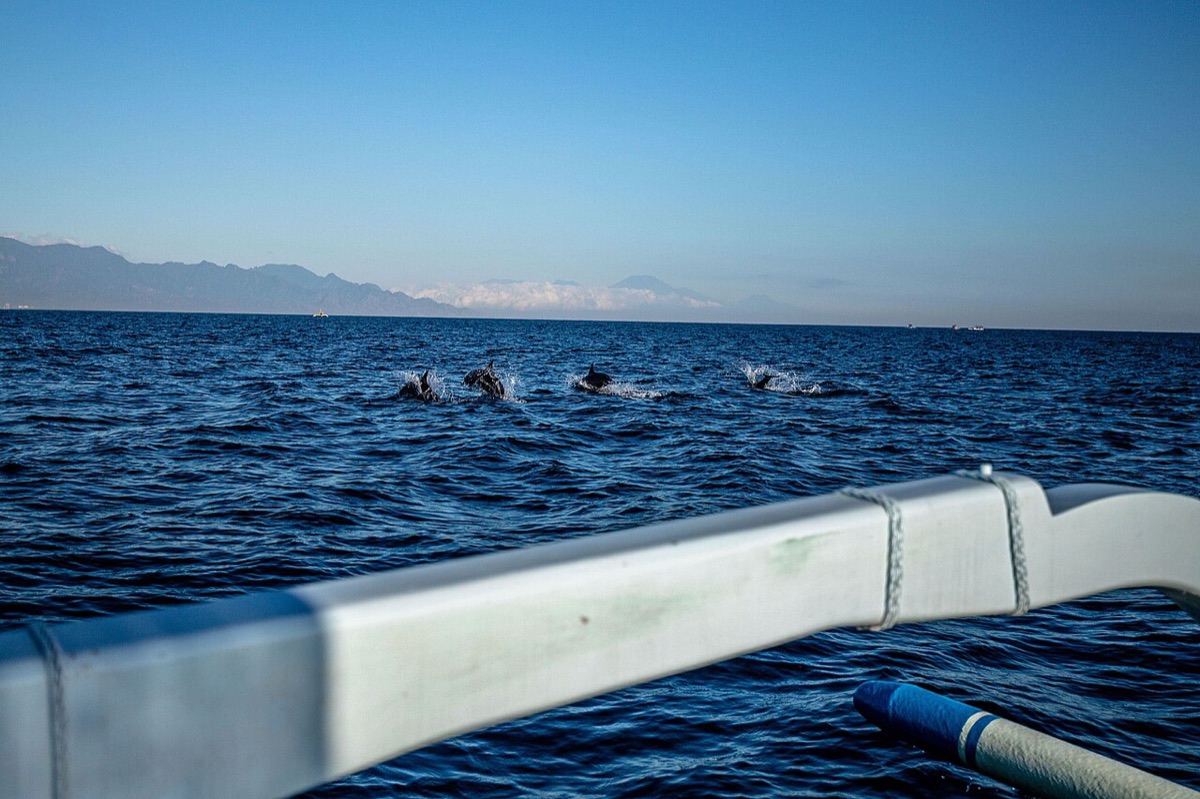
Some mornings, pods of fifty or more spinners leap and twist around the boats. On others, the sea is quieter, with only a few distant fins breaking the surface. That uncertainty is part of watching wildlife.
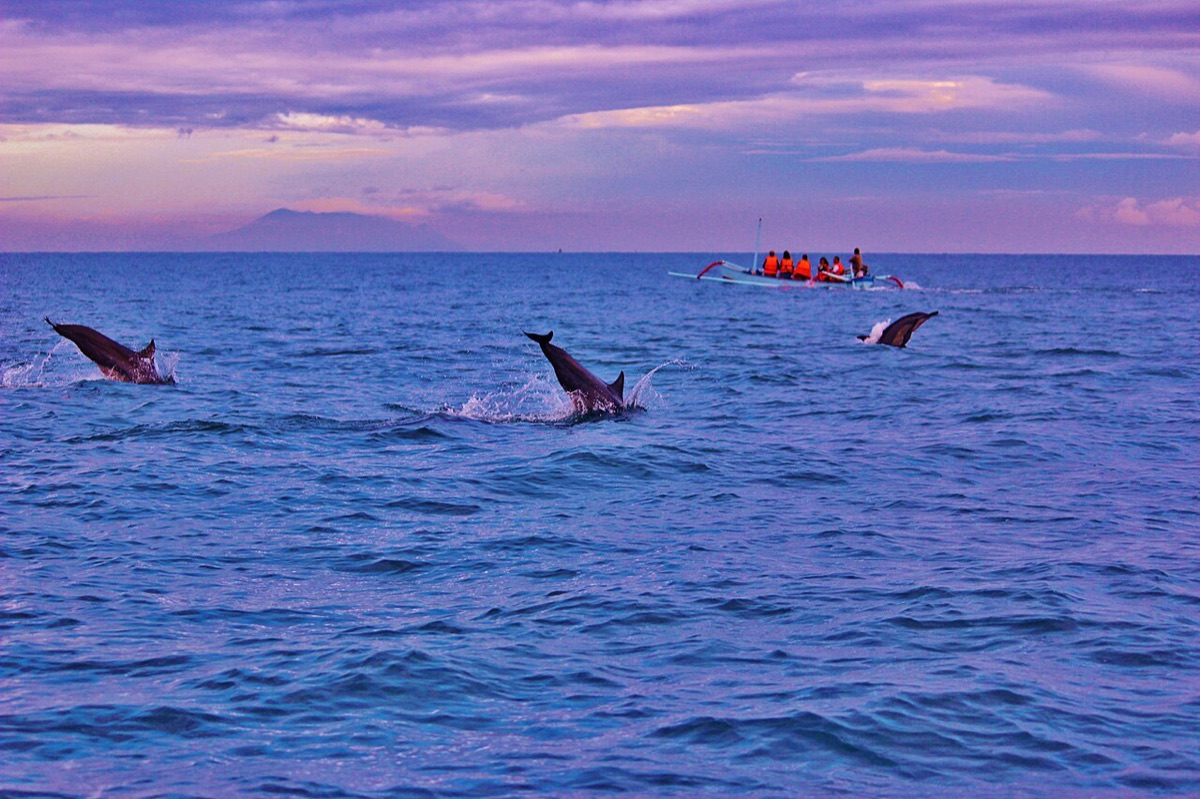 Dolphins at sunrise off Lovina. Photo: Michelle Maria / Wikimedia Commons (CC BY 3.0)
Video: the Palm Living team out with the boats at Lovina. Palm Living, on YouTube.
Go Before First Light, Ideally in the Dry Season
Boats gather on the sand in the dark and launch so you are out in the bay as the sky goes grey.
The early hour is fixed. Dolphins are most active at dawn. The boats need to be back by mid-morning, before the sea gets choppy and the heat sets in. Your captain gives you the time to be on the beach when you book, so take it from them.
Season: trips run all year. The dry season, April to October, brings calmer seas and higher sighting rates, and June to September is the peak. In the rainy season, November to March, trips occasionally cancel in rough conditions.
Moon phases: some captains swear by the days around the new moon, when the water is darker and the dolphins surface more often. It is worth weighing if your dates are flexible.
What You See: Spinners, Sometimes Bottlenose, and the Sunrise
Spinner and Bottlenose Dolphins
Spinner dolphins (Stenella longirostris) are the stars. They are smaller and more acrobatic, known for their aerial spins, and they travel in larger pods. The Lovina boats are built around them.
Bottlenose dolphins (Tursiops truncatus) appear less often. They are larger, equally impressive, and tend to travel in smaller groups.
On a good morning you might see both species, plus flying fish and the occasional sea turtle. The sunrise itself is there every time, and it is worth the early alarm on its own.
The Boats Are Jukung Outriggers
A jukung is a traditional Balinese outrigger: a narrow wooden hull with bamboo floats on either side for stability. It is the same boat the same families fish from, with simple benches and a small party per boat. You are on a working fishing boat that happens to be taking you to the dolphins.
About Two Hours, Door to Door
The boats motor out for a while and spend the bulk of the trip with the dolphins or looking for them. They turn back as the sun climbs.
Sighting Rates Are Good, and Never Guaranteed
There is no verified figure for how often the boats find dolphins, and anyone quoting one at you does not have one either.
Spinner dolphins are found predictably a few kilometres off this shore, and the dry season is calmer and easier. No captain can guarantee a sighting, and anyone who does is selling you something. The odds are good, and a morning without dolphins still gives you the sunrise from the water.
Book the Afternoon Before, Through Your Stay or on the Beach
You have two ways to book, and both work the day before.
Option 1: Through Where You Are Staying (Easiest)
Many Lovina accommodations can arrange a trip the night before. They have their preferred captains and handle the pre-dawn logistics, including waking you. Some boats pair the dolphins with a snorkel stop afterwards, so ask if you want both.
It usually costs a little more than arranging it yourself on the sand. It is worth it if you would rather not negotiate in the dark.
Option 2: Direct with a Boat Captain on the Beach
Walk down to the beach the afternoon before, around Kalibukbuk or the main Lovina strip, and arrange it with a captain face to face.
A place on a shared boat is the cheap option. Taking the whole boat costs more and gets you a captain who is listening only to you. Rates are set between you and the captain, in cash, and change with the season. Ask two or three captains and agree the figure before the morning.
Local tip: look for the older captains who have been doing this for decades. They know the patterns well, give the dolphins room, and do not chase.
Choose a Captain Who Cuts the Engine and Lets the Pod Go
The dolphin trips have drawn criticism for aggressive boat behaviour: several boats chasing a pod, engines revving, dolphins harried instead of watched.
Researchers who have studied this bay found most boats getting far closer than international guidelines allow. Good captains know that patient, respectful watching gives a better morning anyway.
Buleleng's tourism office has drafted standard procedures for the boats with partners:
- the provincial coastal and marine agency (BPSPL)
- the search and rescue post
- the Balawista lifeguards
- the hotel association (PHRI)
Where the dolphins are concerned, the rules are simple. A boat turns its engine off within 25 metres of the animals, and no boat may interrupt a pod's movement. Not every boat follows them, so the captain you choose decides how your morning goes.
What to look for in a good captain:
- approaches at an angle, not head-on
- cuts the engine when dolphins are close, as the rules require
- does not chase if the dolphins move away
- keeps well clear when calves are in the pod
- limits time with any single pod, then moves on
What you can do:
- choose a captain who shows patience, and ask where you are staying for recommendations
- do not pressure your captain to get closer or follow longer
- accept that on some mornings the dolphins are not interested
- go on a weekday, when fewer boats are out
The dolphin trips support dozens of Lovina families. Done respectfully, they help the community with little pressure on the dolphins, and done badly, they become harassment.
Lovina's Beach Captains Book in Person, Without a Website
Many Lovina dolphin boats are run by individual beach captains with no website and no listing anywhere. That is no warning sign.
Some of the best captains, the older ones who approach slowly and cut the engine, work only through the beach queue and the hotels. You book them in person the afternoon before, and your hotel usually knows which ones observe and which chase.
A handful of organised operators also run trips with online booking, which helps if you want the logistics settled before you arrive. None are named here, because Northbound has not been out with them and cannot vouch for how their captains behave around a pod. Ask where you are staying instead, since they watch these boats every morning.
Whoever you book, hold them to the good-captain list above. Say clearly at booking that you want a captain who does not chase. The good ones take it as a compliment, and the trips only improve if visitors keep asking.
If Dawn Is Too Early: Snorkel, Watch from the Beach or Go West
An alarm set in the small hours is not for everyone, and the coast has gentler options.
Snorkelling: the Lovina reef has decent coral and fish, best visited mid-morning. It is the same boats and the same captains, with more sleep.
Sunrise on land: watch from the black-sand beach instead. It is less dramatic than the dolphins, and peaceful in its own right.
Go west: if marine life matters more than dolphins, Pemuteran along the coast has better diving and snorkelling, and the Biorock reef restoration project.
Who It Suits: Early Risers Who Choose Their Captain with Care
The Lovina dolphin trip asks for an early alarm and a tolerance for uncertainty. It walks a line between sustainable tourism and harassment, and your captain decides which side you are on.
When it works, with calm seas, a respectful boat and a pod of spinners leaping at dawn, it is a real wildlife encounter, and special for it. Go with reasonable expectations, and if the dolphins do not show, the sunrise over the Bali Sea is its own reward.
- Best for: early risers, wildlife lovers, families with older children, and anyone who would rather ride a fishing boat with a local captain than a polished tour
- Skip if: you need a guaranteed sighting, dislike early mornings, or prefer a more controlled wildlife encounter
- Book: through your hotel or villa, or directly with a beach captain the day before
How to Fit It In: Dolphins at Dawn, Then the Rest of the Day
The early finish leaves a full day ahead.
- Hot springs: the Banjar hot springs open in the morning, which lines up neatly with a dawn boat, and they are a short drive west of Lovina.
- Waterfalls: head to Sekumpul or Gitgit afterwards, ahead of the crowds.
- Temples: Brahma Vihara Arama, the Buddhist monastery, is nearby and quiet in the morning.
- Snorkelling: go back out after breakfast to snorkel the reef, on the same boats. For a serious underwater day, Pemuteran and Menjangan are about an hour and a half west.
A full day: dolphins at dawn and breakfast where you are staying. Then the Banjar hot springs mid-morning, Sekumpul in the early afternoon, and the sunset from Lovina beach.
Practical Notes
- Bring: a warm layer, since mornings on the water are cool, plus sunscreen for the way back, a waterproof bag for your phone or camera, and cash for payment and tips.
- Also useful: binoculars for distant pods, a motion-sickness remedy if you are sensitive, and a hat and sunglasses for the return trip.
- Leave behind: heavy camera gear (the boats rock), hopes of perfect close-ups, and impatience.
- Included: the boat and captain, basic safety equipment, and usually a bottle of water.
- Not included: breakfast, transport to the beach, and tips (appreciated, not required).
FAQ
How much does a Lovina dolphin tour cost? It is one of the cheaper things you can do in Bali, and the rate is agreed in cash between you and the captain instead of published anywhere. A place on a shared boat costs least, and taking the whole boat costs more. Arranging it through your accommodation costs a little more than arranging it yourself on the sand. Ask two or three captains the afternoon before and agree the figure then. The rate is per trip, not per hour, and the outing runs about two hours.
Are the Lovina dolphins wild? Yes. Spinner dolphins are found predictably a few kilometres off this shore, and bottlenose dolphins are seen too. Nothing is staged and nothing is guaranteed. Be wary of any operator quoting you a sighting percentage, since nobody publishes a verified one.
Is dolphin watching in Lovina ethical? It depends on the boat. The problem behaviour is chasing: several boats crowding a pod with engines running. Researchers working in this bay have documented boats approaching far closer than the guidelines allow, and dolphins showing signs of distress and avoidance. Buleleng's draft procedures answer it directly: engines off within 25 metres, and no interrupting a pod's movement. Choose a captain who works that way, say so when you book, and do not push them to get closer. Done properly, the trips support a lot of Lovina families with little pressure on the dolphins.
What time do the dolphin boats leave? Before first light. The exact time depends on the season and your captain, who will tell you when you book. Dolphins are most active at dawn, and trips are finished by mid-morning.
Do you need to book in advance? The afternoon before is enough. Walk the beach at Kalibukbuk and arrange it with a captain, or ask where you are staying when you check in. Only in the peak weeks of the northern summer is it worth booking a day or two ahead.
What are the rules the boats are supposed to follow? Buleleng's tourism office and the provincial coastal and marine agency have drafted standard procedures for dolphin-watching boats: turn the engine off within 25 metres of the dolphins, and do not interrupt the pod's movement. Every boat is also meant to carry life jackets, first aid, emergency lights and a whistle. The rules are not followed by every boat, which is why your choice of captain matters.
Which dolphins will I see at Lovina? Spinner dolphins (Stenella longirostris) most of the time, the small acrobatic ones the boats are built around, and bottlenose dolphins (Tursiops truncatus) less often.
Sources
- The Bali Sun, New regulations drafted to improve Bali's famous dolphin-watching tours, on the Buleleng tourism office's draft procedures for the boats, read September 2026 (in English)
- Journal of Humanities and Applied Social Sciences (Rodney Westerlaken), Fostering sustainable dolphin-watching tourism in Lovina, Bali: developing destination practices to influence boatmen and tourists, on boat behaviour and the dolphins' response, read September 2026 (in English)
- Australia Awards in Indonesia, Towards Sustainable Dolphin Watching Tourism in Lovina, Bali, Indonesia, the abstract of Putu Liza Kusuma Mustika's James Cook University thesis, on the spinner dolphins and the boats, read September 2026 (in English)
- Indonesia Ministry of Tourism, Lovina Beach: Bali's Dolphin Playground in the North, read September 2026 (in English)
- Palm Living, Dolphin watching at Lovina Beach with the Palm Living team, on YouTube, watched September 2026
Where to base yourself for a dolphin morning: Lovina beach, the best villas in Lovina, and the complete Lovina guide.