On this page
- In Brief
- Rhythm Festival at a Glance
- A Young Folk Festival, Run by IOV and a Singaraja Arts Foundation
- The Week Runs From the Opening to a Parade, Stage Nights and Workshops
- Buleleng Hosts It Because Gong Kebyar Was Born Here
- Check the Week Before You Book, and Plan Around Nyepi
- Practical Notes
- How to Fit It In
- FAQ
- Sources
In Brief
The Buleleng International Rhythm Festival (BIRF) is an annual international folk-arts festival, held for about a week each March. It takes place in Singaraja, the capital of Buleleng regency in north Bali, the regency where Gong Kebyar was born.
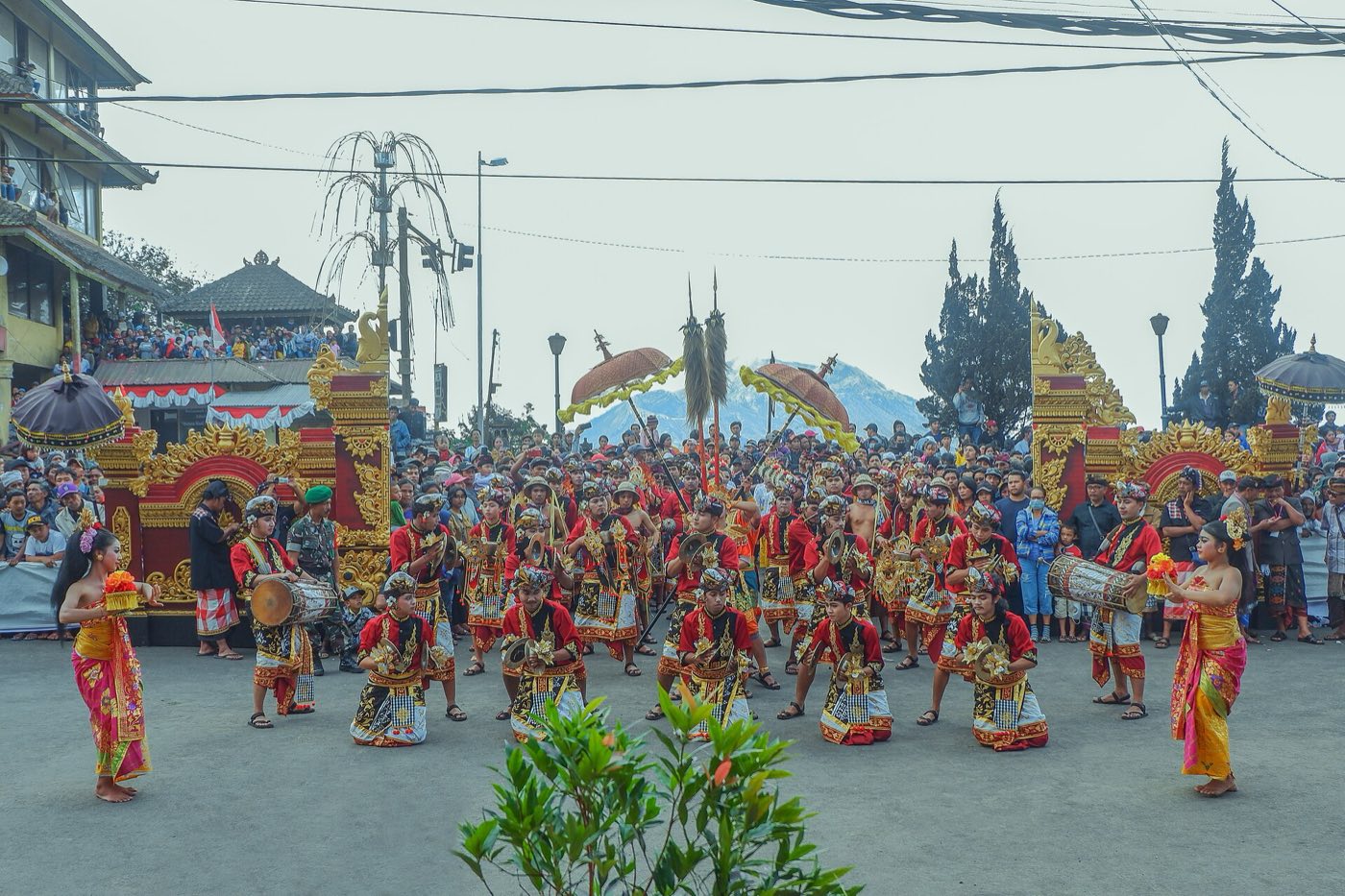
Visiting folk-dance, traditional-music and cultural ensembles from abroad take part in a street parade through the city. They also give evening stage performances alongside Buleleng's own artists, and hold workshops with local schools and the university.
It is organised with the International Organization of Folk Art (IOV) and a Singaraja arts foundation, with the backing of the Buleleng regency. Dates are announced ahead of each edition, and the north Bali events calendar tracks them.
Rhythm Festival at a Glance
- What it is: An international folk music and dance festival: parade, stage performances, workshops and cultural exchange
- Where: Singaraja, the regency capital, with the visiting groups based on the Lovina coast
- When: Annually in March, across about a week
- Who runs it: IOV Indonesia and Singaraja's Sanggar Seni Santi Budaya, supported by the Buleleng regency, Puri Kanginan and Ganesha University of Education (Undiksha)
- Who performs: Folk-dance, traditional-music and cultural groups from abroad, alongside Buleleng's own artists
- Check before booking: the regency's announcement for the current year's dates and programme
- Why here: Buleleng is the birthplace of Gong Kebyar, Bali's fast, blazing gamelan style
A Young Folk Festival, Run by IOV and a Singaraja Arts Foundation
The Rhythm Festival is Buleleng's newest international stage. The regency has hosted it for only a few editions.
The regency's own report credits the collaboration to IOV, the International Organization of Folk Art. IOV works with IOV Indonesia and with Sanggar Seni Santi Budaya, a Singaraja arts foundation that is the festival's main driver.
The Buleleng government and Puri Kanginan, the royal house of Singaraja, back it. Undiksha, the university in Singaraja, runs the programme of activities.
It is a folk festival rather than a percussion contest. The festival's international participation listing is published by the World Festival Association (see Sources). It invites folk-dance groups, traditional-music groups and cultural performance ensembles. Each takes part in an outdoor parade, a stage performance and a workshop or cultural-sharing session.
The delegations at the most recent edition were named by the regency's culture and tourism office. They came from:
- South Korea
- Thailand
- Bulgaria, with a folk group
- the Philippines, with a bamboo band
- Taiwan
The Week Runs From the Opening to a Parade, Stage Nights and Workshops
The opening. The festival opens at the Gedung Kesenian Gde Manik, Singaraja's arts building. The Buleleng district office reported this for the most recent edition.
The parade. The cultural parade is the most public part of the week. The regency's environment office, which prepares the venues, lists the route. It runs from Pura Desa Buleleng to Taman Bung Karno, the city park in Singaraja, with the delegations in traditional costume.
Stage nights. Performances are held at Taman Bung Karno and the Gedung Kesenian. This is where you see the visiting groups at full length, alongside Buleleng's own artists.
Workshops and exchange. The delegations run workshops in schools and on campus in Singaraja, trading their own traditions for the students'. The regency's report also describes visits to the tourism villages of Panji and Kalibukbuk, including the Lovina dolphins.
Not to be confused with the competition. A separate event, the Buleleng Bali International Rhythm Competition, is a juried contest for international dance and rhythm groups. It is based in Lovina and held later in the year. The March festival is the showcase.
Buleleng Hosts It Because Gong Kebyar Was Born Here
North Bali has a real claim to the word rhythm.
Gong Kebyar, the fast, blazing gamelan style that changed Balinese music, was first documented in north Bali in the early 1900s. Its first public performance was at a gamelan competition in Jagaraga, a Buleleng village.
With this festival in Singaraja, the north puts that history on a stage next to the rest of the world's.
For the roots of the music the visitors are answering, read north Bali's dance and music traditions.
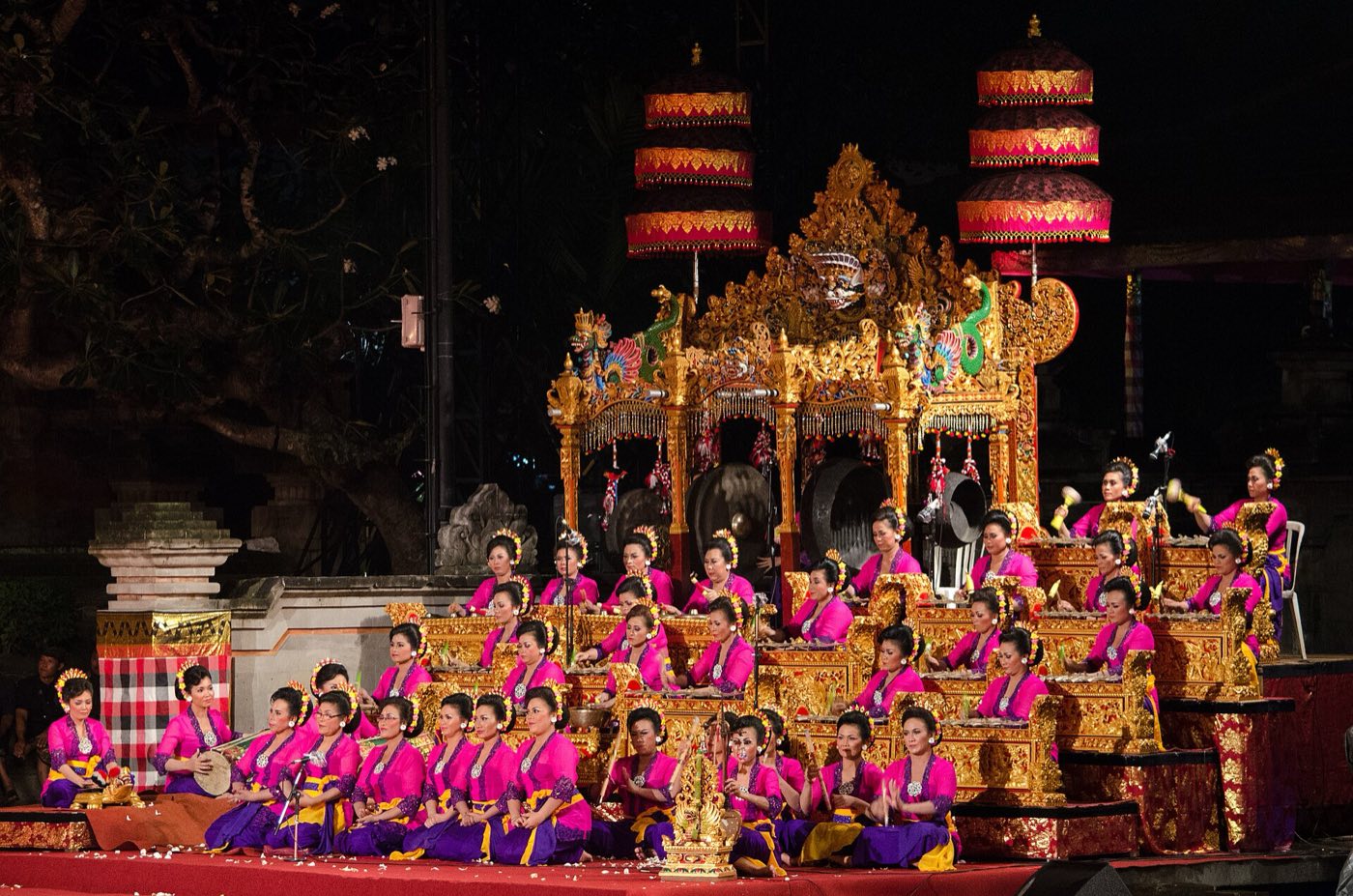 A gong kebyar ensemble in full flight. Photo: Benjamin Hollis / Wikimedia Commons (CC BY 2.0)
Check the Week Before You Book, and Plan Around Nyepi
The festival runs annually in March in Buleleng.
The regency and the organisers announce the exact week ahead of each edition, and the Bali provincial events listing carries it too. Check before you book flights.
March is quiet season on the north coast, which makes the festival an easy trip. Accommodation is plentiful, and the area's headline experiences, from the dawn dolphins to the waterfalls, are uncrowded.
Build the trip with the 15 best things to do in Lovina and where to stay in north Bali.
One calendar note: Nyepi, Bali's Day of Silence, falls in March most years. The whole island stops completely for a day and a night. It is worth experiencing, but it has to be planned around.
Check the events calendar so your festival dates and Nyepi do not collide unplanned.
Practical Notes
- Getting there: Singaraja and Lovina are on the north coast, a long drive over the mountains from the airport in the south. Getting to north Bali covers the routes and the drive.
- Where to stay: Lovina is the natural base. The visiting delegations stay there too, and Singaraja's festival venues are a short drive east along the coast road. Palm Living, the company behind Northbound, rents villas around Lovina.
- Watch the parade: It runs through the streets of Singaraja, so the route is the easiest place to see every delegation in one go.
- Check the programme: The regency announces the schedule and venues for each edition. Confirm them before you plan an evening around a performance.
- Bring cash. Street stalls and warungs take notes. See the Bali currency guide.
How to Fit It In
March is one of the easier weeks to be in Lovina.
The dawn dolphin boats still go out, and the waterfalls are flowing after the wet season. The town is quiet enough that you can decide things the morning of.
A sensible shape is three or four nights on the coast. Give the festival the parade and an evening in Singaraja, and give the other days to the hills behind Lovina.
The regency's other big events are the Lovina Festival on the beach and the Buleleng Festival in Singaraja, both later in the year.
FAQ
What is the Buleleng International Rhythm Festival?
An annual international folk music and dance festival in Buleleng, north Bali. Folk-dance, traditional-music and cultural groups from abroad take part in a parade through Singaraja, stage performances and workshops, alongside Buleleng's own artists.
When is the festival held?
Annually in March, across about a week. The exact week changes from year to year and is announced by the Buleleng regency and the organisers. Confirm it before you book anything that cannot be moved.
Where does it take place?
In Singaraja, the regency capital. The opening is at the Gedung Kesenian Gde Manik, the parade goes through the city to Taman Bung Karno, and the stage nights are at Taman Bung Karno and the Gedung Kesenian. The visiting groups are based in Lovina, a short drive west.
Is it a competition?
No. The March festival is a showcase and cultural exchange. A separate event, the Buleleng Bali International Rhythm Competition, is the juried contest, based in Lovina later in the year.
Why is it held in north Bali?
Buleleng is the birthplace of Gong Kebyar, the gamelan style that changed Balinese music. An international rhythm festival here is a homecoming of sorts.
Is March a good time to visit Lovina?
Yes, it is the quiet season: warm, uncrowded and good value, with the dolphins running at dawn. Check the Nyepi date, since the island shuts down completely for that one day.
Sources
- Buleleng Regency Government, Buleleng International Rhythm Festival: Bali Utara increasingly recognised by the world, read September 2026 (in Indonesian)
- Buleleng Culture and Tourism Office, Opening of the Buleleng International Rhythm Festival, read September 2026 (in Indonesian)
- Buleleng District Office, Buleleng International Rhythm Festival shines again in Singaraja, read September 2026 (in Indonesian)
- Buleleng Environment Office, Coordination meeting for the Buleleng International Rhythm Festival, read September 2026 (in Indonesian)
- Bali Provincial Government, Love Bali, Buleleng International Rhythm Festival, read September 2026
- World Festival Association, Buleleng International Rhythm Festival and Buleleng Bali International Rhythm Competition participation listings, read September 2026
- Wikipedia, Gamelan gong kebyar, read September 2026
- Palm Living, Bali Villas for Rent, read September 2026
Next: north Bali's dance and music traditions for where gong kebyar came from, things to do in Lovina for the rest of the week, and the Buleleng Festival for the regency's other big event.