On this page
- In Brief
- Lovina Festival at a Glance
- The Lovina Festival Is Buleleng's Showcase by the Sea, Held Each Late July
- The Programme Runs From Dance and Village Contests to Bands at Night
- Check Which of the Two Beach Stages Hosts Your Night
- The Opening Dance and the Theme Belong to the North
- Book Early and Follow the Regency's Announcement
- Getting There and Practical Notes
- FAQ
- Sources
In Brief
The Lovina Festival, known locally as Lovest, is north Bali's flagship beach festival. The Buleleng regency government organises it each year along Lovina Beach at Kalibukbuk. The regency now runs it over several days on two beachfront stages.
The programme mixes Buleleng's own arts, such as the mass fishermen's dance, Barong and kebyar dance, with village contests. These include the sapi gerumbungan bull contest and mini sailing-boat races. There is also a market of local food and craft stalls, and modern music at night.
The regency announces the dates and the year's theme through its culture and tourism office shortly before. Check the current announcement before you book around it.
Lovina Festival at a Glance
- What it is: Buleleng regency's annual beach festival and tourism showcase, running since 2012
- Where: Lovina Beach at Kalibukbuk, on two stages near the Dolphin Statue
- When: annually in late July, over several days
- Who runs it: the Buleleng regency government, through its culture and tourism office
- On the programme: traditional dance and gamelan, sapi gerumbungan, mini sailing-boat races, a coastal cross-country run, a food and craft market, modern bands and DJs
- Theme: a new one each year, announced with the dates
- Crowd: local families, domestic visitors and international travellers in roughly equal measure
- Check before booking: the regency's announcement for the current year's dates and programme
The Lovina Festival Is Buleleng's Showcase by the Sea, Held Each Late July
For several days the regency moves its performing arts, its village contests, its food and its creative businesses onto the beachfront. It has run for over a decade.
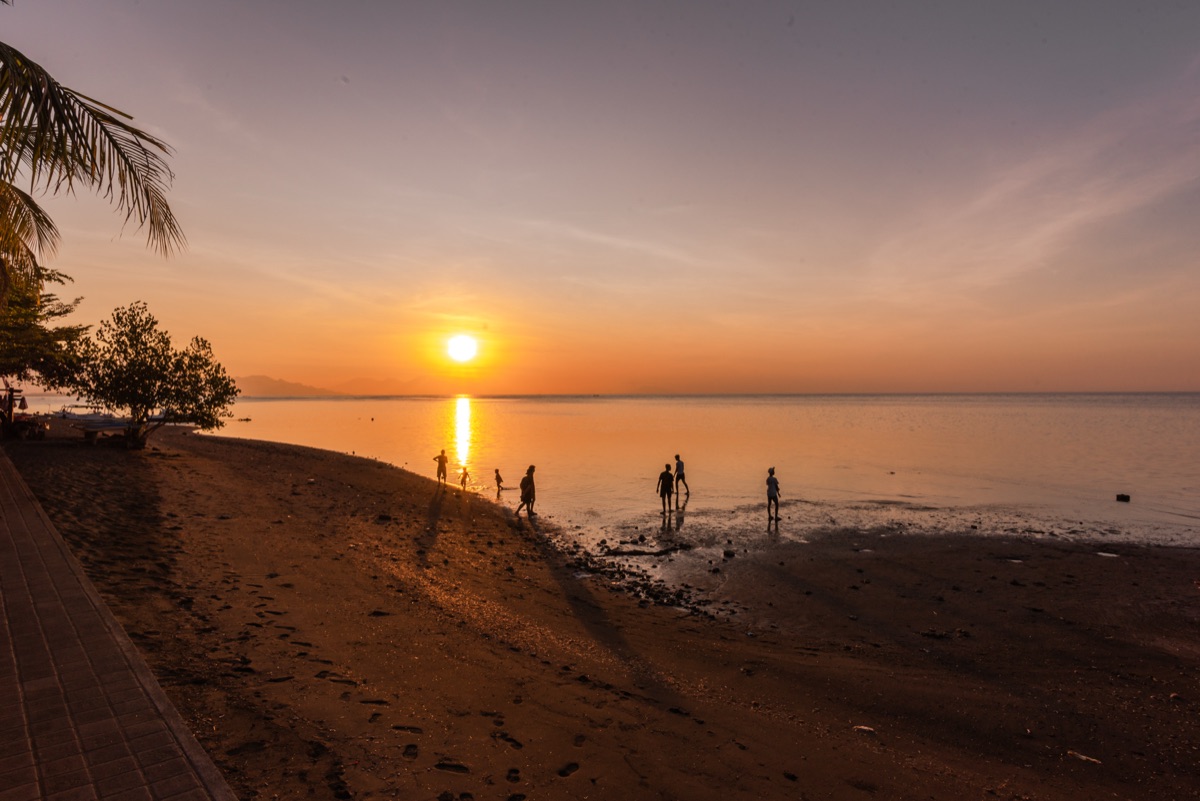 The Kalibukbuk beachfront at evening, the festival's venue. Photo: Palm Living archive.
The Buleleng regency government organises it as a promotion for the whole north. Sanggar dance groups, musicians and dozens of community groups from across the regency take part.
The festival is annual and has settled into late July, in the dry season. The regency has recently lengthened it to five days, to encourage visitors to stay longer.
The Programme Runs From Dance and Village Contests to Bands at Night
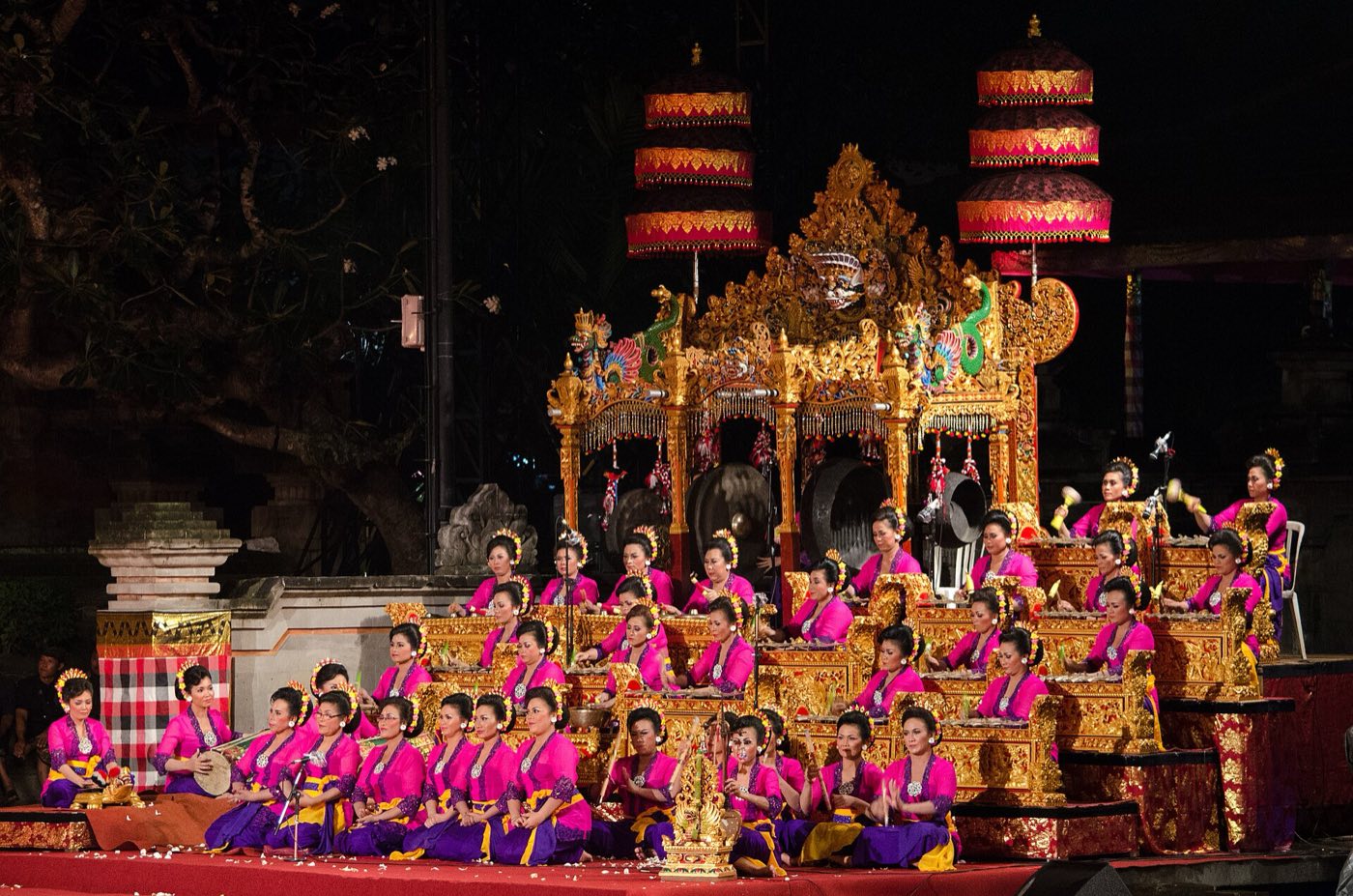
Dance and gamelan. The traditional stage carries Buleleng and Balinese performance:
- the mass fishermen's dance
- Barong
- Kembang Deeng
- bondres comedy
- fragmentari dance-drama
- parades of gamelan and dance
The festival site's line-up has included kebyar dance and gamelan, the fast, virtuosic style north Bali is known for pioneering. The background is in north Bali's dance and music traditions.
Village contests. This is the part visitors rarely expect. The programme includes sapi gerumbungan, Buleleng's decorated bull tradition. It also includes a fish-eating campaign for children and a cross-country run along the coast. These are Buleleng traditions and community events, and the crowd around them is local.
Mini sailing-boat races. A mini sailing-boat tournament is held on the shore at Kaliasem, next to Kalibukbuk. It draws entrants from well beyond Buleleng. The regency presents it as a piece of the coast's maritime tradition, handed down in fishing families.
The market. Dozens of small local businesses, curated by the regency, sell Buleleng food, crafts and local products along the front. Come hungry.
Music at night. Alongside the traditional stage, the evenings bring national and local bands and DJ sets, so the beachfront stays busy late.
Check Which of the Two Beach Stages Hosts Your Night
The regency has split the programme between two stages on Lovina Beach, Tasik Madu and Binaria. It pitches them at different audiences.
The Tasik Madu stage leans more towards international visitors, and the Binaria stage more towards domestic ones. Binaria sits beside Lovina's Dolphin Statue, and Tasik Madu about 400 metres west of it, according to the festival's own site.
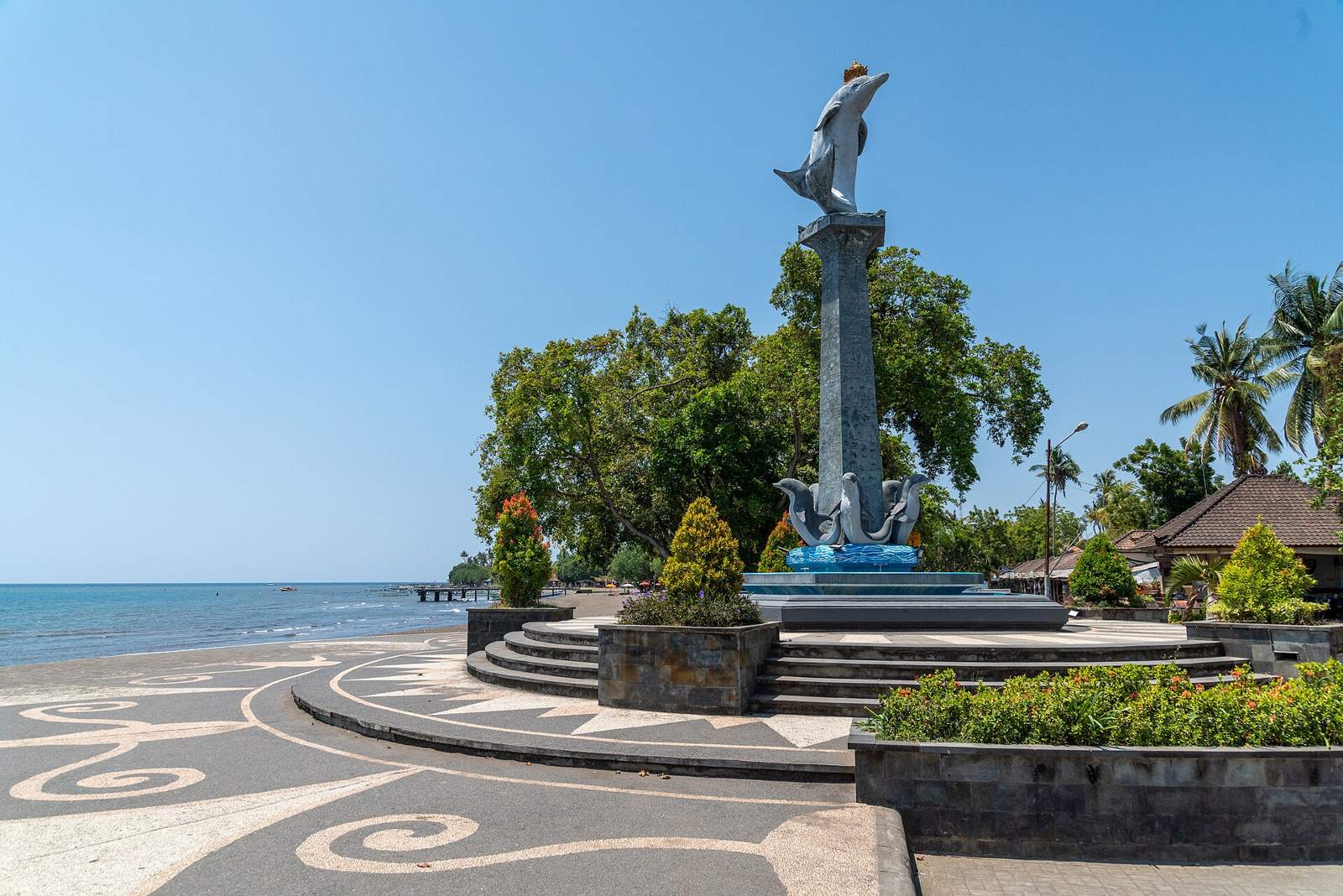 Lovina's Dolphin Statue, the landmark beside the Binaria stage. Photo: Stuecky53 / Wikimedia Commons (CC BY 4.0)
For a visitor that means two practical things. Check which stage is hosting the night you want. And expect the beachfront to be busy on foot in the evenings, which is the good way to experience it.
The Opening Dance and the Theme Belong to the North
The regency's culture and tourism office builds the opening around things that belong to the north.
The most recent edition opened with a mass performance of the Tari Nelayan, the fishermen's dance, created by a Buleleng choreographer. The office's head explained the choice as a portrait of Lovina's fishing community, its daily life and its closeness to the sea. The same explanation calls the dance a sign that Lovina is more than its dolphins.
Themes change each year, and they are announced with the dates. One recent edition ran under "Theatre of Dolphins". It framed Lovina as a natural stage where the sea, the dolphins and the local arts appear together. The year before that it was "The Magical of Lovina".
The theme is worth checking, because it shapes the opening night and the headline performances.
Book Early and Follow the Regency's Announcement
During the festival Lovina's hotels run close to full, so accommodation is at its busiest.
The regency sets the dates and the shape of the programme each year. So treat the official announcement as the source rather than any travel site.
The Buleleng regency government and its culture and tourism office publish the preparation meetings, the theme and then the programme in the weeks and days beforehand. Our north Bali events calendar tracks them as they land.
If you are timing a trip around it, book your stay early. Give yourself extra days for the area rather than flying in for the festival alone.
Palm Living, the company behind Northbound, rents villas around Lovina if you want a house of your own for the festival week.
The rest of the area is close by:
- The dawn dolphin trips leave from the same beach.
- The beach itself is at its best in the dry season.
- The waterfalls inland are a short drive.
Start with the best things to do in Lovina and where to stay in north Bali.
Getting There and Practical Notes
- On foot. The festival runs along the Kalibukbuk beachfront, walkable from most Lovina accommodation.
- From elsewhere on the coast, any local driver will know the Dolphin Statue at Lovina Beach. The regency sets up extra parking areas around Kalibukbuk and Kaliasem for the festival. For routes from the airport and the south, see getting to north Bali.
- Bring cash for the market stalls, which are small local businesses.
- Expect it to be loud and late. For a quiet week in Lovina, come at another time of year.
FAQ
What is the Lovina Festival?
It is the Buleleng regency government's annual beach festival on Lovina Beach at Kalibukbuk, north Bali. The programme mixes Buleleng's traditional dance and gamelan, the sapi gerumbungan bull tradition and mini sailing-boat races with a market of local food and crafts and modern music at night.
When is the Lovina Festival held?
Annually in late July, over several days. The regency sets the dates each year and publishes them with the year's theme shortly before. Confirm against the official announcement before planning around it.
Where does the Lovina Festival take place?
On Lovina Beach in Kalibukbuk village, on two stages: Binaria, beside the Dolphin Statue, and Tasik Madu, a short walk west along the beach.
Is the Lovina Festival worth visiting?
If you are in north Bali in late July, yes. It puts Buleleng's own dance, gamelan and village traditions on one beach, performed by groups from across the regency. It is the liveliest week of the year on the Lovina front.
What is gong kebyar, and is it part of the festival?
Gong kebyar is a fast, loud gamelan style that north Bali is credited with pioneering, and a point of local pride. Kebyar dance and gamelan have featured in the festival's line-up. There is more in our guide to north Bali's dance and music.
Are the bull races at the festival the same as makepung?
No. Buleleng's tradition is sapi gerumbungan, where decorated bulls wearing wooden bells are judged on style and appearance as much as on speed. It is distinct from the racing-focused makepung of Jembrana. See sapi gerumbungan.
Who organises the Lovina Festival?
The Buleleng regency government, through its culture and tourism office. A committee led from the regency secretariat runs it, with support from local businesses, hotels and community groups.
Sources
- Buleleng regency government, Lovina Festival 2026 officially opened (the regency as organiser, the two stages and their audiences, the extension to five days, the mix of domestic and international visitors, the performers and community groups), Indonesian, read September 2026
- Buleleng culture and tourism office (Dinas Kebudayaan dan Pariwisata), the twelfth Lovina Festival and the "Theatre of Dolphins" theme (the name Lovest, the edition count, the theme, the traditional and modern programme and the side events), Indonesian, read September 2026
- Buleleng regency government, final preparations for the festival (the five-day run, the programme, the curated market stalls and the parking areas in Kalibukbuk and Kaliasem), Indonesian, read September 2026
- Buleleng regency government, why the mass fishermen's dance opens the festival (the culture and tourism head's explanation and the dance's Buleleng choreographer), Indonesian, read September 2026
- Banjar district office, mini sailing-boat tournament at the festival (the tournament on the Kaliasem shore and its entrants from beyond Buleleng), Indonesian, read September 2026
- Buleleng regency government, the 2025 festival and "The Magical of Lovina" theme (the previous year's theme and late-July dates), Indonesian, read September 2026
- Lovina Festival, lovinafestival.com, the festival site made by Palm Living (the two stages' positions relative to the Dolphin Statue, the line-up including kebyar, and the festival running since 2012), read September 2026
- Buleleng culture and tourism office, Visit North Bali: Kalibukbuk Village (Lovina Beach in Kalibukbuk and its dolphin trips), read September 2026
- Buleleng culture and tourism office, home page (the office that announces the festival), Indonesian, read September 2026
- Palm Living, Bali Villas for Rent, read September 2026
Read next: the best things to do in Lovina for the rest of the week, sapi gerumbungan for the bull races in full, and the dolphins of Lovina for the dawn trip the festival is built around.