On this page
- In Brief
- Lovina vs Canggu at a Glance
- Canggu and the South: Proven Yield, Priced In
- Lovina and the North: An Early Entry You Wait Out
- Entry Cost: The Clearest Difference Between the Two
- Yield and Liquidity: The South Wins on Liquidity
- The Legal Rules Are the Same on Both Coasts
- Which One Suits You: Test Your Timeline
- Practical Notes
- FAQ
- Sources
In Brief
Lovina vs Canggu comes down to your timeline. A buyer who wants liquid yield this year leans to Canggu and the south. A buyer who wants a lower entry and is patient about the upside leans to Lovina and the north.
Canggu is the proven play. Occupancy is high, the rental market is deep, and a villa there can perform from its first season. The cost is a high entry price and a real oversupply problem. A flood of near-identical villas built after the pandemic now competes for the same guests.
Lovina is the early play. Land trades at a fraction of southern prices, and the coast is far from built out. A property with genuine character has room to stand out. The cost is thinner, more seasonal demand, a smaller resale market and a longer hold before the area matures.
The legal ground rules are identical across Indonesia, so they do not tip the decision. On both coasts, foreigners cannot own land outright.
Lovina vs Canggu at a Glance
| Canggu and the south | Lovina and the north | |
|---|---|---|
| Entry cost | High and rising | Well below the south |
| Demand | Deep, with high occupancy through most of the year in a strong pocket | Lower and more seasonal |
| Liquidity | A deep, active resale market | Thinner, so plan a longer hold |
| Oversupply | Concentrated here | A warning here too, where a generic villa competes only on price |
| Legal structure | Identical: a lease, Hak Pakai or a PT PMA company | Identical: a lease, Hak Pakai or a PT PMA company |
| Suits | Income from the first season and a liquid exit | A longer horizon, a lower budget and patience |
Bali-wide figures below are framed as ranges. Anything specific to the north is marked for local confirmation rather than stated as fact.
Canggu and the South: Proven Yield, Priced In
The south built the template for Bali's villa market.
Canggu, Seminyak and Uluwatu turned Bali into a global short-stay market, and the numbers there are real. Tourist arrivals concentrate in the south, and the airport sits at its doorstep. A well-run villa in a strong pocket can hold high occupancy through most of the year. For an investor who wants income now and an established exit later, this is the safer ground.
That safety is priced in. Southern land has climbed for years, and the entry math is far less forgiving than it was five years ago. A plot that once looked like a bargain now carries a premium, and the premium eats into the yield it can produce.
The bigger pressure is supply. The post-pandemic building boom left parts of the south crowded with similar villas chasing the same booking calendar. When stock looks alike, owners compete on price, which drags nightly rates and squeezes management quality across the board. Strong properties still win, and an average villa in an oversupplied pocket increasingly does not.
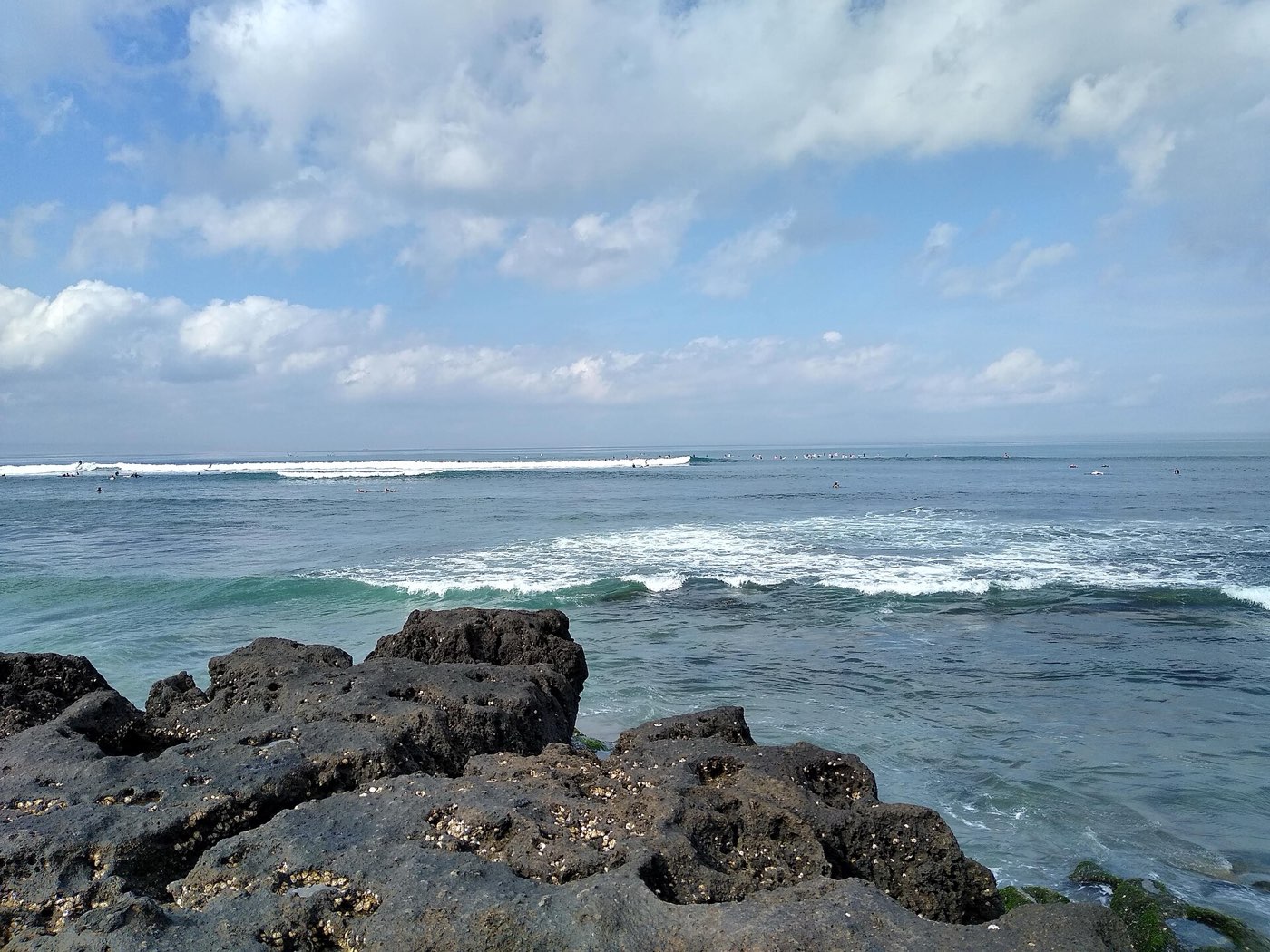 The reef break off the lava rocks at Canggu, the surf that drives the southern short-stay market. Photo: Mx. Granger / Wikimedia Commons (CC0)
The south is the right call for proven, liquid yield. It asks you to pay full price for that certainty, and to build something good enough to stand out in a crowded field.
Lovina and the North: An Early Entry You Wait Out
Lovina anchors the north coast, with dolphins offshore, black-sand beaches and well-developed visitor infrastructure. Around it sit the diving at Pemuteran and the cool highlands of Munduk.
The whole coast shares the south's volcanic beauty with a fraction of its development, and land still trades at early-stage prices. For an investor priced out of the south, that gap is the point. The Lovina area guide gives the full picture of the area.
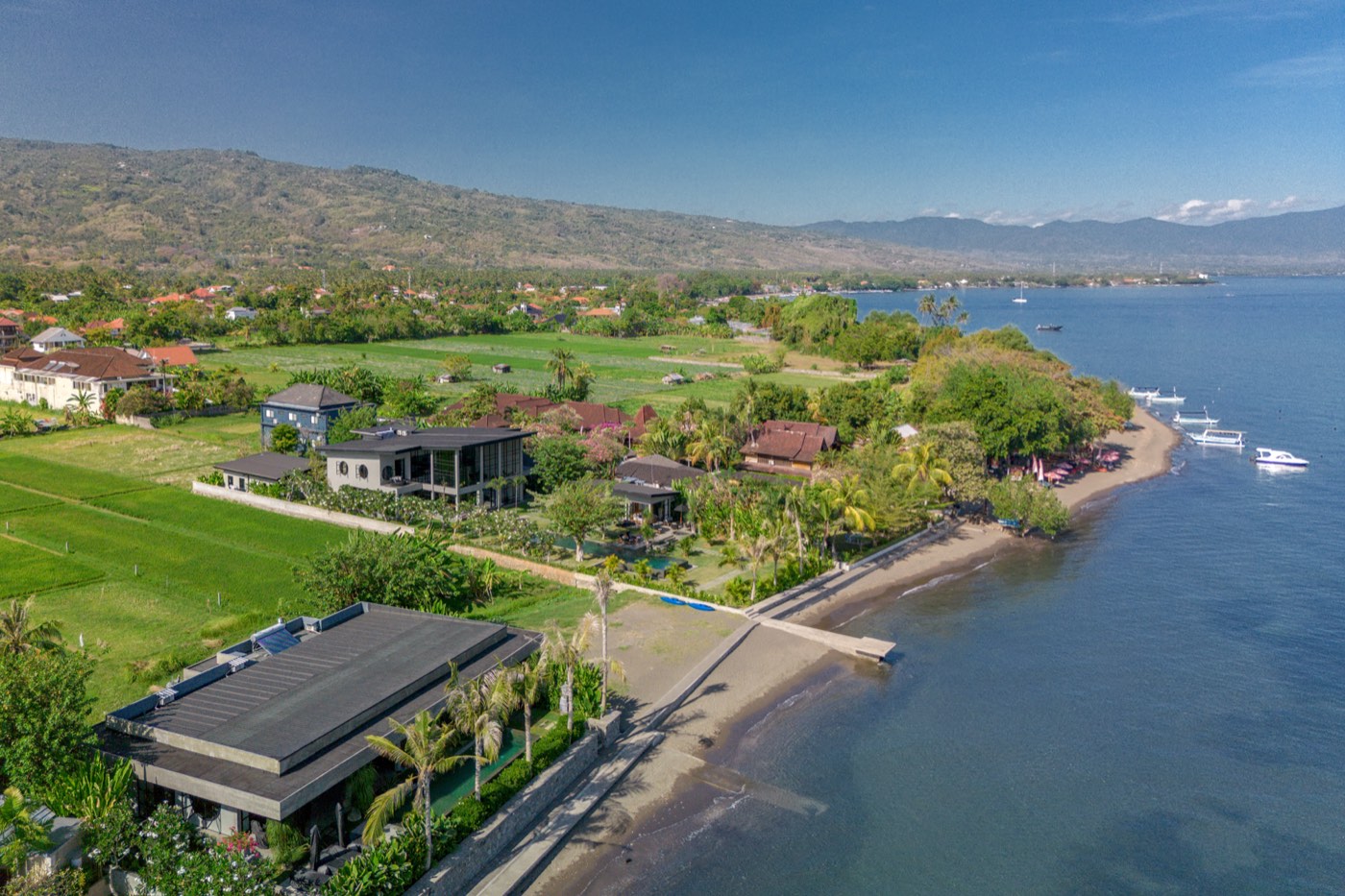 The Lovina bay from the air, jukung boats moored off the black-sand point. Photo: Palm Living archive.
Less competition cuts both ways, because the north is quieter for a reason. Visitor numbers are lower, the season is more pronounced, and demand leans on a narrower band of months. A villa here is a longer-term bet on the coast maturing, rather than a turnkey income machine from day one.
Resale is the other constraint. The northern market is thinner, so an exit can take longer and draw fewer buyers. Plan the hold from the start, and buy something with a clear concept rather than a generic build that competes only on price.
The case for the north is a lower entry, lighter competition and the upside of buying a coast before it prices in. The trade is patience and a tolerance for seasonality. The investing in north Bali guide goes deeper.
Entry Cost: The Clearest Difference Between the Two
The gap in entry cost is the single clearest difference between Canggu and Lovina.
Southern land is well documented and expensive by Bali standards. The prime Canggu and Uluwatu pockets cost the most, because view and beach access there command the steepest premiums. Build costs run higher too, pushed by demand for skilled labour and materials in a saturated construction market.
Off-plan villas are marketed across a wide band that moves with location, size and lease term. The south clusters at the top of it, with finished and beachfront stock above that again. Any figure printed in a guide dates within a season. Take the range from live listings, and from an agent working the area you are looking at.
The north sits at the other end of the curve. Land is priced per are (100 square metres), north-coast rates run well below the south, and beachfront and view plots carry the local premium.
Ask whoever you deal with on the ground for three numbers. They are the current rate per are by zone, the build cost per square metre, and the realistic all-in entry for a villa. All three shift with the market, and the versions worth acting on come from operators who buy, build and manage here, rather than from listings.
Treat any headline number as the start of due diligence. The cheapest listed lease is often the shortest, and a low build quote usually reflects a lower spec.
Yield and Liquidity: The South Wins on Liquidity
The mistake is reading an advertised gross yield as your return. Agencies and developers advertise gross rental yields that look strong. The number to judge is what is left after management, vacancy, tax and licensing. It is always lower than the advertised gross, sometimes by a long way. Ask for net, on an operating villa, over a full year.
The south wins on liquidity outright. Demand is deep, the resale market is active, and a good southern villa can usually find both guests and a buyer. The oversupply now tests this depth, since a crowded field caps the rates an average property can charge.
A hotel-market study by Hotel Investment Advisory, reported by Kompas, looked at Canggu-Seminyak over the past year. It found demand for rooms there had grown more slowly than supply, and fewer room nights were being sold. Rising room rates were holding up revenue per room.
The north trades yield certainty for entry price. Occupancy is lower and more seasonal, so realistic expectations differ from the south. Ask any north-coast operator for figures from operating villas, rather than brochures, before you commit.
The same study found the heaviest pressure outside Bali's six main tourism corridors, where demand fell furthest behind supply and projected occupancy stays lowest. That is the backdrop to any north-coast yield promise. A villa with a strong concept and proper management performs, and an average one competing on price struggles. The full north-coast yield picture is in rental yields in north Bali.
The Legal Rules Are the Same on Both Coasts
The ground rules for a foreign buyer are identical across Bali and the rest of Indonesia. Foreigners use a leasehold (Hak Sewa), a right of use (Hak Pakai) or a PT PMA company, and leasehold versus freehold sets out each one.
The one shortcut to avoid is a nominee freehold. The Basic Agrarian Law makes it void. Use one of the three legal routes, with an independent notary rather than the seller's.
Which One Suits You: Test Your Timeline
There is no single winner, and any guide that names one is selling something. The right answer depends on what you want from the money.
The south fits an investor who wants income from the first season and values a liquid exit. It needs the capital to enter at today's prices and the appetite to compete in a crowded market. If the goal is proven yield and you are willing to pay for certainty, Canggu and its neighbours still deliver.
The north fits an investor with a longer horizon, a lower budget and patience for the area to fill in. The appeal is a fraction of the entry cost, lighter competition, character that stands out and the upside of buying early. It asks for realism about seasonal demand and a slower exit.
The timeline is the useful test. Money that needs to perform inside a year or two belongs in the south. Money free to sit for the medium term, riding the coast as it matures, suits the north.
Buy the south for certainty you pay full price for, and the north for an opening you wait out. Both can work. The mistake is buying either one on a timeline or a budget it was never suited to. Best areas to invest in north Bali gives a ranked, area-by-area view of where the north makes most sense.
Practical Notes
These figures change and the north-specific ones need confirming on the ground. Treat everything below as a starting point, not a quote.
- North-coast land and build figures are confirmed locally rather than quoted here, because they move faster than a guide can.
- Advertised gross yields run well ahead of realised net ones everywhere on the island. In the north, the planning figure to trust comes from operating villas' books rather than listings, as rental yields in north Bali explains.
- Zoning: confirm it allows short-term rental before buying, anywhere on the island.
- Notary: use an independent notary, not the seller's.
Look at the north's side of the comparison. Current villas and houses, most of them around Lovina, and north Bali land are listed by Palm Living here on Northbound. Set two or three listings beside what the same budget buys in Canggu.
With the zoning confirmed, net figures in hand and a hold to match your timeline, either coast can be bought on solid ground.
FAQ
Is it better to invest in north or south Bali? It depends on the investor. The south offers proven, liquid yield at a high entry price and into a crowded market. The north offers a much lower entry, lighter competition, and early-stage upside, with thinner seasonal demand and a slower exit. Income now points south. A patient, lower-budget bet on a maturing coast points north.
Is Canggu oversaturated? Parts of it are. The post-pandemic building boom left sections of Canggu and the wider south crowded with similar villas competing for the same guests, which pressures nightly rates and management quality. A recent hotel-market study found fewer room nights being sold in Canggu-Seminyak, with rising rates holding up revenue per room. Demand there is still strong and the market is liquid, but a generic villa now competes mainly on price. A distinctive, well-run property still performs.
Is Lovina a good place to invest? It suits a specific buyer: one entering at early-stage prices with a longer hold and realistic, seasonal yield expectations, rather than chasing the south's proven returns. The entry is low and competition light. The trade-off is thinner demand and a thinner resale market. See the Lovina area guide.
Where is the cheapest place to buy property in Bali? The north coast is consistently among the cheapest, with land per are well below southern rates and Lovina, Pemuteran, and the Munduk highlands all entering far below Canggu or Uluwatu. The cheapest listing is rarely the best value, since short lease terms and difficult access often explain a low price. Current north figures come from an agent or operator working the coast, not from a guide.
Is north Bali the next Canggu? The north is at the early stage of a curve the south already climbed, with the same volcanic coastline and a fraction of the development. Whether it follows the same path depends on infrastructure, access, and visitor growth that are not guaranteed and will take years. Treat it as an early-stage bet on a maturing coast, not a sure repeat of Canggu.
Sources
- Kompas.com, Tren Hotel Bali: Sanur Menguat, Ubud dan Kawasan Lain Dihantui Oversupply (Hotel Investment Advisory's Bali hotel absorption study: demand against supply by area, room nights sold in Canggu-Seminyak, the pressure outside the six main corridors), read September 2026 (in Indonesian)
- JDIH BPK (Audit Board of Indonesia legal database), Law No. 5 of 1960 on Basic Agrarian Principles (freehold for citizens only, void transfers to foreigners, leases for building) and Government Regulation No. 18 of 2021 (Hak Pakai for foreigners' homes), read September 2026 (in Indonesian)
- Palm Living's own listings on Northbound, villas and houses for sale and north Bali land, refreshed daily, read September 2026
Next: land prices in north Bali for what the coast actually trades at, what it costs to build a villa in Bali for the other half of the sum, and leasehold vs freehold in Bali for how you would hold it.