On this page
- In Brief
- Bali YTT at a Glance
- A Bali Training Takes You Out of Normal Life for a Month
- A 200-Hour Course Covers Six Subjects and Ends in Certification
- Check Four Things Before You Pay a Deposit
- A Bali YTT Costs Less Than in the West, Room and Meals Usually Included
- Ubud Is the Centre, and Canggu Has a Livelier Scene
- FAQ
- Sources
In Brief
Bali, and Ubud especially, is one of the world's leading places to do a yoga teacher training (YTT), and the immersive setting is the draw. The standard is a 200-hour foundational course over three to four weeks. A 300-hour advanced course follows for those who continue.
Look for Yoga Alliance registration, a lead teacher and style that suit you, and an honest schedule. Prices are competitive. Choose the teacher first and the location second.
Bali YTT at a Glance
- Where: Mostly Ubud, some in Canggu and the south
- Standard course: 200-hour, about 3 to 4 weeks, full-time
- Advanced: 300-hour (and 500-hour combined)
- Look for: Yoga Alliance (RYS) registration, the lead teacher, the style
- Cost: Below the Western equivalent, and usually includes accommodation and food. Schools publish their own rates.
- Format: Residential immersion is the norm
- Choose by: Teacher and style first, venue second
A Bali Training Takes You Out of Normal Life for a Month
A residential course in Bali's immersive setting lets you step out of normal life for a month. Prices undercut equivalent trainings in the West, often with accommodation and food included. Ubud in particular has a critical mass of experienced teachers and dedicated training venues.
For many people, the month is both a qualification and a personal reset.
It is also a serious commitment. A 200-hour course is full-time for three to four weeks, with early mornings, long days, study and practice teaching. Treat it as a deep dive rather than a holiday with yoga attached.
A 200-Hour Course Covers Six Subjects and Ends in Certification
The 200-hour YTT is the global foundational standard. A typical course covers:
- Asana (postures): technique, alignment, adjustments
- Teaching methodology: how to sequence and lead a class
- Anatomy and physiology for yoga
- Philosophy: the yoga sutras, history, ethics
- Pranayama and meditation: breathwork and stillness
- Practicum: practice teaching, observed and assessed
You finish certified to teach, and usually able to register with Yoga Alliance as an RYT 200. The 300-hour course builds on this for those going deeper. Yoga Alliance counts a 200-hour plus a 300-hour training, taken at registered schools, as the route to its 500-hour credential.
Check Four Things Before You Pay a Deposit
Run these four checks on any course you are considering.
Yoga Alliance registration. A Registered Yoga School (RYS) credential means the course meets the recognised standard, and it lets you register as a teacher (RYT) afterwards. Do not take the school's word for it. Look the school up in Yoga Alliance's own school directory before you pay a deposit.
The lead teacher. This matters more than anything else on the list. You will spend a month learning their approach, and the school's name tells you little about the person holding the room. Find out who actually teaches the course and read reviews. If you can, take a class with them first.
The style. Courses run in vinyasa, hatha, ashtanga or several styles together. Pick the one that matches how you want to teach.
The schedule and group size. Good courses are upfront about the daily hours and keep groups small enough for real feedback. Ask for the actual timetable and the maximum group size in writing, and be wary of a school that will not give you either.
A Bali YTT Costs Less Than in the West, Room and Meals Usually Included
A 200-hour YTT in Bali generally costs well below an equivalent course in Europe, North America or Australia. The price usually includes accommodation and meals for the whole course.
Yoga Alliance notes that each registered school sets its own tuition. Take the figure from the school's own booking page, where it usually varies with room type.
Add flights, a visa and time off work to the budget. The residential format bundles most of your living costs into the fee.
Ubud Is the Centre, and Canggu Has a Livelier Scene
Ubud has the deepest concentration of training schools and teachers, in jungle and rice-paddy settings. The wider yoga scene and many wellness retreats are there too.
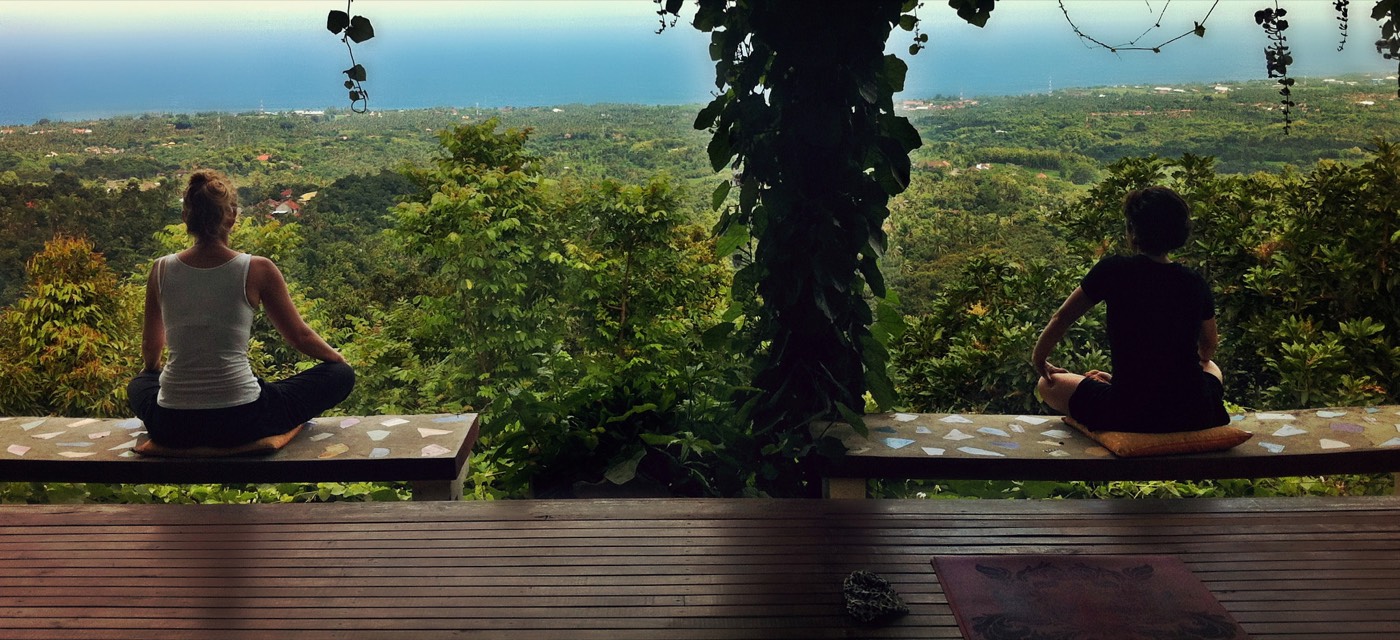 The setting is part of what you are paying for on a residential course. Photo: Bali Real Estate (500px) / Wikimedia Commons (CC0)
Canggu and the south have courses too, with a more dynamic, social atmosphere. The schools change from year to year, so research the current options and their reviews instead of working from a list in a guide.
FAQ
Is Bali a good place to do a yoga teacher training? Yes. Bali, and Ubud especially, is one of the world's leading places to train. It combines a deep yoga culture, an immersive setting and prices below the West, often with accommodation and food included.
How long is a yoga teacher training in Bali? The standard 200-hour course runs about three to four weeks full-time. A 300-hour advanced course takes longer, and the two combine into a 500-hour qualification.
How much does a YTT in Bali cost? Less than an equivalent course in the West, and the fee usually bundles accommodation and meals. Schools publish their rates on their own booking pages, which is where to take the figure from. Add flights, a visa and time off.
What should I look for in a Bali YTT? Yoga Alliance (RYS) registration, the lead teacher's experience and style, an honest daily schedule, and a group small enough for real feedback. Choose the teacher first.
Where is the best place for YTT in Bali? Ubud has the deepest concentration of schools and teachers. Canggu and the south offer a more dynamic scene. Research the specific course and teacher as well as the location.
Do you need experience to do a 200-hour YTT? A consistent personal practice is expected. The 200-hour is a foundational course, though, and dedicated practitioners at every level complete it. Check each school's prerequisites.
Sources
- Yoga Alliance, Find a Yoga School (school directory and RYS 200, 300 and 500 definitions), read September 2026
- Yoga Alliance, Explore Training Options (RYT 200 and 500 credentials, tuition set by each school), read September 2026
See also meditation retreats in Bali, yoga in Bali for the wider scene, and wellness in north Bali for the quieter side of the island.


.jpeg)