On this page
- In Brief
- Sound Healing at a Glance
- A Sound Bath Is Guided Rest to Gongs and Singing Bowls
- An Hour on a Mat: What Happens in a Session
- In North Bali, Sessions Are Small and by Appointment
- Who It Suits, and Who May Not Enjoy It
- The Evidence Points to Calm, and Stops Short of Cure
- Bali's Own Bronze Sound Is Far Older
- How to Fit It In
- Practical Notes
- FAQ
- Sources
In Brief
Sound healing in Bali is a guided relaxation practice. You rest on a mat for about an hour while a practitioner plays gongs, singing bowls and chimes. In north Bali, sessions run through wellness retreats, villas with a resident or visiting practitioner, and independent teachers who work by appointment.
The easiest way in is to ask where you are staying, a day or two ahead. Small studies report less tension and better mood after a session, and no research supports claims to treat a medical condition.
For Bali's own bronze sound, hear gong kebyar at a temple ceremony or a village rehearsal. It costs nothing.
Sound Healing at a Glance
- What it is: guided rest while a practitioner plays gongs, singing bowls, chimes and sometimes the voice
- How long: around an hour, sometimes a little more with settling and rest time
- Where in north Bali: wellness retreats, villas and independent teachers, around Lovina and the hills toward Munduk
- Group or private: small group sound baths, or one-on-one sessions at your accommodation
- What it costs: set by each practitioner, so ask for the current rate when you book
- When to book: a day or two ahead
- What the research shows: less tension and better mood after a session, in a small evidence base
- Bali's own tradition: gamelan, with north Bali's gong kebyar style
A Sound Bath Is Guided Rest to Gongs and Singing Bowls
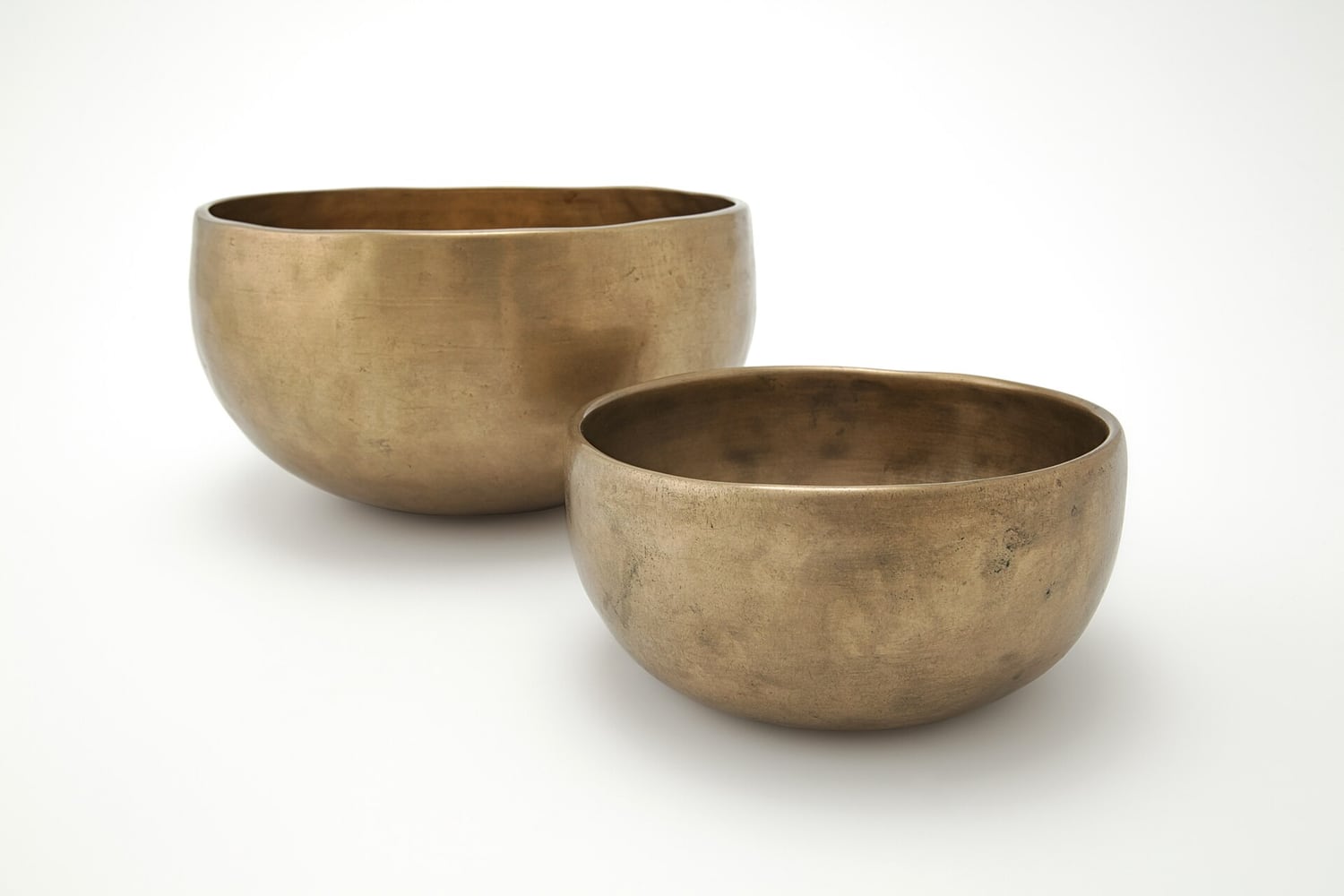
Sound healing is a guided relaxation practice built around sustained, resonant tones. A practitioner plays instruments like gongs, singing bowls and chimes, sometimes with the voice, while you rest and listen.
The sound is continuous and overlapping, which is why a session is usually called a sound bath. The practice rests on a simple idea. Steady, layered tones give your attention something to settle on, the body slows down, and the nervous system drops into a calmer state.
People often describe it as a deep, waking rest somewhere between meditation and a nap. Treat it as a relaxation and meditation practice rather than a medical treatment.
An Hour on a Mat: What Happens in a Session
You leave your shoes at the door and find a mat or cushion on the floor. Many sessions ask you to lie down, often with a blanket and an eye cover. The experience works best when your body is fully supported and still.
The practitioner begins gently, sometimes with a few breaths or a short settling, then moves into the instruments. A typical sound bath layers several at once, from the swell of a gong to the round hum of metal and crystal singing bowls. Chimes or bells add a bright punctuation.
The sound rises and falls in waves, and there is nothing for you to do except listen. Sessions usually run somewhere around an hour.
Some people drift in and out of sleep, and some feel a physical buzz from the lower tones. Others notice emotions surface and pass, or simply feel heavy and slow by the end. All of that is normal, and none of it is needed for the session to be worthwhile.
When the last tone fades, the practitioner brings you back slowly. Many people sit up quietly, a little softened, in no rush to talk.
In North Bali, Sessions Are Small and by Appointment
North Bali's wellness scene is quiet and small, and its sound work keeps the same slow pace. Sessions are offered through wellness retreats, villas with a resident or visiting practitioner, and small independent teachers who work by appointment.
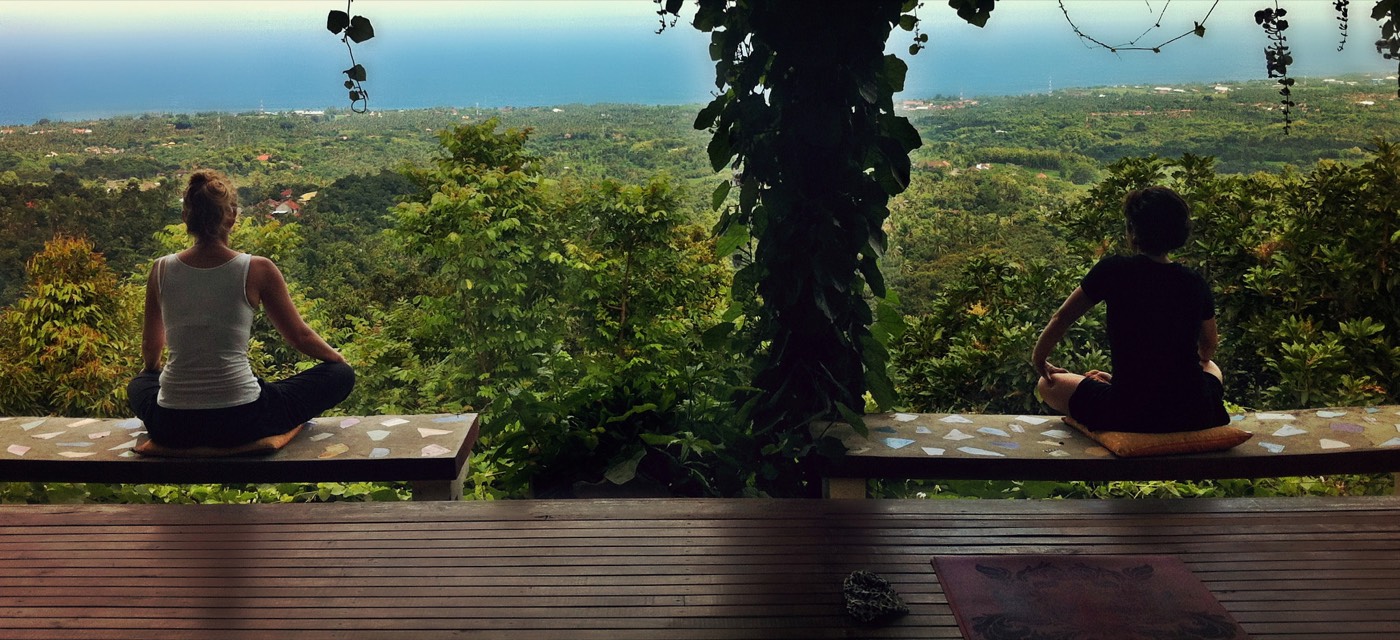 The register of the north's wellness scene: quiet, open-air, unhurried. Photo: Bali Real Estate / Wikimedia Commons (CC0)
Group sound baths are often intimate. Some gather just a handful of people in a garden pavilion or an open-walled room near the sea. Private one-on-one sessions are common too.
A session here becomes part of a quiet stay, in a calm setting and at a gentle pace. You usually have to ask, since few practitioners post a timetable. For more on the pace of the north, see the complete north Bali guide.
How to find a session
-
Ask where you are staying. Many villas and guesthouses know the local practitioners. They can arrange a private session at your accommodation, or point you to a nearby group sound bath.
-
Try a wellness retreat. Several run sound sessions as part of their programmes and often welcome outside guests when there is space. The places that run programmes are in wellness in north Bali and Bali wellness retreats. The quieter end of the same range is in meditation retreats in Bali.
-
Ask a day or two ahead. Schedules here are loose and depend on who is around.
Who It Suits, and Who May Not Enjoy It
Sound healing suits people who want to slow down and find it hard to do so on their own. If you struggle to switch off or lie awake with a busy head, a sound bath gives your mind an easy place to land.
It also suits complete beginners, because there is no technique to learn and nothing to get right.
It may not suit you if you want a clinical treatment or a fix for a specific medical condition. People who find it hard to stay still for an hour may not enjoy it either. The same goes for anyone very sensitive to loud or resonant sound.
The Evidence Points to Calm, and Stops Short of Cure
Sound healing attracts big claims, and two studies show what has actually been measured.
An observational study of Tibetan singing bowl meditation, published in the Journal of Evidence-Based Complementary and Alternative Medicine, measured sixty-two participants before and after a session. It reported significantly less tension, anger, fatigue and depressed mood afterwards, and an increase in reported spiritual wellbeing.
One finding matters to a first-timer. People new to the practice showed a greater drop in tension than those who had done it before.
The study had no control group, so it tells you that people felt better afterwards, and leaves open why. A more recent systematic review of singing bowl interventions, published in the journal Healthcare, gathered the wider literature.
Its results pointed towards less stress and better psychological wellbeing. The studies were too few and too varied to pool into a meta-analysis, and the review called for properly controlled trials. The evidence base is small, with real limits, and the findings are not settled.
In practice, an hour of guided stillness with resonant sound leaves many people calmer, and that is worth an hour of your holiday. Claims about curing conditions or tuning your cells are not supported, and a practitioner who makes them is telling you something about themselves.
Bali's Own Bronze Sound Is Far Older
Sound healing as wellness centres offer it, usually built on Tibetan-style singing bowls, is a newer arrival in Bali. The island's ritual relationship with bronze sound is far older.
Gamelan, the Indonesian percussion orchestra, is inscribed on UNESCO's Representative List of the Intangible Cultural Heritage of Humanity. An ensemble brings together:
- gongs
- gong-chimes
- xylophones
- drums
- cymbals
- bamboo flutes
UNESCO notes that gamelan is played in religious rituals and ceremonies as much as in concerts, and that it is also used in music therapy. The practice goes back centuries, with evidence in the relief carvings of eighth-century Borobudur, more than a thousand years before the wellness industry.
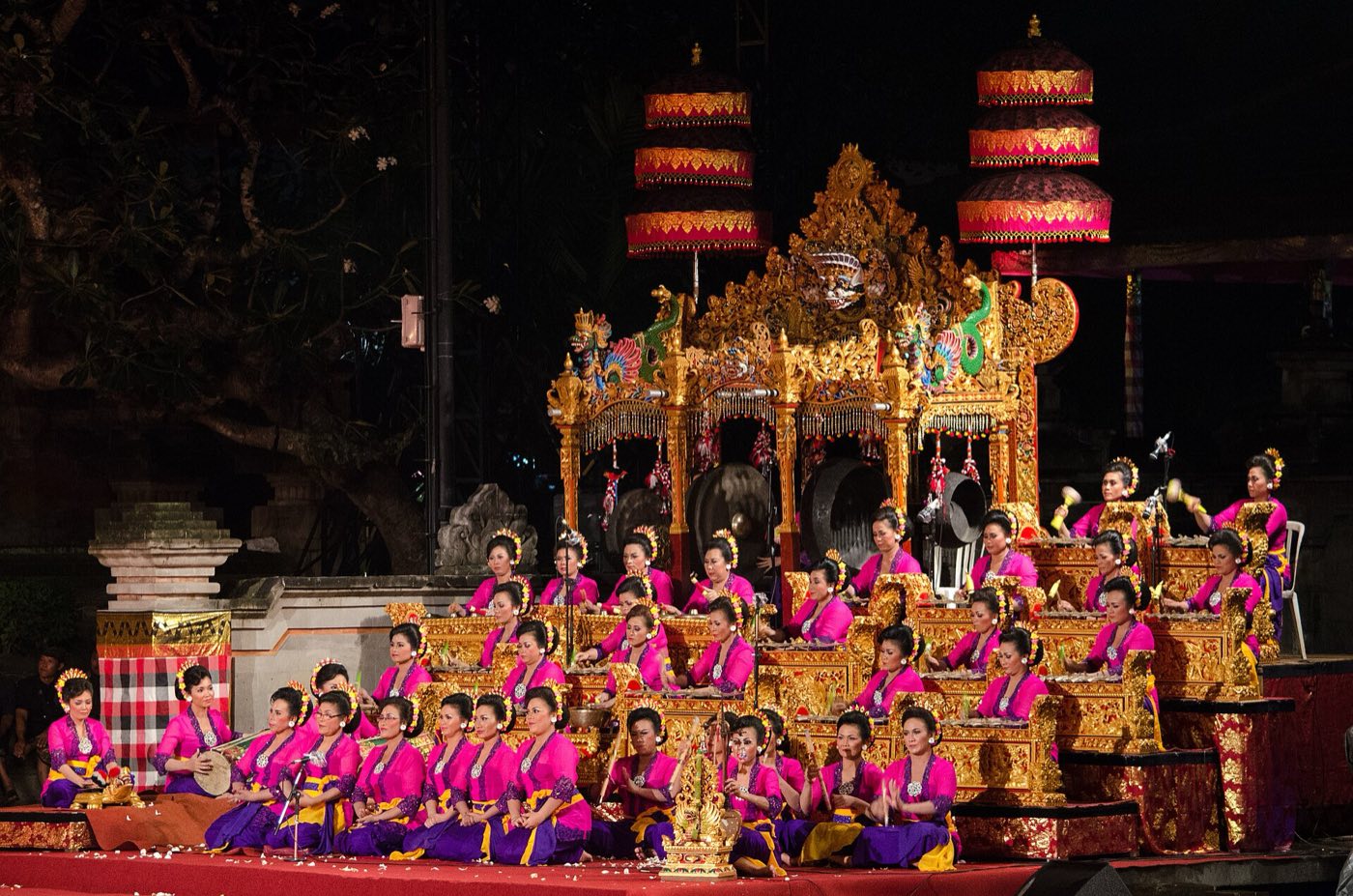 Gong kebyar, the bronze sound north Bali is known for. Photo: Benjamin Hollis / Wikimedia Commons (CC BY 2.0)
North Bali's own contribution to the tradition is gong kebyar, the fast, loud style Buleleng is credited with pioneering. You are more likely to hear it at a temple ceremony than at a wellness session.
If you love what sustained bronze tone does to a room, a village rehearsal or a temple ceremony gives you the deeper version. It is free. See north Bali's dance and music and, for the ceremonies themselves, Balinese ceremonies.
How to Fit It In
An evening session is a soft way to close a day in north Bali. It follows a dawn dolphin trip or a long day among the waterfalls well.
Pair it with the other quiet things up here: a massage, a soak at the Banjar hot springs or a yoga class. The wellness in north Bali guide has them all.
Practical Notes
Details below change with the season and the practitioner. Confirm locally before you commit.
- Session length: plan for around an hour, sometimes a little more with settling and rest time.
- Group sound bath: priced per person. Ask the practitioner or your villa for the current rate when you book.
- Private one-on-one session: priced by the practitioner and by where they come to, so confirm both when you book.
- What to wear: loose, warm, comfortable clothing, since you will be lying still on the floor.
- What to bring: the host usually provides mats and blankets, but ask. Bring a light layer in case the room cools.
- When to book: a day or two ahead, since the north runs on small, flexible schedules.
- Where: often in retreats, villas or quiet open-air rooms around Lovina and the hills toward Munduk.
FAQ
What is sound healing? Sound healing is a guided relaxation practice in which a practitioner plays resonant instruments such as gongs and singing bowls while you rest and listen. The continuous, overlapping sound helps the body slow down and the mind settle. It is a meditation and relaxation practice, not a medical treatment.
What happens in a sound bath? You lie down on a mat, usually with a blanket and an eye cover, and the practitioner plays layered instruments for roughly an hour. The sound moves in waves and there is nothing for you to do but listen. Many people drift toward sleep, feel physically heavy and calm, or notice emotions rise and pass. You are brought back slowly at the end.
Where can you do sound healing in north Bali? Sessions are usually offered through wellness retreats, villas with a resident or visiting practitioner, and small independent teachers who work by appointment. Drop-in studios are few, so the easiest path is to ask your villa or a local retreat.
Is sound healing worth trying in Bali? For many people who want to slow down and rest, yes. It is restful, beginner-friendly, and fits the calm pace of a north Bali trip. Approach it as a relaxation practice rather than a cure, and it tends to deliver what it promises.
Do you need experience for a sound bath? No. There is no technique to learn and nothing to do but lie down and listen, which makes it one of the easiest wellness practices for a first-timer. If you can rest quietly for an hour, you are ready. An observational study of singing bowl meditation even found that people new to it reported the largest drop in tension.
Does sound healing actually work? It makes many people feel calmer, and that much is documented: an observational study of singing bowl meditation found significantly less tension, anger, fatigue and low mood after a session. What the research does not support is any claim to treat a medical condition, and a systematic review of the singing bowl literature found too few and too varied studies for firm conclusions. Go for the rest, not for a cure.
Is sound healing part of Balinese culture? The gong bath format is a newer arrival, usually built on Tibetan-style singing bowls. Bali's own tradition is gamelan, the bronze percussion orchestra inscribed on UNESCO's intangible cultural heritage list, which is played in ritual and ceremony, and north Bali's gong kebyar style is a point of local pride. They are different things, and hearing the second is worth doing while you are here.
What else is there for wellness in north Bali? Spas and Balinese massage, Ayurveda and yoga retreats, traditional healers, and the volcanic hot springs at Banjar. See wellness in north Bali for the full picture, and the best spas in Lovina and north Bali for treatments.
Sources
- Tamara L. Goldsby, Michael E. Goldsby, Mary McWalters and Paul J. Mills, Effects of Singing Bowl Sound Meditation on Mood, Tension, and Well-being: An Observational Study, Journal of Evidence-Based Complementary and Alternative Medicine, full text on PubMed Central (sixty-two participants, the reported reductions in tension, anger, fatigue and low mood after a session, the increase in reported spiritual wellbeing, and the larger effect among participants new to the practice), read September 2026
- Effects of Tibetan Singing Bowl Intervention on Psychological and Physiological Health in Adults: A Systematic Review, Healthcare, full text on PubMed Central (the state and the limits of the singing bowl evidence base, and the call for controlled trials), read September 2026
- UNESCO, Gamelan on the Representative List of the Intangible Cultural Heritage of Humanity (the inscription, the instruments of a gamelan ensemble, its use in religious ritual and ceremony as well as performance and music therapy, and the eighth-century Borobudur reliefs as evidence of the practice), read September 2026
Read next: wellness in north Bali for the practitioners and places up here, Bali wellness retreats for the programmes that include sound work, and north Bali's dance and music for the gong tradition the island already had.


.jpeg)
