On this page
In Brief
A balian is Bali's traditional healer. Balinese families consult one for physical illness, misfortune and questions of the spirit, often alongside the village priest and the local clinic.
There are three broad kinds. The balian usada heals from the old lontar palm-leaf texts, the balian taksu is a medium, and the balian tulang sets bones.
A visitor can sometimes consult one, with care. Come with a sincere reason, through a local who knows the healer and can translate. Bring an offering, dress as you would for a temple, and ask before taking any photograph.
Many genuine balian keep their distance from tourism, so a respectful introduction matters far more than simply showing up.
North Bali holds two places tied to this tradition. Gedong Kirtya in Singaraja keeps usada manuscripts on medicine, and the sulphur water of the Banjar hot springs has long been used for skin complaints.
Balian at a Glance
- What a balian is: a traditional Balinese healer, consulted for illness, misfortune and questions of the spirit
- The three broad kinds: balian usada (the lontar texts), balian taksu (the medium) and balian tulang (the bonesetter)
- Who they serve: their own community first, and visitors only by introduction
- How to find one: a personal introduction from a local who knows and trusts the healer
- Language: most balian speak Balinese or Indonesian, so the local who takes you also translates
- What to bring: canang sari, or a pejati for a formal consultation
- Medical care: a balian is a complement to medical care, never a replacement for it
- In north Bali: the usada manuscripts at Gedong Kirtya in Singaraja, and the hot springs at Banjar
A Balian Reads the Body and the Unseen World Together
The balian sits much closer to the centre of Balinese life than the word "healer" suggests in the West.
People go to a balian for many kinds of trouble:
- a fever that will not break
- a run of bad luck
- a business decision
- a marriage that has gone quiet
- a child who cannot sleep
The balian reads the body and the unseen world together, because in Balinese Hinduism the two are never fully separate.
Healing here belongs to the same fabric as the temple, the family compound and the daily offering. A balian works inside that fabric, often consulted alongside the village priest and, these days, the local clinic.
For many Balinese families, the balian is the first call when something feels wrong in a way that ordinary medicine does not seem to reach.
A balian serves a community that trusts them, and a curious visitor comes second. That order shapes how you approach one.
For the fuller picture of how closely healing and religious life are bound together here, read Balinese Hinduism explained.
The Word Balian Covers Three Broad Callings
The word covers several distinct callings, and it helps a visitor to know which is which.
Balian usada heal from the lontar texts
Balian usada are the text-based healers. They work from the lontar usada, the old manuscripts written on dried palm leaves. The texts hold generations of knowledge about herbs and anatomy, illness and ritual.
A balian usada studies these texts the way a doctor studies medicine, and may prescribe herbal remedies, massage and prayer. This is the scholarly branch of Balinese healing, passed down through careful learning rather than a sudden calling.
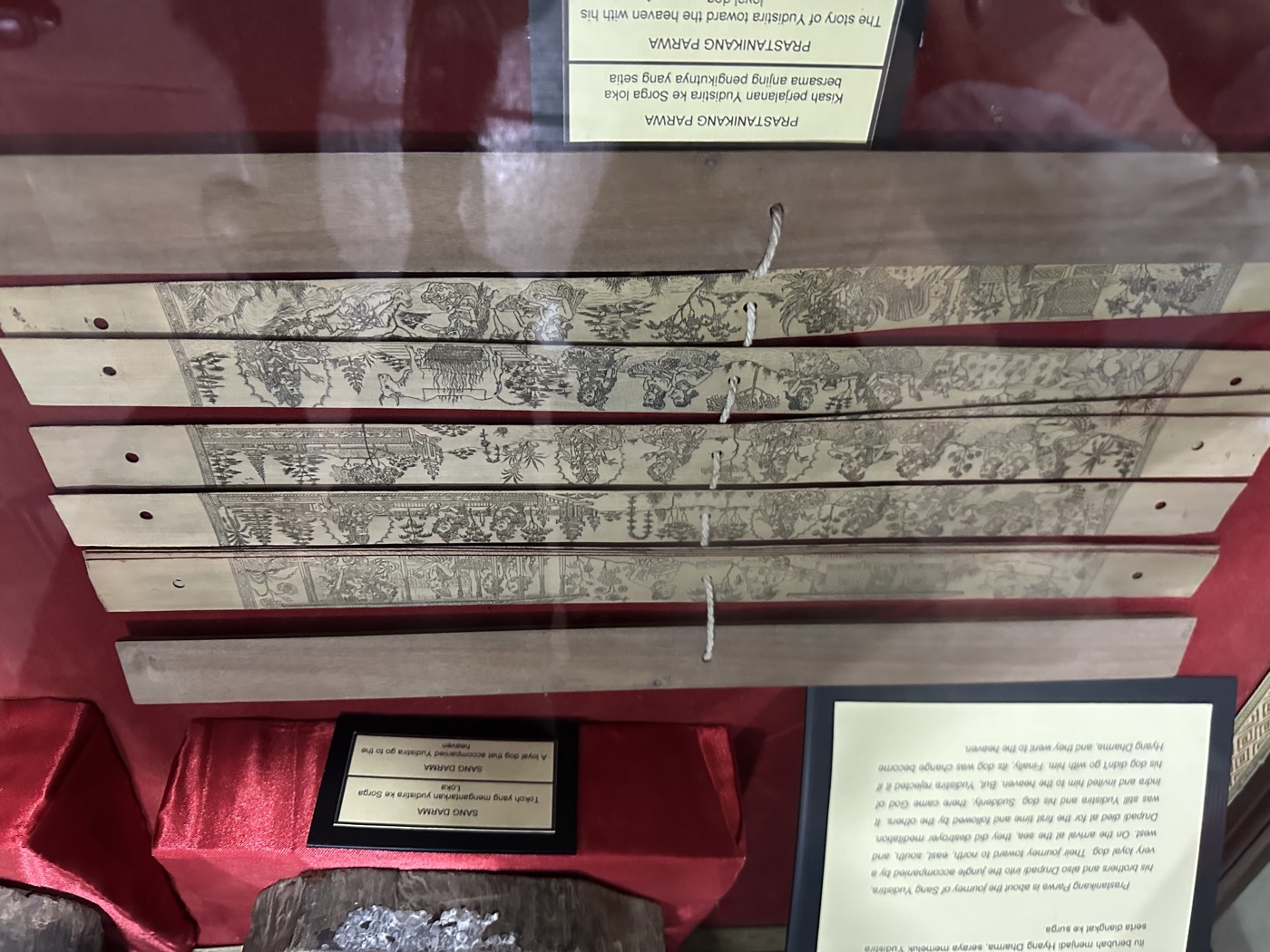 Lontar palm-leaf manuscripts of the kind a balian usada studies, on display at Gedong Kirtya in Singaraja. Photo: Hanno Lans / Wikimedia Commons (CC BY 4.0)
North Bali keeps many of these texts. The manuscript library at Gedong Kirtya in Singaraja was founded in 1928. It holds lontar on religion, law and history, with usada manuscripts on medicine among them.
Balian taksu are mediums
Balian taksu work by channelling. They enter a receptive state. In Balinese understanding, a spirit, a deity or an ancestor then speaks through them, to diagnose the problem and advise the person who has come.
The word taksu itself points to a spiritual presence, the charged quality that makes a healer effective rather than merely skilled.
A balian taksu is often consulted when an illness or misfortune seems to have its cause in the unseen world.
Balian tulang set bones
Balian tulang are the bonesetters, specialists in the physical body. They treat fractures and dislocations, sprains and joint pain. They work with their hands, and with deep practical knowledge of how the body is put together.
Their reputation is built on results. In many villages a balian tulang is sought out before a hospital for certain kinds of injury.
These are broad categories, and a single healer may carry more than one gift. The healer you might meet has a specific calling, earned over a lifetime.
A Visit Is a Consultation, and You Bring an Offering
A visit to a balian is closer in spirit to seeing a respected elder than to booking an appointment.
People come with a real concern and sit with it. The balian usually begins by asking what has brought you, and from there the method depends on the kind of healer.
A balian usada may examine you, ask about your daily life, and prepare a herbal remedy or a course of treatment. A balian taksu may enter a trance and relay what comes through.
The diagnosis can range from a physical cause to a spiritual imbalance. That might be an offering owed, an ancestor unhonoured, or a disturbance that needs correcting through ritual.
Bring canang sari, or a pejati for a formal consultation
An offering is part of the exchange. Visitors are expected to bring canang sari or, for a more formal consultation, a pejati, the larger offering used to mark a sincere request. Both are easily arranged with the help of the local who takes you.
The offering is the proper way of entering a sacred encounter, the same gesture a Balinese person would make. It is not a payment in the transactional sense.
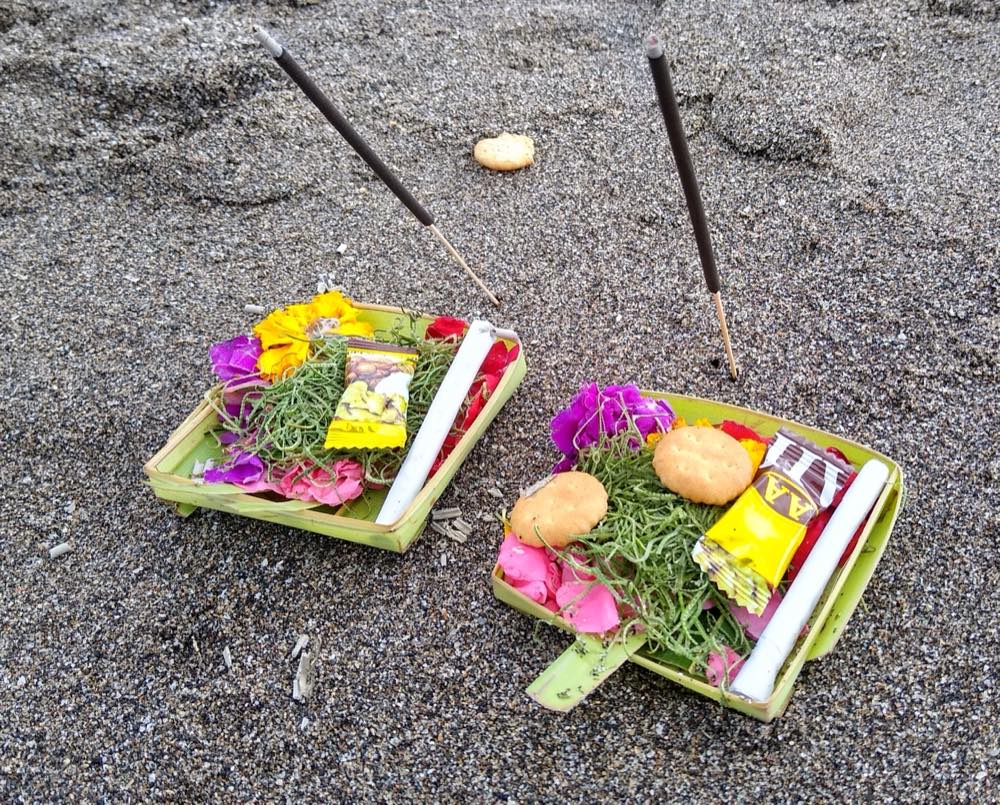 Canang sari, the everyday offering a visitor brings to a consultation. Photo: Mx. Granger / Wikimedia Commons (CC0)
Dress as you would for a temple
Cover your shoulders and legs, and wear a sarong and sash if the setting calls for it. The whole encounter asks for the same quietness and respect you would bring to a ceremony.
Go With a Local Who Knows the Healer
The first step is to go with a local, or with a trusted translator who knows the healer.
Most balian speak Balinese or Indonesian, not English, and the consultation depends entirely on language. A local contact does four things for you:
- knows which healers are genuine and respected
- introduces you properly
- guides you on the right offering
- interprets both the words and the etiquette of the moment
Arriving alone and unannounced, even with good intentions, places a stranger inside a sacred relationship with no bridge.
The balian's role belongs to the community first
The deeper reason is respect. When the "Eat Pray Love" idea of Bali turned the balian into a bucket-list stop, some healers found themselves treated as a spectacle. They were photographed, filmed and lined up by the busload, for an experience rather than a need.
That pressure has worn on the tradition, and a number of genuine balian now keep their distance from tourism altogether.
Come only with a sincere reason
Do not arrive expecting a performance, do not film without clear permission, and do not treat a serious spiritual practice as content.
Come only if you have a sincere reason and a respectful way in. If you are mostly curious, the more honest path is to learn about the tradition rather than intrude on it. The guide to understanding Balinese ceremonies is a good place to begin.
Approached with humility and a local who vouches for you, a visit can be quietly profound. Approached the wrong way, it takes something from a culture that has already given visitors a great deal.
In North Bali the Balian Remains Part of Village Life
North Bali has held on to its older rhythms, and traditional healing is part of that.
Village life in regencies like Buleleng still runs close to the temple and the banjar. The balian remains a known and trusted figure within it.
That does not make healers more available to outsiders here. With little foot traffic, the relationships are more personal and the introductions matter more. A patient traveller with a good local connection does better here than one looking for a quick experience.
The north also has its healing places
The region carries a broader tradition of healing places. The hot springs at Banjar are one, and their sulphur water has long been used for skin complaints. The sacred bathing sites and the temple complexes tied to purification are others.
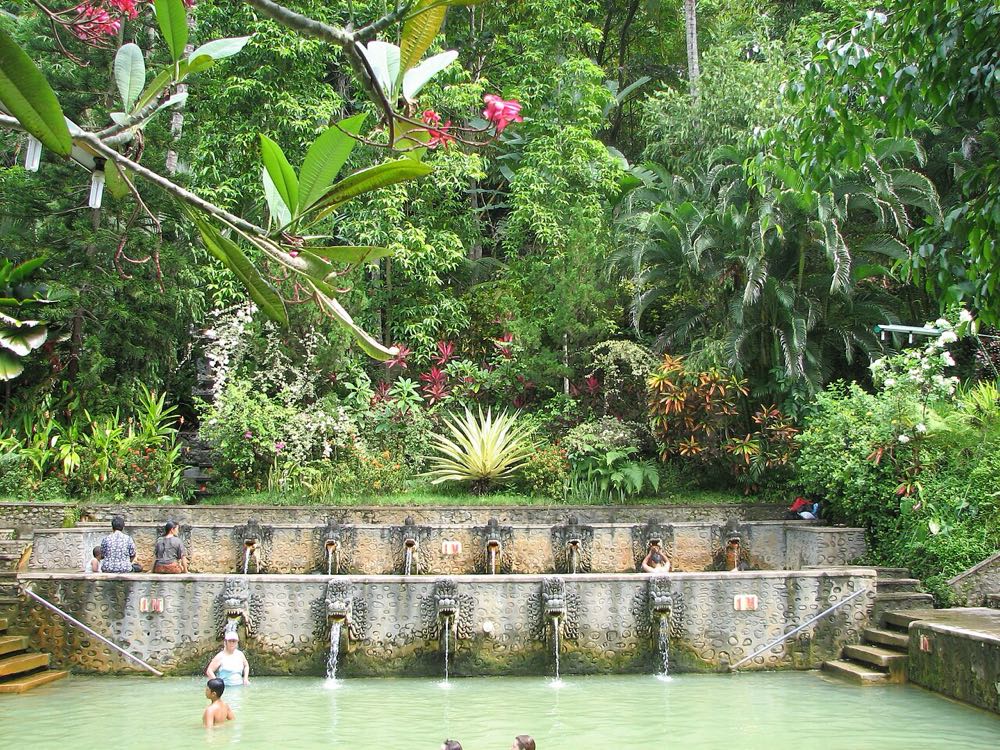 The naga-spout pools at Banjar. Photo: Eric Bajart / Wikimedia Commons (CC BY-SA 3.0)
All of them rest on the teaching the balian works from, in which water, prayer and ritual restore balance in body and spirit.
For a related contemporary practice, see sound healing in north Bali.
Practical Notes
Customs around visiting a balian vary by village and by healer. Always confirm locally before making any plans, and let your local contact lead.
- Introduction: go with a trusted local or translator who knows the healer personally. Start here.
- Offering: canang sari for a simple visit, or a pejati for a formal consultation. Your local contact can help you prepare it.
- Dress: modest, with covered shoulders and legs, and a sarong and sash where appropriate.
- Your reason: treat it as a sincere consultation, and come with a real reason.
- Photographs and video: always ask permission first, and accept a no without pushing.
- Medical care: be ready for an experience very different from Western medicine. A balian is a complement to medical care, never a replacement for it.
- If the answer is no: many genuine balian prefer to stay away from tourism. Respect that, and never pressure an introduction.
FAQ
What is a Balian in Bali? A balian is a traditional Balinese healer, a role woven deeply into village life and into Balinese Hinduism. People consult a balian for physical illness, misfortune and questions of the spirit, often alongside the village priest and modern medicine. The balian works with both the visible body and the unseen world, which in Balinese understanding are connected.
Can tourists visit a Balinese healer? Sometimes, yes, with care. A visit should be a sincere consultation arranged through a trusted local or translator who knows the healer, and never a casual stop on a sightseeing route. Many genuine balian keep their distance from tourism, so a respectful introduction matters far more than simply showing up.
What types of Balinese healers are there? Broadly, there are three kinds. The balian usada heals from the old lontar palm-leaf texts using herbs, massage and prayer. The balian taksu is a medium who channels spirits or deities to diagnose and advise. The balian tulang is a bonesetter who treats fractures and injuries with skilled hands. A single healer may carry more than one of these gifts.
How do you find a traditional healer in Bali? Through people. The right way is a personal introduction from a local who knows and trusts a particular balian, ideally someone who can also translate and guide you on the proper offering and etiquette. Arriving alone, or hunting for a "famous" healer to visit, misses the point of how this tradition works.
Is it respectful to visit a Balian? It can be, if you come for a genuine reason, go with a local, bring the right offering, dress modestly and treat the encounter as sacred. It becomes disrespectful when a balian is approached as a tourist attraction, filmed for content or treated as a show. The difference lies in your intention and your manners.
Sources
- NOW! Bali, The healing traditions of the balian usada (the balian usada, urat, tulang and taksu), read September 2026
- Bali Express, The kinds of balian in the world of usada (the balian usada who works from the lontar usada, and the balian ketakson), read September 2026 (in Indonesian)
- Indonesia Ministry of Tourism, UPTD Gedong Kirtya, Singaraja, read September 2026
- Banjar District, Buleleng Regency, Air Panas Banjar, read September 2026 (in Indonesian)
Read next: Balinese Hinduism explained, Gedong Kirtya and Banjar hot springs.