On this page
- In Brief
- Munduk Coffee Plantations at a Glance
- The Tours Are Farm Visits on the Families' Own Land
- The Walk Runs From the Tree to the Cup
- The Paths Are Gentle and the Air Is Cool
- Luwak Coffee: Ask How It Is Made Before You Order
- Arrange the Walk With a Village Family
- Morning in the Dry Season Is the Best Time
- The Gardens Are on the Slopes Around Munduk Village
- How to Fit It In
- Practical Notes
- FAQ
- Sources
In Brief
A Munduk coffee plantation visit is a guided walk through a family's own garden, ending with a tasting. You follow the bean from the tree through pulping, sun-drying and wood-fire roasting to the cup. Most walks last about an hour.
Arrange the walk through your guesthouse or a driver, directly with a village family, and agree the price before you set out. Morning is the better slot in any season.
If luwak coffee is offered, ask how it is produced. Skip it when the civets are caged.
Munduk Coffee Plantations at a Glance
- What: a guided walk through a family's hillside garden, from the coffee tree to a tasting
- Where: the slopes around Munduk village, in the central mountains of north Bali
- What grows: arabica and robusta coffee, with clove, cinnamon, cacao and vanilla in between
- Who runs it: local families, on their own land
- How long: about an hour, or up to two with a guide who takes the spice gardens slowly
- Cost: a per-person price you agree when you arrange the walk, paid in cash
- Best time: a morning in the dry season, April to October
- Getting there: about two hours from the airport via the Bedugul road, or a climb up from Lovina
The Tours Are Farm Visits on the Families' Own Land
Local families run these walks through the gardens they farm themselves.
The hills around the village are planted with clove, coffee, vanilla and cocoa, so you are visiting a working farm. The coffee is arabica and robusta, grown in smallholder plots across the slopes. Cinnamon grows between the plots too, alongside the clove, cacao and vanilla.
This is cool highland country, high on a ridge above the coast. The Buleleng agriculture office counts Munduk among its arabica coffee villages.
The walks are short, unhurried and easy on the legs. Most last around an hour. A guide who works slowly through the spice gardens can stretch one to two hours without it feeling padded.
The Walk Runs From the Tree to the Cup
A good walk follows the whole cycle, from the coffee tree to the glass in your hand.
First, the coffee and spice gardens
You start among the coffee bushes. The guide shows you the cherries on the branch and how arabica and robusta differ on the same hillside.
From there the walk usually runs through the rest of the planting, past clove trees and cinnamon bark. You also see cacao pods and the vanilla vines that climb their host trees. Smelling a fresh clove off the branch or splitting a cacao pod open is the part many people remember.
Then pulping, drying and wood-fire roasting
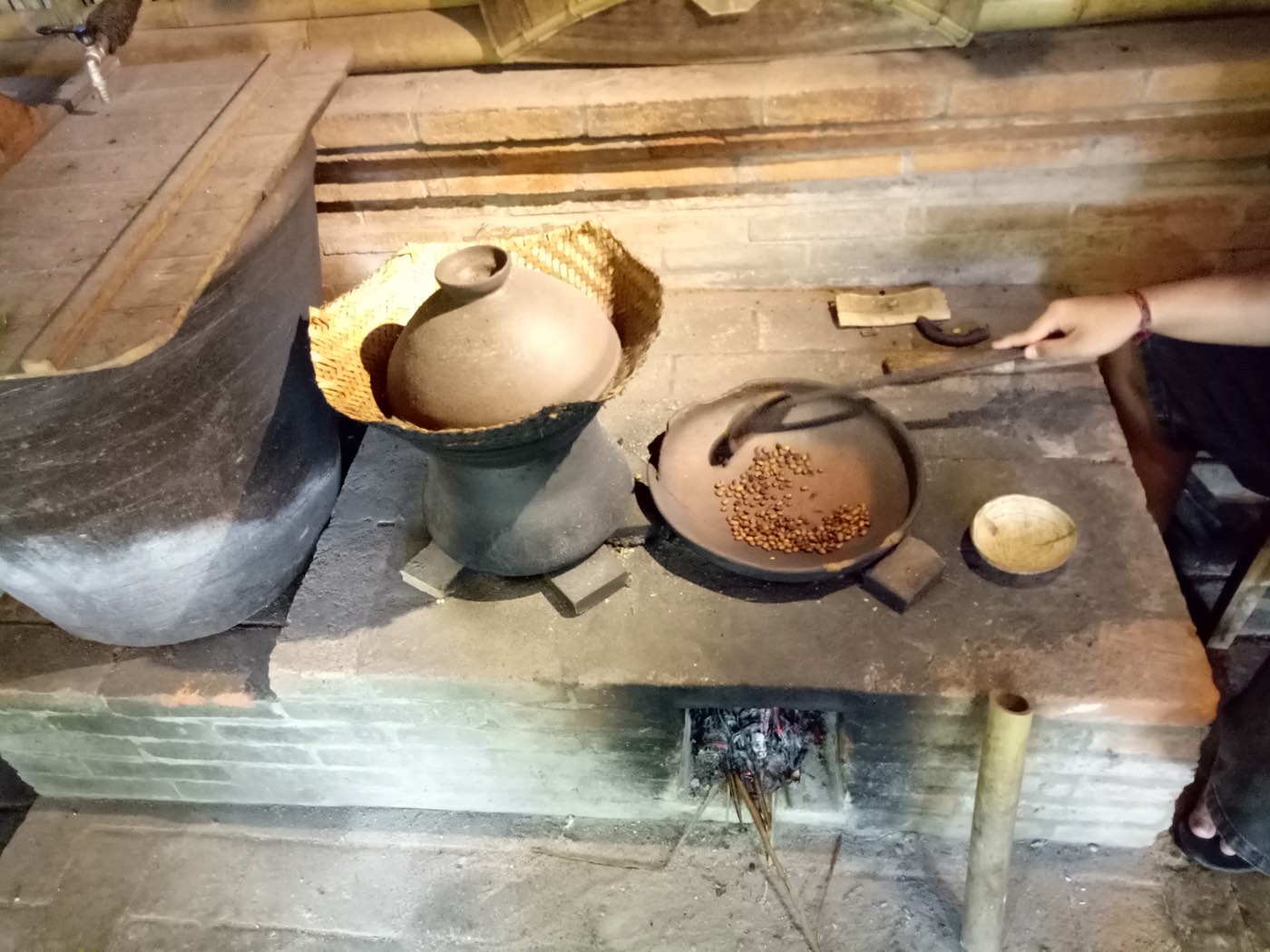
You see the cherries pulped and the beans dried on racks in the sun. The roasting is done in a wok over a wood fire. The beans are turned by hand until they darken and the smell fills the yard.
The grinding is often done in front of you, by hand or with a small mill.
Last, a tasting above the valley
The walk ends with a tasting, served on a bench with a view over the valley. Most families lay out a spread of what they make on the land. Coffee comes first, with cocoa, lemongrass tea, ginger and turmeric beside it.
It is a relaxed half-hour, with the spice gardens you just walked through now on the table.
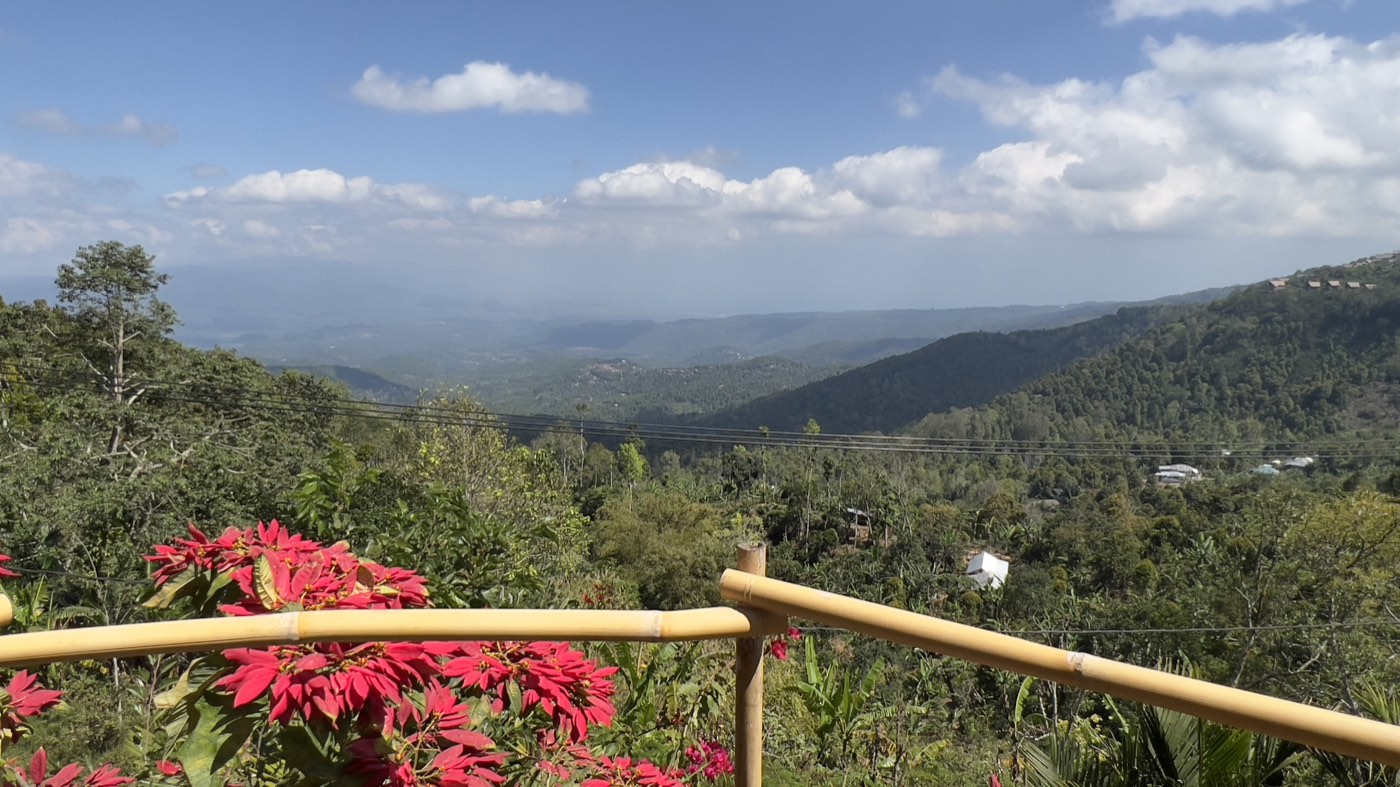 The valley view from a Munduk coffee farm. Photo: Stefan Fussan / Wikimedia Commons (CC BY-SA 3.0)
The Paths Are Gentle and the Air Is Cool
The terrain is gentle by Bali standards. You walk dirt paths and garden tracks through the planting, with some short slopes that get slick after rain. Closed shoes with grip are better than sandals.
It is cool up here, so the walking stays comfortable even at midday. The same effort on the coast would be far less comfortable. The pace is relaxed throughout, a stroll through a farm with a guide who knows the trees.
Luwak Coffee: Ask How It Is Made Before You Order
Many plantation visits offer luwak coffee, the expensive item on the tasting menu.
The bean is famous for passing through a civet, a small cat-like animal that eats the ripe cherries. It is made in two very different ways, and it is worth understanding them before you order.
Some operations keep civets in cages and feed them cherries to force production. That is cramped and unnatural for a wild animal, and the welfare concern is real.
The genuine version is wild-collected. The droppings of free-roaming civets are gathered from the forest floor, the way the coffee was originally found.
Ask the family how theirs is produced before you decide. A farm that collects it wild will usually be glad to explain, and your question raises the standard for the visitors who come after you.
Northbound's read is that the experience is fine when the coffee is wild-collected and worth skipping when it is caged. The walk and the coffee off the trees around you stand on their own, with or without the luwak.
Arrange the Walk With a Village Family
Arrange the walk with a local family in the village rather than through a resort desk.
The families who farm these slopes run the agrotourism on their own land, so the money goes straight to the people doing the work. The walk is also slower and more genuine than a packaged add-on. A guide who grew up on the plot can show you things a booking desk cannot.
Ask at your guesthouse, or have a driver take you to one of the family-run gardens on the ridge.
Morning in the Dry Season Is the Best Time
The dry season, April to October, gives the easiest walking and the clearest views over the valley while you taste. June through September is the reliable window, with firmer paths and mornings that clear early.
The wet season runs October to April, with October and April as changeover months (Bali provincial government). It keeps the gardens lush and green, and the coffee flowers and fruits through parts of it. The paths turn slippery, though, and afternoon rain is common.
Morning is the better slot in any season. The light is good, and you catch the family before the day's other visitors.
The harvest runs roughly through the dry months into the early wet season. A dry-season walk is therefore more likely to show you cherries on the tree and beans on the drying racks.
The Gardens Are on the Slopes Around Munduk Village
The plantation gardens sit on the slopes around Munduk village, in the central mountains of north Bali.
From a base in Munduk you are already among them. Many of the family gardens are within walking distance of the village road, and the rest are a short drive.
From the coast at Lovina, Munduk is a climb up through the mountains, and it is the shorter of the two approaches. From the airport, the regency's tourism site puts the drive at about two hours via the Bedugul road. An older tourism office feature gives two and a half.
A private driver is the practical way up either route, because the roads are narrow and steep through the bends. For the full breakdown of routes and rates, see getting to north Bali.
How to Fit It In
A coffee walk pairs naturally with the morning waterfall trails, since several of the falls are reached through the same plantation land. You can fold the walk into a day on foot. See the Munduk waterfalls hiking guide for how the trails and the gardens overlap.
To add Tamblingan and Buyan to the same day, see the twin lakes guide. For where the walk fits in the wider highland trip, see the Munduk guide.
Practical Notes
The details below change. Confirm locally before visiting.
- Tour cost: agree the per-person price, and what it includes, when you arrange the walk.
- Luwak coffee: ask whether it is part of the tasting or extra, and how it is produced, before ordering.
- Booking: arrange through your guesthouse or a driver, directly with a village family, rather than a resort desk.
- Walking: wear closed shoes with grip, as the paths get slick after rain.
- Timing: morning is best for light, cooler air and catching the family early.
- Cash: bring small notes. The family gardens take cash, not cards.
- Connectivity: mobile data works in the village and is patchier out on the garden tracks.
FAQ
Can you tour coffee plantations in Munduk? Yes. The hills around Munduk are planted with smallholder coffee alongside clove, cinnamon, cacao and vanilla, and local families run guided agrotourism walks through their own gardens. The walk follows the bean from the tree through processing to a tasting at the end.
What is a Munduk coffee tour like? It is a relaxed walk through a working farm. You see the coffee cherries on the bush, the spice gardens in between, and the processing from pulping to drying to roasting over a wood fire. Then you sit for a tasting of coffee, cocoa and herbal teas with a valley view. Most walks last about an hour.
Is luwak coffee ethical? It depends on how it is made. Caged-civet operations raise genuine welfare concerns, while wild-collected luwak, gathered from free-roaming civets in the forest, does not. Ask the family how theirs is produced before you order it, and skip it if the answer is caged.
How do you arrange a coffee plantation tour in Munduk? Through your guesthouse, a driver, or directly with a village family at the gate of their garden. Agree the per-person price when you arrange the walk rather than at the end of it. Ask then whether the tasting and any luwak coffee are included.
How long does a Munduk coffee tour take? About an hour for the walk and tasting, or up to two hours if the guide works slowly through the spice gardens. It pairs well with a morning on the waterfall trails, since several falls are reached through the same plantation land.
Sources
- Visit North Bali (Buleleng Regency), Munduk Tourism Village (the clove, coffee, vanilla and cocoa gardens; about two hours from the airport), read September 2026
- Buleleng Agriculture, Food Security and Fisheries Office, Consolidating the arabica coffee area in Gesing, Munduk and Gobleg, read September 2026 (in Indonesian)
- Buleleng Research and Innovation Agency, Review of the Buleleng arabica and robusta coffee roadmap, read September 2026 (in Indonesian)
- Bali Provincial Government, Tarubali, Iklim tropis laut di Bali (dry season April to October, rainy season October to April, October and April as changeover months), read October 2026 (in Indonesian)
- Buleleng Culture and Tourism Office, Menikmati Hening dan Sejuk Desa Munduk (a 2013 magazine feature republished by the office: about two and a half hours from the airport), read October 2026 (in Indonesian)
Read next: the Munduk guide, Munduk waterfalls hiking and the twin lakes of Buyan and Tamblingan.