On this page
- In Brief
- The Twin Lakes at a Glance
- Two Crater Lakes in One Valley, Inside One Caldera
- Protected Land: Tamblingan Is Kept Undeveloped on Purpose
- Lake Tamblingan: the Quiet Lake, with Canoes, Forest and Temples
- Lake Buyan: the Larger Lake Beside the Main Road
- The Wanagiri Viewpoints: Both Lakes from the Ridge Above
- When to Go: First Light, in the Dry Months
- How to Get There: the Road Between Munduk and Bedugul
- How to Fit It In: the Ridge First, Then the Water
- Practical Notes
- FAQ
- Sources
In Brief
The twin lakes of Bali are Danau Buyan and Danau Tamblingan, two crater lakes in the central highlands of north Bali. They sit side by side on the road between Munduk and Bedugul. Buyan is the larger lake, beside the main road. Tamblingan is the smaller and quieter one, with forest down to its shore and temples around the water. You can arrange a dugout canoe there on the spot.
The famous view of both lakes is from the Wanagiri viewpoints on the ridge above. Go down to the water as well, and go at first light, when cloud sits in the valley and the shore is emptier. The drive takes two and a half to three hours from Denpasar by the Bedugul road, and it is a short one from Munduk.
The Twin Lakes at a Glance
- What they are: Danau Buyan and Danau Tamblingan, two crater lakes in one valley, split by a narrow forested saddle
- Where: the central highlands of north Bali, just below the Munduk ridge, on the road between Munduk and Bedugul
- Tamblingan: the smaller, higher and quieter lake, in Desa Munduk, Banjar district
- Buyan: the larger lake, along the main road
- What to do: take a dugout canoe on Tamblingan, walk its forest shore, photograph both lakes from the ridge
- Protected: a nature tourism park since 1996, managed by Bali's conservation agency
- From Denpasar: two and a half to three hours by the Bedugul road
- Best time: first light, with the least rain in July, August and September
- Bring: cash and a warm layer
Two Crater Lakes in One Valley, Inside One Caldera
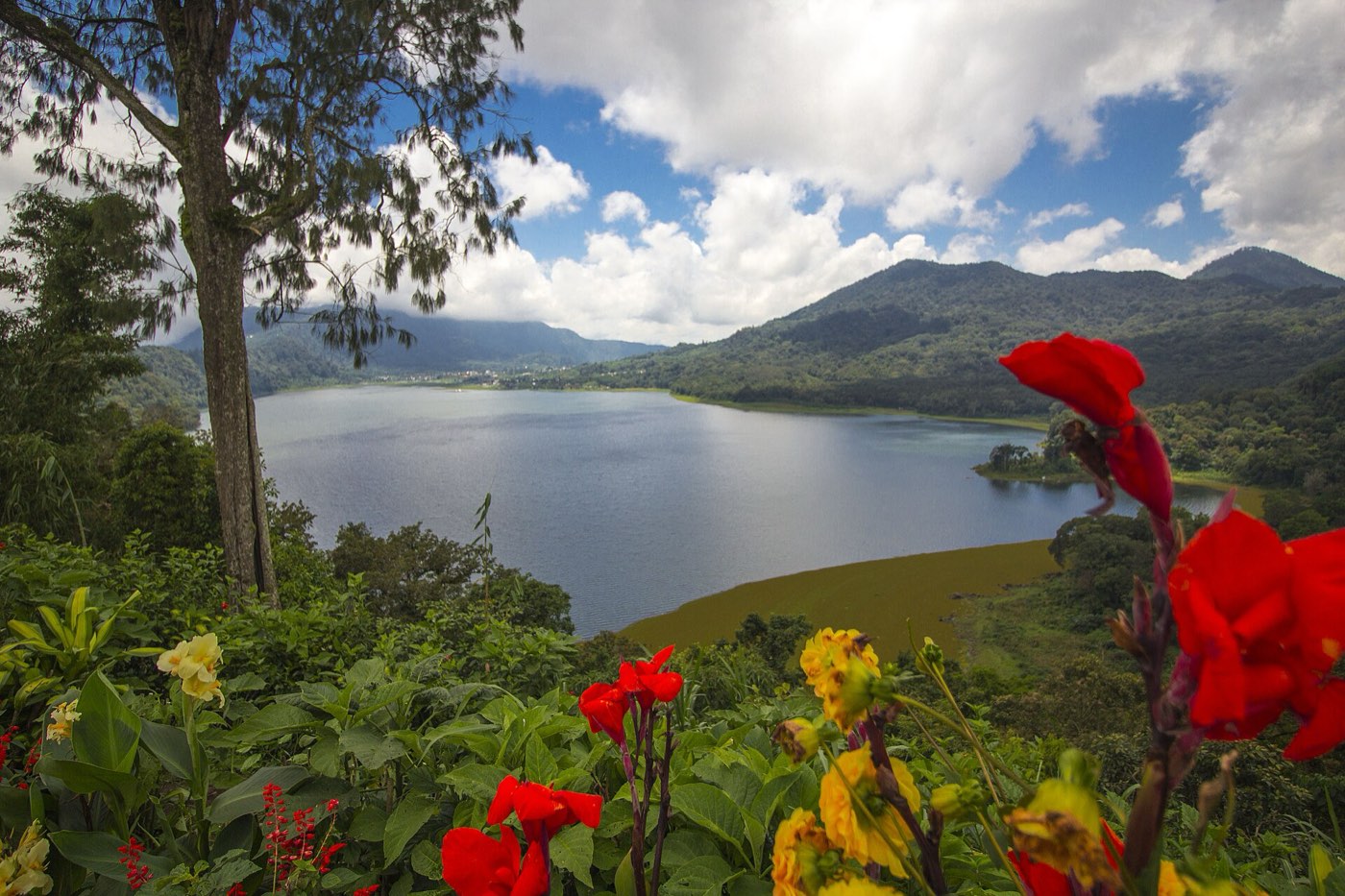
Buyan and Tamblingan share a single valley, separated only by a narrow forested saddle of land.
From the viewpoints above, they read as one body of water split by a green seam. Standing on the saddle, or looking down on it from the ridge, you understand why the pair is treated as one sight.
Their pairing is no accident. Both sit inside one large caldera, along with Danau Beratan to the east, so the three lakes belong to one collapsed volcano. Buleleng's culture and tourism office places Tamblingan on the northern slope of Gunung Lesung, in Desa Munduk in Banjar district.
Both lakes sit at altitude, which is why the air is cool and the mornings often arrive under cloud.
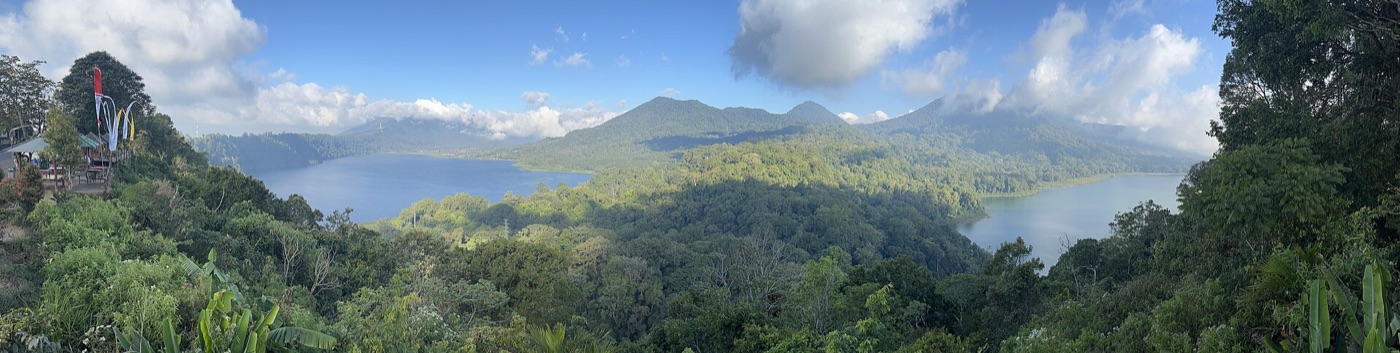 Buyan and Tamblingan from the Wanagiri ridge, one valley split by a green seam. Photo: Stefan Fussan / Wikimedia Commons (CC BY-SA 3.0)
Protected Land: Tamblingan Is Kept Undeveloped on Purpose
The lakes and the forest around them are protected land.
The catchment holds the Batukahu nature reserve, protected forest and the Danau Buyan and Danau Tamblingan nature tourism park. The park was established by a forestry ministry decree in 1996 and is managed by Bali's conservation agency.
Buleleng's culture and tourism office is explicit that Tamblingan is not being developed towards modern tourism, to protect its nature and environment. That is why so little is built here, and why this side of the Bali highlands stays unhurried.
Lake Tamblingan: the Quiet Lake, with Canoes, Forest and Temples
Tamblingan is the one to slow down for.
It is the smaller and higher of the two lakes, and the lack of road access along its shore has kept it relatively undeveloped. The forest at its edge is real rainforest, and the trees come right down to still water. Most mornings the loudest thing is birdsong.
Cross the Lake in a Dugout Canoe
Local fishermen still cross Tamblingan in narrow wooden boats hollowed from a single trunk. The same kind of boat has worked this water for generations.
You can usually arrange a quiet paddle out onto the lake with one of them. The canoe sits low to the surface and has no motor, and the forest slides past on both sides. It is the part of a visit most people remember.
Fishermen from the lakeside village run the canoes informally. So you arrange it at the shore, with no online booking, and you agree the price there before you get in. The shore on the Munduk side is the usual way in.
Walk the Forest Shore
The forest fringe on the Tamblingan side is a calm, flat walk under the trees beside the water. It is easy going. The fringe stays damp, so wear walking shoes.
A Sacred Lake, Kept Pure by Four Villages
The lake is sacred ground as well as scenery. Pura Ulun Danu Tamblingan and a set of older temples stand around the water.
Four villages share the duty of keeping the lake and its temples pure:
- Munduk
- Gobleg
- Gesing
- Umejero
Treat the shore as temple ground. Dress and behave as you would at any temple, and keep clear of ceremonies. The temple etiquette guide covers the details, and Tri Hita Karana explains why a lake gets a temple in the first place.
For where Tamblingan sits within a full highland stay, see the Munduk guide.
Lake Buyan: the Larger Lake Beside the Main Road
Buyan is the larger lake and the more visible one.
The main road from Munduk down toward Bedugul runs along its northern edge. Most visitors get their first look at the twin lakes here, from a car window. The water spreads out below the road through gaps in the trees.
Buyan is easier to reach and easier to photograph from the roadside. A few simple warungs and pull-offs have grown up along the route. It is the busier and more developed of the two, though busy is relative in a valley this quiet. Early in the day it can still feel like you have it to yourself.
The Wanagiri Viewpoints: Both Lakes from the Ridge Above
The famous photographs of the twin lakes are taken from the ridge above the water.
The viewpoints cluster around Wanagiri, where the land drops away and both lakes open up below through the tree canopy. The swings, nests and platforms here were built for the view down over Buyan and Tamblingan, the classic frame.
Early in the day, cloud often sits in the valley below the ridge, and the lakes appear and disappear as it moves. By mid-morning the coach parties arrive and the light flattens.
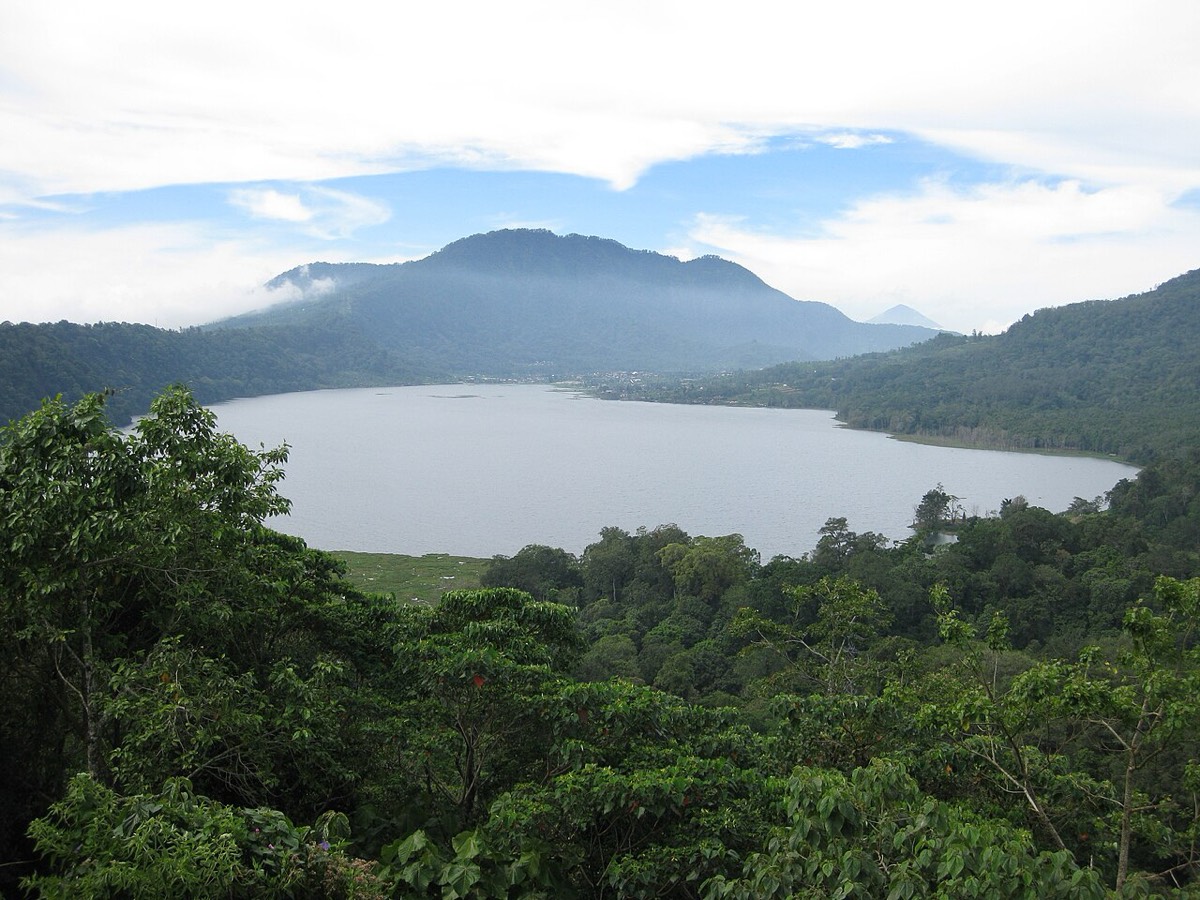 Tamblingan from the ridge above. Photo: Dave / Wikimedia Commons (CC BY 2.0)
Wanagiri Hidden Hills has the full breakdown of the platforms, the photo spots and the timing.
When to Go: First Light, in the Dry Months
Go early. It is the single most useful thing to know about the twin lakes.
The valley is cool and often cloud-wrapped in the morning. That early cloud, with the lakes drifting in and out of it, is far more striking than the flat haze of midday. The coach traffic from the south arrives mid-morning, so the early window also gives you an emptier shore.
Be at the ridge at first light if you can. From Munduk that is realistic. From the south it means leaving in the dark, which is one more reason to stay up in the highlands overnight.
The dry months give the clearest mornings and the most reliable light. The regency's environment office records the lowest rainfall around the lakes in July, August and September, which are also the coldest months up here. The season falls on no fixed calendar, and BMKG forecasts its onset each year.
The wet season brings heavier, more dramatic cloud that can fill the whole valley at dawn. It is beautiful when it works, though the roads and shore paths turn slippery. Whatever the season, the highlands run cool, so bring a layer.
How to Get There: the Road Between Munduk and Bedugul
The twin lakes sit on the road between Munduk and Bedugul, easy to reach from either direction.
From Munduk it is a short drive down off the ridge to the Buyan roadside and the turn for Tamblingan.
From the south, the lakes come up on the main Bedugul road as it climbs into the mountains. They lie past Danau Beratan, on the way toward the Munduk ridge. Buleleng's culture and tourism office puts the drive at two and a half to three hours from Denpasar. That is why many people see the lakes as a stop on the way up to the north coast.
A private driver is the practical way to do it. The mountain road is narrow and winding, and parking at the lakes and viewpoints is informal. For the full picture of routes and timing, see getting to north Bali.
How to Fit It In: the Ridge First, Then the Water
The viewpoints and the lakeshore are two different visits with two different rhythms, and most people do both.
Most day-trippers stop at the ridge for the photograph and drive on, yet the lakes reward the people who go down to the water. A driver lets you take the ridge in the morning and the water afterward, without working out logistics on the fly.
Staying up in Munduk is the way to have the lakes to yourself in the morning, before anything arrives from the south. For a fuller highland day, the lakes pair naturally with Munduk's waterfalls and plantations. See the Munduk guide for the surrounding ground.
Practical Notes
The details below change. Confirm locally before visiting.
- Lake and viewpoint entry: local fees may apply at the viewpoints and some shore access points, so carry cash
- Parking: informal, at the roadside pull-offs and viewpoints
- Dugout canoe on Tamblingan: arranged at the shore with local boatmen, price agreed before you set off
- Getting there: a private driver is the practical option on the narrow, winding road
- What to pack: a light jacket or fleece for the cool morning air, and walking shoes for the damp lakeshore path
- Connectivity: mobile data is patchy in the valley and better up on the ridge
- Timing: at first light for the best cloud and the emptiest shore
FAQ
What are the twin lakes in Bali? The twin lakes are Danau Buyan and Danau Tamblingan, two volcanic crater lakes sitting side by side in the central highlands of north Bali, below the Munduk ridge. They share one valley, separated by a narrow forested saddle. Tamblingan is the smaller, quieter, forest-fringed lake, and Buyan is the larger one along the main road.
How do you get to the twin lakes? They sit on the road between Munduk and Bedugul. From Munduk it is a short drive down off the ridge. From the south they come up on the main Bedugul road, two and a half to three hours from Denpasar. A private driver is the practical choice for the narrow mountain roads. See getting to north Bali.
Can you canoe on Lake Tamblingan? Yes. Local fishermen still work Tamblingan in traditional dugout canoes, and you can usually arrange a quiet paddle out onto the lake at the shore on the Munduk side. It is arranged informally at the shore, with the price agreed there.
Are the twin lakes worth visiting? Yes, particularly if you want the quiet, cool, scenic side of Bali. The view down from the Wanagiri viewpoints is the classic photograph of the lakes, and the dugout canoe on Tamblingan is a calm paddle that most day-trippers miss.
When is the best time to visit the twin lakes? At first light. The valley is cool and often cloud-wrapped at dawn, the light is best, and you are ahead of the mid-morning coach traffic from the south. The dry months give the clearest mornings, with the least rain around the lakes in July to September.
Are the twin lakes protected land? Yes. The catchment holds the Batukahu nature reserve and protected forest. The lakes themselves sit within the Danau Buyan and Danau Tamblingan nature tourism park, created by forestry ministry decree in 1996 and managed by Bali's natural resources conservation agency. Buleleng's culture and tourism office says plainly that Tamblingan is deliberately not being developed for modern tourism.
Is Lake Tamblingan sacred? Yes. Pura Ulun Danu Tamblingan and several older temples stand around the lake and are part of the spiritual life of the surrounding villages, and the lake is held sacred. Dress and behave as you would at any temple, and keep away from ceremonies.
Sources
- Balai Konservasi Sumber Daya Alam (BKSDA) Bali, Danau Buyan and Danau Tamblingan conservation area (the nature tourism park, its founding decrees, its area across Buleleng and Tabanan, and the protected forest it belongs to), Indonesian, read September 2026
- Buleleng culture and tourism office, Keindahan Alam Danau Tamblingan and Wisata Alam Danau Tamblingan (Tamblingan on the northern slope of Gunung Lesung in Desa Munduk, Banjar district, one of three lakes in a single caldera; the temples around the lake including Pura Ulun Danu Tamblingan and the four villages that keep them; the lake held sacred; the drive from Denpasar; and the decision not to develop the lake for modern tourism in order to protect its nature), Indonesian, read September 2026
- Buleleng Regency environment office, TWA Danau Buyan dan Danau Tamblingan (the nature tourism park established by Ministry of Forestry decree in 1996 and managed by Balai KSDA Bali, the Batukahu nature reserve and protected forest in the catchment, and the driest and coldest months at the lakes), Indonesian, read September 2026
- BMKG, Indonesian Agency for Meteorology, Climatology and Geophysics, seasonal prediction (the yearly dry-season forecast), Indonesian, read September 2026
Read next: the Munduk guide for the village above the lakes, Wanagiri Hidden Hills for the viewpoints on the ridge, and Bedugul for the third lake in the same caldera.