On this page
In Brief
Snow fruit, buah salju in Indonesian, is the Bedugul name for the ice-cream bean, Inga edulis, a tree of the pea family native to Central and South America. A botanist at Indonesia's national research agency, BRIN, identifies the Bedugul trees as that species. The fruit is a long, ribbed green pod. Inside, each seed is wrapped in white, sweet pulp that looks like cotton or snow and feels cool in the mouth, which is how it got its name; locals also call it buah es krim, ice-cream fruit. The trees grow around Candikuning village, by Lake Beratan and the Bali Botanic Garden, mostly wild. The fruit is seasonal and sold by hawkers and fruit sellers in Bedugul when the trees are bearing. Eat the pulp and spit out the seeds.
Snow Fruit at a Glance
- Names: buah salju (snow fruit), buah es krim (ice-cream fruit); in English, ice-cream bean
- Species: Inga edulis, family Fabaceae (the pea and bean family)
- Native to: Central and South America
- In Bali: around Candikuning, Bedugul, in the Tabanan highlands
- Altitude: about 1,200 to 1,400 metres, according to BRIN
- What you eat: the white pulp around the seeds, raw
- Season: seasonal; sellers told NusaBali September and October is one of the times it is easy to find
- Where to buy: hawkers by the Bali Botanic Garden car park and fruit sellers in Candikuning
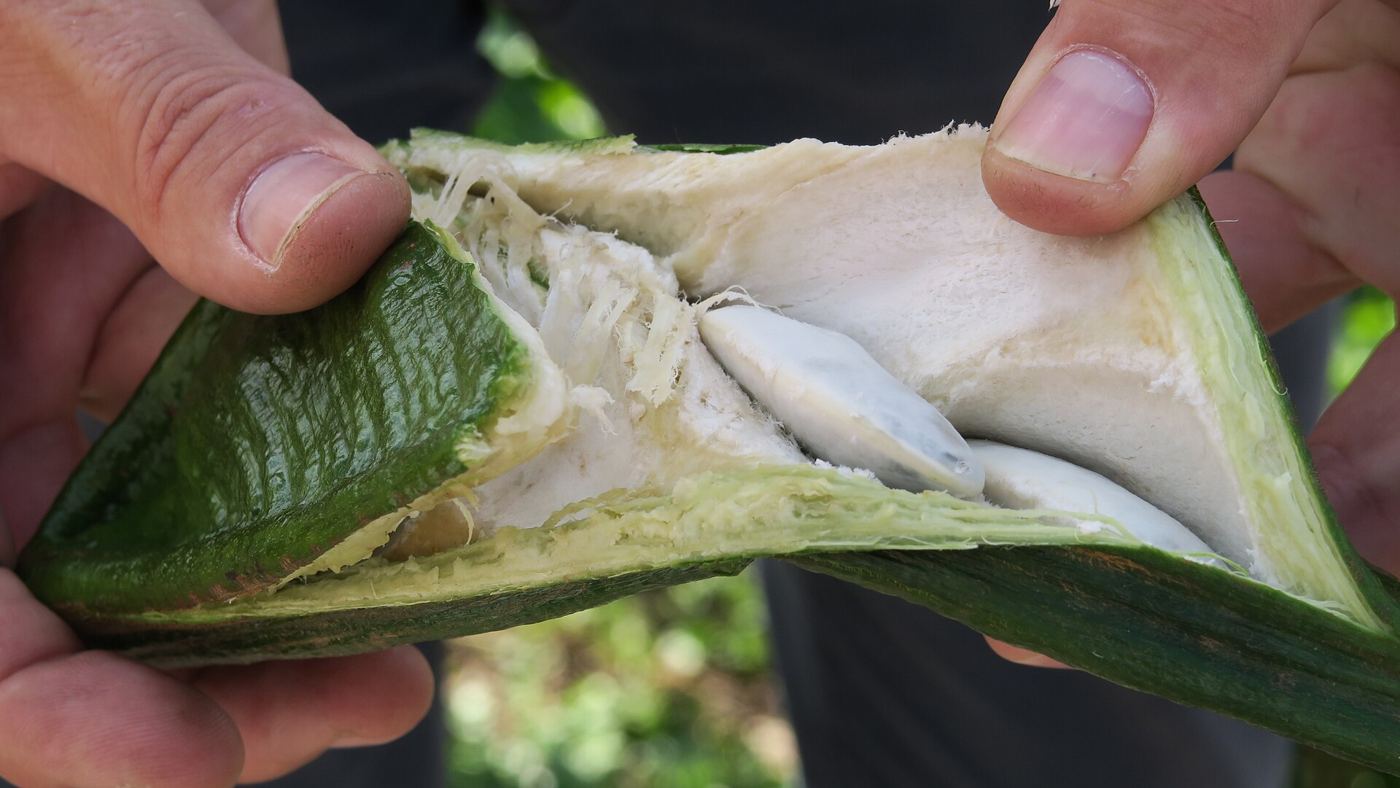 An opened pod of Inga edulis, the tree Bedugul calls snow fruit. The white pulp is the part you eat. Photo: Burkhard Mücke / Wikimedia Commons (CC BY-SA 4.0)
What Snow Fruit Is
The name gives the game away only once you open one. From outside, a snow fruit is a long green pod, ribbed along its length; a Candikuning seller told NusaBali it looks like okra when young and like a tamarind pod when fully ripe. Split it, and inside is a row of seeds, each wrapped in white, fibrous pulp.
The tree is Inga edulis. Farid Kuswantoro, a researcher at BRIN's centre for plant conservation and botanic gardens, identified it for the agricultural magazine Trubus: a member of the pea family from Central and South America, where it is widely grown for its edible fruit. In its home range the pods are sold in markets for the sweet pulp, and the tree is planted to shade coffee and cocoa, according to Wikipedia's account of the species, which also records pods up to a metre long.
One naming trap: another South American tree, Inga feuilleei or pacay, is also sold as ice-cream bean. The Bedugul trees are Inga edulis, as BRIN identifies them.
How a South American Tree Came to Bedugul
Nobody planted an orchard. Budi Ade, a seller from Candikuning, told NusaBali that the seed stock came from Australia, and that the tree seeds itself so readily that seeds thrown on the ground grow; he pointed out snow fruit trees growing along the roads, looking rather like guava trees. He said snow fruit had become popular as a Bedugul souvenir only in recent years.
BRIN's research backs up how easily it spreads. According to Trubus, local people have not cultivated the tree, and most of the fruit sold comes from wild trees. Kuswantoro collected fruit from wild trees inside the Bali Botanic Garden at Bedugul, germinated the 21 seeds, and every one sprouted, the first within three days. The seeds were also polyembryonic: one seed could produce up to four seedlings. His conclusion was that the fruit would be easy to grow on purpose.
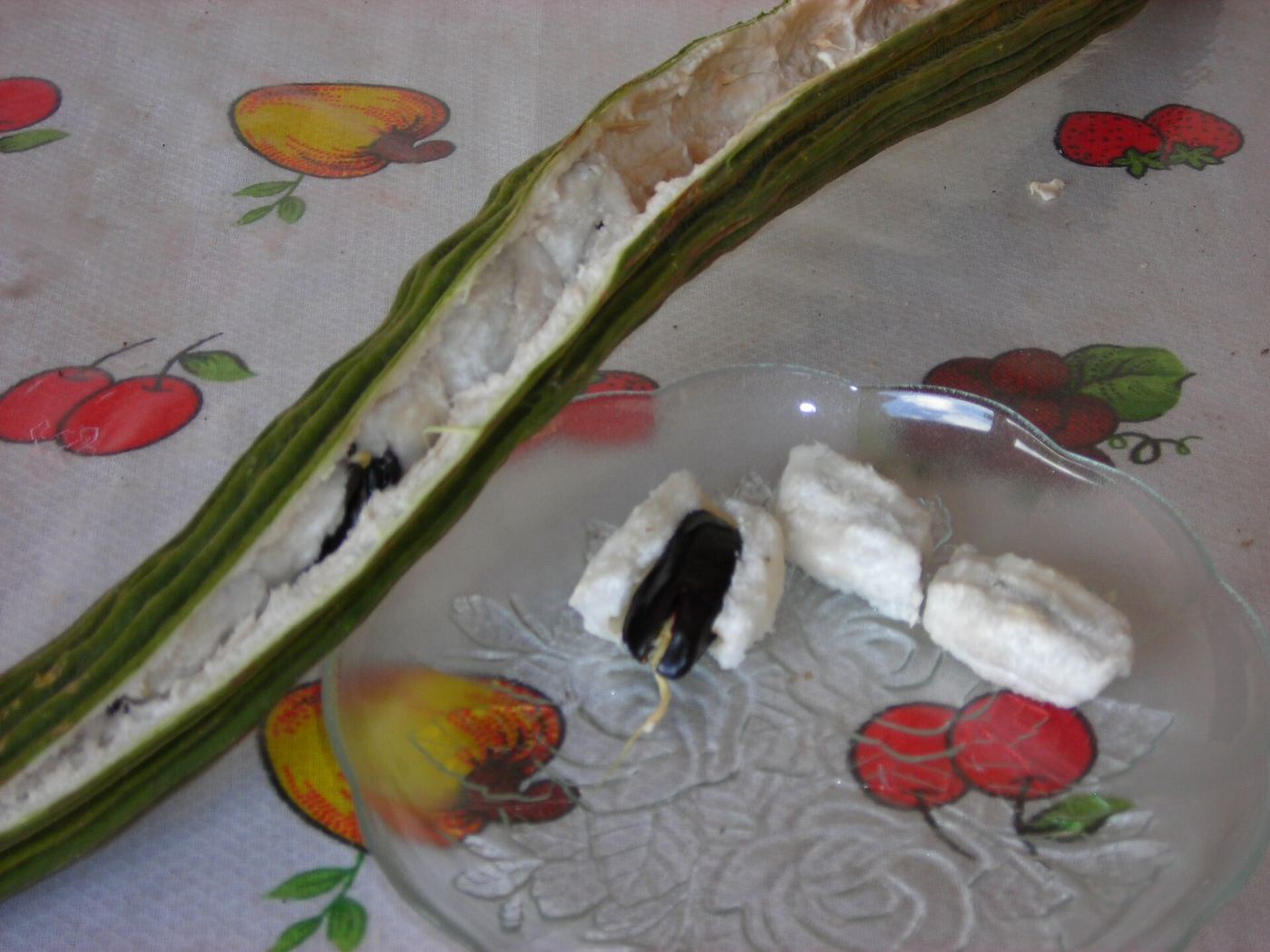 A ripe ice-cream bean pod, opened, with pieces of pulp and a dark seed. Photo: Hellen Perrone / Wikimedia Commons (public domain)
What It Tastes Like and How to Eat It
Open the pod along its seam with your thumbs. Pull out a piece of the white pulp, put it in your mouth and suck the sweetness off the seed. The sellers NusaBali spoke to described the flesh as sweet and cool, like biting into snow, with something of soursop about it but softer and more fibrous. In Kintamani, where the fruit is also sold along the road, a grower told detikBali it is sweet with a slight sourness, and that each pod holds a few marble-sized seeds in cotton-soft flesh.
Do not eat the seeds raw. Wikipedia's account of the species notes that the seeds contain trypsin inhibitors, compounds that are destroyed by cooking. The pulp is the part to eat fresh.
How long it keeps. The Bedugul sellers say a pod lasts about a week at room temperature, and one claimed the sweetness grows if you leave it longer. Wikipedia's account says the fruit ripens quickly and keeps for a few days, longer in the fridge. Buy it to eat the same day or the next.
The sellers also told NusaBali that people believe snow fruit lowers blood pressure and cholesterol. That is local belief, and none of the sources for this page tested it.
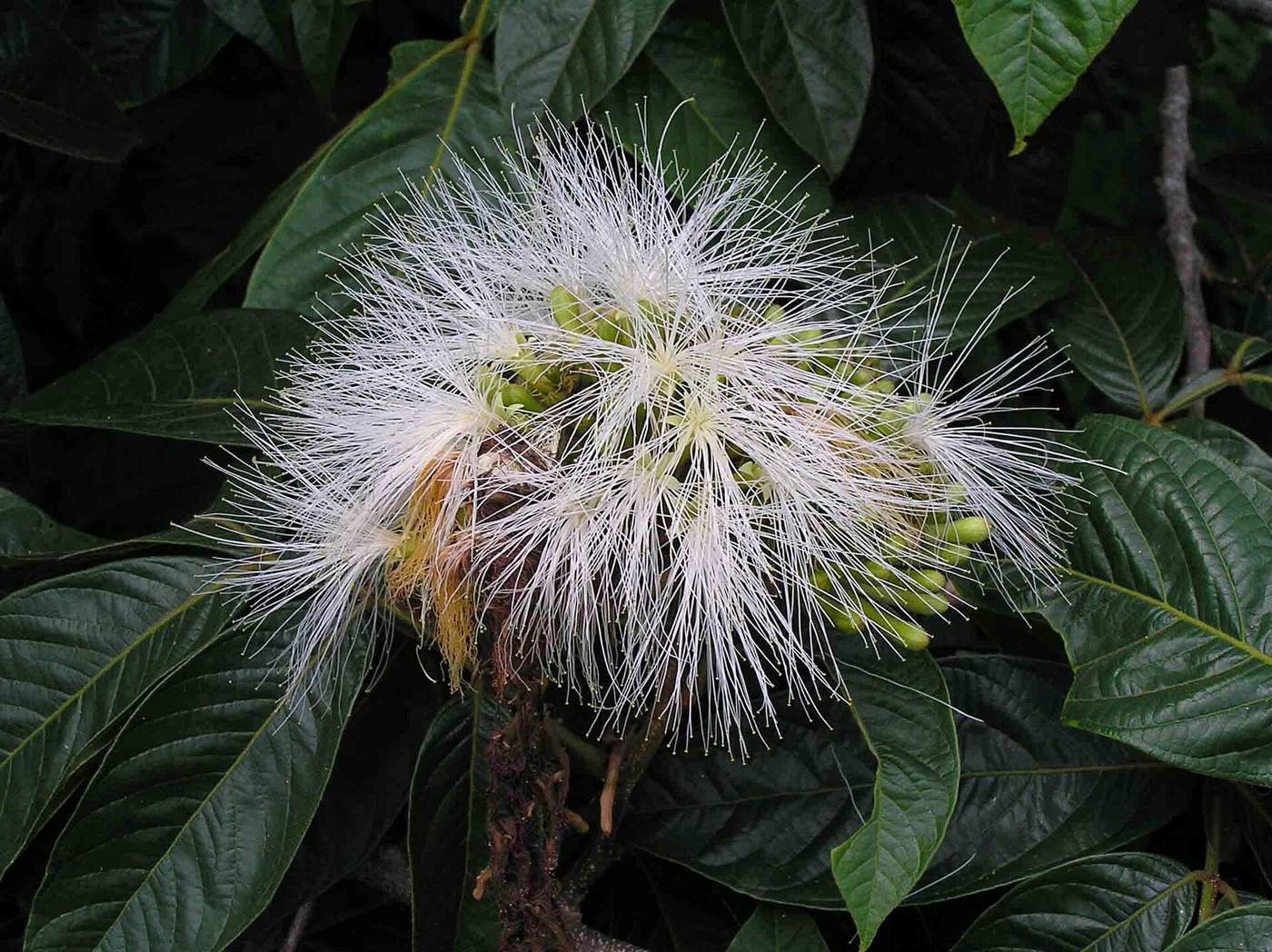 The flower of the ice-cream bean tree, all stamens, photographed on a fruit farm in Penang. Photo: 阿橋 HQ / Wikimedia Commons (CC BY-SA 2.0)
Where to Buy Snow Fruit Around Bedugul
The Bali Botanic Garden car park. NusaBali photographed the hawker Nurjanah selling snow fruit in the parking area of the Bali Botanic Garden (Kebun Raya Eka Karya) in Candikuning, alongside the other fruit sold to visitors. The garden itself is where BRIN's researcher collected wild fruit; the Bali Botanic Garden guide covers a visit (Map).
Fruit sellers in Candikuning. Budi Ade, the Candikuning man NusaBali met, supplies snow fruit to the village's souvenir sellers, so the fruit and souvenir stalls of Candikuning are where to ask. Candikuning's market and the lake temple are covered in Bedugul, Bali.
Kintamani. detikBali found the fruit sold along the Batur to Kintamani road too, from trees growing in the forest there.
The fruit is seasonal. When the trees are not bearing, the sellers have none, so count it as a bonus if you find it.
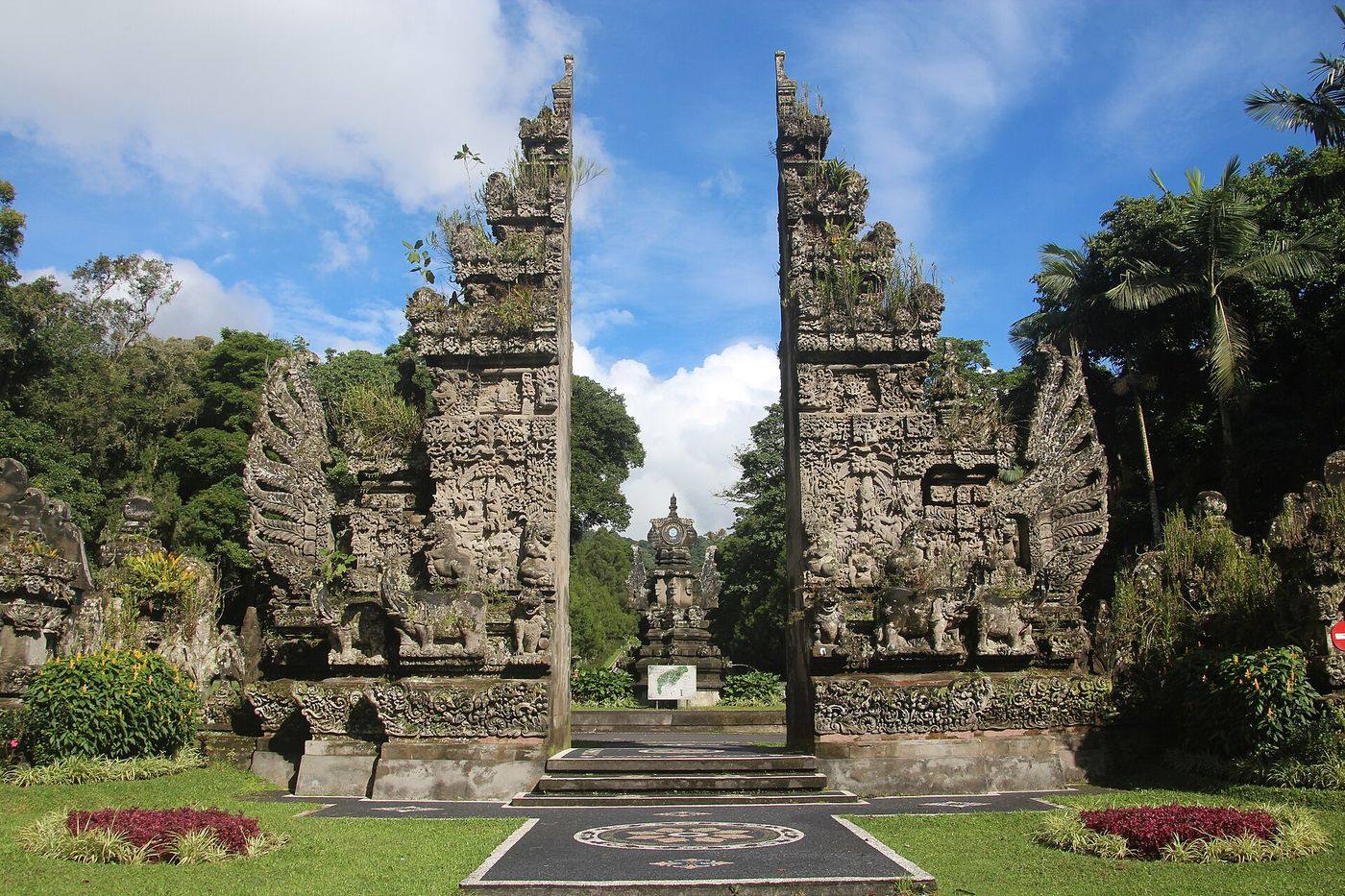 The candi bentar, the split gate at the main entrance of the Bali Botanic Garden in Candikuning. Photo: KRBali / Wikimedia Commons (CC0)
How to Fit It In
Snow fruit is a snack for the road. The road from the south to the north coast climbs through Bedugul, past Pura Ulun Danu Beratan and the Botanic Garden, before dropping to Lovina. Stop at the lake, walk the garden, buy a bundle of pods from the hawkers in the car park and eat them on the drive down. Getting to north Bali has the route, and the twin lakes of Buyan and Tamblingan are a short drive further west toward Munduk.
If you are staying on the north coast, Palm Living runs a Munduk, Wanagiri and Bedugul day tour from Lovina that passes the same places.
Practical Notes
- Season: the fruit comes and goes with the trees; sellers point to September and October as one good time.
- Buy by the bundle; sellers tie the pods together.
- Eat the pulp, not the seeds. Raw seeds contain compounds that only cooking destroys.
- Eat it within a day or two for the best texture.
- Cash: hawkers sell for small notes.
- Bring a bag for the empty pods and seeds; do not throw seeds down, since the tree takes root easily.
FAQ
What is snow fruit in Bali? Snow fruit, or buah salju, is the ice-cream bean, Inga edulis, a South and Central American tree now growing around Bedugul. Its long green pods hold seeds wrapped in sweet white pulp that looks like snow or cotton.
What does snow fruit taste like? Sweet, soft and cool in the mouth, with a fibrous, cotton-like texture. Sellers compare it to soursop but softer, and some growers describe a slight sourness.
Where can I buy snow fruit in Bedugul? From the hawkers by the car park of the Bali Botanic Garden in Candikuning and from fruit and souvenir sellers in the village, when the trees are in fruit. It is also sold along the road in Kintamani.
Is snow fruit native to Bali? No. It comes from Central and South America. A Candikuning seller says the seed stock came from Australia, and the tree now grows wild around Bedugul.
Can you eat the seeds of snow fruit? Not raw. The seeds contain trypsin inhibitors, which are destroyed by cooking. Eat the white pulp and discard the seeds.
Is snow fruit available all year? No, it is seasonal. Sellers in Bedugul told NusaBali that September and October is one of the times it is easy to find.
Sources
- Trubus, Getting to know snow fruit, from the Americas, known in Bali as ice-cream fruit, quoting BRIN researcher Farid Kuswantoro, read September 2026 (in Indonesian)
- NusaBali, Snow fruit, Bedugul's souvenir: sweet, soft and cold, 8 October 2023, read September 2026 (in Indonesian)
- detikBali, Snow fruit now sold in Kintamani as well as Bedugul, read September 2026 (in Indonesian)
- Wikipedia, Inga edulis, for the species' range, pods, uses, keeping time and seed compounds, read September 2026 (in English)
Read next: Bedugul, Bali, the Bali Botanic Garden and the twin lakes.



.jpg)
