On this page
- In Brief
- The Bali Tourist Tax at a Glance
- The Levy Funds Bali's Culture and Natural Environment
- Who Pays: Foreign Tourists of Any Age, With Some Visa Types Exempt
- How Much It Costs: A Flat Amount Per Person, Shown on the Portal
- How to Pay Online Before You Fly, in Four Steps
- Paying at the Airport Works, With a Longer Wait
- The QR Voucher: One Per Person, Kept Where You Can Reach It
- Tourist Tax, Visa and Arrival Card Are Three Separate Steps
- Practical Notes
- FAQ
- Sources
In Brief
The Bali tourist tax is a one-time levy the province charges foreign visitors, separate from your visa and your arrival card. It is a flat amount per person, the same for every age, paid once per trip and not per day. The rate that counts is the one shown on the official Love Bali portal when you pay.
The simplest way to handle it is online before you fly, through the Love Bali portal, which gives you a QR-coded voucher to show on arrival. You can also pay at the airport, but the queues are slower.
Children pay the same as adults, and the payment covers your whole stay until you leave Indonesia.
The Bali Tourist Tax at a Glance
- What it is: A levy on foreign tourists, introduced by the Bali provincial government to fund the protection of Balinese culture and the natural environment
- Who pays: Foreign visitors entering Bali, regardless of nationality, age, or length of stay
- How much: A flat amount per person, per visit, the same regardless of age. The current rate is shown on the official portal
- The law behind it: Bali provincial regulation (Perda) No. 6 of 2023 on the foreign tourist levy, amended by Perda No. 2 of 2025, with a governor's regulation on how it is paid
- Indonesian name: Pungutan Wisatawan Asing, PWA, the foreign tourist levy
- Frequency: Once per trip, covering you until you leave Indonesia. It is not charged per day or per night
- How to pay: Online before arrival via the official portal, or on arrival at the airport
- Official portal: lovebali.baliprov.go.id
- What you get: A QR-coded voucher (digital or printed) to present at checkpoints
- Exemptions: Diplomatic and official visas, transport crew, KITAS and KITAP holders, family reunification, student and golden visas, and certain other visa types
- Is it the same as the visa? No. The levy is separate from your visa on arrival and from the electronic arrival card
The Levy Funds Bali's Culture and Natural Environment
Bali introduced a dedicated levy on foreign tourists to fund the things that make the island worth visiting. Those are its customs, traditions, arts and local wisdom, and a natural environment under pressure from millions of annual arrivals.
Since the amendment, the money also goes toward the quality of tourism services and the running of the levy itself. The provincial government runs it.
The official purpose is preservation. Bali absorbs an enormous number of tourists each year, and the levy puts a small, direct contribution from each visitor toward the upkeep of the place.
The law behind it
The legal basis is Bali provincial regulation (Perda) No. 6 of 2023 on the levy for foreign tourists, amended by Perda No. 2 of 2025. A governor's regulation sets out how it is paid.
The province charges the levy on foreign tourists entering Bali, whether they fly in from abroad or arrive from somewhere else in Indonesia.
Who Pays: Foreign Tourists of Any Age, With Some Visa Types Exempt
The levy applies to foreign tourists entering Bali. Nationality does not change it, and the rule draws no line between a tourist and a traveller. A foreign visitor arriving in Bali pays, with three points worth knowing:
- Children pay too. The rate is per person and the same regardless of age. There is no child rate and no infant exemption.
- Indonesian passport holders do not pay. The levy applies to international tourists only, so an Indonesian citizen is outside it altogether.
- Arriving from elsewhere in Indonesia still counts. The levy is charged on entry into Bali, whether you come directly from abroad or via another Indonesian province.
Which visa types are exempt, and how each claims it
The amended regulation and the Love Bali FAQ list the exempt groups:
- holders of diplomatic and official visas
- crew on transport vehicles
- holders of a temporary stay permit card (KITAS) or permanent stay permit card (KITAP)
- family reunification visas
- student visas
- golden visas
- certain other visa types
Two routes apply. Diplomatic and official visas, crew, KITAS and KITAP, family reunification and student visas are handled by showing the card or visa to the officer.
Golden visa holders and the other visa types must apply through the exemption form on the Love Bali system no later than five days before arrival. The provincial tourism office reviews each application. An approval comes back as a QR code, as the office explained when the levy began.
One payment lasts until you leave Indonesia
Once paid, the levy covers you until you leave Indonesia. The official FAQ says it is paid only once while travelling in Bali, before you leave the country.
A side trip to Lombok or Java during the same visit does not call for a second payment. A new trip to Indonesia means a new levy.
How Much It Costs: A Flat Amount Per Person, Shown on the Portal
The levy is a flat amount per person, charged once per trip. It is small next to the cost of flights and rooms, and many visitors settle it online in a couple of minutes.
The rate is set by provincial regulation and can be changed by a later one. Trust the figure shown on the portal at the moment you pay, and treat a number quoted in an older article as a starting point.
The levy is charged per person, not per booking. A family of four pays four times the single rate, with no reduction for the children. What a whole trip costs, levy included, is broken down in the cost of a Bali trip.
Pay in Indonesian rupiah. If you pay online with a foreign card, your bank handles the conversion at its own rate. A small foreign-transaction fee may apply, depending on your card.
How to Pay Online Before You Fly, in Four Steps
There are two ways to settle the levy. You pay from your sofa before you fly, or in the arrivals hall after you land. Online is the recommended route.
-
Open the official portal a day or two before you fly. The Love Bali portal lets you pay any time before arrival.
-
Enter your details and pay the levy. Each traveller needs a paid voucher of their own, children included.
-
Collect the QR voucher. It arrives by email and stays in the system.
-
Save it offline. Keep it on your phone, and screenshot or print it as a backup in case airport wifi is slow. Store it with your other arrival documents.
Paying ahead means you walk past the on-arrival payment desks without joining the queue. With a private driver from the airport waiting to take you north, a pre-paid levy keeps that handover clean.
Paying at the Airport Works, With a Longer Wait
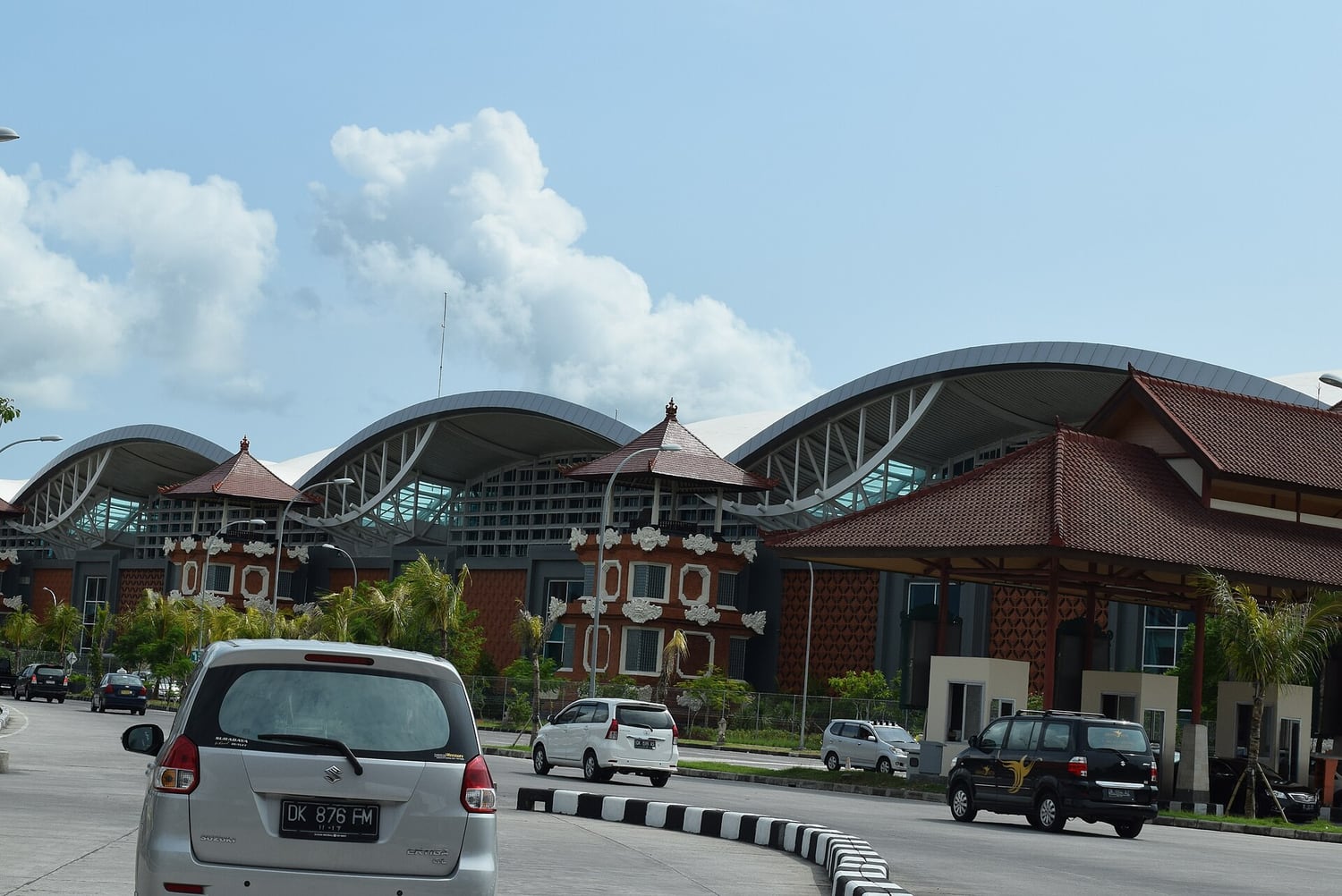
If you skip the online step, you can pay after you land. There are designated payment points at Ngurah Rai International Airport, and the process is the same in substance. You pay the levy, receive the QR voucher and carry on.
The trade-off is time. On-arrival payment can mean queuing alongside everyone else who did not pay ahead, on top of immigration and baggage.
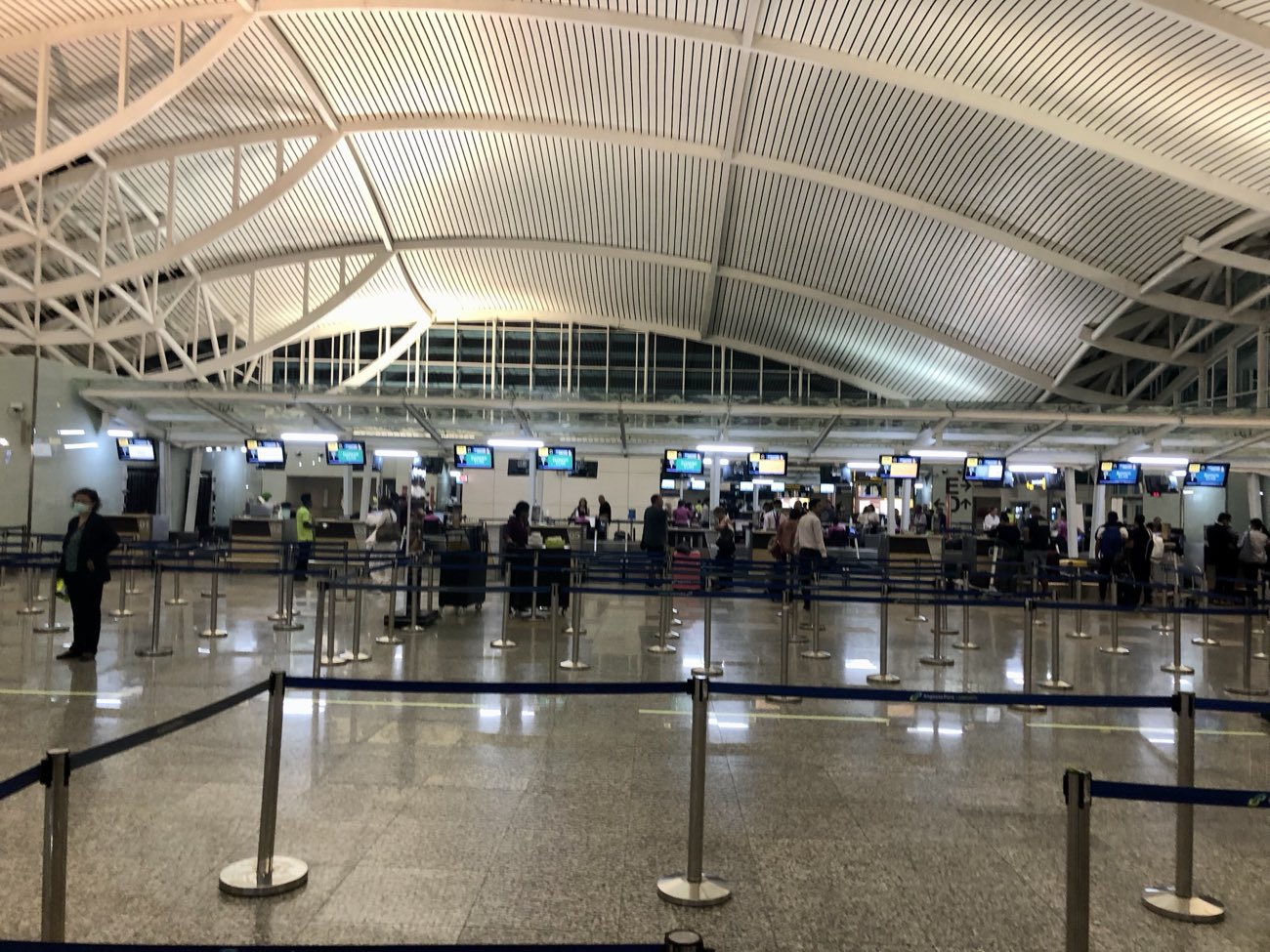 The arrivals hall at Ngurah Rai, where the voucher is scanned. Photo: Pinterpandai.com / Wikimedia Commons (CC BY-SA 3.0)
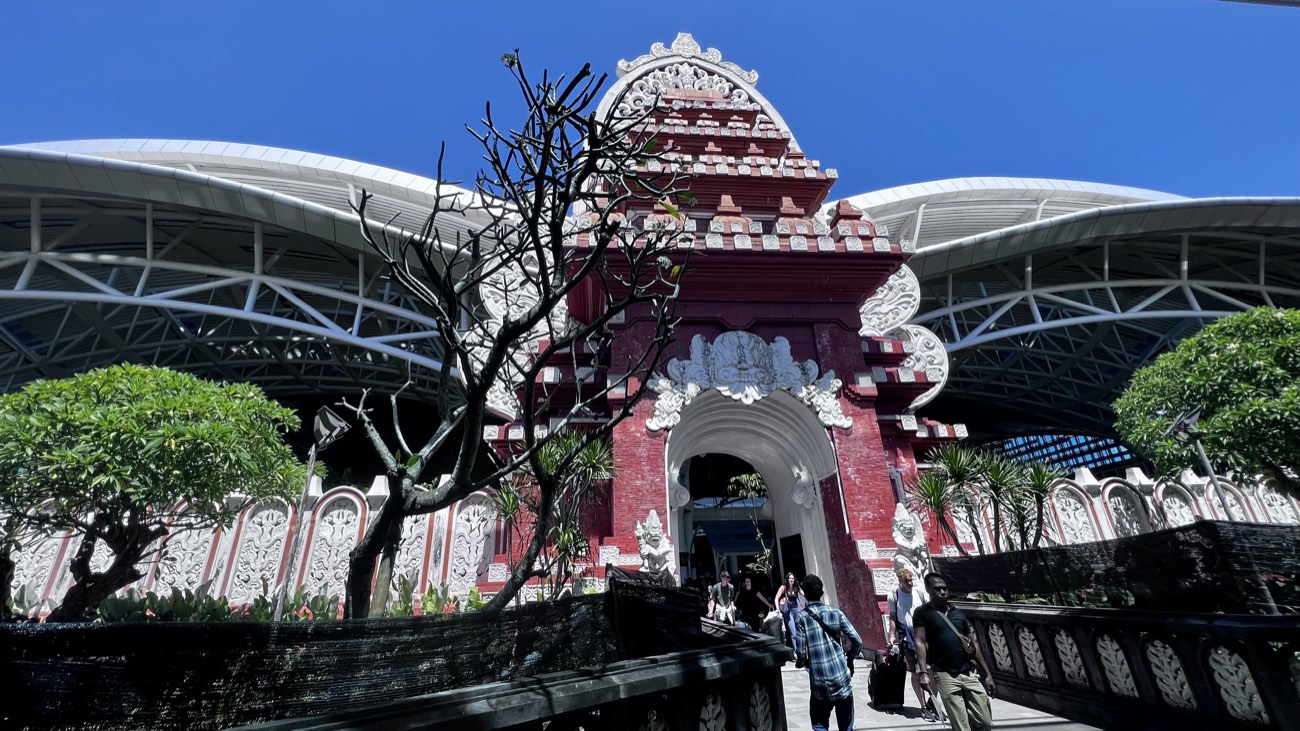 The temple-gate entrance of Ngurah Rai airport. Photo: Pinterpandai.com / Wikimedia Commons (CC BY-SA 3.0)
Either way, the levy is a single payment. There is nothing further to pay day by day.
The QR Voucher: One Per Person, Kept Where You Can Reach It
When you pay, the system issues a voucher with a QR code. It is your proof that the levy is settled, and it is what staff scan if they ask for it.
The most reliable approach is a screenshot or PDF saved to your phone's photos, plus a printed copy folded in with your passport. Connectivity at the airport can be patchy on landing, and an offline copy saves you hunting for signal in the arrivals hall.
One voucher covers one person for one trip. A family or group needs a paid voucher for each person, so check that every member of the party is covered before you fly.
Where the voucher is checked
You may be asked to show the QR voucher at a checkpoint on arrival. The provincial tourism office has also run spot checks at tourist sites such as Goa Gajah.
Under the amended regulation, a visitor who has not paid can be warned or refused service at tourist attractions. Enforcement has been uneven in practice, but the levy is mandatory and carrying the voucher costs you nothing. Treat it like any other travel document, and keep it out of the depths of your inbox.
Tourist Tax, Visa and Arrival Card Are Three Separate Steps
Three separate things must be handled before or on arrival, and they are easy to blur together. The levy sits alongside your visa and your arrival card and replaces neither. Paying one does not cover the others.
| Step | What it is | Who sets it | A payment? |
|---|---|---|---|
| The visa | Your legal permission to enter Indonesia | The Indonesian government, for the whole country | Yes, with its own fee and its own process |
| The electronic arrival card | The customs and immigration declaration most arrivals now complete online before landing, in place of the old paper form | A national requirement, not a Bali one | No, it is a declaration |
| The Bali tourist levy | The provincial levy on this page, which funds local preservation | The province, for Bali only | Yes, separate from both of the others |
Most tourists use a visa on arrival or its electronic equivalent.
The visa lets you into Indonesia, the arrival card declares you to Indonesia, and the levy contributes to Bali. That makes three systems and three confirmations to carry.
Each step has its own guide. The Bali visa guide covers permission to enter, and the Indonesia arrival card covers the declaration. Do the visa, the arrival card and the levy in that order before you fly, and your landing is paperwork-free.
Practical Notes
- Levy amount: A flat amount per person, per trip. Confirm the current figure on the portal
- Official portal: lovebali.baliprov.go.id
- Best time to pay: Online, one to two days before departure
- What to save: QR voucher as a phone screenshot or PDF, plus a printed backup
- Currency: Indonesian rupiah. Foreign cards convert at your bank's rate
- Per person: Each traveller, including children, needs their own paid voucher at the full rate
- Frequency: Once per trip, not per day or per night
- Not the visa: Separate payment and separate system from your visa and arrival card
- Re-entry: One payment covers you until you leave Indonesia. A new trip to Indonesia needs a new levy
FAQ
What is the Bali tourist tax? It is a levy charged to foreign visitors entering Bali, introduced by the Bali provincial government to fund the protection of the island's culture and natural environment. It is paid once per visit and is separate from your visa.
How much is the Bali tourist tax? A flat amount per person, per trip, the same for every age. The rate is set by provincial regulation and can be changed by a later one. Confirm the current figure on the official portal at the time you pay, and do not rely on a number in an older article.
Is the Bali tourist tax a one-time payment or per day? One time per trip. It covers your whole stay until you leave Indonesia, with nothing further to pay day by day.
How do I pay the Bali tourist tax? Online before you fly, through the official Love Bali portal, which issues a QR voucher. You can also pay on arrival at the airport, though the queues are slower. Paying ahead is the smoother option.
Do I have to pay the tourist tax before arriving in Bali? You do not have to pay in advance, but it is strongly recommended. Paying online beforehand means you skip the on-arrival payment desks and clear the airport faster. On-arrival payment is available if you forget.
Is the Bali tourist tax the same as the visa on arrival? No. The visa is your national permission to enter Indonesia and carries its own fee. The tourist levy is a separate, Bali-specific payment. You need both, and paying one does not cover the other.
Do children have to pay the Bali tourist tax? Yes. The levy is charged per person at the same rate regardless of age, so an infant pays what an adult pays. There is no child rate on the official exemption list.
What is the QR voucher for? It is your proof that the levy is paid. Staff may scan it at an arrival checkpoint, and it can be requested at certain tourist sites. Save it to your phone and keep a printed backup, since airport connectivity on landing can be slow.
Do I need to pay the tax again if I leave and come back to Bali? Not within the same visit to Indonesia. The official Love Bali FAQ says the levy is paid only once while travelling in Bali, before you leave the country. If you leave Indonesia and come back on a later trip, you pay again.
Is the Bali tourist tax the same as the electronic arrival card? No. The arrival card is a customs and immigration declaration completed online before landing, and it is not a payment. The levy is a separate provincial charge. Both are handled before arrival, but through different systems.
What happens if I do not pay the Bali tourist tax? The levy is mandatory for foreign visitors. A traveller who cannot show proof of payment is required to pay, and the amended regulation adds sanctions: a spoken or written warning, or being refused service at tourist attractions. Paying ahead avoids any of that friction.
Who is exempt from the Bali tourist tax? The Love Bali FAQ lists holders of diplomatic and official visas, transport crew, KITAS and KITAP holders, family reunification visas, student visas, golden visas and certain other visa types. Most show their card or visa to the officer. Golden visa holders and the other visa types apply through the Love Bali exemption form no later than five days before they arrive.
Does the tourist tax cover travel to north Bali? Yes. The levy is a single payment for entering Bali and applies island-wide. It covers you whether you stay in the south or head up to Lovina and Munduk in the north. Planning the journey north is covered in the north Bali itinerary.
Sources
- Directorate General of Legislation, Peraturan Daerah Provinsi Bali No. 2 of 2025, amending Perda No. 6 of 2023 on the levy for foreign tourists, full text (PDF), for the exemptions, when and how the levy is paid, and the sanctions, read September 2026 (in Indonesian)
- Bali Provincial Government, Peraturan Daerah Provinsi Bali No. 6 of 2023 on the levy for foreign tourists, full text (PDF), for the original regulation and its purpose, read September 2026 (in Indonesian)
- Bali Provincial Government, Love Bali FAQ, for the exemption list, how each exemption is claimed, the once-per-trip rule and the payment options, read September 2026 (in English)
- Bali Provincial Government, Love Bali exemption form, for the five-day application deadline, read September 2026 (in English)
- Bali Provincial Government, Bali Media Center, Governor's circular No. 7 of 2025 on the new rules for foreign tourists, naming the Love Bali website as the place to pay, read September 2026 (in Indonesian)
- ANTARA, Pemprov Bali kecualikan tujuh kategori WNA kena pungutan wisman, on how an exemption is applied for and approved, read September 2026 (in Indonesian)
- ANTARA, Dinas Pariwisata Bali sidak wisatawan mancanegara yang belum bayar pungutan wisatawan asing, on spot checks at tourist sites, read September 2026 (in Indonesian)
Before you fly: the Bali visa guide and the Indonesia arrival card. After you land: getting to north Bali.



_I_Gusti_Ngurah_Rai_International_Airport.jpg)