On this page
- In Brief
- A Bali Budget at a Glance
- Four Choices Set Most of Your Bali Budget
- Step 1. Choose Where You Sleep, the Widest Range in the Budget
- Step 2. Decide How You Eat: Warung, Cafe or Beach Club
- Step 3. Pick How You Get Around: Scooter, Driver or App
- Step 4. Add the Four Charges Somebody Else Sets
- Step 5. Add Activities Last: Most Sights Cost Little
- Where You Base Yourself Is the Largest Structural Saving
- Three Budgets Described: Lean, Middle and Comfort
- Five Habits Move a Budget More Than Any Single Splurge
- Where to Read Today's Numbers
- Practical Notes
- FAQ
- Sources
In Brief
Most of a Bali trip cost comes from three choices: where you sleep, where you eat and how you get around. A dorm bed, warung plates and a rented scooter put you at one end. A private pool villa, restaurant dinners and a driver on call put you at the other, and that end costs a multiple of the first.
A few charges come on top whichever way you travel. They are the flight and travel insurance, plus two official ones, the visa and the provincial tourist levy.
Published price lists go stale within months here, so this page carries none. Each section says what a line is for and what makes it move. It then links the official page or the operator's own site, where you can read the current number yourself.
A Bali Budget at a Glance
- The three levers: accommodation, food and transport, in that order of impact
- Fixed charges: the international flight, a visa or e-VOA, the Bali tourist levy and travel insurance
- Discretionary: entry donations at temples and waterfalls, diving, tours and spa
- The regional factor: the south and Ubud price for a global crowd, north Bali closer to local rates
- The north Bali trade: lower daily costs, one longer transfer from the airport in the far south
- Currency: the Indonesian rupiah, with the reference rate published daily by Bank Indonesia
- Cash: warungs, entrance gates, scooter hire and rural drivers are cash businesses
Four Choices Set Most of Your Bali Budget
Three choices set most of your spend and compound, and the region you pick sits behind them.
- Where you sleep. The same village on the same night offers a shared dorm and a private pool villa.
- How you eat. A local warung plate and a beach-club lunch sit an order of magnitude apart.
- How you move. You either ride your own scooter or hire a car and driver by the day.
- Where you base yourself. The south and Ubud price for international demand. The north prices closer to what people who live here pay.
Everything else is largely discretionary. Temple and waterfall entry, a dive, a massage or a boat trip sit on top of that base.
Keep the three core choices lean, and a modest base still holds a rich week together. If they run, a comfort budget goes in a few days. Knowing which choices move the number lets you spend on the part of the trip you care about.
The five steps below build the budget one line at a time.
Step 1. Choose Where You Sleep, the Widest Range in the Budget
Where you sleep is the widest range in a Bali budget, and it sets the tone for the rest. The ladder has four rungs:
- Hostel dorms. They are concentrated in Canggu, Kuta and Ubud. The room is a bed, and the value is the social side.
- Guesthouses and family homestays. You usually get a private room with breakfast, a fan or basic air conditioning, and an owner who lives on site. This band is the backbone of independent travel in Bali and often the best value on the island.
- Mid-range. This covers boutique rooms, small private villas and well-reviewed hotels. A one-bedroom villa with its own small pool falls in this band more often than people expect, particularly outside the peak months and away from the south coast.
- Full pool villas and resorts. Here you pay for staff, space and privacy more than for a room.
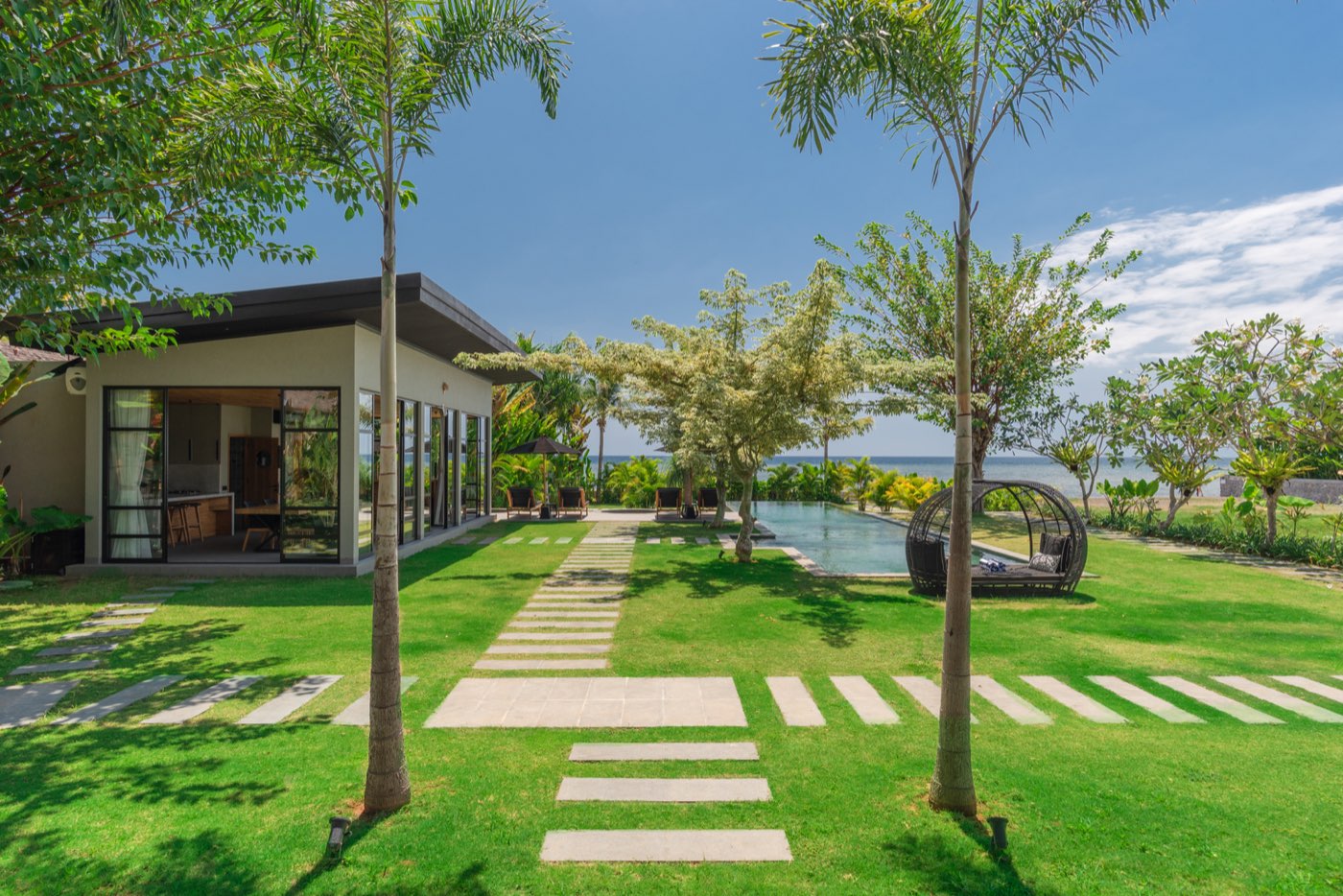 A beachfront pool villa on the north coast, one of the places to sleep this step compares. Photo: Palm Living archive.
Three habits move this line more than the choice of platform. Book direct, since a booking site adds a service layer. Book by the week, since weekly rates are usually set well below seven nightly ones.
For a stay of a month, book by the month, which often halves the per-night figure again.
Palm Living's villas for rent are around Lovina, on the north coast, and each property page lists its current rates. For how the areas differ, see where to stay in north Bali.
Step 2. Decide How You Eat: Warung, Cafe or Beach Club
Food is where Bali rewards the curious eater and quietly drains the cautious one.
A warung is a small family-run local eatery. A plate of nasi campur or mie goreng there costs a fraction of a main at a tourist restaurant. Eat where the neighbourhood eats, and food stops being a meaningful line in the budget.
The portions are honest, and the cooking is closer to the island than anything with a laminated menu.
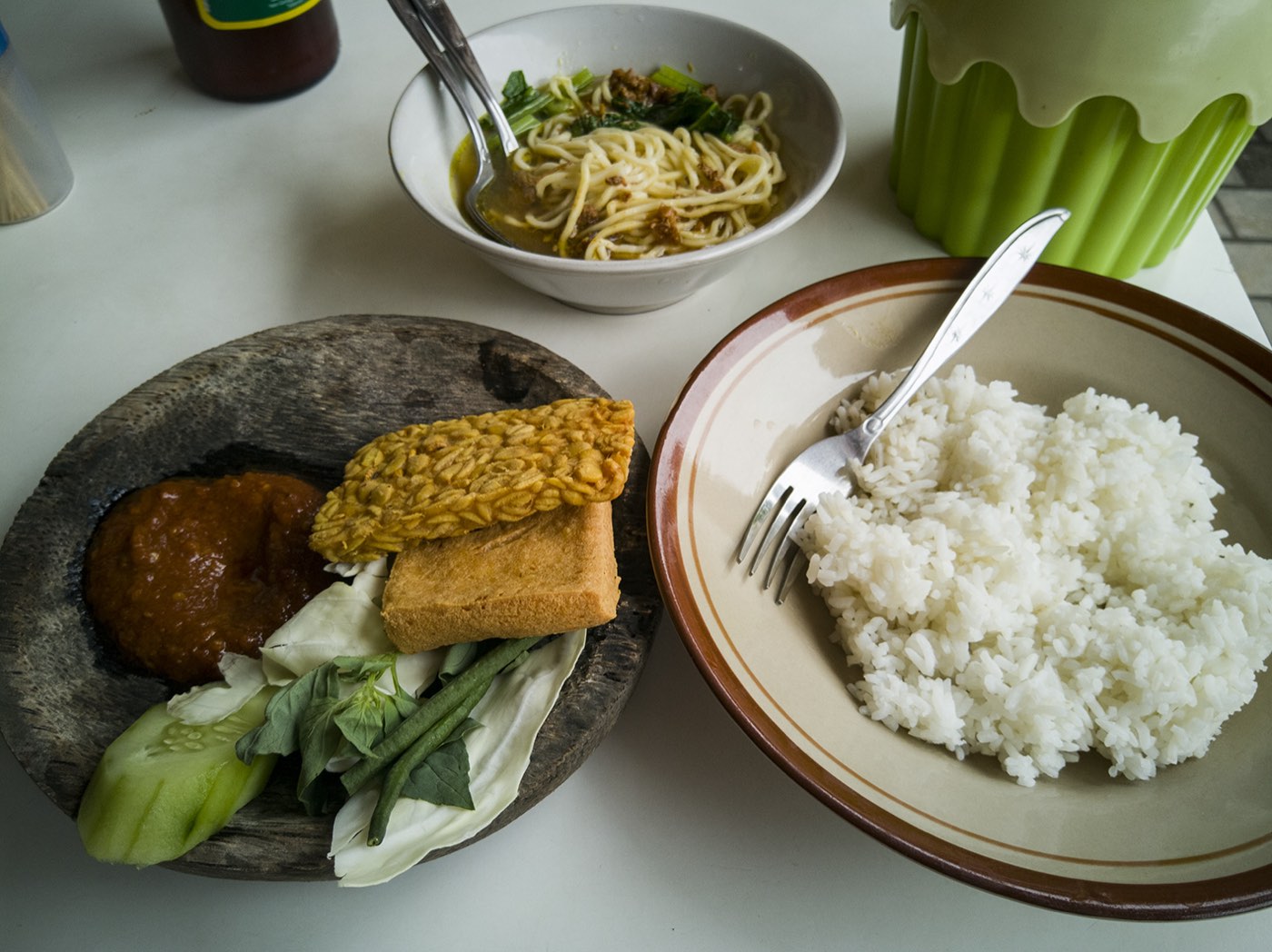 A warung meal in Ubud: rice, tempeh, tofu and sambal with a bowl of mie ayam, from Warung Lalapan Solo Mas Muklis. Photo: Lamacchiacosta / Wikimedia Commons (CC BY-SA 4.0)
The middle tier is the cafe and tourist restaurant, with smoothie bowls, Western brunch and sit-down Indonesian food. A main here costs several times a warung plate.
At the top, a beach club or resort restaurant puts one person's dinner with drinks in the range of a night at a guesthouse. Beach clubs often set a minimum spend for a day bed, so read the terms before you sit down.
Drinks follow the same pattern. Beer from a shop costs a small share of the same beer in a bar. Cocktails in a bar with a view are priced for the view, and specialty coffee is priced like specialty coffee anywhere.
Warung-led eating keeps this line small, and a mix of warungs and restaurants roughly doubles it. Beach clubs and resort dining make food the largest line in the budget after the room. The warungs worth the drive in the north are in the best warungs in north Bali.
Step 3. Pick How You Get Around: Scooter, Driver or App
How you move is the third lever, and it turns on confidence and distance.
Scooter rental is the cheapest and most common option. Weekly and monthly rates drop well below seven or thirty daily ones, and fuel is a rounding error.
Two things matter more than the price. To ride legally and keep your travel insurance valid, you need an international driving permit carrying a motorcycle entitlement. Bali traffic is also a poor place to learn to ride, though north Bali's quiet coast road is far gentler on a newer rider.
A car and driver for the day is the comfortable choice, and the rate usually includes fuel and waiting time. Split across a group, it costs little per head. For a day of waterfalls and temples that sit an hour apart, it is the practical option. Private drivers in north Bali explains how hiring works.
Ride-hailing apps work well for short hops in the south. Coverage thins in the north and in rural areas, where a pre-arranged driver is the reliable choice. Most villas and guesthouses can book one, airport transfers included.
The airport transfer is the line people forget. Ngurah Rai airport sits in the far south, so a stay in Lovina or Pemuteran begins with a drive across or around the mountains. It takes roughly two and a half to three and a half hours.
That drive is a real cost and a real part of the day. The routes, and the choice between them, are in getting to north Bali.
Step 4. Add the Four Charges Somebody Else Sets
Four lines are fixed by somebody else. The two official ones, the visa and the levy, each have a government page that stays current.
The visa
Most visitors on a short holiday use the electronic visitor visa, the e-VOA. It is a single-entry visa for a 30-day stay, for tourism, business meetings or transit. You apply and pay online by card.
The fee and the conditions are published on Indonesia's official e-visa portal. Use that page and no lookalike. The portal itself warns that such sites charge a service fee and are not endorsed by the government.
The Bali visa guide walks through the application.
The tourist levy
Bali charges foreign visitors a provincial levy, paid once per trip and always cashless. You can pay online through the Love Bali site before you fly, or at the payment counters at Bali's airport and port. A hotel or agent registered with the scheme can also take the payment.
Holders of stay permits (KITAS or KITAP) and a few other visa types are exempt. The provincial government sets the amount by regulation and publishes it on the Love Bali site.
Pay before you fly and keep the voucher. The detail is in the Bali tourist tax explained.
Travel insurance
Insurers price a policy by your age, your trip length and whether you declare that you will ride a motorbike. Riding without the right licence normally voids the policy. That makes the international driving permit the cheapest piece of insurance you will buy.
The flight
For most travellers the flight is the single largest line, and it is the one this page cannot help with.
Step 5. Add Activities Last: Most Sights Cost Little
Bali's headline sights are inexpensive by global standards, and a good number of the best are free.
Temples and waterfalls take a modest entry payment or donation at the gate, in cash, and the amount differs from site to site. Hot springs work the same way.
The guided canyon falls in the north, Sekumpul among them, charge a combined entry and guide payment at the gate. The guide is real there and leads the walk down. None of these is a large number, and all of them are cash.
The bigger-ticket days are diving and boat trips. A guided dive at Pemuteran or Menjangan is priced per dive with gear on top, and dive centres publish their own current rates. A snorkelling boat costs a fraction of that.
The sunrise dolphin boats at Lovina are a village operation, and you settle in cash on the beach. A massage remains one of Bali's bargains at every tier.
For the sights themselves, the north Bali travel guide maps them and the routes between them.
Where You Base Yourself Is the Largest Structural Saving
Region is the fourth lever. North Bali generally prices below the south for the same standard of room, meal and service. The reason is visitor density, since the north carries a fraction of the crowd of Canggu, Seminyak and Ubud.
The villa that commands a premium on the south coast costs less on a quiet north coast beach, and the warung lunch costs less again. North Bali's villa stock is also newer and far less saturated than the south's, so a given budget tends to buy more space here.
The catch is the airport, which sits in the far south, so a northern trip starts and ends with a longer drive. On a stay of several days, the lower daily costs cover that one transfer comfortably. On an overnight they do not.
How many days to spend in north Bali works through where that line falls. North Bali on a budget takes the lean version further.
Three Budgets Described: Lean, Middle and Comfort
Numbers date, but the shape of each tier holds.
Lean. You take a dorm bed or a fan room in a homestay, eat warung food at every meal and rent a scooter by the week. Days go to beaches, temples and the occasional paid waterfall, and drinks come from the shop. This tier works well in Bali and better still in the north, where rooms and food cost less. There is also less to spend money on by accident.
Middle. You take a private guesthouse room or a shared villa, with warungs most days and a restaurant meal a few times a week. Add a scooter, a driver for the long day trips and a paid activity every couple of days. Most visitors land here, and it is where Bali feels generous.
Comfort. You take a private pool villa, eat at restaurants, keep a driver on call and book something most days. At this tier you are buying handled logistics and privacy. North Bali gives more villa and more quiet for the same spend, one reason people who could stay anywhere choose Lovina.
Five Habits Move a Budget More Than Any Single Splurge
- Eat at warungs for most meals. Keep restaurants for the meals you want most.
- Rent by the week or the month. That goes for scooters and for rooms.
- Book villas direct.
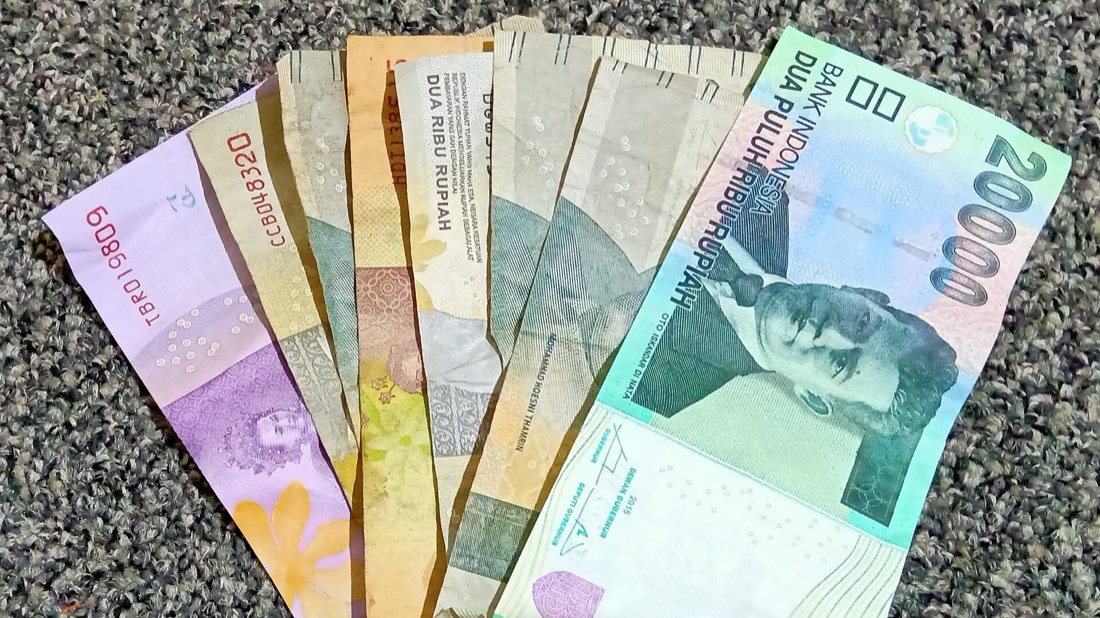
- Carry cash. Warungs, gates and rural drivers take nothing else, and ATM fees compound.
- Travel in the shoulder months. These are roughly April to June and September to October, when rates soften and the roads empty.
Where to Read Today's Numbers
A price list published here would be wrong within a season. Read the current figure at its source:
- Exchange rate: Bank Indonesia's transaction rates, the official reference for the rupiah. The Bali currency guide covers cash, ATMs and the tricks to avoid.
- Visa: the official e-visa portal, run by Indonesia's immigration directorate.
- Tourist levy: Love Bali, the provincial government's own payment site.
- Villas and long stays: the property's own page. Palm Living lists its Lovina villas for rent with current rates on each one.
- Dives, boats and tours: the operator's own site, or a message to them. Operators here update their own pages and almost never update anyone else's.
Practical Notes
- Carry cash in small notes for warungs, temple gates, waterfall entries and village boats
- Withdraw larger amounts less often, since ATM fees are charged per withdrawal
- On a long stay, book accommodation and scooters by the week or month, not night by night
- Pay the provincial levy through the official Love Bali site before you fly, and keep the voucher
- Apply for the e-VOA on the official portal, not on an agent site
- Get an international driving permit with a motorcycle entitlement before you leave home if you intend to ride
- Budget the airport transfer as its own line for any north Bali trip
FAQ
What actually determines a Bali trip cost?
Where you sleep, where you eat and how you get around, in that order, plus the region you base yourself in. Those four decisions account for most of the gap between a lean trip and a comfortable one. The fixed charges are the flight, the visa, the provincial levy and insurance. They sit on top and are the same whichever tier you choose.
Is Bali expensive to visit?
Bali is inexpensive by the standards of most Western destinations, particularly for food and local transport. Costs rise sharply only when you move into pool villas, beach clubs and daily tours. The north of the island is cheaper again than the busy south for the same standard of room and meal.
Why does this page not list prices?
Published prices in Bali go stale within months, and a wrong number is worse than no number when you are planning. Each line here links the official page or the operator's own site, where the current figure lives.
How much cash should I carry in Bali?
Carry enough for warungs, temple and waterfall entries, scooter hire and rural drivers, since those are cash businesses. Cards work in supermarkets, hotels and tourist restaurants. Withdraw larger amounts less often, because ATM fees are charged per withdrawal and not per rupiah.
Do I have to pay the Bali tourist levy?
Yes, if you are a foreign visitor, unless you hold a stay permit (KITAS or KITAP) or one of the other exempt visa types. The provincial government charges it once per trip, and payment is cashless. You pay through the official Love Bali site, at the counters at Bali's airport and port, or through a registered hotel or agent. Pay before you fly and keep the voucher, which arrives by email with a QR code.
Is a scooter or a driver better value in Bali?
A scooter is cheaper by a wide margin. It suits short hops and confident riders who hold an international driving permit with a motorcycle entitlement. A car and driver is better value for a day of sights that sit an hour apart, especially split across a group, and it is the sane choice in rain. See private drivers in north Bali.
Is north Bali cheaper than the south?
Generally yes, for accommodation, food and services, because the north carries far less visitor density than Canggu, Seminyak or Ubud. The trade is the transfer from the airport in the far south, which a stay of several days absorbs easily.
Sources
- Love Bali, Bali provincial government, official levy site and frequently asked questions (who pays the foreign tourist levy and who is exempt, paid once per trip, cashless only, online or at counters at Bali's airport and port or through registered endpoints, voucher by email with a QR code, the provincial regulations it rests on), English, read September 2026
- Directorate General of Immigration, Republic of Indonesia, official e-visa portal, general information on the visitor visa (single entry, 30-day stay, tourism, business meetings, goods purchasing or transit, applied for and paid online by card; third-party sites charging a service fee are not endorsed), English, read September 2026
- Bank Indonesia, foreign exchange transaction rates and JISDOR (the official daily reference rate for the rupiah), English, read September 2026
- Palm Living, villas for rent (villa stock around Lovina, current rates on each property page), read September 2026
- Gunawan Kartapranata, Nasi Campur Bali, Wikimedia Commons (CC BY-SA 4.0), warung photograph
Read next: Bali currency and cash, north Bali on a budget, and where to stay in north Bali.