On this page
- In Brief
- Banjar Hot Springs at a Glance
- The Springs Are a Warm Sulphur Bath in a Shaded Garden
- The Spring Has Flowed for Centuries, and the Public Bath Dates From 1986
- The Pools Run in Tiers, Warmest at the Top
- Go Early in the Morning for a Quiet Pool
- Getting There: 20 to 30 Minutes West of Lovina by Driver or Scooter
- What to Bring: Swimwear, a Towel and Cash
- How to Fit It In: Pair the Springs With the Monastery, the Dolphins or Munduk
- Practical Notes
- FAQ
- Sources
In Brief
Banjar Hot Springs, known locally as Air Panas Banjar, is a natural sulphur spring near Banjar village, 20 to 30 minutes west of Lovina. Its warm water flows down through tiered stone pools in a shaded garden. A row of carved spouts pours it across your shoulders like a firm massage.
Go early in the morning, when the pools are quietest, and bring swimwear, a towel and cash for the gate. A private driver or a scooter gets you there, and the Brahma Vihara Arama monastery is minutes away for the same morning.
Banjar Hot Springs at a Glance
- What it is: natural sulphur hot springs feeding tiered stone bathing pools
- Local name: Air Panas Banjar
- Where: near Banjar village, roughly 20 to 30 minutes west of central Lovina by road
- Who runs it: the owner's foundation, as a public bath since 1986
- How old: hundreds of years by the district's account, with bathing pools built during the Japanese occupation
- Entry: a single charge, paid in cash at the gate
- How long: about an hour in the water, an easy half-day with the drive
- Best time: early morning, before the mid-morning tour groups
- Getting there: private driver or scooter
- Pairs with: Brahma Vihara Arama, the dawn dolphin trip, Munduk
The Springs Are a Warm Sulphur Bath in a Shaded Garden
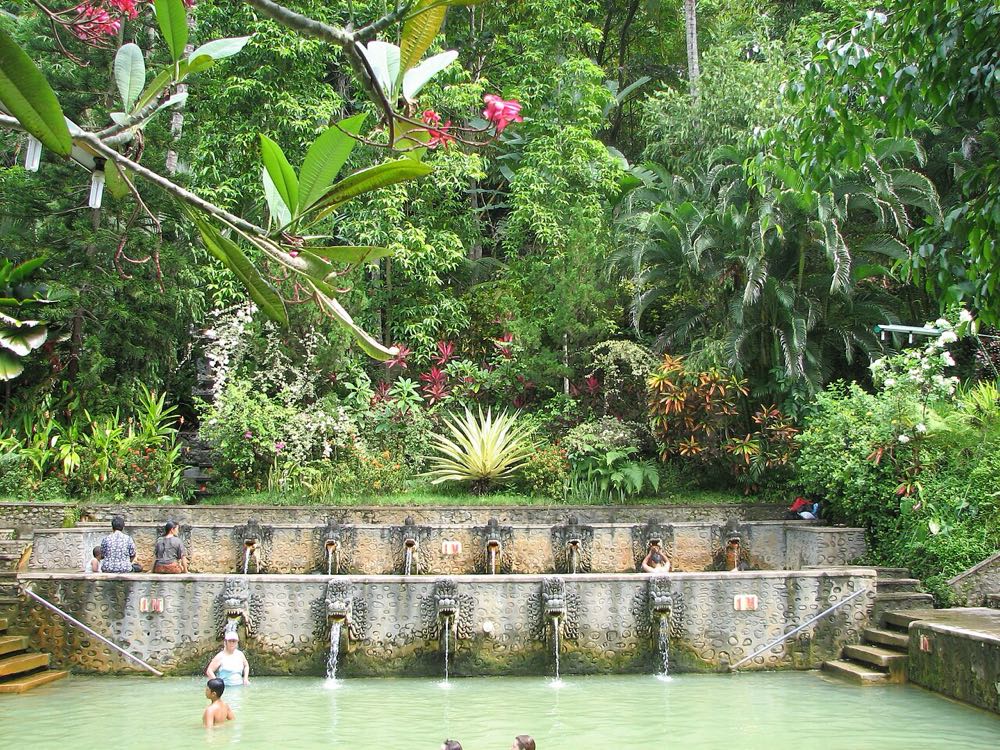
The water at Banjar rises warm from the ground and carries a faint mineral smell. It feeds a series of stone pools set among frangipani, palms and dense green planting.
This is one of the easiest half-day trips on the north coast, and all it asks of you is a swimsuit. After a steep waterfall trek or a pre-dawn boat trip, an hour in warm mineral water is a good way to recover.
It is a relaxed place, and it suits families, older travellers and anyone who wants a slow morning.
The Spring Has Flowed for Centuries, and the Public Bath Dates From 1986
The Banjar district's own account puts the spring at hundreds of years old. During the Japanese occupation of Bali it was improved, and at least three catchment pools were built for bathing. It has been kept in use ever since.
The baths are privately run. According to a 2021 BaleBengong report, the owner inherited the site from his forebears. A foundation he set up has operated it as a public bath since 1986.
The Pools Run in Tiers, Warmest at the Top
The water flows downward from the source through a sequence of stone bathing pools. The upper pool is the warmest, because it is fed directly where the water emerges.
From there the water spills into the lower pools through carved stone spouts. Several are shaped like nāga, the serpent figure that runs through Balinese stone carving.
Stand Under the Nāga Spouts for a Shoulder Soak
A much-photographed row of these spouts pours from a height into one of the lower baths. Standing under them gives you a steady, heavy stream across the shoulders and back, the closest thing here to a massage.
The flow is firm, so brace before you step under.
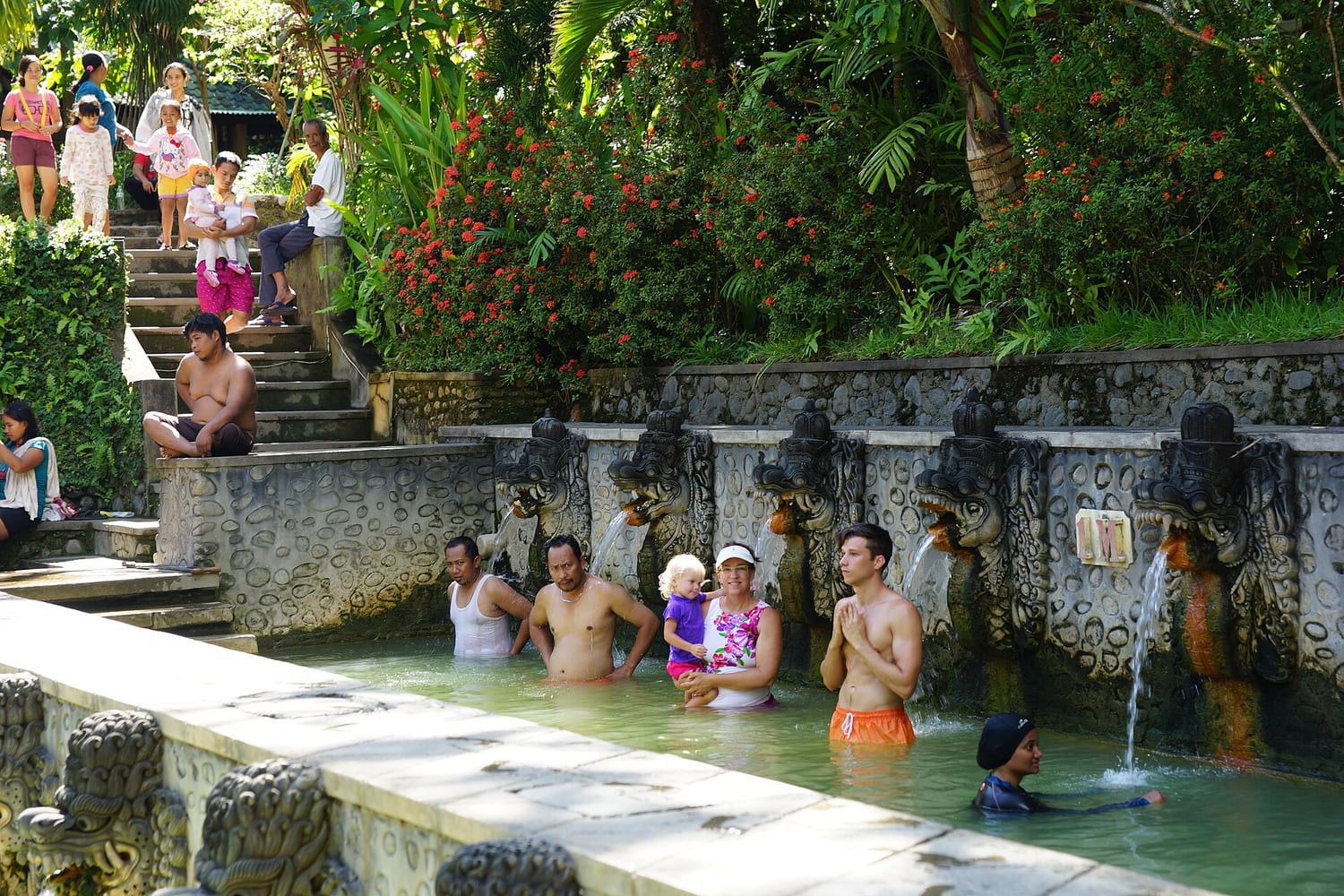 Bathers below the naga spouts on a busy morning. Photo: Dion Hinchcliffe / Wikimedia Commons (CC BY-SA 2.0)
The Water Is Warm, Clear and Smells of Sulphur
The water is rich in minerals and smells distinctly of sulphur. It is warm rather than scalding, and clear with a faint cloudiness from the dissolved minerals.
The stone is dark and softened by moss and age, which gives the whole place a worn, lived-in look.
You can sit on submerged ledges around the edges, and the pools are shallow enough to stand in comfortably. They are pools for soaking and lingering rather than swimming laps.
Go Early in the Morning for a Quiet Pool
The springs open early, and the first hour or two are the quietest. You share the water with locals and a handful of early travellers, before the tour groups arrive mid-morning.
The light through the garden canopy is softer then, and you will often have a full pool to yourself.
From late morning into early afternoon, the pools draw their largest crowds. They are fullest in the dry season and on weekends, when Balinese families visit.
Banjar works all year, because the water is warm in any season and light rain is no obstacle in a garden setting. In the rainy season, November through March, an overcast morning can be one of the most atmospheric times to visit. Mist hangs in the planting and few other people are around.
Getting There: 20 to 30 Minutes West of Lovina by Driver or Scooter
Banjar village lies roughly 20 to 30 minutes west of central Lovina by road. The route follows the coast, then turns a short way inland.
A private driver or a scooter is the practical way in, because no convenient public transport drops you at the gate.
By car, the drive is straightforward and mostly flat until the final approach, which climbs gently toward the springs. On a scooter the route is easy by north Bali standards, though the last stretch narrows through the village.
From the parking area, a short walk on a paved path and a few steps bring you down to the pools.
For travellers from the south of the island, Banjar lies at the far end of the long mountain crossing through Bedugul. Most visitors therefore come as a day trip once they are based on the coast, and few stop on the drive up. Getting to north Bali explains how that drive works, and the Lovina area guide covers the wider area.
What to Bring: Swimwear, a Towel and Cash
You will be getting in the water, so wear or pack swimwear. Changing rooms are available near the pools, but they are basic, and arriving with your suit on under your clothes is simpler.
The garden is shaded and the air is humid, so you dry slowly without a towel. Sulphur water also lingers on skin, and over time it can lightly mark pale or delicate swimwear.
Worth bringing:
- Swimwear, worn under your clothes to skip the changing room
- Towel and a change of clothes for after
- Older swimwear, the safer choice over anything precious
- Dry bag for your phone near the spouts, where spray carries
- Cash for entry, lockers and the warungs
- Light footwear with grip, as wet stone gets slippery
The springs are a calm, shared space, so keep noise down and let others have a turn under the main spouts.
Warungs by the entrance sell a drink or a snack for afterwards. A small fee may apply for the changing or shower facilities, on top of entry.
How to Fit It In: Pair the Springs With the Monastery, the Dolphins or Munduk
The Monastery Is Minutes Away
The springs sit a short distance from Brahma Vihara Arama, a Buddhist monastery on a hillside with rice-terrace views. It has a miniature Borobudur, and its gardens reward a slow walk.
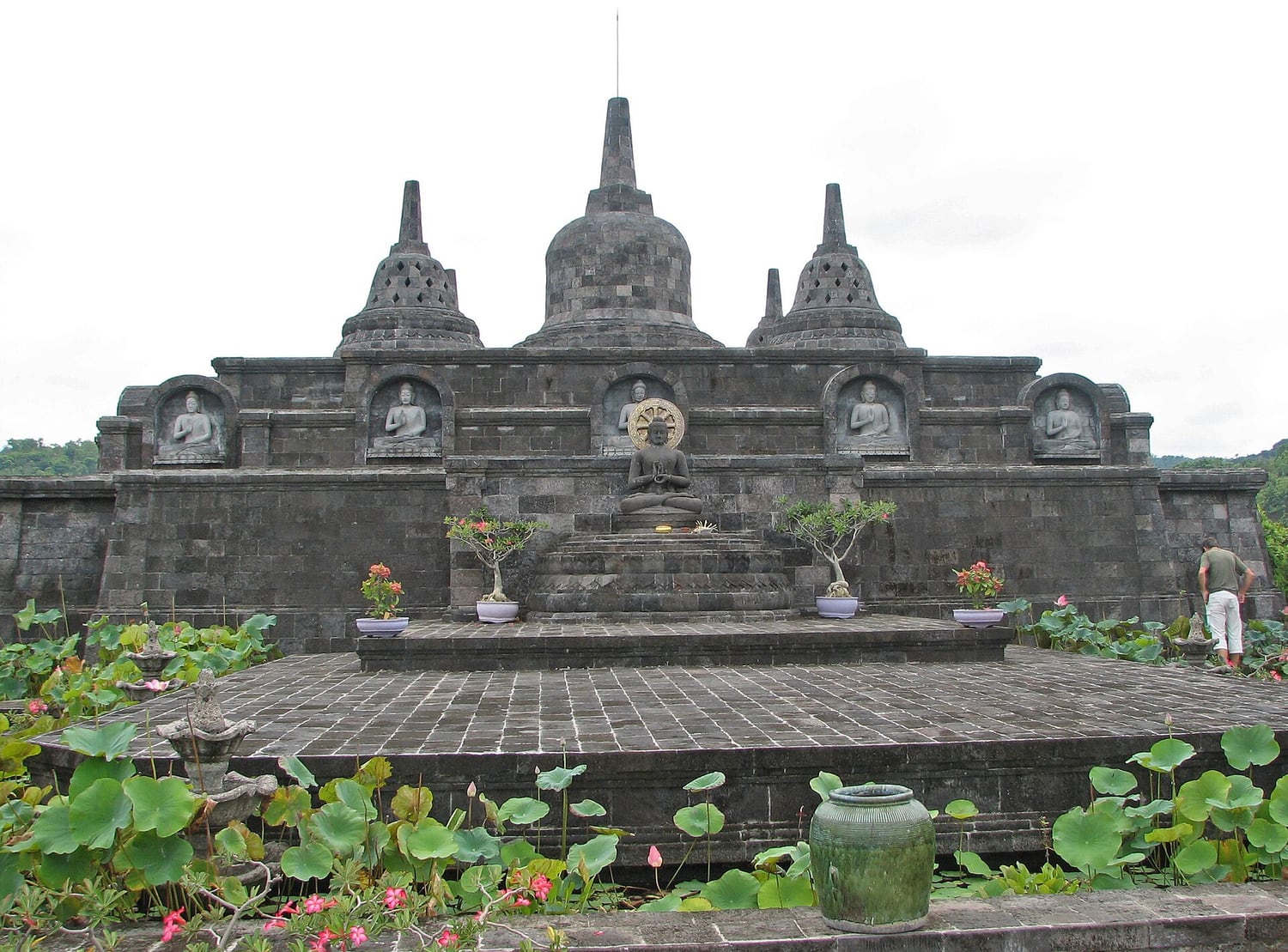 The Borobudur replica at Brahma Vihara Arama, minutes from the springs. Photo: Eric Bajart / Wikimedia Commons (CC BY-SA 3.0)
The monastery asks for modest dress, with shoulders and knees covered. Sarongs are usually available at the entrance.
A common order puts the monastery first, while the morning is cool and the light is good for the hillside views. The springs come afterwards for the soak, and you move between the two in minutes by car or scooter.
For a fuller day, start with a walk through the rice fields of Mayong, a village inland from Seririt. Then soak at Banjar and visit Brahma Vihara Arama on the way back. A private driver links the three.
After the Dawn Dolphin Trip, Banjar Is an Easy Second Stop
Boats leave Lovina before sunrise and are usually back by mid-morning, which leaves the rest of the day open. A soak at Banjar is an easy second stop once you are off the water and want to slow down.
The Lovina dolphins guide explains the boat trip in full.
Banjar Sits on the Way to Munduk and Back From the Waterfalls
The springs also fit a longer day in the highlands. On the way up to Munduk, Banjar makes a sensible warm-water stop before the climb into the hills.
On the way back down, soak here after a wet walk at Gitgit or Aling-Aling.
Practical Notes
Details below are subject to change. Confirm current rates and hours locally before you go.
- Entry: A single entry charge, paid in cash at the gate.
- Opening: Open from the morning through the afternoon. The management sets the hours, so ask where you are staying the night before if you want to be there at opening.
- Facilities: Changing rooms, showers and lockers near the pools. A small extra fee may apply.
- Food and drink: Warungs at the entrance for snacks and drinks after your soak.
- Driver from Lovina: Agree a return fare with waiting time included before you set off, not on the way home. Private drivers in north Bali covers how that is normally done.
- Best arrival: Early, before the mid-morning tour groups.
- Payment: Bring cash, because card payment is not reliable at the gate.
- Footwear: Wet stone is slippery, so something with grip helps around the pools.
FAQ
Is Banjar Hot Springs worth visiting? Yes, especially as a relaxed half-day to pair with something more active. The setting is lovely, natural sulphur water in a tiered jungle garden, and the carved spouts give a good shoulder soak. It suits travellers who want a slow, easy morning more than anyone after an adventure.
How much is the entrance to Banjar Hot Springs? There is a single entry charge paid in cash at the gate, and it is modest. Small extra charges may apply for lockers or showers. Bring cash, because card payment is not reliable here.
How do you get to Banjar Hot Springs from Lovina? By road, roughly 20 to 30 minutes west of central Lovina. A private driver or a scooter is the practical option, since there is no convenient public transport to the gate. From the parking area, a short paved walk and a few steps bring you down to the pools.
What should you bring to Banjar Hot Springs? Swimwear, ideally worn under your clothes, plus a towel and a change of clothes for after. Bring cash for entry and the warungs, and a dry bag for your phone near the spouts. Older swimwear is wise, as sulphur water can mark delicate fabric over time.
Are the Banjar hot springs natural? Yes. The water is naturally heated and rises warm from the ground, carrying dissolved minerals and a clear sulphur smell. The pools and the carved stone spouts that channel it are built, but the source and the warmth are natural.
How old are the Banjar hot springs? The Banjar district's own account puts the spring at hundreds of years old. It says the spring was improved during the Japanese occupation of Bali, when at least three catchment pools were built for bathing. It has operated as a public bath since 1986.
Can you visit Banjar hot springs and the monastery on the same morning? Yes, easily. Brahma Vihara Arama is minutes away by car or scooter. The usual order is the monastery first, while the morning is cool and the hillside light is good, then the springs to soak afterwards.
Sources
- Banjar District, Buleleng Regency, Air Panas Banjar, the district's own account of the springs, read September 2026 (in Indonesian)
- BaleBengong, Pemandian Air Panas Banjar Buleleng bertahan sejak masa kolonial, on the springs' history, ownership and the foundation that runs them, read September 2026 (in Indonesian)
Staying nearby? Palm Living's villas are around Lovina, 20 to 30 minutes east of the springs.
Nearby: Brahma Vihara Arama, the Lovina dolphins, and Lovina beach.