On this page
- In Brief
- Lovina Beach at a Glance
- What Lovina Beach Is: Seven Villages on One Run of Black Sand
- Where the Name Comes From: A Holiday Home Called Lovina
- The Sand Is Black Because the Coast Is Volcanic, and the Sea Stays Flat
- The Main Stretches: Kalibukbuk for Life, East and West for Quiet
- What to Do at the Beach: Dolphins at Dawn, a Swim and the Sunset
- When to Go: April to October Is the Reliable Season
- How to Get There: About Three Hours from the Airport, over the Mountains
- How to Fit It In: A Slow Few Days, Planned Around Dawn and Sunset
- Practical Notes
- FAQ
- Sources
In Brief
Lovina Beach, Bali, is a string of black-sand beaches on the north coast, in Buleleng regency. It runs through seven villages, from Pemaron in the east to Temukus in the west. Kalibukbuk, with its dolphin statue, is the centre. The sea is calm and flat, with almost no surf, so swimming is easy for families and weaker swimmers.
Come for a dawn dolphin trip, a long swim and the sunset. The centre at Kalibukbuk is the busiest part, and the sand to the east and west is quieter. The beach is about three hours by road from the airport, and April to October is the reliable season.
Lovina Beach at a Glance
- What it is: a string of black volcanic-sand beaches and shallow bays, not one single beach
- Where: Bali's north coast, in Buleleng regency, facing the Bali Sea
- Villages, east to west: Pemaron, Tukad Mungga, Anturan, Banyualit, Kalibukbuk, Kaliasem and Temukus
- Centre: Kalibukbuk, marked by the Lovina dolphin statue
- The sea: calm, flat and shallow, with almost no surf
- Known for: the dawn dolphin boats, easy swimming and long sunsets
- Who named it: Anak Agung Panji Tisna, in 1953
- From the airport: roughly three hours by road, over the central mountains
- Best months: April to October, with June to September the most dependable
What Lovina Beach Is: Seven Villages on One Run of Black Sand
Lovina is a run of dark sand and shallow bays, tied together by the coast road.
The name covers more coast than many visitors expect. From east to west, it takes in:
- Pemaron
- Tukad Mungga
- Anturan
- Banyualit
- Kalibukbuk
- Kaliasem
- Temukus
Kalibukbuk is the heart of it, marked by the Lovina dolphin statue. It is the village most people mean when they say Lovina.
The beach is a working coastline as much as a swimming one. Fishing boats are pulled up on the sand, nets dry along the shore and the dolphin boats wait there through the day. Come to it as a village beach where people work, and you will see it as it is.
For the wider area, with its inland waterfalls, villages and highlands, see the Lovina area guide.
Where the Name Comes From: A Holiday Home Called Lovina
Lovina is a young name, given in 1953, and it is not an old Balinese place name.
It came from Anak Agung Panji Tisna, a Regent of Buleleng and a novelist, credited as a pioneer of tourism on this coast. He made a seaside holiday home at Kaliasem, called it Lovina and began taking in guests. He then built more guest houses along the coast, and the name spread along the whole stretch of sand.
 Anak Agung Panji Tisna, who gave Lovina its name. Photo: Ministry of Education / Wikimedia Commons (public domain)
So Lovina is a name laid over a run of older coastal villages. Each still keeps its own temples, its own banjars and its own stretch of sand. Why north Bali feels different picks up the rest of that story.
The Sand Is Black Because the Coast Is Volcanic, and the Sea Stays Flat
The sand at Lovina is black because the whole north coast is volcanic.
The dark grains are eroded basalt and volcanic minerals, washed down from the mountains and ground fine by the sea over a very long time. The sand at Amed and Tulamben, further east, is dark for the same reason.
The colour holds heat, so the sand warms underfoot by midday. Its texture is finer and heavier than the pale sand of the south.
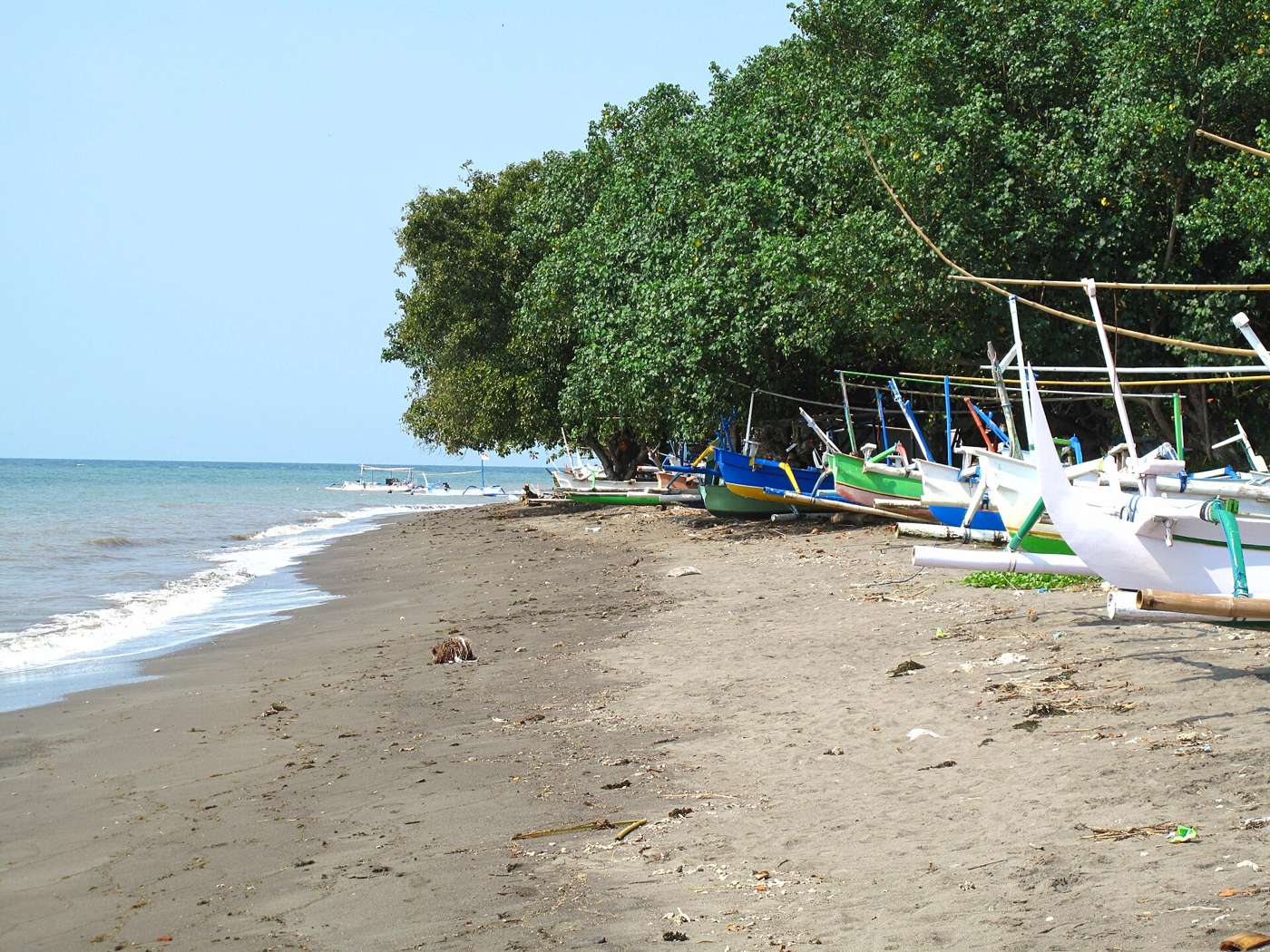 Dark volcanic sand and a calm sea at Lovina, with jukung boats drawn up under the trees. Photo: Ken Eckert / Wikimedia Commons (CC BY-SA 4.0)
The water is the bigger draw. Lovina sits on a sheltered, north-facing coast with no open swell rolling in, so the sea stays flat and calm through most of the year. There is rarely any surf.
Families, weaker swimmers and anyone wary of strong currents will find it a relief. The shallows shelve gently, so you can wade out a long way and the water stays gentle.
A few things to watch when you swim:
- Lines and boats: look out for fishing lines and the occasional boat near the launch points, early in the morning.
- Children: keep an eye on small children around the boats.
- Lifeguards: there are no big lifeguard operations here, so swim within your depth.
The Main Stretches: Kalibukbuk for Life, East and West for Quiet
The beach changes character as you move along the coast.
Kalibukbuk, the Centre
This is the heart of Lovina and the beach most visitors picture. The dolphin statue stands here, and the sand around it is the busiest and most social part of the coast. The warungs, the boat operators and the easiest access are all on this stretch.
East of the Centre: Banyualit and Anturan
Heading east, the sand gets quieter and more local. Fishing boats cluster on these stretches, and you find smaller homestays and beachfront warungs without the crowd.
West of the Centre: Kaliasem and Temukus
West through Kaliasem toward Temukus and beyond, the coast thins out into longer, emptier sand. This is the direction of the road to Pemuteran and the far northwest, and the beaches here feel like open coastline.
The water is much the same calm sea all the way along. Pick the centre for convenience and life, and the edges for space and quiet.
What to Do at the Beach: Dolphins at Dawn, a Swim and the Sunset
Four things fill a day here, and the first starts before sunrise.
Watch the Dolphins at Dawn
The dolphins put Lovina on the map. Wooden jukung outriggers leave the beach before sunrise and head out to where spinner and bottlenose dolphins feed offshore.
On a good morning you see plenty, and on a slow one only a few distant fins. It is wild and unstaged. The Lovina dolphins guide explains how it works, the timing, the boats and the honest questions about it.
Take a Long Swim
Swimming is the everyday pleasure. Because the sea is so flat, a long, slow swim parallel to the shore is easy and safe. Mornings are calmest.
Stay for the Sunset
Lovina faces north and slightly west, so the evening light over the Bali Sea stretches out and the sky holds its colour for a good while. Most days on the beach end with it, often at a warung table with grilled fish caught that day. The best restaurants in Lovina covers where those tables are.
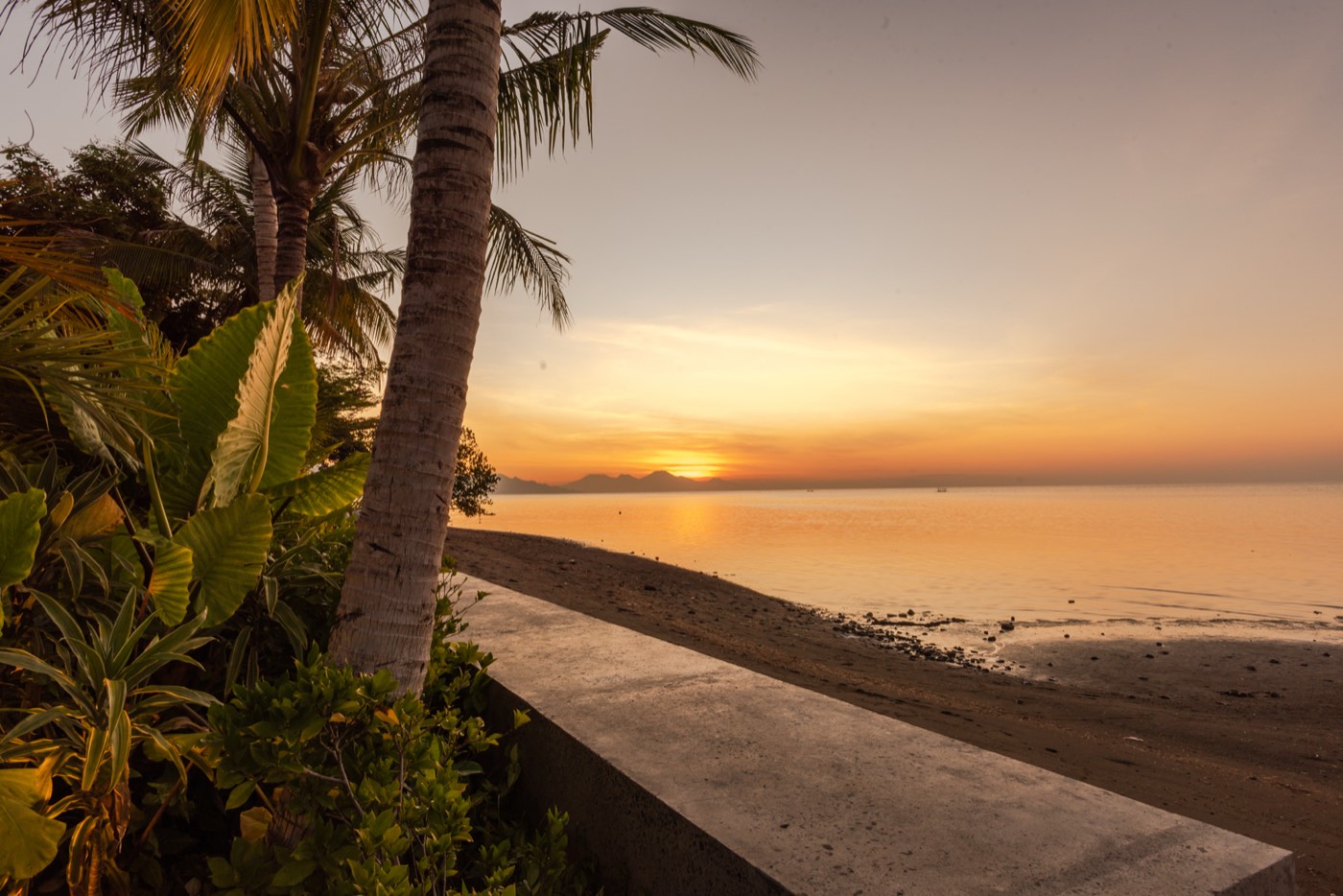 The north-facing sunset from Lovina's sand. Photo: Palm Living archive.
Walk the Sand, Snorkel and Visit the Sunday Market
Beyond that, the beach rewards slowness more than activity. Walk the sand between the villages, watch the fishing boats come in and eat where the locals eat.
Snorkelling gear and short boat hires are easy to arrange on the sand. The reef snorkelling is better further west, around Pemuteran, and snorkelling in north Bali covers where to go for it.
On Sundays, the beach at Kaliasem has hosted a makers' market on the sand, announced as a weekly event. Check it is on before you plan around it. It is the easiest way to meet the people who make things in this regency.
When to Go: April to October Is the Reliable Season
The dry season, April to October, is the reliable window for the beach, and June to September is its most dependable stretch.
In these months the sea is calmest, the light is clearer and the dolphin-sighting rate is higher. The water is easy and the sunsets are at their best.
The rainy season, November to March, is greener and quieter, with warm afternoons and occasional heavy downpours. The sea is still mostly calm, though rough weather can stir it up and dolphin trips are sometimes cancelled. The north is drier overall than the south of Bali, so the shoulder months tend to hold up well here.
How to Get There: About Three Hours from the Airport, over the Mountains
Lovina Beach is roughly a three-hour drive from the airport and the south, over the central mountains.
The route climbs past the Bedugul lakes and down the far side, a beautiful drive on slow, winding mountain roads. A private driver is the simplest way up and lets you break the journey at a lake or a waterfall.
Once you are in Lovina, the beach is easy to reach. The centre at Kalibukbuk is walkable, with the dolphin statue and the main sand a short stroll from most accommodation there. For the quieter eastern and western stretches, a scooter or a short ride is enough, because the coast road runs right behind the beach the whole way.
Getting to north Bali breaks down the routes and options from the south. If you would rather not drive yourself, private drivers in north Bali covers how that is usually arranged.
How to Fit It In: A Slow Few Days, Planned Around Dawn and Sunset
Lovina Beach suits a slow few days better than a quick stop. Across a day, it goes like this:
- Early morning: the beach at its quietest and calmest.
- Midday: the black sand gets hot underfoot, so shade or a swim is welcome.
- Late afternoon into evening: the sunset.
For a place to stay, see the best villas in Lovina and Palm Living's villas for rent around Lovina.
Practical Notes
The details below can change. Confirm anything that matters locally before you rely on it.
- Swimming: calm, flat water that shelves gently, easy for most swimmers. There is no major lifeguard presence, so swim within your depth.
- The sand: black volcanic sand, fine and heavy. It heats up in the midday sun, so sandals help.
- Boats and fishing: fishing and dolphin boats use the beach, most of all at dawn. Watch for lines and traffic near the launch points.
- Best stretches: the Kalibukbuk centre for life and access, east and west for quiet.
- Facilities: warungs and beach bars line the central sand, and the quieter stretches have fewer.
- Money: ATMs are in Kalibukbuk. Carry cash for warungs and boat hires.
- Sunset: worth planning your evening around, as the north-facing light is long.
FAQ
Is Lovina Beach worth visiting? Yes, if you want calm water, a north-coast village beach and long, soft sunsets over the Bali Sea. The black volcanic sand and the flat, easy sea make it one of the gentler beaches in Bali, and the dawn dolphin boats leave from here. It suits a slow few days better than a quick stop.
Why is Lovina Beach black sand? Because Bali's north coast is volcanic. The dark sand is eroded basalt and volcanic minerals, carried down from the mountains and ground fine by the sea over time. The beaches at Amed and Tulamben, further east, are dark for the same reason. The black grains hold heat, so the sand warms underfoot in the midday sun.
Can you swim at Lovina Beach? Yes, and the swimming is some of the easiest in Bali. The sea is calm and flat with almost no surf, and the shallows shelve gently, which suits families and weaker swimmers. Watch for fishing lines and boat traffic near the launch points early in the morning. Swim within your depth, as there is no major lifeguard presence.
What is there to do at Lovina Beach? Take a dawn dolphin boat trip, swim in the calm sea, walk the sand between the fishing villages and stay for the sunset. The centre around the dolphin statue at Kalibukbuk has the warungs, the boats and the easiest access, and the eastern and western stretches are quieter. For the dolphins, see the Lovina dolphins guide.
Where is the best part of Lovina Beach? It depends on what you want. Kalibukbuk in the centre is the most convenient, with the dolphin statue, the warungs and the boats all close at hand. For quiet sand and a more local feel, head east toward Anturan or west toward Kaliasem and Temukus. The water is calm and easy all the way along, so the choice comes down to crowd or quiet.
Sources
- Buleleng Regency tourism office, Kalibukbuk Village, read September 2026 (in English)
- Indonesia Ministry of Tourism, Lovina Beach: Bali's Dolphin Playground in the North, read September 2026 (in English)
- Wikipedia, Lovina Beach, for the village list, read September 2026 (in English)
- Wikipedia, Pandji Tisna, for his life and the naming of Lovina in 1953, read September 2026 (in English)
- Palm Living, villas for rent around Lovina, read September 2026 (in English)
Next: the Lovina dolphins, the best villas in Lovina, and the wider Lovina guide.