On this page
- In Brief
- North Bali's Seasons at a Glance
- The Dry Season, April to October, Brings Calm Seas and Firm Trails
- The Wet Season, November to March, Is Greener, Emptier and Cheaper
- Dolphins, Diving and Waterfalls Each Have Their Own Best Months
- Crowds Peak in July, August and the Holiday Weeks
- Nyepi Closes the Whole Island for 24 Hours, Usually in March
- North Bali Month by Month
- Practical Notes
- FAQ
- Sources
In Brief
The best time to visit north Bali is the dry season, roughly April to October, and June to September is the most reliable stretch. Those months bring calm seas and the highest dolphin-sighting rates off Lovina. The water is clear for diving at Pemuteran, and the trails to the waterfalls inland are firm.
The wet season, November to March, is greener and emptier, with fuller waterfalls and warm afternoon downpours. It is a real option for a calmer, cheaper trip, as long as you know the trade-offs. The central mountains shelter the north coast from much of the rain, so the shoulder months hold up well.
For one window with the fewest compromises, aim for May, June or September.
North Bali's Seasons at a Glance
- Best months overall: May, June and September
- Dry season: roughly April to October, most reliable from June to September
- Wet season: November to March, with heavy afternoon rain and often bright mornings
- Dolphins at Lovina: best April to October
- Diving and snorkelling at Pemuteran and Menjangan: best April to November
- Waterfalls: safest trails in the dry season, most water from December to March
- Busiest and most expensive: July, August, Christmas to New Year and Easter week
- Nyepi: usually in March, when the whole island closes for 24 hours
- Temperature: warm in every season, with cool mountain mornings around Munduk
The Dry Season, April to October, Brings Calm Seas and Firm Trails
The dry season is the high season for good reason. Rain is infrequent, the air inland is clearer, and the sea along the north coast lies flat for most of the day.
Lovina faces the Bali Sea rather than the open Indian Ocean, and in the dry months its surface is glassy at dawn. That is what the dolphin boats and the dive operators want. Sighting rates run highest in these calm seas, and trips rarely cancel for weather.
The diving off Pemuteran and Menjangan is at its best too, with the visibility that draws people across the island to dive here.
Inland, the trail down to Sekumpul holds together and the river crossings stay predictable. The long mountain views around Munduk open up on clear mornings.
June, July and August Bring the Most Visitors
These three months have the highest villa rates as well as the most visitors. The popular waterfalls fill up through the middle of the morning, so a quiet visit and a busy one are hours apart.
Start early and most of the crowd disappears.
The Wet Season, November to March, Is Greener, Emptier and Cheaper
The wet season in north Bali is gentler than the word suggests. Rain tends to arrive in heavy afternoon bursts rather than all-day grey, and mornings are often bright and usable. Temperatures stay warm throughout.
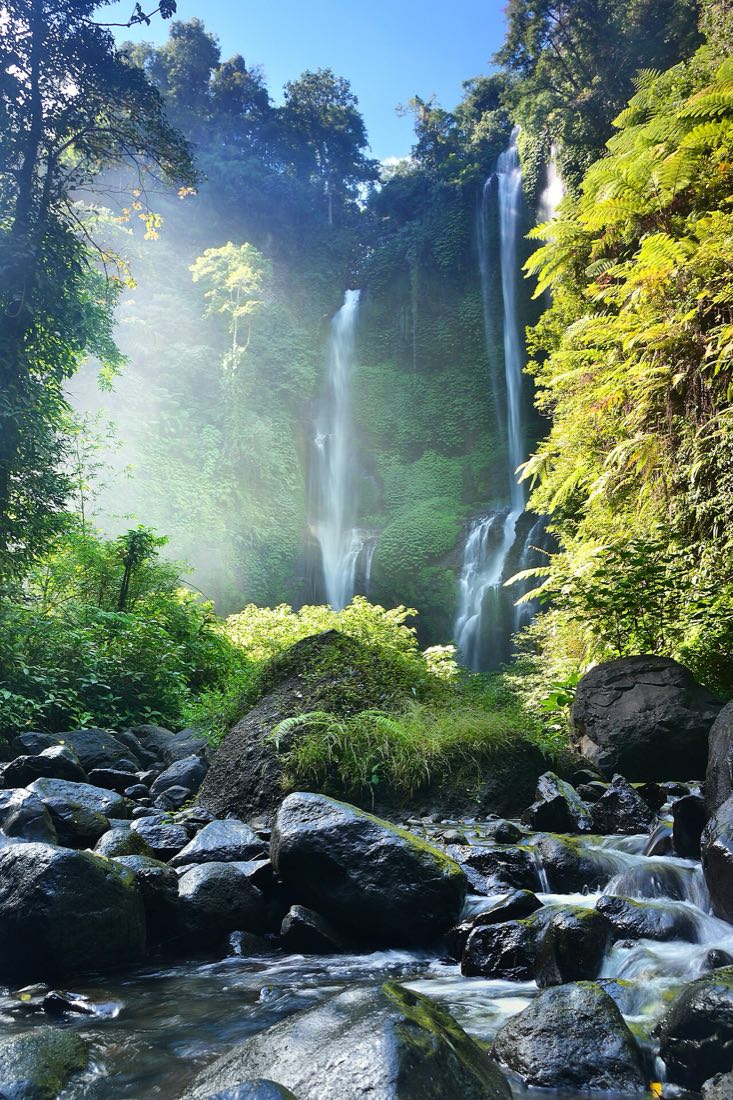
The rice terraces glow, the jungle around Munduk thickens and the waterfalls run at full force. Sekumpul in February is louder and wider than Sekumpul in August, and the whole north turns a deeper green.
Rain Can Cancel a Boat or Close a Trail
Rough seas can cancel dolphin trips and the occasional dive day. The surface that sits glassy in July gets choppy after a storm.
Waterfall trails turn slippery after overnight rain. The river crossing at Sekumpul can rise enough to close the descent on safety grounds, so check conditions at the gate before committing.
For a traveller who wants empty roads, lower prices and the north at its most lush, the wet season delivers. Build in flexible days so a washed-out morning costs you nothing.
Dolphins, Diving and Waterfalls Each Have Their Own Best Months
Each of the north's signature experiences peaks at a slightly different time.
Dolphins at Lovina: April to October
Calm dry-season seas mean higher sighting rates and far fewer cancellations. Trips run year-round, but a rough morning in the wet season can scrap the boat entirely.
In any season the trip leaves before dawn, so the sea state at sunrise is what matters. See the Lovina area guide for how the dolphin trip fits into a stay.
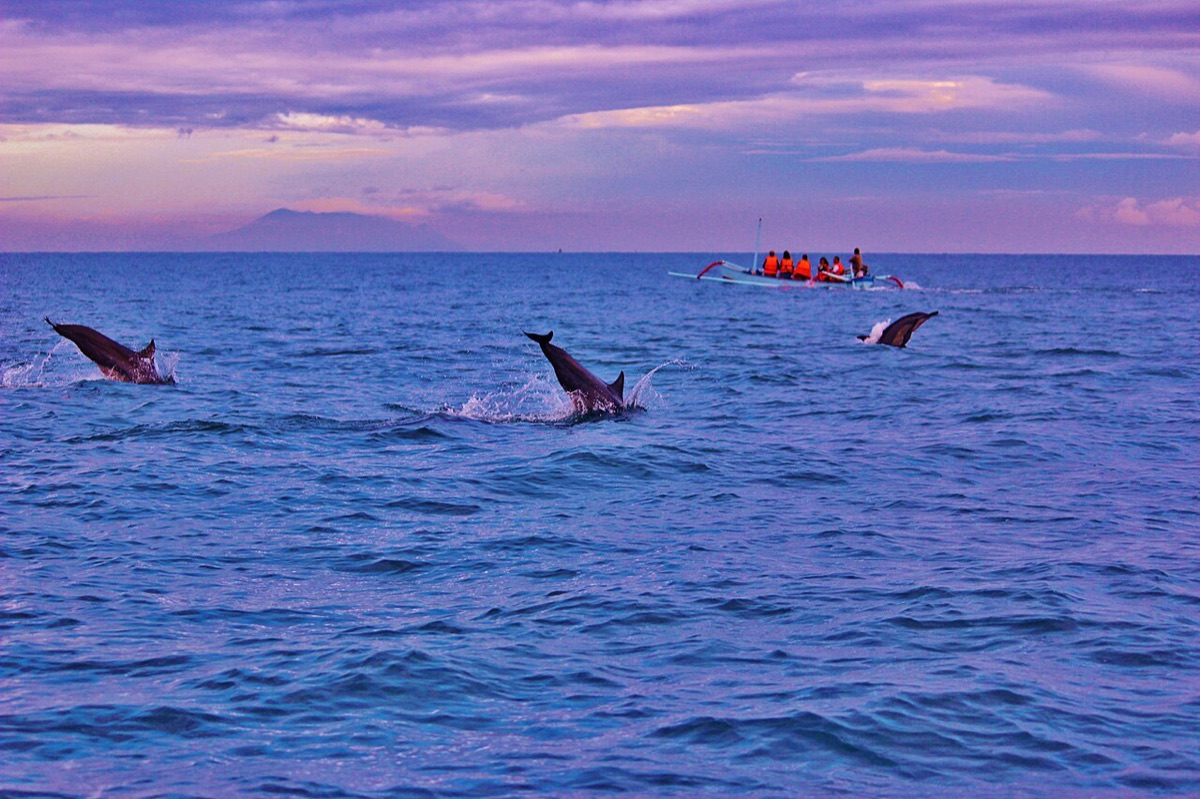 Dolphins on a glassy dry-season dawn off Lovina. Photo: Michelle Maria / Wikimedia Commons (CC BY 3.0)
Diving and Snorkelling at Pemuteran and Menjangan: April to November
Visibility is at its clearest and the water is calmest from April to November. Menjangan Island in particular rewards the dry-season window.
The reefs are good year-round, though storms can stir up the water and reduce visibility in the wettest months. The full breakdown is in diving and snorkelling in Pemuteran.
Waterfalls: Dry Season for Safe Trails, Wet Season for the Most Water
Sekumpul, Aling-Aling, Gitgit and the Munduk falls have two answers. For the safest, most accessible trails, go in the dry season.
For the most dramatic volume of water, go in the wet season and accept the conditions. The falls are full and thunderous from December to March, though trails get slick and access can close after heavy rain.
A trip built around the sea belongs in the dry season. A trip built around green hills and roaring water has a case for the wet.
Crowds Peak in July, August and the Holiday Weeks
The busiest stretches are July and August, the Christmas-to-New-Year period and Easter week. Both international visitors and domestic travellers fill the popular sites then.
Indonesian school holidays and long weekends also bring day-trippers to the waterfalls and hot springs. In each of these periods, plan on earlier starts and higher villa rates.
Nyepi Closes the Whole Island for 24 Hours, Usually in March
Nyepi is the Balinese Day of Silence, which marks the new year in the Saka calendar. For 24 hours the entire island shuts down:
- no flights
- no traffic
- no beach
- no leaving your accommodation
- minimal lights after dark
It usually falls in March, on a date that shifts each year with the Saka calendar. If your trip overlaps it, you stay in wherever you are lodged, and with some planning the day is a rare kind of quiet.
The day before brings the spectacular Ogoh-Ogoh parades. Read more in Nyepi, Bali's day of silence.
 An ogoh-ogoh on parade the night before Nyepi. Photo: MagdaLena7 / Wikimedia Commons (CC BY-SA 4.0)
North Bali Month by Month
- January: deep wet season, lush, quiet and cheap. Expect full waterfalls, frequent afternoon rain and some rough-sea days.
- February: still deep in the wet season, with the greenest landscape and the most dramatic falls. It is the least reliable month for the sea.
- March: the rain eases toward the end of the month, and Nyepi usually falls here. A green, low-crowd month between the seasons.
- April: the turn. Seas calm, trails firm up and prices are still moderate, which makes it one of the smartest months to come.
- May: excellent. Dry, clear and calm at sea, and ahead of the peak-season crowds and rates.
- June: reliable and beautiful as the dry season settles in. Crowds start to build late in the month.
- July: the peak, with the clearest conditions, the most visitors and the highest prices. Start early everywhere.
- August: the peak continues, dry, calm and busy. Book villas and drivers well ahead.
- September: often the sweet spot. Dry-season conditions hold while crowds thin out and rates ease.
- October: still mostly dry, with the first occasional showers returning. Quiet and good value.
- November: the wet season begins. The hills green up, the sites empty out, prices drop and the odd rough-sea day arrives.
- December: wet and lush. Quiet early in the month, then busy over the Christmas and New Year holidays.
Practical Notes
Conditions shift year to year. Confirm dates and sea conditions locally before you commit.
- Best all-round months: May, June and September balance good weather against thinner crowds.
- Sea-dependent plans: Dolphins and diving favour the dry season. The dawn sea state is what decides a dolphin morning.
- Waterfall plans in the wet season: Build in flexible days and check trail conditions at the gate after overnight rain.
- Nyepi: Usually in March, on a date that moves with the Saka calendar. The island fully closes for 24 hours, including the airport. Plan accommodation and supplies around it.
- Peak-season booking: Reserve villas and drivers ahead for July, August and the year-end holidays.
- Year-round warmth: The north stays warm in every season. Pack light, and add a layer only for cool mountain mornings around Munduk.
FAQ
When is the best time to visit north Bali? The dry season, roughly April to October, with June to September the most reliable. Those months bring calm seas, the highest dolphin-sighting rates off Lovina, clear diving water at Pemuteran and firm waterfall trails. For the best balance of good weather and lighter crowds, aim for May, June or September.
What is the rainy season like in north Bali? Gentler than the name suggests. Rain usually comes in heavy afternoon bursts rather than all day, and mornings are often clear. The landscape turns deep green and the waterfalls run at full force. The trade-offs are occasional rough seas that cancel dolphin and dive trips, and slippery trails after rain. The north sits in the rain shadow of the mountains, which keeps it on the drier side even in the wet months.
Is north Bali worth visiting year-round? Yes. The dry season is best for the sea and the trails, and the wet season is best for green landscapes, full waterfalls, lower prices and quiet roads. The mountains shelter the north in every season, so the shoulder months hold up well. The only day to plan around carefully is Nyepi, when the whole island closes.
When is the best time to see dolphins in Lovina? April to October, during the dry season, when the sea off Lovina is calmest. Calm seas mean higher sighting rates and far fewer weather cancellations. The trip leaves before dawn in any season, so the sea state at sunrise is what decides the morning.
What months should you avoid in Bali? There is no month to avoid outright in the north, though each has its cost. January and February are the wettest, with the least reliable sea conditions. July, August and the year-end holidays are the busiest and most expensive. Nyepi, usually in March, closes the entire island for 24 hours, so check its date before you book.
Sources
- Wikipedia, Bali (climate: the west monsoon from about October to April, heaviest rain December to March, monthly averages), read September 2026
- Wikipedia, Nyepi (restrictions for residents and visitors, the airport closure, the parades the evening before), read September 2026
- Wikipedia, Bali Sea, read September 2026
For the wider picture, see the complete north Bali guide.