On this page
- In Brief
- Pemuteran Diving and Snorkeling at a Glance
- The House Reefs Start a Few Metres off the Beach
- The Biorock Reefs Are a Coral Garden the Village Grew Back
- Menjangan Island Is the Wall Dive a Short Boat Ride Out
- How to Book Menjangan and Learn to Dive, in Four Steps
- Snorkelers and Divers Can Share the Same Boat
- Go in the Dry Season, Best from June to September
- What to Bring: Your Own Mask, Reef-Safe Sunscreen and Cash
- Practical Notes
- FAQ
- Sources
In Brief
Pemuteran diving and snorkeling need no boat to begin. Wade in off the beach with a mask and you reach coral within minutes. The bay is sheltered, the sea stays flat and clear for most of the year, and there is almost no current along the shore.
Two things set it apart. The Biorock project, one of the world's largest coral-restoration efforts, has dozens of structures thick with coral just off the sand. Menjangan Island, often rated one of the best dive sites in Bali, is a short boat ride out. Beginners learn in the bay, and experienced divers use it as a base for the walls offshore.
Pemuteran Diving and Snorkeling at a Glance
- Where: Pemuteran Bay, on the northwest coast of Bali
- From the beach: house reefs and the Biorock structures, no boat needed
- By boat: Menjangan Island, inside West Bali National Park
- Who it suits: first-time snorkelers, families, learner divers and experienced divers
- Learning: SSI and PADI dive schools in the village, plus AIDA freediving courses
- Best time: the dry season, April to October, most reliable from June to September
- Gear: fins and full dive gear rent easily in the village
The House Reefs Start a Few Metres off the Beach
The bay faces north into protected water, out of reach of the big ocean swell. Its surface stays calm enough that snorkeling feels closer to floating in a pool than swimming in the sea.
Many lodges along the shore have a house reef a short swim out. You walk in off the beach, put your face down, and the sand gives way to coral patches and fish within a few metres of standing depth.
There is no boat to catch and no schedule to keep. You can snorkel twice a day, before breakfast and again at dusk, without arranging anything.
For new snorkelers and families, the shore reefs are one of the gentlest starts in Bali. The water is shallow, the entry is easy, and no current drifts you off your line. Strong swimmers can range further out along the reef edge, where the coral thickens and the bigger schools hold.
Visibility in the bay is good through most of the year. It is best in the dry season, when no rain washes runoff into the water.
The Biorock Reefs Are a Coral Garden the Village Grew Back
Decades ago, the natural reef in the bay was badly damaged. The village partnered with marine scientists to grow new coral on steel frames placed on the seabed.
A low-voltage current runs through the metal to speed mineral deposit and coral growth. The reef came back around the frames.
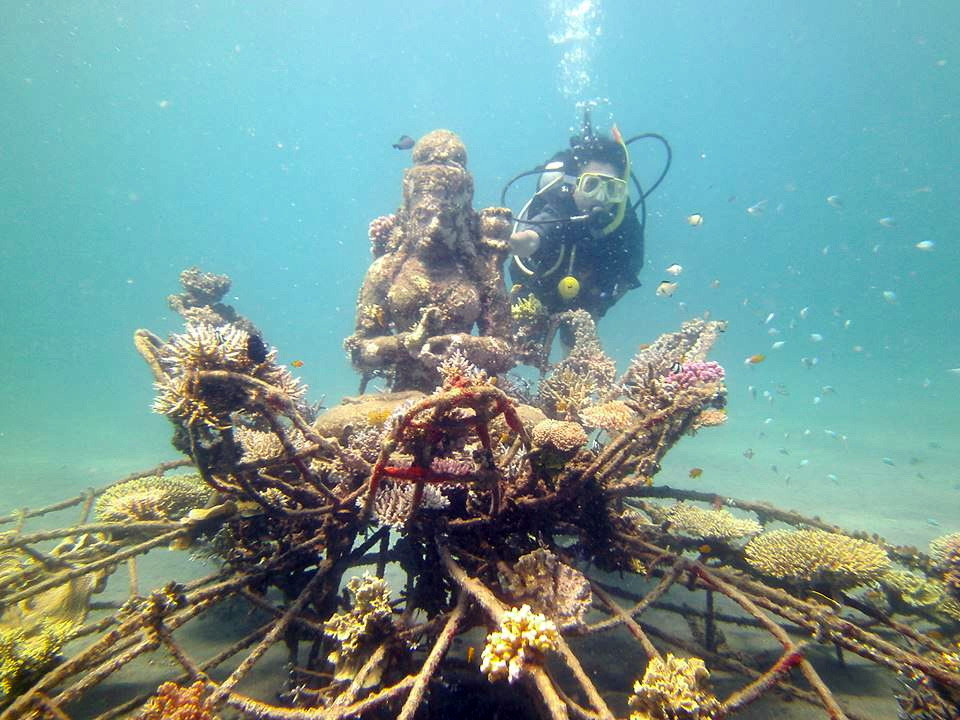 A Biorock structure in Pemuteran bay, coral climbing the frame the village built. Photo: Ennio morricone / Wikimedia Commons (CC BY-SA 3.0)
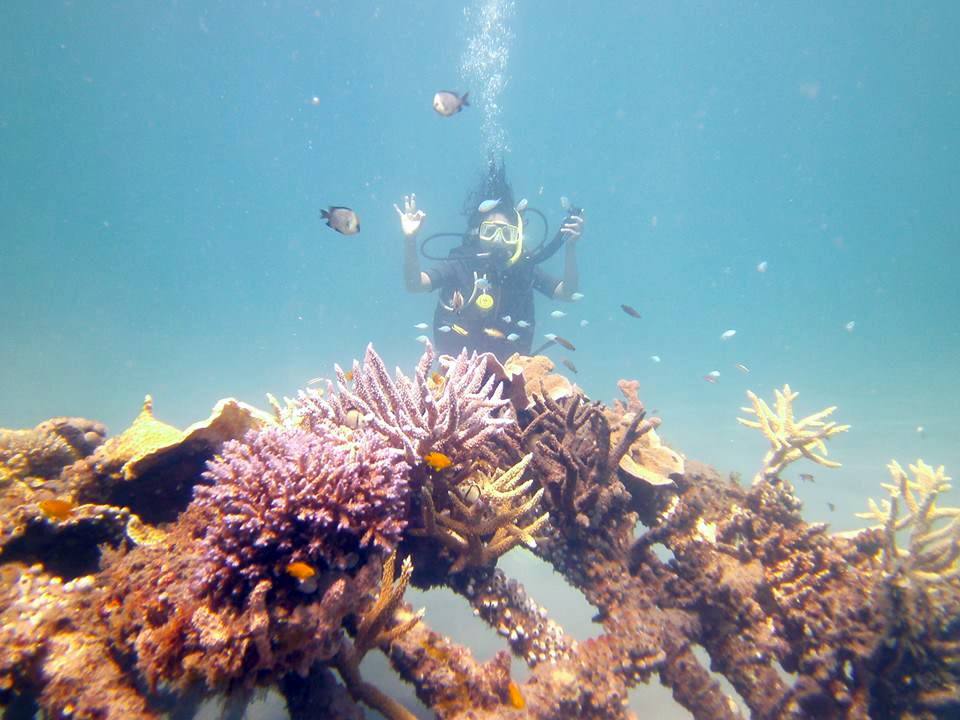
What you see is a field of structures just off the beach, shallow enough to reach with a mask and fins. The oldest are so thickly grown they look like natural reef. Some are shaped into domes and arches, now crusted with coral, and fish shelter inside them.
Snorkelers float over the whole field, and divers drop down and move through it. You need neither a boat nor a guide. For many visitors this becomes the highlight of the trip, ahead of the dive sites offshore.
The project is community-run and paid for locally, through village levies on hotels and dive shops and local contributions. Karang Lestari, the foundation behind it, takes donations and coral sponsorships on its own site.
Menjangan Island Is the Wall Dive a Short Boat Ride Out
Menjangan is a small island inside West Bali National Park, the bigger dive day from Pemuteran.
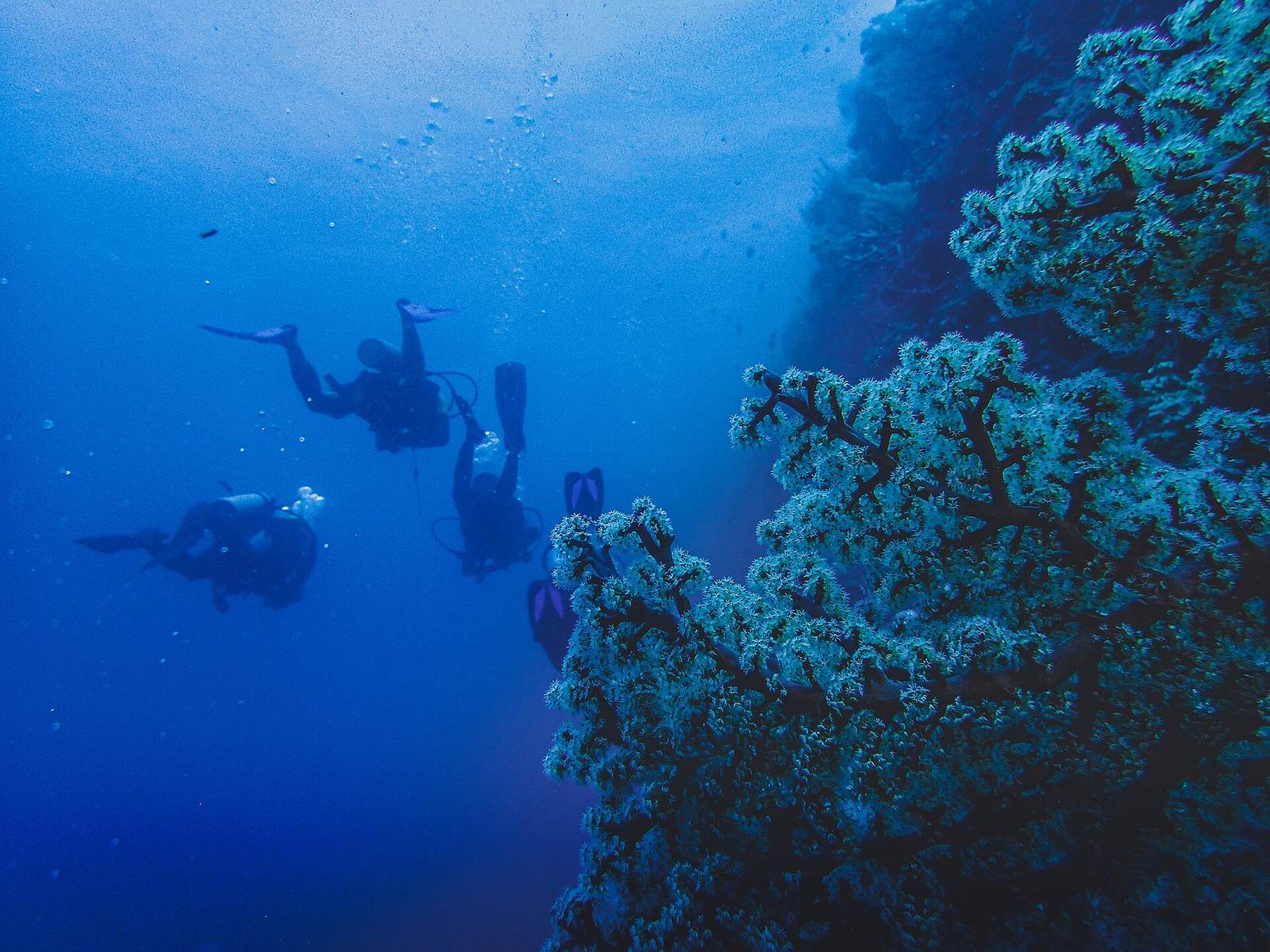 Divers beside a coral wall at Menjangan Island, the wall dive that boats run to from Pemuteran. Photo: Noirperspective / Wikimedia Commons (CC BY-SA 4.0)
This is wall diving: steep coral drop-offs falling into deep blue, with overhangs and gorgonian fans. The water is some of the clearest in the region, and the island is often rated one of the best dive sites in Bali. Strong snorkelers enjoy it too, because the wall starts near the surface.
The park sets its own charges for visits and the crossing, separate from the price of the trip. Its protection keeps Menjangan clean and quiet.
The sites, the boat trip, what to expect on the wall and how park access works are all in the Menjangan Island guide.
How to Book Menjangan and Learn to Dive, in Four Steps
-
Book Menjangan as one trip. The easiest booking covers the boat, the park guide and the permit together, and the dive centres and lodges in the village sell it that way.
-
Ask what the quote includes. Check whether the national park's own charges sit inside the price or on top. The Menjangan Island guide explains the park fee and the permit desk.
-
Learn first if you want to dive the wall. Pemuteran has dive schools that teach certification courses. Course content and prices change, so check the current schedule on each school's site when you enquire.
-
Book a day ahead in peak season. Reserve the Menjangan trip a day or more in advance, and book dive-oriented lodges early.
The dive schools in Pemuteran include these two:
- Dive Concepts. Its Pemuteran centre lists SSI courses from Open Water through Advanced, Rescue and Divemaster. The Open Water page sets out the course day by day, from a pool session to open-water dives.
- Bali Diving Academy. A PADI school with a dive centre on the main road in Pemuteran. Its site lists PADI courses alongside AIDA freediving courses.
Snorkelers and Divers Can Share the Same Boat
Pemuteran works for both, which is why it draws mixed groups and families. Knowing which sites suit you saves a wasted boat trip.
Snorkelers reach most of the bay's best reef without leaving the surface. The Biorock field and the house reefs are shallow, calm and reachable from the shore. A guided snorkel boat also goes out to Menjangan, where the wall begins shallow enough to float over and watch the drop fall away beneath you. You need no experience beyond being comfortable in the water with a mask.
Divers get the same gentle bay, plus the depth. The sheltered water and easy entry make Pemuteran one of the kindest places in Bali to learn. First open-water descents often happen right here in the bay, and once you are certified, Menjangan is the payoff. Beginners are welcome on this coast.
Divers and snorkelers often ride the same Menjangan boat. A mixed group can go out together and meet back on the surface.
Go in the Dry Season, Best from June to September
The dry season, April through October, is the prime window, and June to September is the most reliable stretch. Seas are calm, offshore visibility is at its best, and the Menjangan boats run without weather interruptions.
The rainy season, November through March, brings warmer afternoons and the odd downpour. Visibility drops a little after heavy rain pushes runoff into the bay.
Diving still goes on, and the village is quieter and cheaper, though the offshore water is less dependable. The far northwest is one of the drier corners of Bali all year, so the wet months hold up well here.
For the calmest water and the clearest reef, aim for the heart of the dry season.
What to Bring: Your Own Mask, Reef-Safe Sunscreen and Cash
You can rent most of what you need at a village dive shop. Bring a few things yourself, especially if you plan to snorkel from the beach every day.
- Your own mask if you have one, since a mask that seals to your face beats a borrowed one every time
- Reef-safe sunscreen, or a rash guard to cover up instead, since you will be face-down in the sun for long stretches
- A dry bag for your phone and valuables on boat days
- Cash for dives, boat trips, park fees and the Biorock contribution, as card payment is limited
- A towel and a change of clothes for the ride back from Menjangan
- Water and a hat for the surface intervals between dives
Fins and full dive gear are easy to rent locally, so there is no need to fly with them.
Practical Notes
The details below change. Confirm current rates and conditions locally before you go.
- Dive and snorkel costs: Menjangan trips and dive courses are priced separately, and each dive centre quotes its own.
- Menjangan park charges: the park sets its own, separate from the trip price. Ask what the quote includes.
- Supporting Biorock: the Karang Lestari foundation takes donations and coral sponsorships on its site.
- Beach snorkeling: free along most of the bay, with house reefs reachable straight from the shore.
- Money: ATMs are limited in the village. Carry cash for dives, fees and warungs.
- Best season: the dry season, June to September, for the calmest water and clearest visibility.
- Booking: reserve the Menjangan trip a day ahead in peak season, and book dive-oriented lodges early.
FAQ
Is Pemuteran good for diving and snorkeling? Yes, it is one of the best places in Bali for both. The bay is sheltered and calm most of the year, and the house reefs and Biorock structures are reachable straight from the beach. Menjangan Island, often rated one of the best dive sites in Bali, is a short boat ride offshore. The water is forgiving enough for beginners and rich enough to hold experienced divers for days. See the Pemuteran guide for the wider picture of the village.
Where is the best snorkeling in north Bali? Pemuteran Bay, with Menjangan Island offshore. The Biorock reefs sit close enough to shore to reach with a mask and fins, the water is calm and shallow, and there is no current along the beach. Boats run out to Menjangan for deeper reef. Easy shore access and a large restoration project make the bay a standout on the north coast.
Can beginners dive or snorkel in Pemuteran? Yes, easily. The sheltered bay, easy entry and lack of current make it one of the gentlest places in Bali to learn. First open-water dives often happen right here before anyone heads offshore, and snorkelers need no more than comfort in the water with a mask. Families and first-timers are well suited to the house reefs and the Biorock field.
What are the Biorock reefs? A large coral-restoration project in Pemuteran Bay, among the biggest of its kind in the world. After the natural reef was damaged, the village grew new coral on steel structures, using a low-voltage current that speeds growth. Dozens of these structures now sit just off the beach, thickly grown with coral and full of fish, shallow enough to snorkel over or dive through.
When is the best time to dive in Pemuteran? The dry season, April through October, with June to September the most reliable. Seas are calm, visibility is at its best, and the boats to Menjangan run without weather interruptions. Diving continues in the wet season too, but offshore visibility is less dependable after heavy rain.
Sources
- Pemuteran Bay Festival, About Biorock: the Karang Lestari coral restoration project, read September 2026
- Karang Lestari Pemuteran, official site, read September 2026
- West Bali National Park Office, General information, read September 2026 (in Indonesian)
- Dive Concepts, Open Water course in Pemuteran; Bali Diving Academy, Pemuteran dive center, both read September 2026
Going wider: north Bali snorkeling covers the other reefs along the coast, West Bali National Park is the land side of the same protected area, and the Pemuteran Bay Festival is the week the village opens the restoration project up.