
On this page
- In Brief
- Nyepi at a Glance
- Nyepi Is the Saka New Year, Kept in Silence
- Nyepi Usually Falls in March
- The Four Prohibitions Run for 24 Hours
- Melasti Cleanses, Ogoh-Ogoh Banishes and Nyepi Is the Clean Slate
- The Rules Apply to Visitors Too
- Prepare a Day or Two Ahead
- Nyepi in the Quiet North
- Practical Notes
- FAQ
- Sources
In Brief
Nyepi is Bali's Day of Silence, the Balinese Saka New Year. It is a 24-hour day of silence, stillness and self-reflection, kept from morning to morning. Streets empty, businesses close and Ngurah Rai International Airport suspends all flights.
The rules apply to everyone on the island, visitors included. You stay within your hotel or villa grounds for the full day, with lights low and noise gentle. Mobile data is switched off and television goes off air.
Nyepi usually falls in March, and the date moves each year with the Saka calendar. Check it before you book a flight.
The days around it are worth seeing. Melasti processions go down to the sea a few days before, and the ogoh-ogoh parade fills the night before.
Nyepi at a Glance
- What it is: The Balinese Saka New Year, kept as a day of silence, stillness and self-reflection
- When: Usually in March, on the day after the dark moon (Tilem Kesanga) that ends the old Saka year
- How long: A full 24 hours, morning to morning
- The rules: Catur Brata Penyepian, the four restraints on fire and light, work, travel and entertainment
- Who keeps it: Everyone on the island, visitors included
- The airport: Ngurah Rai International closes for the day
- Before it: Melasti, the purification at the sea, and the ogoh-ogoh parade on the eve
- On the roads: The pecalang, the traditional village security
Nyepi Is the Saka New Year, Kept in Silence
Nyepi is the Balinese Saka New Year, observed as 24 hours of silence, stillness and self-reflection.
From morning to morning the island shuts down. Streets empty and businesses close. Even Ngurah Rai International Airport suspends all flights.
The silence is a sacred act rooted in Balinese Hinduism, kept for its own sake and never staged for visitors. The day is made for purification, for meditation and for the cleansing of both the island and the self.
Part of the teaching is to leave Bali very still and very dark. Any lingering negative spirits then take the island for deserted and move on.
From outside it looks like a shutdown. From inside it is one of the most important days in the Balinese spiritual year.
Nyepi Usually Falls in March
Nyepi is the first day of the new Saka year.
It falls on the day after the dark new moon that ends the previous year. The Saka calendar is lunar, so the date shifts each year against the Gregorian calendar, usually landing in March.
Check the date for your travel year before you book anything, because the airport closes.
For how the Balinese track these cycles, see the Balinese calendar explained. For the wider ritual year, see understanding Balinese ceremonies.
The Four Prohibitions Run for 24 Hours
The discipline of Nyepi is held in four vows known as Catur Brata Penyepian, the four restraints of the silent day.
They run for a full 24 hours, from early morning on Nyepi until the same hour the next morning.
Amati Geni means no fire, no light and no electricity. Cooking fires stay cold and lamps stay dark. After sunset the island falls into a blackness many modern travellers have never experienced, and the stars come out as no city allows.
Amati Karya means no work or activity. Daily labour stops, businesses close and the focus turns inward, toward reflection.
Amati Lelungan means no travel. People stay within their home compounds. Only the pecalang are on the roads, the traditional village security who keep watch so the silence holds (who the pecalang are).
Amati Lelanguan means no entertainment or indulgence. There is no music and no festivity, and the devout fast and keep silent. The day is given to meditation and contemplation.
Together the four restraints turn the whole island into a single act of meditation. For deeply observant Balinese, Nyepi is a day of fasting and total silence, a reset of the spirit before the new year begins.
Melasti Cleanses, Ogoh-Ogoh Banishes and Nyepi Is the Clean Slate
Nyepi is the still centre of a larger cycle, and the days around it are far from quiet.
Melasti, a few days before
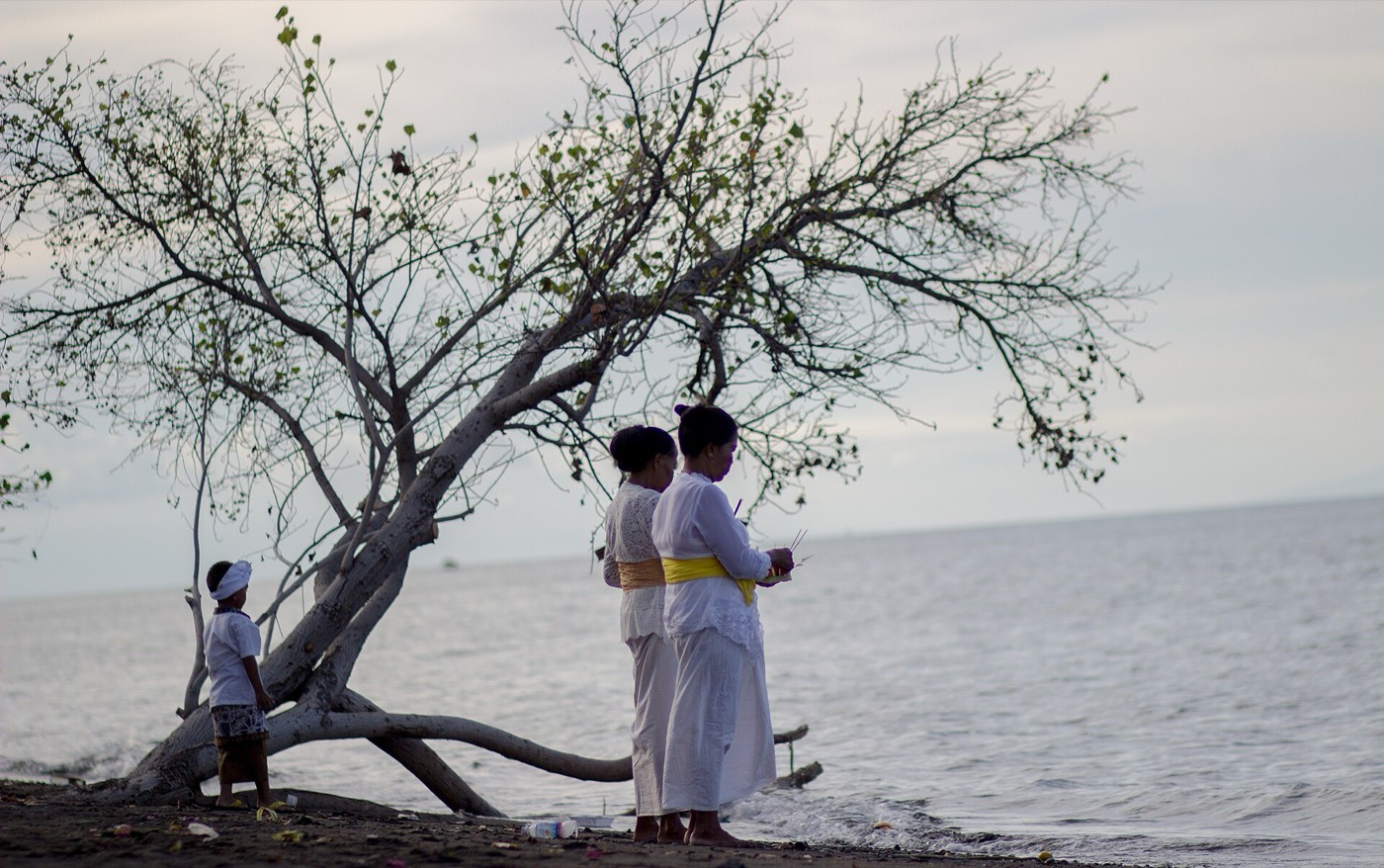
A few days before Nyepi, villages perform Melasti, a purification procession to the sea.
Long lines of white-clad worshippers carry temple objects and sacred heirlooms down to the water, where they are cleansed in the ocean. In Balinese understanding the sea holds the source of life and the power to wash away impurity, from the objects and from the community.
Along the north coast, the beaches near Lovina and Singaraja fill with these processions. Gamelan music drifts over the sand.
The ogoh-ogoh parade, the night before
On the night before Nyepi the energy reverses completely. This is the Ogoh-Ogoh parade, one of the loudest, wildest nights of the Balinese year.
Communities spend weeks building towering papier-mache demons. The figures are grotesque and beautifully made, and they represent Bhuta Kala, the negative forces of the world.
After dark the ogoh-ogoh are hoisted onto bamboo platforms and carried through the streets by crowds of young men. They are spun at crossroads to disorient evil spirits, to clanging gamelan and torchlight.
Many are burned at the end of the night, destroying the negativity they embody.
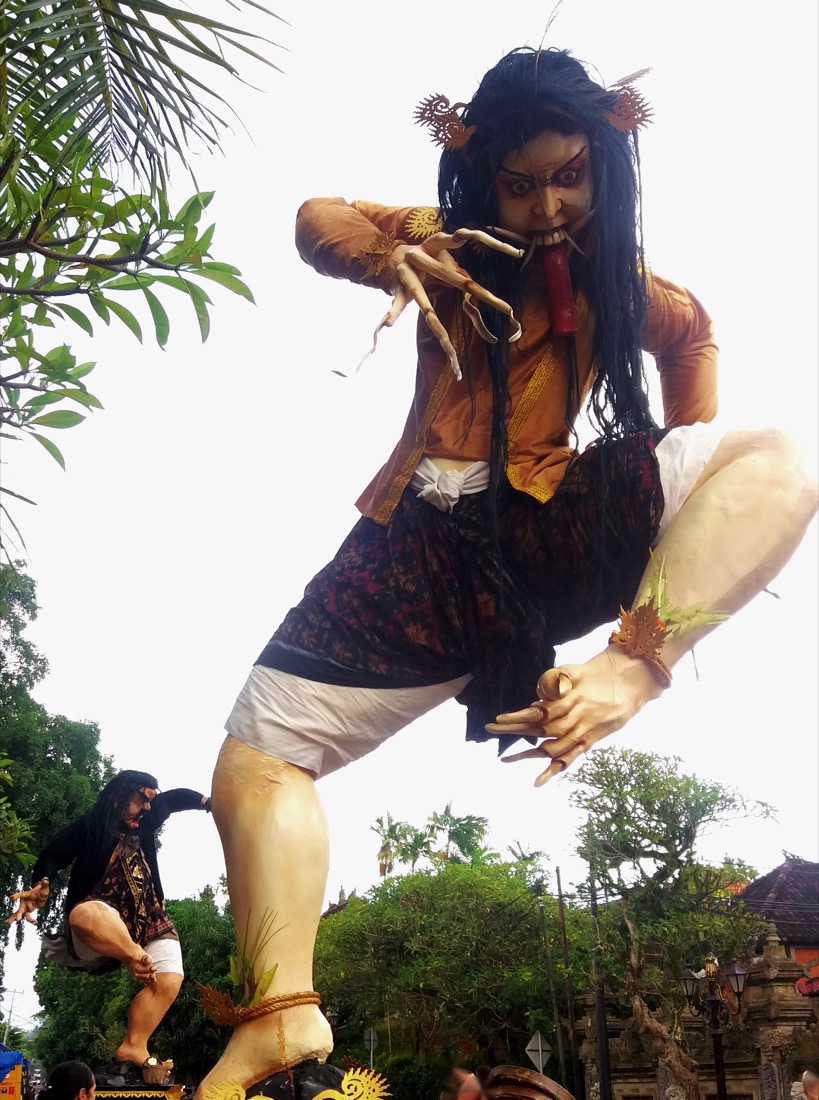 An ogoh-ogoh hoisted through the streets on the eve of Nyepi. Photo: MagdaLena7 / Wikimedia Commons (CC BY-SA 4.0)

The sequence carries a logic
Melasti cleanses. The Ogoh-Ogoh draws out and banishes the dark forces, and Nyepi itself is the clean, silent slate left behind.
The new Saka year begins in that emptiness.
The Rules Apply to Visitors Too
If your trip overlaps with Nyepi, plan for it. The rules apply to everyone on the island, visitors included.
- You stay in. For the full 24 hours you stay within your accommodation. Going out into the streets is not permitted, and the pecalang will turn back anyone who tries.
- Everything is closed. Shops, restaurants and attractions are closed.
- No flights. The airport is shut, so no flights arrive or depart that day.
- No mobile data or television. Mobile data is switched off across the island and television goes off air.
- Wifi may work. In past years the provincial government has confirmed that fixed-line internet stayed on while mobile data and IPTV were cut. Wifi at your accommodation may still work. Plan as though it will not.
A joint appeal sets the rules
There is no leaving the island on Nyepi and no moving around it.
The rules are set out in a joint appeal, the Seruan Bersama, issued ahead of the day. It comes from Bali's religious leaders, with the governor, the police and the military command. The appeal:
- suspends land, sea and air transport for the whole of Catur Brata Penyepian
- takes radio and television off air
- asks mobile providers to switch off data, while keeping emergency communications open
Hotels and villas keep a quiet exception
Hotels and villas run a quiet exception inside their own grounds.
You can move around the property, and most kitchens prepare meals in advance or operate discreetly so guests are fed. Lights are kept low, curtains are often drawn after dark and noise is kept gentle out of respect.
You will not go hungry or sit in a locked room.
Prepare a Day or Two Ahead
The work is in preparing ahead.
- Buy any snacks, water and essentials a day or two before.
- Charge your devices.
- Download anything you want to watch or read offline.
- Confirm with your accommodation what they provide on the day.
Travellers who prepare often describe Nyepi as the most peaceful day of their trip, a forced and welcome pause. Travellers who do not prepare spend it hungry and frustrated.
The day before and the day after are extraordinary to witness, so timing a north Bali stay around the cycle can be a gift.
The best time to visit north Bali covers planning around the island's calendar. The Balinese calendar explained covers how the cycle is counted.
Nyepi in the Quiet North
North Bali is already quiet, and on Nyepi the stillness settles in naturally.
Around Lovina, Singaraja and the villages of the north coast, daily life moves at a slow rhythm. When Nyepi arrives there is less machinery to switch off and less light to extinguish.
The sound of the Bali Sea continues against the black sand. After dark the lack of light pollution makes the northern sky one of the best places on the island to see the famous Nyepi stars.
The processions feel closer here too. Melasti on the northern beaches and the ogoh-ogoh parades through the villages happen at a human scale, among communities more than crowds of spectators.
For a traveller, the north offers Nyepi much as the Balinese themselves experience it: quiet, communal and deeply felt. To understand the faith behind it, read Balinese Hinduism explained.
Practical Notes
Dates shift each year with the lunar calendar, so confirm locally before you book or travel.
- Date: Usually falls in March, on the day after the dark moon (Tilem Kesanga) that ends the old Saka year. The date moves each year, so check it against your travel dates before you book anything.
- Duration: A full 24 hours, morning to morning.
- Airport: Ngurah Rai International closes for the entire day. There are no arrivals or departures. Plan flights for the day before or the day after.
- Internet: Mobile data is switched off. Fixed-line wifi has stayed on in past years, but download what you need in advance and do not count on it.
- Food and supplies: Buy water, snacks and essentials at least a day ahead. Confirm meal arrangements with your accommodation.
- Movement: Stay within your hotel or villa grounds for the full day. The streets are off-limits to everyone.
- The night before: Catch the Ogoh-Ogoh parade if you can. It is the highlight of the whole cycle and well worth staying up for.
FAQ
What happens on Nyepi Day in Bali?
The island observes silence and stillness for 24 hours. There is no work, no travel, no fire or light and no entertainment. Shops, restaurants and the airport close, and people stay at home or within their accommodation. It is the Balinese Saka New Year, a day given to purification and reflection.
What are the rules of Nyepi?
The day is governed by four prohibitions, the Catur Brata Penyepian. They are no fire or light (Amati Geni), no work (Amati Karya), no travel (Amati Lelungan) and no entertainment or indulgence (Amati Lelanguan). Many Balinese also fast and keep silent for the full day.
Are you allowed to talk on Nyepi Day?
Quiet is expected across the island, and devout Balinese keep full silence as part of the day's discipline. As a visitor inside your accommodation you can speak in a low voice. Loud noise, music and celebration are not appropriate. The spirit of the day is stillness.
Can tourists go outside during Nyepi?
No. Visitors must stay within their hotel or villa grounds for the full 24 hours, the same as residents. Traditional village security, the pecalang, patrol the streets and will turn back anyone who goes out. You can move freely inside your accommodation's grounds.
When is Nyepi in Bali?
Nyepi usually falls in March, on the day after the dark moon that ends the old Saka year. The date moves against the Gregorian calendar each year. The day's rules are set out ahead of time in a joint appeal (Seruan Bersama) published through the Bali provincial government. That appeal is the thing to check before you book a flight.
Does the internet work during Nyepi?
Partly. Mobile providers are asked to switch off data for the day, and television goes off air. In past years the Bali provincial government has confirmed that fixed-line internet stayed on, so wifi may work where your phone does not. Assume you will be offline and download what you need beforehand.
Sources
- Bali Provincial Government, Ceraken Kebudayaan Bali: Hari Suci Nyepi, on Catur Brata Penyepian and the ceremonies around it, read September 2026 (in Indonesian)
- Bali Provincial Government, Seruan Bersama on the observance of Nyepi, the joint appeal suspending transport and broadcasting and switching off mobile data for the day, read September 2026 (in Indonesian)
- Bali Provincial Government, fixed-line internet stays on during Nyepi; only mobile data and IPTV are switched off, a statement for the 2021 observance, read September 2026 (in Indonesian)
- Indonesia Ministry of Tourism, what to know about Nyepi in Bali, read September 2026 (in Indonesian)
- Ministry of Religious Affairs, Bali office, on observing Nyepi and the Catur Brata Penyepian, read September 2026 (in Indonesian)
- Wikipedia, Nyepi, for the 24-hour, morning-to-morning observance, read September 2026 (in English)
Related: the Balinese calendar explained, understanding Balinese ceremonies, and Galungan and Kuningan.