On this page
In Brief
The Bali Botanic Garden, Kebun Raya Bali in Indonesian and officially Kebun Raya "Eka Karya" Bali, is a 157-hectare botanic garden in Candikuning village, Bedugul, in the Tabanan highlands at roughly 1,250 to 1,450 metres. It opened on 15 July 1959 and conserves the mountain plants of eastern Indonesia, with a long-standing special collection of conifers. It belongs to Indonesia's national research agency, BRIN, and its visitor services have been run with a private partner, PT Mitra Natura Raya, since 2020. Plan half a day, pair it with Pura Ulun Danu Beratan and the Candikuning market, and check the official garden site for current tickets and hours.
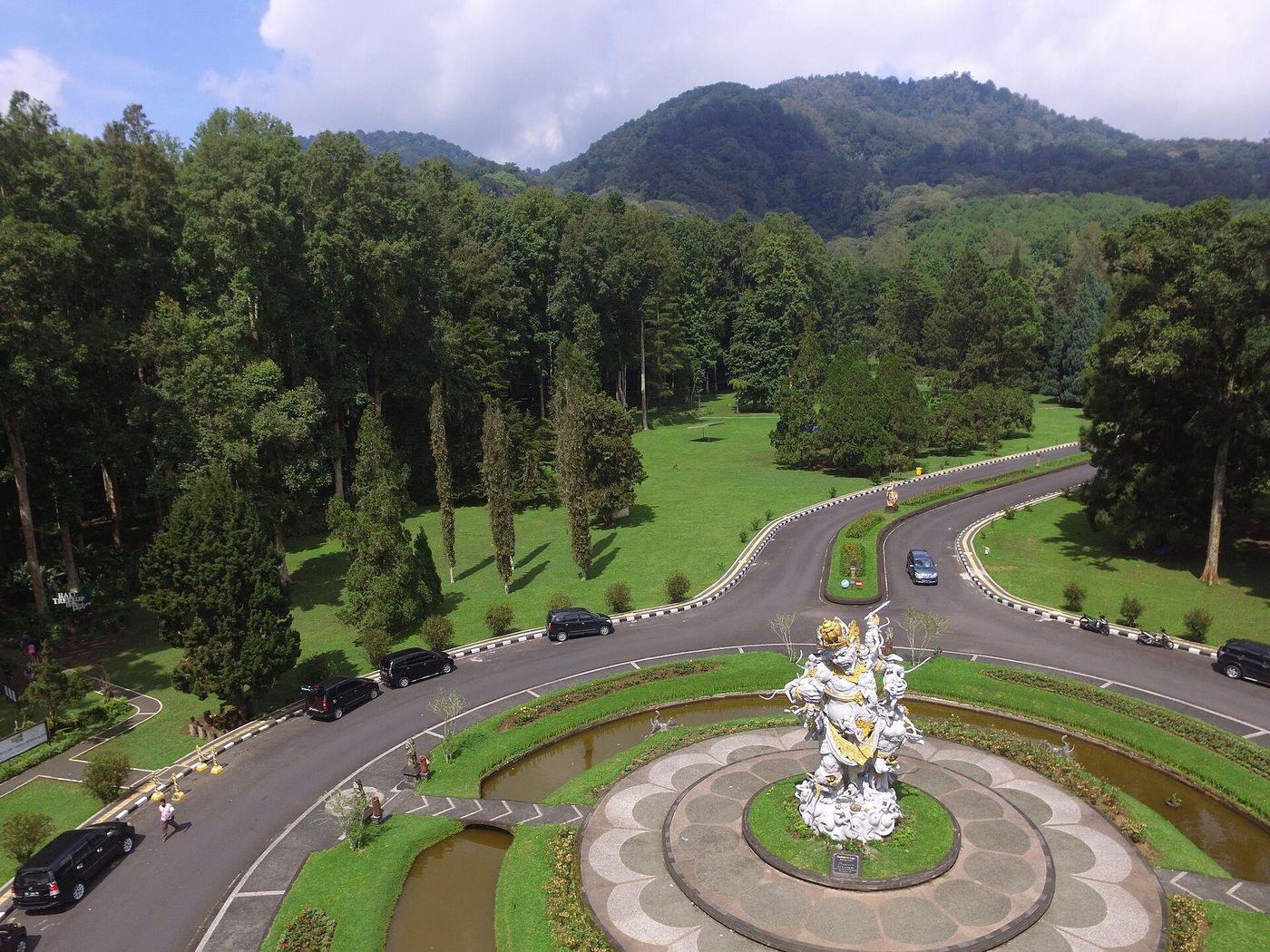 The Ramayana Boulevard, the Kumbakarna statue and the conifer lawns, with the forested hills of the reserve behind. Photo: Bali Botanic Garden / Wikimedia Commons (CC BY-SA 4.0)
The Garden at a Glance
- What it is: A national botanic garden for conservation, research and education, open to visitors
- Where: Candikuning, Baturiti district, Tabanan regency, beside the main Denpasar to Singaraja road at Bedugul
- Size and height: 157 hectares, on slopes between about 1,250 and 1,450 metres
- Opened: 15 July 1959, as Kebun Raya "Eka Karya" Bali
- Who runs it: BRIN, the National Research and Innovation Agency, which keeps research and conservation; PT Mitra Natura Raya handles visitor services and tourism
- Known for: Conifers, the orchid garden, begonia and cactus greenhouses, tree ferns, a giant ficus, the gardens of medicinal and ceremonial plants
- Tickets and hours: On the official site and its online ticket page
- How long: Half a day on foot, or a couple of hours with a rented bike or cart
How the Garden Began
The idea came from two men. Prof. Ir. Kusnoto Setyodiwiryo ran Indonesia's central nature research institute and the national botanic gardens, and I Made Taman headed the nature conservation institute of the time. Both wanted a branch of the national garden outside Java, and they began talking to the Bali government in 1955, according to the garden's own history page. In 1958 Bali formally offered the land.
The agreed site was 50 hectares of the Candikuning reforestation forest, directly bordering the Batukau nature reserve. Kusnoto opened it on 15 July 1959.
I Made Taman chose the name. Eka means one and karya means work: the first botanic garden created by Indonesians themselves after independence, as the garden explains it. The garden has since grown to 157 hectares.
Its brief has widened too. The garden was set up to collect gymnosperms, the needle-leaved conifers, from around the world, because they grow well at this height, and it still keeps that collection. Its wider work now is to conserve the tropical plants of eastern Indonesia. Indonesian Wikipedia's account of the garden's history adds that its first conifers were brought from the older gardens at Bogor and Cibodas on Java, and that it expanded to 129.2 hectares in 1976 and to 157.5 hectares in the 2000s.
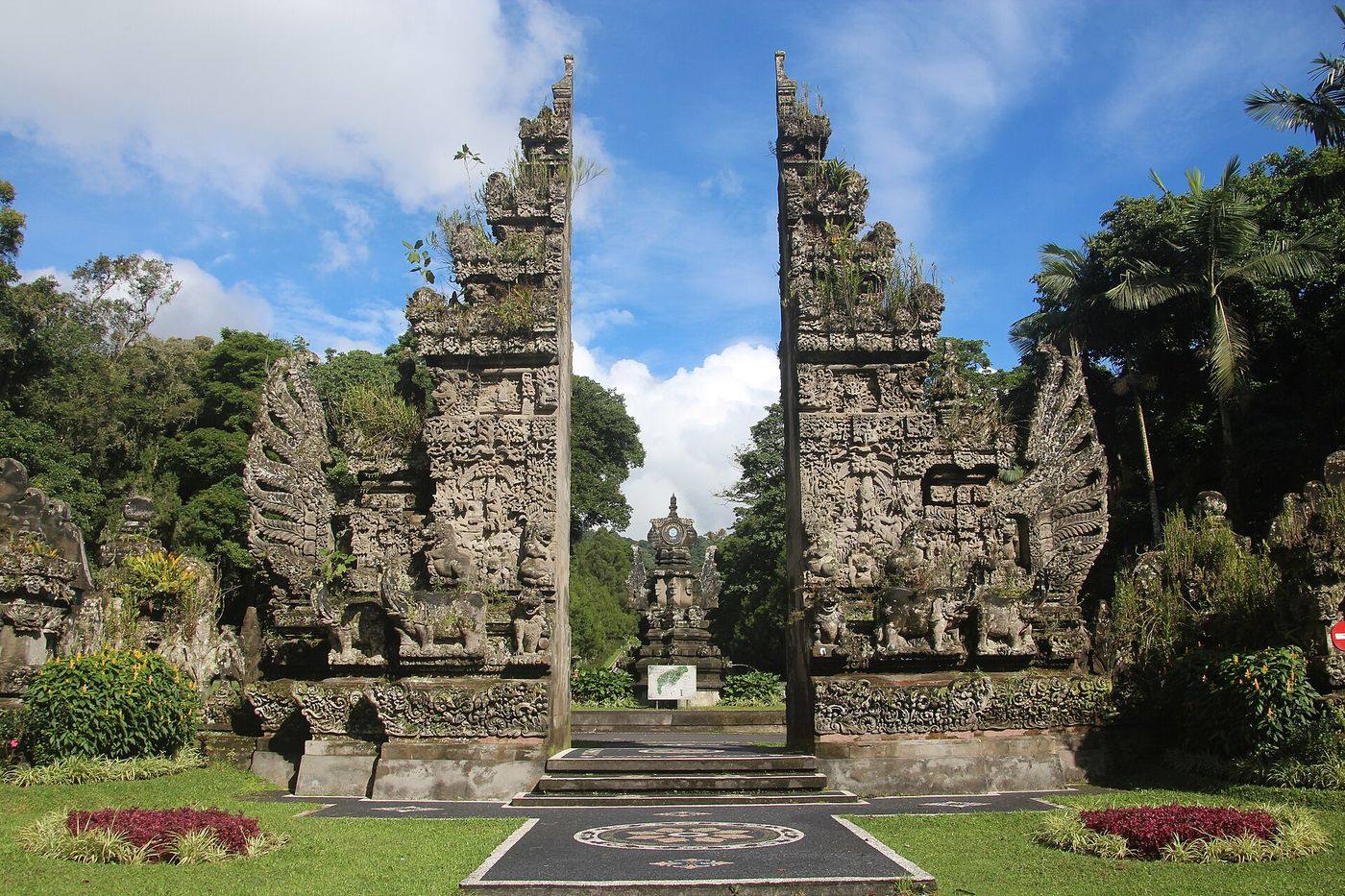 The candi bentar, the split gate at the main entrance, carved with reliefs of Indonesian plants and animals. Photo: KRBali / Wikimedia Commons (CC0)
Who Runs It Now
Kebun Raya Bali is one of four national botanic gardens, with Bogor, Cibodas and Purwodadi on Java, owned by BRIN, Indonesia's National Research and Innovation Agency. Since 2020 the public side of all four has been run in partnership with a private company, PT Mitra Natura Raya.
ANTARA, the national news agency, set out the split. BRIN keeps the research and biodiversity conservation. The partner handles visitors, hospitality, cleaning, marketing and the upkeep of public facilities, and the arrangement is meant to leave BRIN's researchers free for science. For a visitor, this is why the ticketing, the rentals and the cafés feel run like an attraction while the plant collections are labelled and kept like a research garden.
What to See
The garden publishes a visitor guide with a map on its site. The map groups the grounds into themed gardens, plant collections and a few cultural spots. The ones below are those it marks as highlights, plus the collections the garden is known for.
The Ramayana Boulevard and Kumbakarna Laga
Just inside the entrance, the main road runs up the Ramayana Boulevard to a roundabout and a statue several storeys high: Kumbakarna, the giant brother of the demon king in the Ramayana, fighting off the monkey army that swarms up his arms and legs. The map calls it the Kumbakarna Laga statue. It is the garden's landmark and the photograph most people take first.
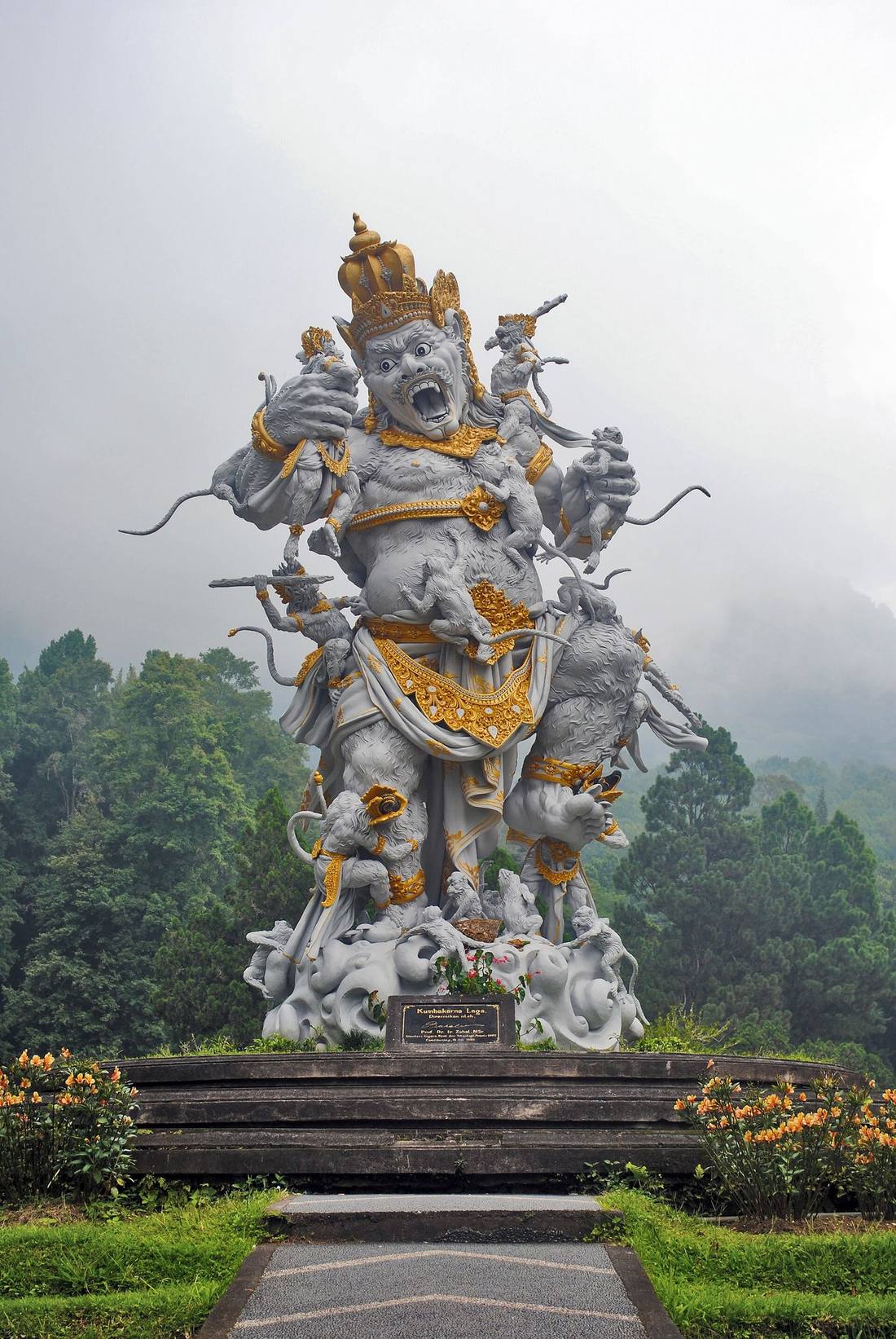 Kumbakarna Laga in the afternoon cloud. Photo: Ya, saya inBaliTimur / Wikimedia Commons (CC BY-SA 2.0)
The Conifers
The garden's founding collection is still here. The map marks a conifer plot, the Petak Cemara, and the lawns around the entrance roundabout are lined with tall columnar cypresses and other conifers, the reason the lower garden looks more alpine than tropical.
The Orchid Garden
The orchid garden was started around 1979. It is split in two, according to the archived collection notes cited by Wikipedia: an open lower garden for cultivated hybrids, and an upper garden for wild orchids from Bali, Nusa Tenggara, Sulawesi, Kalimantan and Papua, which are the conservation priority. Most flower between March and June.
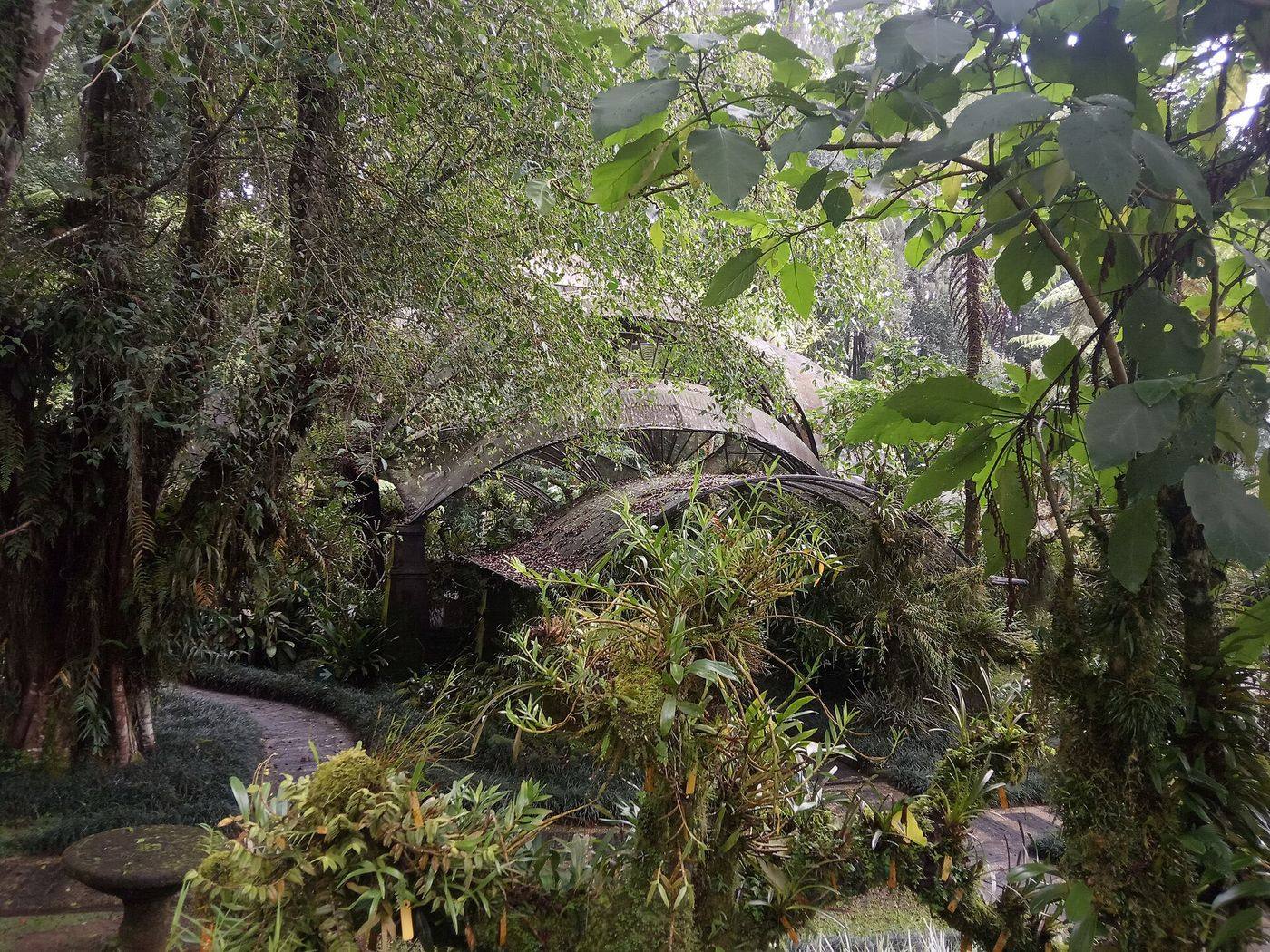 The orchid garden in June 2022. Photo: Nasudi / Wikimedia Commons (CC BY-SA 4.0)
The Greenhouses
Two glasshouses are on the highlight list. The Begonia Greenhouse and Conservatory holds the garden's begonias, and the Cactus Greenhouse is a dry-climate house of cacti and succulents in the middle of a cloud forest, which is part of its charm.
Tree Ferns, Rhododendrons and the Giant Ficus
The Cyathea Garden is a grove of tree ferns around a stone gateway. The Rhododendron Garden gathers the mountain rhododendrons. Near the top of the garden, the Giant Ficus Tree is a huge old fig hung with aerial roots.
Medicine and Ceremony: the Usada and Panca Yadnya Gardens
Two of the themed gardens are Balinese in purpose. Usada is the Balinese word for traditional healing and the palm-leaf texts that record it, and the Usada Garden grows the plants of Balinese traditional medicine; the healers who still work with them in the north are in traditional healers of north Bali. The Panca Yadnya Garden is named for the five kinds of ceremonial offering in Balinese Hinduism and grows plants used in them. The Panca Yadnya explainer and how offerings are made give the context.
The Rest of the Grounds
The map also marks a bamboo garden, an aquatic garden, a rose garden, a palm and rattan collection, a rasamala forest and a stretch of tropical rainforest, plus a Lake View point. The upper garden runs into the forest of the Batukau reserve, which is part of why the paths feel wild once you leave the lawns. Birds come with it.
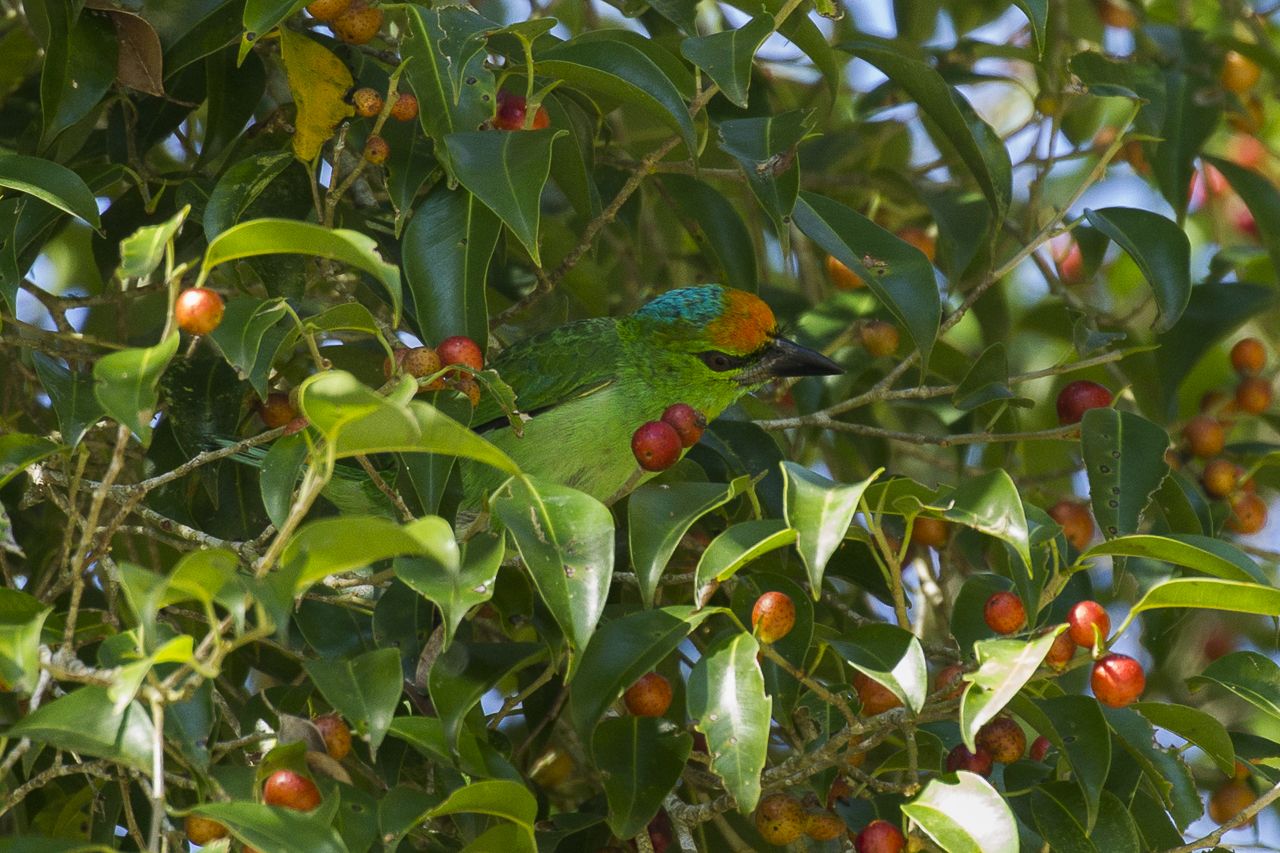 A flame-fronted barbet feeding on figs in the garden. Photo: Francesco Veronesi / Wikimedia Commons (CC BY-SA 2.0)
Entry, Getting Around and Staying
Tickets are sold through the garden: the official site links to its online ticket page, and the site's visitor centre page has a WhatsApp and email contact for questions. Prices, opening hours and seasonal events change, so read them there on the day rather than trusting a figure in a guide, including this one.
The grounds are large and hilly, and roads loop through them. The current visitor guide lists a shuttle bus and hourly rentals of bicycles, e-bikes, golf carts and scooters, so you do not have to walk the whole 157 hectares. There are food stalls and a restaurant, the Begonia, inside, and a prayer room.
You can also sleep in the garden. The map shows two guest houses, Etnobotani and Wijahloka, bookable through the official site. A night inside means the garden early, before the day-trip traffic, and a cold highland evening.
A rope-course and zipline park, Bali Treetop Adventure Park, runs in the tall trees inside the grounds; its sign stands by the road near the Kumbakarna roundabout. It is a separate business with its own tickets. Map
Getting There from Lovina and Munduk
From Lovina. Take the main road east to Singaraja and turn south up the mountain road through Gitgit to Bedugul, about 40 kilometres. Allow an hour to an hour and a quarter by car. The road climbs past Gitgit waterfall, an easy stop on the way up or down, tops the pass and runs along Lake Beratan to Candikuning. Parts of it are being rebuilt as the new "shortcut", explained in getting to north Bali.
From Munduk. Follow the ridge road east above the twin lakes, past the Wanagiri viewpoints, to join the main Bedugul road; from there it is a few minutes south to the lake and the garden. It is only about 20 kilometres; allow 40 minutes to an hour, longer in cloud.
From the south. The garden is on the main Denpasar to Singaraja road, so it breaks the drive north well. The Beratan lake site puts the lake about 60 kilometres from the airport.
The Temple, the Lakes and the Market
The garden, the lake temple and the market sit within a few minutes of each other in Candikuning, so one visit takes in all three.
Pura Ulun Danu Beratan
The temple on the shore of Lake Beratan is, for Balinese Hindus, one of the nine most significant temples on the island, the Kahyangan Jagat, according to the lake's official site. It stands at about 1,200 metres. The Babad Mengwi chronicle records that it was built in 1634 by the King of Mengwi, I Gusti Agung Putu, and it is cared for today by four community groups from the villages around it. The temple appeared on the 50,000-rupiah note issued in 2005.
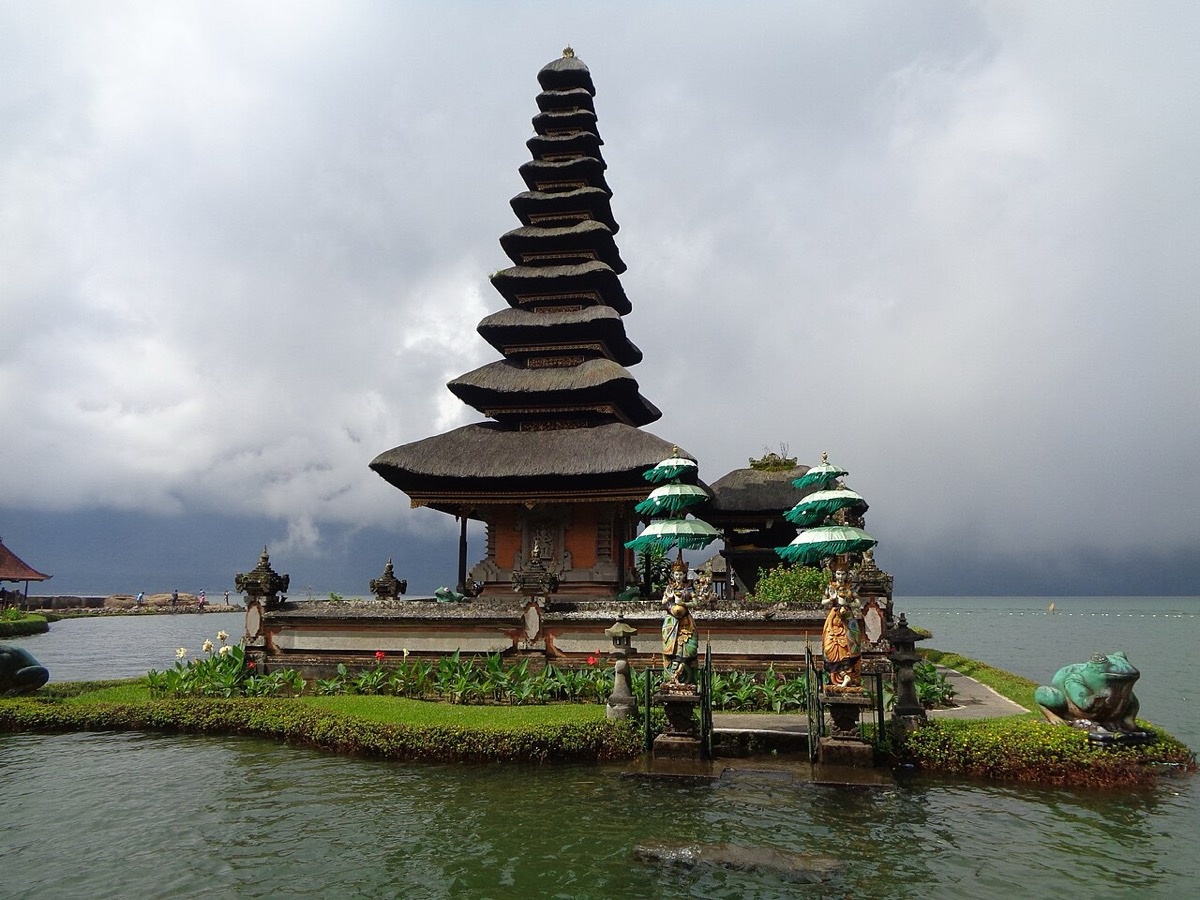 The meru towers of Pura Ulun Danu Beratan. Photo: Susan.wibowo / Wikimedia Commons (CC BY-SA 4.0)
Go in the morning, before the tour buses and before the cloud comes down off the hills. It is a working temple, so dress for one; the temple etiquette guide covers the sarong and sash. The same site sells tickets and boat trips on the lake.
The Three Lakes
Beratan is one of three crater lakes in the old caldera. Buyan and Tamblingan lie just west, quieter and wilder, with forest to the waterline. The twin lakes guide covers the walks and the lakeside temples there.
Candikuning Market
The highland market sits on the main road in Candikuning, on Jalan Kebun Raya, where the lane climbs to the garden gate. Its fruit and vegetables come straight from the farms on these slopes: strawberries, passionfruit, bananas, papaya, avocado and salak, with souvenir and T-shirt stalls alongside, according to a report on kumparan. Bargain gently. It is the place to buy strawberries for the drive down. Map
How to Fit It In
From the north coast, make it a highland day: leave Lovina early, stop at Gitgit on the way up, reach Ulun Danu Beratan before the buses, and walk the garden late morning before the cloud builds. Eat in the garden or at the market and come down in the afternoon. The wider area is in the Bedugul guide.
From Munduk it is a half-day trip along the ridge. From the south it is the natural stop on the way up to the coast, which is how the 10-day north Bali itinerary uses it.
If you are staying on the coast, Palm Living's villas are around Lovina, about an hour down the mountain.
Practical Notes
- Check tickets and hours on the official site before you go; the garden updates its visitor guide through the year.
- Bring a layer. At this height the garden is far cooler than the coast, and rain and cloud come in fast after midday.
- Wear shoes that grip. The forest paths are steep in places and slippery when wet.
- Cash and cards: carry some cash for the market and the food stalls.
FAQ
Where is the Bali Botanic Garden? In Candikuning village at Bedugul, in the Tabanan highlands of central Bali, beside the main road between Denpasar and Singaraja and above Lake Beratan. It is about an hour's drive up from Lovina and roughly 20 kilometres from Munduk.
Is the Bali Botanic Garden worth visiting? Yes, if you like plants, cool air or a long quiet walk. The conifers, orchids, greenhouses and giant ficus fill half a day, and it sits a few minutes from Pura Ulun Danu Beratan and the Candikuning market, so it fits into any drive over the mountains.
Who owns and runs Kebun Raya Bali? It belongs to BRIN, Indonesia's National Research and Innovation Agency, which keeps the research and conservation. Since 2020 visitor services have been run with a private partner, PT Mitra Natura Raya.
How big is the Bali Botanic Garden? About 157 hectares. It began in 1959 with 50 hectares of the Candikuning reforestation forest and was enlarged in stages.
What does "Eka Karya" mean? Eka means one and karya means work. The name, chosen by co-founder I Made Taman, marks it as the first botanic garden created by Indonesians after independence.
How much is the entrance fee, and what are the opening hours? Both change, so check the official site and its ticket page on the day you go.
Sources
- Kebun Raya Indonesia, Kebun Raya Bali and Tentang Kami (history), read September 2026 (in Indonesian)
- Kebun Raya Bali, visitor guide and garden map, July to September 2026 edition, linked from the official site, read September 2026
- ANTARA, BRIN makes private partnership the management model for four botanic gardens, read September 2026 (in Indonesian)
- Wikipedia (English), Bali Botanic Garden, for the medicinal and ceremonial plant collections, read September 2026
- Wikipedia (Indonesian), Kebun Raya Bali, for altitude, expansions, first collections and the orchid garden, read September 2026
- Ulun Danu Beratan, official lake and temple site, read September 2026
- kumparan, Pasar Candi Kuning Bedugul, read September 2026 (in Indonesian)
- Wikimedia Commons, Kebun Raya Bali Candi Bentar, description by the garden's account, for the gate
- Distances from OpenStreetMap routing; drive times are our own rough allowance
More of the highlands: Bedugul, the twin lakes and Munduk.



.jpg)
