
On this page
- In Brief
- Tri Hita Karana at a Glance
- A Good Life Rests on Three Relationships
- Parahyangan Is Harmony With the Divine
- Pawongan Is Harmony Among People
- Palemahan Is Harmony With Nature
- You See It in Offerings, Homes, Villages and Rice Terraces
- It Explains the Connectedness Travellers Feel
- How to Honour Tri Hita Karana as a Guest
- FAQ
- Sources
In Brief
Tri Hita Karana is the Balinese philosophy that well-being comes from three harmonies. They are harmony with the divine (parahyangan), with other people (pawongan) and with nature (palemahan). The phrase means roughly "the three causes of well-being".
It is a lived practice. You see it in the daily offerings, in the design of homes and villages and in the subak rice system. It shows in the rhythm of community life too.
For a visitor it is a good key to why Bali feels the way it does. Once you know the three harmonies, you start to notice them across the island.
Tri Hita Karana at a Glance
- Meaning: "The three causes of well-being", or of happiness
- Parahyangan: Harmony with the divine, meaning God and the ancestors
- Pawongan: Harmony among people, meaning the community
- Palemahan: Harmony with nature, meaning the land and the environment
- The teaching: Balance across all three brings prosperity and peace
- Where you see it: Offerings, the layout of temples, homes and villages, the subak and the banjar
- Why it matters: It is an organising principle of Balinese culture
A Good Life Rests on Three Relationships
The name comes from Sanskrit: tri is three, hita is well-being and karana is cause.
The teaching holds that a good life depends on keeping three relationships in balance. Neglect any one and harmony breaks. Tend all three and life flourishes.
In this view, well-being is balance across all three at once, more than a personal achievement.
Parahyangan Is Harmony With the Divine
Parahyangan is the vertical relationship, between people and the sacred.
It is the relationship with God (Sang Hyang Widhi), the gods and the ancestors. People keep it through prayer, temples and constant offerings.
A Balinese home has its family temple, a village has its temples and the island has its great directional temples.
Pawongan Is Harmony Among People
Pawongan is the relationship between human beings: family, neighbours and community.
It is held through the cooperative institutions of Balinese life, above all the banjar. The banjar is the village association, and it binds people through mutual aid and shared duty.
This is the horizontal relationship, between one person and another.
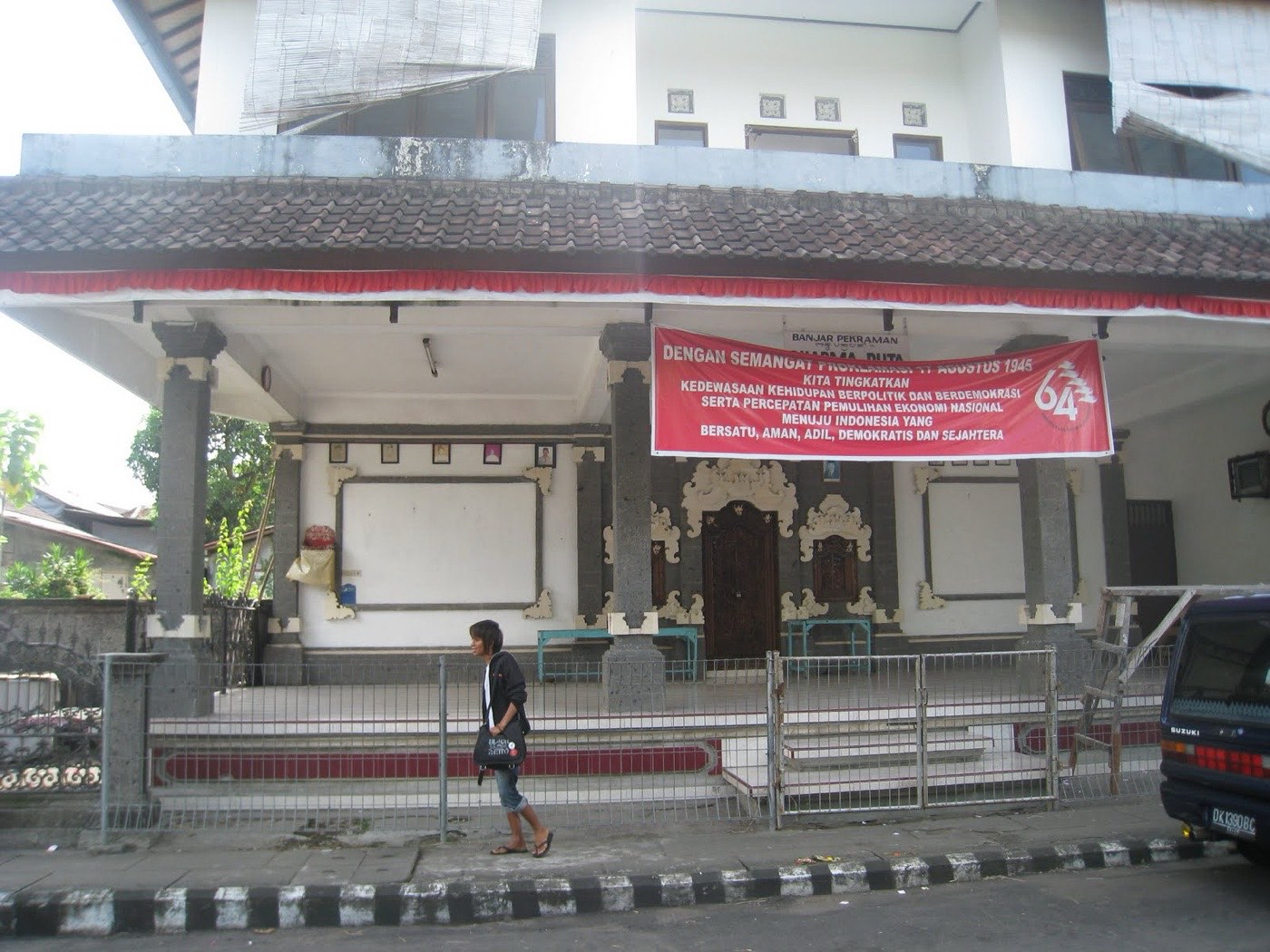 A bale banjar opening straight onto its village street, pawongan given a building. Photo: alfannahdi / Wikimedia Commons (CC BY-SA 3.0)

Palemahan Is Harmony With Nature
Palemahan is the relationship between people and the earth.
It covers the land and the living environment: the rice fields, the water and the animals. This is the world that sustains life.
People honour it through care for the land and through systems like the subak. A subak shares water cooperatively and keeps the ecology in balance.
You See It in Offerings, Homes, Villages and Rice Terraces
Tri Hita Karana reaches well beyond the temple. It is built into the physical and social world of Bali.
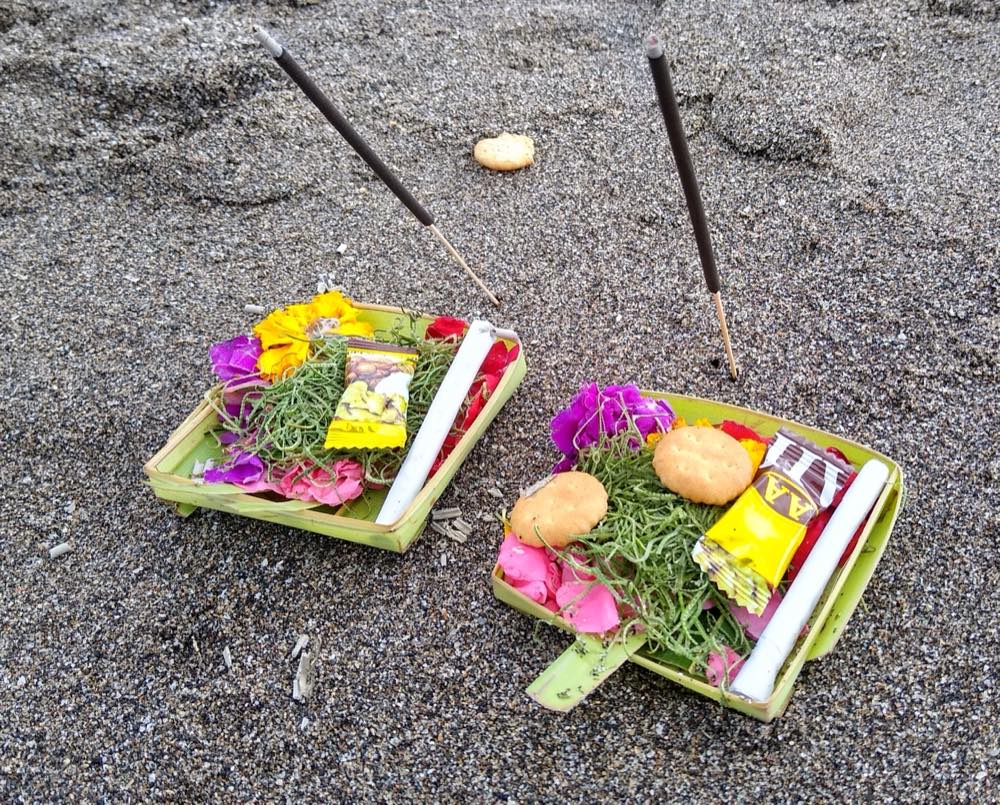 Canang sari on the morning sand, parahyangan made small and constant. Photo: Mx. Granger / Wikimedia Commons (CC0)

The daily offering
The canang sari placed each morning is a daily act of harmony with the divine.
Some offerings are raised to the gods. Others are set on the ground for the earth spirits, and together they hold the balance.
The Balinese home
A traditional family compound is laid out by the philosophy:
- the family temple in the most sacred corner, for parahyangan
- the living pavilions for the family, for pawongan
- the garden, the kitchen and the animal areas, for palemahan
The whole cosmos sits in one compound.
The village
Villages are organised the same way. The temples and the communal spaces each have their proper place, and so do the fields and the cemeteries.
The rice terraces
The subak system is Tri Hita Karana in action.
UNESCO inscribed it in 2012 as the Cultural Landscape of Bali Province: the Subak System as a Manifestation of the Tri Hita Karana Philosophy. Its three parts cannot be separated:
- the water temples, for the divine
- the cooperative farmer associations, for people
- the shared ecology of the terraces, for nature
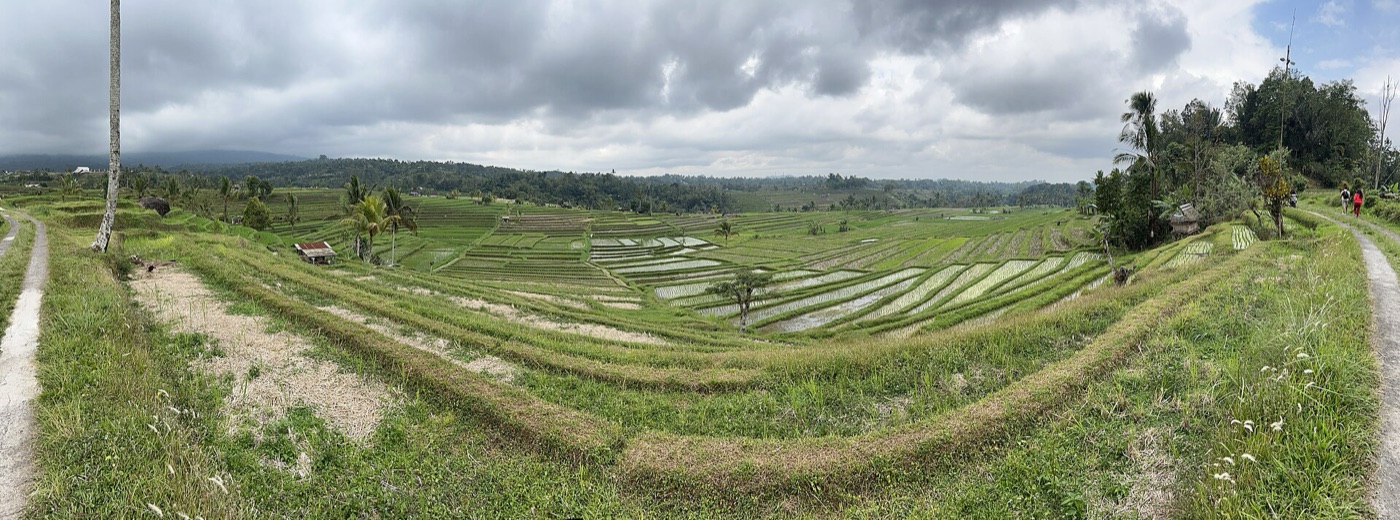 The Jatiluwih subak landscape, the three harmonies written across a valley. Photo: Stefan Fussan / Wikimedia Commons (CC BY-SA 3.0)

It Explains the Connectedness Travellers Feel
Many travellers sense that life in Bali is more connected and more whole than they are used to.
Tri Hita Karana is much of the reason. For centuries Balinese culture has kept the spiritual, the social and the natural together as one balance.
Knowing this changes how you travel. The offerings underfoot and the ceremonies express it, and so do the care of the land and the strength of community. They belong to one coherent way of seeing the world.
How to Honour Tri Hita Karana as a Guest
A visitor can keep the same three harmonies, and it is simple.
- Respect the sacred: the temples and the offerings.
- Respect people: community life and local customs.
- Respect nature: the land and the environment.
The wider religion is set out in Balinese Hinduism explained.
FAQ
What is Tri Hita Karana? Tri Hita Karana is the Balinese philosophy that well-being comes from three harmonies: with the divine (parahyangan), with other people (pawongan) and with nature (palemahan). The phrase means "the three causes of well-being". It underpins Balinese culture.
What are the three elements of Tri Hita Karana? They are parahyangan, pawongan and palemahan. Parahyangan is harmony with God and the ancestors. Pawongan is harmony among people and community. Palemahan is harmony with nature and the land. Balance across all three brings prosperity and peace.
Where does Tri Hita Karana come from? The term is Sanskrit: tri is three, hita is well-being and karana is cause. The concept is woven through Balinese Hinduism. It is a lived organising principle rather than a single scripture.
How is Tri Hita Karana practised in daily life? The daily offerings keep harmony with the divine. Cooperative community institutions like the banjar keep harmony among people. Care of the land, and of water systems like the subak, keeps harmony with nature. The philosophy also shapes the layout of homes, villages and temples.
Why is Tri Hita Karana important in Bali? It holds the spiritual, social and natural worlds together as one balance. It explains the deep connectedness travellers feel in Bali. It even underpins the UNESCO-listed subak rice landscape.
How can visitors honour Tri Hita Karana? Respect the sacred, meaning the temples and the offerings. Respect people, meaning local customs and community life. Respect nature, meaning the land and the environment. These are the same three harmonies, kept as a guest.
Sources
- Wikipedia, Tri Hita Karana, read September 2026
- Wikipedia, Subak (irrigation) (the 2012 World Heritage inscription and its official name), read September 2026
- UNESCO Intangible Cultural Heritage, Three genres of traditional dance in Bali (which lists the subak cultural landscape as a related World Heritage element), read September 2026
- Wikimedia Commons, Balai Banjar DlodRurung, alfannahdi, CC BY-SA 3.0
Read next: Sekala Niskala, the Balinese banjar and Balinese offerings explained.