On this page
- In Brief
- Banyumala at a Glance
- Twin Falls on a Green Cliff, Over One Clear Pool
- The Walk Down Takes 15 to 30 Minutes, and the Climb Back Is the Effort
- Swimming: Get In from the Edge and Stay Out from Under the Falls
- When to Go: a Weekday Morning in the Dry Season
- After Rain, the Root Steps Turn to Mud
- Entry Is a Cash Fee, Paid to the Village Group That Runs It
- Getting There: About an Hour from Singaraja or Lovina
- How to Fit It Into a Munduk or Bedugul Day
- What to Wear and Bring
- Practical Notes
- FAQ
- Sources
In Brief
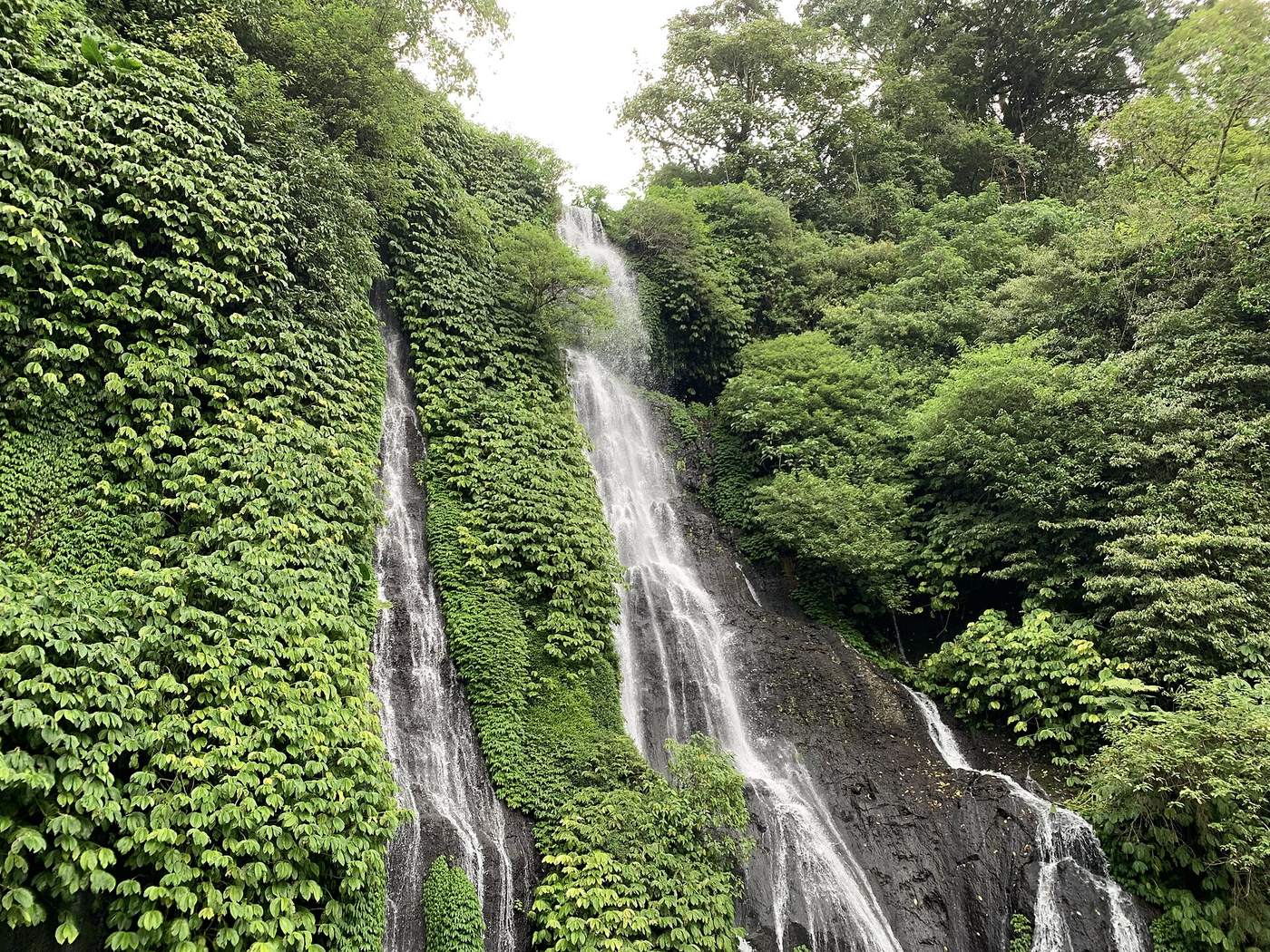
Banyumala Twin Waterfall is in Wanagiri village, Sukasada district, in the north Bali highlands near Lake Buyan. Two tall streams and a thinner third fall down a green cliff into a natural pool about 15 metres across, deep enough to swim. You reach it on foot, down forest paths and steps from the village, and the climb back up is the real effort of the visit.
A group from Wanagiri has managed the site since it opened and collects the entry fee there. Go on a weekday morning in dry weather and wear shoes that grip. It fits into one highland day with the twin lakes, the Handara Gate and Ulun Danu Beratan temple.
Banyumala at a Glance
- What it is: A twin waterfall over a swimmable natural pool, in forest below the Wanagiri ridge
- Where: Banjar Asah Panji, Wanagiri village, Sukasada district, Buleleng, about 27 km from Singaraja
- Getting down: A walk through forest and clove gardens, with steps on the steep parts
- Run by: The village tourism group for the waterfall, Kelompok Sadar Wisata Air Terjun Banyumala, listed on the Buleleng government's Visit North Bali directory
- Entry: A fee paid at the site, with one rate for Indonesians and another for foreign visitors
- Swimming: Yes, in the main pool
- Best time: A weekday morning in dry weather
- Open to visitors since: July 2015
Twin Falls on a Green Cliff, Over One Clear Pool
The cliff at Banyumala is almost entirely covered in creepers, so the water seems to come out of a green wall.
The two main streams fall a short distance apart, which gives the waterfall its "twin" name. A third, thinner stream runs down the dark rock to their right. Ahmad Muzakky, a writer from Singaraja, described the site for Mongabay Indonesia and counted three falls, a main one with two smaller ones beside it.
All of them drain into one pool. By his account it is round, about 15 metres across and clear enough to see the stones on the bottom. At certain times of day he saw rainbows form in the spray at the foot of the falls.
The Buleleng tourism office's own listing describes a water curtain coming down from the cliffs over a clear pool. It calls the place calm and relatively quiet, where you hear the water without the noise of crowds. That quiet is the reason to come.
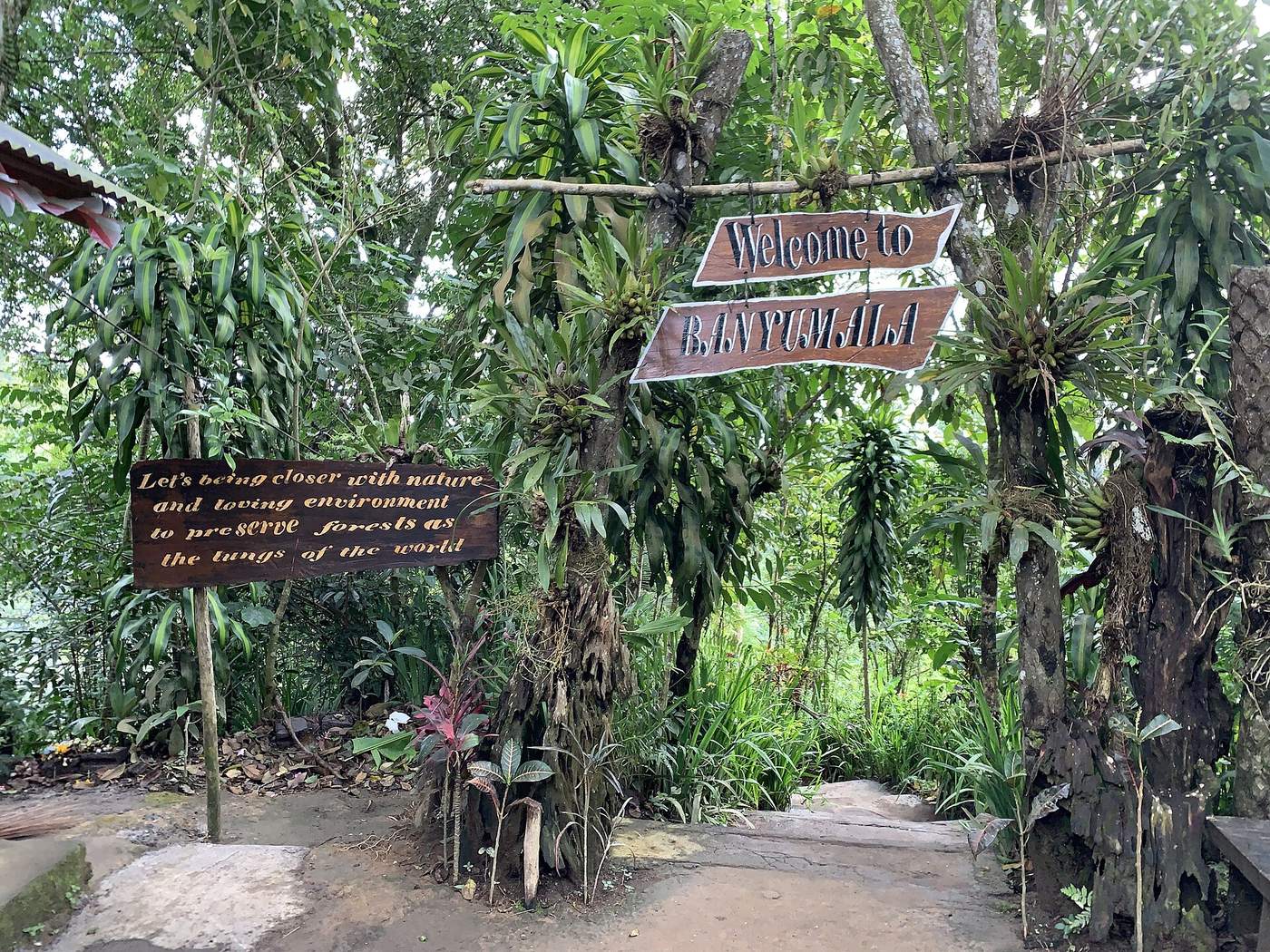 The welcome sign at Banyumala. Photo: Chainwit. / Wikimedia Commons (CC BY-SA 4.0)
The Walk Down Takes 15 to 30 Minutes, and the Climb Back Is the Effort
You leave the car or scooter in the village at the top and walk the rest of the way.
The path runs through forest and clove plantations, then drops down the cliffs on steps cut into the soil and edged with wood. The detikBali report describes dozens of steps held together by tree roots. Mongabay's writer put the walk at 15 to 30 minutes.
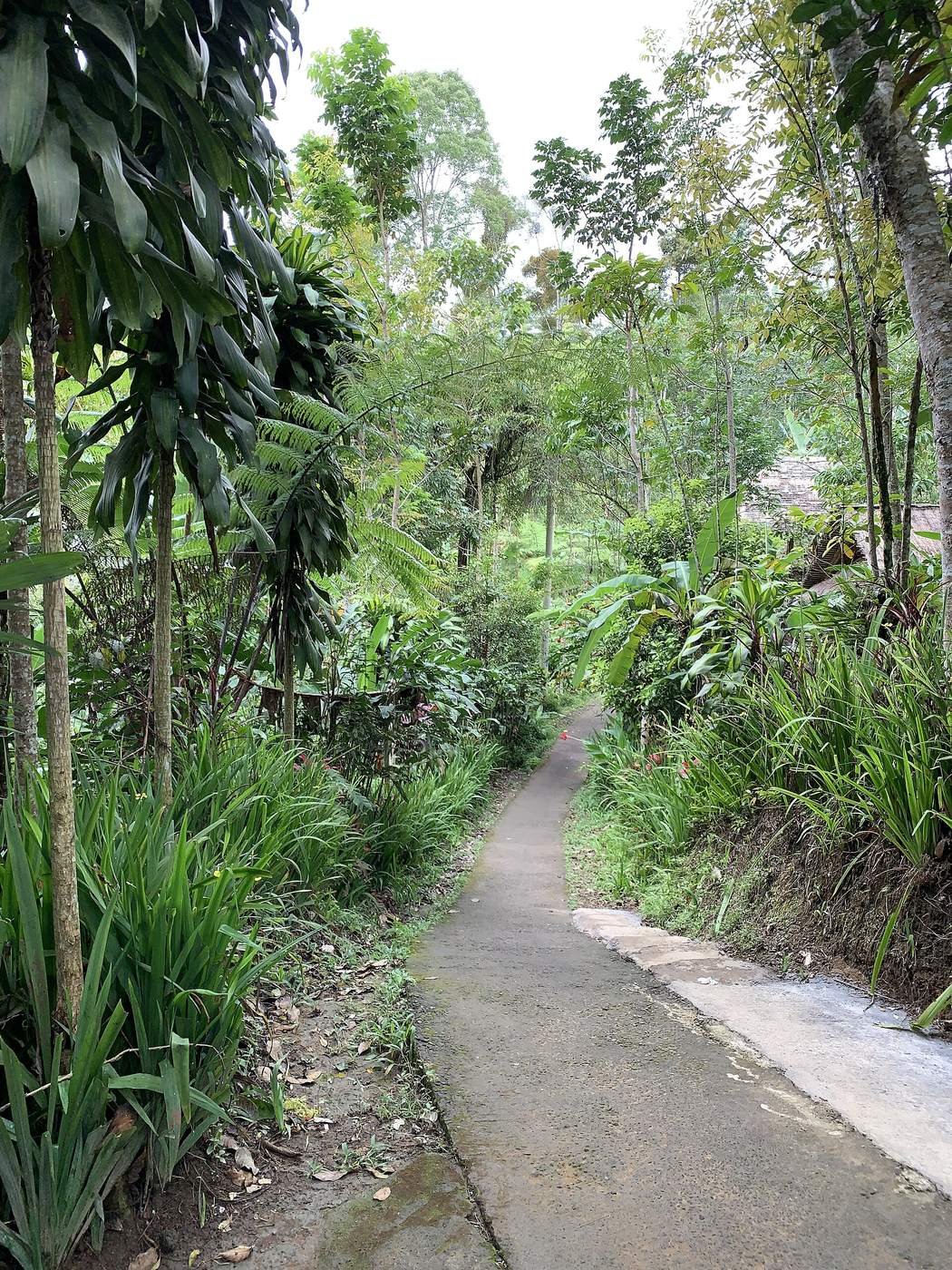 A garden path at Banyumala. Photo: Chainwit. / Wikimedia Commons (CC BY-SA 4.0)
Going down is easy on dry ground. The way back up is a steady climb at altitude and takes longer than the descent, so leave time and carry water for it. Near the pool, a bamboo walkway with railings runs along the edge of the water.
The walk is shorter than most of the trails around Munduk, a few kilometres west. The Munduk waterfalls hiking guide covers those longer walks.
Swimming: Get In from the Edge and Stay Out from Under the Falls
Swimming is the main event at Banyumala, and the tourism office's listing mentions people swimming and soaking in the pool.
Depth depends on how much water is coming down. Mongabay described it as chest-deep on an adult, and detikBali put it at about two metres. Treat it as swimming depth and get in from the edge rather than jumping.
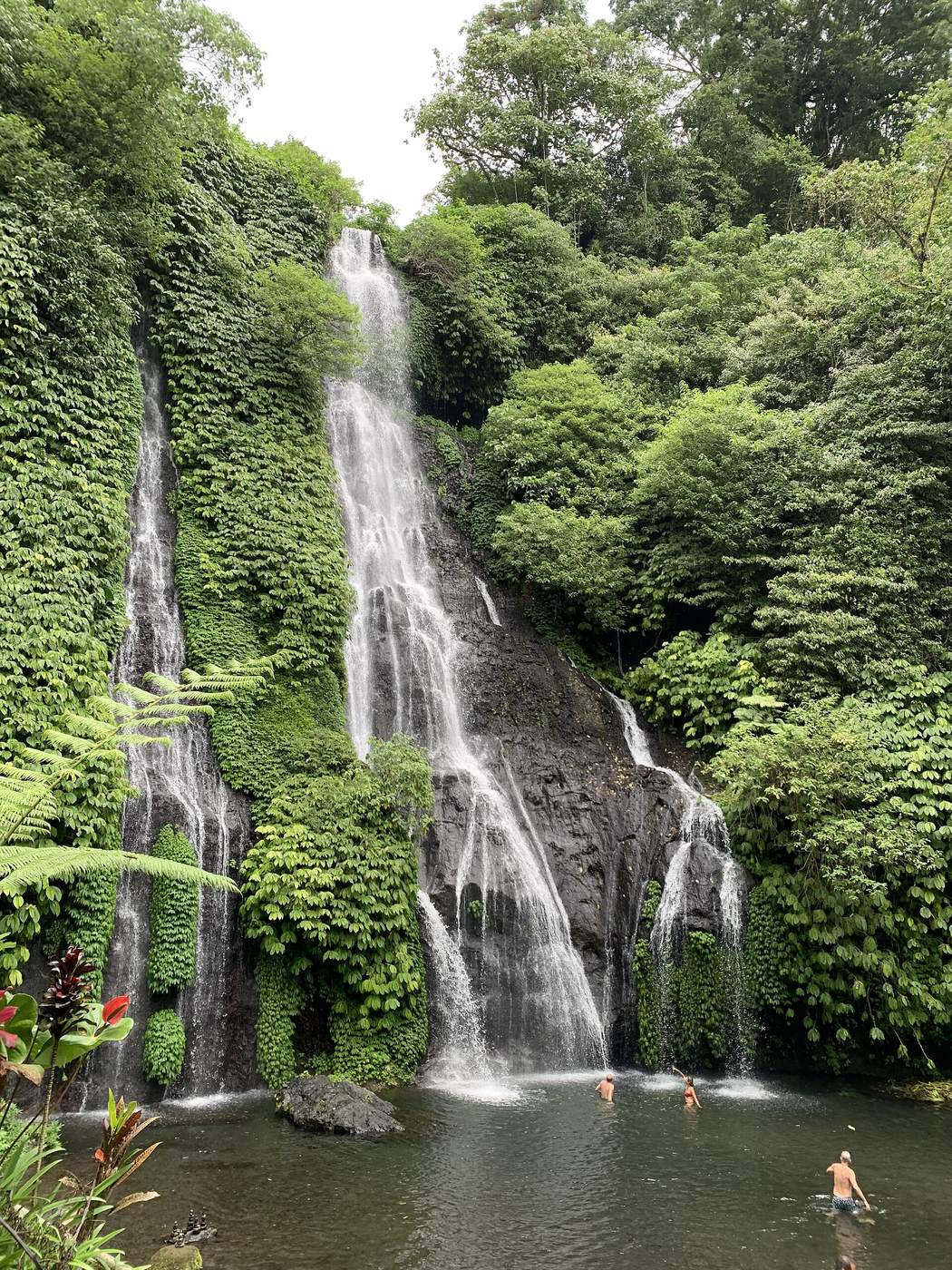 Swimmers in the pool below the falls. Photo: Chainwit. / Wikimedia Commons (CC BY-SA 4.0)
The water comes straight off the highlands, so expect it to be cold and bring something warm for afterwards. Keep out from directly under the falling water, where the force is strongest and loose material can come down with it.
When to Go: a Weekday Morning in the Dry Season
Time of day. Go early, when the walk is cooler and the pool quieter. The highlands tend to cloud over as the day goes on, as the Bedugul guide explains. A morning at Banyumala leaves the afternoon free for the lakes.
Day of the week. Mongabay's writer advised avoiding weekends, when it is busier.
Season. The dry season, roughly April to October, gives firmer footing on the steps. In the wet season the falls carry more water and the path is harder going. In July and August, the same Mongabay report notes, the walk in smells of the coffee and clove harvest in the gardens along the way. For the wider picture, see the best time to visit north Bali.
After Rain, the Root Steps Turn to Mud
Both Indonesian reports warn that the steps turn slippery in the rain. They are soil held by roots and wood, and a downpour turns them to mud quickly.
After hard rain, go slowly, hold the railings where they exist and expect the climb back to take longer. When the pool is running brown or much faster than usual, stay on the bank and look. In the wet season, plan to walk out before the afternoon, when rain is most likely to come in.
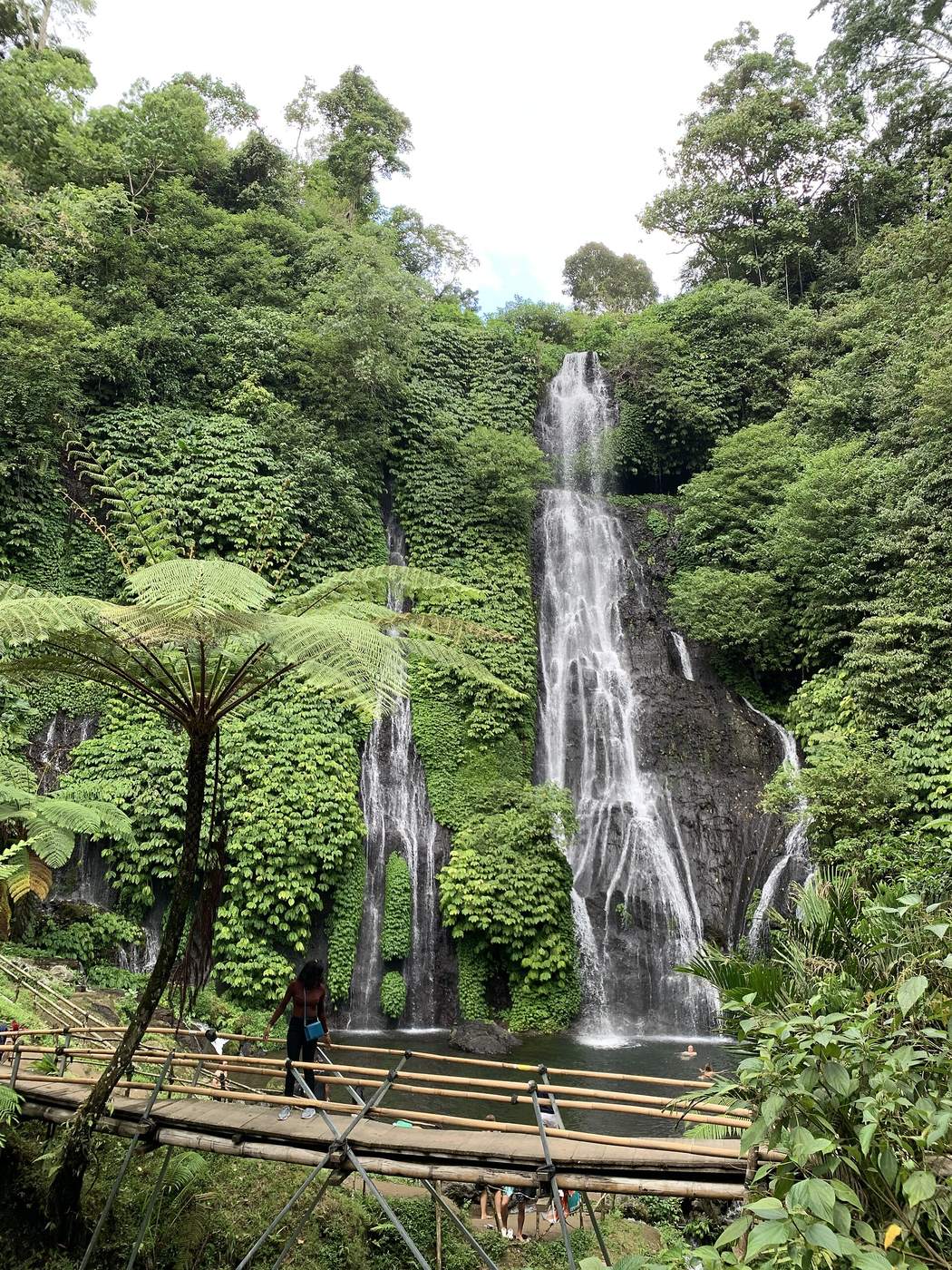 The bamboo walkway along the pool. Photo: Chainwit. / Wikimedia Commons (CC BY-SA 4.0)
Entry Is a Cash Fee, Paid to the Village Group That Runs It
Residents of Wanagiri who live near the waterfall opened Banyumala to visitors in July 2015. They still run it and collect the entry fee at the site.
The Buleleng government's Visit North Bali directory lists the managing group, Kelompok Sadar Wisata Air Terjun Banyumala, the village's tourism awareness group. It names the chairman, Putu Sukadana, and carries a WhatsApp contact button.
The fee is paid in cash when you arrive, and foreign visitors pay a different rate from Indonesians. Use the contact on the directory page for the current fee, or to ask about conditions before you drive up. An Instagram account for the waterfall shares photos from the site.
Banyumala Twin Waterfalls on Instagram
Getting There: About an Hour from Singaraja or Lovina
From Singaraja, detikBali gives about 27 km and an hour's ride by motorbike on the mountain road. Lovina is a little further west, so allow a little over an hour from there. From the south, Mongabay gives about 65 km and two and a half hours from Denpasar.
A driver who knows the highlands saves you the search for the turn and the parking. The guide to private drivers in north Bali explains how day hire works, and getting to north Bali covers the routes over the mountains.
How to Fit It Into a Munduk or Bedugul Day
Banyumala sits in the middle of the highland circuit, so it combines easily with the rest of it.
The Visit North Bali directory places Banyuwana Amertha waterfall about 2.3 km away. The Wanagiri Hidden Hill viewpoints are about 2.6 km away. A simple order for the day:
-
Banyumala first thing, while the path is dry and the pool is quiet.
-
The Wanagiri ridge for the view down over the lakes. The Wanagiri Hidden Hills guide is honest about which platforms are worth stopping for.
-
Lakes Buyan and Tamblingan below, for a walk or a canoe on the water. See the twin lakes guide.
-
The Handara Gate at Pancasari, the split gateway at the entrance to the Handara golf resort.
-
Pura Ulun Danu Beratan on Lake Beratan, just over the regency line in Tabanan. The temple's own site dates it to around 1634, built by the King of Mengwi. It counts the temple among Bali's most important.
From a base in Munduk, swap the order and walk the village falls another day. The Munduk guide and the page on Munduk's coffee plantations fill the rest of that trip. For the wider set of falls across the north, start with the north Bali waterfalls guide.
What to Wear and Bring
- Shoes that grip on wet ground. Strapped river sandals or trail shoes. Flip-flops on root steps are how people fall.
- Swimwear under your clothes, so you can change fast at the bottom.
- A towel and a warm layer. The air is cool at this height and the water colder.
- Cash in small notes for the entry fee.
- Drinking water for the climb out.
- A dry bag or a plastic bag for a phone, since the spray carries.
Practical Notes
- Cash for the entry fee. There is no card machine to count on.
- Morning, weekday, dry weather is the combination that works best.
- Allow about two hours for the walk down, a swim and the climb back.
- Carry out your rubbish. The sign at the entrance asks visitors to protect the forest.
- Staying nearby: Palm Living's villas for rent are on the coast around Lovina, a little over an hour's drive below Banyumala, and a good base for highland day trips.
FAQ
Can you swim at Banyumala Twin Waterfall? Yes. The falls drop into a round natural pool about 15 metres across, deep enough to swim in, and swimming there is normal. Expect the water to be cold.
How long is the walk to Banyumala waterfall? About 15 to 30 minutes down, through forest and clove gardens and then on steps down the cliff. The climb back up takes longer. Allow about two hours for the whole visit.
Where is Banyumala Twin Waterfall? In Wanagiri village, Sukasada district, Buleleng, in the north Bali highlands near Lake Buyan. It is about 27 km from Singaraja and a little over an hour by road from Lovina.
Is Banyumala waterfall safe after rain? The steps get slippery in the rain, so a dry morning is the better time to go. Wear shoes with grip, go slowly on the root steps, and stay out of the pool if the water is running brown or fast.
Is there an entrance fee at Banyumala? Yes. A small fee is paid in cash at the site to the village group that runs it, with a separate rate for foreign visitors. Check the current fee through the contact on the Buleleng tourism directory page.
Can you combine Banyumala with Ulun Danu Beratan and the Handara Gate? Easily. They are all on the same highland circuit. Do Banyumala in the morning, then the Wanagiri viewpoints, the twin lakes, the Handara Gate at Pancasari and the temple on Lake Beratan.
Sources
- Buleleng Tourism Office, Visit North Bali: Banyumala Waterfall, listing dated 5 February 2024, read September 2026 (in English; managing group and contact)
- Buleleng Tourism Office, Visit North Bali: Banyuwana Amertha Waterfall, read September 2026
- Ahmad Muzakky, Menengok segarnya Air Terjun Banyumala Bali, Mongabay Indonesia, 12 August 2018 (in Indonesian; opening, the walk, the pool, seasons)
- Made Wijaya Kusuma, Megahnya Air Terjun Kembar Banyumala, sepotong surga di Bali Utara, detikBali, 22 November 2022 (in Indonesian; distance, steps, pool, manager); republished by the Buleleng Culture and Tourism Office
- Wikipedia (Indonesian), Air Terjun Banyumala, citing Radar Bali, 3 September 2017 (banjar and opening date)
- DTW Ulun Danu Beratan, official site, read September 2026 (the temple's location and history)
- Photographs: Chainwit., Wikimedia Commons, CC BY-SA 4.0, taken October 2022
More in the highlands: Gitgit waterfall on the road up from the coast, Sekumpul to the east, and the best waterfalls in Bali island-wide.