On this page
- In Brief
- Bali Coffee at a Glance
- Bali Grows Arabica and Robusta in Its Volcanic Highlands
- Kintamani Arabica Is Indonesia's First Registered Origin
- Bali Drinks Coffee Three Ways
- Kopi Luwak: Skip It, Because No Label Can Prove It Is Wild
- Where to Drink Bali Coffee: The Specialty Cafes, the Highlands and the Warung
- How to Buy Beans Worth Carrying Home
- FAQ
- Sources
In Brief
Bali coffee grows on the island's highland slopes, so you can drink it near where it is farmed. Bali grows arabica and robusta, including around Munduk in the north.
The local everyday brew is kopi Bali, coarse grounds steeped in the cup. Canggu, Ubud and Seminyak have a strong specialty-coffee cafe scene.
Kopi luwak, the famous "civet coffee", is best treated with caution on welfare grounds. For the real thing, drink highland single-origin at a specialty cafe or visit a plantation near Munduk.
Bali Coffee at a Glance
- Grown where: The highlands, including Kintamani and Munduk (north)
- Types: Arabica (highland, brighter) and robusta (lower, stronger)
- Everyday brew: Kopi Bali, coarse grounds steeped in the cup
- Specialty scene: Canggu, Ubud, Seminyak and highland cafes
- Kopi luwak: Famous, expensive and ethically fraught. Approach with caution
- Origin trip: A Munduk plantation walk in the north
- Kintamani arabica: Indonesia's first registered geographical indication, protected since 2008
Bali Grows Arabica and Robusta in Its Volcanic Highlands
Bali has grown coffee for generations in its volcanic highlands. The main areas are the Kintamani region in the centre and the Munduk hills in the north.
Arabica is planted higher up and robusta lower down, often alongside clove, cinnamon and vanilla.
The north's own coffee, from the Munduk valleys, is the backbone of the cafe scene up the coast. You can walk the plantations it comes from on a Munduk coffee tour.
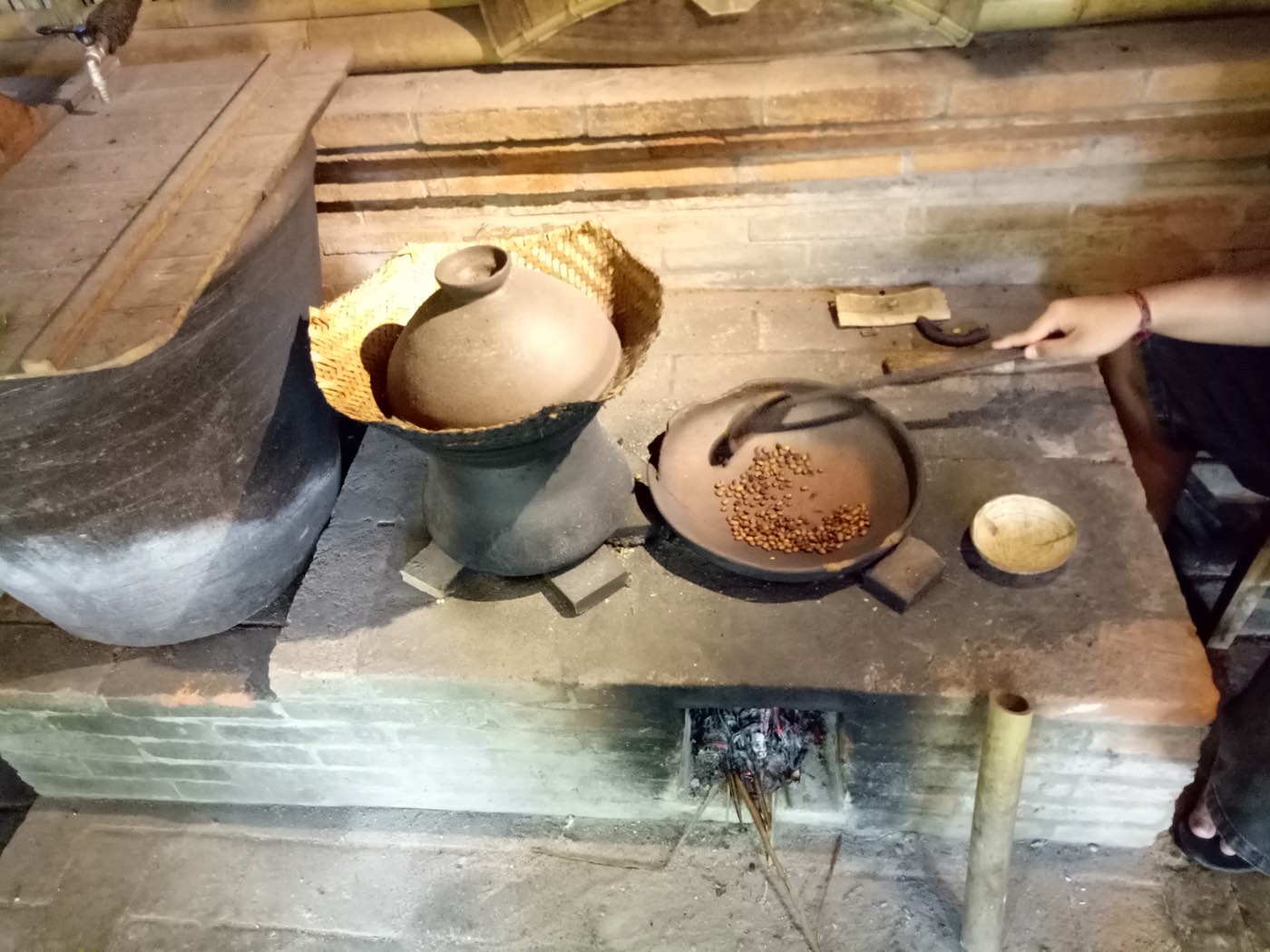 Wood-fire pan roasting at a Bali plantation, the traditional first step from cherry to cup. Photo: Rennytan / Wikimedia Commons (CC BY-SA 4.0)
Kintamani Arabica Is Indonesia's First Registered Origin
Kintamani arabica is more than a label. Kopi Arabika Kintamani Bali was the first geographical indication certificate issued in Indonesia, in December 2008.
The certificate was handed to the growers' own geographical-indication protection society rather than to a company, as the intellectual property directorate general announced at the time.
The register is kept by the Directorate General of Intellectual Property. Bali now has several protected products on it, Pupuan robusta among them, as the law ministry's Bali office notes.
In practice, a bag labelled Kintamani arabica is tied to a registered origin, which is worth paying attention to on a menu. The better cafes now pour this local, traceable coffee as single-origin rather than as a commodity blend.
Bali Drinks Coffee Three Ways
Kopi Bali, the local way. Coarse grounds go straight in the cup with hot water on top. You let it settle, then sip around the sludge. This everyday cup is strong, sweet if you add sugar, and found all over the island.
Specialty cafes. Bali has a genuine third-wave coffee scene, concentrated in Canggu and Ubud and spreading. The cafes serve espresso, pour-over, cold brew and flat whites, and many roast their own and pour Indonesian single-origins. See where to eat in Bali for the cafe-heavy areas.
Highland cafes. In Munduk and Kintamani, cafes pour the beans grown on the slopes around them, often with a view to match. This is the closest you get to the source.
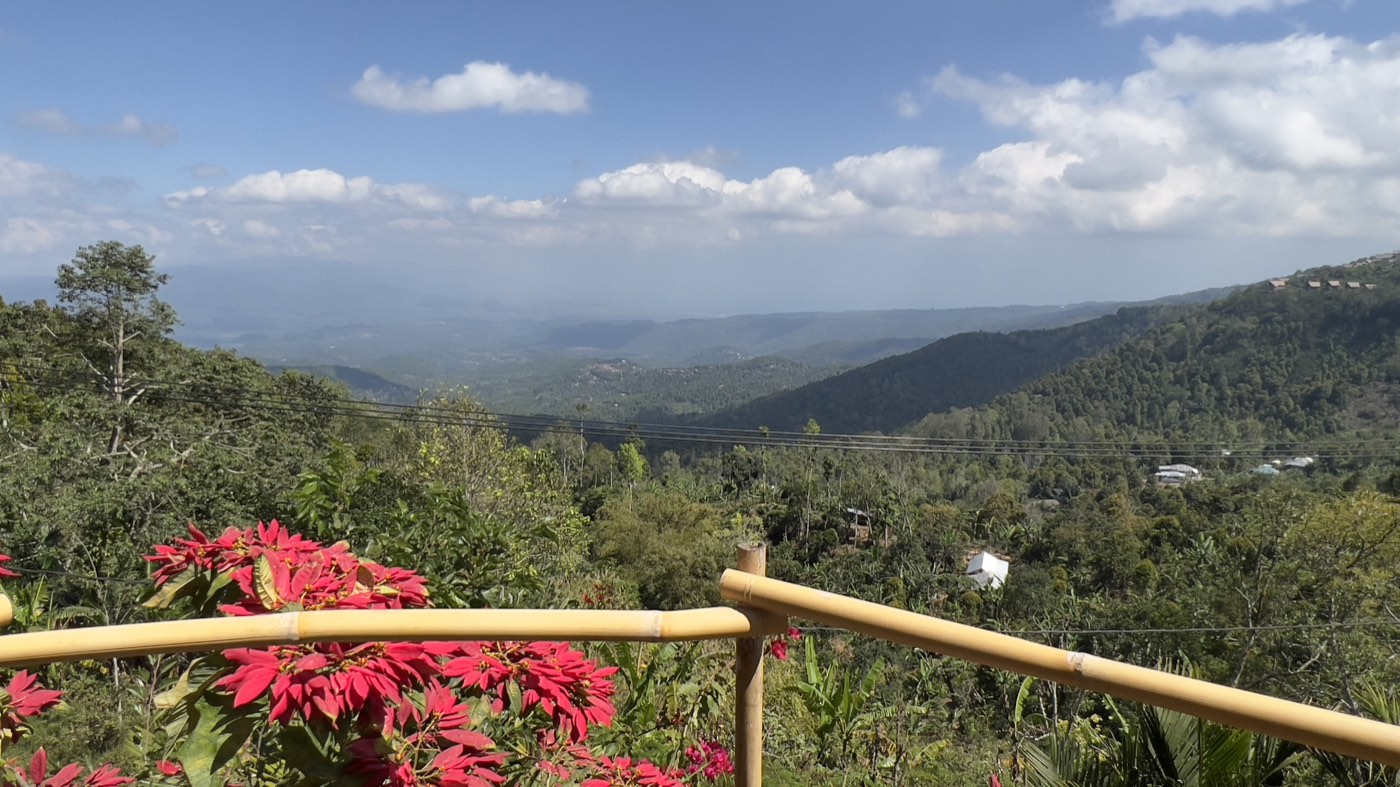 The view from a Munduk coffee-farm cafe, beans grown on the slopes below. Photo: Stefan Fussan / Wikimedia Commons (CC BY-SA 3.0)
Kopi Luwak: Skip It, Because No Label Can Prove It Is Wild
Kopi luwak is coffee made from cherries eaten and passed by the civet, or luwak. It is sold all over Bali as a novelty at a heavy premium.
The usual pitch is that the animals are wild. The evidence says otherwise, and it is worth knowing before you order a cup or pay for a plantation tour that features caged animals.
What Researchers Found at Sixteen Bali Plantations
Researchers from Oxford University's Wildlife Conservation Research Unit and World Animal Protection assessed the conditions of nearly fifty civets caged at sixteen plantations on Bali. They published the results in the journal Animal Welfare.
As National Geographic reported, every plantation they visited failed basic welfare requirements. Civets are nocturnal, and the study describes:
- tiny cages
- wire floors
- diets of nothing but coffee cherries
- animals exposed to daytime noise from traffic and tourists
World Animal Protection's own summary adds the pacing and self-harm of stressed caged animals.
No Certification Guarantees a "Wild" Label
Labelling settles the question. A BBC undercover investigation found coffee from caged civets being sold as wild in Europe.
The same National Geographic report states that there is now no way to tell whether a bag was made from wild or caged civets. It adds that no certification scheme guarantees a "wild" label.
So there is no certified wild-sourced kopi luwak that you can verify from a shop counter or a tour desk. Retailers in several countries have taken it off their shelves.
Skip it, and spend the same money on a good single-origin Kintamani or Munduk arabica, which is a better cup anyway.
Choose a Plantation Tour Without Cages
If a plantation tour keeps civets in cages, that is your signal about the rest of the operation. A tour that walks you through the trees, the drying beds and the roasting pan is the one worth taking. See coffee plantations in Munduk.
Where to Drink Bali Coffee: The Specialty Cafes, the Highlands and the Warung
- Canggu and Ubud: the specialty cafe scene, with espresso and pour-over done well
- Munduk and Kintamani: highland cafes pouring local beans near where they grow
- Almost anywhere: a kopi Bali, to taste the everyday version
- In the north: the best cafes in north Bali guide covers the Lovina and Munduk spots, and a plantation tour takes you to the source
How to Buy Beans Worth Carrying Home
- Look for an origin before a brand. Kintamani or Munduk on the bag, ideally with the village or the cooperative named.
- Look for a roast date. A bag without one has been sitting somewhere.
- Buy whole beans if you can grind them. Pre-ground Bali coffee is usually destined for the kopi Bali steep rather than an espresso machine.
- Buy at the farm or a roasting cafe, where you can ask when and where the beans were roasted.
- Skip the gift tins of flavoured coffee and the kopi luwak sampler. Neither is the coffee this island actually grows.
- Payment: cash works almost everywhere. Specialty cafes usually take cards or QRIS.
FAQ
Is Bali known for coffee? Yes. Bali grows arabica and robusta in its highlands (Kintamani and Munduk), drinks a strong local brew called kopi Bali, and has a serious specialty-cafe scene in the south. It is also the home of the famous, controversial kopi luwak.
What is kopi Bali? The local everyday coffee: coarse grounds placed straight in the cup with hot water poured over, left to settle before drinking. Strong and simple.
Is kopi luwak worth trying? Skip it. An Oxford and World Animal Protection study of caged civets at sixteen Bali plantations documented the welfare problem. Beans from caged animals have been found sold as wild, and no certification scheme guarantees a wild label. So there is no way to verify a wild-sourced claim from a counter or a tour desk. Drink a single-origin Kintamani or Munduk arabica instead.
Where is the best coffee in Bali? Specialty cafes in Canggu and Ubud for the third-wave scene, and highland cafes in Munduk and Kintamani for local beans near the source.
Does north Bali have good coffee? Yes. The Munduk highlands grow the north's own beans, poured in cafes around Lovina and Munduk. You can tour the plantations on a Munduk coffee walk.
How much does coffee cost in Bali? Less than the Western equivalent, and a kopi Bali at a warung less again, though rates move too much to publish. Kopi luwak is the outlier, sold at a heavy premium for the reasons above.
Sources
- Kompas, Animo Petani Meraih Keuntungan dari Indikasi Geografis, 4 December 2008 (the intellectual property directorate general announcing Kintamani arabica as Indonesia's first geographical indication certificate, handed to the growers' protection society), Indonesian, read September 2026
- Mongabay Indonesia, Indikasi Geografis Belum Berdampak pada Petani Kopi. Benarkah? (the Kintamani protection society as the first group certified, on 5 December 2008), Indonesian, read September 2026
- Directorate General of Intellectual Property (DJKI), official site (the office that keeps the geographical indication register), read September 2026
- Ministry of Law, Bali regional office, on geographical indication registration and protection in Bali (Bali's registered geographical indication products, including Kintamani arabica and Pupuan robusta), Indonesian, read September 2026
- National Geographic, The Disturbing Secret Behind the World's Most Expensive Coffee (the Oxford and World Animal Protection study of nearly 50 caged civets at 16 Bali plantations, published in Animal Welfare; the conditions found; the BBC investigation; no way to tell wild from caged and no certification for "wild"), read September 2026
- World Animal Protection, civet coffee and retailers pulling civet coffee from shelves (capture and caging of civets, signs of stress, and the retailers that removed the product), read September 2026
Read next: coffee plantations in Munduk to walk the source, the best cafes in north Bali for where to drink it up here, and drinks of north Bali for everything else in a glass.