On this page
- In Brief
- North Bali Drinks at a Glance
- Arak: What It Is
- The 2020 Change: Arak Became Legal
- The Honest Safety Note: Methanol
- Tuak: Palm Wine at the Warung
- Loloh and Jamu: The Herbal Drinks
- Es Kuwud and Rujak Yeh Kuwud: Buleleng's Coconut Drinks
- Kopi Bali and the Munduk Beans
- Where to Drink in the North
- Practical Notes
- FAQ
In Brief
Arak is Bali's traditional spirit, distilled from fermented palm sap; on north Bali's Tejakula coast the palm is the lontar. It has been legal to produce and sell under a Bali governor's regulation since January 2020, and legal bottles carry a food and drug agency (BPOM) registration and an excise stamp. The safety rule is simple: drink arak only from sealed, labelled bottles or at reputable licensed venues, because home-made and adulterated spirits in Indonesia have caused deadly methanol poisoning, and symptoms can appear hours after drinking. Tuak is the palm wine that arak is distilled from. Loloh is the Balinese word for herbal jamu. Rujak yeh kuwud is a Buleleng coconut-water drink made on the days families cook lawar. Up in the hills, Munduk grows its own coffee.
North Bali Drinks at a Glance
- Arak: Distilled palm spirit; legal under Bali Governor Regulation 1 of 2020
- Safe arak: Sealed bottle, BPOM registration, excise stamp, alcohol content and producer on the label
- The danger: Methanol in illicit or adulterated spirits; get medical help fast if you suspect it
- Tuak: Palm wine from coconut or lontar sap; the base for arak
- North Bali's arak villages: Les and Tembok, on the Tejakula coast, tap lontar palms
- Loloh: Balinese herbal drinks (jamu), such as loloh cemcem
- Rujak yeh kuwud: Coconut water with galangal, a home drink from Buleleng
- Coffee: Arabica and robusta from the Munduk highlands; kopi selem, black coffee, at every warung
- Arak Bali Day: 29 January
Arak: What It Is
Arak is the clear spirit of Bali, made by distilling tuak, palm wine. The sap is tapped from the flower of a palm, left to ferment, then boiled so the vapour runs through bamboo pipes and condenses as arak. In one of the best-known arak villages, Tri Eka Buana in Sidemen, Karangasem, the base is coconut sap, according to Bali's provincial cultural inventory. In the villages of Buleleng's Tejakula coast, the base is the sap of the lontar palm.
In Les, a village in Tejakula district, a 2023 report in tatkala.co followed the process at a kitchen called Dapur Bali Mula: farmers climb the lontar palms every day to collect the sap, it ferments overnight with coconut fibre, and the tuak is boiled over a wood fire for four to five hours. The first drops come off strongest, and a batch runs from about 60 per cent alcohol down to 20, when the distillers stop and sort the arak into jars by strength.
Arak is also sacred. With brem, the sweet rice wine, and tuak, it is poured as tetabuhan on the ground offerings, segehan, made to the lower forces at ceremonies, and it is mixed into boreh, the traditional healing rub. The daily offerings it accompanies are explained in Balinese offerings explained.
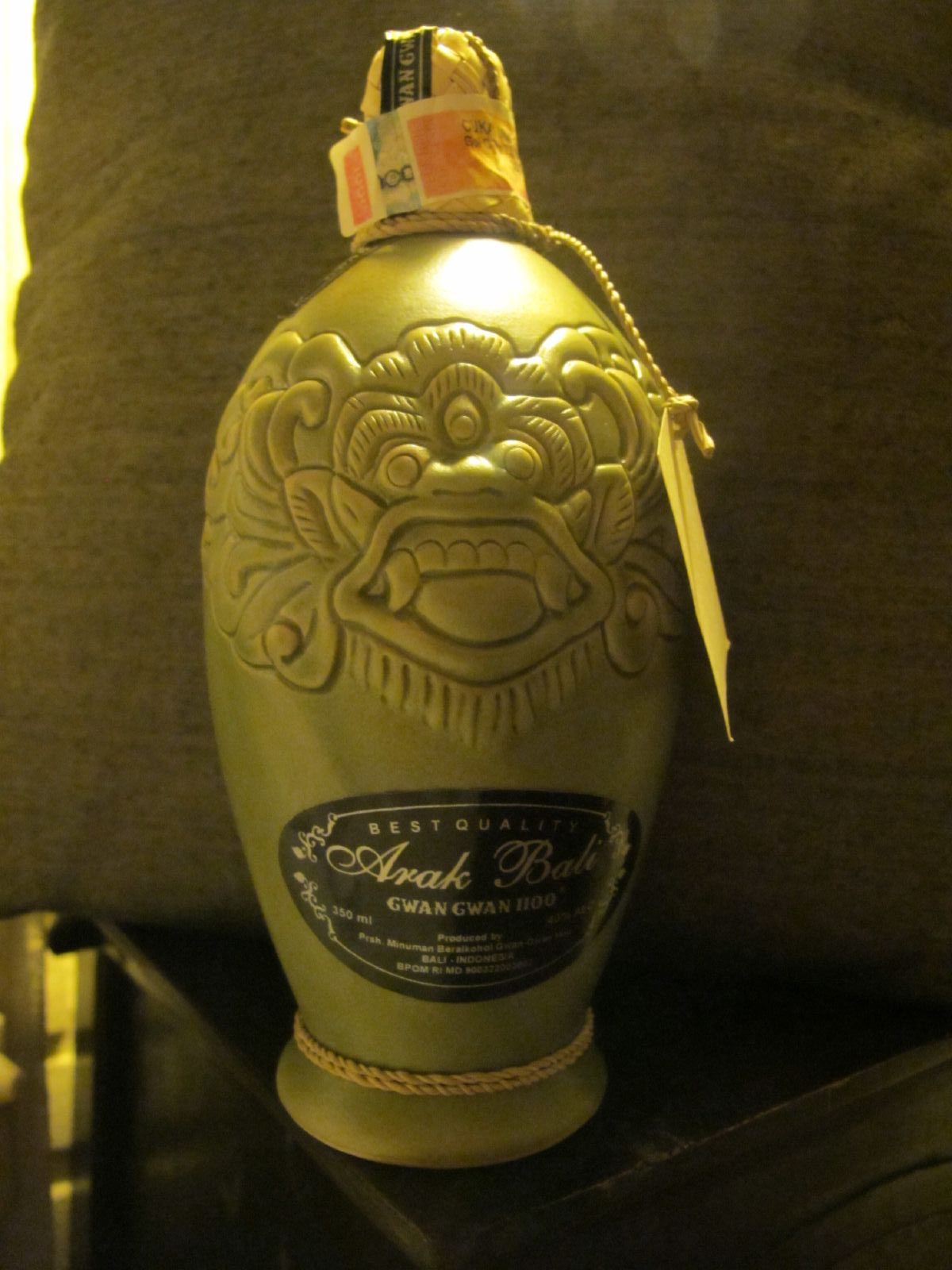 A labelled bottle of commercial Arak Bali. Photo: Li Tsin Soon / Wikimedia Commons (CC BY-SA 2.0)
The 2020 Change: Arak Became Legal
For decades arak was made quietly, in villages, outside the law. That changed on 29 January 2020, when Bali Governor Regulation 1 of 2020 on traditional Balinese fermented and distilled drinks took effect. It covers tuak, brem, arak, artisanal products, and arak and brem made for religious ceremonies. Producers and distributors now need licences, and the regulation bars sale to minors and schoolchildren and at youth venues, street stalls, lodgings, campsites, and places near temples, schools, government offices and health facilities, as the Buleleng regency reported when it was issued.
A national step followed. Presidential Regulation 10 of 2021 opened the alcoholic drinks industry to new investment in Bali, and the governor declared 29 January Arak Bali Day in 2022. By January 2024, Bali's trade and industry office counted 48 brands of arak-based drinks sold legally with excise stamps, Antara reported.
What makes a bottle legal is printed on it. Under the customs rules explained by the Denpasar excise office to NusaBali, legal arak is made by a licensed factory, carries a BPOM distribution permit and an excise stamp (pita cukai), and states its alcohol content and producer. A bottle without those marks is the kind to leave alone.
The Honest Safety Note: Methanol
Arak itself is ethanol, the same alcohol as in any spirit. The danger is methanol, a toxic alcohol that can form when distillation is done badly, or that is added deliberately to stretch or strengthen cheap spirits. The World Health Organization lists Indonesia among the countries that have had methanol poisoning outbreaks, which arise from counterfeit or informally produced spirits.
This is a real risk, and a local one as much as a tourist one. Of the 25 people who died of methanol poisoning in Bali in 2009, only four were foreigners, according to Inside Indonesia. The same article reports 44 people from a village in Bangli treated for methanol poisoning in late 2012, three of whom died. Australia's Smartraveller warns that locals and foreigners, including Australians, have died or become seriously ill from methanol poisoning in Indonesia, and that contaminated drinks have included local spirits such as arak, spirit-based cocktails and brand-name alcohol.
How it shows itself. The WHO describes a delay between drinking and the first real symptoms, because the body has to break methanol down before it does harm, and drinking ordinary alcohol at the same time can delay it further. After that gap come headache, vomiting, abdominal pain and dizziness, then fast or laboured breathing and trouble with vision, which can lead to blindness, coma and death. Smartraveller notes that symptoms can look like drinking too much, only stronger. Treatment exists, and late treatment is a large part of why outbreaks kill.
How to drink arak safely:
- Buy sealed bottles with a BPOM number, an excise stamp, the alcohol content and the producer's name on the label.
- Drink at reputable, licensed venues. Smartraveller adds that labels are not always accurate, so the venue matters as much as the bottle.
- Refuse arak from unlabelled bottles, jerrycans or plastic water bottles, and treat very cheap spirits with suspicion.
- Be most careful with cocktails and buckets, where you cannot see what went in.
- If you or a friend feel unusually ill hours after drinking, especially with blurred vision or trouble breathing, go to a hospital emergency department at once and say you suspect methanol. Smartraveller also asks travellers to report suspected cases to the Indonesian police.
Ask your villa host which nearby hospital to use before you need it.
Tuak: Palm Wine at the Warung
Tuak is the everyday drink behind arak, palm sap left to ferment, and in the lontar country of Tejakula it is a daily trade. In Tembok, at the eastern end of Buleleng, villagers turn lontar sap into four products, tatkala.co reported in 2024:
- Tuak manis, the fresh, sweet, barely fermented sap.
- Tuak wayah, fermented with a starter of coconut husk or lontar-fruit fibre, sharper and stronger.
- Tuak badeg, the tuak set aside for distilling into arak.
- Gula Bali, the dark palm sugar boiled down from the sap.
The same report describes tuak and arak in Tembok as drinks for news and friendship, shared the way coffee is shared in a French café.
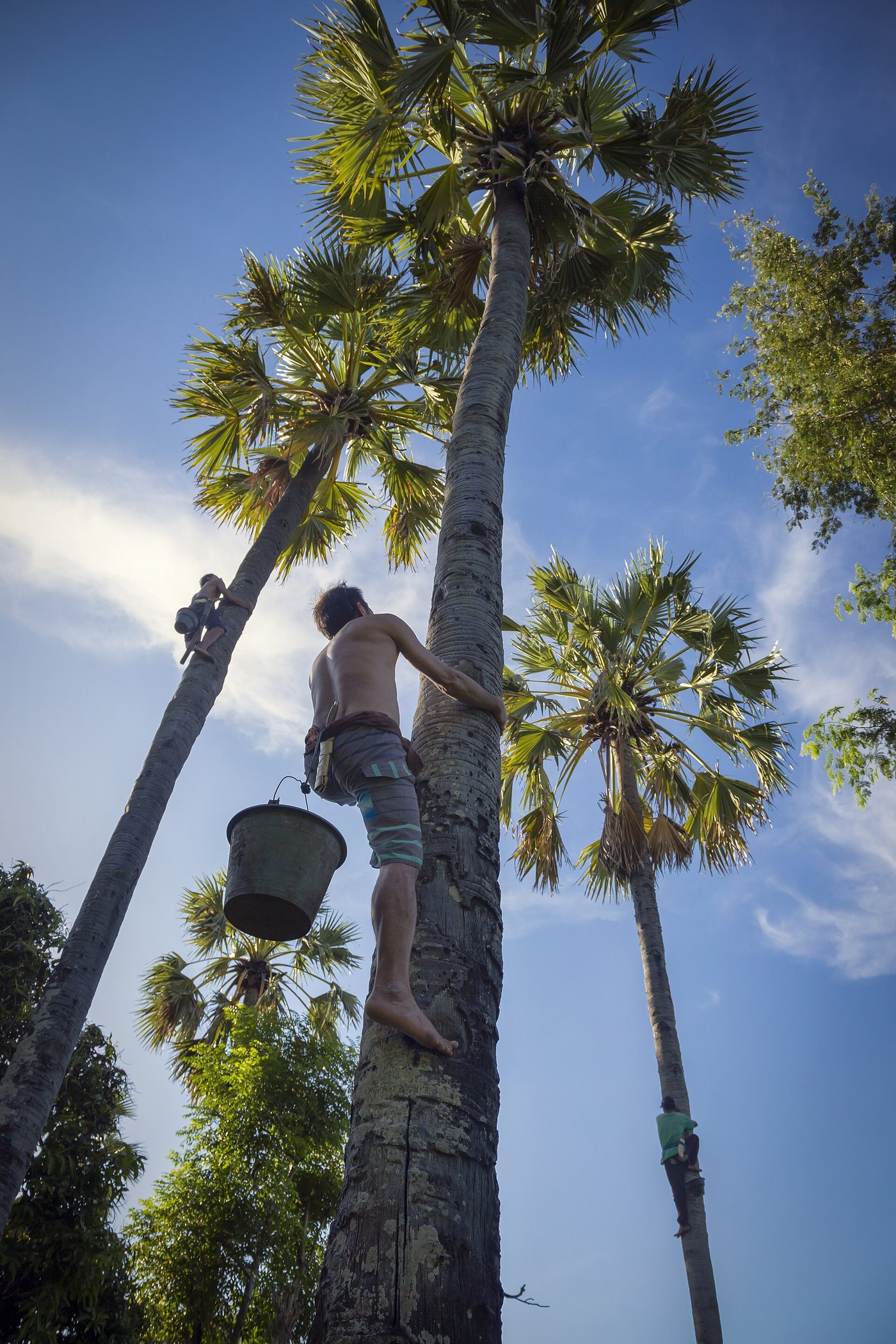 A lontar palm tapper at work in Tianyar, Karangasem, on the same north-east coast. Photo: Imadedana / Wikimedia Commons (CC BY-SA 4.0)
Tuak is fermented rather than distilled, and the WHO notes that the small amounts of methanol found naturally in fermented drinks are not harmful; the dangerous amounts come from badly managed distillation or deliberate adding. Buy it from a seller the village knows. Which warungs around Lovina serve tuak openly changes, so ask your host.
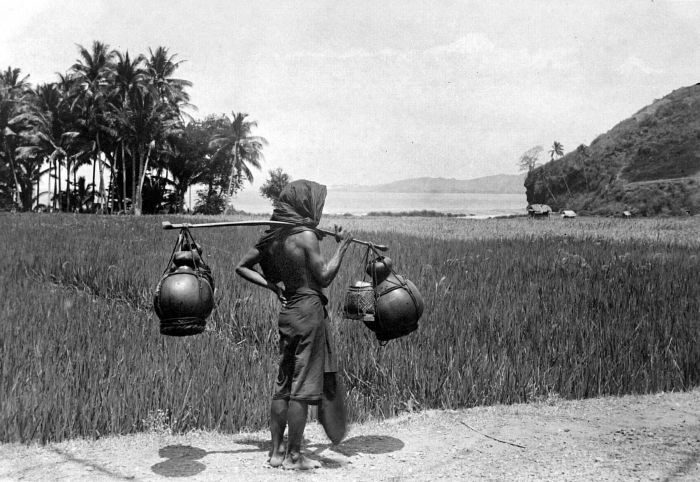 A tuak seller on Bali in 1929, carrying palm wine in clay jars. Photo: Unknown author, Tropenmuseum / Wikimedia Commons (CC BY-SA 3.0)
Loloh and Jamu: The Herbal Drinks
Loloh is the Balinese word for jamu, the herbal drinks families make at home. The best known is loloh cemcem, made from the leaves of the wild kedondong tree (Spondias pinnata) with spices and young coconut flesh, a sour, salty, sweet and faintly spicy drink that people take for panas dalam, "inner heat". It comes from the village of Penglipuran in Bangli, and Bali's cultural inventory records it as a village speciality.
Buleleng has its own home brews. Palm Living's list of local north Bali drinks names a tea of secang wood from Bubunan village, an avocado-leaf tea from Gitgit, and loloh sembung served with sweet tuak in Banyuseri. These are family and warung drinks, found by asking rather than on menus.
Es Kuwud and Rujak Yeh Kuwud: Buleleng's Coconut Drinks
Kuwud is coconut. On a hot north-coast afternoon the simplest version is iced young coconut, the water and soft flesh served in the shell, an Indonesian favourite at food stalls.
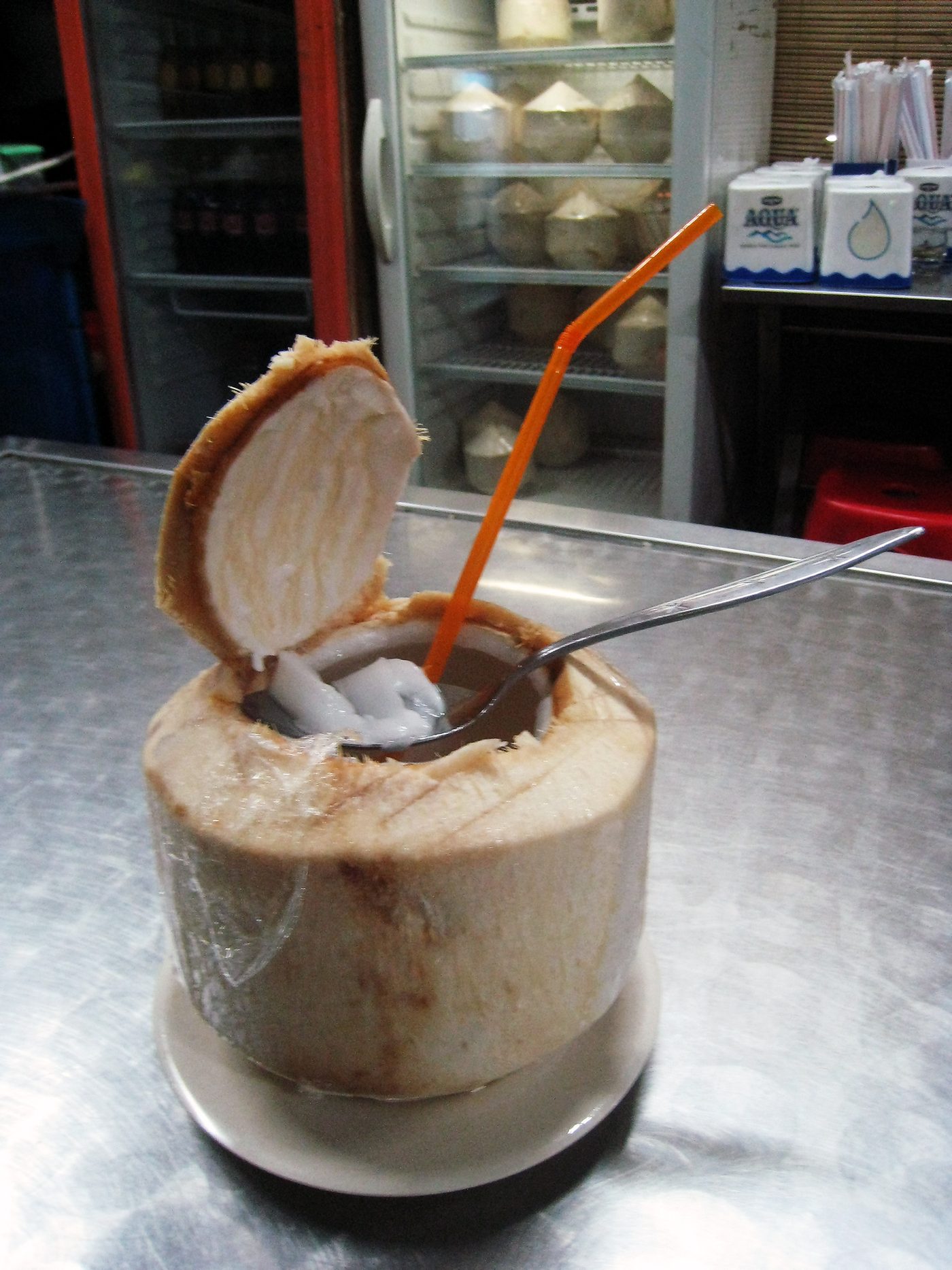 Iced young coconut in the shell, the everyday version, here at a stall in Jakarta. Photo: Gunawan Kartapranata / Wikimedia Commons (CC BY-SA 3.0)
The Buleleng classic is stranger and better. Rujak yeh kuwud comes from Suwug village in Sawan district: the water of a half-mature coconut seasoned with galangal and salt, sweet, salty and faintly fizzy, according to the Budaya Indonesia archive. It is made from the coconut water left over when families cook lawar nyuh, so nothing of the coconut is wasted, and it is drunk to settle the stomach after rich pork lawar. The same record notes that nobody sells it. It appears on lawar-cooking days, at home.
In Les, Dapur Bali Mula served es daluman, a cooling drink of daluman-leaf jelly, made from leaves bought from village households, when tatkala.co visited in 2023.
Kopi Bali and the Munduk Beans
Coffee is the drink you will be offered most. At a warung it usually comes as kopi selem, the Balinese name for black coffee made the tubruk way: finely ground coffee in a glass, hot water poured straight on, sugar stirred in, and the grounds left to settle at the bottom. Wait a minute before you drink.
The beans closest to home grow in the highlands around Munduk, where smallholder plots of arabica and robusta share the slopes with clove, cinnamon, cacao and vanilla at around 1,000 metres. Farm walks there follow the bean from tree to cup; see coffee plantations in Munduk, and for the wider island, the best coffee in Bali.
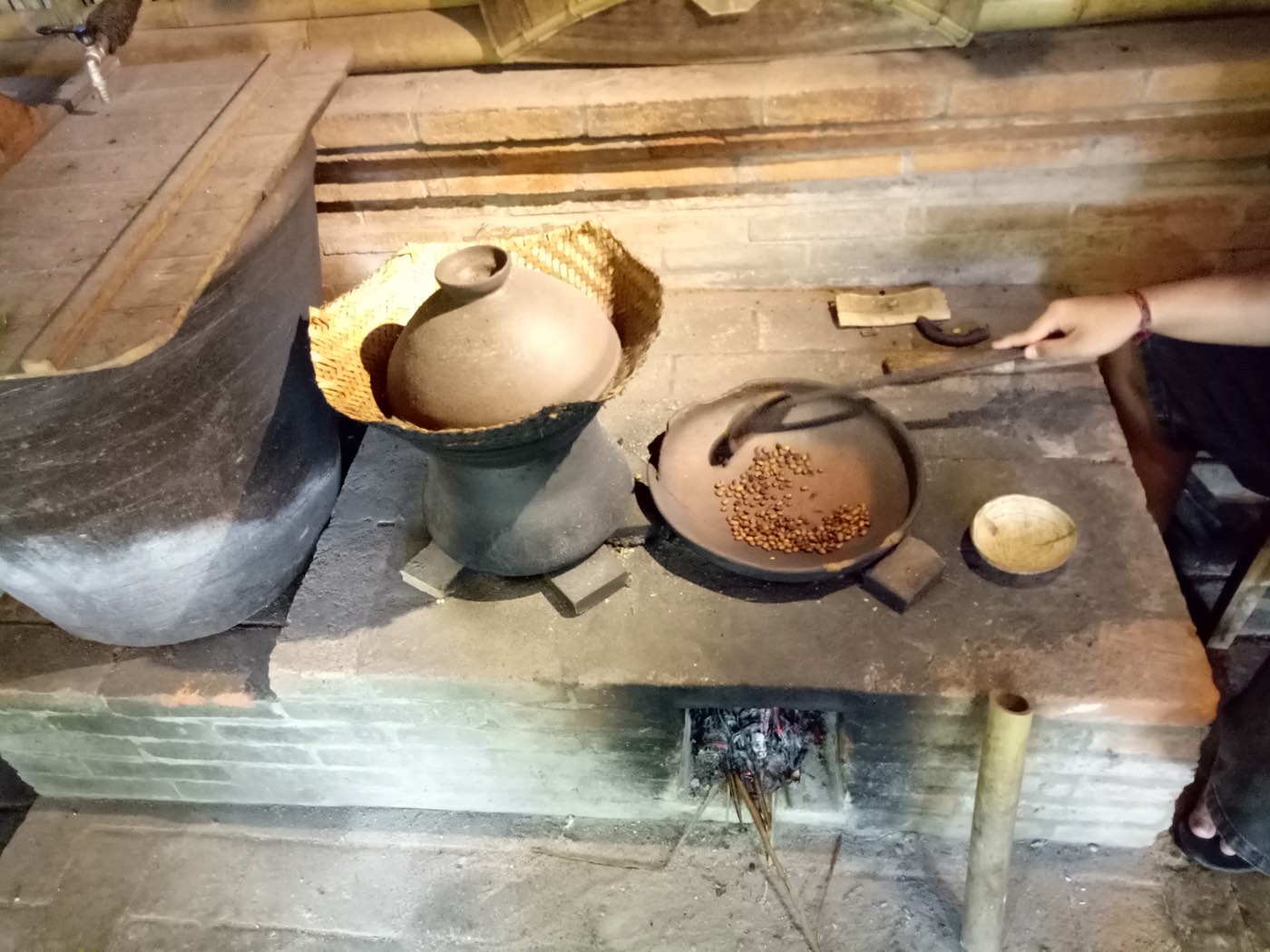 Wood-fire roasting at a Bali coffee plantation. Photo: Rennytan / Wikimedia Commons (CC BY-SA 4.0)
Where to Drink in the North
- For arak: Licensed bars and restaurants in Lovina that serve arak from sealed, labelled bottles. Ask to see the bottle. Which venues pour legal arak cocktails changes by season, so ask your villa host for a current name.
- For the arak villages: Les and Tembok on the Tejakula coast, east of Lovina beyond Tejakula village, where lontar tapping and distilling are part of daily life. Go with a guide who knows the families. See the Tejakula guide.
- For tuak, coffee and the local drinks: The warungs, where kopi selem is always on and the coconut drinks follow the season. Start with the best warungs in north Bali.
- For coffee at the source: The farm walks around Munduk.
- For the full table: Pair the drinks with the food in what to eat in Bali.
Practical Notes
Venues, products and rules change. Confirm what a venue pours before you order, and check current advice from your government before you travel.
- Legal arak is labelled. Look for the BPOM registration, the excise stamp, the alcohol content and the producer.
- Arak is strong. A distiller's first drops can reach 60 per cent alcohol; check the label and pace yourself.
- Suspect methanol, go to hospital. Blurred vision, breathlessness or severe vomiting hours after drinking need emergency care, not sleep.
- Arak Bali Day falls on 29 January.
- Respect the ceremonial use. Arak and brem poured on offerings are for the offering; never pick up or drink from them.
FAQ
Is arak safe to drink?
Arak from a sealed, labelled bottle made by a licensed producer, served at a reputable licensed venue, is an ordinary spirit. The danger is methanol in illicit, home-made or adulterated spirits, which has killed locals and travellers in Indonesia. Avoid unlabelled or very cheap arak, and seek emergency care if you feel severely ill hours after drinking.
How strong is arak?
It varies by producer, so read the label. In traditional distilling the first drops can be around 60 per cent alcohol and the run is stopped at about 20 per cent, with the arak then sorted by strength.
Is arak legal in Bali?
Yes. Bali Governor Regulation 1 of 2020, in force since 29 January 2020, governs the production and sale of arak, tuak and brem. Legal bottles carry a BPOM permit and an excise stamp, and sales are banned to minors and at certain places such as street stalls and near temples and schools.
What are the symptoms of methanol poisoning?
After a delay, often hours, headache, vomiting, abdominal pain and dizziness, then breathing trouble and blurred or lost vision, which can progress to coma. It can look like a bad hangover, only stronger. Go to a hospital emergency department immediately and say you suspect methanol.
What is tuak?
Tuak is Balinese palm wine, the fermented sap of the coconut or lontar palm. It is sold fresh as sweet tuak manis or stronger tuak wayah, and distilled to make arak. In Tejakula villages such as Tembok, lontar sap is also boiled into palm sugar.
What is loloh?
Loloh is the Balinese word for jamu, traditional herbal drinks made at home. The best known is loloh cemcem from Penglipuran, made from wild kedondong leaves with spices and young coconut, drunk to cool the body.
What is rujak yeh kuwud?
A Buleleng coconut drink from Suwug village: half-mature coconut water seasoned with galangal and salt, made from the water left when families cook lawar and drunk to settle the stomach after the rich pork dish. It is a home drink and is rarely, if ever, sold.
Where can I try arak in north Bali?
At licensed bars and restaurants in Lovina that pour from sealed, labelled bottles, or with a guide in the lontar-tapping villages of Les and Tembok on the Tejakula coast, where arak is distilled. Ask to see the bottle wherever you drink.



_op_Bali_TMnr_10002905.jpg)

