On this page
- In Brief
- At a Glance
- How a Class Runs: Market, Kitchen, Then the Meal You Cooked
- The Market Tour Starts Soon After First Light
- The Dishes: Base Genep First, Then a Full Balinese Meal
- Half a Day Covers the Core Dishes, a Full Day Adds Depth
- Vegetarian and Vegan Classes Are Easy to Find: Say So When You Book
- Where to Take a Class: Ubud, Seminyak and Canggu, or Lovina
- How to Choose a Good Class: Six Checks Before You Book
- How to Fit It In: A Class in the North Pairs with Waterfalls and Coffee
- Practical Notes
- FAQ
- Sources
In Brief
A cooking class in Bali ends at the table, with a Balinese meal you cooked yourself from the spice paste up. Many start with a guided market tour, then move to an open-air kitchen where you cook several dishes. Classes run a half or a full day, usually three to five hours, with all ingredients and the meal included.
Expect to learn base genep, plus staples such as nasi goreng, satay lilit and fresh sambal. Classes adapt easily for vegetarians and vegans if you ask when you book. Ubud has a wide choice, and the Seminyak and Canggu area has polished studios. The north around Lovina has smaller, quieter classes with a rural feel.
At a Glance
- Typical duration: 3 to 5 hours for a half day, or a morning-to-afternoon session for a full day
- What's usually included: a market tour (on some classes), all ingredients, hands-on cooking, the full meal you cook, a recipe booklet, and often hotel pickup in the main tourist zones
- What you'll cook: base genep spice paste, plus a spread that often includes nasi goreng, satay lilit, chicken or tempeh in spices, sambal, soup and a coconut-based dessert
- What it costs: a group class is priced per person. Private classes and full-day formats with a spice garden cost more. Each school publishes its own rate, so take it from the school
- Main areas: Ubud (a wide choice), Seminyak and Canggu (polished, beach-side), Lovina and the north (quiet, rural, small groups)
- Group size: anywhere from 2 to 15 people, and smaller means more hands-on time
- Vegetarian and vegan: widely available if you flag it when you book
- Best for: couples, families, solo travellers, anyone who wants a half day off the beach that teaches a real skill
How a Class Runs: Market, Kitchen, Then the Meal You Cooked
Classes across the island follow a version of the same order.
You meet in the morning and shop or tour the ingredients. Then you cook in an open kitchen and sit down to eat what you made.
Each cook works at a station with a wok, a cutting board and a mortar and pestle. A local instructor demonstrates each dish, and you cook it alongside them. The better classes keep groups small enough for everyone to get real time at the stove.
The meal at the end is the full spread you cooked, eaten together at a long table. Coffee, tea and water are standard throughout, and most classes hand you a recipe booklet so you can cook the dishes again at home.
The setting varies more than the food. Some classes run from a family compound among rice fields, some from a restaurant kitchen, and some from a purpose-built cooking studio.
The Market Tour Starts Soon After First Light
Many classes open with a trip to a local morning market, and it is worth seeking out.
A guide walks you through the stalls and names the ingredients that define Balinese cooking:
- galangal and turmeric
- lemongrass and kaffir lime
- shrimp paste and palm sugar
- the small fiery chillies that go into sambal
Markets in Bali run early, so a market-tour class starts not long after first light. You arrive while the produce is fresh and the stalls are busy. You see how people here shop, and you handle the raw spices before they become a paste.
The visit is usually a tour, and the school provides what the cooking needs. You learn what each item is and how it is used.
Some classes skip the market and have the ingredients ready at the kitchen, which suits anyone who would rather not start before dawn. Listings can be vague on this, so if the market matters to you, confirm it is part of the class before you book.
The Dishes: Base Genep First, Then a Full Balinese Meal
The heart of a Balinese class is base genep, the foundational spice paste.
Its name means "complete spices", and it is ground by hand in a stone mortar. The mix runs to:
- shallot and garlic
- chilli and candlenut
- turmeric, ginger, galangal and lesser galangal
- lemongrass, with salam and lime leaves
- shrimp paste
It is the base of a large share of Balinese cooking, ayam betutu among it. That makes it the most useful thing a class teaches you to take home.
From there, a class works through several dishes, so you finish with a full meal. Common dishes across Bali cooking classes:
- Base genep, the master spice paste that underpins the rest, ground fresh in a mortar
- Nasi goreng, Indonesian fried rice, the dish everyone recognises
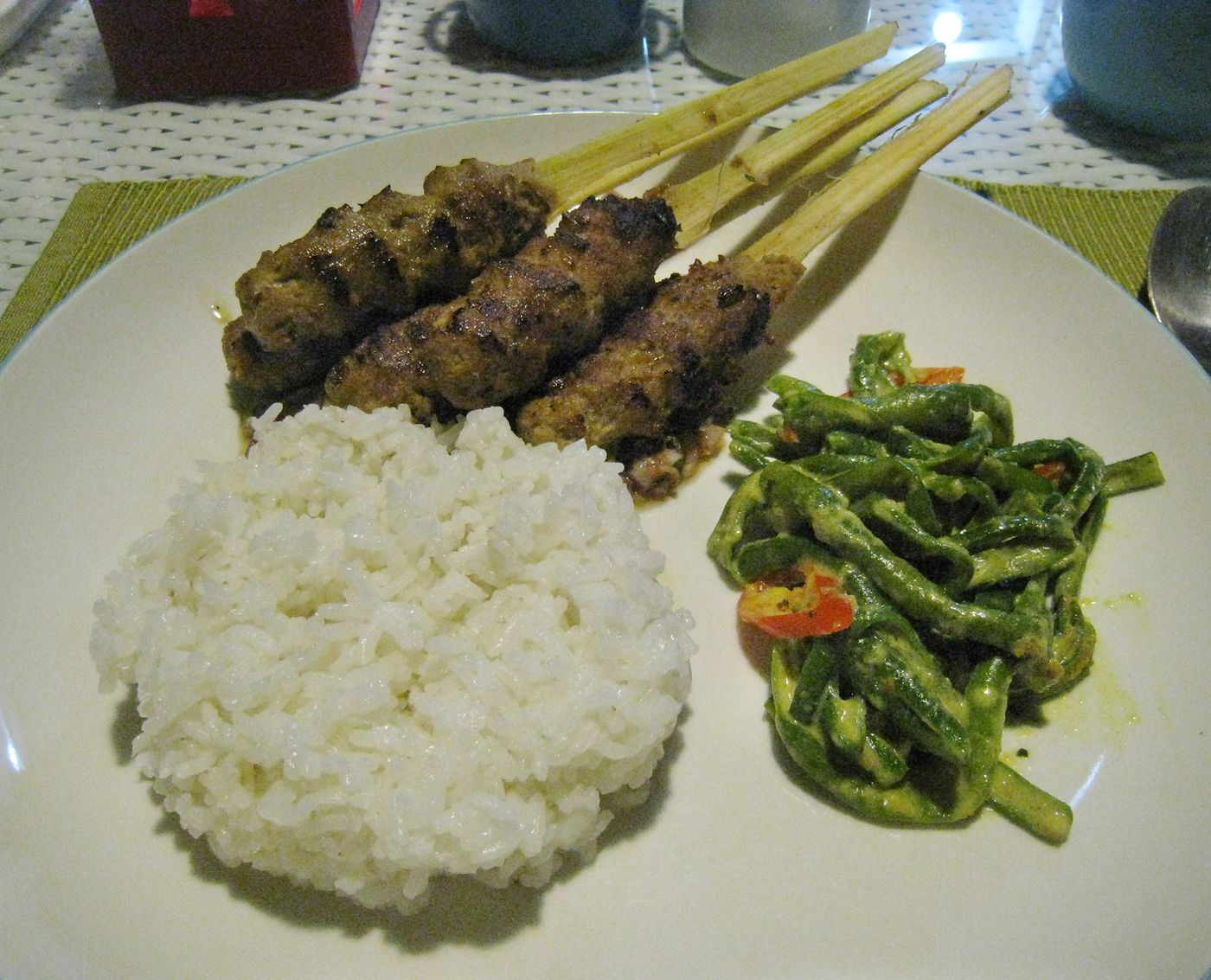
- Satay lilit, minced satay, often chicken or fish, pressed onto lemongrass or bamboo skewers and grilled
- Sambal, fresh chilli relish, usually sambal matah (raw shallot, lemongrass, chilli) or a cooked tomato-based version
- A spiced protein, chicken, fish, or tempeh and tofu cooked in base genep
- A vegetable dish, often urab, vegetables tossed with grated coconut and spice
- Soup, a clear or spiced soup such as a Balinese-style chicken soup
- Dessert, often a coconut-and-palm-sugar sweet like dadar gulung (green pancakes) or black rice pudding
The exact list shifts by school and by what is fresh. By the end you have cooked a complete Balinese meal from scratch.
Half a Day Covers the Core Dishes, a Full Day Adds Depth
Cooking classes in Bali are usually half-day, running three to five hours.
Without the market, a half-day class usually starts mid-morning and finishes after lunch. With the market, it starts at dawn and wraps up by early afternoon.
Full-day classes are less common, and they add depth more than extra dishes. The extras might include:
- a longer market tour
- a visit to a rice paddy or a spice garden
- more time learning about Balinese ingredients
- a wider menu
For most travellers, the half day is the right call. It teaches the core dishes and leaves the afternoon open for a beach, a pool or a waterfall trip. The full day suits keen home cooks who want the ingredient education as much as the recipes, from market to garden to table.
Evening classes also run, mostly in the southern tourist zones, for travellers who would rather cook dinner than lunch. They usually skip the market, since markets run in the morning.
Vegetarian and Vegan Classes Are Easy to Find: Say So When You Book
Balinese and wider Indonesian cooking adapts well to plant-based diets.
Tempeh and tofu are everyday staples here, so a vegetarian class in Bali still teaches real Balinese dishes. Sambal, urab, fried rice and most vegetable dishes adapt cleanly.
Base genep is plant-based apart from terasi, the shrimp paste most recipes finish it with. If you avoid all animal products, state your diet when you book, not on the day. A school that knows in advance leaves the terasi out and plans the menu around you.
Many classes in Ubud market themselves as vegetarian or vegan specialists, in step with the area's plant-based food scene. Vegan and vegetarian food in Bali covers the same catches across the rest of the island's menus.
Where to Take a Class: Ubud, Seminyak and Canggu, or Lovina
Three broad areas hold many of the island's classes, and each gives a different kind of morning.
Ubud
Ubud has a dense spread of cooking classes, set among rice fields and family compounds in the cultural heart of Bali. The range runs from small family-run classes to larger commercial studios, with many vegetarian and vegan options. For wide choice in a rural but busy setting, Ubud is the default.
Seminyak and Canggu
The beach belt around Seminyak and Canggu has polished, professionally run classes, often attached to restaurants or purpose-built studios. Expect hotel pickup and English-fluent instructors, with smooth logistics and a more produced experience. It suits travellers already based there who want convenience and a higher-end feel.
Lovina and the North
The north around Lovina has fewer classes, with a quiet, rural character. Groups tend to be smaller, and the kitchen is often a family home or a small homestay. It suits travellers who want a class without crowds while exploring the north's waterfalls, coffee plantations around Munduk and dolphin coast.
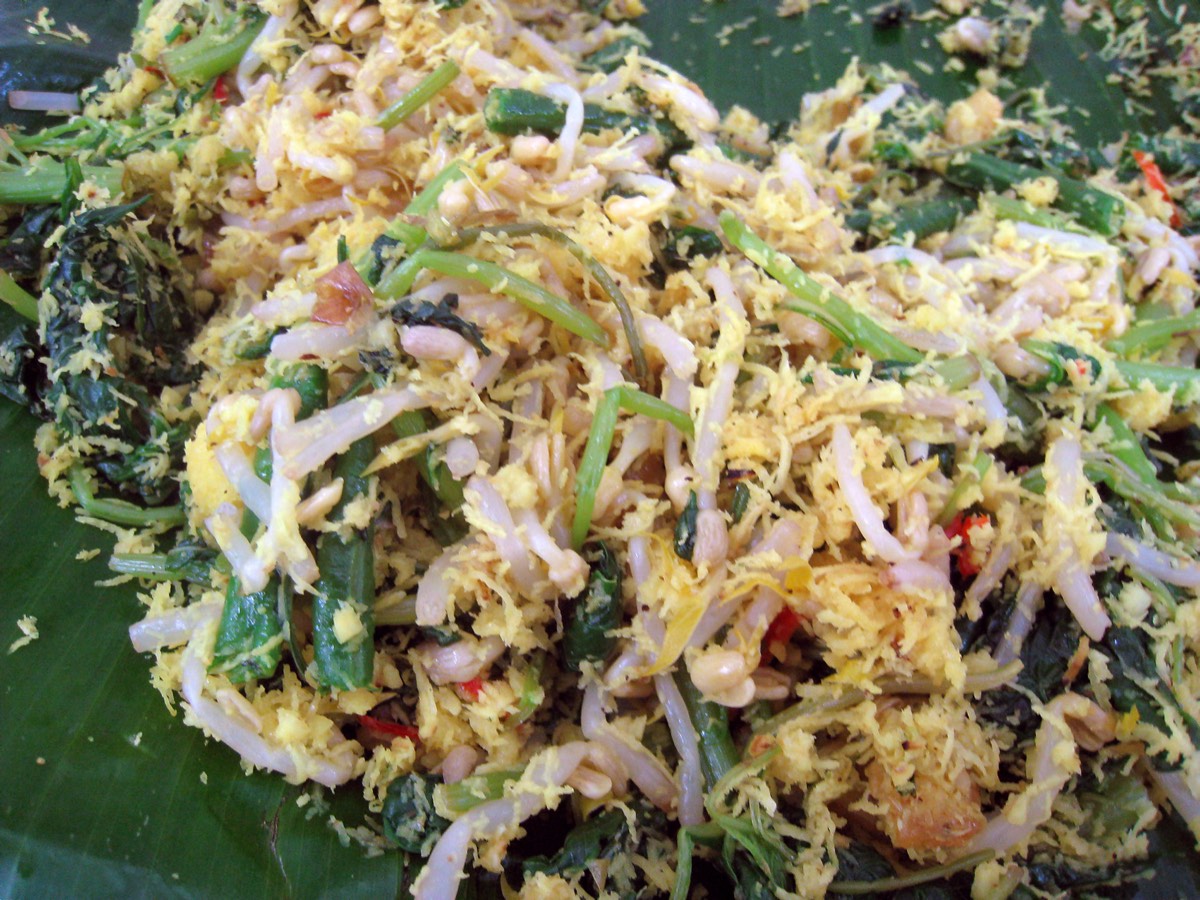 Urap, the vegetable dish most classes teach. Photo: Gunawan Kartapranata / Wikimedia Commons (CC BY-SA 3.0)
How to Choose a Good Class: Six Checks Before You Book
Cooking classes in Bali vary in quality, and six checks separate a memorable morning from a forgettable one.
-
Check the group size. A class capped around six to eight people gives you real time at the stove and more of the instructor's attention. Large groups can turn into a watch-and-photograph session.
-
Read the menu. A good class teaches base genep and a full spread of dishes, more than one main and a side. Make sure the spice paste is on it, since that is the skill worth carrying home.
-
Decide if the market matters. If the morning market is part of why you want the class, confirm it is included and accept the early start. If you would rather sleep in, choose a class that prepares the ingredients at the kitchen.
-
Match the setting to the mood you want. A rice-field family compound, a beach-side studio and a north Bali homestay feel very different, though the food overlaps. Pick the setting on purpose.
-
State dietary needs when booking. Vegetarian, vegan, allergies: flag them on booking, not on the day. The better schools build the menu around them.
-
Read recent reviews for the instructor before the food. A class lives or dies on the teaching. The telling reviews say what people learned, since anyone can serve a good lunch.
How to Fit It In: A Class in the North Pairs with Waterfalls and Coffee
A class around Lovina or in the hills inland trades polish for a family kitchen, a smaller group and a slower pace.
A morning class and an afternoon at a waterfall make a full day. A class plus a coffee plantation walk above Munduk links the food to where its ingredients grow. The highlands there produce coffee, cloves and spices. If you would rather eat than cook, the best warungs in north Bali is the shortcut.
Classes are fewer here, so plan ahead and do not count on booking the same day. Many run through homestays and small operators, so places are tighter, and the class is closer to a meal in a local home.
Ask where you are staying who runs classes nearby, since a local answer finds these small kitchens better than a booking site does. For a base on this coast, see Palm Living's villas around Lovina.
For how a class fits a wider trip, see how many days you need in north Bali. For the food it teaches you to recognise, read what to eat in Bali.
Practical Notes
- Booking ahead: a day or two in Ubud and the south, where popular classes fill up, and further ahead in the north, where classes are fewer.
- Price: set per person by each school. Check whether the market tour and hotel pickup are in the base rate.
- Diet: state vegetarian, vegan or allergies when you book, and ask for the terasi to be left out if you avoid all animal products.
- What to wear: comfortable clothes you do not mind getting messy, closed shoes for the kitchen, and sun protection for a market tour. Most schools provide aprons and all equipment.
- With children: check the minimum age and the group size before you book.
FAQ
How much does a cooking class in Bali cost? A group class is priced per person, and the rate normally covers all the ingredients, the cooking and the full meal you make. Private classes, studio operations and full-day formats with a spice-garden visit cost more. Rates change, so take the figure from the school itself. Check what is included before you book, since the market tour and the hotel pickup are not always part of the base rate.
How long does a Bali cooking class take? Most are half-day classes of three to five hours. A class with a market tour starts at dawn and finishes by early afternoon. Full-day classes add a longer market visit, a spice garden or a wider menu, and run from morning into the afternoon.
What dishes do you learn in a Balinese cooking class? The core is base genep, the foundational spice paste. From there, classes cover a full spread: nasi goreng, satay lilit, a fresh sambal, a spiced protein, a vegetable dish like urab, often a soup, and a coconut-based dessert. You finish by eating the complete meal you cooked.
Do cooking classes include a market tour? Some do, some do not. Market-tour classes start soon after first light, so you walk the stalls while the produce is fresh. Classes without the market prepare the ingredients at the kitchen and start later in the morning. Confirm which one you are booking, because listings are often vague on this.
Are there vegetarian and vegan cooking classes in Bali? Yes, and they are easy to find, especially in Ubud. Tempeh and tofu are staple ingredients here, so plant-based classes still teach real Balinese dishes. Base genep is often finished with shrimp paste, so state vegan or vegetarian when you book and the menu can be planned around it.
Where is the best place to take a cooking class in Bali? It depends on what you want. Ubud has a wide choice in a rural but busy setting. Seminyak and Canggu have polished, professionally run classes. Lovina and the north have smaller, quieter, more local classes. Pick the area for the atmosphere, since the food taught is broadly similar everywhere.
Do I need to book a cooking class in advance? In the south and Ubud you can often book a day or two ahead, though popular classes fill up. In the north, classes are fewer and many run through homestays and small operators, so plan further ahead and do not count on same-day places.
Is a Bali cooking class good for kids and families? Yes. Most classes welcome families and can adjust tasks so younger cooks help with safe steps like grinding spices and assembling dishes. Check the minimum age and the group size, since a smaller class gives children more room to take part.
What should I bring or wear to a cooking class? Comfortable clothes you do not mind getting a little messy, closed shoes for the kitchen, and sun protection if a market tour is involved. Most schools provide aprons and all equipment. Bring an appetite, and a phone for photos and your recipe notes.
Can you take a cooking class in north Bali near Lovina? Yes. The north has fewer classes, with a quiet, local feel, often in a family kitchen or homestay. A class pairs well with the area's waterfalls and the coffee country around Munduk. Plan ahead, as places are tighter than in the busier hubs.
Will I get recipes to take home? Most classes hand out a recipe booklet covering the dishes you cooked, so you can cook them again at home. The one to master is base genep, since that single spice paste is the base of a large share of the Balinese dishes you will have made.
Sources
- Wikipedia, Balinese cuisine, for base genep and the dishes classes teach, read September 2026 (in English)
- Wikipedia, Bumbu (seasoning), on basa genep as the Balinese spice paste among Indonesia's bumbu, read September 2026 (in English)
- Indonesia Ministry of Tourism, 13 iconic Bali dishes, read September 2026 (in English)
- Indonesia Ministry of Tourism, Ayam Betutu, for what base genep means and what goes into it, read September 2026 (in English)
Next: what to eat in Bali, the best warungs in north Bali, and vegan and vegetarian food in Bali.