On this page
- In Brief
- Balinese Food at a Glance
- Balinese Cooking Starts With a Fresh Spice Paste
- The Dishes to Try First
- Buleleng's Own Dishes Came Through Singaraja's Port
- Jaja Bali: Morning Cakes That Are Also Offerings
- Warungs Cook It, Markets Sell the Cakes
- Taste the Sambal First and Eat Where It Is Busy
- Practical Notes
- FAQ
- Sources
Last updated: September 2026
In Brief
Balinese food is built on base genep, a fresh spice paste, and it leans spicy far more than sweet. Start at a warung with nasi campur, rice with a spread of small sides. Then order babi guling, the suckling pig, and betutu, duck or chicken slow-cooked in spice paste. Sate lilit, lawar and a fresh sambal make up the rest of the island's core cooking.
For something sweet, look for jaja Bali, the traditional cakes sold at markets in the morning and eaten with coffee. Laklak are small rice-flour pancakes under grated coconut and palm-sugar syrup. Klepon are green glutinous-rice balls that burst with liquid palm sugar. Pisang rai and jaja uli belong on the same tray. To drink with them, look for es daluman, the green leaf jelly poured over palm sugar and coconut milk.
The north has dishes of its own. Singaraja is known for siobak, Chinese-Balinese pork in a dark spiced sauce. The village of Sangsit makes sudang lepet, flattened dried flying fish.
Balinese Food at a Glance
- The everyday plate: Nasi campur, rice with several small sides
- The celebration dish: Babi guling (suckling pig)
- The slow-cooked star: Betutu (duck or chicken in dense spice paste)
- The satay: Sate lilit, minced and pressed onto lemongrass
- The flavour base: Base genep, a fresh paste of roots, chilli, and aromatics
- The condiment: Sambal, in many forms, often very hot
- The sweets: Jaja Bali, led by laklak, klepon, pisang rai and jaja uli
- North-coast specialities: Siobak (Singaraja), sudang lepet and jukut undis (Sangsit)
- Where to eat it: Warungs, for the real thing at local prices. Traditional markets for jaja
- Cost: Warung plates and market jaja are among the cheapest food on the island
Balinese Cooking Starts With a Fresh Spice Paste
Balinese cooking is built on base genep, a complex fresh paste ground and cooked down before anything else happens. Its ingredients include:
- shallot
- garlic
- ginger
- galangal
- turmeric
- candlenut
- chilli, and more besides
That base is why the food tastes layered and aromatic rather than simply spicy.
The Dishes to Try First
Nasi Campur
Nasi campur is the everyday Balinese plate and a good first introduction. Rice sits in the middle, ringed by small portions:
- a little meat or fish
- vegetables
- peanuts
- tempeh
- an egg
- sambal
It changes from warung to warung, so order it first anywhere new.
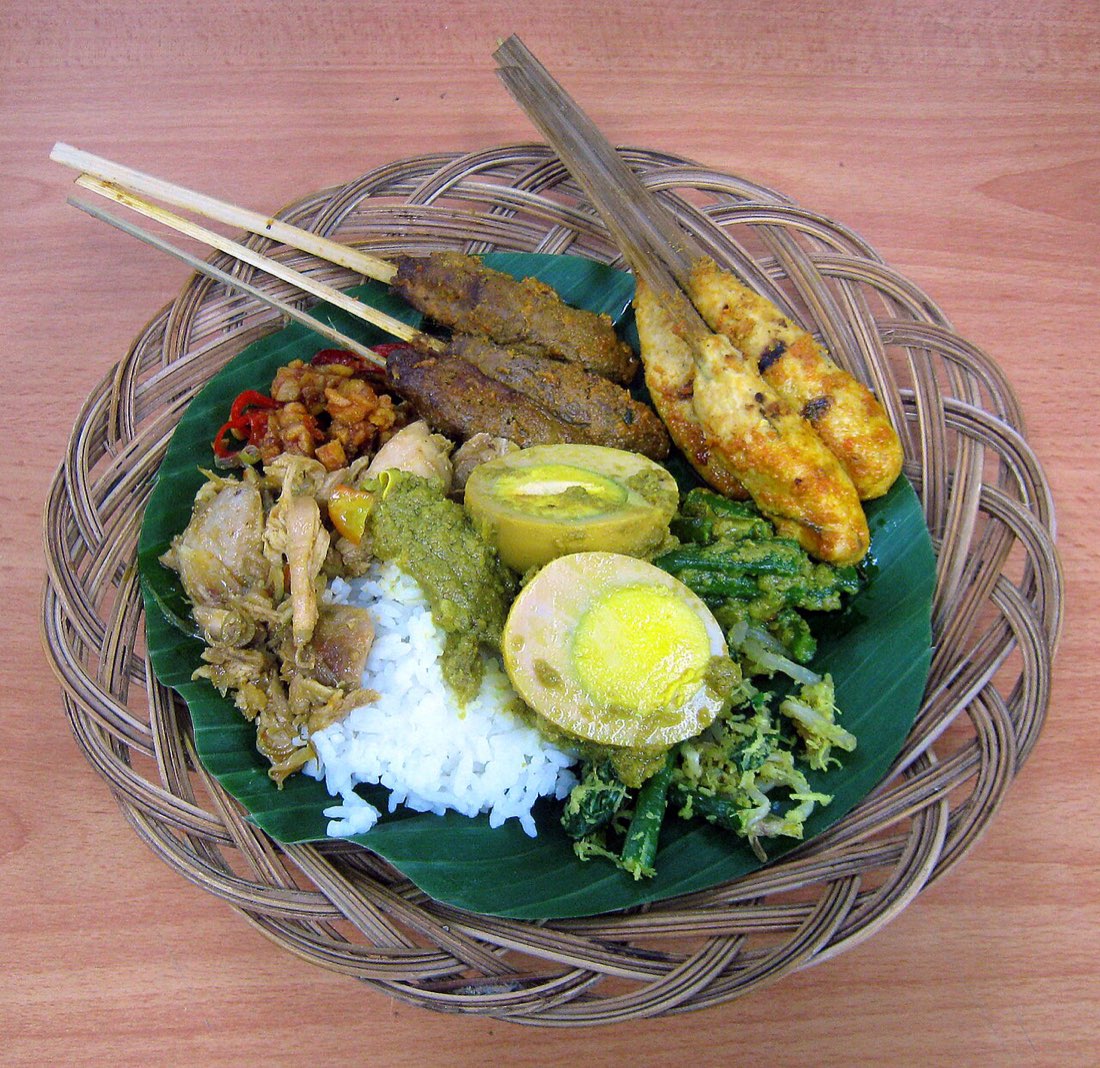 Nasi campur with sate lilit on a banana leaf. Photo: Gunawan Kartapranata / Wikimedia Commons (CC BY-SA 3.0)
Babi Guling
Babi guling, suckling pig, is the island's celebration dish. The pig is stuffed with spice paste and roasted whole until the skin crackles, then served with rice, crispy skin and sides.
Specialist warungs sell out by early afternoon, so go at lunch. Pork is more prominent here than in the rest of Muslim-majority Indonesia, because Bali is majority Hindu.
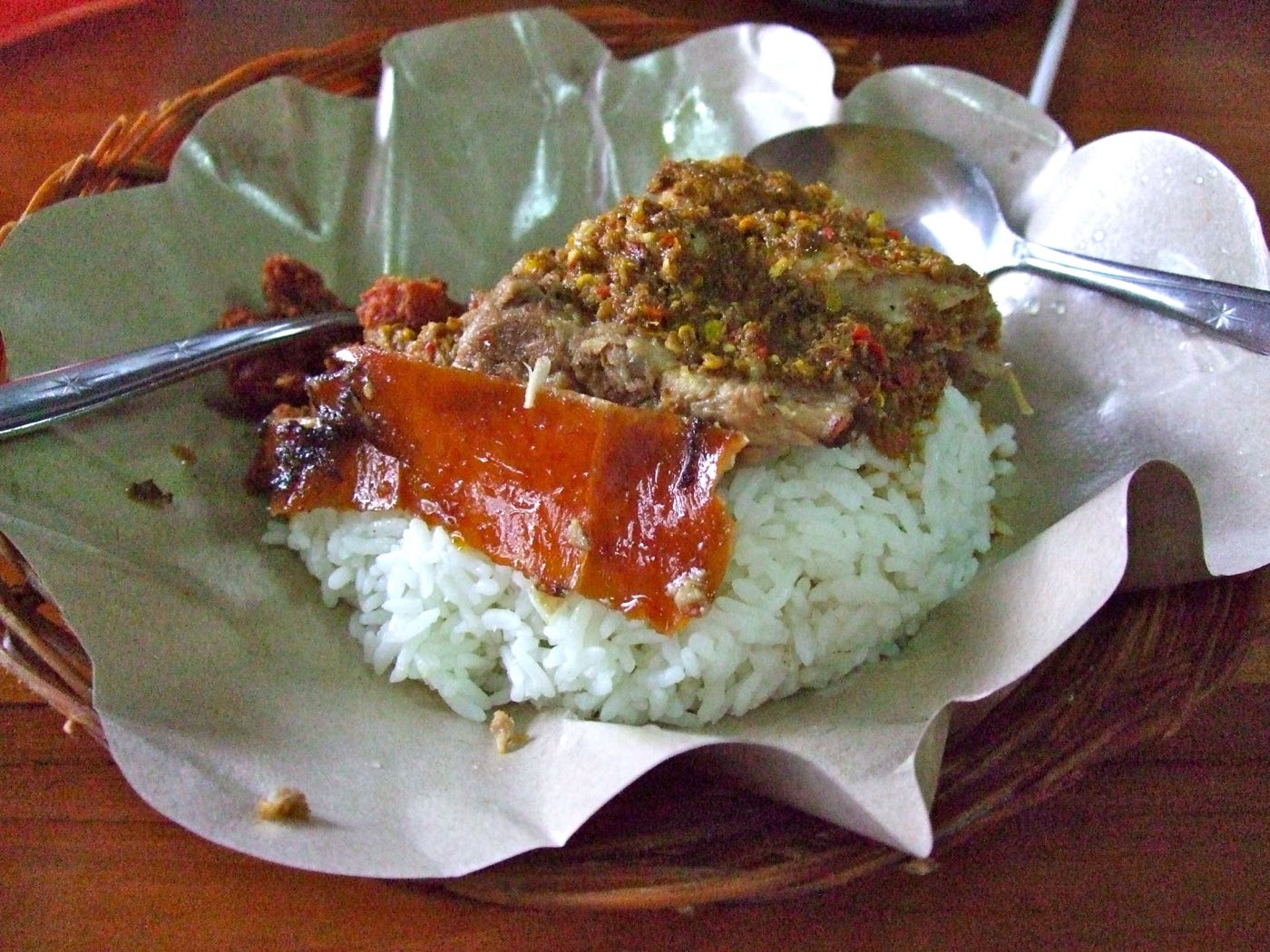 Nasi babi guling with crackling. Photo: Wei-chieh Chiu / Wikimedia Commons (CC BY-SA 2.0)
Bebek and Ayam Betutu
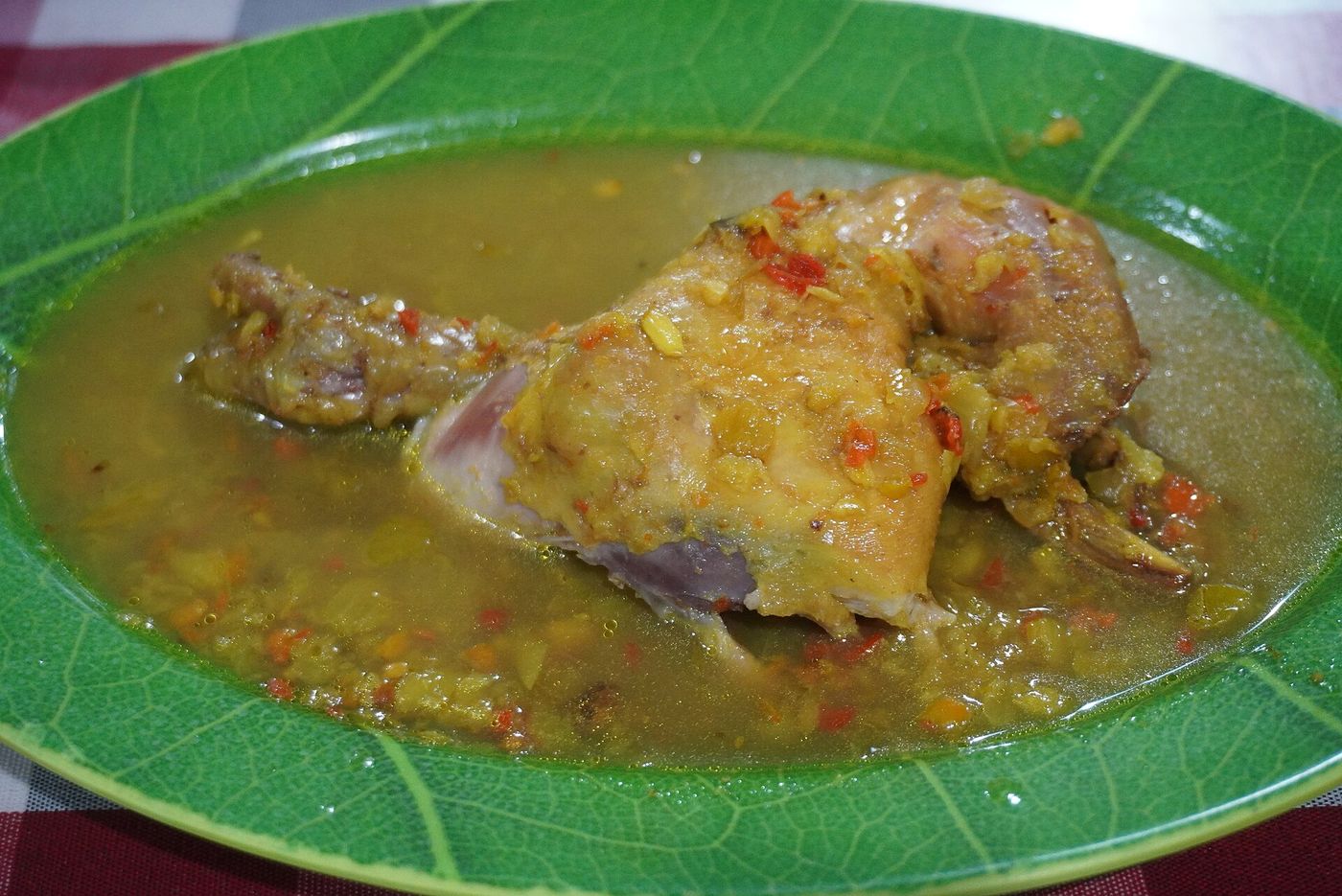
Betutu is duck (bebek) or chicken (ayam) rubbed with a dense spice paste, wrapped and slow-cooked for hours until it falls off the bone. It is a north and central Bali speciality, rich, aromatic and worth seeking out.
Sate Lilit
Sate lilit is Balinese satay, made differently from the skewered kind. Minced fish or chicken is mixed with grated coconut and spice, pressed around a flattened lemongrass or bamboo stick, and grilled. The lemongrass perfumes the meat as it cooks.
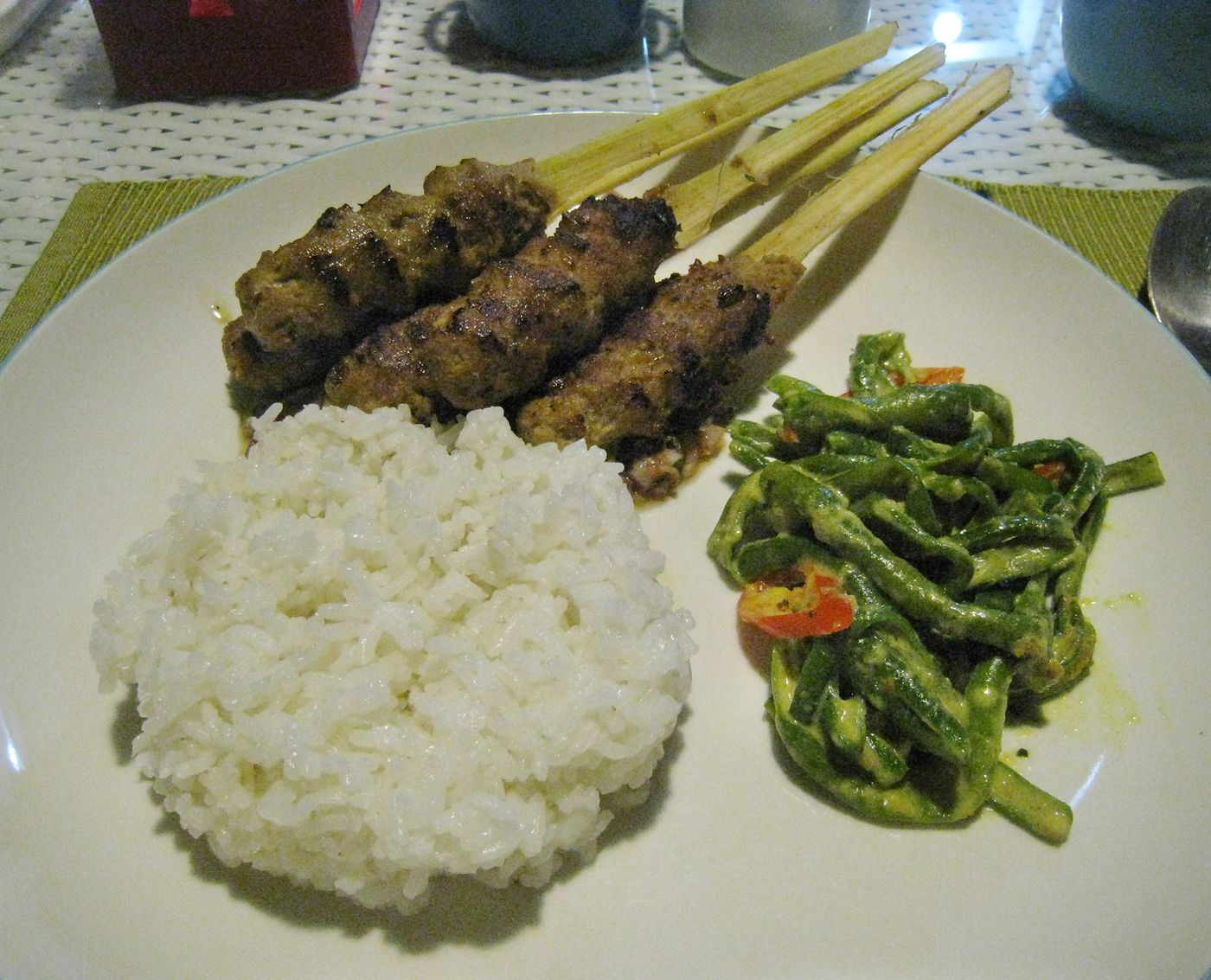 Sate lilit on lemongrass sticks. Photo: Gunawan Kartapranata / Wikimedia Commons (CC BY-SA 4.0)
Lawar
Lawar is a traditional mix of finely chopped vegetables, grated coconut and spice, sometimes with minced meat. You meet it at ceremonies and on the everyday plate alike, and it varies by region and cook.
One village version is mixed with raw meat and blood. Read lawar plek for that dish and what Bali's health authorities say about it.
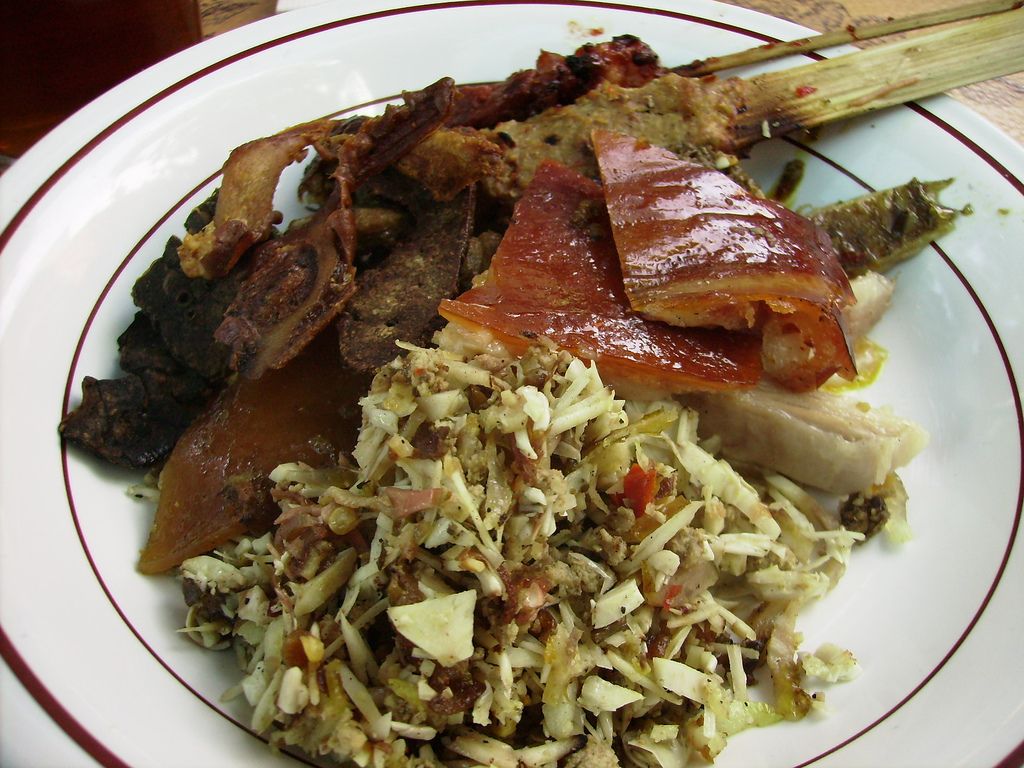 Lawar beside babi guling on a warung plate. Photo: ybs / Wikimedia Commons (CC BY 2.0)
Fresh Grilled Fish
In fishing areas such as Lovina in the north and Jimbaran in the south, the day's catch is grilled simply over coconut husk. It comes with sambal matah, a raw relish of shallot, chilli, lemongrass and lime. This is one of the island's great cheap pleasures.
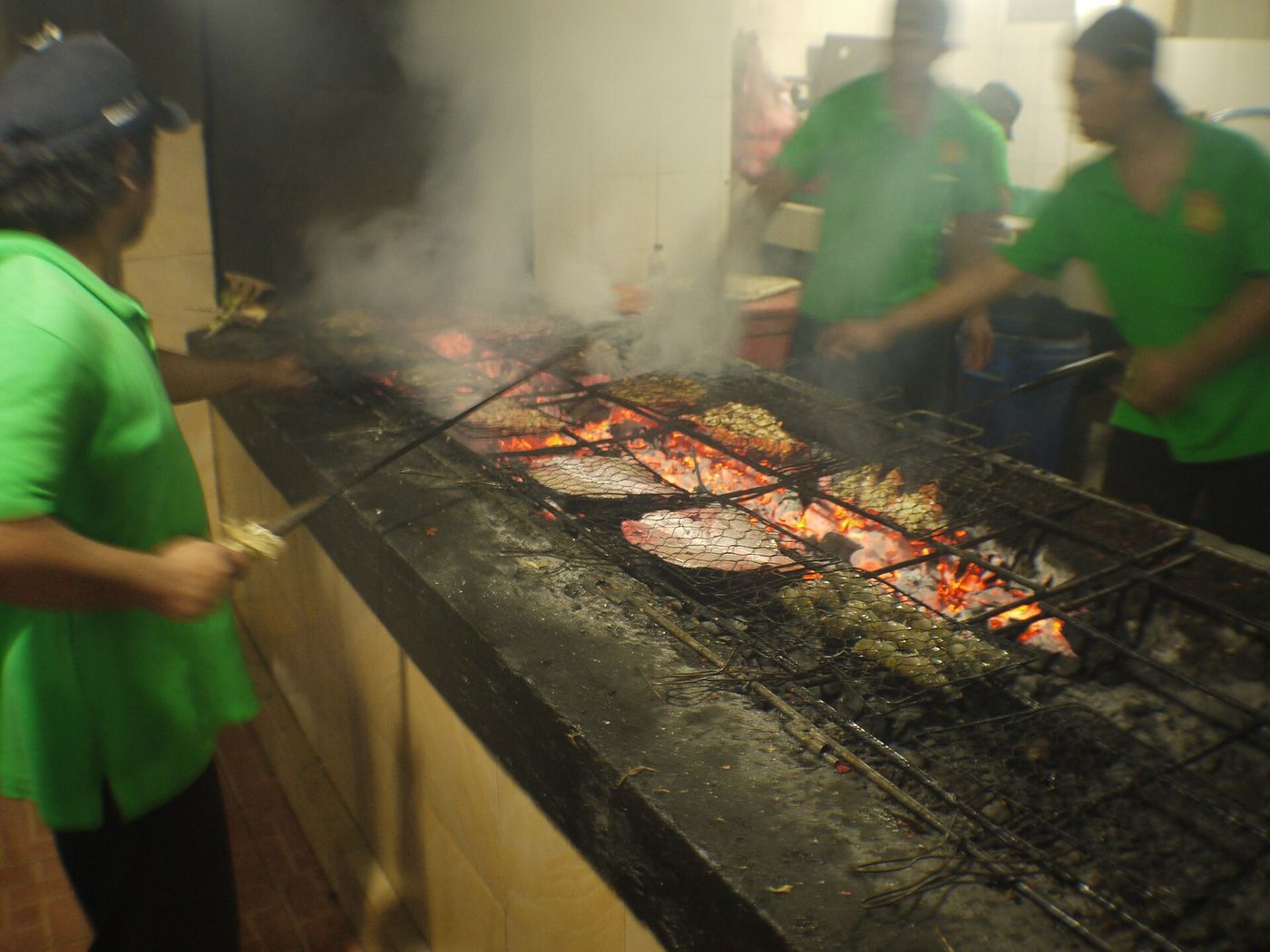 The day's catch over coals at Jimbaran. Photo: Robb1e / Wikimedia Commons (CC BY-SA 2.0)
Sambal
Sambal, the chilli relish, is the soul of the meal. It comes in many forms, from the raw sambal matah to the cooked sambal ulek, and it is often very hot. If you are unsure, ask for it on the side and build up.
Jukut Ares and the Lesser-Known Sides
Jukut ares is banana-stem soup, one of the regional dishes you mostly meet in the north and in villages. Ask a warung what is local that day.
Buleleng's Own Dishes Came Through Singaraja's Port
The north coast was long Bali's trading door. Singaraja's port brought Chinese, Bugis and Arab communities into the town, and the food shows it (the story is in the Singaraja old town guide). These are the dishes people in the north name first when you ask what is theirs.
Siobak
Siobak is Singaraja's signature plate. It is pork, meat, skin and offal, boiled for a long time until tender, cut small and served over rice. A thick, dark, sweet-leaning sauce heavy with spice goes on top. The spices named by writers in Singaraja are:
- clove
- shallot
- cinnamon
- garlic
- pepper
- palm sugar
- tauco, fermented soybean paste
A plate usually comes with pork crackling, pickles and sliced chilli (tatkala.co).
The dish is a product of the port. RRI's Singaraja station describes it as Chinese cooking technique meeting Balinese spice in a city where cultures crossed. A local saying holds that if you have not tasted siobak, you have not been to Singaraja (RRI Singaraja, tatkala.co).
No written record of its origin exists. The Chinese role in creating it survives as a story passed down in Singaraja.
Siobak travels with the people who make it. Buleleng's regency government has profiled a Singaraja-born cook who has sold siobak in Denpasar since 1985, still using tauco and spices brought from Singaraja (Pemkab Buleleng). At home, siobak has been among the heritage dishes on the curated food streets of the Buleleng Festival in Singaraja.
Sudang Lepet
Sudang lepet is Sangsit's speciality, made from blambang, flying fish brought in from the waters off Madura. The fish is cleaned, sun-dried and grilled over embers, then pounded flat and thin. The result is salty and savoury, with a crisp bite (detikBali).
Sangsit lies in Sawan district, east of Singaraja. Its carved temple, Pura Beji, draws visitors on the north Bali temple route.
Sangsit cooks fry the fish and finish it with lime juice and lengis tandusan, traditional Balinese coconut oil, with sambal matah alongside. At weddings and village events they serve it with jukut undis.
Jukut Undis
Jukut undis is the partner dish, a soup of undis, black pigeon peas. The peas cook with base genep, tamarind and bruised lemongrass, which gives the soup a distinctive dark broth. Some cooks add young jackfruit or chayote (tatkala.co). Buleleng cooks pair it with sudang lepet or pindang and hot rice.
Jaja Bali: Morning Cakes That Are Also Offerings
Jaja (or jaje) is the Balinese word for cake or snack, and jaja Bali covers the whole family of traditional sweets. They are small and cheap, built mostly from rice flour, glutinous rice, coconut and palm sugar. Traditional markets and roadside stalls sell them, and they are at their best in the morning with coffee or tea (detikBali).
Many of the same cakes are parts of banten, the ceremonial offerings. So you meet them in the market in the morning and again on offering towers on temple days (see Balinese offerings explained).
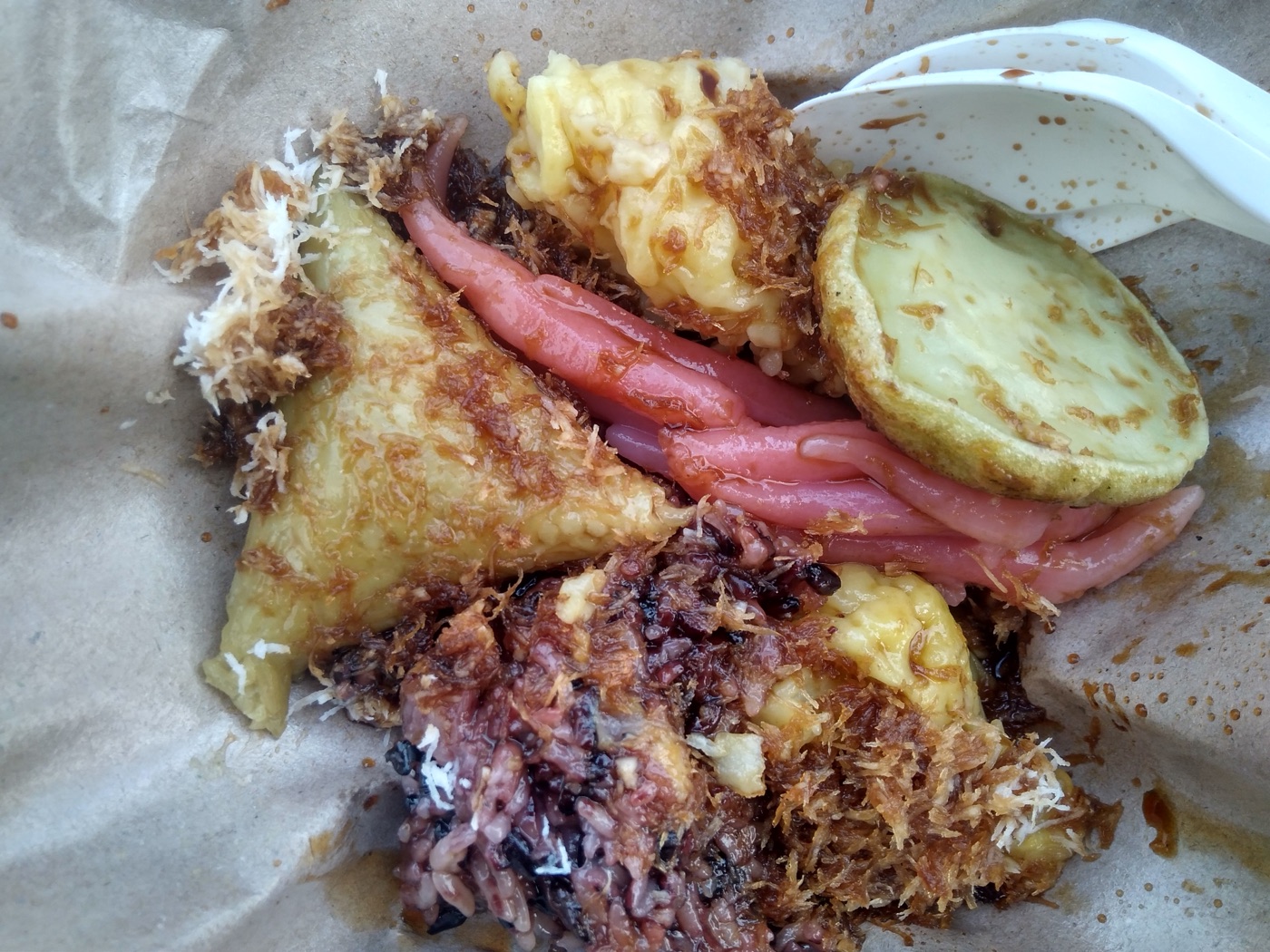 A mixed parcel of jaja Bali: laklak, pisang rai, timus, jaje giling and black sticky rice. Photo: Eny Santiati / Wikimedia Commons (CC BY-SA 4.0)
Laklak
If you learn one Balinese cake, learn this one. Laklak is a small, round rice-flour pancake, about 3 centimetres across in the provincial culture record, cooked in a covered mould with several round hollows. It is served in a row, scattered with grated coconut and soaked with melted palm sugar (Ceraken Kebudayaan Bali). It looks like the serabi of Java, only smaller.
Colour. Plain laklak is white, and the green ones traditionally take their colour from suji leaf juice. Buleleng's own culture office gives the classic batter as rice flour, water and sugar, with suji for green and coconut milk for white. It is often cooked over a wood fire for its smoky edge (Disbudpar Buleleng). Pink and black versions exist too.
Laklak kelor. A newer green laklak uses kelor (moringa) leaves, crushed for their juice, in place of or alongside suji (Sajian Sedap). Laklak kelor has been shown as a village heritage food at the Buleleng Festival in Singaraja.
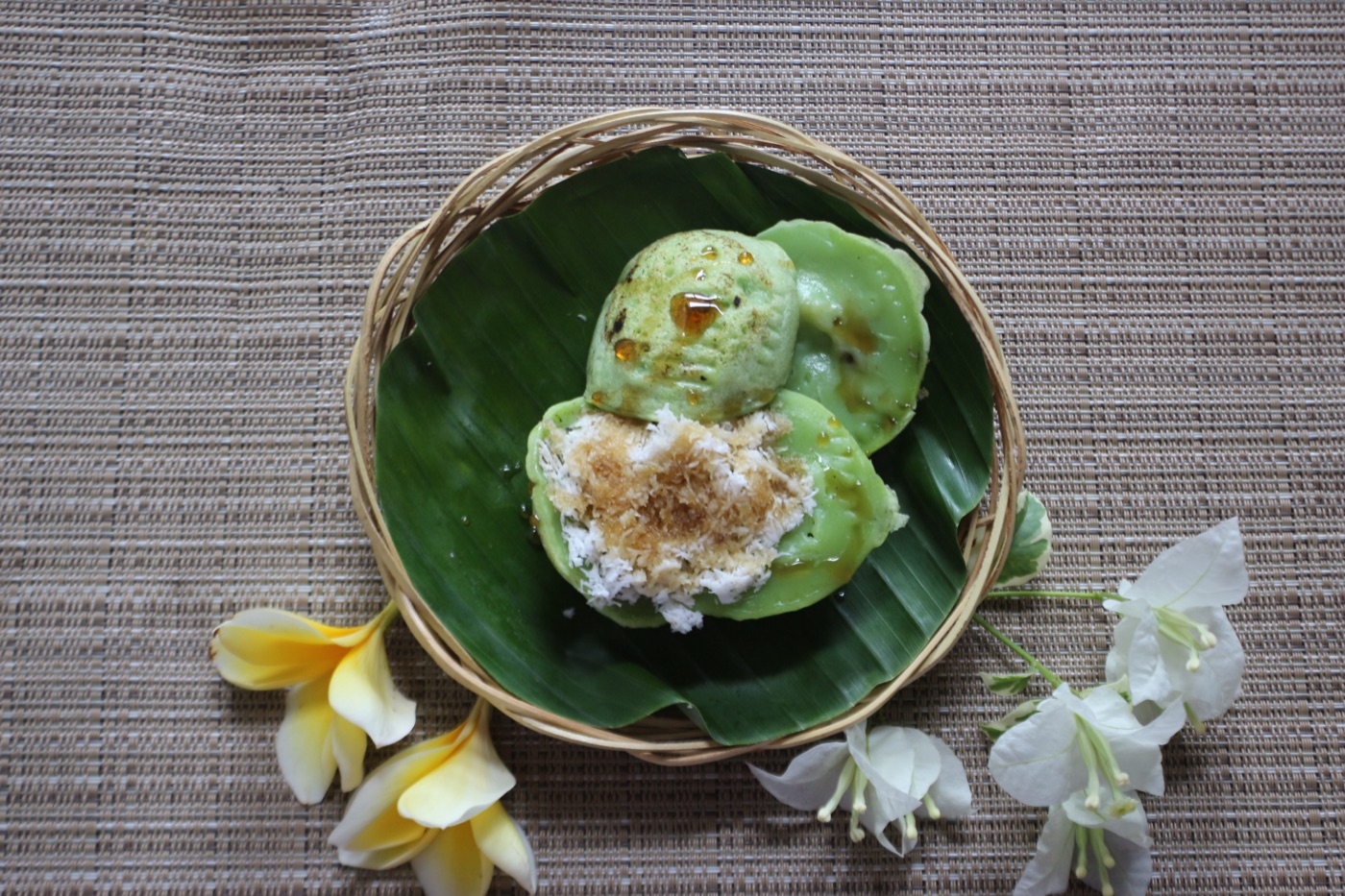 Green laklak with grated coconut and palm-sugar syrup. Photo: Joseagush / Wikimedia Commons (CC BY-SA 4.0)
A cake with a priest's story. Laklak is an offering before it is a snack. The Bali provincial culture record traces it to Dang Hyang Nirartha, the priest who came to Bali from Java around 1500. In the story recorded in the lontar Dwijendra Tatwa, his daughter asked for laklak tape as her offering when she was given power over the unseen beings. From then on, laklak entered the ritual repertoire.
Later palm-leaf manuscripts name it as a required offering in all five categories of ritual, the Panca Yadnya (Ceraken Kebudayaan Bali, Disbudpar Buleleng). The same record reads the name as a reminder not to be careless about the life to come.
The north's part in it. Laklak as a commercial snack is recent. The provincial record credits I Ketut Sutarman with laklak biu (banana laklak) in Penebel, Tabanan, in the 1980s. It credits I Gede Rena of Pancasari, in Buleleng's Sukasada district, with fruit-flavoured laklak in 1990 (Ceraken Kebudayaan Bali). Pancasari sits on the mountain road between the Bedugul lakes and the north coast, which gives fruit laklak a Buleleng connection.
Where to find it in the north. Laklak is a morning food, so it is a market errand rather than a restaurant order. Look for it early at Singaraja's traditional markets, Pasar Anyar and Pasar Banyuasri, and at roadside cake stalls.
Klepon
Klepon are small balls of glutinous-rice dough, coloured green with pandan or suji leaf and wrapped around palm sugar. They are boiled until the sugar inside melts, then rolled in grated coconut. The sugar bursts when you bite, so eat each one whole (Wikipedia).
Klepon is eaten across Indonesia, Malaysia and Singapore, and in Bali it also belongs to offerings. Balinese cooks often fill the dough with palm sugar already melted and cooked with pandan. Pinching the dough shut around the liquid gives the Balinese klepon a slightly pointed, oval shape rather than a perfect sphere (Ngiring Melali).
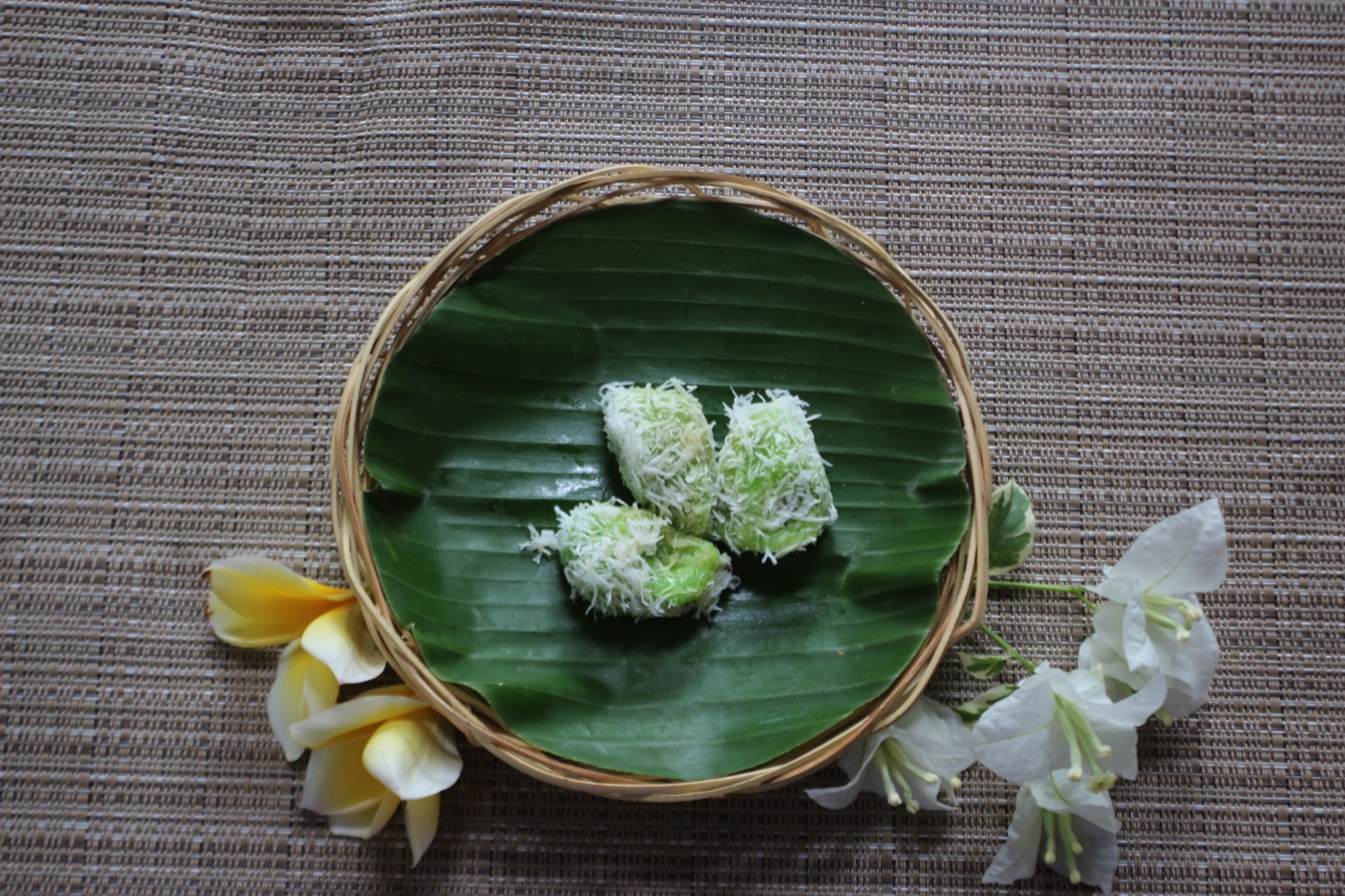 Balinese klepon, oval and rolled in coconut. Photo: Joseagush / Wikimedia Commons (CC BY-SA 4.0)
Pisang Rai
Pisang rai is banana wrapped in a coat of rice-flour dough, cooked until the coating sets. It is finished with grated coconut and, in many versions, palm sugar. It resembles nagasari and sumping, but unlike sumping it is not wrapped in banana leaf (IDN Times Bali). detikBali calls it a banana snack found only in Bali.
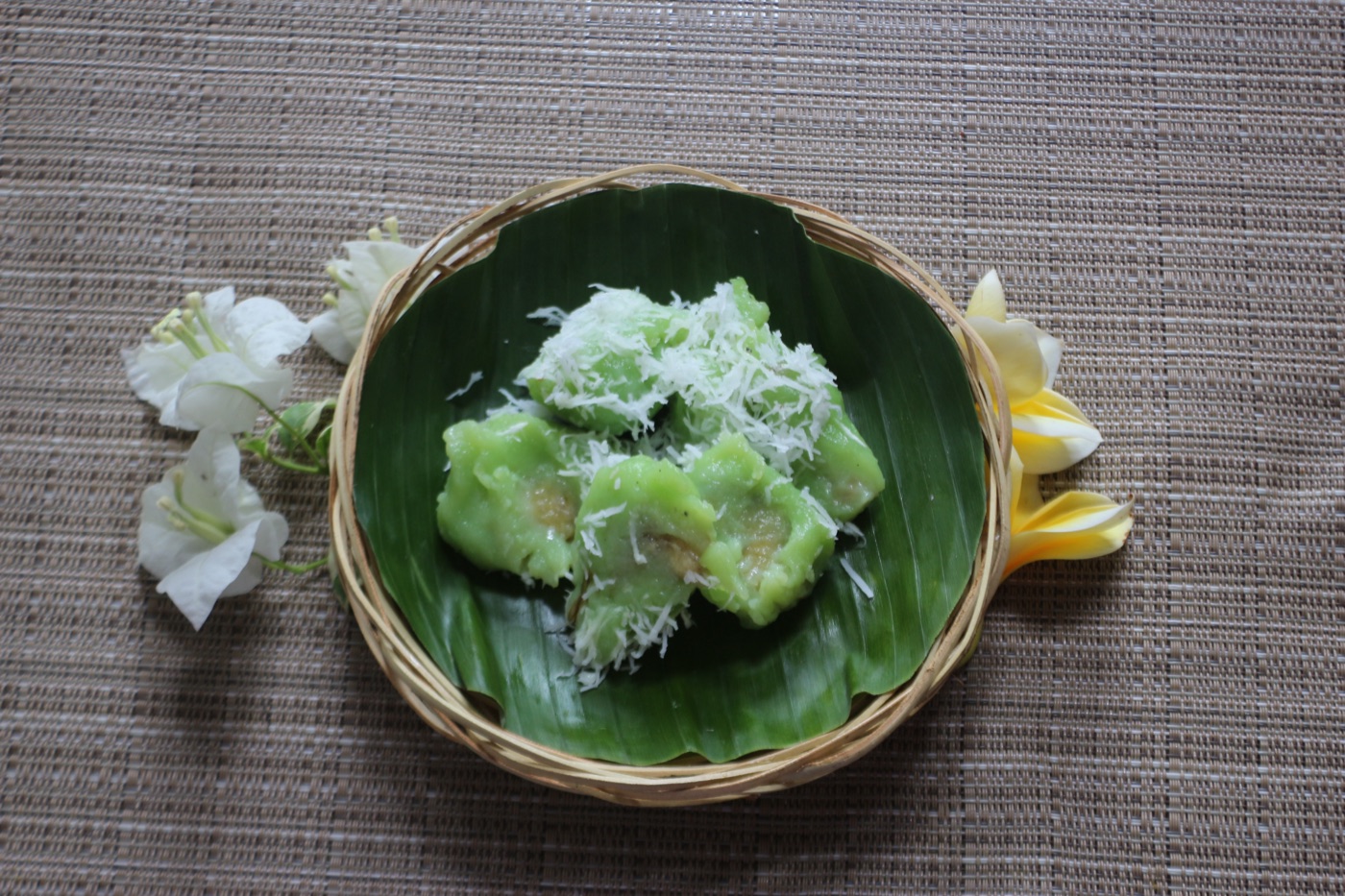 Pisang rai, banana in a rice-flour coat under grated coconut. Photo: Joseagush / Wikimedia Commons (CC BY-SA 4.0)
Jaja Uli
Jaja uli is a dense cake of steamed glutinous rice with grated coconut, pounded or kneaded until smooth and pressed into blocks. It is central to ceremony. Red and white versions are made for offerings, and families prepare it for Galungan and Kuningan.
As a snack, it usually comes with tape ketan, fermented black sticky rice (RRI Denpasar, detikBali). A fried, dried form is made for offerings as well.
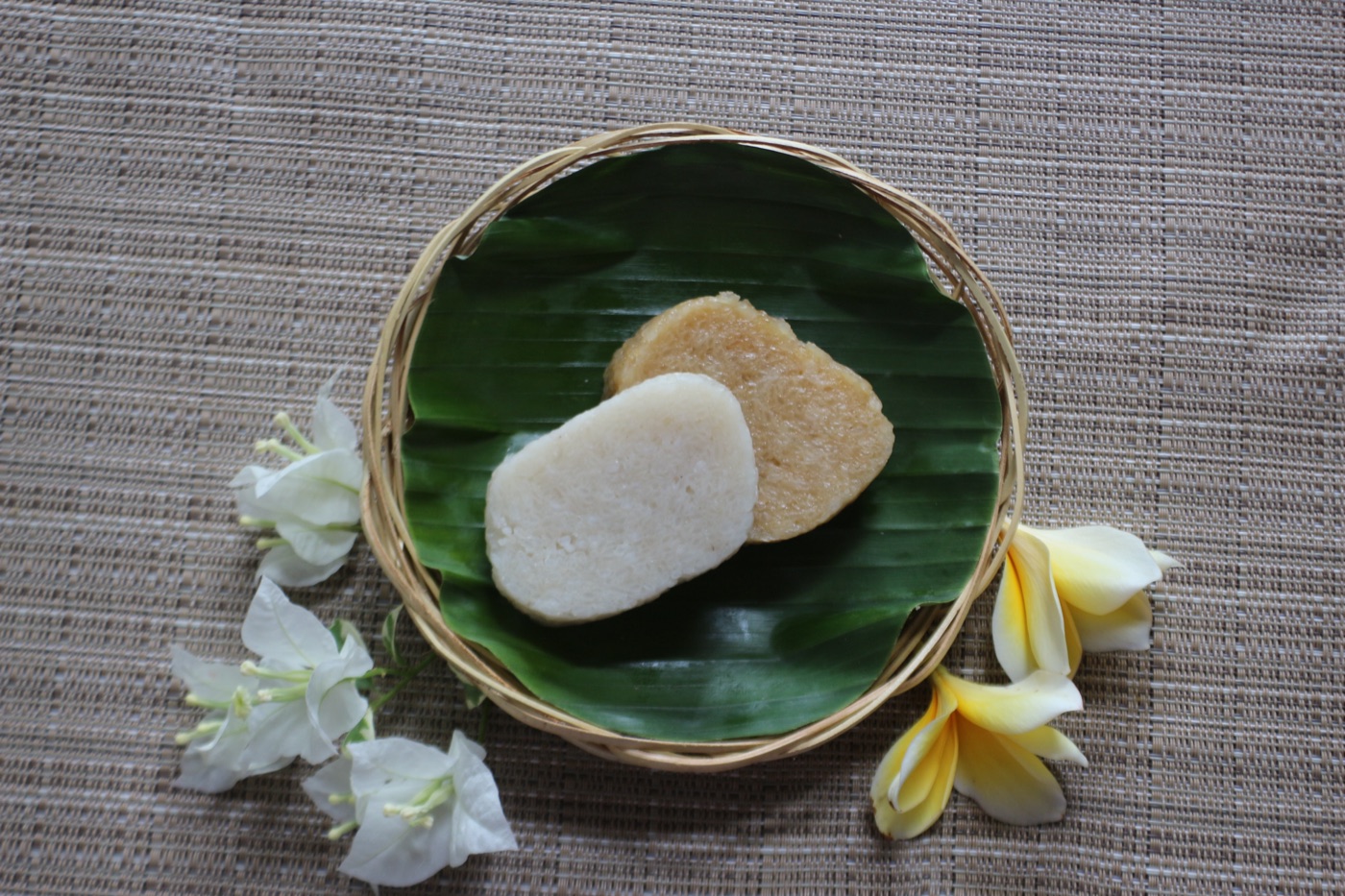 Jaja uli, the sticky-rice cake of offerings and holidays. Photo: Joseagush / Wikimedia Commons (CC BY-SA 4.0)
Five More for the Market Tray
- Jaja injin. Steamed black sticky rice, eaten with grated coconut and palm sugar stirred through.
- Jaja bantal. Sticky rice with banana and beans wrapped in young palm leaf. Its name means pillow, for the shape, and it plays a part in weddings.
- Jaja cerorot. Rice flour, coconut milk and palm sugar steamed in a cone of lontar leaf left open at the top. Push from the bottom to eat.
- Bendu. A cake of toasted rice flour around a palm-sugar filling, used in ceremonies and now harder to find.
- Sumping waluh. Steamed rice-flour cake filled with pumpkin, wrapped in banana leaf.
Sources for these: IDN Times Bali and detikBali.
Warungs Cook It, Markets Sell the Cakes
Balinese food is at home in warungs, the small family kitchens that cook for locals. To find them in the north, read best warungs in north Bali. For sit-down meals on the north coast, see best restaurants in Lovina. A Bali cooking class teaches you the dishes hands-on, with the spice paste behind them.
In the north, three kinds of place cover everything in this guide:
- Singaraja's markets for jaja Bali. Pasar Anyar in the old town and Pasar Banyuasri on the western edge, on the road toward Lovina, are both covered in the Singaraja old town guide. Go early.
- Singaraja's warungs for siobak and the old-town nasi campur kitchens.
- Sangsit, east of Singaraja, for sudang lepet and jukut undis, easily combined with a visit to Pura Beji.
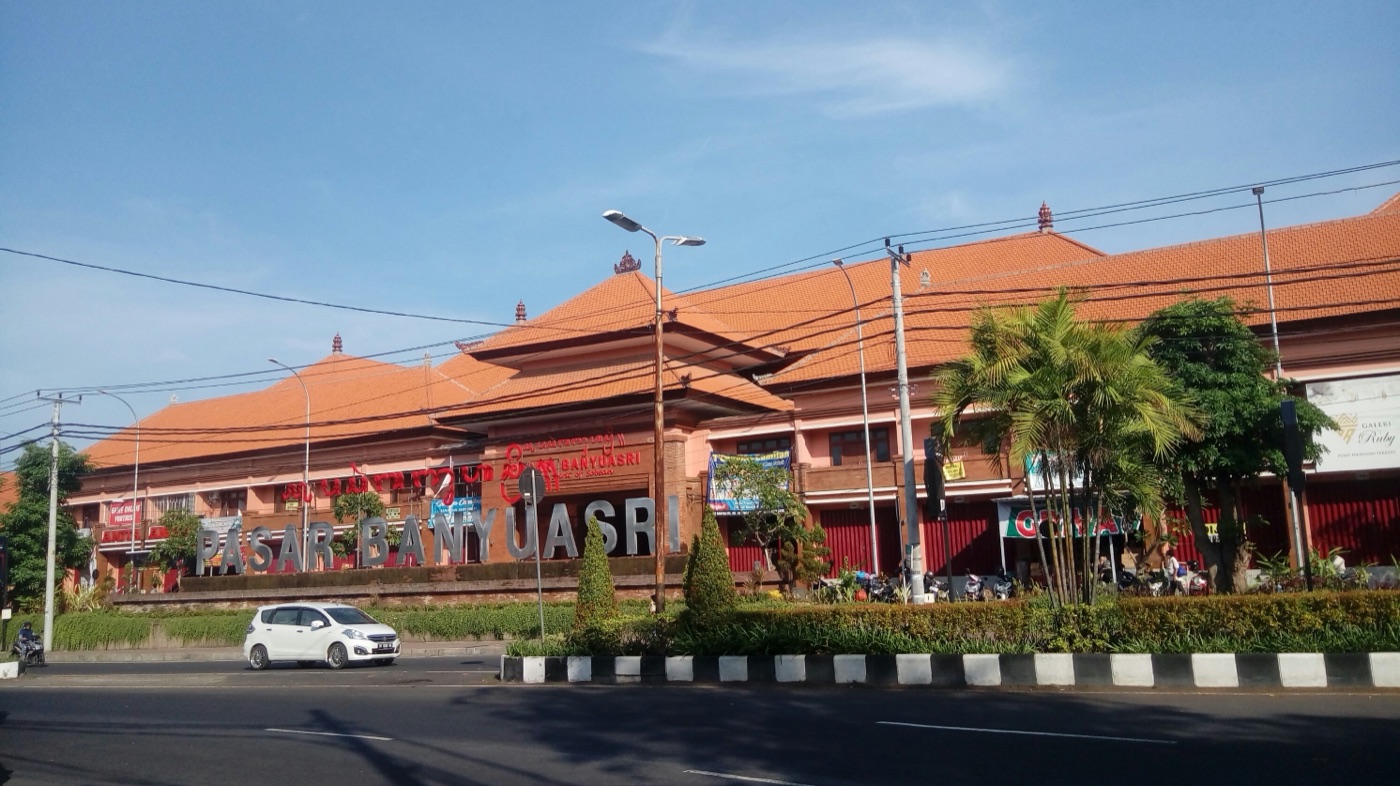 Pasar Banyuasri, one of Singaraja's traditional markets. Photo: DayakSibiriak / Wikimedia Commons (CC BY-SA 4.0)
For street-side eating after dark, see the Bali street food guide.
Taste the Sambal First and Eat Where It Is Busy
Sambal can be very hot, so taste it before you pile it on. For stomach comfort, eat where turnover is high and the food is cooked fresh, as it usually is at warungs busy with locals. Tap water is not for drinking, so stick to bottled or filtered.
Practical Notes
Warungs open, close and move. The places below come from Indonesian food reporting rather than from our own visits, so check a name is still trading before you drive across town for it.
- Jaja Bali prices. Market jaja is among the cheapest food on the island (detikBali), so a mixed tray of several kinds is the sensible order.
- Siobak in Singaraja. Tatkala.co names Warung Siobak Khe Lok, reporting that it has several branches in Bali. Map
- Sudang lepet and jukut undis in Singaraja. Tatkala.co names a warung called Sudang Lepet Jukut Undis on Jalan Pulau Komodo, Banyuning. Map
- Sudang lepet in Sangsit. detikBali interviewed the seller at Warung Sari Mina Ayu on Jalan Raya Sangsit Beji, who sells the dried flying fish by the pack. Map
- Old-town nasi campur. Tatkala.co describes Warung Bik Juk in Kampung Kajanan as a Singaraja institution running since the 1970s. It keeps daytime hours. Map
- Laklak in the morning. Jaja Bali is breakfast food, so shop for it early or not at all.
- Vegetarians can eat almost all jaja Bali, which are made from rice, coconut, palm sugar and fruit, but check sudang lepet and siobak plates, which are fish and pork. Vegan and vegetarian food in Bali covers the rest.
FAQ
What food is Bali known for? Nasi campur, babi guling (suckling pig), betutu (slow-cooked duck or chicken), sate lilit, lawar, and fresh grilled fish on the coast, all built on the fresh spice paste called base genep.
What is the national dish of Bali? There is no single official dish. Babi guling and nasi campur are among the most emblematic, and betutu is the great celebration dish.
Is Balinese food spicy? It can be. The food is aromatic rather than simply hot, but sambal, the chilli relish served alongside, is often very spicy. Ask for it on the side if you are sensitive.
Why is there so much pork in Bali? Bali is majority Hindu rather than Muslim, so pork, especially babi guling, is central to the cuisine in a way it is not across most of Indonesia.
Where is the best place to eat Balinese food? Warungs, the small family-run eateries that cook for locals at local prices. See the north Bali warung guide for how to find the good ones.
What should vegetarians eat in Bali? Plenty. Tempeh, tofu, gado-gado, urap (spiced vegetables and coconut), and nasi campur sayur (vegetable version) are widely available. See the Bali vegan and vegetarian guide for more.
Is street food safe in Bali? Generally, if you eat where it is busy and freshly cooked. Stick to hot, made-to-order food, and drink bottled or filtered water rather than tap.
What is laklak? Laklak is a small traditional Balinese rice-flour pancake, white or green, served with grated coconut and melted palm sugar. It is also a ritual offering, traced in Balinese tradition to the priest Dang Hyang Nirartha, and a common morning snack at traditional markets.
What is the green colour in laklak and klepon? Leaf juice. Suji and pandan leaves give the traditional green, and some laklak now uses kelor (moringa) leaves instead.
What is jaja Bali? Jaja Bali is the family of traditional Balinese cakes and snacks, including laklak, klepon, pisang rai, jaja uli, jaja injin and jaja bantal. Most are made from rice flour or glutinous rice with coconut and palm sugar, sold at markets in the morning, and many are also used in offerings.
What food is Singaraja known for? Siobak, pork boiled until tender and served over rice with a dark, spiced, sweet-leaning sauce, a dish born from the port city's Chinese and Balinese communities. Nearby Sangsit is known for sudang lepet, pounded dried flying fish, eaten with jukut undis, a black pigeon-pea soup.
Sources
- Bali Provincial Government, Ceraken Kebudayaan Bali, Jaja Laklak, for the Dwijendra Tatwa account and the modern laklak makers, read September 2026 (in Indonesian)
- Buleleng Culture and Tourism Office, Asal mula jaja laklak, read September 2026 (in Indonesian)
- Buleleng Regency, profile of a Singaraja siobak cook selling in Denpasar, read September 2026 (in Indonesian)
- RRI Singaraja, Siobak, the north Bali speciality, read September 2026 (in Indonesian)
- RRI Denpasar, Jaje uli as a ceremonial accompaniment, read September 2026 (in Indonesian)
- detikBali, Sudang lepet, the Buleleng dish made from flying fish, eight Balinese market snacks and jaja uli at Galungan, read September 2026 (in Indonesian)
- Tatkala.co, Mengenal Singaraja melalui kulinernya, the source for the Singaraja warung names above, read September 2026 (in Indonesian)
- IDN Times Bali, traditional Balinese cakes for breakfast, read September 2026 (in Indonesian)
- Sajian Sedap, jaje laklak, for laklak kelor, read September 2026 (in Indonesian)
- Ngiring Melali, six traditional Balinese market snacks, read September 2026 (in Indonesian)
- Wikipedia, Klepon, read September 2026 (in English)
Next: the best warungs in north Bali, Bali street food, and the drinks of north Bali.