On this page
- In Brief
- Hak Pakai at a Glance
- Hak Pakai Is a Registered Right to Use Land, Held in Your Name
- Who Can Hold Hak Pakai: A Foreigner With an Immigration Document
- What Hak Pakai Lets You Own: One Home to Live In
- Bali Sets a Minimum Price for a Foreigner's House
- How Hak Pakai Is Granted and Registered at the Land Office
- The Term Runs Up to 30 Years, and the Next Step Has a Deadline
- When You Leave Indonesia, You Have One Year to Sell or Transfer
- Hak Pakai, Hak Sewa or a PT PMA: One Plain Comparison
- Practical Notes
- FAQ
- Sources
In Brief
Hak Pakai is a right of use over land, and it is the title through which a foreigner can own a home in Bali in their own name. It is granted over state land by the land authority, or over an Indonesian owner's freehold by a deed made before a land deed official (PPAT). The land office registers it and issues a certificate to you.
In Bali, a house bought this way must meet a minimum price set by decree and stand on one plot of up to 2,000 square metres. Apartment units have their own, lower floor. The home is for living in.
The right follows your immigration status. If you leave Indonesia for good, you have a year to sell it or pass it to someone who qualifies.
A guide, not legal advice. Rules differ by area and change by decree, so check your own case with a notary or lawyer who knows Indonesian property law. Arranged the right way, owning a home in Bali as a foreigner is safe. For current information, talk to Palm Living's team on WhatsApp. They have worked with buyers and land owners in north Bali for over 24 years.
Hak Pakai at a Glance
- What it is: A registered right to use land for a set term, with a land certificate in your name
- Who can hold it: A foreigner with an Indonesian immigration document, and others the law lists, such as Indonesian citizens
- What it buys: One house to live in, or an apartment unit
- Bali's minimum price: set by ministerial decree in 2022, see the figures below
- Plot limits: One plot per person or family, up to 2,000 square metres, unless the minister allows more
- First term: Up to 30 years, then extended or renewed
- Where it is registered: The land office (Kantor Pertanahan) of the regency, in north Bali the Buleleng office
- If you leave Indonesia: One year to sell or transfer it
Hak Pakai Is a Registered Right to Use Land, Held in Your Name
Hak Pakai is one of the land rights set out in Indonesia's land law.
Government Regulation 18 of 2021 (PP 18/2021) divides it in two. One kind runs for a fixed term, and the other lasts for as long as the land is used. The second kind is reserved for government bodies, village governments, and foreign and international missions. A private foreigner holds the first kind.
Hukumonline, the Indonesian law publisher, describes the right as a right to use land owned by the State or by someone else. It notes the agreement behind it is not a rental contract.
Three kinds of land can carry a Hak Pakai with a term:
- state land, granted by decision of the land authority
- freehold (Hak Milik), granted by the owner in a PPAT deed
- land under a management right (Hak Pengelolaan), with the consent of the body holding it
The right is an asset you can use. Under Article 60 of PP 18/2021 it can secure a loan, be sold or be given up. A 2022 ministerial decree on homes for foreigners adds that the home can pass to qualifying heirs.
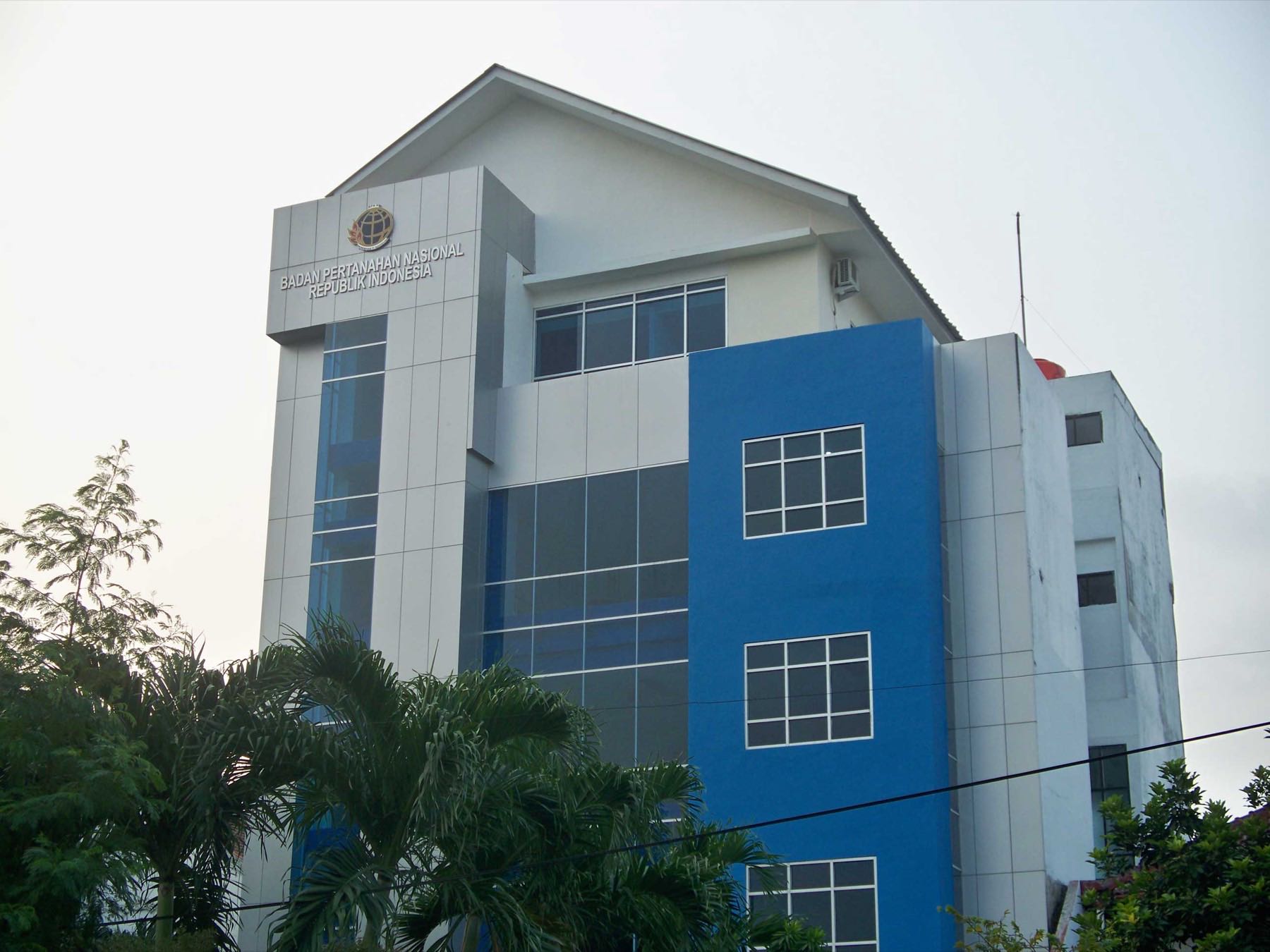 A building of the national land agency, Badan Pertanahan Nasional (BPN), in central Jakarta, photographed in 2012. Photo: Akhmad Fauzi / Wikimedia Commons (CC BY 3.0)
Who Can Hold Hak Pakai: A Foreigner With an Immigration Document
PP 18/2021 lets a foreigner own a home if they hold an immigration document "in line with the law" (Article 69).
The regulation's own explanation defines that document as a visa, a passport or a stay permit. The land ministry's implementing regulation of 2021 (Permen ATR/BPN 18/2021) repeats the same three in its list of what a foreign applicant files (Article 114).
Sources read this differently. The Hukumonline report names the stay permit cards, KITAS and KITAP, among the requirements. Ask your PPAT which document the land office will accept for your purchase before you sign.
A stay permit comes with a long-stay visa. The second home visa for Bali is one, and retiring in north Bali covers the retirement versions.
The law also lists other holders of Hak Pakai with a term. These are Indonesian citizens, Indonesian companies, religious and social bodies, and foreign companies with a representative office in Indonesia.
What Hak Pakai Lets You Own: One Home to Live In
The rules tie a foreigner's Hak Pakai to a home.
Article 71 of PP 18/2021 lists the two kinds a foreigner can own. One is a house standing on its own land (rumah tapak). The other is a unit in an apartment building (rumah susun), held as strata ownership.
Article 186 of Permen ATR/BPN 18/2021 sets the limits for a house:
- it falls in the category of a luxury house
- one plot per person or family
- a plot of no more than 2,000 square metres
The minister can allow more than one plot, or a larger one, where it brings a positive economic and social effect. Foreign embassies and international bodies are exempt from the limits.
If the house you buy stands on freehold or on a right to build (Hak Guna Bangunan), the title is changed to Hak Pakai on transfer (Article 187).
The land comes with duties in PP 18/2021. You build on or use it for its stated purpose within two years of the grant (Article 57). You keep public access and water channels open (Article 58).
Bali Sets a Minimum Price for a Foreigner's House
The price floor comes from Decree 1241/SK-HK.02/IX/2022, signed by the land minister on 12 September 2022. The ministry's legal database lists it as in force.
It sets a minimum price by province, for new and resale homes alike. For Bali, the decree sets Rp5 billion for a house and Rp2 billion for an apartment unit. Jakarta, Banten and the provinces of Java share Bali's floor for a house. For members of the Indonesian diaspora, the floor is 75% of these figures.
Kompas reported the Bali figures in 2023, from the same decree. Homes a foreigner bought before the decree follow the rules that applied then.
A decree can be replaced. Check the current one in the ministry's legal database before you agree a price.
How Hak Pakai Is Granted and Registered at the Land Office
Registration at the land office is what creates the right.
Under Article 54 of PP 18/2021, a Hak Pakai exists from the day the land office (Kantor Pertanahan) registers it. A Hak Pakai over freehold binds third parties from that day too. The holder then receives a land certificate as proof.
The route depends on the land under the house:
-
Over an owner's freehold. The owner grants the right in a deed before a PPAT. The land office registers it on the strength of that deed, with no land inspection (Permen ATR/BPN 18/2021, Articles 116 and 117).
-
Over state land. You apply to the land office with your identity, your immigration document and the papers for the land. Officers inspect the land. The head of the land office, the regional office or the minister then decides, each within their own authority.
-
On land under a management right. The holder of the management right agrees first. The land minister then grants the right by decision.
Decisions and PPAT deeds can now be made electronically (PP 18/2021, Article 53). In north Bali the office is the Buleleng land office.
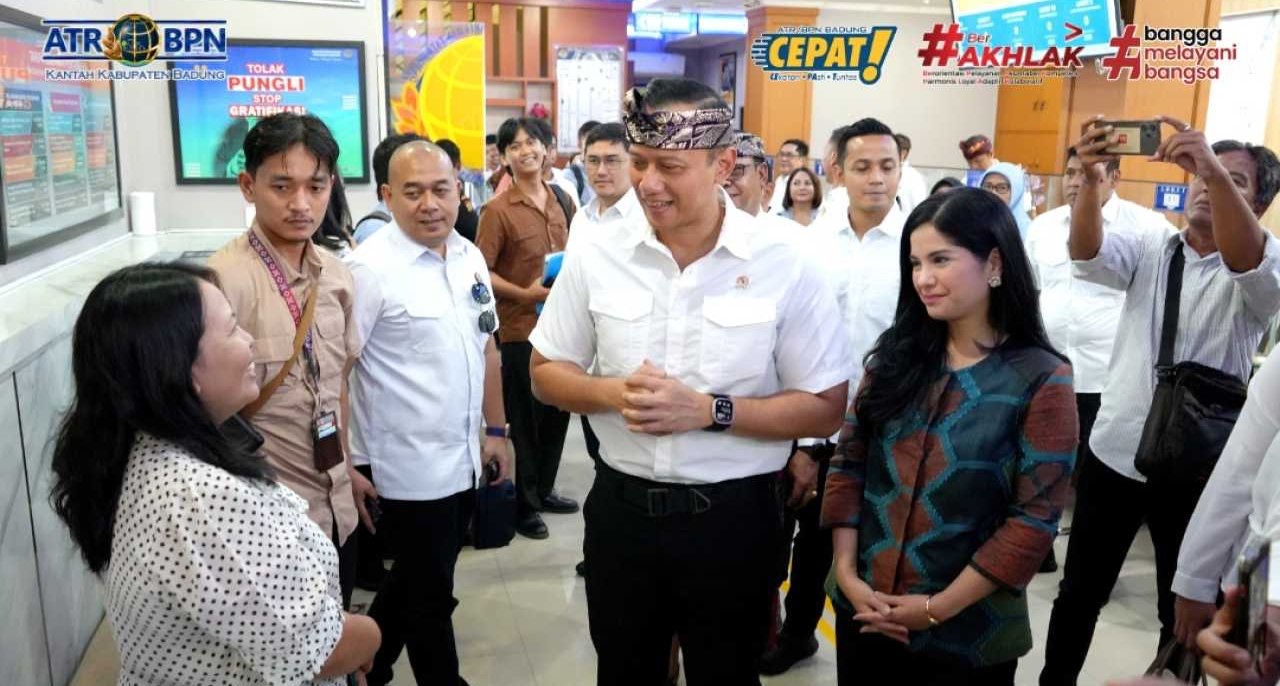 The service hall of the Badung land office in south Bali, during a visit by the land minister, Agus Harimurti Yudhoyono, in June 2024. The logos are from the office's own post. Photo: Badung Land Office / Wikimedia Commons (Public domain)
The Term Runs Up to 30 Years, and the Next Step Has a Deadline
The first grant runs for up to 30 years. What follows depends on the land.
On state land, you apply to extend the right once the land is in use for its purpose, and before the term ends (Article 56). A renewal can be requested up to two years after expiry. The land office checks five things under Article 55:
- the land is still used well for its purpose
- you met the conditions of the grant
- you still qualify as a holder
- the land still fits the spatial plan
- the land is not needed for public works
On an owner's freehold, the right is renewed by a new PPAT deed, if you and the owner agree (Article 55). Agree the renewal terms with the owner when you buy, and write them into the first deed.
At the very end, the land goes back to the State, to the management-right holder or to the freehold owner (Articles 52 and 62).
When You Leave Indonesia, You Have One Year to Sell or Transfer
Your right depends on staying a qualifying holder.
A 2016 regulation of the Minister of Law and Human Rights, Permenkumham 23/2016, covers this case. A foreign owner who leaves Indonesia and is no longer domiciled here has one year to act (Article 2). Within it, they release the house and land or transfer them to a qualifying person. The year counts from the exit stamp in your passport. The same applies to a foreign heir (Article 3).
That regulation was made under PP 103 of 2015, which PP 18/2021 replaced. Article 102 of PP 18/2021 keeps such rules in force where they do not conflict with it, and the government database lists Permenkumham 23/2016 as in force.
PP 18/2021 gives the same one-year window to any holder who no longer qualifies (Article 50). If the right is not transferred in time, it ends by law. On freehold land, the land returns to the owner.
Keep your immigration papers current. If you plan to leave for good, start the sale well inside the year.
Hak Pakai, Hak Sewa or a PT PMA: One Plain Comparison
Each route suits a different buyer.
| Hak Pakai | Hak Sewa (lease) | PT PMA with Hak Guna Bangunan | |
|---|---|---|---|
| Held by | You, with an immigration document | You, as a foreigner living in Indonesia | Your Indonesian company |
| Made for | A home to live in | Using an owner's land to build on, for rent | A business |
| Your proof | A land certificate in your name | The lease deed with the owner | A land certificate in the company's name |
| Term | Up to 30 years, then extension or renewal | What the deed says | Up to 30 years, extendable by 20, renewable by 30 |
| Main condition | Bali's minimum price for a house | Terms agreed with the owner | Company licences and reporting |
The lease rules sit in Articles 44 and 45 of the Basic Agrarian Law of 1960. The right to build for companies sits in Articles 34 to 39 of PP 18/2021.
- Living in Bali yourself, on a stay permit: Hak Pakai gives you a certificate in your own name.
- A holiday base, or a house below Bali's minimum price: a lease, as set out in leasehold vs freehold in Bali.
- A villa run for rental income: a PT PMA, as explained in property ownership in Bali.
The one shortcut to avoid is a nominee holding freehold for you. Article 26 of the land law voids that arrangement, and the money paid cannot be claimed back.
Practical Notes
- Choose your own PPAT. The deed that creates a Hak Pakai over freehold is made before a land deed official.
- Ask which immigration document will be accepted. Bring your passport and your stay permit to the first meeting.
- Check the price against the floor set by the 2022 decree, unless your notary confirms a newer rule.
- Count the plot. One plot per person or family, up to 2,000 square metres.
- Note the expiry date. Extension is applied for before the term ends.
- Building a house on the plot? Building a villa in north Bali covers the permits.
Palm Living lists villas for sale in north Bali. Take the title of any listing to your own PPAT before you pay.
Palm Living's team has worked with buyers and land owners in north Bali for over 24 years, and can give you current information.
FAQ
What is Hak Pakai? Hak Pakai is a right of use over land, registered at the land office with a certificate. It is the title under which a foreigner can own a house or an apartment unit in Indonesia in their own name. It can be granted over state land, over an owner's freehold by PPAT deed, or over land under a management right.
Can a foreign investor hold Hak Pakai? A foreign individual holds Hak Pakai for a home to live in, within limits on price, plot size and number of plots. A foreign company with a representative office in Indonesia is also among the listed holders. A villa run as a rental business usually goes through a PT PMA, which holds Hak Guna Bangunan.
How long does Hak Pakai last in Bali? The first grant runs for up to 30 years. On state land it can be extended by up to 20 years and renewed by up to 30. On freehold land it is renewed by a new PPAT deed, if the owner agrees.
What is the minimum price for a foreigner's house in Bali? The land ministry's Decree 1241/SK-HK.02/IX/2022 sets it, and the minimum price section gives the Bali figures. Check the decree is still current before you agree a price.
Can Hak Pakai be sold or inherited? Yes. PP 18/2021 lets a Hak Pakai with a term be sold, transferred or used as security for a loan. The home can pass to heirs, and a foreign heir needs an immigration document of their own.
What happens to Hak Pakai if I leave Indonesia? You have one year from the exit stamp to sell the house and land or transfer them to a qualifying person. If the right is not transferred in time, it ends by law and the land returns to its owner or the State.
Is Hak Pakai the same as leasehold? No. Hak Pakai is a land right registered in your name with its own certificate. A lease (Hak Sewa) is a contract to use an owner's land for rent, on the terms in the deed.
Sources
- JDIH BPK, Government Regulation No. 18 of 2021 on Management Rights, Land Rights, Apartment Units and Land Registration, Articles 34 to 39, 49 to 62, 69 to 73 and 102, with the elucidation of Article 69, read October 2026 (in Indonesian)
- JDIH Ministry of Agrarian Affairs and Spatial Planning/BPN, Ministerial Regulation No. 18 of 2021 on Procedures for Management Rights and Land Rights, Articles 111 to 118 and 185 to 188, read October 2026 (in Indonesian)
- JDIH Ministry of Agrarian Affairs and Spatial Planning/BPN, Decree No. 1241/SK-HK.02/IX/2022 on the Acquisition and Price of Homes for Foreigners, and the cluster of rules on land rights for foreigners with their status, read October 2026 (in Indonesian)
- JDIH BPK, Permenkumham No. 23 of 2016 on Foreign Home Owners or Foreign Heirs No Longer Domiciled in Indonesia, Articles 2 to 4, status in force, read October 2026 (in Indonesian)
- JDIH BPK, Law No. 5 of 1960 on Basic Agrarian Principles, Articles 44 and 45, read October 2026 (in Indonesian)
- Kompas.com, WNA Bisa Beli Rumah di Bali, Sekian Harga Minimalnya (Rp5 billion for a house and Rp2 billion for an apartment in Bali), 30 June 2023, read October 2026 (in Indonesian)
- Hukumonline, Memahami Aturan Main Kepemilikan Hak atas Tanah bagi Warga Asing (what Hak Pakai is, KITAS and KITAP among the requirements), June 2021, read October 2026 (in Indonesian)
- Kantor Pertanahan Kabupaten Buleleng, official website, read October 2026 (in Indonesian)
Read next: leasehold vs freehold in Bali, the second home visa for Bali and land prices in north Bali.