On this page
- In Brief
- Retiring in North Bali at a Glance
- Indonesia Has Two Retirement Visas, E33E and E33F
- A Retirement Permit Brings Tax Duties and Ends the Tourist Levy
- Choose Where to Live by the Drive to Singaraja
- Rent by the Year First, Then Decide Whether to Buy
- Set Up Your Healthcare in Singaraja Before You Need It
- Daily Life Runs on the Village, the Banjar and the Road
- Practical Notes: Your First Year, Step by Step
- FAQ
- Sources
In Brief
To retire in north Bali, you start with the right to stay. Indonesia's immigration directorate lists two retirement visas: E33E, for up to five years at 55 or over, and E33F, for one year with a sponsor.
On this coast a yearly lease is the usual way into a house. Renting first lets you learn the area before you decide whether to buy. A foreigner can lease land or own a home on a right of use, Hak Pakai, while freehold stays with Indonesian citizens.
Singaraja is the main medical centre of the north, and its public hospital runs a geriatric clinic. Serious cases go south to Denpasar, so keep private insurance that covers medical evacuation.
Retiring in North Bali at a Glance
- The visa: E33E (55 or over, up to five years, no sponsor) or E33F (one year, with a sponsor), both through the official eVisa portal
- Your immigration office: Kantor Imigrasi Singaraja, which serves Buleleng, Jembrana and Karangasem
- Where long-stayers live: mostly Lovina and its hills, also Munduk and the Pemuteran area
- A home: rent by the year first, and to buy, a lease or Hak Pakai
- Healthcare: Singaraja's hospitals, including a geriatric clinic, and Bali's referral hospital in Denpasar
- Insurance: private cover that includes medical evacuation
- Tax: a retirement permit holder can count as an Indonesian tax resident
- Tourist levy: KITAS and KITAP holders are exempt
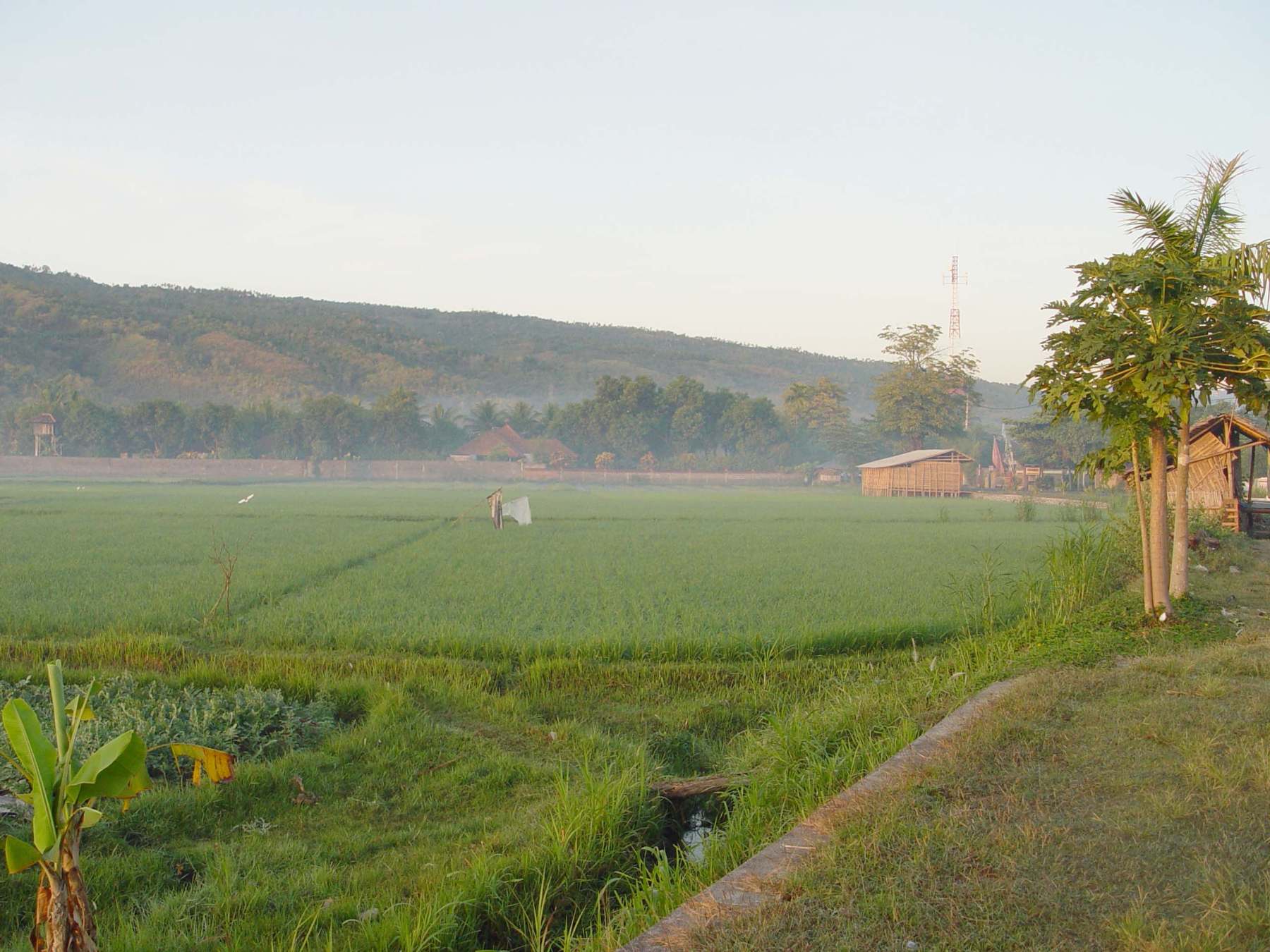 Morning over the rice fields at Dinginbanjah, Temukus, on the western side of Lovina, in 2005. Photo: っ / Wikimedia Commons (CC BY-SA 3.0)
Indonesia Has Two Retirement Visas, E33E and E33F
Indonesia files its retirement visas under "second home" on the immigration directorate's visa list.
The list names two versions for older applicants, one for five years and one for a single year. You apply for either on the official eVisa portal, which also handles extensions.
E33E: Up to Five Years at 55 or Over, With No Sponsor
The E33E page says the visa is for foreigners aged 55 or over who want to live in Indonesia. You apply yourself, without a sponsor, either a person or a company.
In place of a sponsor, you meet an immigration guarantee. That means a commitment to keep a set sum in your own account at a state-owned bank.
You report that deposit to the immigration office that issued your permit within 90 days of entering Indonesia. The balance must stay at the committed level for as long as the permit runs. The page also asks for proof of a monthly income or pension, at the minimum it sets.
The first stay permit runs for up to five years. It can be extended as long as your total stay stays within ten years, and it can be converted to another stay permit.
E33F: One Year, With a Sponsor
The E33F page sets out a one-year version. Your sponsor applies for you, through their own account on the eVisa portal.
It asks for the same proof of income or pension, at the minimum the page sets. The stay permit can be extended online and converted to another permit.
What the E33E Permit Lets You Do
The E33E page lists tourism, shopping and visits to family and friends among what a holder can do. Work, study or other activities need a report of the extra activity to the immigration office that issued the permit.
You can leave and re-enter Indonesia while the permit is valid, without a new visa. You can bring family to live with you, within the immigration rules.
Both official pages bar staying past your permit and doing work it does not cover.
Enter Within 90 Days, and the Permit Is Issued at the Border
The visa is valid for 90 days from the day it is issued. If you do not travel in that window, you apply again.
Your stay permit and re-entry permit are then issued automatically when the officer admits you at the immigration checkpoint. Fees are listed on each official page and are set by regulation, so check them there.
The Bali visa guide covers the other ways to stay, from the visit visa to the remote-worker route.
Your Immigration Office Is in Singaraja
For north Bali, the local office is Kantor Imigrasi Singaraja. It serves Buleleng, Jembrana and Karangasem regencies from the Seririt to Singaraja road at Pemaron (Map).
A Retirement Permit Brings Tax Duties and Ends the Tourist Levy
Singaraja's tax office, KPP Pratama Singaraja, has briefed the sponsors and visa agents of foreigners living in Buleleng on their tax duties.
The office set out the rule in Directorate General of Taxes regulation PER-23/PJ/2025. A foreigner who lives in Indonesia more than 183 days in 12 months, in one stretch or several, is a domestic tax subject. So is one who shows an intention to live here by holding a KITAP, an ITAS or a limited-stay visa.
One of the participants asked about retirement permits. The office's answer was that no tax rule exempts them, so a retirement permit holder who meets the criteria is a domestic tax subject.
A domestic tax subject whose income passes the non-taxable threshold needs a tax number, the NPWP. The yearly return reports income from inside and outside Indonesia. Tax paid abroad can be credited against Indonesian tax under the rules.
Ask a tax adviser how this meets the rules of the country that pays your pension.
The levy side is simpler. Bali's foreign tourist levy is paid by international tourists, and the Love Bali FAQ lists KITAS and KITAP holders among those exempt.
Choose Where to Live by the Drive to Singaraja
Singaraja is the north's main medical centre and the seat of its immigration office, so the drive there shapes a retiree's week.
Lovina and its villages are the natural base for most long-stayers, with Singaraja about twenty minutes east. The hills behind Lovina, Munduk and Pemuteran give more quiet for a longer drive to services. Long-term rentals in north Bali compares the four areas.
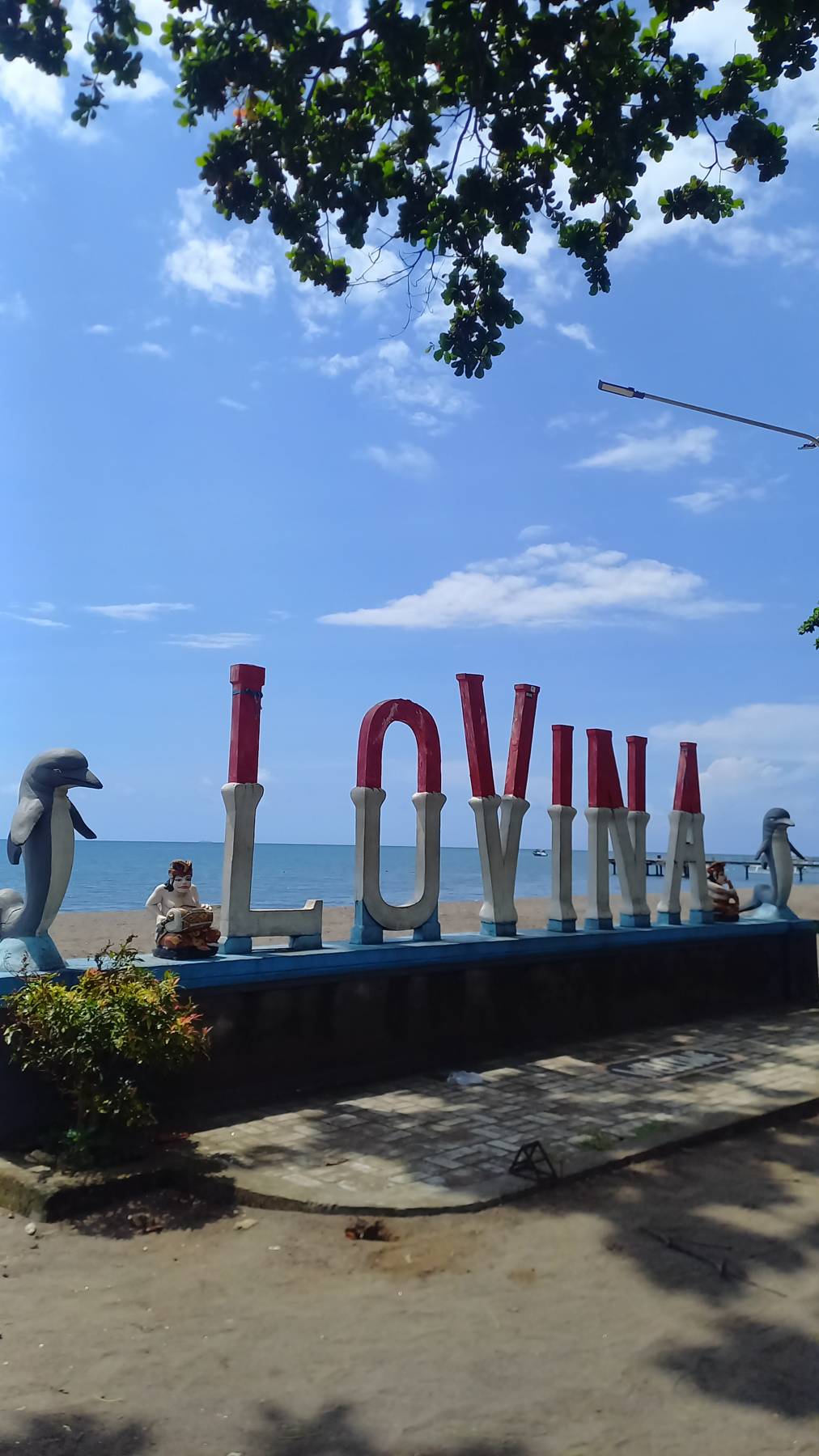 The Lovina sign and its dolphin statues on the beachfront. Photo: Tisa0603 / Wikimedia Commons (CC0)
Moving to north Bali names retirees on a fixed budget among the people the north suits. It also asks anyone who needs regular specialist care to weigh the move carefully.
If you live with a serious ongoing condition, healthcare in north Bali advises weighing the distance to the south's hospitals honestly when you choose where to stay.
Rent by the Year First, Then Decide Whether to Buy
A yearly lease is the usual way into a house on this coast, often with much of the rent paid in advance. A year in a rented house shows you the road in the wet season and the village around you before you commit.
Palm Living lists villas offered for long-term rent, several of them in central Lovina.
A foreigner has two legal ways to hold a home. You can lease land in your own name, or own a house on Hak Pakai. Freehold, Hak Milik, is reserved for Indonesian citizens.
Government Regulation 18 of 2021 lets a foreigner with an immigration document own a home, and it names a visa, a passport or a stay permit. A house on Hak Pakai over someone's freehold is set up by a deed before a land deed official, the PPAT. The home can pass to heirs, and a foreign heir also needs an immigration document.
The one shortcut to avoid is a nominee, an Indonesian who holds freehold for you. The land law makes that arrangement void. Leasehold vs freehold in Bali explains each route and the deed terms to agree.
Palm Living's team has worked with buyers and land owners in north Bali for over 24 years, and can give you current information.
This is a guide, and the rules change. Take any purchase to a PPAT or a licensed Indonesian lawyer before you pay, and your home here rests on a legal footing.
Set Up Your Healthcare in Singaraja Before You Need It
Singaraja's public hospital, RSUD Kabupaten Buleleng, lists a geriatric clinic among its 22 outpatient clinics. Physiotherapy is on the same list of services.
The hospital also runs education and exercise sessions for older people as part of its geriatric service. The aim it gives is strength, balance and independence.
The city's private hospitals add more specialists. Healthcare in north Bali lists them, with the emergency steps.
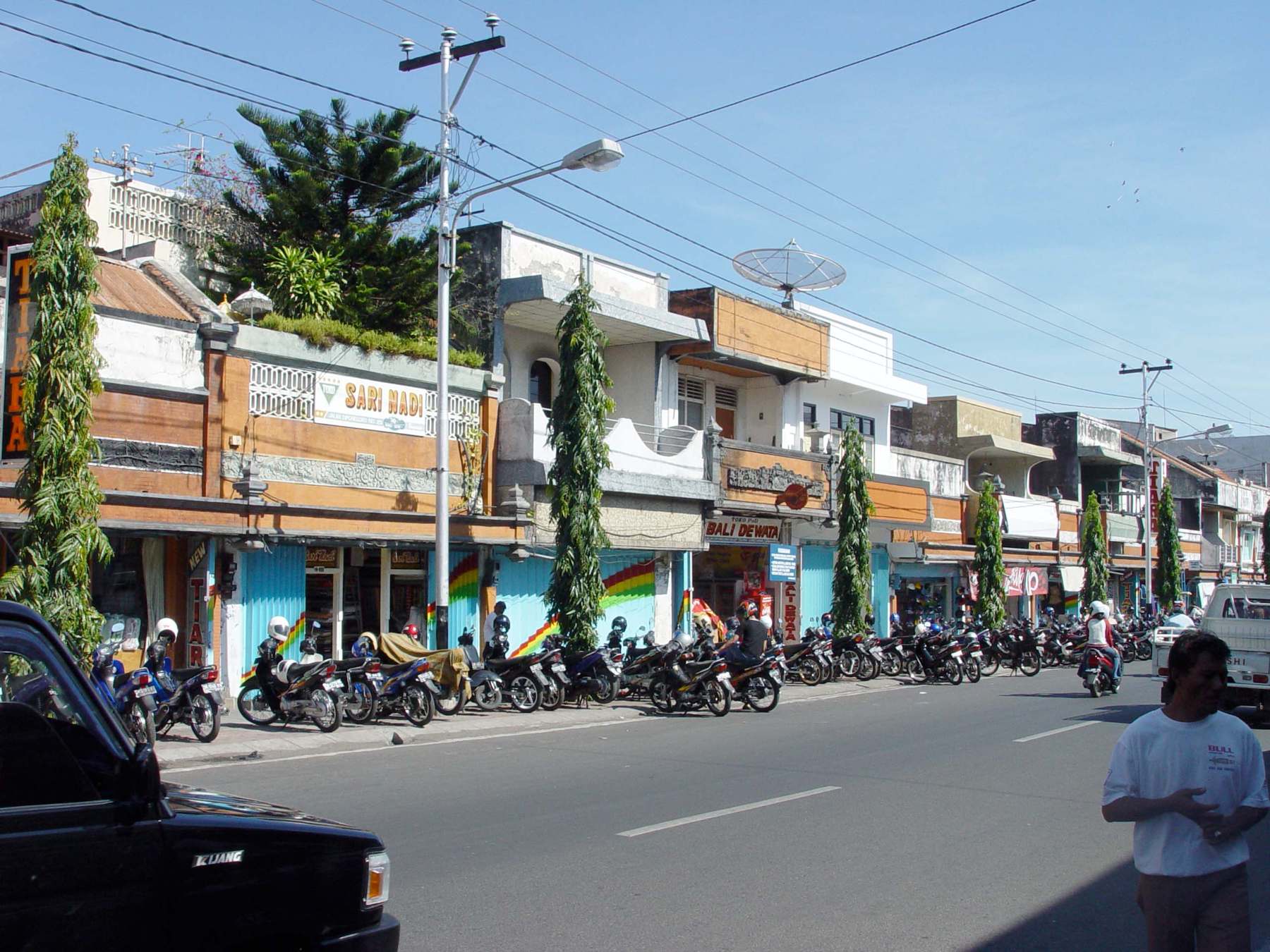 Shopfronts near the crossing of Jalan Ahmad Yani and Jalan Diponegoro in Singaraja, in 2005. Photo: っ / Wikimedia Commons (CC BY-SA 3.0)
For serious care beyond Singaraja, patients go south to RSUP Prof. Ngoerah in Denpasar, Bali's referral hospital. The UK government's health advice for Indonesia warns that medical evacuation can cost tens of thousands of pounds. Keep insurance that covers local treatment and evacuation.
Indonesia's national health insurance, BPJS, is compulsory for foreigners who work here. On a retirement permit, ask BPJS Kesehatan directly whether you can join. BPJS for foreigners explains the scheme and the offices in Singaraja.
Daily Life Runs on the Village, the Banjar and the Road
Your house sits inside a banjar, the village association that runs local life. Each village sets what it asks of foreign residents in its own rules, including any contribution. The banjar guide explains what you are joining, and your landlord can tell you what yours expects.
On a stay permit you can apply for an Indonesian driving licence, the SIM, at the Buleleng police office in Singaraja. Driving licence in Bali covers the tests.
Rent decides most of a north Bali budget, with food, transport and insurance after it. The cost of living in north Bali links the pages that publish today's prices.
Practical Notes: Your First Year, Step by Step
-
Check the official page against your age, income and savings, for E33E or E33F.
-
Apply on the eVisa portal, yourself for E33E or through your sponsor for E33F, and travel within 90 days of issue.
-
On E33E, report your deposit to the immigration office within 90 days of arrival.
-
Take a monthly rental first, then a yearly lease once you know the area.
-
Register with a hospital's outpatient clinic in Singaraja, and keep insurance with evacuation cover.
-
See a tax adviser about the NPWP and your yearly return.
FAQ
Can you retire in north Bali? Yes, on Indonesia's retirement visas, which apply across the whole country. The E33E visa is for foreigners aged 55 or over and gives a stay of up to five years. The E33F visa gives one year, with a sponsor. Both are listed on the immigration directorate's visa list.
What is the retirement visa for Bali called? Immigration files it under "second home". E33E is the five-year version and E33F the one-year version. Both lead to an ITAS, the limited-stay permit, which is carried on a KITAS card.
How old do you have to be to retire in Bali? The E33E page sets the age at 55 or over. The E33F page does not state an age. Both ask for proof of a monthly income or pension, at a minimum set on the official pages.
Can a retiree buy a villa in north Bali? Yes, through a lease or Hak Pakai. A foreigner can lease land, or own a house on Hak Pakai with a valid immigration document under Government Regulation 18 of 2021. Freehold is reserved for Indonesian citizens. Leasehold vs freehold in Bali explains both, and Palm Living lists villas for sale in the north.
Do retirees in Bali pay Indonesian tax? They can. Singaraja's tax office has said no rule exempts retirement permit holders, and a holder who meets the criteria is a domestic tax subject. Above the non-taxable threshold, that means a tax number and a yearly return covering income from inside and outside Indonesia.
Can retirees join BPJS? BPJS is compulsory for foreigners who work in Indonesia. On a retirement permit, ask BPJS Kesehatan directly. BPJS for foreigners explains what it covers and what it leaves out.
Where do long-stay residents live in north Bali? Mostly in Lovina and its villages, with Singaraja's hospitals about twenty minutes east. The hills behind Lovina, Munduk and Pemuteran suit people who want more quiet and will drive further for services.
Sources
- Directorate General of Immigration, E33E second-home visa for older applicants, five years (age 55 or over, no sponsor, immigration guarantee, income or pension proof, stay of up to five years within a ten-year total, permitted activities, 90-day visa validity), read October 2026 (in Indonesian)
- Directorate General of Immigration, E33F second-home visa for older applicants, one year (sponsor, income or pension proof, one-year stay, online extension), read October 2026 (in Indonesian)
- Directorate General of Immigration, List of Indonesian visas and the eVisa portal, read October 2026 (in Indonesian and English)
- Kantor Imigrasi Singaraja, area served and address, read October 2026 (in Indonesian)
- Directorate General of Taxes, KPP Singaraja briefs sponsors and visa agents in Buleleng on foreigners' tax duties (the 183-day and stay-permit tests under PER-23/PJ/2025, retirement permits, worldwide income), June 2026, read October 2026 (in Indonesian)
- Bali Provincial Government, Love Bali FAQ (who pays the tourist levy, KITAS and KITAP exemption), read October 2026 (in English)
- JDIH BPK, Government Regulation No. 18 of 2021, Articles 69 and 71 and the elucidation of Article 69, read October 2026 (in Indonesian)
- RSUD Kabupaten Buleleng, services (22 outpatient clinics including geriatrics, physiotherapy) and geriatric education and exercise for older people, January 2026, read October 2026 (in Indonesian)
- UK Foreign, Commonwealth & Development Office, Indonesia travel advice: health (insurance and the cost of medical evacuation), read October 2026 (in English)
- Palm Living, long-term rent (villas offered for long stays around Lovina), read October 2026 (in English)
- Northbound guides drawn on for areas, renting, ownership, healthcare, BPJS, the banjar and driving: long-term rentals in north Bali, moving to north Bali, leasehold vs freehold in Bali, healthcare in north Bali, BPJS for foreigners, the banjar and driving licence in Bali
Read next: moving to north Bali, healthcare in north Bali, long-term rentals in north Bali and leasehold vs freehold in Bali.