On this page
- In Brief
- North Bali at a Glance
- A Volcanic Range Makes the North the Drier Side
- The Beaches Are Black Volcanic Sand
- The Sea Is Calm, With No Real Surf
- Singaraja Was Bali's Capital Until 1960
- The Airport Took Tourism South From 1969
- Village Life Sits Close to the Surface
- Who the North Suits, and Who the South Suits
- Practical Notes
- FAQ
- Sources
In Brief
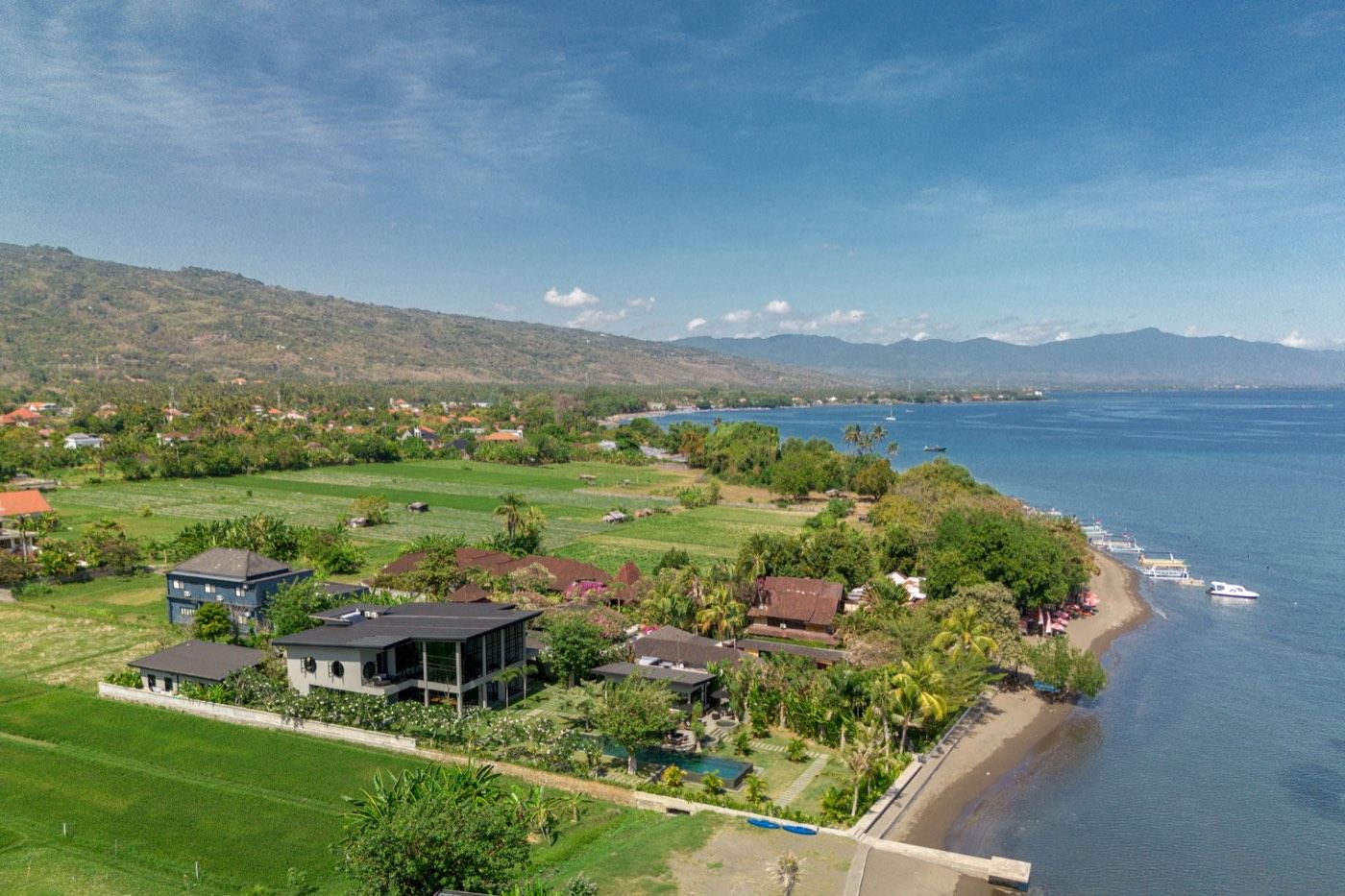
North Bali is drier and calmer than the south, because a volcanic range runs across the middle of the island and keeps the two coasts apart. The southern slopes catch the wet-season winds and most of the rain. The north is left as the drier side, with black volcanic-sand beaches and a calm sea.
History explains the rest. The north was Bali's front door for about a century: the Dutch ruled the island from Singaraja from 1849, and it stayed the provincial capital until 1960. Fewer visitors make it over the range today, so the pace is slower and village life sits closer to the surface.
For the spiritual layer beneath all of it, start with Balinese Hinduism explained.
North Bali at a Glance
- Where: The coast and highlands north of Bali's central volcanic range, most of it in Buleleng regency
- Climate: The drier side of the island, with about 260 mm less rain a year than the south in weather-service records from 1984 to 2009
- Beaches: Black volcanic sand, lined with fishing boats
- Sea: The Bali Sea, calm, with no real surf
- History: The Dutch governed Bali from Singaraja from 1849, and it stayed the provincial capital until 1960
- Getting there: A winding drive of around three hours over the mountains from the airport
- Best for: Calm water, village life, slow days and longer stays
- Less suited to: Nightlife, surf breaks and big-name restaurants
A Volcanic Range Makes the North the Drier Side
North Bali is shaped by a wall of volcanoes.
A mountain range runs east to west through the middle of the island. Climate scientists describe it as dividing Bali into two parts, each with its own rainfall: a narrower northern strip and a broader southern plain.
You feel the change on the drive over the top. The air cools, the road tightens into switchbacks past the crater lakes, and then it runs down toward the north coast.
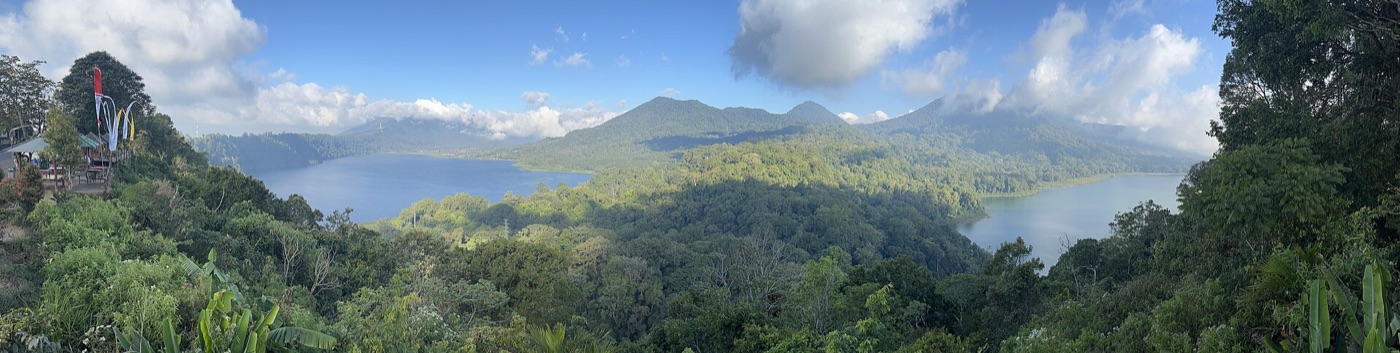 The crater lakes at the top of the crossing, where the island changes character. Photo: Stefan Fussan / Wikimedia Commons (CC BY-SA 3.0)

The range casts a rain shadow. In the wet season, south-easterly winds push moist air against the southern slopes, where it falls as heavy local rain. The air that comes down the northern side has already lost most of its moisture.
A study of Bali's rainfall in Theoretical and Applied Climatology calls the result a "dry northern and wet southern" island. The weather-service records it cites, from 1984 to 2009, put the north's average annual rainfall about 260 mm below the south's.
The lush, dripping rice-terrace Bali of the brochures sits mostly on the south side. The north coast stays browner through the dry months, with a starker, sunbaked beauty of its own.
The Beaches Are Black Volcanic Sand
The Buleleng district government describes Lovina's beach as black sand, lined with traditional fishing boats. That holds for most of the coast.
The colour comes from the dark volcanic rock the mountains shed. It runs from deep charcoal to a soft pewter grey, and on a clear evening it holds the light.
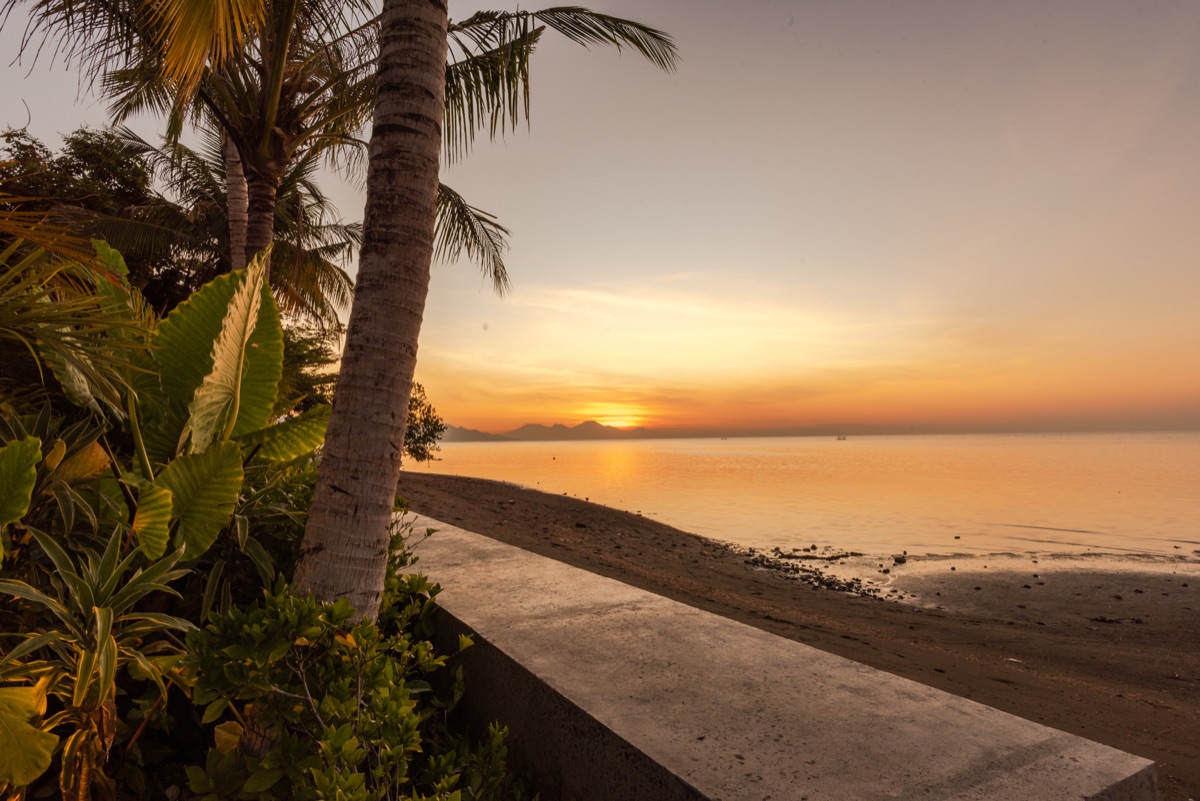 Black sand holding the evening light on the north coast. Photo: Palm Living archive.
The Sea Is Calm, With No Real Surf
The north coast looks out onto the Bali Sea, away from the Indian Ocean swell that reaches the south.
There is no real surf here. The same government page calls Lovina's water relatively calm, calm enough to cross comfortably in a fishing boat. That makes for gentle swimming, and the villages still fish from small outriggers.
The complete north Bali guide maps where each stretch of the coast sits. The best beaches in north Bali goes beach by beach.
Singaraja Was Bali's Capital Until 1960
The north was Bali's front door long before a plane landed in the south.
Singaraja is the capital of Buleleng regency, which holds most of the north coast. It was the seat of the kingdom of Buleleng. The Buleleng government's history of the town describes its harbour as the place where Bali traded with Asia and Europe.
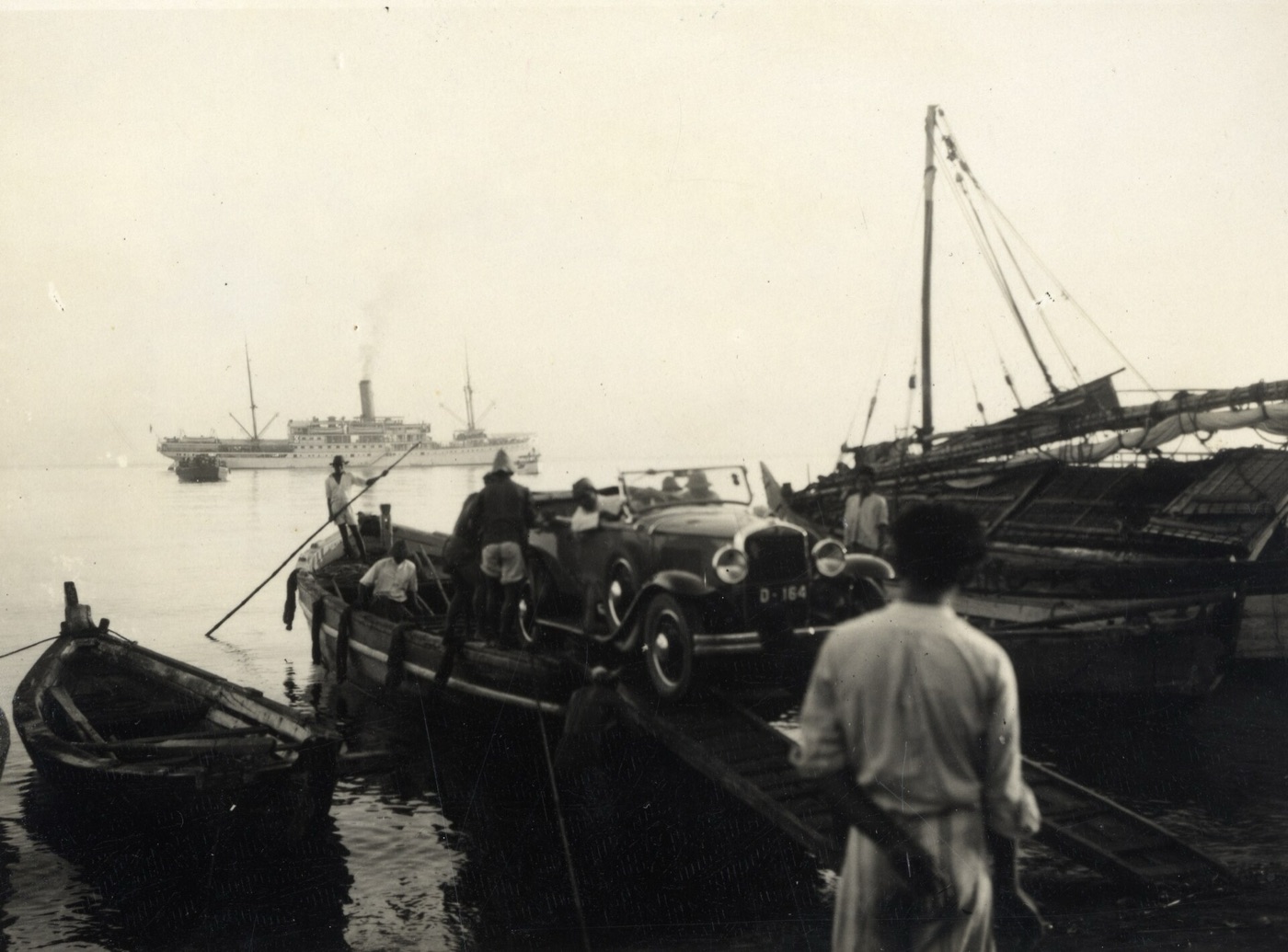 Buleleng harbour when the north was still the island's front door. Photo: KITLV via Wikimedia Commons (CC BY 4.0)
When the Dutch moved to take the island, they came in from the north first. They took Buleleng in 1849, after the campaign told in the Jagaraga war, and made Singaraja the capital of their government in Bali.
They built roads and government offices there, and opened schools that taught in Dutch. For a long stretch the officials, the traders and the island's first modern schools clustered around this coast, while the south stayed largely rural.
After independence Singaraja remained the capital of Bali until 1960. A Home Affairs decision of 23 June 1960 moved the provincial capital to Denpasar (Bali provincial government).
The Airport Took Tourism South From 1969
The other shift came with the airport.
A grass airstrip was built at Tuban, near Denpasar, in 1930. Between 1963 and 1969 the government lengthened the runway and built an international terminal, as part of a national tourism plan. On 1 August 1969 it opened under its current name, I Gusti Ngurah Rai International Airport.
From then on the south was where visitors arrived. Tourism grew around the beaches closest to the runway, then spread outward, and the south rebuilt itself around arrivals. The north, on the far side of the mountains, kept its older shape.
Singaraja is still busy and still the administrative heart of Buleleng, though few week-long visitors reach it. Its Dutch-era streets are in Singaraja old town, and the fuller story is in a brief history of north Bali.
Village Life Sits Close to the Surface
The north coast runs on its own clock.
The morning belongs to the fishing boats and the offerings, with little traffic. Ceremonies happen because they are due. You may be held up behind a temple procession on a back road. That is the village keeping its calendar.
Lower visitor numbers protect that rhythm. The warung that feeds you has often fed the village for years. The temple anniversary down the road is for the village, and you are welcome to stand respectfully at the edge of it.
This is a working coast, with its own small towns, markets and arguments about its future. It has not been remade by mass tourism, so daily life is easy to see. The banjar, the neighbourhood council that organises ceremonies and village work, is in plain view.
Who the North Suits, and Who the South Suits
The two coasts suit different travellers, and it helps to know which one you are.
The north rewards you if you want calm water, village life and black-sand evenings. It is a base for:
- waterfalls
- hot springs
- the highland lakes
- the reefs around Pemuteran and Menjangan
It suits slow days, longer stays and anyone who wants a lived-in coast.
The south suits you if you came for nightlife, big-name restaurants, surf breaks and the switched-on energy of Canggu or Seminyak. The north has restaurants and bars, but it is a quiet coast. Distances are real, the mountain drive from the airport is long and winding, and the polish of the south thins out as you go.
Expect a spacious Bali that you travel a little further to reach. For a side-by-side of the two coasts, read north Bali vs south Bali. If you are weighing the north for a home or an investment, Lovina vs Canggu for investment takes the comparison further. To try it for a week, Palm Living's villas are around Lovina, on this coast.
Practical Notes
Conditions change. Confirm locally before you rely on any of this.
- Getting there: The north is reached over the central mountains from the airport in the south, a slow, scenic, winding drive of around three hours. Budget for the time more than the distance on the map. Getting to north Bali has the routes.
- When to come: The dry season, roughly April to October, brings the calmest seas and the clearest mountain views. The north coast is the drier side of the island all year. The best time to visit north Bali goes month by month.
- The sea: Calm and flat along most of the north coast, with no real surf, so swimming is easy.
- The sand: Volcanic black. The colour is geology, not dirt.
- Pace: Plan fewer things per day than you would in the south. The north is a place you settle into.
FAQ
What is north Bali like? North Bali is drier, calmer and quieter than the south. The beaches are black volcanic sand, the sea is flat with no surf, and the towns are small fishing villages and the old capital, Singaraja. Far fewer visitors cross the mountains, so village life and ceremonies are easier to see, and there is little nightlife.
Why is north Bali different from the south? A volcanic range across the middle of the island catches most of the wet-season rain on its southern slopes. That leaves the north drier, with black-sand beaches and a calmer sea. The long drive over the mountains keeps visitor numbers low, and the north was Bali's capital under Dutch rule, from 1849 until the provincial capital moved to Denpasar in 1960.
Is north Bali less touristy? Yes. The mountains and the long drive from the southern airport keep visitor numbers low compared with Canggu, Seminyak or Ubud. You get quieter beaches, fewer crowds and a coast that runs largely on local rhythms.
Why is the sand black in north Bali? The sand comes from the island's volcanoes. North Bali's beaches sit below a volcanic range, and the dark rock the mountains shed has been ground down into charcoal-grey and black sand along the coast.
Does it rain less in north Bali? Yes, on the coast. Weather-service records from 1984 to 2009 put the north's average annual rainfall about 260 mm below the south's. The mountains take the moisture out of the wet-season winds before they reach the coast.
Is north Bali better than south Bali? They suit different people. The north is calmer and more lived-in, good for slow stays, nature and quiet water. The south is busier and more developed, with nightlife, surf, big-name dining and easy airport access. Choose by the trip you want, and is north Bali worth it helps you decide.
Sources
- Novi Rahmawati and Maciek W. Lubczynski, Validation of satellite daily rainfall estimates in complex terrain of Bali Island, Indonesia, Theoretical and Applied Climatology, 2018, open access (the mountain range dividing a dry north from a wet south; BMKG rainfall averages 1984 to 2009), read September 2026
- Buleleng Regency Government, Sejarah Kota Singaraja: Jejak Sejarah di Bali Utara (the kingdom of Buleleng, the harbour's trade, Dutch control from 1849, schools, the capital moving to Denpasar in 1958), in Indonesian, read September 2026
- Buleleng District Government, Daya Tarik Pantai Lovina (black sand, fishing boats, calm water), in Indonesian, read September 2026
- InJourney Airports, History of I Gusti Ngurah Rai International Airport (the 1930 airstrip, the 1963 to 1969 expansion, the 1969 inauguration), read September 2026
- Bali Provincial Government, Selayang Pandang Provinsi Bali (the Home Affairs decision of 23 June 1960 that moved Bali's capital to Denpasar), in Indonesian, read October 2026
Read next: a brief history of north Bali, Singaraja old town and things to do in north Bali.