On this page
- In Brief
- West Bali National Park at a Glance
- What the Park Protects: Savanna, Forest, Mangrove and Reef
- The Bali Starling Lives Here, With Wild Deer and Monkeys
- What to Do: Trek, Snorkel, Explore the Mangrove, Climb to a Temple
- How to Visit: a Permit, a Park Guide and Cash
- Getting There: Stay in Pemuteran, on the Park's Doorstep
- Best Time to Visit: April to October, at Dawn
- Practical Notes
- FAQ
- Sources
In Brief
West Bali National Park (Taman Nasional Bali Barat) protects Bali's far northwest corner, Menjangan Island included. Its savanna, monsoon forest, mangrove and coral reef make it a place for birdwatching and quiet nature. A park guide walks you through forest and savanna and helps you look for the critically rare Bali starling.
You visit with a registered park guide and a permit, usually arranged from Pemuteran. Many people pair the park with snorkelling at Menjangan.
West Bali National Park at a Glance
- Where it is: the far northwest tip of Bali, spanning Buleleng and Jembrana
- What it is: Bali's only national park, 18,043.76 hectares of savanna, monsoon forest, mangrove and marine zone
- Known for: the Bali starling, birdwatching, Menjangan Island reefs, wild deer
- Access: a registered park guide and a permit, required for treks and the marine zone
- Permit and guide: arranged and paid in cash at the gateway, with entry, marine and guide charges separate
- Official entrances: Labuan Lalang and Banyuwedang, with the park office at Cekik
- Base: Pemuteran, just east of the park
- Best time: the dry season, April to October, and early morning for wildlife
What the Park Protects: Savanna, Forest, Mangrove and Reef
The park is a large stretch of wild Bali, running across two regencies, Jembrana and Buleleng.
The Forestry Ministry's conservation directorate records it at 18,043.76 hectares. It was first designated a national park in 1995.
The landscape changes as you move through it:
- open savanna with lontar palms, in the rain shadow of the west
- denser monsoon forest inland
- mangrove along the coast
- the reefs offshore around Menjangan
That range of habitat in a small area is why the birdlife is so good.
The Park Is Run in Seven Zones
The park's own zoning map divides it into these zones:
- a core zone
- a land wilderness zone
- a utilisation zone
- a marine protection zone
- a traditional zone
- a zone for cultural, religious and historic sites
- a special zone
The park develops its visitor activities inside the utilisation zones. This is why a guide steers you to particular areas instead of letting you roam.
The Bali Starling Lives Here, With Wild Deer and Monkeys
The park's most famous resident is the Bali starling (jalak Bali), a white bird with blue eye markings that exists in the wild almost nowhere else.
The cage-bird trade drove it nearly to extinction, and the park is the centre of the effort to bring it back. A sighting is not guaranteed, but the park is the main place in the wild where one is possible.
In Sumber Klampok, one of the villages on the park's edge, the park notes that visitors can see the community's Bali starling breeding work up close.
Wild Java deer (menjangan) live in the park too, and give Menjangan Island its name. Monkeys, civets and a long list of resident and migratory birds share the forest with them.
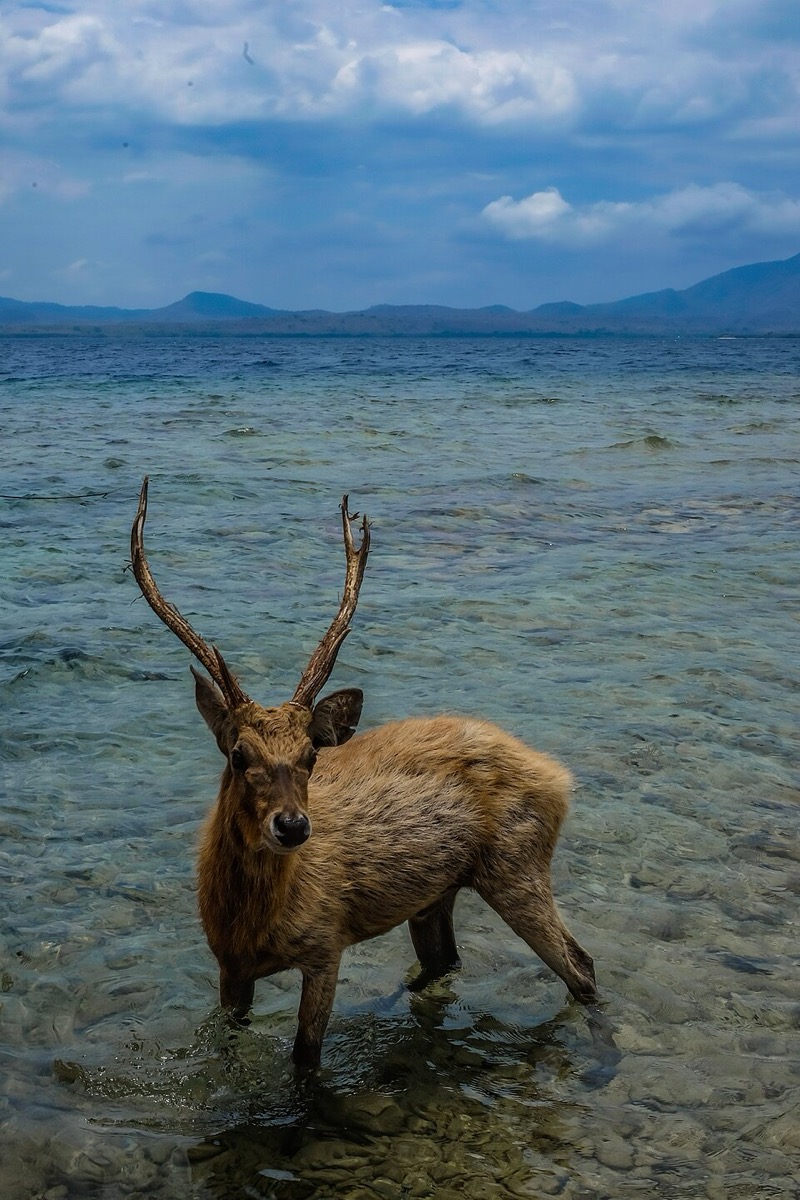 A rusa stag in the Menjangan shallows. Photo: Syselpunk / Wikimedia Commons (CC BY-SA 4.0)
What to Do: Trek, Snorkel, Explore the Mangrove, Climb to a Temple
The park lists trekking, wildlife watching and birdwatching among the activities it develops, alongside diving, snorkelling and religious visits.
Birdwatching on a Guided Morning Trek
This is the heart of a visit. A park guide leads you on foot through savanna and forest, reading the birdlife as you go.
Go in the morning, when the birds are active and the heat has not yet built. The routes differ by zone and by season, so ask your guide for the walk that fits your morning.
Snorkelling and Diving at Menjangan
The marine half of the park is the reef around Menjangan Island, often rated among the best snorkelling and diving in Bali. The Menjangan Island guide covers the clear water, the wall drop-off and the shallow coral gardens in full.
The Mangrove and the West Coast
Boat and walking routes run through the mangrove and along the quiet west coast, for anyone who wants more than the reef.
The Jayaprana Grave Temple Above Teluk Terima
Religious visits are on the park's own list of activities, and this is one of its sites. It stands on the hill above Teluk Terima, in forest inside the park boundary, just past Labuan Lalang.
A stepped path climbs to the grave-temple of Jayaprana and Layonsari, the north's great love legend. The climb takes about fifteen to twenty minutes, and the view over the bay to Menjangan is one of the best in the northwest.
How to Visit: a Permit, a Park Guide and Cash
As at Menjangan, you cannot simply walk in, and the rules are simple once you know them.
You need a permit and a guide. Treks and the marine zone both require a registered park guide and an entry permit, arranged at the park gateways. For the marine zone, dive centres and lodges in Pemuteran sell Menjangan trips. When you enquire, ask whether the park guide and permit are in the price.
There are two official entrances. The park's own record names Labuan Lalang and Banyuwedang as the official entry points. Labuan Lalang is the jetty for Menjangan and the marine zone, and Banyuwedang is the area of the park's hot springs.
The park office is on the Cekik to Gilimanuk road, about two kilometres from the western ferry port. Your guide will send you to the right entrance for your plan.
Bring cash. Fees are paid on the day, and there are no ATMs at the park. Carry enough for the permit, the guide and any boat.
Getting There: Stay in Pemuteran, on the Park's Doorstep
The park lies in Bali's far northwest, and the distance keeps it quiet. From Pemuteran it is a short drive to either gateway. From Lovina it is roughly 90 minutes west along the coast road.
From the south (Seminyak, Ubud, the airport), the drive runs three and a half to four hours, which makes a day trip punishing. Stay a night or two in Pemuteran instead, and see the park and Menjangan at an easy pace.
The detailed routes and driver options are in getting to north Bali. The north Bali travel guide ties the whole region together.
Best Time to Visit: April to October, at Dawn
The dry season, April to October, is the window. Trails are firm, the boats to Menjangan run reliably, and reef visibility is at its best. The northwest is one of the drier corners of Bali, so even the shoulder months hold up well here.
For wildlife, the time of day matters more than the month. The birds are active and the forest is cool in the early morning, so a dawn start is worth it.
Practical Notes
Charges and conditions are set by the park and change. Confirm at the gateway before you go.
- Permit and guide: paid in cash on the day, with entry, marine and trek-guide charges separate and set by the park
- Guide: mandatory for treks and the marine zone
- Entrances: Labuan Lalang (marine and Menjangan) and Banyuwedang, with the park office at Cekik
- Base: Pemuteran, just east of the park
- Money: no ATMs at the park, so bring cash
- What to bring: binoculars for birding, water, sun cover, closed shoes for treks
- Best for wildlife: early morning
FAQ
What is West Bali National Park? It is Bali's only national park, in the far northwest, protecting savanna, monsoon forest, mangrove and reef, including Menjangan Island. It is one of Bali's best places for birdwatching and quiet nature, and the stronghold of the rare Bali starling.
Do you need a guide for West Bali National Park? Yes. Both the land treks and the marine zone require a registered park guide and a permit, arranged at the park gateways. For the marine zone, a Menjangan trip booked with a dive centre or lodge in Pemuteran usually arranges both. Ask whether they are included when you enquire.
Can you see the Bali starling there? The park is the main place in the wild where it is possible. Sightings are not guaranteed, since the bird is critically rare. Your chances are highest on a morning trek with a park guide.
How do you get to West Bali National Park? It is about 90 minutes west of Lovina along the coast, or right next door if you are staying in Pemuteran. From the south it is a three-and-a-half to four hour drive, so an overnight in Pemuteran makes far more sense than a day trip.
Is West Bali National Park worth visiting? For anyone who likes birds, quiet and wild landscape, yes. It is one of the least developed corners of Bali, and paired with snorkelling at Menjangan it makes a strong reason to come this far northwest.
How much does it cost to enter? Entry, marine and guide charges are set by the park, are separate from one another, and are paid in cash on the day. There are no ATMs at the park, so bring enough for the permit, the guide and any boat.
When is the best time to visit? The dry season, April to October, for firm trails and reliable boats, and early morning in any season for the wildlife.
Sources
- Balai Taman Nasional Bali Barat, Umum (the two regencies, the two official entrances at Labuan Lalang and Banyuwedang, the Banyuwedang hot springs, the activities developed in the utilisation zones, the Menjangan crossing, Bali starling breeding at Sumber Klampok, the Jayaprana grave in the forest at Teluk Terima inside the park, and the office on the Cekik to Gilimanuk road) and Kawasan (the zoning map), Indonesian, read September 2026
- Direktorat Jenderal Konservasi Sumber Daya Alam dan Ekosistem, Kementerian Kehutanan, Profil TN Bali Barat (area of 18,043.76 hectares, the regencies of Jembrana and Buleleng, designation as a national park in 1995), Indonesian, read September 2026
- Clarissaudreylia, Senja di Menjangan, Wikimedia Commons (CC BY-SA 4.0)
- Syselpunk, Menjangan deer, Wikimedia Commons (CC BY-SA 4.0)
Read next: the Menjangan Island guide, Pemuteran, and Jayaprana and Layonsari.