On this page
- In Brief
- Menjangan at a Glance
- What Menjangan Island Is: a Protected Island Inside the National Park
- The Reef: a Bright Shallow Top, Then a Wall into Deep Blue
- The Sites, One by One, Round the Island
- On Shore: Wild Deer and Pilgrim Temples
- The Boat: Four Departure Points, a Park Guide on Every Trip
- What a Trip Costs: Ask What the Quote Includes
- The Park Fee Is Set Nationally, and Operators Usually Pay It
- A Half-Day Snorkel or a Full Day of Diving
- Getting There: Base Yourself in Pemuteran
- Best Time: April to October, in the Morning
- Menjangan, Pemuteran's Bay or Amed: Which Suits Your Days
- What to Bring for an Open Boat
- Practical Notes
- FAQ
- Sources
In Brief
Menjangan Island is a small uninhabited island off Bali's far northwest coast, inside West Bali National Park. It is often rated among Bali's best places to snorkel and dive, with coral walls and gentle slopes a short boat ride from shore. You reach it by boat only, with a registered park guide, from Pemuteran beach or one of three harbours to its east.
The crossing takes about 20 to 45 minutes, depending on the boat. Named sites run all the way round the island. They range from Pos I and Pos II by the ranger posts to the Anchor Wreck and the Eel Garden in the northwest. Plan it as a morning trip, and stay a night or two in Pemuteran so the drive does not take the day.
Menjangan at a Glance
- Where it is: uninhabited island off northwest Bali, inside West Bali National Park (Bali Barat)
- Known for: some of Bali's clearest water, walls covered in sea fans, calm diving with mild currents
- Visibility: dive operators report 20 to 40 m, best in the dry season
- Water temperature: about 28 to 30°C year-round
- The sites: Pos I, Pos II, Bat Cave, Cave Point, Temple Point, Coral Garden, Dream Wall, Anchor Wreck, Eel Garden and more
- Best for snorkelers: Pos I, the Coral Garden, the shallow tops of the walls
- Access: boat only, registered park guide required, no independent visits
- Harbours: Labuan Lalang and Banyuwedang, the park's two official gateways, plus Sumberkima or direct from Pemuteran beach
- Crossing: about 30 to 45 min by wooden outrigger, about 20 min by fibreglass speedboat
- Fees: national park entry plus the boat, usually folded into one booking by the operator
- Best time: dry season, April to October, with the calmest water in the morning
What Menjangan Island Is: a Protected Island Inside the National Park
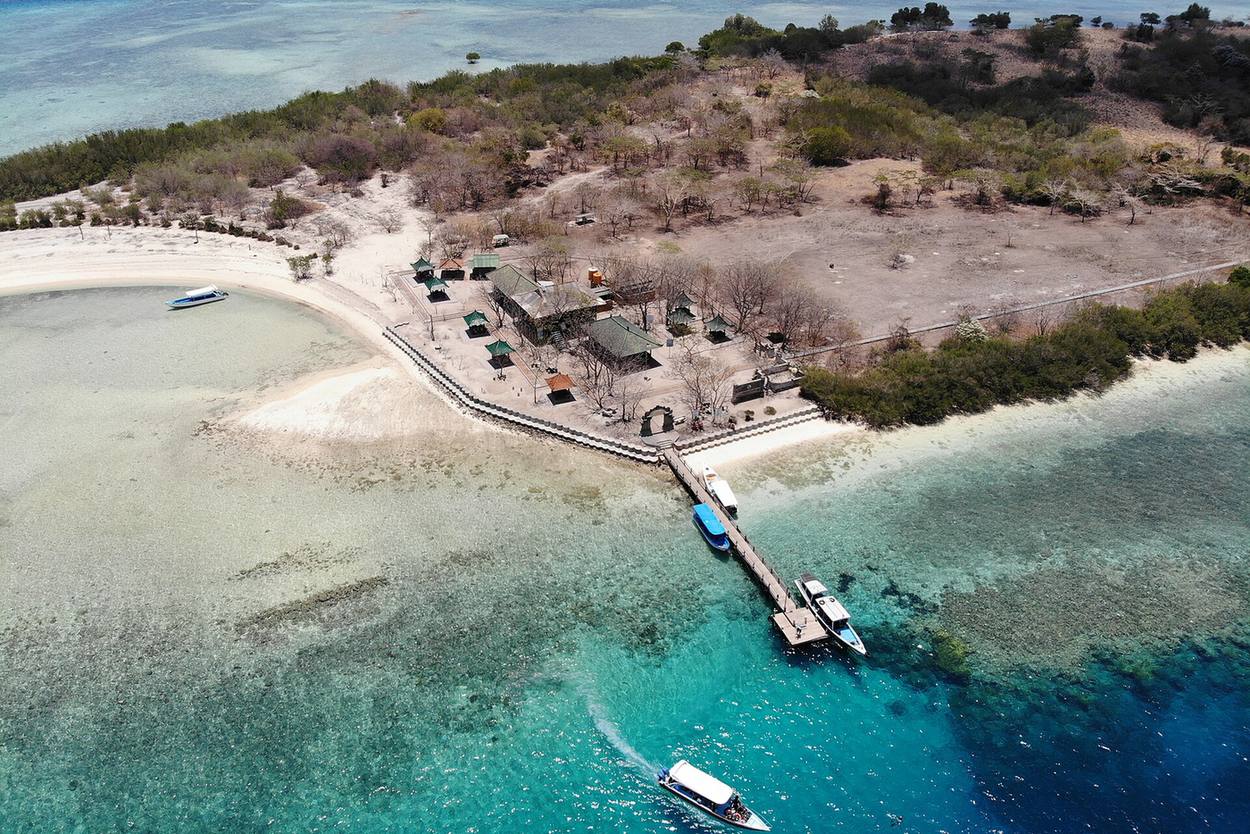
Menjangan is a small uninhabited island off Bali's northwest coast, inside West Bali National Park (Bali Barat).
It is often rated among the best snorkeling and diving in Bali, and the water is the reason. Dive operators who work the island every week put visibility at 20 to 40 metres in good conditions.
The name means deer, for the wild Java deer that live here. A ranger post, a jetty and a cluster of temples are the only buildings, with no hotels, warungs or roads. It is a protected marine and wildlife area. Little building and low fishing pressure inside the park have kept the reef in its present condition.
Most visitors come for the day from Pemuteran, the diving village on the mainland coast. The boat ride is short, the water is calm in season, and the reef starts almost as soon as you drop in. For the village itself, see the Pemuteran guide.
Give it a half day at minimum, and a couple of unhurried days if you can.
The Reef: a Bright Shallow Top, Then a Wall into Deep Blue
Nearly all of Menjangan's reef follows the same shape.
A shallow reef top, bright and full of fish, runs out from the shore and ends at a wall that drops into deep blue. On some sides the wall is vertical, cut with cracks and overhangs. On others it softens into a sandy slope, and most sites begin in the shallows and follow the wall along or down.
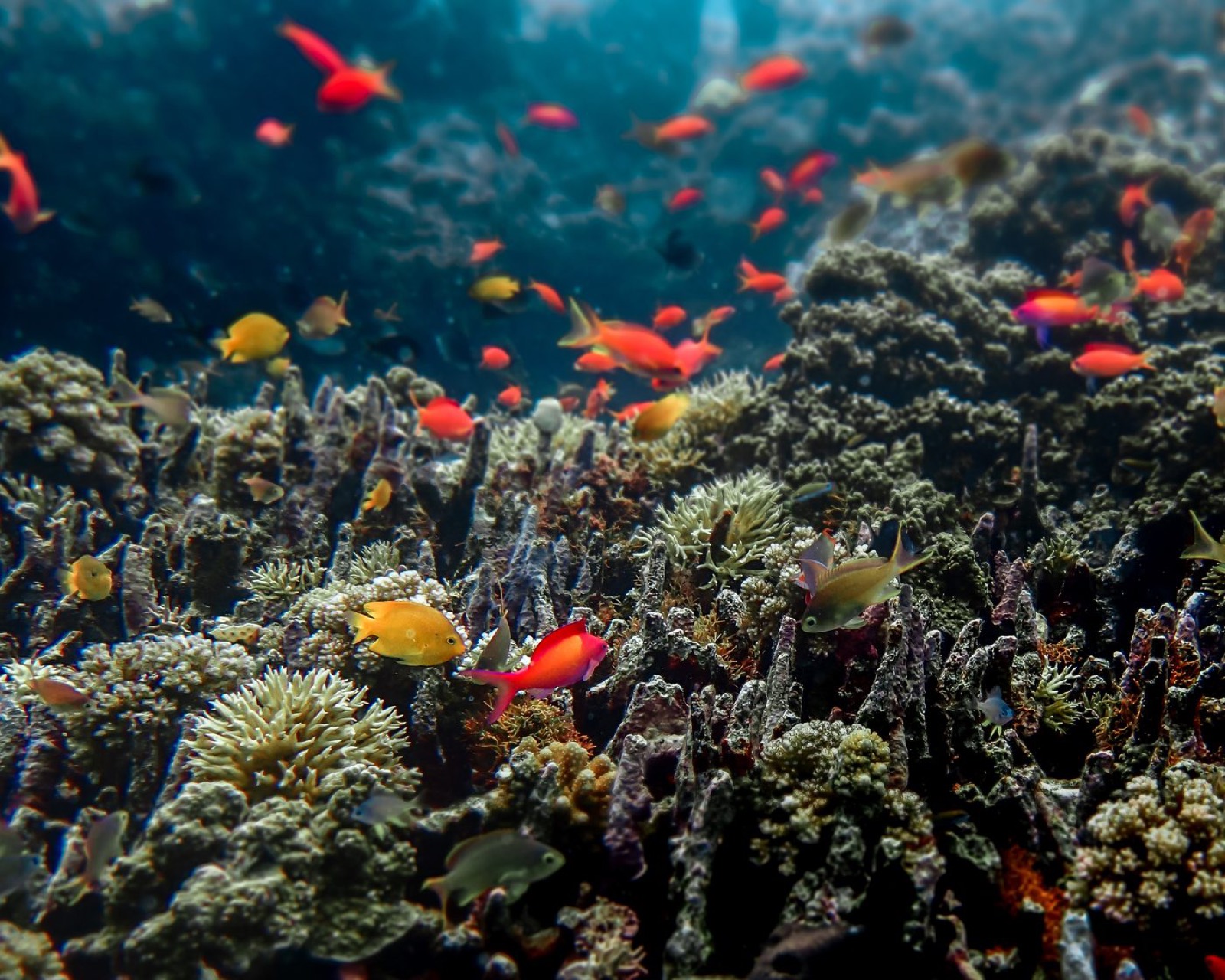 Reef fish over the coral at Menjangan. Photo: Noirperspective / Wikimedia Commons (CC BY-SA 4.0)
That shape suits mixed groups. Divers descend the wall, while snorkelers float over the top edge and look down it. On a clear day the drop-off is as striking from the surface as from 20 metres.
Currents are usually mild to moderate, and the boat crew picks sites around the island to suit the day's conditions.
Regular sightings on the reef:
- Turtles: green and hawksbill, seen regularly
- Reef sharks: whitetip and blacktip, patrolling the walls
- Schooling fish: fusiliers, snapper and trevally off the drop-offs
- Near the reef: batfish and groupers
- In the big gorgonian sea fans: pygmy seahorses, for divers who look closely
- Now and then: eagle rays and barracuda off the corners
The Sites, One by One, Round the Island
Operators name around a dozen sites on Menjangan, and these are the ones you will hear on the boat.
Names vary a little between dive centres, and some spell them differently (Pos 2 and Pos II, Anchor and Anker). Match the description over the spelling.
Pos I
Pos I is the gentle site, named for the ranger station beside it at the island's southwest tip. A sandy slope with scattered coral runs down from the beach and the small jetty, from about 2 metres to 20 and more. Stingrays, flounders and turtles rest on the sand, with reef fish along the coral edge.
Current is usually light but can pick up toward the channel. Pos I is used for first dives, refreshers and training, and it is one of the best snorkeling spots on the island. Most boats stop at the ranger station for lunch, so expect company at midday in high season.
Snorkel or dive: both, in the easiest water on Menjangan.
Pos II and Bat Cave
Pos II sits on the southeast side, by the jetty pilgrims use to reach the temples. Divers enter near a crack in the wall and choose a direction.
West, you stay within Pos II, where the wall breaks into small caves and overhangs lit by shafts of light, with critters in the crevices. East, a gentle drift follows a vertical wall to Bat Cave, named for the bats that rest in small caves above the waterline.
Depths run from about 5 or 6 metres to 30 and beyond. Giant gorgonians and huge sponges cover the wall, and it gives some of the best chances on the island of seeing reef sharks. Current is light to moderate, with surge possible near the entry.
Snorkel or dive: mainly a dive. Strong snorkelers can follow the wall top on a calm day.
Coral Garden
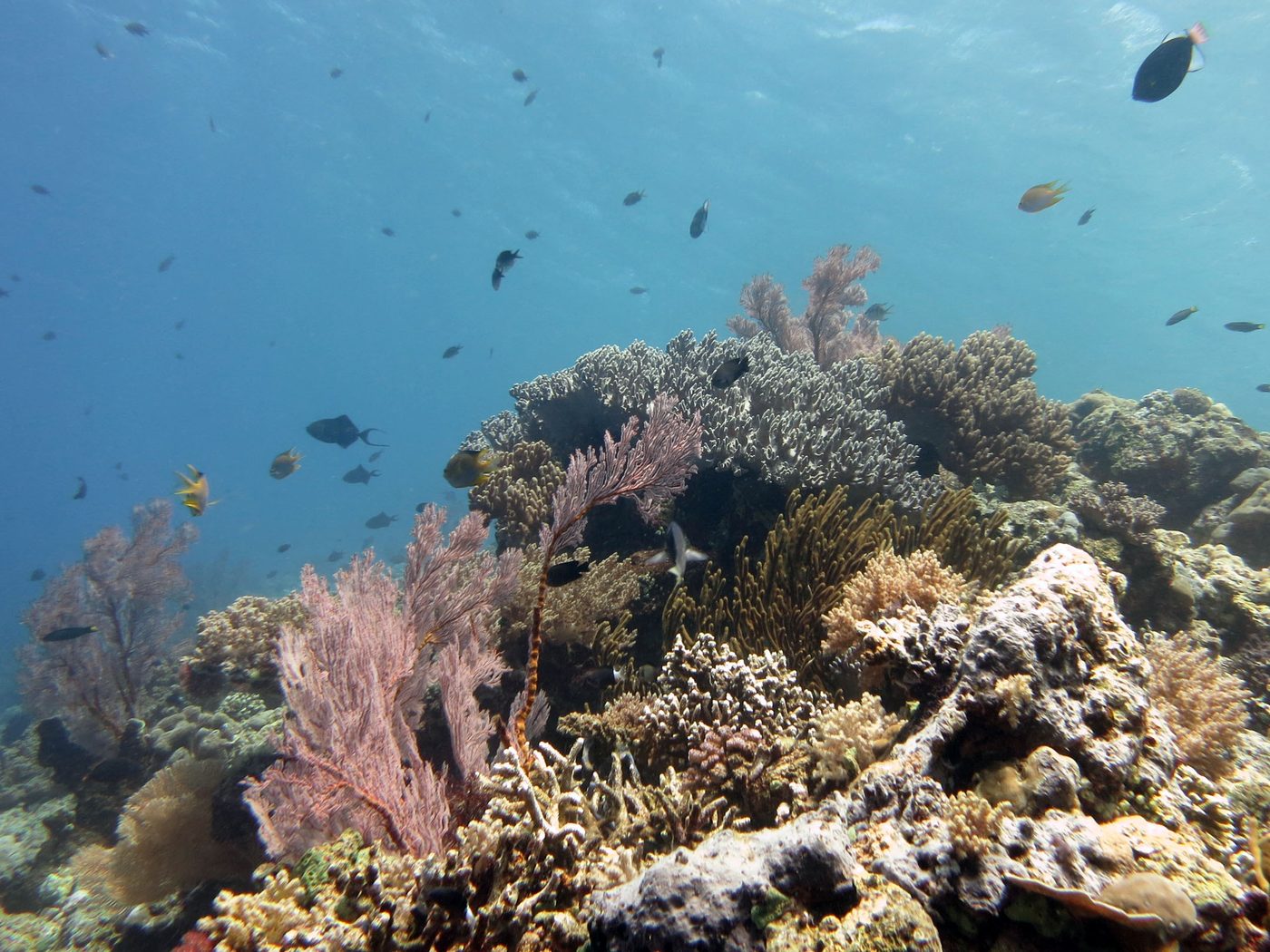 The Coral Garden on Menjangan, sea fans and hard coral in clear water. Photo: Lakshmi Sawitri / Wikimedia Commons (CC BY 2.0)
On the north side of the island, the Coral Garden starts on a shallow coral plateau. It slopes gently to a small drop-off, from about 4 metres to 30. Hard coral, soft coral and large sea fans spread across the slope. Turtles rest on the reef, and triggerfish, batfish and Moorish idols move over it.
Currents are usually mild or absent, so boats move here when conditions are rough elsewhere.
Snorkel or dive: both. It is the classic Menjangan snorkel and a good first dive.
Temple Point (Ganesh Corner)
Temple Point lies at the island's northeast tip, below the coastal temples and a white statue of Ganesha you can see from the boat. The dive starts on a gentle sandy slope, and depth runs from about 6 metres to 30.
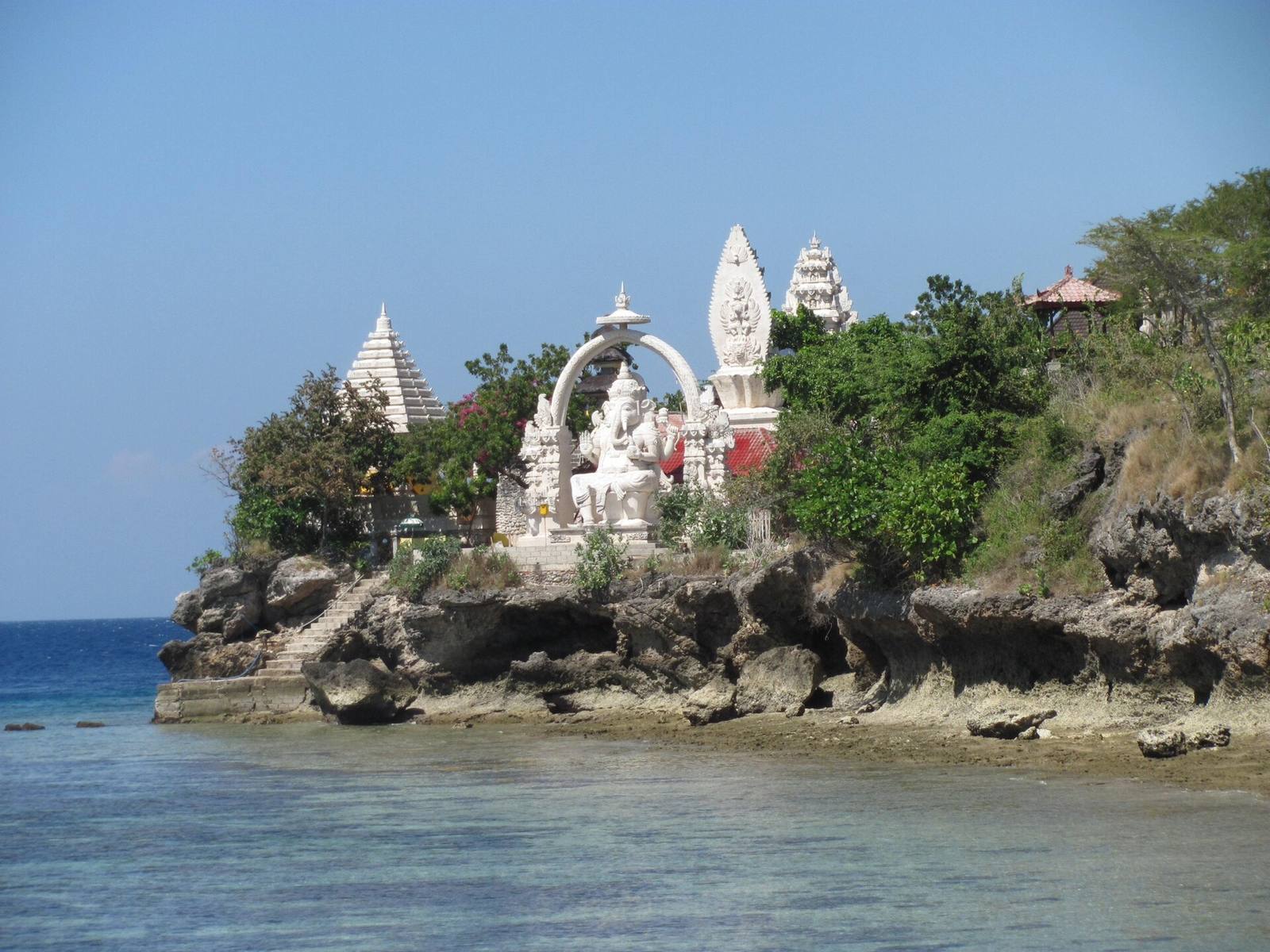 The white Ganesha statue and temple shrines on the rocky shore of Menjangan Island. Photo: Oogstweg / Wikimedia Commons (CC BY-SA 3.0)
To the west is a sloping reef with coral gardens. To the east is a steeper wall with cracks and overhangs, where blacktip and whitetip reef sharks are often seen.
Light to moderate current can run, most often from the southeast. On choppy days the boat captain keeps you on the sloping side.
Snorkel or dive: dive first. The shallow western slope suits snorkelers in calm water.
Anchor Wreck
In the northwest, a large anchor lies in about 6 metres of water at the top of the reef wall. It belonged to an old wooden ship, described variously as a nineteenth-century Dutch vessel or an older colonial-era boat. Most of what is left of the hull lies far deeper, beyond recreational limits.
The anchor is the landmark, and the steep wall beside it is the dive. Sea fans and sponges cover it, with turtles, reef sharks and schooling fusiliers, and a light drift often carries divers on toward the Eel Garden.
Snorkel or dive: a dive. Snorkelers can see the anchor from the surface on a clear day.
Eel Garden
At the western end of the island, the wall gives way to a slope of bright white sand. A large colony of garden eels sways out of its burrows there and vanishes as you approach.
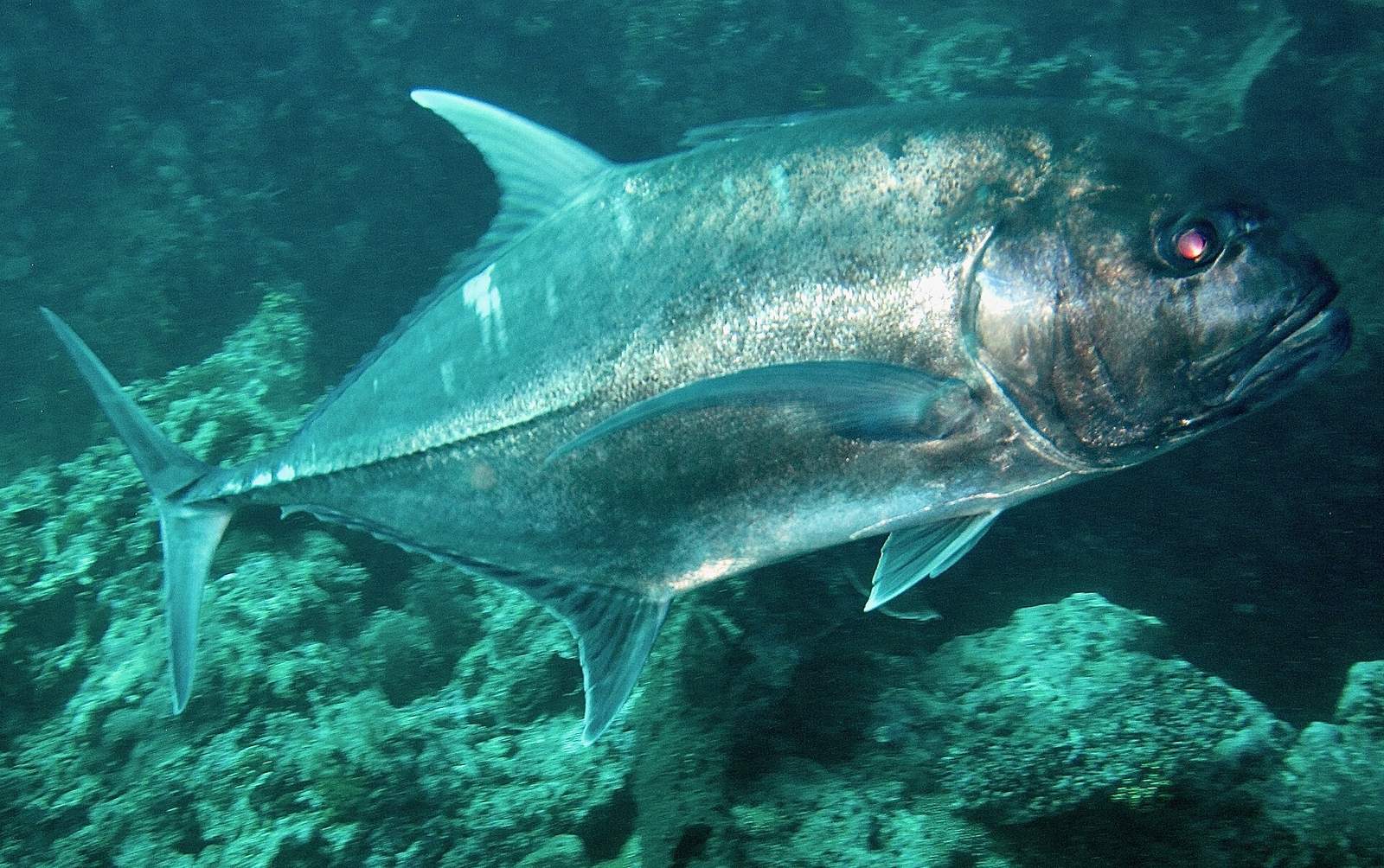 A giant trevally (Caranx ignobilis) at the Eel Garden dive site, Menjangan Island. Photo: Bernard Dupont / Wikimedia Commons (CC BY-SA 2.0)
The dive usually begins on the wall among large gorgonians and ends over the sand and shallow coral bommies. It is a common spot for the safety stop at the end of an Anchor Wreck dive. When moderate current runs, it is one of the better places to see giant trevally and barracuda passing through.
Snorkel or dive: both. The sand and coral shallows reward a careful snorkeler.
Dream Wall, Cave Point and Blue Corner
Three more names come up often.
Dream Wall, on the north side between the Anchor Wreck and the Coral Garden, is a long coral wall with large sea fans. Its busy shallows suit snorkelers.
Cave Point, east along the same reef as Pos II, has a shallow cave at about 12 to 14 metres. Juvenile whitetip reef sharks sometimes rest inside.
Blue Corner, on the southeast stretch, is where the wall bends and currents concentrate, bringing schooling fish. Snorkeling and freediving boats like it, and the visibility here changes with the tide.
For the Biorock reefs in the bay, gear and dive courses, see diving and snorkeling in Pemuteran.
On Shore: Wild Deer and Pilgrim Temples
Java deer, menjangan in Indonesian, give the island its name. They live here wild and have long crossed from the mainland.
You are most likely to meet them near Pos I, where boats land for lunch and some deer have learned to approach people for food. Signs on the island ask visitors not to feed them, so keep your distance and keep your lunch to yourself.
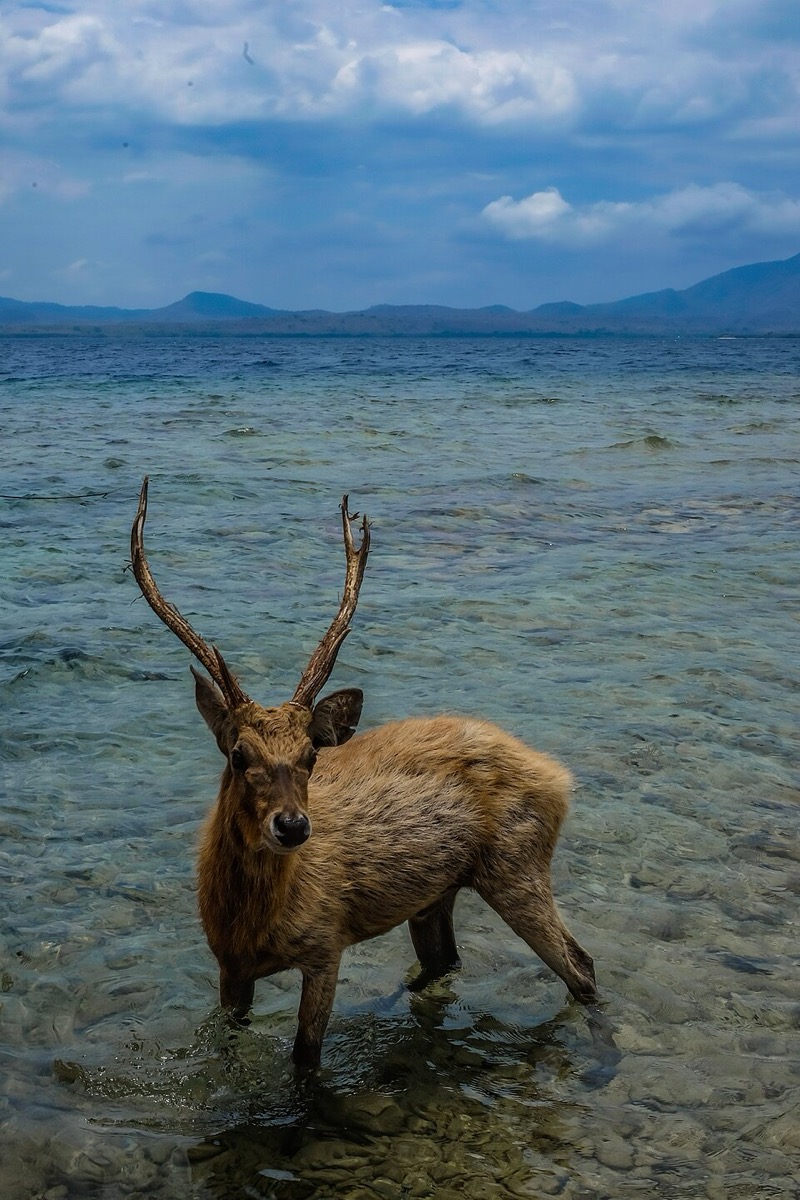 A rusa stag in the Menjangan shallows. Photo: Syselpunk / Wikimedia Commons (CC BY-SA 4.0)
The island is also a place of pilgrimage, with several temples on its shore. Pura Segara Giri Dharma Kencana carries the large white Ganesha statue that faces the sea above Temple Point. Pura Taman Kelenting Sari stands nearby, and Pura Gili Kencana is another of the island's shrines.
On ceremony days Balinese pilgrims cross in numbers, which can tie up boats at the harbours for the day.
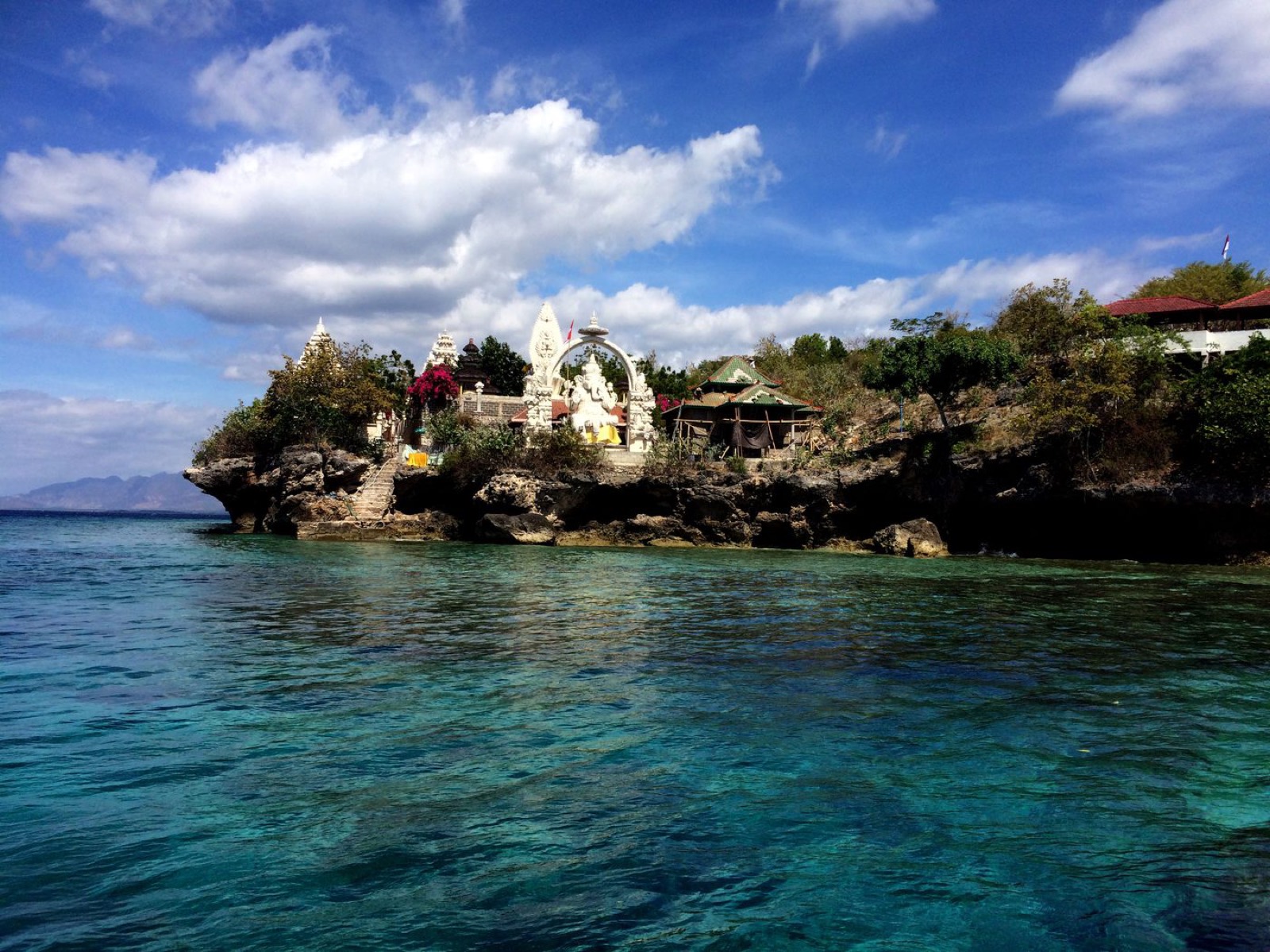 The temple shrines on Menjangan's shore, seen from the water. Photo: Lakshmi Sawitri / Wikimedia Commons (CC BY 2.0)
If you walk up to a temple, wear a sarong and sash, cover your shoulders and keep a respectful distance from anyone praying. The rest is in the Bali temple etiquette guide.
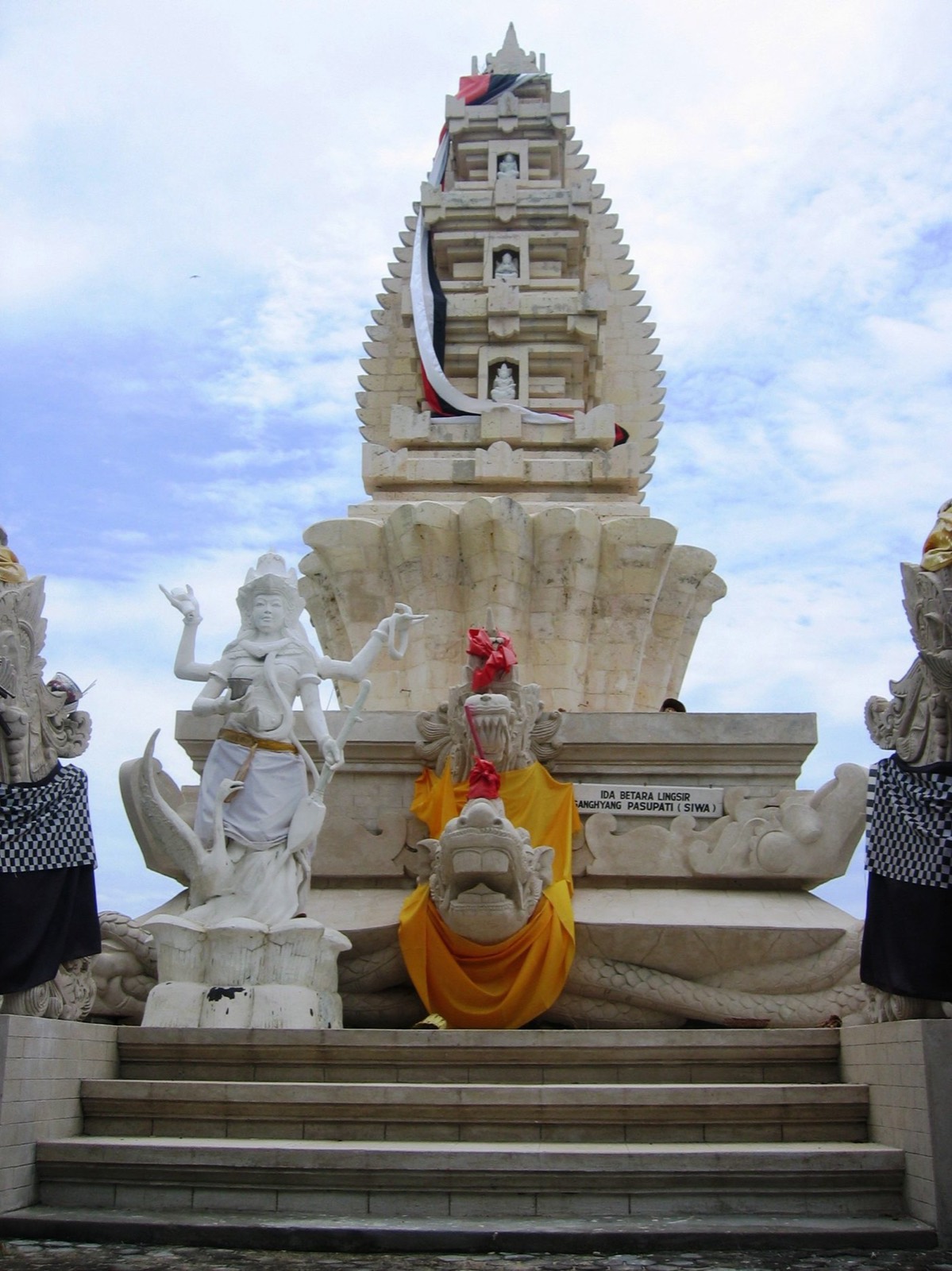 A shrine at Pura Taman Kelenting Sari on Menjangan Island. Photo: ŭn-sŭng / Wikimedia Commons (CC BY 2.0)
The Boat: Four Departure Points, a Park Guide on Every Trip
You cannot visit Menjangan on your own. Trips run on registered boats, and every group goes with a licensed park guide.
The park names Labuan Lalang and Banyuwedang as its two official gateways. It lists Sumberkima and Pemuteran among the other departure points, which gives four ways onto the water:
- Labuan Lalang: the historic harbour and still the best known, the national park jetty inside the park boundary, about 30 minutes' drive west of Pemuteran. Traditional wooden outriggers (jukung) and some fibreglass boats work from here.
- Banyuwedang: about 20 minutes from Pemuteran, now one of the most popular departure points, with easier logistics than Labuan Lalang.
- Sumberkima: the village between Banyuwedang and Pemuteran, listed by the park among the departure points.
- Pemuteran beach: some dive centres take you straight from the beach in Pemuteran. It saves the drive, but depends on the operator and on sea conditions.
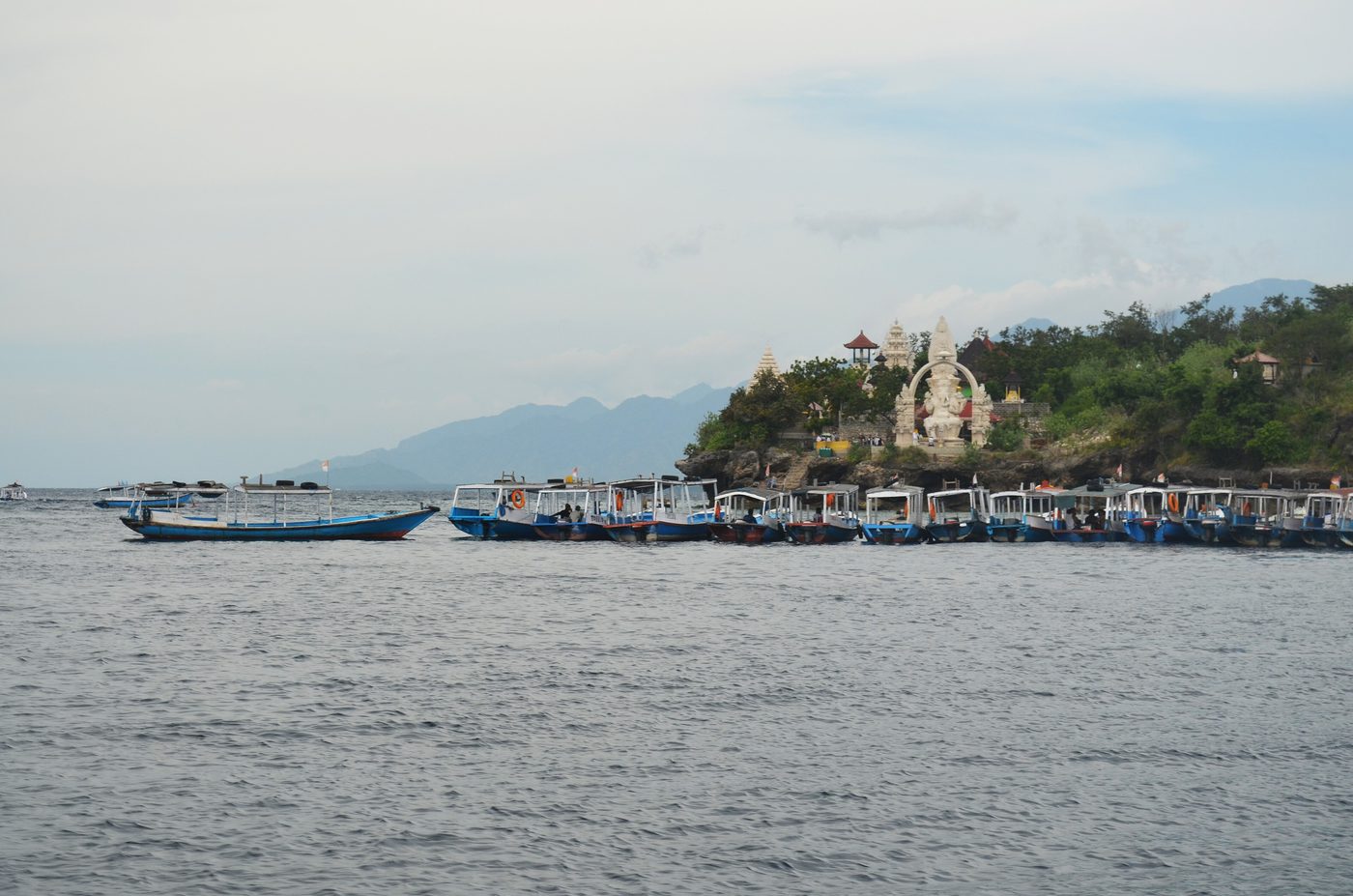 Day boats moored off Menjangan. Photo: Chafidwahyu / Wikimedia Commons (CC BY-SA 4.0)
From the harbours the crossing takes about 30 to 45 minutes by wooden outrigger and about 20 minutes by fibreglass speedboat. At the island, boats tie up to moorings close to each site, so entries are short and the surface is usually calm.
What a Trip Costs: Ask What the Quote Includes
A Menjangan trip has three cost parts: the boat, the park fee and guide, and the diving or snorkeling itself. The last means gear, a dive guide and tanks.
Dive centres and lodges usually quote one price that covers all of it. A boat you charter at the harbour on your own is quoted separately from the park fee.
Before you agree to a price, ask whether the park fee, the park guide and lunch are included. Quotes that look cheaper often leave one of them out. Prices vary by operator and by boat type, so get two quotes before you book.
There are two ways to book:
-
One booking for everything. A dive centre or lodge on the Pemuteran side arranges boat, guide and permit in one go, which is how they usually sell it. Diving and snorkelling in Pemuteran covers the village's dive schools.
-
A boat at the gateway. You charter a boat at the harbour and take the park guide at the permit desk.
The Park Fee Is Set Nationally, and Operators Usually Pay It
Menjangan sits inside a national park, so every visitor pays a park entry fee. The marine activities you do there fall under the park's permit system.
The fees are set nationally. Indonesia revised the entry tariffs for all its national parks from 30 October 2024 under Government Regulation (PP) No. 36 of 2024. West Bali National Park's fees changed with them, with separate rates for foreign and Indonesian visitors.
Ask your operator which of those rates applies to you, and whether snorkeling or diving is charged on top.
In practice you rarely deal with the permit desk yourself. Dive centres and lodges handle the paperwork, pay the fees on your behalf and often fold them into their price.
If you hire a boat directly at Labuan Lalang, you pay at the park's section office by the harbour, which handles the permit and the guide. Carry enough cash either way.
The wider park, its gateways at Labuan Lalang and Cekik and its land treks are in the West Bali National Park guide.
A Half-Day Snorkel or a Full Day of Diving
Both plans start from Pemuteran in the early morning.
Half day, snorkeling. Leave Pemuteran early and be on the boat by the start of the morning. Snorkel two sites, usually the Coral Garden or a wall top and then Pos I, and be back on the mainland by early afternoon. This plan suits families, beginners and anyone with other plans for the afternoon.
Full day, diving. Two or three dives, with a surface interval and lunch at Pos I between them. A common pattern is a morning wall dive at Pos II, Bat Cave or the Anchor Wreck, drifting toward the Eel Garden. After lunch at the ranger station comes an easier second dive at the Coral Garden or Pos I. You are back in Pemuteran by late afternoon.
On the way back. The grave-temple of Jayaprana and Layonsari sits on the hill above Teluk Terima, just past Labuan Lalang. It is a short climb with a view over the bay to Menjangan, so pair it with a Labuan Lalang departure.
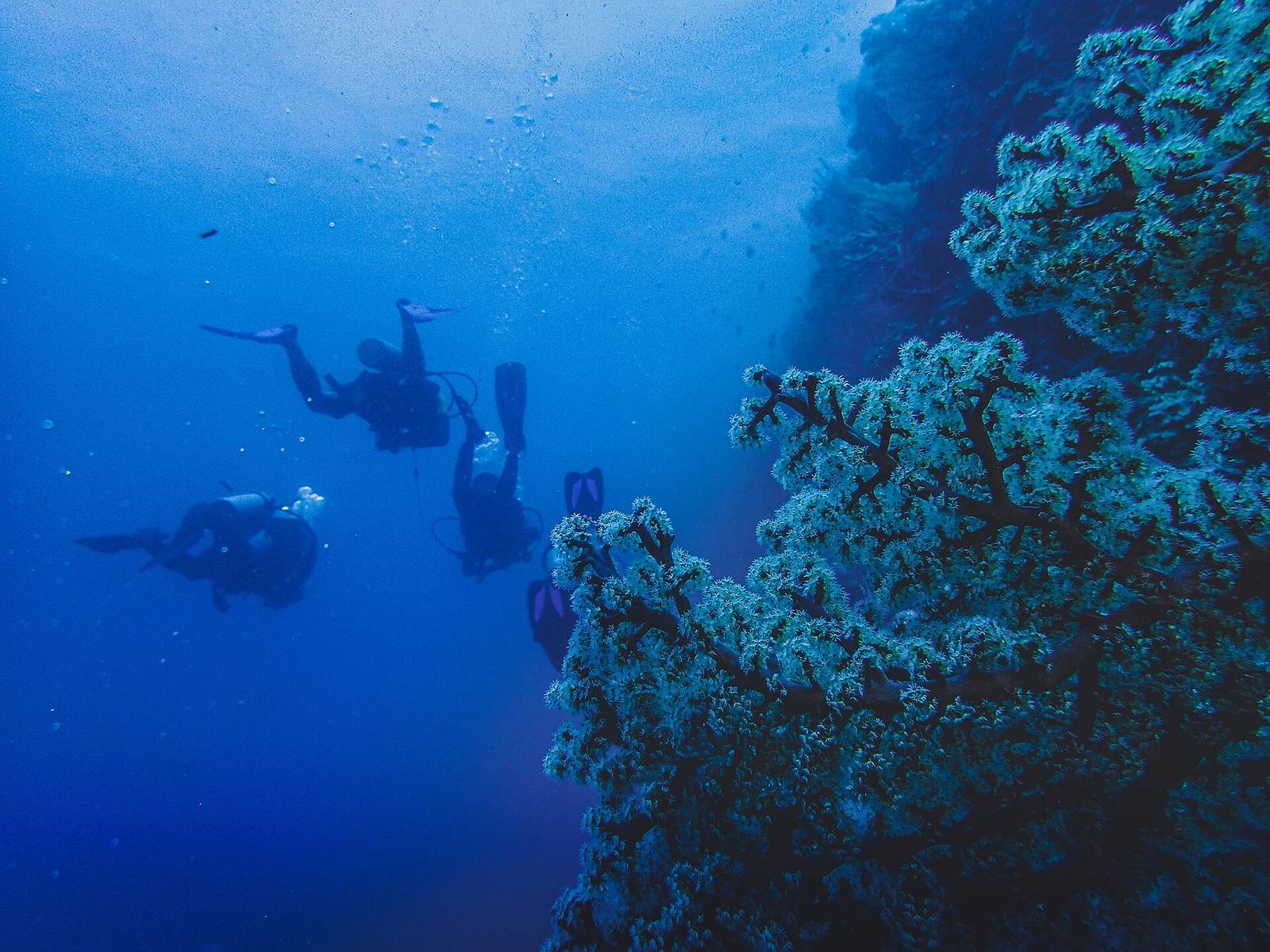 Divers beside a coral wall at Menjangan Island, the kind of dive a full day out covers. Photo: Noirperspective / Wikimedia Commons (CC BY-SA 4.0)
Getting There: Base Yourself in Pemuteran
From Pemuteran, you are already at the launch point.
Boats leave from the village beach, or from Sumberkima, Banyuwedang or Labuan Lalang, up to about 30 minutes' drive away. From Lovina, Pemuteran is about 90 minutes west along the coast road.
From Seminyak, Ubud or the airport, the drive to the northwest coast takes roughly four hours, and up to four and a half with traffic. A day trip from there means more hours in the car than in the water. Stay a night or two in Pemuteran instead and take the boat from there, relaxed.
Getting to north Bali has the detailed routes and driver options. Many people fold Menjangan into a wider north-coast trip. The complete north Bali guide ties the region together: dolphins, waterfalls, hot springs and the reef.
Best Time: April to October, in the Morning
Menjangan can be dived all year, and the dry season, April through October, is the most reliable window. Seas are calm, boats run without weather interruptions, and visibility is at its best.
The rainy season runs October to April, with October and April as changeover months (Bali provincial government). It brings occasional downpours and lower clarity when wind or rain stirs the water. Trips still run, and strong currents stay rare. The northwest is one of the drier corners of Bali, so the wet months often hold up well here.
Crowds. July to October is high season, when more boats share the moorings and the lunch stop at Pos I gets busy. Underwater, groups spread out along the walls. November to May is quieter, and boats are easier to book.
Ceremony days bring pilgrims to the island's temples and can make boats scarce, so ask your operator whether a festival falls on your date.
Morning beats afternoon in any season. The water tends to be calmest early, the light is good for snorkeling, and you miss the heat of the open boat.
Menjangan, Pemuteran's Bay or Amed: Which Suits Your Days
With limited days, these are the three north-coast choices people weigh.
Menjangan has clear water and a dramatic reef, with walls, sea fans, reef sharks and turtles inside a protected park. The cost is logistics: a boat, a park guide and a park fee, and a morning goes on it.
Pemuteran's own reefs sit right off the village, and some can be snorkeled from the beach. The bay holds the Biorock reef-restoration structures, where coral grows over steel frames. Visibility is lower than at Menjangan and the reef is more modest. In return you can be in the water in minutes, as often as you like, for next to nothing. The detail is in the north Bali snorkeling guide.
Amed, at the northeast end of the coast, is a shore-diving and freediving base. You walk in off the beach, and the USAT Liberty wreck at Tulamben is twenty minutes up the road. Amed suits divers who want two dives a day without boats.
Amed is two and a half to three hours along the coast road from Lovina and further still from Pemuteran, so treat it as a separate base. See the Amed guide.
In short, choose Menjangan for one big day on the reef and Pemuteran's bay for easy, repeated swims. Amed is the base for a week of shore diving.
What to Bring for an Open Boat
The day is spent in and out of the water, so pack for sun and salt.
- Reef-safe sunscreen, plus a rash guard or shirt for the boat
- A hat and sunglasses for the crossing
- Your own mask if you have one that fits, though operators provide gear
- A dry bag for phone, camera and anything that must stay dry
- A towel and a change of clothes for the ride back
- Drinking water and a snack, since there is nothing to buy on the island
- Cash for fees, tips and anything arranged on the day
- A sarong and a cover-up if you plan to walk up to the temples
Practical Notes
The details below change. Confirm current rates and conditions locally before you go.
- Trip price: boat, park fee and guide, and gear, usually bundled by the operator. Ask what is included and compare two quotes.
- National park fee: set nationally by government regulation, with separate foreign and Indonesian rates. Ask what it covers.
- Guide: a registered national park guide is mandatory, and you cannot visit independently
- Harbours: Labuan Lalang (about 30 min from Pemuteran), Banyuwedang (about 20 min), Sumberkima, or Pemuteran beach
- Crossing: about 30 to 45 min by wooden outrigger, about 20 min by speedboat
- Lunch stop: Pos I ranger station, busy at midday in high season
- Money: bring cash
- Connectivity: mobile signal is patchy on the water and inside the park, so download offline maps first
- Conditions: check the forecast in the wet season, since rough seas can move or cancel trips
FAQ
Is Menjangan Island worth visiting? Yes. It is often rated among the best snorkeling and diving in Bali, with visibility reported at 20 to 40 metres in good conditions. Its coral walls are covered in sea fans, and its shallow coral gardens suit beginners and experienced divers alike. The island sits inside a protected national park, which has kept the reef in good condition.
What are the best snorkeling spots on Menjangan Island? The Coral Garden on the north side, Pos I by the ranger station, the shallow tops of Dream Wall and the Eel Garden sand. All have calm, clear water a few metres deep. Strong swimmers can also follow the top edge of the walls at Pos II and look down the drop-off.
What are the best dive sites at Menjangan? Pos II drifting to Bat Cave for the wall and reef sharks, the Anchor Wreck wall drifting toward the Eel Garden, Temple Point below the Ganesha statue, and the Coral Garden for an easy dive. Pos I is the usual site for beginners and training dives.
How do you get to Menjangan Island? By boat only, with a registered park guide. Boats leave from Labuan Lalang or Banyuwedang, the park's official gateways, from Sumberkima, or directly from Pemuteran beach. The crossing takes about 30 to 45 minutes by wooden outrigger or about 20 minutes by speedboat. The easiest way is a trip booked with a dive centre or lodge in Pemuteran. When you enquire, ask whether the boat, the park guide and the permit are all in the price.
How much does a trip to Menjangan cost? It depends on whether you snorkel or dive, join a shared boat or charter one, and whether the park fee is in the quote. The park entry fee is set nationally by government regulation, and operators usually bundle it with the boat and guide. Ask each operator what their price includes, and compare two quotes.
Do you need a guide for Menjangan Island? Yes. The island is inside West Bali National Park, and a licensed park guide must accompany every group. The guide comes with the park permit when the trip is booked as a package.
Is it safe to swim at Menjangan Island? Yes, in normal conditions. The Coral Garden and Pos I are calm and gentle. The walls involve deeper water and some drift, so they suit confident swimmers and divers, and the crew picks sites to match your group and the day's current. Follow the guide's lead on where to enter and when to get out.
Can you do Menjangan as a day trip from south Bali? You can, but it means about four hours each way in the car for a few hours on the water. A night or two in Pemuteran turns it into a relaxed morning trip.
When is the best time to visit Menjangan Island? The dry season, April through October, for the calmest seas and clearest water, with mornings better than afternoons year-round. July to October is busiest. November to May is quieter, with lower visibility after heavy rain.
Sources
- Balai Taman Nasional Bali Barat, Umum (Menjangan inside the park, its eight dive and snorkel points, the two official gateways at Labuan Lalang and Banyuwedang, the other departure points, the crossing from Labuan Lalang), read September 2026 (in Indonesian)
- JDIH BPK, Government Regulation No. 36 of 2024 (non-tax state revenue tariffs of the environment and forestry ministry, in force from 30 October 2024), read September 2026 (in Indonesian)
- Bali Provincial Government, Tarubali, Iklim tropis laut di Bali (dry season April to October, rainy season October to April, October and April as changeover months), read October 2026 (in Indonesian)