On this page
- In Brief
- North Bali Photography at a Glance
- The North Gives a Photographer Space
- The Waterfalls: Sekumpul for Scale, Aling-Aling for Motion
- The Highlands and Lakes: Mist at Munduk, Twin Lakes from Wanagiri
- The Coast: Black Sand, Dolphin Boats and a Long Sunset
- Temples and Village Life: the Everyday North Between the Big Stops
- When to Shoot: Dawn First, Then Golden Hour on the Coast
- Which Season: Dry for Clear Air, Wet for Full Waterfalls
- Practical Notes
- FAQ
- Sources
In Brief
The best north Bali photography is concentrated in three places. They are the waterfall gorges in the hills above Lovina, the misty highlands and lakes around Munduk and Wanagiri, and Lovina's black-sand coast at dawn.
Temples and village life sit between them. A single base in the north puts almost every frame within an hour or two of the camera.
Most of the strongest locations reward an early start, because dawn is the strongest light here. The dry months from April to October give the clearest air.
North Bali Photography at a Glance
- Where: the waterfall gorges above Lovina, the highlands and lakes around Munduk and Wanagiri, and the Lovina coast
- Waterfalls: Sekumpul for scale, Aling-Aling for motion
- Viewpoint: Wanagiri Hidden Hills, over the twin lakes of Buyan and Tamblingan
- Coast: grey and black volcanic sand, dolphin boats at dawn, golden hour in the evening
- Strongest light: dawn
- Weakest light: midday
- Clearest season: April to October, steadiest from June through September
- Greenest season: November to March, with fuller waterfalls
- Getting around: a driver who knows the routes
- Bring: a lens cloth, a sealed bag, footwear that grips wet rock, and cash for gate fees
The North Gives a Photographer Space
The light here arrives over empty rice terraces. The waterfalls run through jungle few visitors reach, and the ridges look out over lakes with barely another tripod in sight.
You photograph at your own pace.
The Waterfalls: Sekumpul for Scale, Aling-Aling for Motion
The hills between Lovina and Munduk hold some of the most dramatic waterfalls in Bali, and they photograph as well as they look in person.
Sekumpul: a Whole Gorge in One Frame
Sekumpul Waterfall is the headline. A group of falls drops through a narrow jungle gorge, and the scale is the subject. Look for the spray, the green walls of the valley and the water threading down in separate ribbons.
A short trek down into the gorge gets you to the base. A wide lens there captures the full drop and the surrounding jungle in one frame.
Go first in the day. The light reaches the falls earlier in the morning, before the gorge falls into shade.
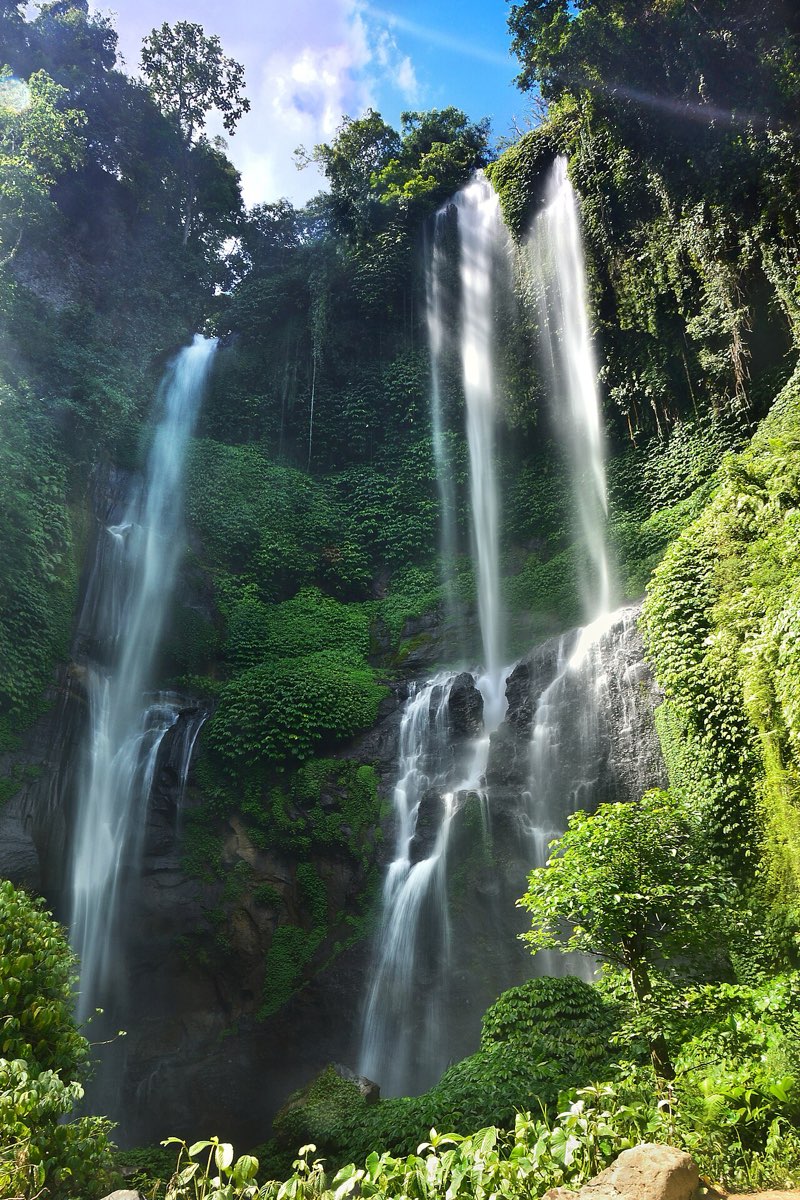 Sekumpul's main drop, the scale that makes the frame. Photo: Putu Andika Panendra / Wikimedia Commons (CC BY-SA 4.0)
Aling-Aling: Slides, Jumps and People in the Water
Aling-Aling Waterfall is the more active site. It is a split 35-metre fall, with the natural slides and jump pools at the neighbouring Kroya, Kembar and Pucuk falls.
For a photographer this means motion to work with: people in the water, the slides, and the smaller falls beside the main drop.
Bring something to keep the camera dry. The spray reaches further than it looks, and the swimming pools are the whole point of the place.
Keep the Gear Dry in Both Gorges
Both gorges run damp. A cloth for the lens, a bag that seals and footwear that grips wet rock will save more shots than any filter.
The Highlands and Lakes: Mist at Munduk, Twin Lakes from Wanagiri
Munduk: Weather as Part of the Picture
Munduk sits high enough that the weather becomes part of the picture. Mist moves through the coffee and clove plantations in the early morning, and the valleys fill and clear. The cooler air holds the haze longer than it would lower down.
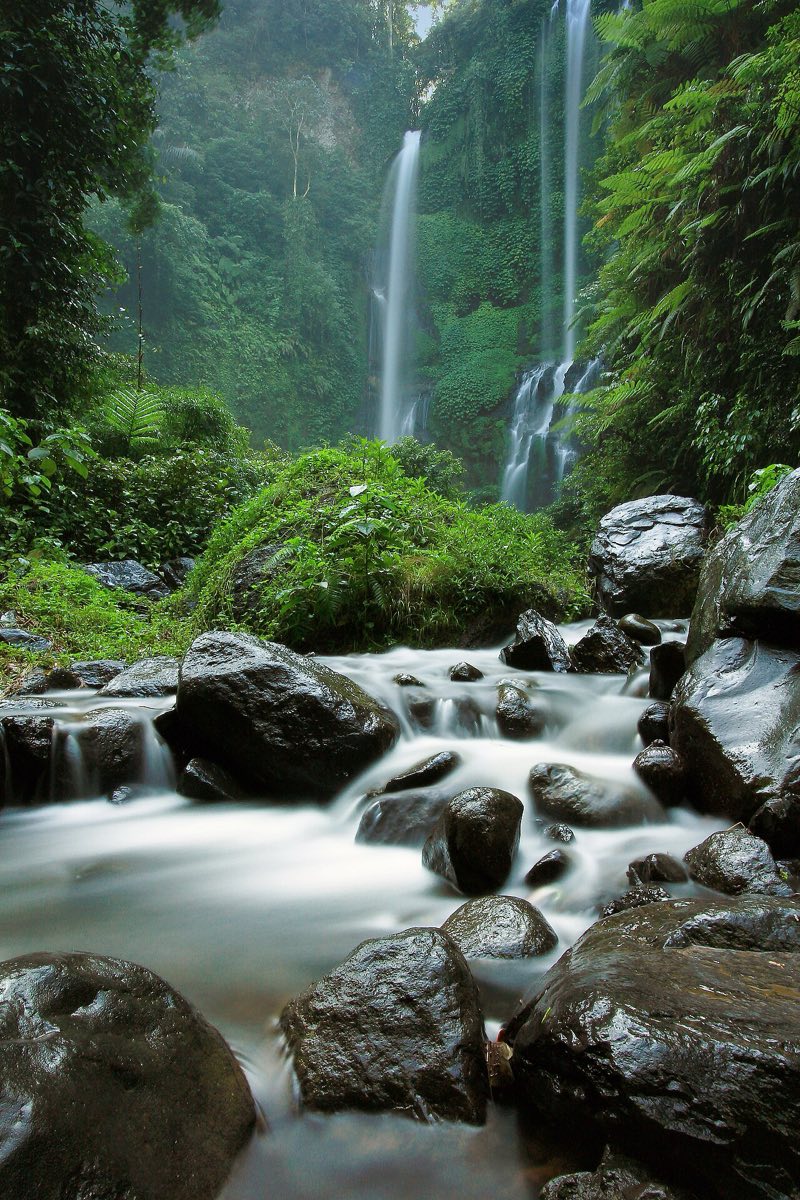
The waterfall trails below the village run through jungle that stays green year-round. This is layered, atmospheric country, made for the hour just after dawn.
Wanagiri: the Ridge Above the Twin Lakes
Up the ridge, Wanagiri Hidden Hills looks out over the twin lakes, Buyan and Tamblingan, lying side by side in the crater below.
These viewpoints are among the most photographed in the north. The frame holds the lakes, the forested slopes and, on a clear morning, a sea of cloud sitting in the valley.
There are built platforms and swings set up for the shot. Quieter spots along the ridge give you the view without the staging.
Morning is the window, before the cloud burns off and before the haze of a warm afternoon settles over the water.
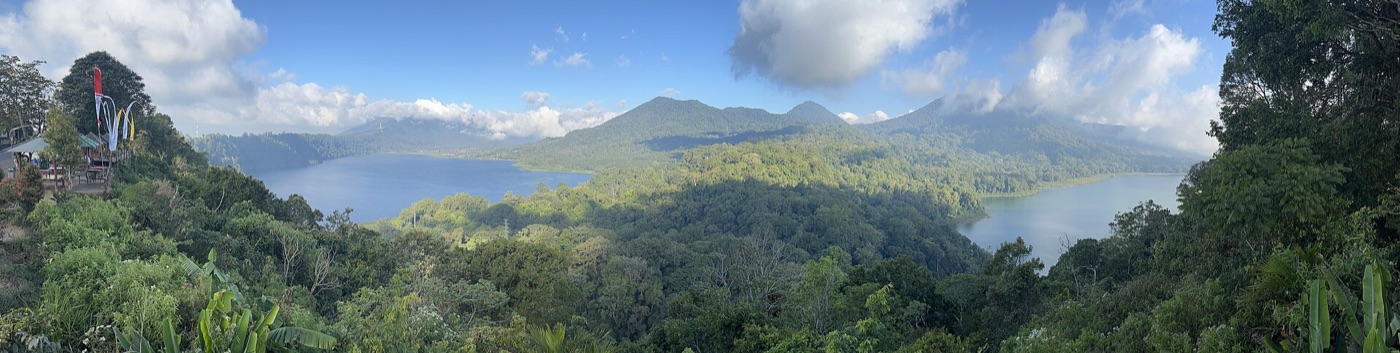 The twin lakes from the Wanagiri ridge, the north's most photographed view. Photo: Stefan Fussan / Wikimedia Commons (CC BY-SA 3.0)
The Road Between Them
The drive between Munduk and the lakes is itself worth slowing for. The road climbs through terraces and forest, and the pull-offs along the way frame the highlands as well as any marked viewpoint.
The Coast: Black Sand, Dolphin Boats and a Long Sunset
The Lovina area is where the north meets the sea, and the sand here is grey and black volcanic sand.
That changes how the coast photographs. The dark shore reads graphic against pale morning water. Reflections sit cleaner on the flat sea, and the wet sand at the tideline mirrors the sky.
The Dawn Dolphin Trip
The dawn dolphin trip is the frame many people come north hoping to make. Traditional jukung outriggers leave before sunrise and head out to where the dolphins feed. The picture is as much about the boats and the low sun on the water as the dolphins themselves.
The fins break the surface fast and unpredictably, so a longer lens and a quick shutter help. A wider shot of the fleet against the sunrise often lands more reliably than the chase for a single dolphin.
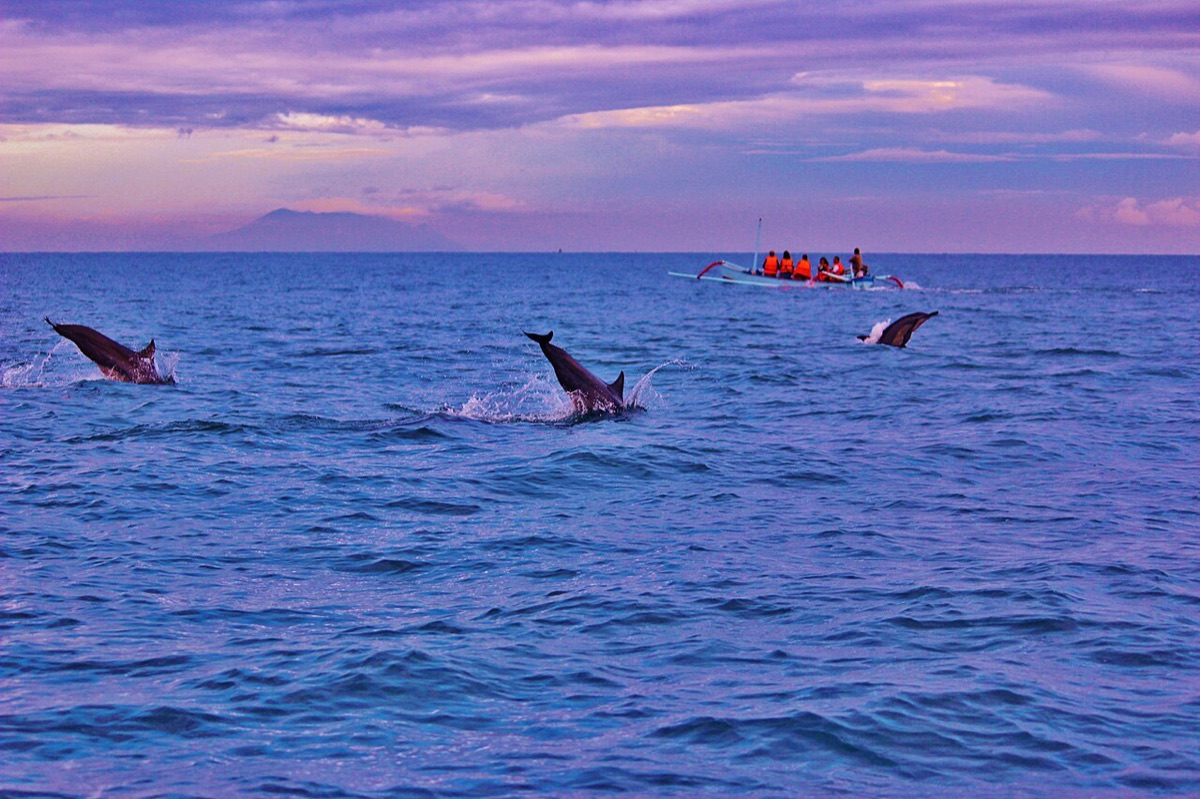 The dawn frame off Lovina: low sun, flat water, fins breaking the surface. Photo: Michelle Maria / Wikimedia Commons (CC BY 3.0)
Evening on the Shore
Back on shore, Lovina faces north and slightly west, which gives it long, soft evening light over the Bali Sea. The coast that starts the day with the dawn boats closes it with an easy golden hour.
Temples and Village Life: the Everyday North Between the Big Stops
Between the waterfalls and the coast sits the everyday north, and it is some of the most rewarding material to photograph.
The temples of the north carry their own character, with weathered stone, carved gates and offerings left fresh each morning. They tend to be quiet.
Photograph them with respect. Dress modestly, ask before pointing a camera at people in prayer, and stay outside areas marked private.
Village life runs on its own rhythm:
- morning markets
- fishermen pulling boats up the black sand
- rice work in the terraces
- the slow trade of a roadside warung
These are the frames that say north Bali more than any landmark. They reward patience and a light footprint more than any particular gear.
A driver who knows the area can route you past the temples and villages that sit between the bigger stops. A lot of the best unplanned frames happen that way.
When to Shoot: Dawn First, Then Golden Hour on the Coast
Dawn is the strongest light in the north, and it earns the early alarm. Four things come together in the first hours:
- the gorges catch sun before the walls throw them into shade
- the highlands hold their mist
- the lakes lie still before the wind picks up
- the coast gets the dolphin boats under a low sun
Golden hour in the evening is the coast's turn. Lovina's north-and-west aspect gives a long, soft sunset over the sea, and the black sand and calm water make the most of it.
Midday is the weakest light almost everywhere up here, with hard shadows in the gorges and haze over the lakes. Use that hour to travel, eat or scout.
Which Season: Dry for Clear Air, Wet for Full Waterfalls
The dry months from April to October give the clearest air and the most reliable mornings. June through September is the steadiest window for clean lake views and open skies.
The wet season from November to March runs greener and fuller, with the waterfalls at their most powerful and dramatic. The trade is more cloud, more haze and slippery trails.
Both seasons photograph well. The dry season is clearer, and the wet season is moodier.
Practical Notes
These details change. Confirm current access, fees, and conditions locally before you go.
- Start early. The best light and the emptiest spots both belong to the first hours after dawn. Build the day around morning shoots.
- Protect the gear. Both waterfall gorges run damp. Carry a sealed bag and a lens cloth, and wear footwear that grips wet rock.
- A local driver helps. The spots are spread across the hills and coast. A driver who knows the routes saves hours and finds the frames between the marked stops.
- Drone rules vary. Restrictions apply around temples, villages, and some viewpoints, so check locally before flying.
- Respect the temples. Dress modestly, ask before photographing people at prayer, and stay clear of areas marked private.
- Carry cash. Gate fees at the waterfalls and viewpoints are simplest paid in cash.
FAQ
Where are the best photography spots in north Bali? The strongest are Sekumpul and Aling-Aling waterfalls in the hills above Lovina, the Wanagiri Hidden Hills viewpoints over the twin lakes, the misty highlands and waterfall trails around Munduk, and the black-sand coast at Lovina at dawn. The temples and villages between them add some of the most rewarding frames.
What is the best time of day for photos in north Bali? Dawn is the strongest light. The waterfall gorges catch sun early before falling into shade, the highlands hold their morning mist, the lakes lie still, and the dolphin boats run under a low sun. Evening golden hour belongs to the Lovina coast, which faces the sunset over the Bali Sea.
Where can you photograph waterfalls in north Bali? Sekumpul, for the scale of a multi-fall jungle gorge, and Aling-Aling, for water, motion, and the slides and pools. Both sit within an hour of Lovina and photograph best in the morning. Munduk's highland falls add a cooler, mistier option.
Is Wanagiri Hidden Hills good for photography? Yes. The ridge looks straight out over the twin lakes, Buyan and Tamblingan, with forested slopes and, on a clear morning, cloud sitting in the valley. There are built platforms and swings set up for the shot, and quieter points along the ridge for the view on its own. Go in the morning before the haze settles.
What is the best season for photography in Bali? The dry season, April to October, gives the clearest air and the most reliable mornings, with June through September the steadiest window. The wet season, November to March, runs greener and makes the waterfalls more dramatic, traded against more cloud and slippery trails. Both work for photography.
Sources
- Indonesia Ministry of Tourism, Lovina Beach: Bali's dolphin playground in the north (the grey and black volcanic sand, the coast facing the Bali Sea, the early-morning dolphins), read September 2026
- Desa Sambangan (village government), Aling-Aling Waterfall, read September 2026 (in Indonesian)
- Visit North Bali (Buleleng Regency), Munduk Tourism Village, read September 2026
For how the photography stops fit into a wider trip, see the complete north Bali guide.