
On this page
In Brief
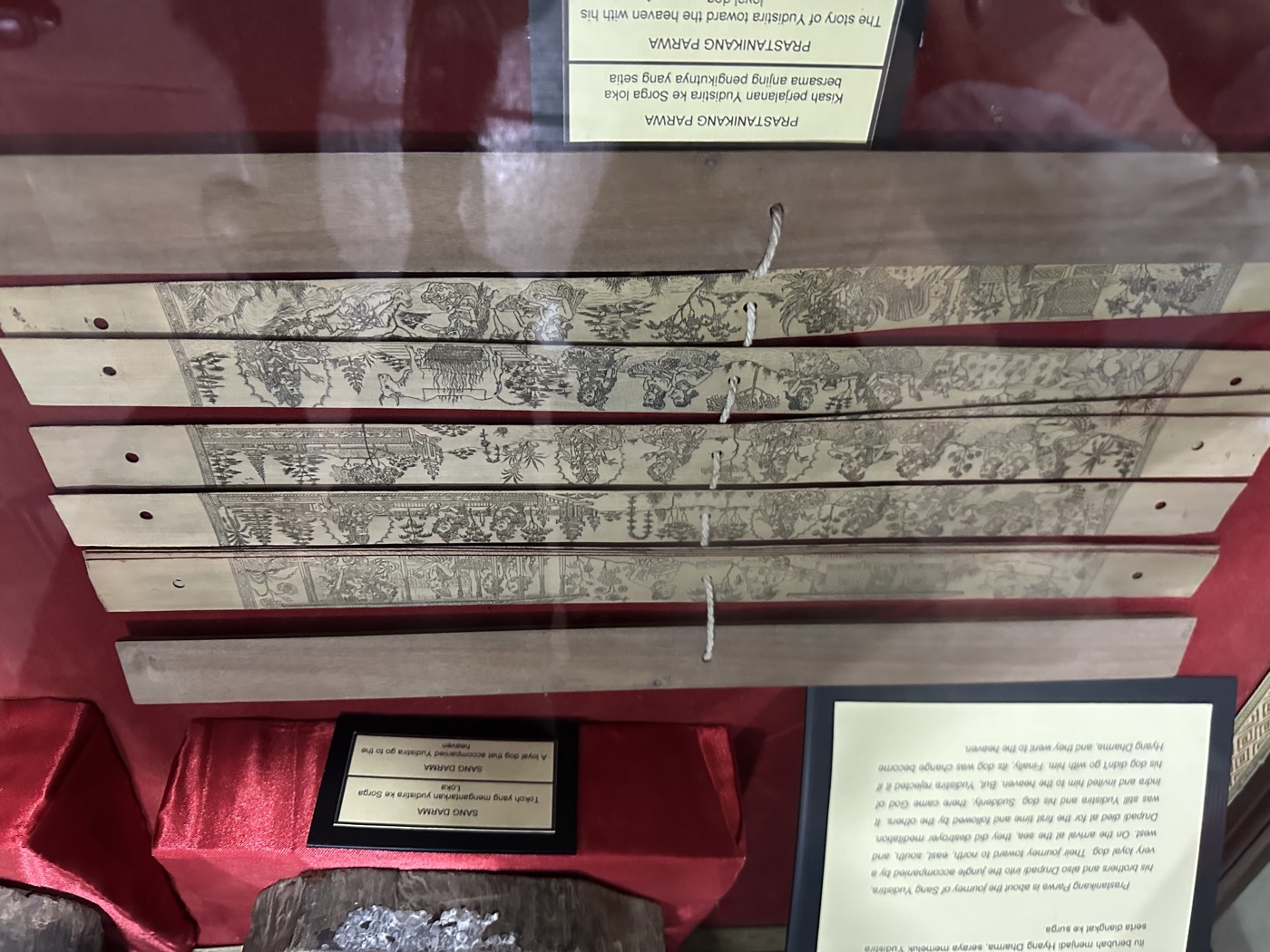
Gedong Kirtya is a working library of lontar in Singaraja, north Bali's old capital. Lontar are traditional Balinese manuscripts, inscribed by hand onto dried palm leaves.
The library holds thousands of texts on religion, medicine, law, literature and magic. It is one of very few institutions still preserving and even creating lontar.
It is a quiet and little-known stop, a short drive east of Lovina, and it opens on weekdays. A short, respectful visit is one of the most singular things to do in the north.
Gedong Kirtya at a Glance
- What it is: A library of lontar (palm-leaf) manuscripts
- Where: Singaraja, north Bali's old capital
- Holds: Thousands of texts, religion, medicine (usada), law, literature, magic
- Founded: 2 June 1928, as a foundation named for two Dutch scholars of Balinese language and custom, Liefrinck and van der Tuuk
- Run by: The Bali provincial government, as a unit of its culture office
- Rare: One of the few places still preserving and copying lontar
- The craft: Text incised into palm leaf with a knife, then rubbed with soot
- Best for: Anyone drawn to history, books, and the deep written culture of Bali
A Lontar Is a Book Written on Palm Leaf
Long before paper, the Balinese wrote on lontar, as did the wider Hindu-Buddhist world of the archipelago.
The leaves of the lontar palm are dried, cut into strips and inscribed. A scribe incises the letters with a small knife, then rubs soot or candlenut ash into the cuts so the script appears.
Bound between wooden covers, a lontar can last centuries if cared for. When it is recopied before it decays, the text passes down through generations.
These leaves hold an extraordinary range of subjects:
- sacred texts and theology
- the usada, traditional medicine
- law codes
- epic literature and poetry
- genealogies
- architecture
- works on magic and ritual power
They are the encyclopaedia of old Balinese knowledge.
The Collection Runs From Mantras to Folk Tales
Buleleng's culture and tourism office counts about two thousand lontar and several thousand copies.
They are sorted into classes:
- mantras and sacred texts
- ethics
- astronomy and astrology
- teachings
- traditional medicine
- poetry
- history and folk tales
Alongside them sit prasasti inscribed on copper plates. There are also papers in Balinese and Roman script from the colonial administration.
Today the Bali provincial government runs the library as a unit of its culture office.
Gedong Kirtya Opened in 1928, With a Name Suggested by the King of Buleleng
Gedong Kirtya exists to keep this written knowledge alive.
It began with a meeting of Dutch scholars at Kintamani. The meeting set up a foundation for keeping lontar, with the help of Balinese priests and kings.
The foundation was established on 2 June 1928 as the Stichting Liefrinck-van der Tuuk. It was named after F. A. Liefrinck and H. N. van der Tuuk, two Dutchmen who had pioneered the study of Balinese language and custom.
The king of Buleleng, I Gusti Putu Djelantik, suggested adding the Sanskrit-Balinese word kirtya. The library opened to the public on 14 September 1928. That date is carved as a chronogram on its entrance gate, according to the national museum registry.
It collected, preserved and catalogued these manuscripts, and it still copies them. It is one of the oldest manuscript preservation institutions in Indonesia.
Its place in the north, in the old capital, is fitting. Singaraja was Bali's centre of administration and learning when this work began.
Bali Has a Written Tradition, Beside Its Dance and Temples
Gedong Kirtya is a living link to how knowledge was held for a thousand years. It was written by hand on a leaf, and recopied with devotion before time erased it.
Beside its dance and its temples, Balinese culture has a textual tradition, with its own literature, science and law.
The same culture that built the carved temples and the subak water system also kept libraries of palm-leaf books. It still does, quietly, in the north.
The library sits alongside Singaraja's old-capital heritage and the wider history of north Bali. Together they show how much intellectual life the north once held.
How to Visit Gedong Kirtya
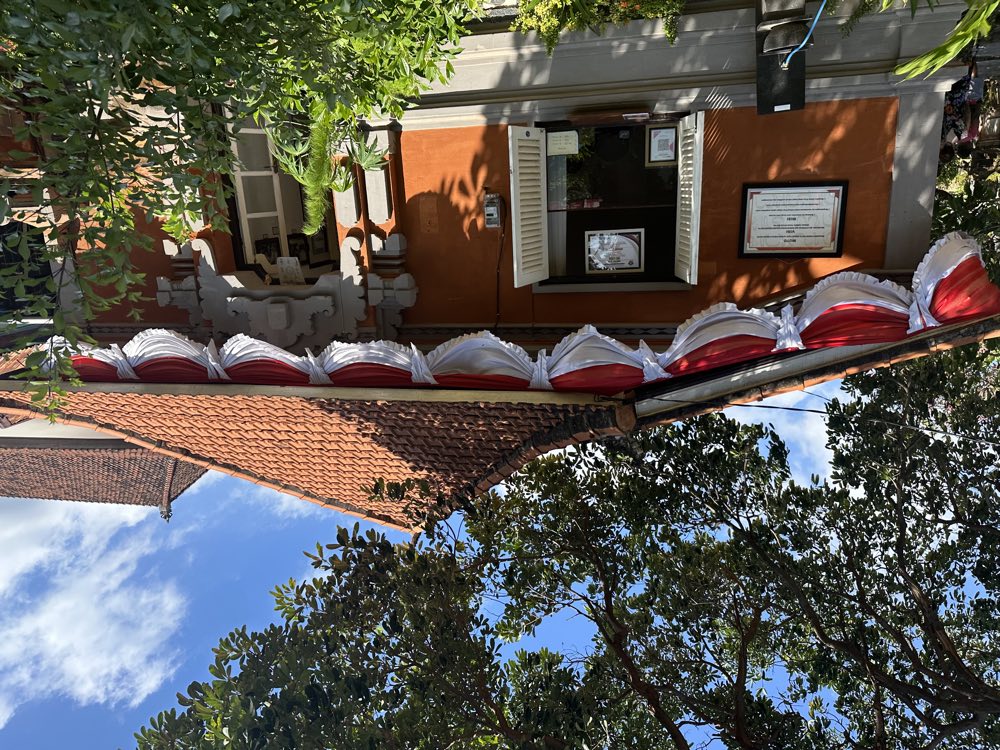 The library building in Singaraja, dressed in red and white bunting. Photo: Hanno Lans / Wikimedia Commons (CC BY 4.0)

Gedong Kirtya is in Singaraja, a short drive east of Lovina. Map
It is a modest, working institution rather than a polished attraction. Visitors are welcome to see the collection, and the staff usually show visitors how lontar are inscribed.
It opens on weekdays and keeps office hours rather than tourist ones. So go in the morning on a working day, and ask at the desk what can be seen that day.
Approach it as you would any place of preservation:
- Go quietly and with care. The manuscripts are fragile, sacred objects.
- Ask before photographing.
- Do not touch the manuscripts unless invited.
Two pairings make a half-day or more of it:
- The old town of Singaraja and the carved temples of the north, for a half-day of the north's deep heritage
- The Bali Aga villages in the hills behind it, for the older layer still
A local guide adds the context that a room of palm leaves needs.
FAQ
What is Gedong Kirtya? A library in Singaraja, north Bali, holding thousands of lontar, traditional manuscripts inscribed on palm leaves. It preserves and recopies texts on religion, medicine, law and literature. It is one of the few institutions still doing this work.
What is a lontar? A Balinese manuscript made from strips of dried lontar-palm leaf. The text is incised by knife and rubbed with soot to make it visible, then the leaves are bound between wooden covers. Lontar held Bali's sacred and practical knowledge for centuries.
Where is Gedong Kirtya? In Singaraja, north Bali's old colonial capital, a short drive east of Lovina. It pairs well with the old town and the nearby carved temples.
Can you visit Gedong Kirtya? Yes. It is open to respectful visitors who want to see the collection, and the staff usually show how lontar are inscribed. It opens on weekdays and works to office hours rather than tourist ones, so go on a weekday morning. Treat it as a place of preservation: stay quiet and careful, and ask before photographing.
Why is it important? It is one of the oldest manuscript preservation institutions in Indonesia. It keeps alive a thousand-year-old way of holding knowledge. It is also a reminder that beneath the temples and the dance sits a deep textual tradition.
What can you pair it with? The old town of Singaraja and the nearby carved temples (Beji Sangsit, Meduwe Karang), for a half-day on the north's intellectual and artistic heritage.
Sources
- Indonesia Ministry of Culture, National Museum Registration System, UPTD Gedong Kirtya Singaraja, for the Kintamani meeting, the founding and the name, read September 2026 (in Indonesian)
- Buleleng Culture and Tourism Office, Sejarah Gedong Kirtya, for the history and the size and classes of the collection, read September 2026 (in Indonesian)
- Buleleng Regency Government, Gedong Kirtya, museum menyimpan lontar dan buku tua, for the collection and what visitors see, read September 2026 (in Indonesian)
- Indonesia Ministry of Tourism, Getting to know UPTD Gedong Kirtya Singaraja and its history, for its management and its standing among Indonesia's manuscript institutions, read September 2026 (in English)
- Wikipedia, Gedong Kirtya, for the copper-plate inscriptions and colonial papers in the collection, read September 2026 (in English)
- Wikipedia, Balinese literature, on the categories of palm-leaf manuscripts at Gedong Kirtya, read September 2026 (in English)
Next: Singaraja old town, the history of north Bali, and the Balinese calendar explained, which is itself a lontar science.