On this page
- In Brief
- Balinese Names at a Glance
- Balinese Names Mark Birth Order, in Place of a Surname
- What Wayan, Made, Nyoman and Ketut Mean
- A Fifth Child Starts the Cycle Again
- I and Ni Come First, the Personal Name Last
- Caste Titles Come Before the Birth-Order Name
- In Buleleng, Names Follow Household and Village Habit
- How to Address People in Bali
- FAQ
- Sources
In Brief
Most Balinese names are given by birth order instead of by a family name. A first-born is Wayan, Putu or Gede, or Luh for a girl. A second child is Made, Kadek or Nengah, a third is Nyoman or Komang, and a fourth is Ketut.
A fifth child starts the cycle again, often as "Wayan Balik", literally "Wayan again".
The names are used for boys and girls alike. I for men or Ni for women goes in front, and a personal name comes after. Some families carry a caste title before everything.
Balinese Names at a Glance
- First-born: Wayan, Putu, or Gede (Luh or Ni Luh for a daughter, Kompiang in some families)
- Second-born: Made, Kadek, or Nengah
- Third-born: Nyoman or Komang
- Fourth-born: Ketut, the only one with no common alternative
- Fifth-born: the cycle restarts, Wayan again
- Gender markers: I (male) and Ni (female) before the name
- Plus: a personal name, and for some families a caste title such as Ida Bagus, Anak Agung, or Gusti
- Surnames: traditionally none
Balinese Names Mark Birth Order, in Place of a Surname
Balinese Hindu society traditionally organises life around the family compound, the village (banjar) and the temple. Family names passed down a line are not part of that order.
A person's place within the family and role in the community were what counted. So a name answered a practical question: which child of the family is this?
As a result the names are shared by millions. The personal name, the family compound and the village do the work that a surname does elsewhere.
The Naming Cycle Follows the Family's Own Cycle
The system is connected to the way Balinese Hinduism sees the family itself, as a living cycle rather than a dynasty.
In Balinese understanding children are reincarnations within the family line, and ceremonies mark each stage of life from birth on. The naming system quietly reflects that wheel turning. For the faith behind this, see Balinese Hinduism explained.
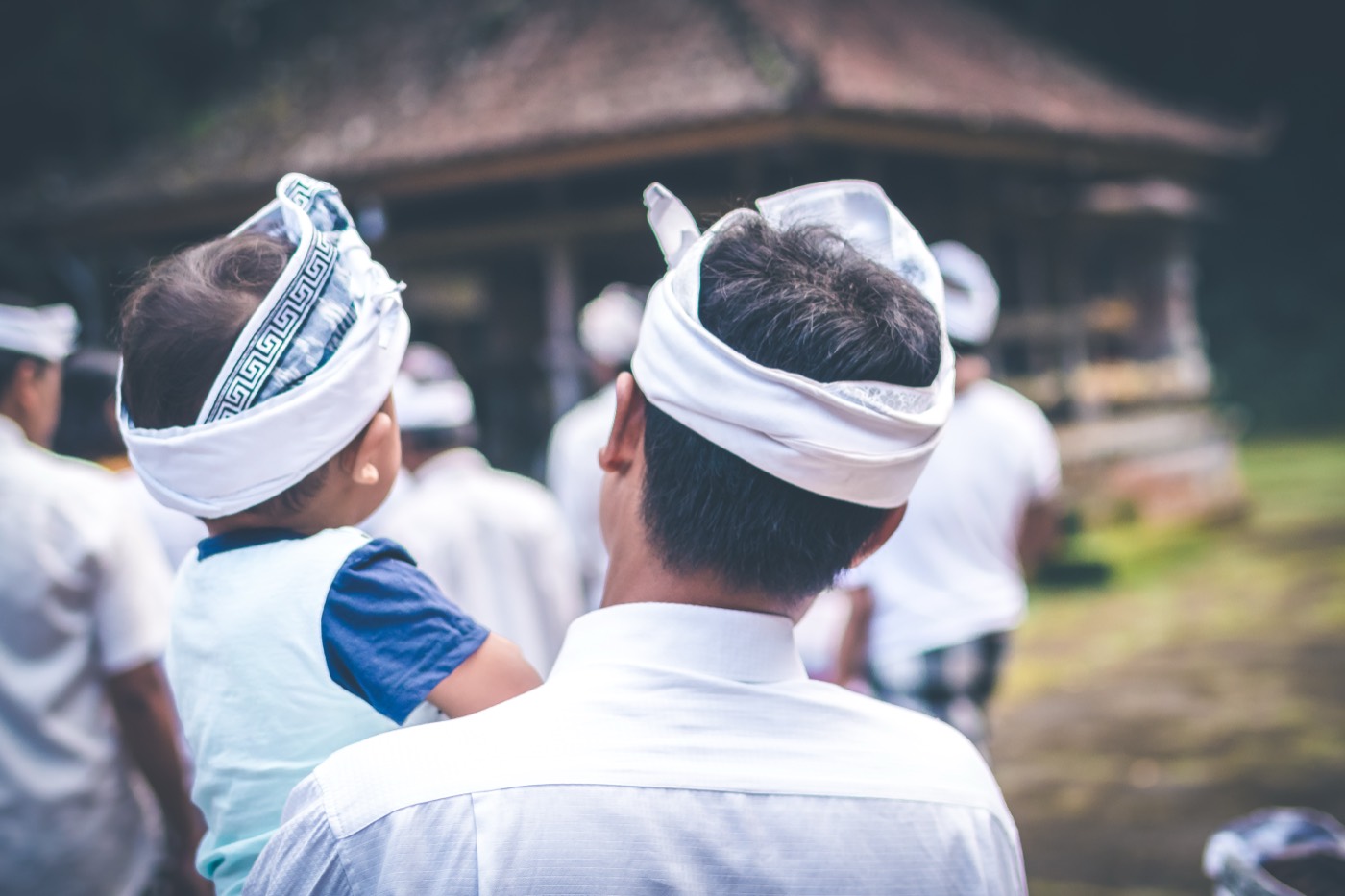 Father and child in udeng at a temple ceremony. Photo: Artem Beliaikin / Wikimedia Commons (CC0)
.jpg)
Those ceremonies start early. A baby is marked by rites in its first months, and the child's first otonan, the Balinese birthday that returns every 210 days, is one of the milestones.
Museum records keep a trace of how names enter this sequence. The Tropenmuseum's caption for a 1949 photograph of a three-month ceremony describes the baby being bathed by a priest and given new clothing and a name.
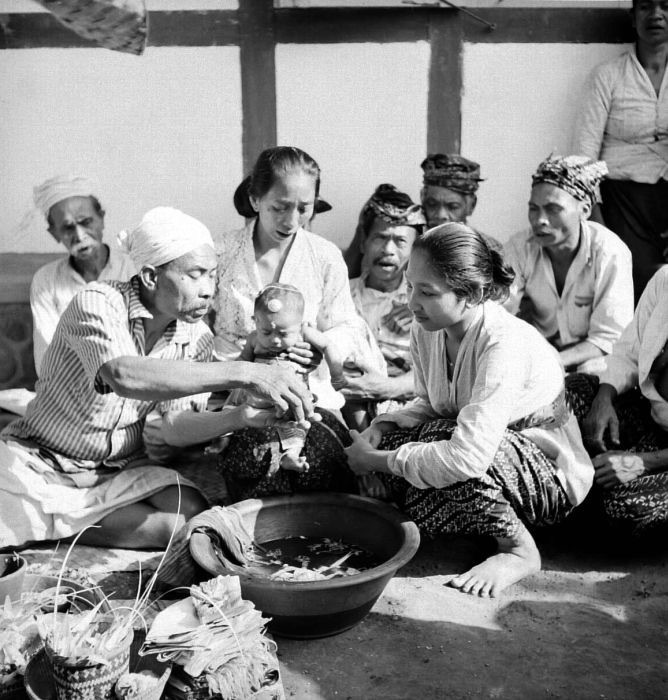 A baby's three-month ceremony, photographed in 1949. Photo: Unknown author, Tropenmuseum / Wikimedia Commons (CC BY-SA 3.0)

The Origin Is Held as Tradition
The system cannot be dated precisely. Some Balinese sources trace the birth-order prefixes to the fourteenth century and the Gelgel court of Dalem Ketut Kresna Kepakisan.
The same sources note that into the late nineteenth century some people still went by a gender marker and a single name. Treat the origin story as tradition rather than record.
What Wayan, Made, Nyoman and Ketut Mean
Each birth-order name has an explanation, and most have more than one.
The etymologies here are the ones Balinese themselves give, including those published by the Buleleng regency secretariat. Several are folk etymologies, passed on because they make sense and make people smile. Scholars have not settled them.
Wayan, Putu and Gede: The First-Born
Wayan comes from wayahan, meaning the eldest or the most mature. Putu means grandchild, and Gede means big or bigger.
A first daughter is often Luh or Ni Luh, and some families use Kompiang for a first-born.
Made, Kadek and Nengah: The Second-Born
Made comes from madia or madya, the middle. Nengah comes from tengah, which also means middle, and is common in some regions and families. Kadek is usually explained as younger brother or sister.
Nyoman and Komang: The Third-Born
Nyoman has three explanations. One takes it from anom, young, with the -an ending. Another links it to nyeman, fresher, from the image of the soft inner layer of a banana stem just inside the outer skin.
A third, repeated for Komang as well, derives it from uman, meaning remnant or end. That reading carries a piece of old family advice. Three children was considered enough, and anyone who reached a third was being gently told to be wise.
Komang is the everyday alternative, and both names shorten in speech to Man and Mang.
Ketut: The Fourth-Born
Ketut is most often linked to the old word kitut, the small banana at the outer end of the bunch, the bonus child held dear. Another explanation reads it as ke and tut, to follow or trail behind.
Ketut has no common alternative, and it shortens to Tut.
In Bali, Ketut is also a word you are careful with in the rice fields. Farmers traditionally avoid saying the word for rat while working, and call it Jero Ketut, little master, instead.
A Fifth Child Starts the Cycle Again
A fifth child is commonly named Wayan Balik, "Wayan once more", and some families say Wayan Tagel.
Balinese custom also describes a tagel or lipat approach. It picks a different first-born name from the eldest child's, so that two siblings answering to the same call do not get mixed up.
A Worked Example: A Family of Six
- The first child is Wayan.
- The second is Made.
- The third is Nyoman.
- The fourth is Ketut.
- The fifth becomes Gede for a boy or Luh for a girl, since Wayan is already taken in the house.
- The sixth becomes Kadek or Nengah, so the family never shouts "Made!" and gets two answers.
Other families simply repeat the names, fifth Wayan and sixth Made, and tell the pair apart by personal name. In larger families of the past you could meet two Wayans and two Mades under one roof.
I and Ni Come First, the Personal Name Last
Formal Balinese names begin with a gender marker: I for men, Ni for women. The marker traditionally signals a commoner family as well as gender.
A full name reads marker, birth order, personal name: I Wayan Sujana, Ni Kadek Ayu, Ni Ketut Sulastri.
The Family Chooses the Personal Name
Since Indonesian independence, Sanskrit-rooted names have become the fashion, often with a meaning the parents want the child to carry. Sujana means good man, and Ayu means beautiful.
More recent generations mix in names with a Western ring. You will meet young Balinese whose full names pair Ketut or Made with something their grandparents would never have chosen.
In daily life most people go by either the birth-order name or the personal name, whichever their community settled on.
Caste Titles Come Before the Birth-Order Name
Some Balinese carry a title before everything else, reflecting the island's traditional fourfold caste structure.
The large majority, the sudra or jaba, use I and Ni with the birth-order system above. The three higher groups, together called the triwangsa, carry titles.
Brahmana Families: Ida Bagus and Ida Ayu
Brahmana families are traditionally priests. Their title is Ida Bagus for men and Ida Ayu for women.
The title often sits in front of a birth-order name, as in the name of the Balinese painter Ida Bagus Made Nadera. Brahmana men who are consecrated as high priests take the title pedanda.
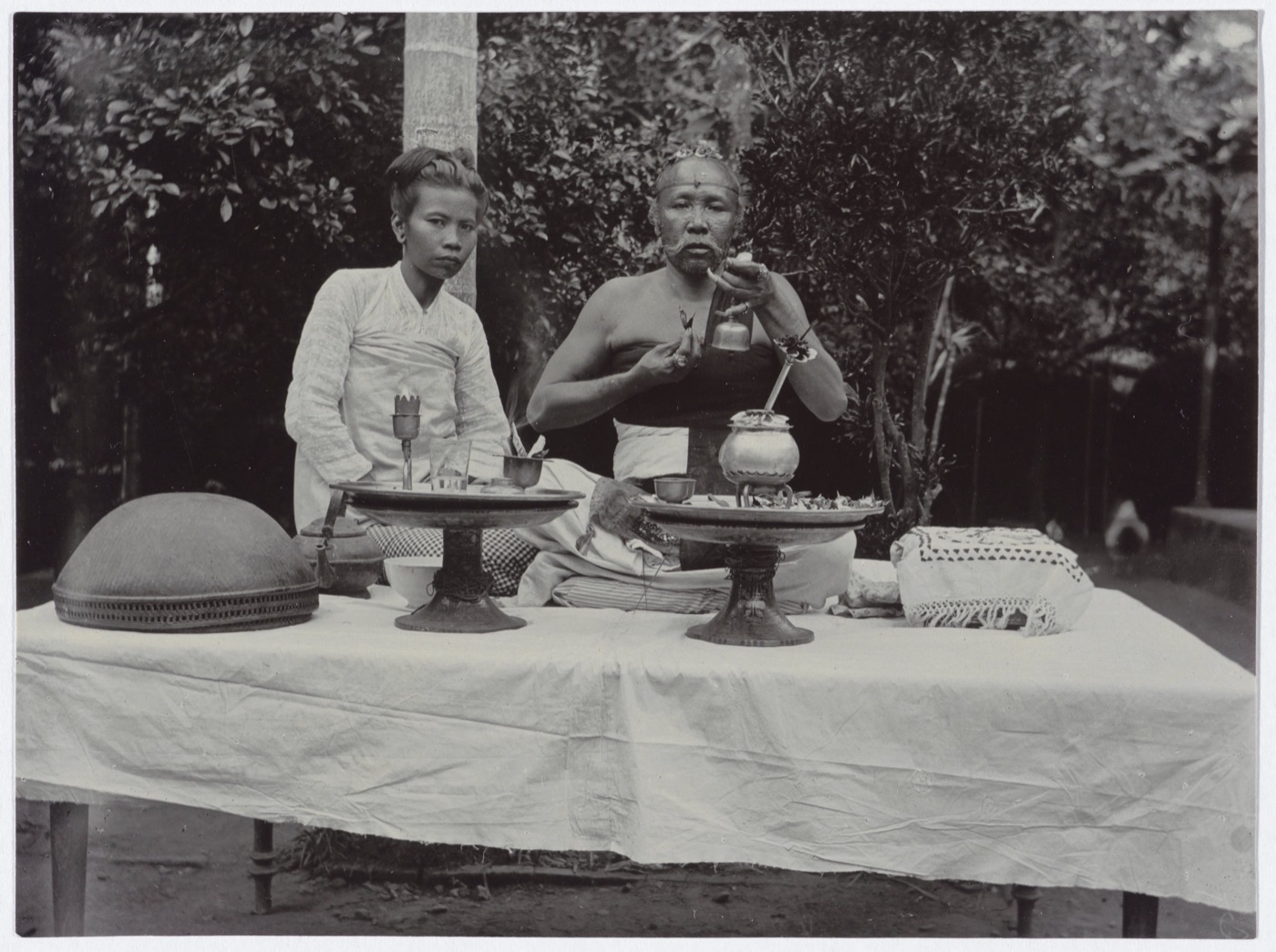 A pedanda, a brahmana high priest, at work in Singaraja between 1900 and 1915; the photographer's note names him Paetoe Gria. Photo: Rijksmuseum / Wikimedia Commons (CC0)
,_RP-F-2001-17-42.jpg)
Ksatria Families: Anak Agung, Cokorda and Dewa
Ksatria families are traditionally rulers and warriors. Their titles are:
- For men: Anak Agung, Cokorda (also spelled Tjokorda) and Dewa
- For women: Anak Agung Istri, Cokorda Istri, Dewa Ayu and Desak
Wesia Families: Gusti, Gusi and Si
Wesia families are traditionally merchants and officials. Titles recorded include Gusti, Gusi and Si. Many wesia families have dropped older forms such as Ngakan and Sang.
Sources disagree on Gusti. Some Balinese accounts class it with the wesia, while others list I Gusti Ngurah among ksatria names. Families themselves are not always in agreement, so do not read too much into it.
Pande and Jero Signal Lineage Too
Pande marks a family descended from smiths. Jero, meaning "come in", is traditionally taken by a commoner woman who marries into a triwangsa household.
Buleleng's Rulers Carried a Title and a Birth-Order Name
The titles and the birth-order names combine freely, and Buleleng's history shows it.
I Gusti Ketut Jelantik was the patih who led the north's defence against the Dutch in the 1840s. His name holds a Gusti title, a fourth-born name and the personal name Jelantik. His story is told in the guide to the Jagaraga war.
A generation of Buleleng rulers shows the same pattern. Gusti Putu Jelantik, a scholar, was appointed regent by the Dutch in 1929. His son, the novelist Anak Agung Nyoman Panji Tisna, carried a third-born name.
In 1947 Panji Tisna handed the throne to his younger brother, Anak Agung Ngurah Ketut Djelantik, a fourth-born.
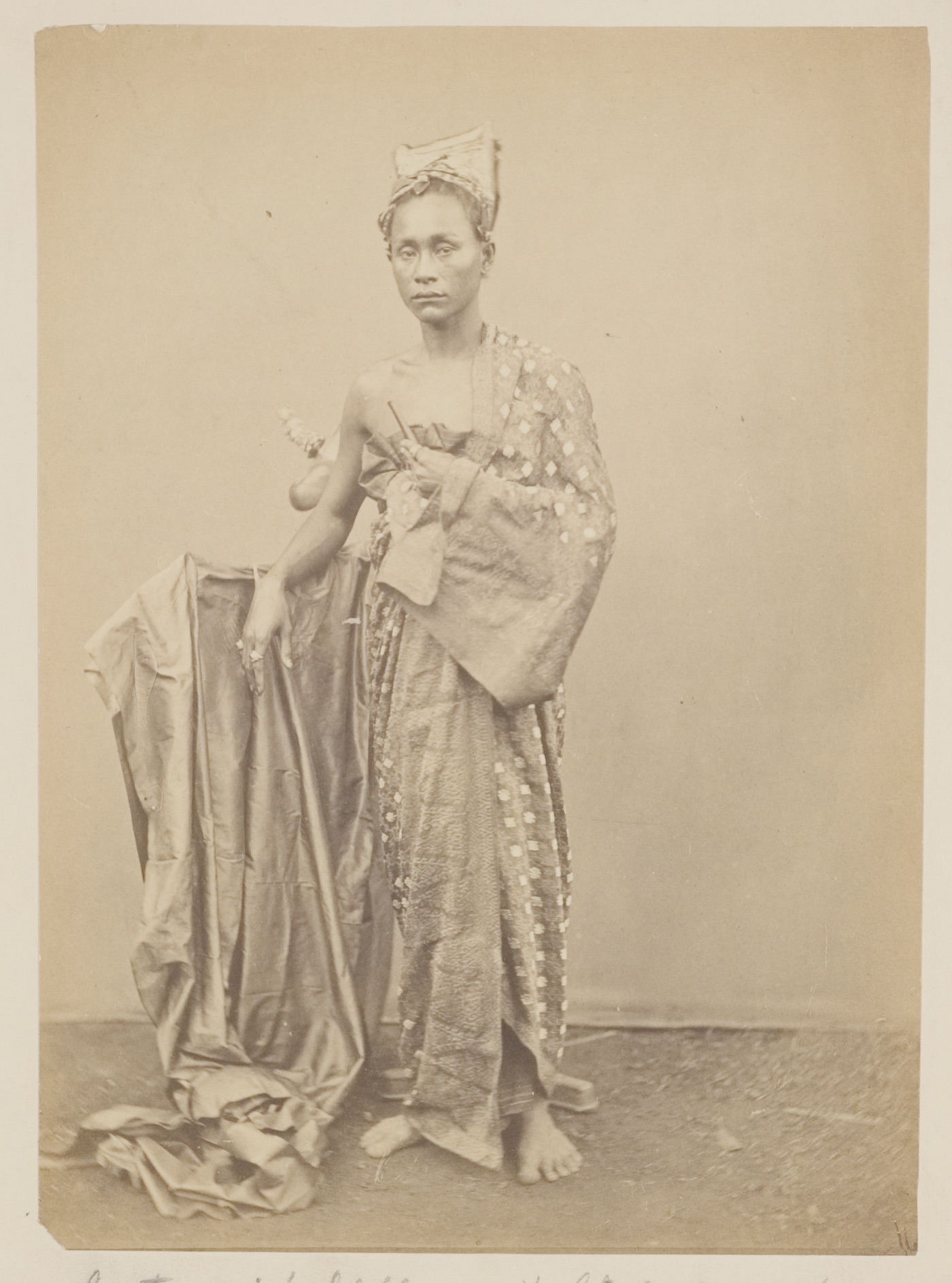
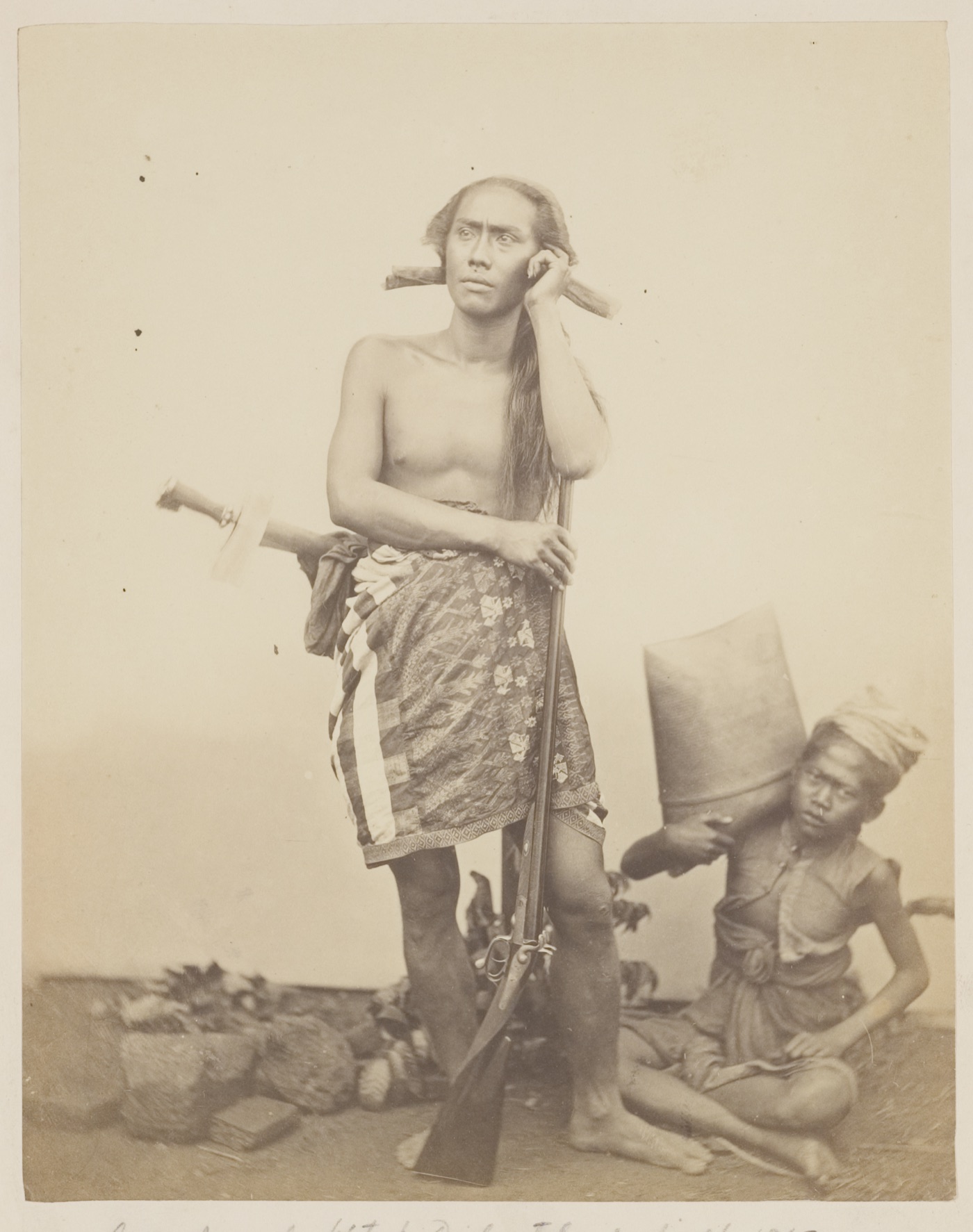 Gusti Ngurah Ketut Djilantik, raja of Buleleng, in hunting dress in 1865. Photo: Isidore van Kinsbergen, KITLV / Wikimedia Commons (Public domain)
Caste in Bali today shapes ceremony and language more than opportunity. It is treated with a light touch in daily life, but the names carry history. Deeper background is in the guide to understanding Balinese ceremonies.
In Buleleng, Names Follow Household and Village Habit
The naming system varies by region, caste, and the differences between north and south Balinese speech. The north has its own habits.
Whether a Buleleng family calls a second child Made, Kadek or Nengah is a household and village habit. It is a fair question to ask the family you are staying with.
Pegayaman Pairs Balinese Birth-Order Names With Islamic Ones
Pegayaman is a Muslim village in Sukasada district, inland from Singaraja. Its families have long lived alongside Balinese Hindu neighbours.
Aliffiati, Ida Bagus Oka Wedasantara and Gede Budarsa of Udayana University published a study of the village in the anthropology journal Umbara. They found that Pegayaman families use the Balinese birth-order names, combined with an Islamic personal name. The families use Siti for women and Muhammad for men.
A follow-up study by Gede Budarsa and Jonson Handrian Ginting draws on 2022 fieldwork. It gives names such as:
- Wayan Hasyim
- Nengah Zakaria
- Nyoman Imamulhayi
- Ketut Muhammad
The study records only four prefixes in use: Wayan, Nengah, Nyoman and Ketut. The variants Gede, Putu, Made, Kadek and Komang are not used.
The village also departs from the Hindu cycle. Every child after the fourth stays Ketut, however large the family.
Fewer Balinese Are Called Ketut Now
The Buleleng regency secretariat's explainer adds a modern note. The national family planning programme made four-child families rarer, so fewer Balinese are called Ketut. Some people worry the name could fade out.
For how the north came to be so mixed, from Bugis sailors to Chinese traders, see the history of north Bali.
How to Address People in Bali
- Use the name someone introduces themselves with. It is the right one, and there is no trick to it.
- Pak (sir) and Bu (madam) are polite Indonesian forms that work everywhere: Pak Wayan, Bu Made.
- Short forms are friendly among people who know each other: Man or Mang for Nyoman and Komang, Tut for Ketut. Wait until someone uses them first.
- Don't worry about meeting many Wayans. Balinese themselves distinguish by personal name, nickname, or village.
- In a formal letter or email, write the full name the way the person writes it, including I or Ni and any title such as Ida Bagus or Anak Agung.
- Ask what a name means. It is welcome conversation, and names are a source of quiet pride.
FAQ
Why do so many Balinese have the same name?
Most Balinese are named by birth order rather than by family name. Across the island, first-borns are Wayan, Putu, or Gede, second-borns Made, Kadek, or Nengah, third-borns Nyoman or Komang, and fourth-borns Ketut. Personal names, nicknames, and village identity do the distinguishing.
What does Wayan mean in Balinese?
Wayan comes from wayahan, meaning the eldest or most mature, and marks a first-born child. Putu (grandchild) and Gede (big) are common alternatives for the same position.
What happens if a family has a fifth child?
The cycle restarts. A fifth child is named as a first-born again, often called Wayan Balik, which means "Wayan again". Many families pick a different first-born name from the eldest's, such as Gede or Luh, so the two are not confused.
Is Ketut disappearing in Bali?
Ketut is becoming rarer because families are smaller than they used to be, so fewer children are fourth-born. The Buleleng regency secretariat has noted the worry, and it is a running joke on the island.
Do Balinese have surnames?
Traditionally no. Identity comes from the family compound, the village, and the temple community rather than a passed-down family name. Some families use caste titles such as Ida Bagus, Anak Agung, Dewa, or Gusti before the given names. Some families now adopt a family name for passports and life abroad.
What do I and Ni mean in Balinese names?
They are gender markers used in formal names: I for men and Ni for women, as in I Made Sudarta or Ni Wayan Sari. They traditionally also mark a commoner family, since higher castes use titles in their place.
Sources
- Buleleng regency secretariat, Asal Usul Nama Orang Bali: Wayan, Made, Nyoman, Ketut (the etymologies wayahan, madia, uman and kitut; the three-child ideal and the fourth as a bonus child; the note that Ketut is becoming rarer as families shrink), Indonesian, read September 2026
- Aliffiati, Ida Bagus Oka Wedasantara and Gede Budarsa, Ketut Muhammad: Sistem Penamaan Diri Muslim Pegayaman di Bali, Umbara, abstract on the national research index Garuda (the birth-order names Wayan, Nengah, Nyoman and Ketut at Pegayaman, Siti and Muhammad as gender names, and the Islamic personal names combined with them), English, read September 2026
- Gede Budarsa and Jonson Handrian Ginting, Inklusivitas Masyarakat Islam Pegayaman Melalui Sistem Penamaan Diri, Jurnal Ilmu Sosial dan Ilmu Politik Malikussaleh 5(2), 2024 (Pegayaman in Sukasada district, 2022 fieldwork, the four prefixes in use and the variants not used, fifth and later children named Ketut, example names), Indonesian, read September 2026
- Buleleng culture and tourism office, Pegayaman, Kampung Islam dengan Beragam Tradisi Unik di Buleleng Bali (the village's location in Sukasada, the origin of its Muslim community, and its use of Balinese birth-order names), Indonesian, read September 2026
- Wikipedia, Buleleng Kingdom and Anak Agung Pandji Tisna (Gusti Putu Jelantik's appointment as regent in 1929, Panji Tisna as novelist and ruler, and his handing the throne to his younger brother in 1947), read September 2026
- Tropenmuseum photograph caption, three-month ceremony, 1949 (the bathing, the new clothing and the naming at the three-month rite), Dutch, read September 2026
- Isidore van Kinsbergen for KITLV, portraits of Gusti Njoman Kaler and Gusti Ngurah Ketut Djilantik, 1865 (the titled and birth-order names recorded in the plate captions), read September 2026
- Rijksmuseum, Een Pedanda aan het werk, Noord-Bali (the pedanda title and the photographer's note naming the priest), Dutch, read September 2026
Read next: Balinese Hinduism explained for the beliefs behind the naming cycle, otonan, the 210-day Balinese birthday for the rite that first gives a child its name, and the history of north Bali for how Buleleng came to hold so many different naming traditions at once.