On this page
- In Brief
- North Bali History at a Glance
- The North Coast Was Bali's Front Door for Centuries
- Panji Sakti Founded the Kingdom of Buleleng
- The Dutch Took the North Decades Before the South
- Singaraja Was Bali's Capital Until 1960
- The Port Made Singaraja One of Bali's Most Mixed Cities
- Five Places Where the History Still Stands
- Practical Notes
- FAQ
- Sources
In Brief
North Bali history is the story of the coast where Bali met the outside world. For centuries ships came to the old port near Singaraja, in the kingdom of Buleleng. The Dutch conquered Buleleng in 1849 and made Singaraja their capital for Bali.
Singaraja was still the capital when Bali became a province under Law No. 64 of 1958. The capital moved to Denpasar by a ministerial decision dated 23 June 1960.
The port also made Singaraja one of the most mixed places on the island. Chinese, Bugis, Arab and Indian communities settled beside the Balinese. Their temples, mosques and shophouses still stand in the old town, close to Lovina.
North Bali History at a Glance
- The kingdom: Buleleng, which ruled the north coast and gave today's regency its name
- The founder: Ki Gusti Ngurah Panji Sakti, remembered as Buleleng's first king
- The city: Singaraja, whose birthday the regency gives as 30 March 1604
- The Dutch wars: A defeat and a treaty in 1846, a Dutch assault thrown back at Jagaraga in 1848, the fall in 1849
- Who led the defence: I Gusti Ketut Jelantik, chief minister to the king, I Gusti Ngurah Made Karangasem
- Capital of Bali: Singaraja, under the Dutch and again under Law No. 64 of 1958
- The move to Denpasar: A ministerial decision dated 23 June 1960
- The port communities: Balinese, Chinese, Bugis, Arab and Indian
- Where to see it: Singaraja old town, the old port, the Chinese temples, the Bugis quarter and the north coast temples
- How long: Half a day for the old town and port, from a base in Singaraja or Lovina
The North Coast Was Bali's Front Door for Centuries
For centuries the north coast was Bali's main point of contact with the rest of the world.
Geography decided it. The calm waters and trading routes of the Java Sea brought ships to the northern shore. The south faced the open Indian Ocean and offered far fewer safe anchorages.
So the north coast looked outward, and traders, sailors, soldiers and officials arrived through it first. The old port near Singaraja is the place where most of Bali's outside contact once passed.
Panji Sakti Founded the Kingdom of Buleleng
Buleleng was the kingdom that ruled the north coast, and it is still the name of the regency today.
Its territory ran along the northern shore, with its seat of power near the coast where Singaraja now stands. Its founding is credited to Ki Gusti Ngurah Panji Sakti. He is remembered as Buleleng's first king and the figure who unified the north under its banner.
Buleleng's own regency history names him the founder of the city as well as the kingdom. He built a new palace among fields of buleleng, a local maize, and called it Singaraja for his lion-like courage. The regency gives 30 March 1604 as the city's birthday.
Other local accounts date parts of his life differently, among them the regency archive's history of Astina. Treat the years more loosely than the man.
The dynasty he established shaped the region for generations. Its rulers built Buleleng into one of the strongest kingdoms on the island. Control of the northern port gave it wealth and reach that inland kingdoms could not match.
By the early nineteenth century, the same port had made Buleleng the first part of Bali that a rising colonial power set its sights on.
The Dutch Took the North Decades Before the South
The Dutch grip on Buleleng tightened from the 1840s onward.
Their reasons were practical. The north's port and trade routes mattered to a colonial power, and the coastal kingdom was reachable and exposed.
The regency's own account of the Jagaraga war sets out three campaigns. Buleleng lost a first war with the Dutch in 1846 and was forced into a treaty. Its forces threw back a Dutch assault at Jagaraga in 1848, and a far larger expedition broke them in 1849.
The defence was led by I Gusti Ketut Jelantik. He was the patih, or chief minister, to the king of Buleleng, I Gusti Ngurah Made Karangasem.
The last stand was at the fortified village of Jagaraga, where the court had moved after 1846. These campaigns are remembered for the Balinese tradition of fighting to the death rather than surrendering. The full story is in the Jagaraga war.
Once the north was secured, the Dutch made Singaraja their administrative base for Bali, as the regency secretariat's history of Singaraja records. The southern kingdoms held out far longer and fell only in the early twentieth century.
So the history of colonial Bali runs north to south, and it begins on this coast.
Singaraja Was Bali's Capital Until 1960
Singaraja grew at the heart of Buleleng and governed Bali for a long stretch of its modern history.
Under Dutch rule it was the colonial capital and the seat of administration for the whole island. When Bali became a province in its own right, under Law No. 64 of 1958, Singaraja was its capital.
It lost the role two years later. According to the Bali provincial government, the capital moved to Denpasar by a decision of the Minister of Home Affairs and Regional Autonomy. The decision is dated 23 June 1960 and followed a resolution of Bali's provincial legislature.
The long tenure left a deep mark and gave Singaraja the air of a true city. Over those decades it gathered:
- offices
- schools
- printing
- a working harbour
- a population shaped by trade and administration
When the capital moved to Denpasar, the centre of gravity moved with it, and Singaraja settled into a quieter life. The city you visit now still wears the layers of its time at the top of the island's order.
The Port Made Singaraja One of Bali's Most Mixed Cities
A working port draws people, and Singaraja became one of the most mixed places on the island.
Alongside the Balinese, four trading communities settled in the city and its harbour, and each left traces that survive today. The Chinese presence shaped commerce and left temples and shophouse architecture in the old town.
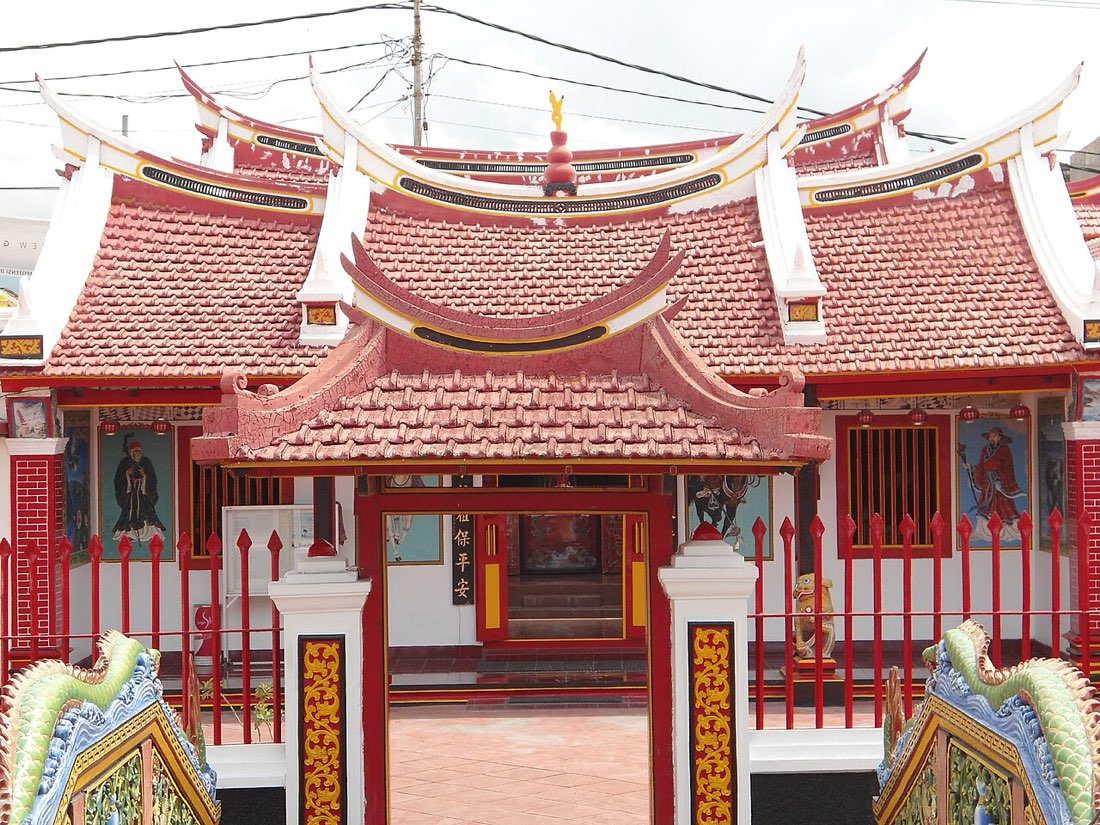 Ling Gwan Kiong, the Chinese temple the port community left on Singaraja's waterfront. Photo: DayakSibiriak / Wikimedia Commons (CC BY-SA 4.0)

Bugis seafarers from Sulawesi settled along the coast and brought their own maritime culture and Islamic faith. Arab and Indian traders added further layers to the religious and commercial life of the port.
The northern port absorbed influence from everyone who sailed in. That blend is part of the region's character, a thread followed in why north Bali feels different.
Balinese Hinduism still runs deep here, woven through daily life as it is across Bali. The guide to Balinese Hinduism explained introduces the spiritual world beneath it.
The north keeps its own legends too. One of the best known is the tale of Jayaprana and Layonsari, a Buleleng court story of love and betrayal. Its grave-temple still stands above Teluk Terima in the far northwest.
Five Places Where the History Still Stands
The history of the north stands in its streets, temples and harbour, and you can read it on foot.
- Singaraja old town. The old quarter holds colonial-era buildings, the bones of the administrative city and the architecture of its trading communities. Wide streets and ageing facades carry the feel of a former capital. The walk is described in Singaraja old town.
- The old port at Buleleng. The harbour that once received the island's shipping is still there. Monuments and a waterfront mark its long role as Bali's gateway, and it is a quiet place now.
- Chinese temples and shophouses. The Chinese community's long presence shows in temple architecture and in the rows of old shophouses along parts of the old town.
- Old mosques and the Bugis quarter. The coastal settlements founded by Bugis seafarers preserve old mosques and a maritime Muslim heritage uncommon elsewhere on the island.
- North coast temples. The region's temples carry a carving style of their own, a sign of the north's artistic tradition. Many sit within easy reach of the coast road.
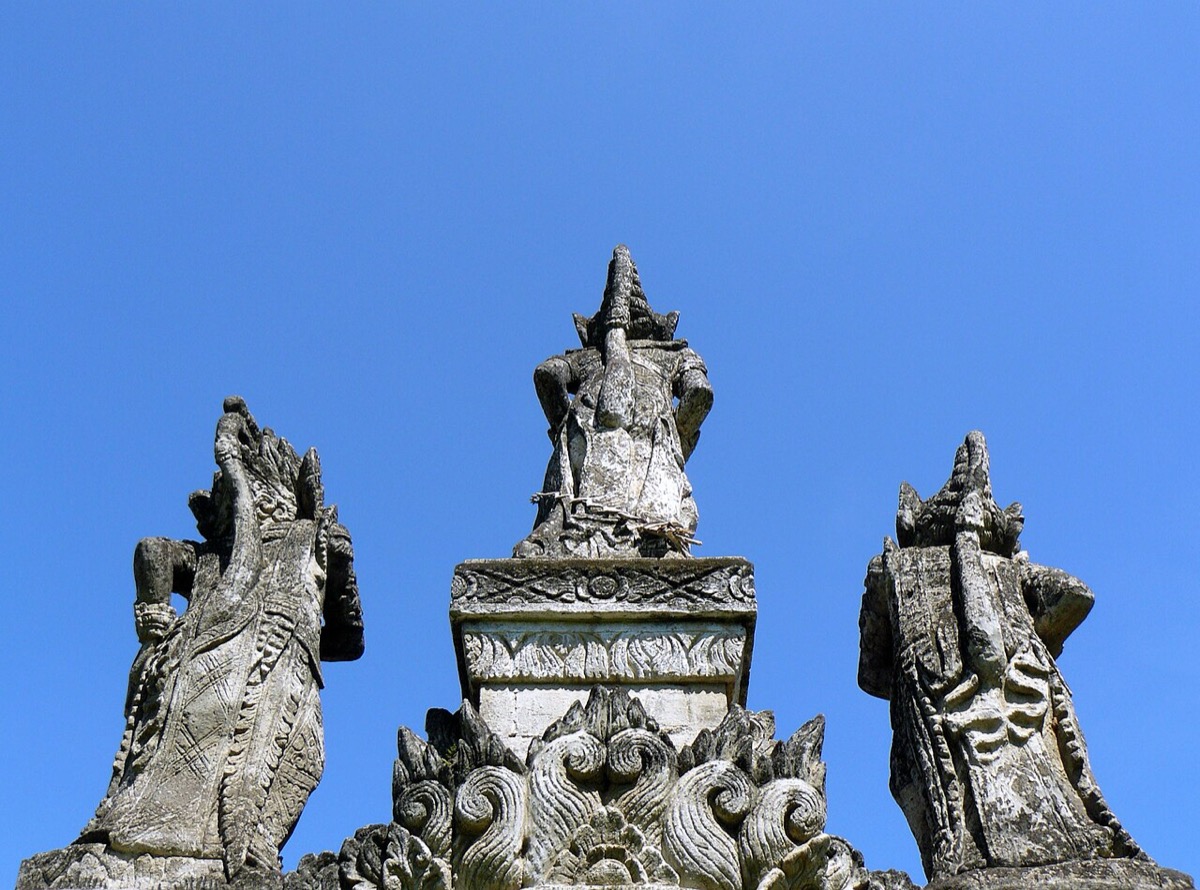 The carved figures of Pura Meduwe Karang at Kubutambahan, the north's own carving style. Photo: yeowatzup / Wikimedia Commons (CC BY 2.0)
.jpg)
Much of this lies close to the Lovina area, the natural base for exploring the region. It is covered in the Lovina area guide.
Practical Notes
These notes are a starting point. Confirm hours, access, and details locally before you plan a day around them.
- Base yourself near Singaraja or Lovina. Most of the historic sites cluster along this stretch of the north coast, within a short drive of one another.
- Allow a half day for the old town and port. The old quarter and the harbour are walkable together and reward an unhurried pace.
- Dress respectfully at temples and mosques. A sarong and sash are expected at Balinese temples. Modest dress is appreciated at mosques and Chinese temples alike.
- Hire a local driver or guide for context. The history here is layered and often unmarked, and a knowledgeable guide can tell you what each old building was.
- The dates on this page come from government sources, listed at the end. Where accounts differ, as they do for the founding of Buleleng, the page says so.
For how to travel the region, start with the complete north Bali guide.
FAQ
What is the history of north Bali?
North Bali was the island's main point of contact with the outside world for centuries, through the port near Singaraja. The kingdom of Buleleng ruled it, and it became the seat of Dutch colonial administration. Singaraja served as the capital of Bali until that role moved to Denpasar in the mid-twentieth century. Its port culture mixed Balinese, Chinese, Bugis, Arab and Indian influences.
Was Singaraja the capital of Bali?
Yes. Singaraja was the Dutch administrative seat for Bali, and it was still the capital when Bali became a province under Law No. 64 of 1958. The capital moved to Denpasar by a Ministry of Home Affairs decision dated 23 June 1960.
Why did the Dutch control north Bali first?
The north was reachable and exposed through its trading port, which the Dutch valued, so the coastal kingdom of Buleleng was the obvious first target. Buleleng lost its first war with the Dutch in 1846 and fell for good at Jagaraga in 1849. The southern kingdoms fell decades later, in the early twentieth century.
What is Buleleng?
Buleleng is the kingdom that ruled the north coast of Bali and the name of the regency that covers the region today. Its control of the northern port made it one of the most powerful kingdoms on the island, and Singaraja grew at its heart.
What of north Bali's history can you still see?
A great deal. Singaraja's old town holds colonial and trading-era architecture, and the old port at Buleleng marks the island's former gateway. Chinese temples, old mosques in the Bugis quarter and distinctive north coast temples survive within easy reach of the coast road.
Sources
- Buleleng Regency government, Sejarah Kota Singaraja (Ki Gusti Ngurah Panji Sakti as the founder of Buleleng and of Singaraja, the naming of the city and of Buleleng, and 30 March 1604 as the city's birthday), Indonesian, read September 2026
- Buleleng Regency government secretariat, Sejarah Kota Singaraja: Jejak Sejarah di Bali Utara (the Dutch taking Buleleng in 1849 and making Singaraja their colonial capital for Bali), Indonesian, read September 2026
- Bali Provincial Government, Sistem Informasi Wilayah dan Tata Ruang Bali, Selayang Pandang Provinsi Bali and Sekilas Bali (Bali constituted as a province under Law No. 64 of 1958 with Singaraja as its capital, and the capital's move to Denpasar by Ministry of Home Affairs and Regional Autonomy decision of 23 June 1960 on a resolution of the provincial legislature), Indonesian, read September 2026
- Buleleng Regency archive service, Sejarah Kelurahan Astina (Ki Gusti Ngurah Panji Sakti as the first king of Buleleng, a different dating of his life, and the palace that gave Singaraja its name), Indonesian PDF, read September 2026
- Buleleng Regency social affairs office, Ringkasan Perang Jagaraga Tahun 1848–1849 (the defeat of 1846, the move to Jagaraga, the Dutch repulse in 1848 and the fall in 1849, and the roles of I Gusti Ngurah Made Karangasem and I Gusti Ketut Jelantik), Indonesian, read September 2026
Read next: Singaraja old town for what survives of the colonial capital, the Jagaraga war for the resistance to the Dutch, and Gedong Kirtya for the library that keeps the north's written memory.