
On this page
- In Brief
- The Jagaraga War at a Glance
- The Dutch Came to the North First for Its Port
- Jelantik Moved the Court to Jagaraga and Built a Ring of Forts
- The Forts Held in 1848 and Fell in April 1849
- The War Made Singaraja a Colonial Capital and Reached the Temple Walls
- Jagaraga Is a Morning's Visit From Lovina
- FAQ
- Sources
In Brief
The Jagaraga war was fought in 1848 and 1849, when the Dutch conquered Buleleng, the kingdom of north Bali. Balinese forces under the warrior-minister I Gusti Ketut Jelantik fortified the village of Jagaraga and threw back a first Dutch assault. A far larger expedition took the forts in April 1849.
North Bali was the first part of the island the Dutch conquered, in a series of mid-nineteenth-century wars. The fall of Buleleng opened Bali to colonial rule from the north.
The history is tragic, and it still shapes how the north looks and feels today.
The Jagaraga War at a Glance
- Where: Buleleng, north Bali, around Singaraja and the village of Jagaraga
- When: The Dutch expeditions against Buleleng of 1846, 1848 and 1849
- Key figure: I Gusti Ketut Jelantik, the Buleleng patih (chief minister) and war leader
- The climax: The Battle of Jagaraga, an early Balinese puputan (fight to the end)
- The outcome: The Dutch took the north, opening Bali to colonial rule
- Why it matters: The north was Bali's first front line, and the legacy is still easy to see
- To see: Jagaraga village and its Pura Dalem Segara Madu, and the historical sites around Singaraja
The Dutch Came to the North First for Its Port
Bali's colonial era began in Buleleng.
With its port at Singaraja, Buleleng was the island's trading gateway and its point of contact with the outside world. Control of the north meant control of Bali's commerce and its door, which is why the Dutch came here first.
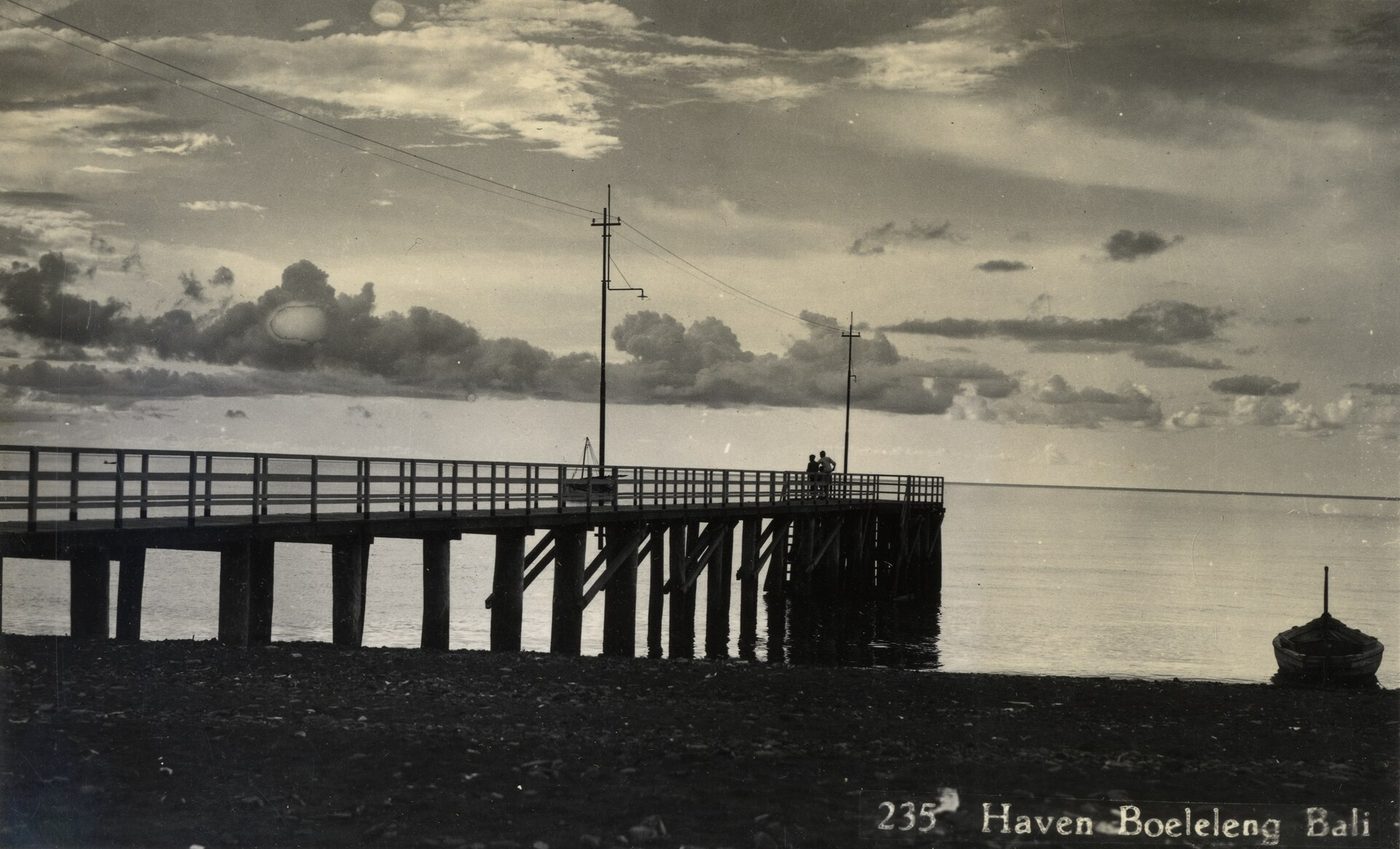 The pier at Buleleng harbour, from a colonial-era photo album of about 1920 to 1935. Photo: Unknown author, KITLV / Wikimedia Commons (CC BY 4.0)
The pretext was the Balinese custom of tawan karang, the right to claim shipwrecks and their cargo washed onto Balinese shores. The Dutch wanted it abolished.
Behind the demand lay the larger colonial aim of bringing Bali under control. When negotiation failed, the Dutch came with force.
Jelantik Moved the Court to Jagaraga and Built a Ring of Forts
The Dutch launched a series of military expeditions against Buleleng in the 1840s.
Buleleng lost the first war in 1846. It signed a treaty that, among other terms, abolished tawan karang.
The kingdom's resistance was led by I Gusti Ketut Jelantik. He was the patih, or chief minister, of the king of Buleleng, I Gusti Ngurah Made Karangasem. He became the great figure of north-Balinese defiance.
After the defeat, the king and Jelantik moved the court to the village of Jagaraga, inland from the coast. There they built a ring of forts.
The Forts Held in 1848 and Fell in April 1849
The Buleleng regency tells what followed in its history of the war.
A Dutch assault in June 1848 was thrown back. A far larger expedition landed in April 1849 and took the forts.
Jelantik and the king fled east and were killed at Seraya. The defenders left at Jagaraga, led by Jro Jempiring, fought on to the end.
The battle is remembered as an early puputan, the Balinese fight to the finish in place of surrender. The same terrible resolve would later define the royal puputans of the south.
Jagaraga fell, and with it the north. The defeat was the beginning of the end of independent Bali, as colonial control spread from the north across the island over decades.
The War Made Singaraja a Colonial Capital and Reached the Temple Walls
Much of the north's character goes back to the Jagaraga war.
The colonial presence that began here made Singaraja the Dutch capital for Bali from 1849. It stayed the administrative capital for about a century. Those years left the Dutch-era architecture and the layered port culture of the old town, described in the guide to Singaraja.
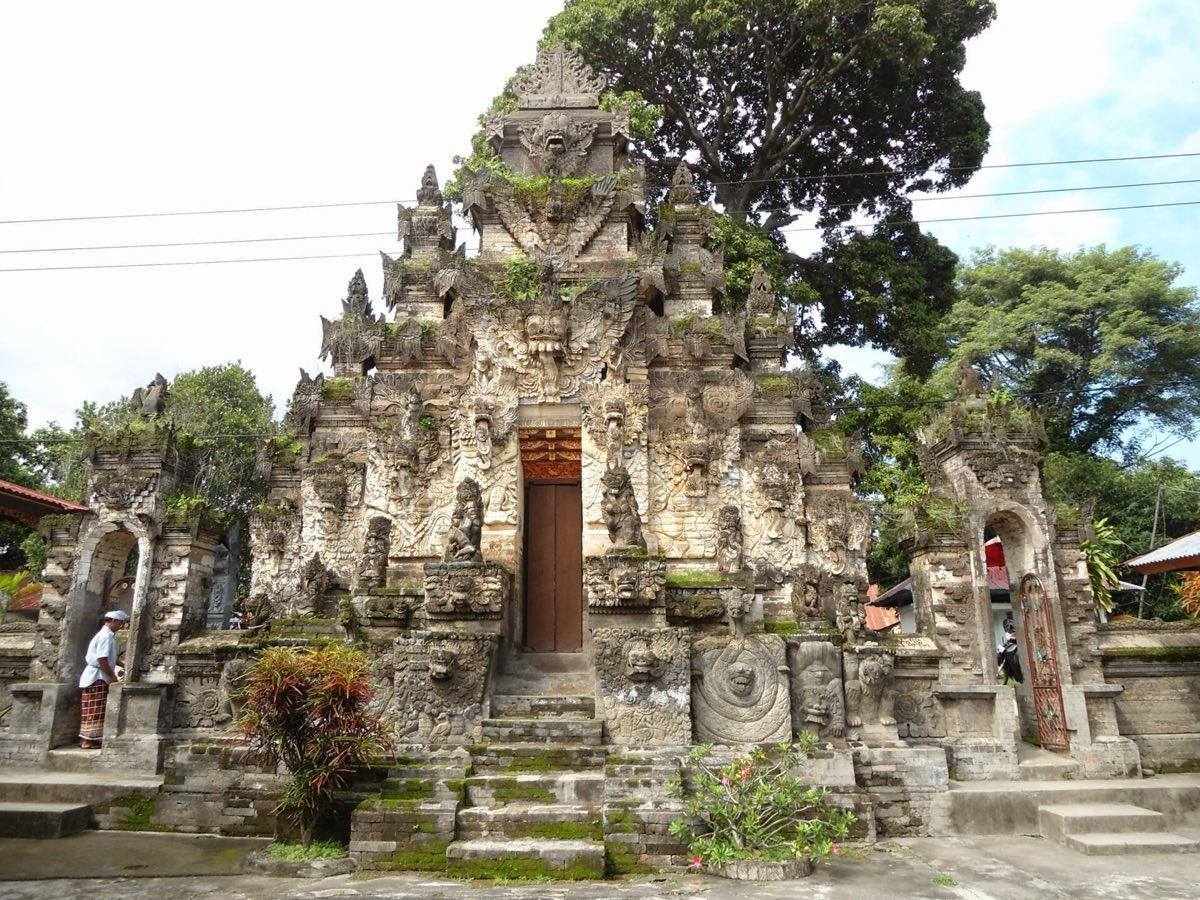
The encounter even reached the temple walls. At Pura Meduwe Karang, the famous carved European figures include a Dutchman on a bicycle and a foreigner held up at gunpoint. They are the north remembering its colonial encounter in stone.
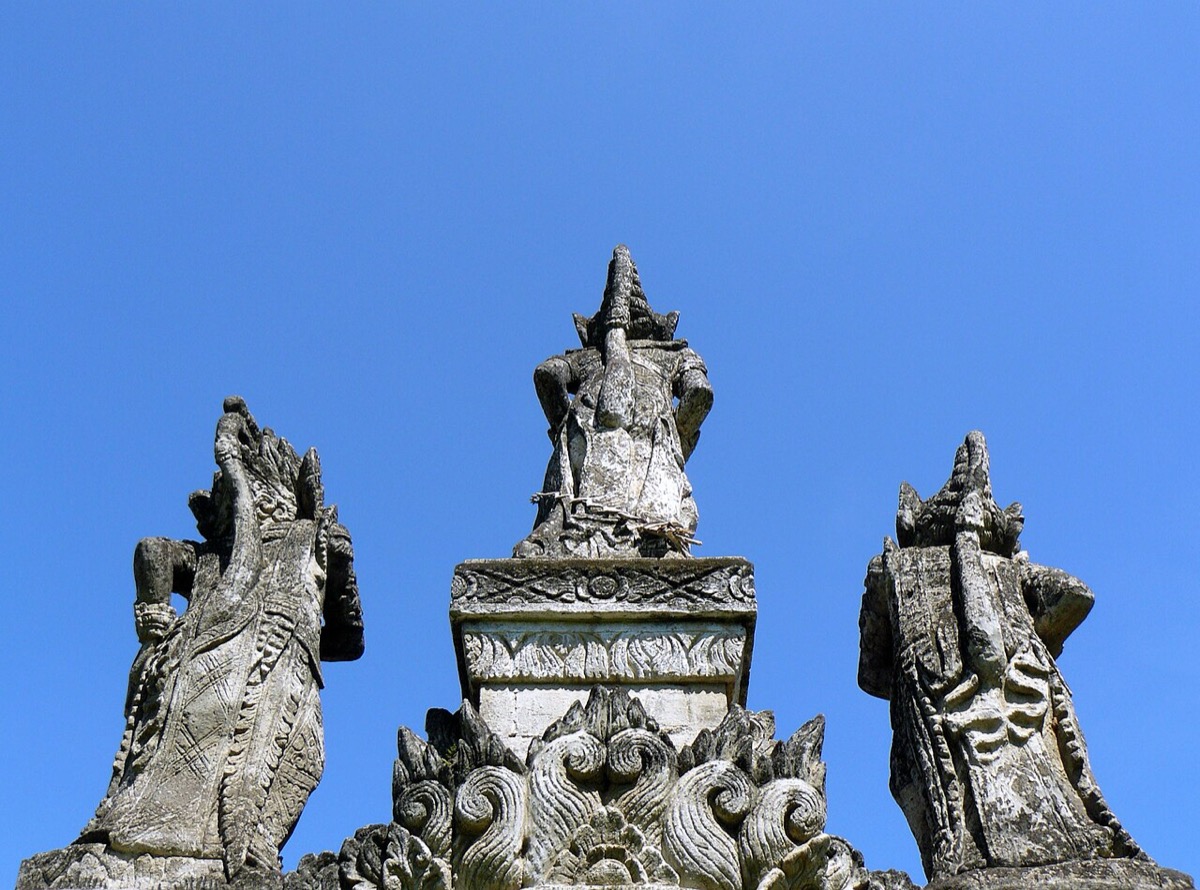 The carved figures of Pura Meduwe Karang, where the north put its colonial encounter in stone. Photo: yeowatzup / Wikimedia Commons (CC BY 2.0)
.jpg)
The story also belongs to the wider arc of north Bali's history. The region was Bali's gateway, then its first battlefield, then its colonial capital.
Jagaraga Is a Morning's Visit From Lovina
Jagaraga and the Buleleng historical sites sit inland and around Singaraja, east of Lovina.
In Jagaraga itself, Pura Dalem Segara Madu stood behind the fort walls that served as Jelantik's headquarters. The carved temples nearby make the colonial encounter vivid.
The sites are lightly visited, which suits the weight of the story. Come to it thoughtfully, with more time than a photo stop needs.
A local guide adds the depth these places deserve, and Lovina is the practical base for a morning of it.
For the broader picture, see the history of north Bali and Singaraja.
FAQ
What was the Jagaraga War? The war of 1848 and 1849 in which the Dutch conquered north Bali (Buleleng), after Balinese forces led by the minister I Gusti Ketut Jelantik fortified the village of Jagaraga, threw back a first assault, and fell to a second. Its fall opened Bali to colonial rule.
Who was I Gusti Ketut Jelantik? The patih (chief minister) and war leader of the kingdom of Buleleng, the great figure of north-Balinese resistance against the Dutch, remembered for the defiant stand at Jagaraga.
Why did the Dutch attack north Bali first? Buleleng, with its port at Singaraja, was Bali's trading gateway and point of outside contact. Controlling the north meant controlling Bali's commerce, so the colonial campaign began there in the 1840s.
What is a puputan? The Balinese "fight to the finish", choosing death in battle over surrender. Jagaraga is remembered as an early puputan, foreshadowing the royal puputans of the south decades later.
Can you visit Jagaraga and the war sites? Yes. Jagaraga and the Buleleng historical sites sit inland and around Singaraja, east of Lovina, and they are lightly visited. A local guide brings the history to life, and the carved north temples make the colonial encounter vivid.
How does this history shape north Bali today? The colonial era that began here made Singaraja the administrative capital for a century, left Dutch-era architecture and a layered port culture, and even put European figures on the temple walls, a north that remembers its history in stone.
Sources
- Buleleng Regency social affairs office, Summary of the Jagaraga War, 1848–1849 (the 1846 defeat and treaty, the move to Jagaraga, the forts and Pura Dalem Segara Madu, the Dutch repulse in June 1848, the fall in April 1849, and the deaths of Jelantik and the king at Seraya), read September 2026 (in Indonesian)
- Buleleng Regency government secretariat, History of Singaraja: traces of history in north Bali (the Dutch taking Buleleng in 1849 and making Singaraja their capital for Bali), read September 2026 (in Indonesian)
- Wikimedia Commons, Zeegezicht bij de haven van Boeleleng op Bali, KITLV collection, CC BY 4.0