On this page
- In Brief
- Singaraja at a Glance
- What Singaraja Is: The North's Main City and Bali's Former Capital
- The Old Port: Bali's Largest Dock into the 1950s
- A Layered Heritage: The Port Made Singaraja One of Bali's Most Mixed Cities
- Singa Ambara Raja: The Winged Lion That Spells Out the City's Birthday
- Landmarks Worth Seeing: Five Stops, All Within a Walk
- Panji Tisna: The Writer-King Who Named Lovina
- Five Facts Most Visitors Miss
- The Markets: Pasar Anyar in the Old Town, Pasar Banyuasri Toward Lovina
- How to Get There: Three Hours from the Airport, Twenty Minutes from Lovina
- How to Fit It In: A Half-Day Morning Walk from a Base in Lovina
- Practical Notes
- FAQ
- Sources
In Brief
Singaraja, Bali, is the capital of Buleleng, the regency that covers the island's north coast. It was the capital of Bali itself until the seat of government moved to Denpasar, and its name means "lion king". A half day on foot takes you from the old harbour to a library of palm-leaf manuscripts.
Its landmarks sit close together:
- the old Buleleng harbour, with the Museum Soenda Ketjil and the Yudha Mandala Tama monument
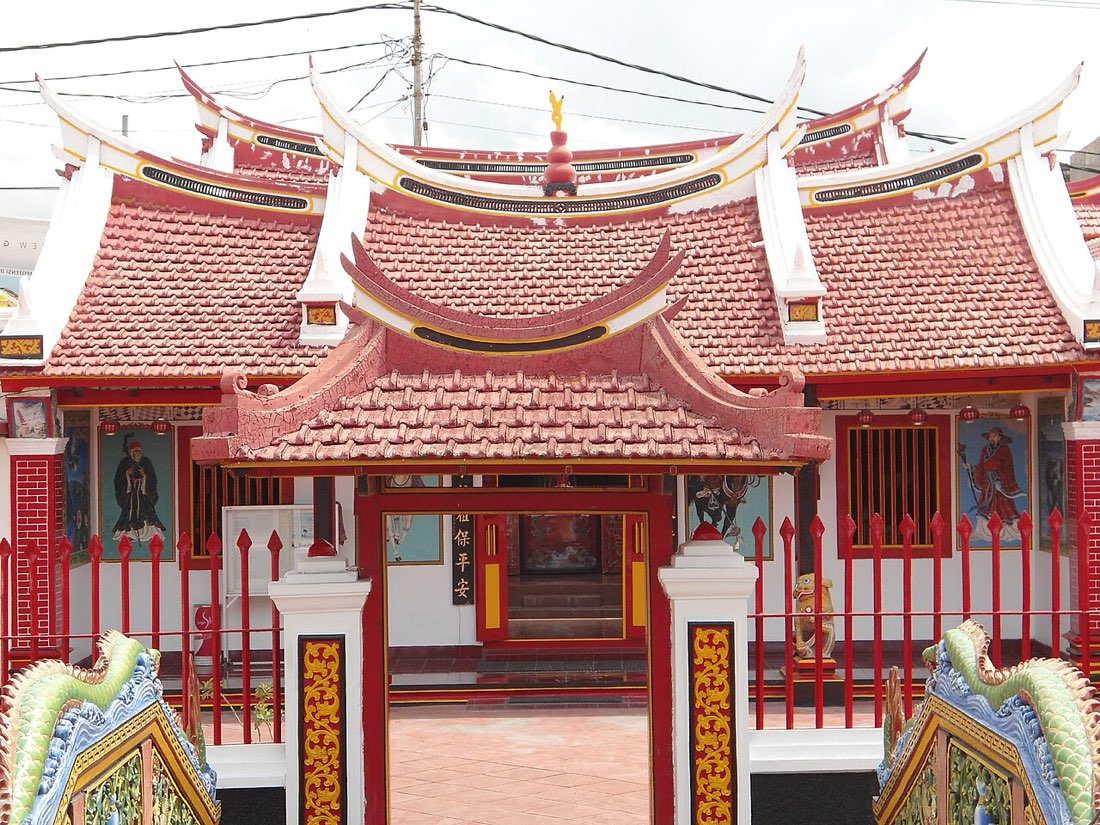
- the nineteenth-century Ling Gwan Kiong Chinese temple beside it
- Singa Ambara Raja, the winged-lion monument at the city's centre
- Gedong Kirtya, the palm-leaf manuscript library in the old palace grounds
Lovina, twenty minutes west, was named by Panji Tisna, King of Buleleng from 1944 to 1947.
Singaraja at a Glance
- What it is: capital of Buleleng regency and the main city of north Bali
- The name: "lion king", from Sanskrit singha and raja
- City birthday: 30 March 1604, the date the regency counts from
- Capital of Bali until: 1960, when the provincial capital moved to Denpasar
- The old port: Buleleng harbour, the island's main gateway until the 1950s
- The symbol: Singa Ambara Raja, the winged lion monument at the central junction
- What to see: the old harbour, Ling Gwan Kiong temple, Gedong Kirtya, the markets
- Time needed: a half day, ideally the morning
- Distance from Lovina: about twenty minutes east
What Singaraja Is: The North's Main City and Bali's Former Capital
Singaraja is the main city of north Bali and the capital of Buleleng, the regency that covers the northern coast.
For much of the colonial and early modern period it was also the capital of Bali. The Dutch administered the whole island from here, before the centre of government moved south to Denpasar.
That history sets it apart. While the rest of the north stayed villages and rice fields, Singaraja grew into a working city of offices, schools and printing, around a busy harbour.
You still feel that today. The streets are wider than a Balinese town usually runs, and the old facades carry the weight of a former capital. The mix of cultures along the waterfront has few equals on the island.
The Buleleng regency secretariat gives the dates:
- 1846: the Dutch took part of north Bali.
- 1849: Singaraja became the colonial capital for Bali and the Lesser Sunda Islands.
- 1950: after independence, Singaraja was the capital of the province of Sunda Kecil. Under Government Regulation 21 of that year, the province stretched from Bali across Lombok, Bima, Flores, west Timor and Sumba.
- 1958: Law 64 split that province into Bali, West Nusa Tenggara and East Nusa Tenggara.
- 1960: a decree of the Minister of Home Affairs moved Bali's capital from Singaraja to Denpasar.
Many travellers pass through on the way to Lovina, twenty minutes west, without stopping. Those who do stop find one of the most layered towns in Bali, and the place where the island's modern story began.
A brief history of north Bali tells how that story unfolded. The Jagaraga war covers the war that preceded Dutch rule.
The Old Port: Bali's Largest Dock into the 1950s
Singaraja was built on its harbour.
For centuries the north coast was Bali's front door. The calm Bali Sea brought ships to the northern shore, while the south faced the open ocean with few safe anchorages. Most of Bali's contact with the outside world once passed through the port near Singaraja.
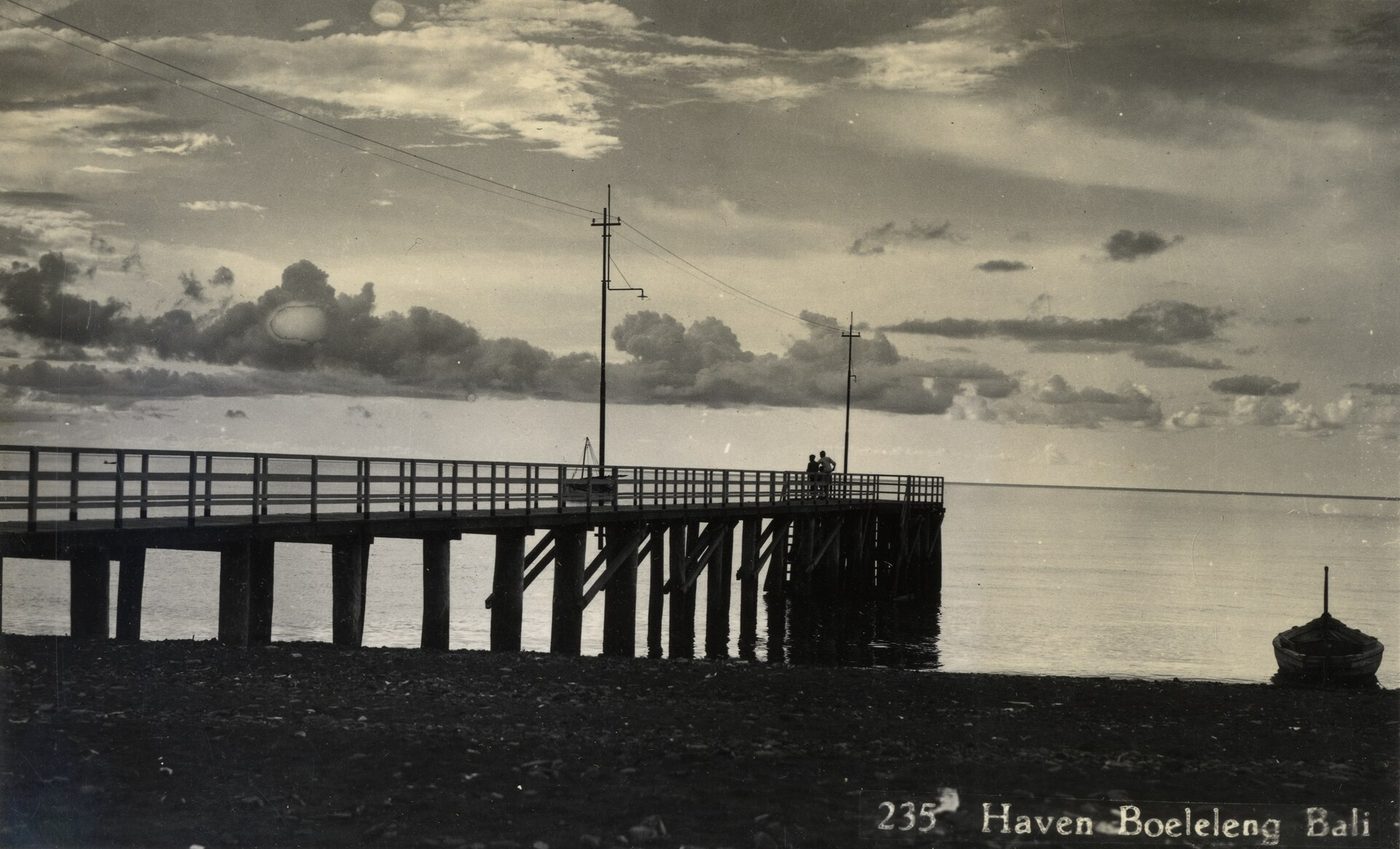 The pier at Buleleng harbour on an old Dutch postcard. Photo: Unknown author, KITLV / Wikimedia Commons (CC BY 4.0)
The regency's own account of the port is vivid. Buleleng harbour stayed the largest dock in Bali into the 1950s, and it worked two ways:
- Cargo: cattle, pigs, coffee and cloves left from here for Singapore.
- Passengers: ships linked it to Surabaya, Makassar, Ampenan on Lombok and Kupang on Timor.
Once the capital moved south and Ngurah Rai airport began international flights, the harbour lost its purpose and fell quiet.
The waterfront still stands. At its centre is the Yudha Mandala Tama monument, a bare-chested fighter who holds the red-and-white flag and points out to sea. It was raised to remember the people of Buleleng who fought the Dutch landing here.
In the same harbour area, the former office of the Dutch shipping line KPM now houses the Museum Soenda Ketjil, opened in March 2018. It tells Buleleng's story from the seventeenth century to the present, including the years when Singaraja ran the whole province. The regency runs it, so ask locally or check the regency's own pages for opening times before you plan a morning around it.
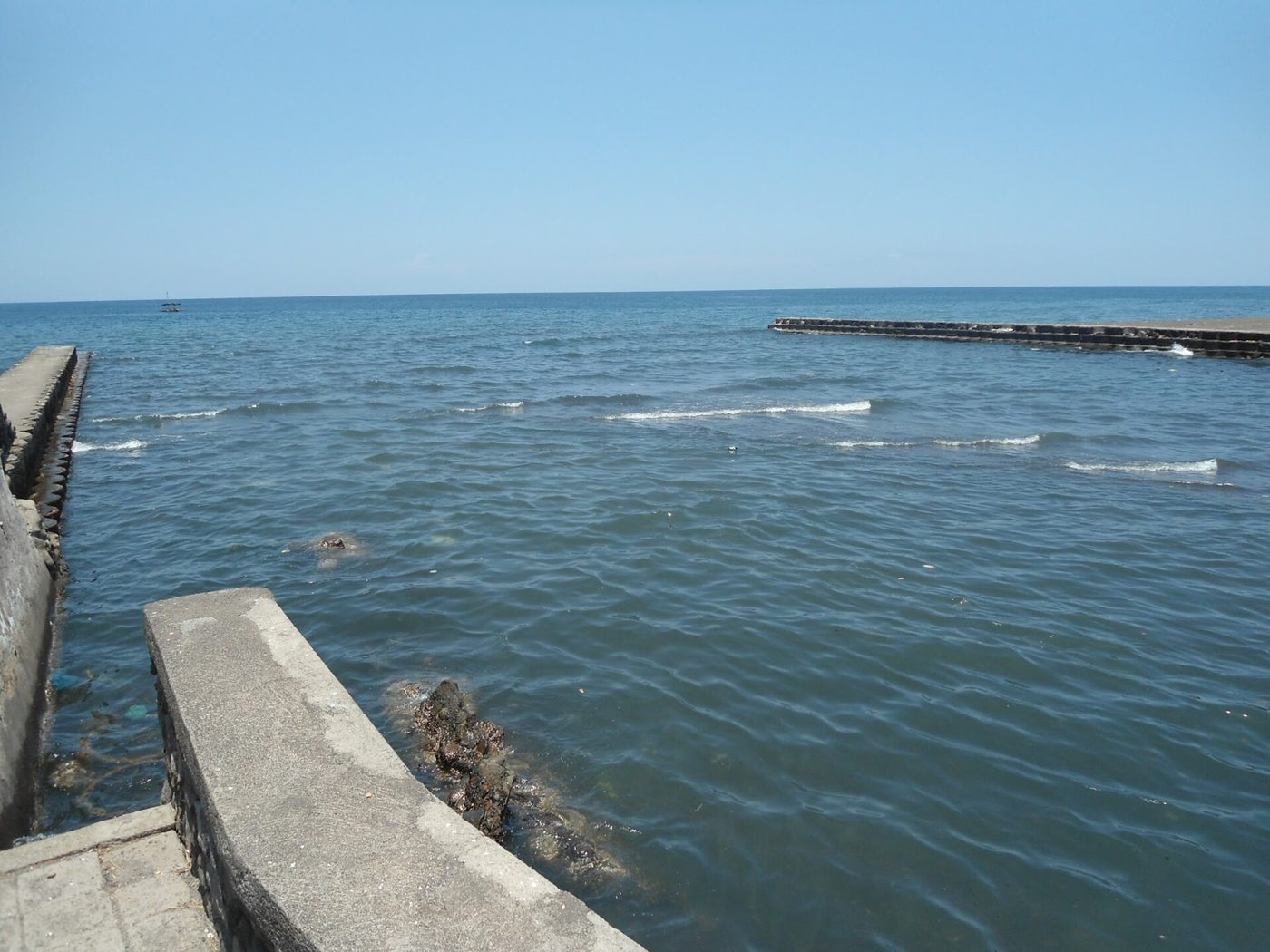 The former Buleleng harbour today, quiet water behind the old sea wall. Photo: DayakSibiriak / Wikimedia Commons (CC BY-SA 4.0)
The harbour is quiet now, with fishing boats and still water where cargo ships once unloaded. That quiet makes its former importance easier to feel.
Walk the waterfront slowly. The harbour is the reason the city exists, and you read it best on foot.
A Layered Heritage: The Port Made Singaraja One of Bali's Most Mixed Cities
A working port draws people.
Alongside the Balinese, the city held communities of traders and settlers. Each left traces that survive in the old quarters today:
- Chinese: their presence shaped commerce and left temple architecture and rows of old shophouses through the old town.
- Bugis: seafarers from Sulawesi settled along the coast and brought their maritime culture and their Islamic faith. Kampung Bugis, the neighbourhood behind the old harbour, still carries the name.
- Arab and Indian: traders who added further layers to the religious and commercial life of the port.
This blend is part of what makes the north feel different. Southern Bali developed as a stronghold of Balinese Hindu court culture, while the northern port absorbed influence from everyone who sailed in.
You can walk from a Chinese temple to an old mosque to a Hindu compound within a few streets. That range is rare on the island.
Singa Ambara Raja: The Winged Lion That Spells Out the City's Birthday
A golden winged lion holds Singaraja's main junction.
It is the Singa Ambara Raja, rearing on a white lotus in front of the Buleleng Regent's office. It is the city's mascot and its zero-kilometre point, and the Buleleng Festival has put its main stage around it, as the Buleleng Festival guide describes.
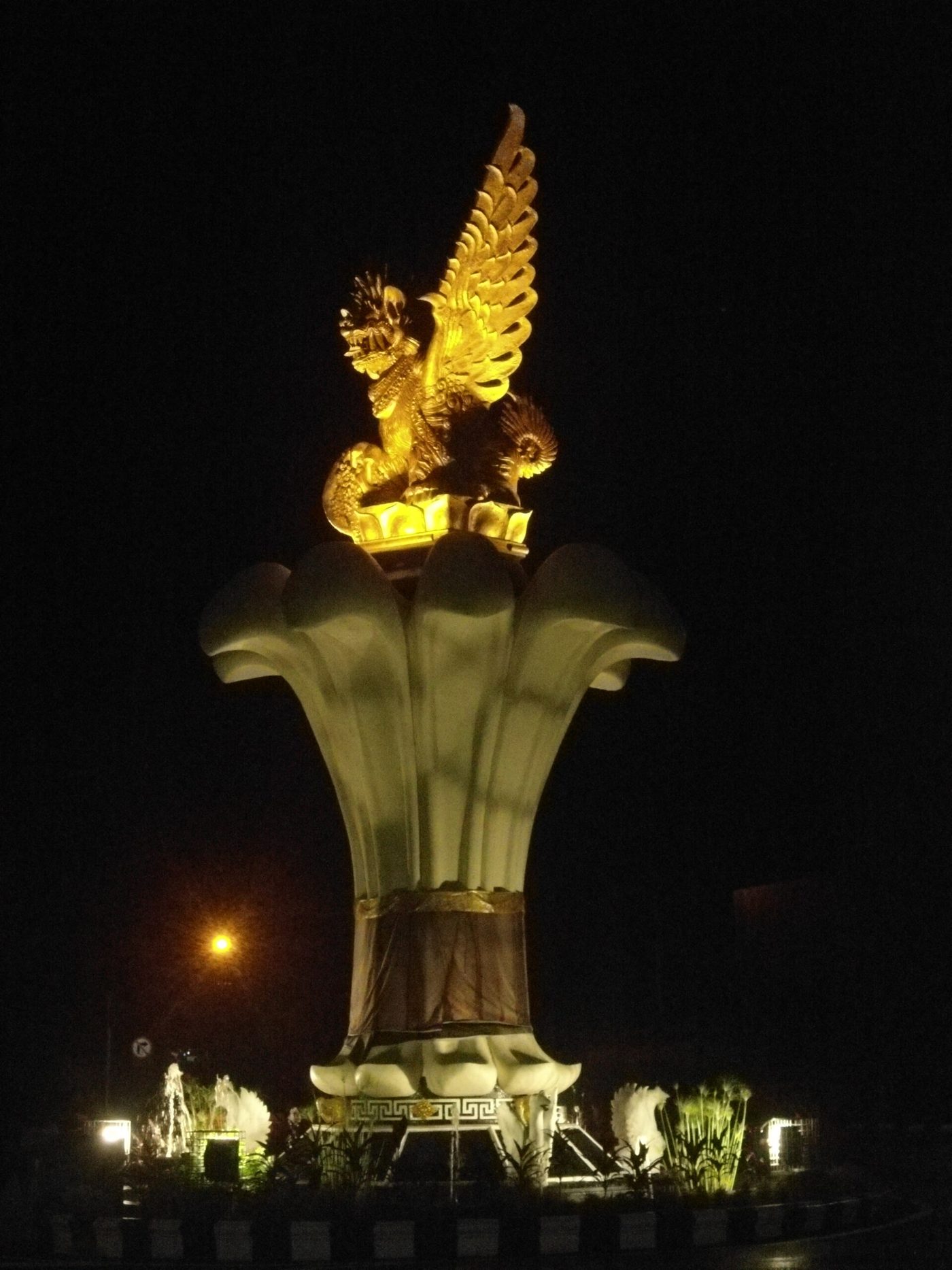 Singa Ambara Raja, Singaraja's winged lion, lit at night. Photo: DayakSibiriak / Wikimedia Commons (CC BY-SA 4.0)
The monument honours Ki Gusti Ngurah Panji Sakti, the seventeenth-century ruler who founded the kingdom of Buleleng. The lion grips an ear of corn in its claws, a sign of a strong and prosperous north.
Its body is a coded birth certificate, according to the regency's culture and tourism office:
- The lotus has nine petals, one for each of Buleleng's nine districts.
- Each wing carries 30 long feathers, for the 30th day of the month.
- The feathers grow from three wing bones, for the third month, March.
- The fine feathers covering the body number 1,604, for the year.
Read together, the lion spells out 30 March 1604, the date Singaraja counts as its founding. The monument was inaugurated on the same day and month in 1971.
Go in the early evening, when the traffic loops the roundabout and the lion catches the light. The city's pride in its founder is easy to understand from there.
Landmarks Worth Seeing: Five Stops, All Within a Walk
The history here stands in the streets, and you can read it on foot.
Ling Gwan Kiong, the Chinese Temple Facing the Harbour
Singaraja's Chinese temple stands on Jalan Erlangga in Kampung Bugis, its back to the street and its face to the old harbour. The name translates as "palace of the sacred source". An inscription above the main altar dates the temple on this site to 1873, in the reign of the Qing emperor Tongzhi.
It has been restored almost completely in recent years, keeping its Balinese carving and Dutch-era details. The carved detail and the red-and-gold colour stand out against the colonial streets around it.
Gedong Kirtya, the Library of Palm-Leaf Manuscripts
Gedong Kirtya is one of the most important sites in Singaraja, and rare in all of Bali. It is a library devoted to lontar manuscripts, the palm-leaf texts on which Balinese knowledge was traditionally recorded.
It was founded on 2 June 1928 and sits on Jalan Veteran, inside the grounds of Puri Agung, the old palace of the kings of Buleleng.
The library holds a working collection of these manuscripts, and it is the reason scholars still come to the city. Check access before you plan a visit around it.
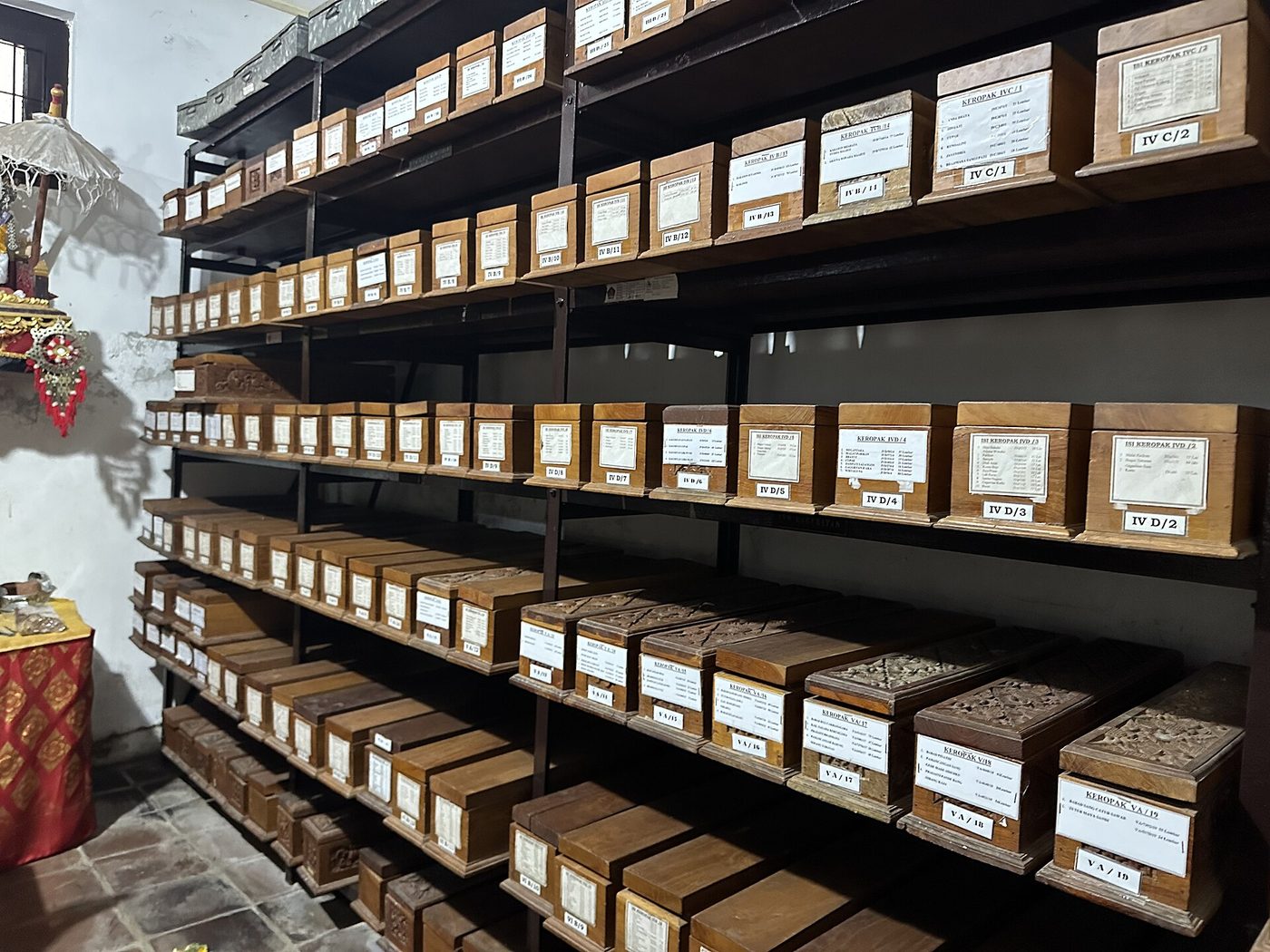 Lontar manuscripts stored in carved wooden boxes at Gedong Kirtya. Photo: Hanno Lans / Wikimedia Commons (CC BY 4.0)
Museum Buleleng and Puri Agung, the Old Palace
The small Museum Buleleng is close by on Jalan Veteran. It holds statues, sarcophagi and weapons, the relics of the kingdom. It also keeps the memory of Panji Tisna, King of Buleleng from 1944 to 1947, whose story follows below.
The palace compound itself, Puri Agung Buleleng, is where the royal line lived after the Dutch wars. Ask at the gate before you walk in.
The House of Sukarno's Mother
The family home of Nyoman Rai Srimben, mother of Indonesia's first president, is in Banjar Bale Agung, Kelurahan Paket Agung. It is now a provincial heritage site, with a small pavilion that tells her life story.
The house is on Jalan Gunung Batur. Kompas describes it as open to visitors on any day, and advises avoiding public holidays and ceremony days. Ask locally before you set out.
The Old Streets
The old quarter holds colonial-era buildings and trading-community architecture, the administrative bones of a former capital. Wide streets and ageing facades carry the feel of a city that once ran an island.
A half day covers all five at an unhurried pace. The sites cluster close together, and the old town and harbour are walkable as one route.
Panji Tisna: The Writer-King Who Named Lovina
Anak Agung Panji Tisna was King of Buleleng from 1944 to 1947 (Wikipedia).
He lived from 1908 to 1978, the eleventh descendant of Panji Sakti, and his name is also spelled Pandji Tisna. He never wanted the throne, because he wanted to write.
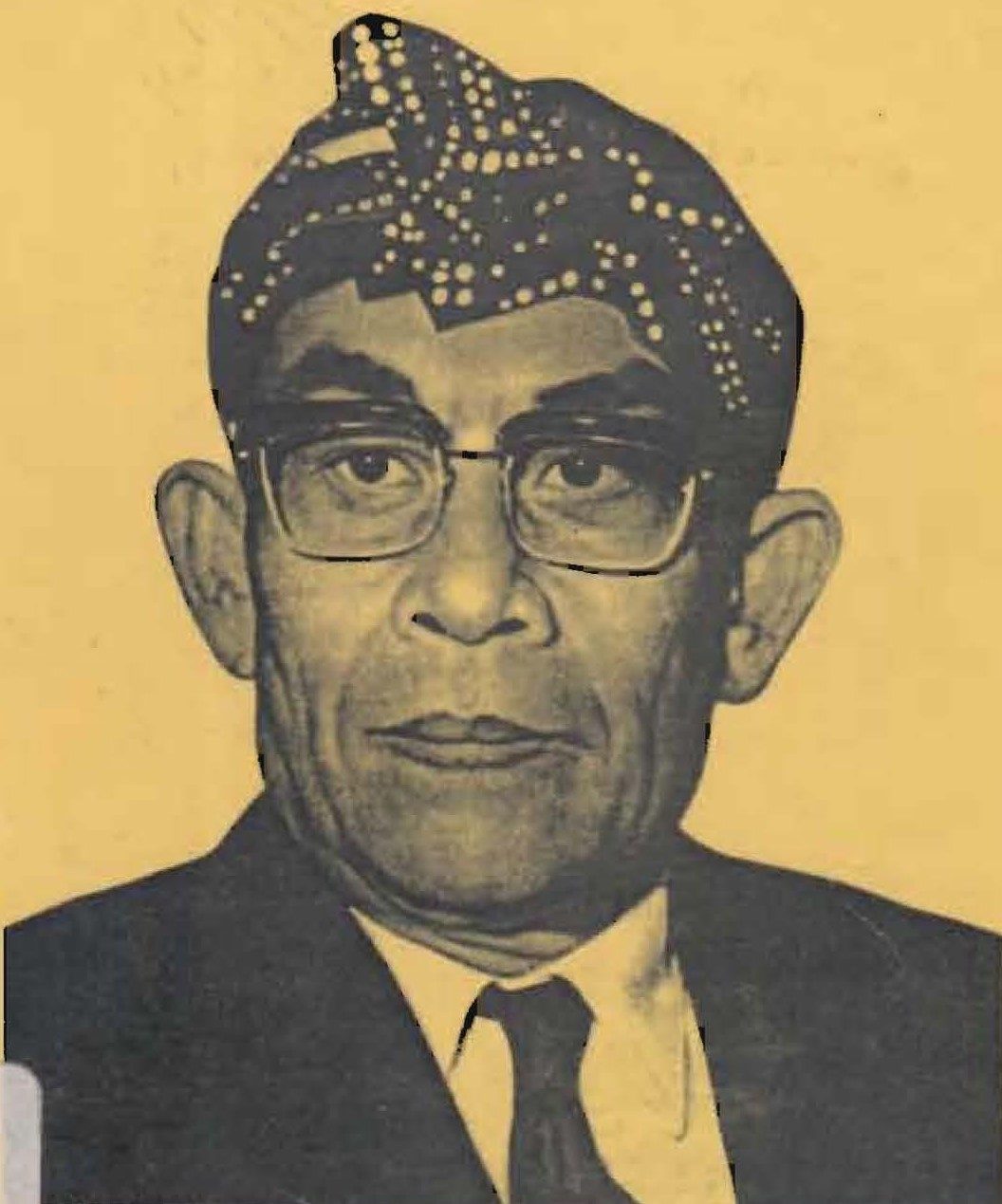 Anak Agung Panji Tisna, King of Buleleng from 1944 to 1947 and a novelist. Photo: Ministry of Education / Wikimedia Commons (public domain)
A Novelist Before He Was a King
Before the crown he worked as:
- a merchant
- a headmaster
- a magazine editor
- a farmer
He published novels set in and around his birthplace through Balai Pustaka, the colonial-era publishing house. Ni Rawit Ceti Penjual Orang came out in 1935 and Sukreni Gadis Bali in 1936. George Quinn later translated the second into English as The Rape of Sukreni.
When his father died in 1944, the Japanese occupiers made him take the throne. He chaired Bali's council of kings from 1946 to 1947. He then handed the title to his younger brother, in part because he had become a Christian in a Hindu court.
The Beach Home He Named Lovina
Then he went to the beach. In the early 1950s he built a holiday home and guest bungalows at Tukad Cebol, today Kaliasem village, west of the city. He named the place Lovina.
The name is usually explained as short for "Love Indonesia". Wayan Artika, a literature researcher at Universitas Pendidikan Ganesha, told Koran Buleleng that it joins the English "love" with the Balinese ina, mother. That reading makes it a love for the motherland.
Either way, the name spread from his guesthouse to the whole coast. In 2003 the Balinese government honoured him posthumously for his part in the island's tourism.
The Little Museum Panji Tisna
The original Lovina sits about 300 metres west of the famous dolphin statue.
The Little Museum Panji Tisna is on the Singaraja to Seririt road, inside the grounds of the Puri Manggala hotel, next to Tasik Madu. It keeps his memory with:
- photographs
- a family tree
- copies of his books
- an old typewriter
- trees in front of the hotel that he planted himself
His grandson founded it, and after the founder's death it fell quiet until it was revived under the founder's son. Ask at the Puri Manggala reception whether it is open on the day.
For the town that grew from his guesthouse, see the Lovina area guide.
Five Facts Most Visitors Miss
-
It governed far more than Bali. From 1950 to 1958 Singaraja was the capital of Sunda Kecil, a province reaching from Bali to Timor. It stayed Bali's capital until 1960.
-
Sukarno's mother grew up here. Ida Ayu Nyoman Rai Srimben, born around 1881, spent her youth in Banjar Bale Agung, where she met the Javanese teacher Raden Soekemi. They married in 1897, and their son became Indonesia's first president.
-
The city's birthday is counted in feathers. The winged lion at the central junction encodes 30 March 1604 in its wings and body. The anniversary has been marked with street parades.
-
It is Bali's second city and its city of education. Buleleng district, the urban heart of Singaraja, had 153,930 people in 2022, the second-largest population on the island. It is home to Universitas Pendidikan Ganesha, the teacher-training university.
-
Its harbour fed Singapore. Into the 1950s, north Bali's cattle, pigs, coffee and cloves were shipped out of Buleleng harbour to Singapore. Then the port closed and the island turned south.
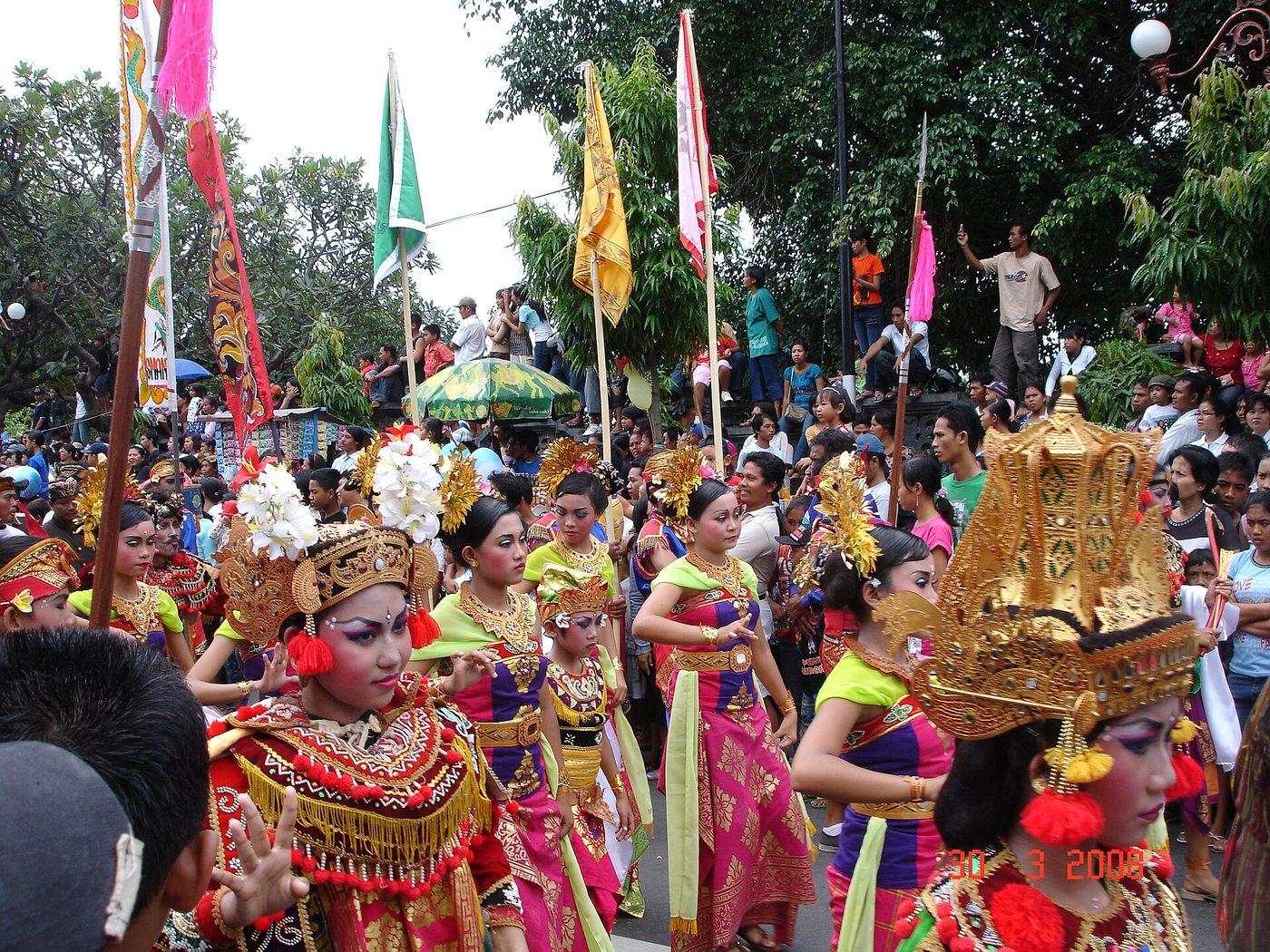 Dancers gathering for the parade on Singaraja's anniversary, 30 March. Photo: Drbrucepk / Wikimedia Commons (CC BY-SA 3.0)
The Markets: Pasar Anyar in the Old Town, Pasar Banyuasri Toward Lovina
Singaraja is still a market town, and for many visitors the markets end up being the best part of the walk.
Two are worth knowing, one in the old town and one on the road toward Lovina.
Pasar Anyar, the Main Traditional Market
Pasar Anyar is on Jalan Diponegoro in the heart of the old town, a short walk from the harbour and the Chinese temple. This is where Singaraja shops. The stalls sell:
- produce down from the hills
- spices
- Balinese cakes and snacks
- ceremony goods
- cheap clothes and sandals
- food, at the small stalls that feed the traders
Prices are local and bargaining is expected, done with a smile and without hurry. It is also the honest place to buy something to take home from Buleleng, far from anything made for tourists.
Pasar Banyuasri, a Market With a Double Life
Pasar Banyuasri sits on the western edge of the city, on the road toward Lovina. Its day has two halves:
- Morning: a working produce market, with meat, vegetables, fruit and household goods.
- Late afternoon: the stalls open again as an evening food market, with crowds to match the morning.
The regency rebuilt the market as a modern complex, so check the evening rhythm locally before you build a plan around it. If you are driving back to Lovina in the evening, it is the natural last stop.
Go in the Morning
If you can only pick one time, go in the morning. The markets are at their liveliest in the first hours after dawn, when the produce arrives and the ceremony trade is busiest. The heat is still soft then.
Slot Pasar Anyar between the harbour and the old streets, and the market becomes part of the heritage walk. For markets, crafts and shops across the rest of the region, see where to shop in north Bali.
How to Get There: Three Hours from the Airport, Twenty Minutes from Lovina
Most travellers reach Singaraja the way they reach the north in general, by driving over the central mountains from the south.
The route runs roughly three hours from the airport, on a beautiful road past the Bedugul lakes. It is slow and winding through the highlands before it drops to the coast.
A private driver is the simplest way up, and it lets you stop at the lakes or a waterfall on the way. The detailed routes and drive times are in getting to north Bali.
How to Fit It In: A Half-Day Morning Walk from a Base in Lovina
Singaraja sits about twenty minutes east of Lovina, the natural base for the whole region and the easiest place to stay while you explore.
Many visitors stay there and treat Singaraja as a half-day trip. For everything around that base, see the Lovina area guide.
A sensible route for the morning:
- Start at the old harbour and the Museum Soenda Ketjil.
- Cross to Ling Gwan Kiong.
- Walk inland through Pasar Anyar.
- Finish at Gedong Kirtya and the Museum Buleleng on Jalan Veteran.
- Drive past the winged lion on the way out.
Practical Notes
These notes are a starting point. Confirm hours, access, and details locally before you plan a day around them.
- Base in Lovina. It is twenty minutes west and has the rooms, the food and the calm coast. Singaraja itself is a city to visit, and not usually a place to stay.
- Allow a half day. The old town, the harbour and the main sites are walkable together and reward a slow pace.
- Go in the morning. The north coast gets hot by midday, and the old quarter is best walked before the heat settles in.
- Dress respectfully. A sarong and sash are expected at Balinese temples. Modest dress is appreciated at mosques and Chinese temples alike.
- Hire a local guide for context. Much of the history here is unmarked, and a knowledgeable guide turns a row of old buildings into a living story.
- Check Gedong Kirtya before you go. Confirm access to the manuscript library locally if it is the reason for your trip.
- Combine it with Lovina's own history. The Little Museum Panji Tisna is on the Singaraja to Seririt road in Lovina, on your way back west.
For the full picture of how to travel the region, start with the complete north Bali guide.
FAQ
Is Singaraja worth visiting?
Yes, if you have an interest in history, culture or the layers that make the north different. Singaraja is one of the most layered towns in Bali. Its old colonial harbour, a Chinese temple, a Bugis Muslim quarter and the Gedong Kirtya manuscript library all sit within a short walk. It works best as a half-day trip from a base in Lovina.
What is Singaraja known for?
Singaraja is known as Bali's old capital, the seat of Dutch colonial administration for the whole island, and the main city of the north coast today. It is also known for its old port and its mixed heritage of Balinese, Chinese, Bugis, Arab and Indian communities. Its two best-known landmarks are the winged-lion monument Singa Ambara Raja and Gedong Kirtya, a rare library of Balinese lontar palm-leaf manuscripts.
Was Singaraja the capital of Bali?
Yes. Singaraja was the colonial capital of Bali and the Lesser Sunda Islands from 1849, then capital of the province of Sunda Kecil from 1950 to 1958. After that province was split in 1958, a 1960 decree of the Minister of Home Affairs moved Bali's capital to Denpasar.
What does the Singa Ambara Raja monument mean?
The winged lion honours Panji Sakti, founder of the Buleleng kingdom, and encodes the city's birthday. Its lotus has nine petals for Buleleng's nine districts. Each wing has 30 long feathers for the day, three wing bones for March, and the body has 1,604 fine feathers for the year. Together they give 30 March 1604.
Who named Lovina?
Anak Agung Panji Tisna, King of Buleleng from 1944 to 1947 and a novelist. In the early 1950s he named his beach retreat at Tukad Cebol, now Kaliasem village, Lovina. The name is usually read as "Love Indonesia", and a Buleleng literature scholar reads it as "love" plus the Balinese ina, mother. A small museum to him stands in the grounds of the Puri Manggala hotel.
What is there to do in Singaraja?
Walk the old harbour, with its Yudha Mandala Tama monument and the Museum Soenda Ketjil, and visit the Ling Gwan Kiong Chinese temple. See the Gedong Kirtya lontar-manuscript library and the Museum Buleleng, and browse Pasar Anyar, the city's main traditional market. Stop at the Singa Ambara Raja monument on the way out. A half day on foot, ideally with a local guide, covers the heart of it.
How do you get to Singaraja?
Singaraja is on Bali's north coast, about three hours by road from the airport over the central mountains, past the Bedugul lakes. It sits roughly twenty minutes east of Lovina, the natural base for the region. A private driver is the simplest option and lets you stop at the lakes or a waterfall along the way. See getting to north Bali for routes and times.
Sources
- Bagian Setda Kabupaten Buleleng, Pelabuhan Buleleng, eks dermaga terbesar di Bali (the old harbour as Bali's largest dock into the 1950s, the cattle, pigs, coffee and cloves shipped to Singapore, the passenger links, and its decline after the capital moved south), Indonesian, read September 2026
- Dinas Kebudayaan dan Pariwisata Kabupaten Buleleng, Tugu Singa Ambara Raja (the winged lion as the city's mascot, its lotus pedestal and the 30 March 1604 date read from its feathers), Indonesian, read September 2026
- Koran Buleleng, Lovina dan Panji Tisna (Anak Agung Panji Tisna, the naming of Lovina, the site west of the dolphin statue and The Little Museum Panji Tisna), Indonesian, read September 2026
- Kompas.com, Cagar Budaya Rumah Asal Nyoman Rai Srimben: Lokasi, Jam Buka, dan Tiket and Mengunjungi Rumah Asal Nyoman Rai Srimben (the house of Sukarno's mother in Banjar Bale Agung, Paket Agung, on Jalan Gunung Batur, open to visitors), Indonesian, read September 2026
- Bagian Protokol dan Komunikasi Pimpinan, Setda Kabupaten Buleleng, Perjalanan revitalisasi Pasar Banyuasri (the rebuilding of Pasar Banyuasri), Indonesian, read September 2026
- Pemerintah Kabupaten Buleleng, Geografis dan Iklim (the regency's area and its long north-coast shoreline, the setting for its capital), Indonesian, read September 2026
- Wikipedia, Anak Agung Pandji Tisna (King of Buleleng from 1944 to 1947), English, read October 2026
- Photographs credited in full at each caption: the Buleleng former harbour, the KITLV view of Buleleng harbour, Singa Ambara Raja at night, the Ling Gwan Kiong temple, the Gedong Kirtya exhibition, Anak Agung Nyoman Pandji Tisna and Singaraja festivities, Wikimedia Commons
Read next: Gedong Kirtya and the lontar library, the Jagaraga war and Buleleng, and the Buleleng Festival.