On this page
In Brief
Bali belly is traveler's diarrhea, a stomach infection picked up from contaminated food or water, and it usually clears on its own in one to three days. Treat it with rest, oral rehydration salts, and bland food; add an anti-diarrheal like loperamide only if you must travel that day. Prevent it by drinking bottled or filtered water only, avoiding ice of unknown origin, and eating at busy places where food turns over fast. See a doctor if symptoms last beyond three days, you see blood, or a fever reaches 38°C.
Bali Belly at a Glance
- What it is: Traveler's diarrhea, most often a bacterial infection (E. coli is the usual culprit), sometimes viral or parasitic
- How common: Common enough that every pharmacy stocks the remedies; the CDC's Yellow Book calls it the most predictable travel-related illness
- Typical timing: Days 2 to 5 of the trip
- Typical duration: 24 to 72 hours
- The core treatment: Fluids + electrolytes, rest, bland food
- The pharmacy kit: Oral rehydration salts, loperamide, paracetamol; all available cheaply at any Indonesian pharmacy (apotek)
- Doctor triggers: Blood or mucus in stool, fever of 38°C or more, symptoms past 72 hours, signs of dehydration, or any of it in a young child
What Bali Belly Actually Is
Bali belly is the local name for traveler's diarrhea, and there is nothing uniquely Balinese about it. The same bug operates in Mexico, India, and Egypt under different nicknames. Your gut runs on a settled population of bacteria adapted to your home food and water. Travel introduces unfamiliar strains, most often through food or water carrying bacteria your system has never met, and the result is your digestive tract flushing everything out until the invader is gone.
The usual cause is enterotoxigenic E. coli, which the CDC's Yellow Book names as the most commonly identified pathogen, ahead of Campylobacter, Shigella and Salmonella. Viruses and, less commonly, parasites like giardia can produce the same picture. The distinction matters mainly for duration: bacterial cases burn out in a day or three, while anything dragging past a week deserves a stool test.
Symptoms arrive fast: cramping, urgent loose stools, sometimes nausea, low fever, and fatigue. Unpleasant, rarely dangerous for a healthy adult, and almost always self-limiting.
How to Avoid It
Prevention is habit, not luck. The travelers who stay well in Bali mostly follow the same short list.
Water discipline. Tap water is the single biggest risk. Drink bottled or properly filtered water only, and use it for brushing your teeth too. Most villas and good hotels provide refillable gallon dispensers, which are safe and cut the plastic waste. Coffee and tea made with fully boiled water are fine.
Ice, with judgment. Commercial ice in Indonesia is factory-made from treated water and generally safe at established restaurants and cafes. Ice of unknown origin at a roadside stall is a different bet. If in doubt, take the drink without.
Eat where the locals queue. A busy warung with high turnover is usually safer than an empty restaurant, whatever the decor suggests, because nothing sits around. Freshly cooked and served hot is the rule that matters most. Be more careful with raw vegetables washed in tap water, unpeelable fruit, and buffets that have been standing. Bali's food is one of the island's great pleasures, and a working street food guide helps you eat adventurously and intelligently at the same time.
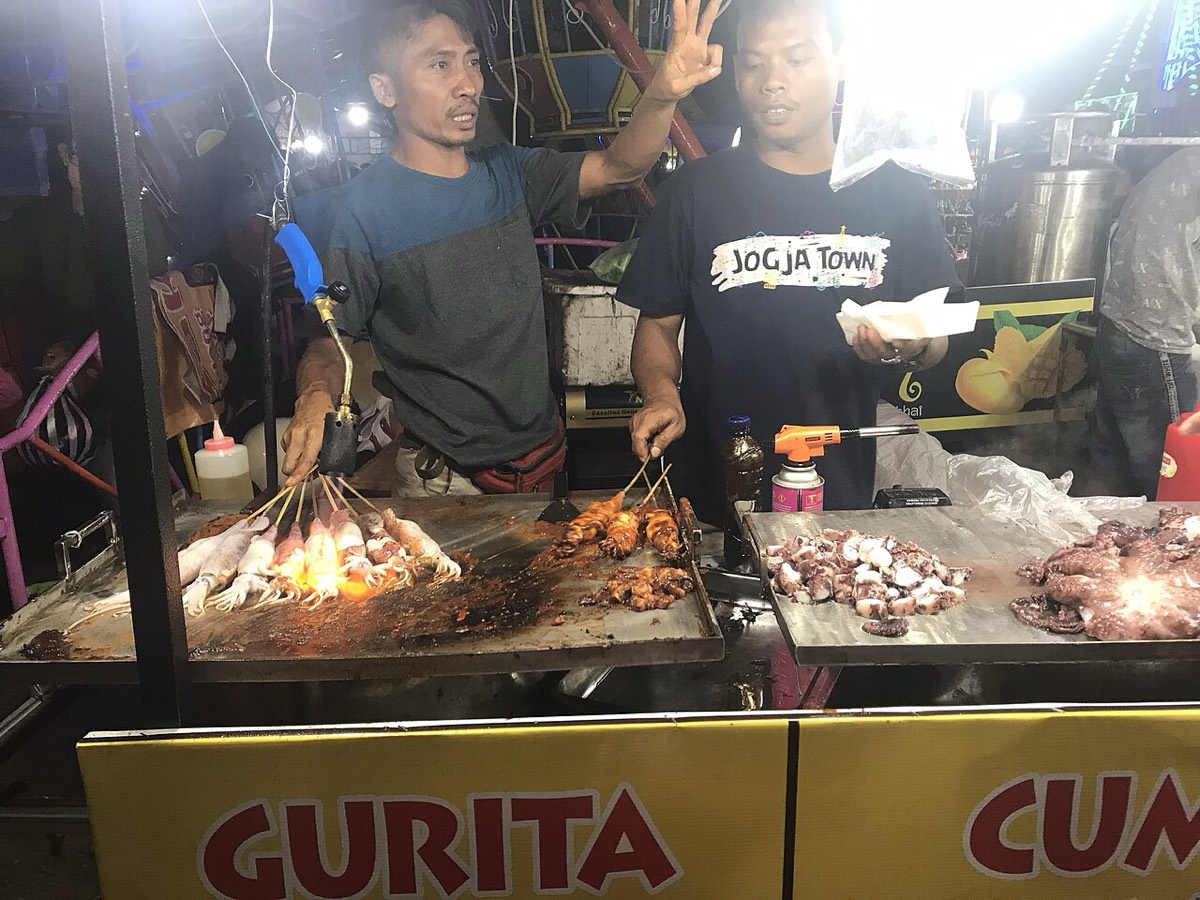 Skewers over the grill at a night market. Photo: Julia Kado / Wikimedia Commons (CC BY-SA 4.0)
Hands. Sanitizer before meals does more than any supplement marketed for gut protection.
The supplement question. Probiotics taken before and during travel have modest supporting evidence and do no harm. Nothing sold as a Bali belly preventative replaces the water and food habits above.
How to Treat It
When it hits, the goal is simple: stay hydrated while your body clears the infection.
1. Rehydrate properly. Water alone does not replace what you are losing. Oral rehydration salts (look for Oralit or Pocari Sweat at any apotek or minimart) restore the electrolytes that matter, and the CDC recommends packaged salts, such as those the World Health Organization provides, for heavy fluid loss. In a mild case almost any liquid you will actually drink works, though very sweet drinks and sodas can make things worse. Young coconut water, sold on every corner, is a decent natural backup. Small sips continuously beat large glasses occasionally if nausea is in play.
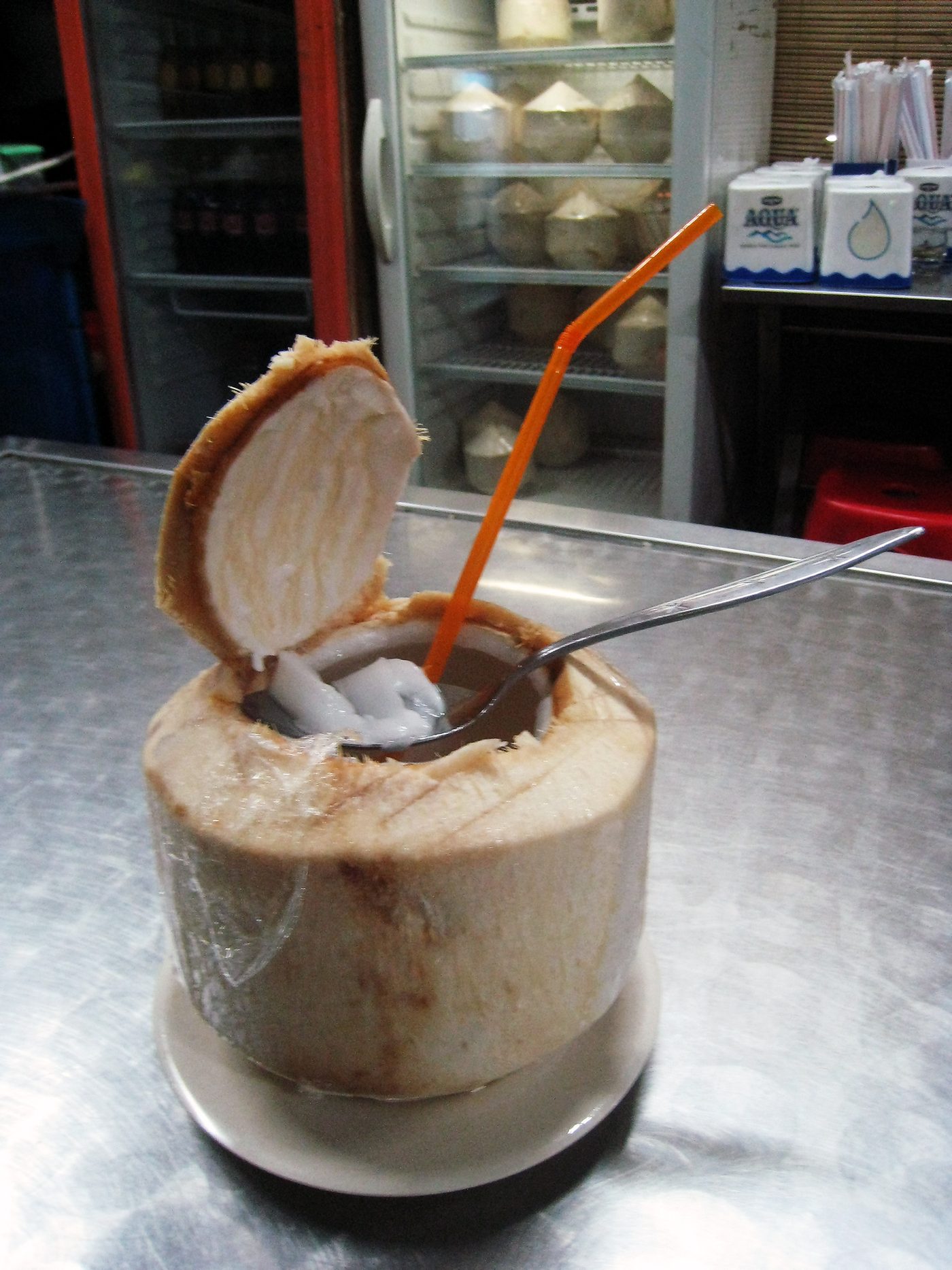 Iced young coconut in the shell, the everyday version, here at a stall in Jakarta. Photo: Gunawan Kartapranata / Wikimedia Commons (CC BY-SA 3.0)
2. Rest and eat bland. Skip a day of activities. When appetite returns, start with plain rice, bananas, toast, or clear broth, and hold off on dairy, alcohol, coffee, and spicy or oily food for a day or two after recovery.
3. Use loperamide tactically, not automatically. An anti-diarrheal like Imodium stops the symptom without treating the cause, and your body is flushing the bacteria out for a reason. Save it for the day you genuinely need to function: a flight, a long drive, a boat crossing. Do not use it if you have a high fever or blood in your stool.
4. Antibiotics, only with a doctor. Most cases resolve without them. The CDC's guidance is that antibiotics shorten a bacterial case by roughly a day or two, and that they are worth considering for bloody or severely watery diarrhoea, or where there are signs the infection has gone systemic. That is a judgement for a doctor who can see you, both because the wrong antibiotic wastes days and because resistance in the region is real. The same guidance notes that loperamide can safely be taken alongside an antibiotic, which is the one situation where using it during an active infection is sound.
5. Paracetamol covers the fever and the aches while you wait it out.
When to See a Doctor
Most Bali belly needs no medical visit. Go promptly if any of these apply:
- Symptoms lasting beyond 72 hours without improvement
- Blood or mucus in the stool
- Fever of 38°C or more
- Signs of real dehydration: dizziness on standing, minimal dark urine, confusion
- A young child, a pregnant traveler, or anyone immunocompromised with any of the above
Care is easy to reach in the tourist south, home to international hospitals such as BIMC and Siloam. In the north the options are thinner but workable: Singaraja has the region's main hospitals, and Lovina has walk-in clinics used to exactly this complaint. The full picture for the north coast, including pharmacies, clinic locations, and how travel insurance fits, is in the healthcare in north Bali guide.
Pharmacies (apotek) are everywhere, cheap, and staffed by people who diagnose Bali belly several times a day. For rehydration salts and basic medication you do not need a prescription or an appointment.
The North Bali Note
A practical observation from the quiet coast: the risk factors concentrate where the crowds do. The buffet lines, the beach-club ice, and the massed food service of the southern resort strip are where most cases start. Up north around Lovina and Munduk, meals come from small warungs cooking to order and villa kitchens, exactly the freshly-cooked-and-hot pattern that keeps travelers well. It is not immunity, and the water rules apply everywhere on the island, but the slower coast plays in your favor here too.
If you are planning your trip budget, a doctor visit for a stubborn case runs far less than travelers expect; the Bali trip cost guide covers what medical care and travel insurance realistically cost, and why insurance is worth carrying for the bigger risks like scooter accidents rather than for stomach bugs.
FAQ
How long does Bali belly last? Usually 24 to 72 hours. Most travelers are back to normal eating within two days. Anything past three days without improvement, or past a week in any form, is the signal to see a doctor and rule out a parasite.
What should I eat with Bali belly? Start with fluids only until the worst passes: oral rehydration solution, weak tea, clear broth, coconut water. Then bland and simple: plain rice, bananas, toast, plain crackers. Avoid dairy, alcohol, coffee, and anything spicy or fried until a day or two after you feel normal.
Should I take Imodium for Bali belly? Only when you need to travel or function that day. Loperamide stops the symptom while leaving the cause in place, so use it as a tool rather than a cure, and never with a high fever or blood in the stool.
Is the ice in Bali safe? At established restaurants and cafes, generally yes: commercial ice is factory-produced from treated water. At roadside stalls where the origin is unclear, skip it. When in doubt, order drinks without ice.
Can you get Bali belly from brushing your teeth with tap water? Yes, it is a known route. Use bottled or filtered water for brushing, and keep your mouth closed in the shower. It sounds excessive until the one time it isn't.
Is Bali belly contagious? The bacteria spread through contaminated food, water, and hands rather than through the air, but a sick person can pass it on with poor hand hygiene. If someone in your villa has it, everyone washes hands more, and shared serving spoons get retired for a few days.
Sources
- US Centers for Disease Control and Prevention, Travelers' Diarrhea, CDC Yellow Book (enterotoxigenic E. coli as the commonest pathogen, oral rehydration solution and what to drink in mild cases, loperamide and when it is unsafe, antibiotics shortening a bacterial case by a day or two and when to consider them), English, read September 2026
- National Travel Health Network and Centre (NaTHNaC), UK, Travellers' diarrhoea factsheet (when to seek care: fever of 38C or more, blood or mucus in the stool, signs of dehydration, and the higher risk in young children and older travellers), English, read September 2026
- Julia Kado, Street food in Ubud Night Market, Wikimedia Commons (CC BY-SA 4.0)
- Gunawan Kartapranata, Es Kelapa Muda, Wikimedia Commons (CC BY-SA 3.0)
This page describes common travel-health practice and links the official guidance. It is not medical advice, and a doctor who can see you overrides anything here.
Read next: healthcare in north Bali, Bali street food, and the best warungs in north Bali.
Last updated: September 2026
<!-- PRODUCTION NOTES (not published): - targetKeyword: bali belly (5,400 AU / 9,900 US, KD 2), the health-cluster anchor. - Sep 2026: all three open flags closed against the CDC Yellow Book and NaTHNaC. The unsourced incidence figure was cut, the doctor trigger moved to 38C to match NaTHNaC, and the clinic sentence names the hospitals without asserting their hours (both sites block automated readers, so they are not listed as sources). - Internal links out (6): street-food, healthcare-north-bali, lovina, munduk, trip-cost + WhatsApp. Internal links IN to add: from bali-street-food, healthcare-north-bali, dangerous-animals-bali, bali-trip-cost, best-warungs (contextual, next enhance pass). - Hero reuses healthcare.jpg, generate a dedicated bali-belly hero later. - Schema: Article + FAQPage. Do NOT use MedicalWebPage schema without review. -->