On this page
- In Brief
- Bali's Wildlife Risk at a Glance
- The Risk Is Low, and It Comes From Small, Ordinary Animals
- Monkeys: Zip Your Things Away and Treat Any Scratch as a Rabies Risk
- Dogs: Most Are Harmless, and They Are the Main Source of Rabies
- Snakes: A Few Are Seriously Venomous, and Bites on Tourists Are Uncommon
- Sea Life: Touch Nothing on the Reef and Wear Reef Shoes
- Mosquitoes: Dengue Is the Risk, and Avoiding Bites Is the Whole Strategy
- Centipedes and Spiders: Shake Out Your Shoes and Clothes
- What to Do If You Are Bitten or Stung
- The Rabies Vaccine: Start It the Same Day
- Practical Notes
- FAQ
- Sources
In Brief
The dangerous animals in Bali come down to two real risks, and the first is rabies, carried by stray dogs and the temple monkeys. The second is a small number of venomous snakes and sea creatures. You are unlikely to meet them if you watch where you step and where you put your hands.
One rule covers the serious risk. Any bite or scratch from a monkey or dog needs the rabies vaccine, started the same day, however small the wound looks.
The rest is sensible caution: reef shoes in rocky shallows, repellent against the dengue mosquito and a torch at night.
Bali's Wildlife Risk at a Glance
- Overall risk: Low for the average visitor, and the vast majority of trips are uneventful
- The serious one: Rabies, from dog or monkey bites and scratches. It is almost always fatal once symptoms appear, and preventable with prompt vaccination
- The usual incident: Monkey scratches and bag-snatching at temple sites like Uluwatu and the Ubud Monkey Forest
- Snakes: Present across the island. Bites on tourists are rare, and a handful of species are dangerously venomous
- Sea life: Jellyfish stings, sea-urchin spines and stonefish are the realistic hazards. The blue-ringed octopus is dangerous but very rarely encountered
- Insects: Mosquitoes carry dengue, a risk across Indonesia. Malaria risk in Bali is low
- Where rabies risk concentrates: Rural areas and anywhere with free-roaming dogs, plus monkey temples
- What to carry: Repellent, basic first-aid, travel insurance that covers medical evacuation
- The golden rule: Bitten or scratched by a mammal? Wash the wound and get to a clinic for the rabies vaccine the same day.
The Risk Is Low, and It Comes From Small, Ordinary Animals
Dangerous animals rarely shape a day in Bali.
You will see far more dogs sleeping in the shade than anything that threatens you. The snakes and sea creatures that can hurt you spend most of their lives avoiding people. Sharks and large predators are not the issue here.
The genuine risks are smaller and more mundane:
- a monkey that scratches your hand reaching for your sunglasses
- a stray dog near a rural warung
- a sea urchin under a careless step on the reef
- the mosquito that gives you dengue fever
Ordinary care prevents most of these. Rabies, the serious one, is preventable with prompt treatment after a bite or scratch.
Know the few things that matter and carry insurance, and the odds are firmly on your side.
Monkeys: Zip Your Things Away and Treat Any Scratch as a Rabies Risk
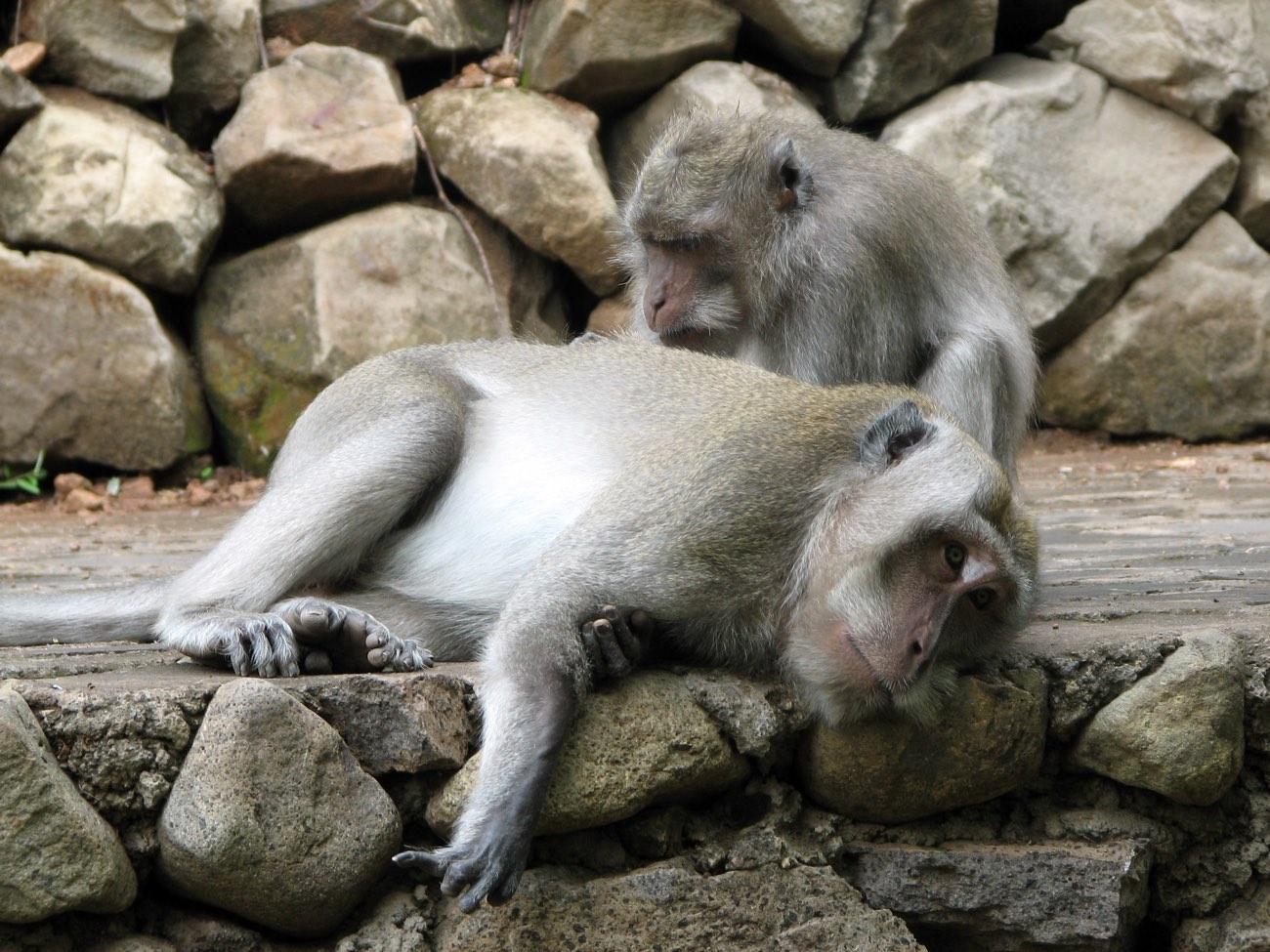
The long-tailed macaques at Bali's temple sites are the wild animals many visitors meet up close, and a common source of trouble. They gather in numbers at Uluwatu Temple and the Ubud Monkey Forest. They are clever, bold and unafraid of people.
They Steal Sunglasses, Phones and Anything Loose
The macaques at Uluwatu in particular are practiced thieves. They take sunglasses, phones and hats, and water bottles and anything else loose go too. Often it is a trade, and a temple staff member will sometimes barter food to get your glasses back.
They are fast and they work in full view, so secure your things before you walk in:
- Keep sunglasses off your head.
- Keep phones zipped away.
- Keep bags closed and held in front of you.
- Do not carry food.
- Do not hold a plastic bag, which reads to a monkey as a snack.
A Scratch or Bite Carries Rabies Risk
This is the part that matters medically. Monkeys can carry rabies, and any bite or scratch, even a minor one, must be treated as a possible exposure.
A monkey grabbing for your glasses can catch your hand with a claw without meaning to bite at all. That scratch counts. Four habits lower the odds:
- Do not feed the monkeys.
- Do not try to pet them.
- Do not pull back hard if one grabs your bag.
- Do not get between a mother and her young, or between two squabbling adults.
If a monkey breaks your skin, wash the wound immediately and go for the rabies vaccine the same day. The full steps are in the first-aid section below.
Temples in north Bali have troops of their own, such as the macaques at Pura Pulaki, and the same rules apply there. The animals are wild across the island, however relaxed they look.
Dogs: Most Are Harmless, and They Are the Main Source of Rabies
Bali has a large free-roaming dog population, and it is the main source of rabies on the island.
Rabies has circulated in Bali since the first outbreak in 2008. The Bali provincial government says mass dog vaccination has greatly reduced human cases. Dog bites and suspected rabid animals are still reported across the island.
Most Bali dogs are harmless and want nothing to do with you. They sleep through the heat of the day and ignore passing tourists. The risk comes from the few that are unwell or frightened, and from dogs guarding their territory or their puppies.
A few habits keep you clear of trouble. Do not approach or pet street dogs, however friendly they seem, and teach children the same. Running past a dog that is watching you can trigger a chase, so slow down and give it space.
Be more cautious at night and in rural areas, where dogs are less used to people and roam more freely. If a dog is aggressive, avoid eye contact and back away slowly, without screaming or waving your arms.
Under WHO's exposure categories, any bite or scratch is a rabies exposure, even a minor one that barely marks the skin. It needs the vaccine the same day, and so does a lick on broken skin or on the eyes, nose or mouth. The wound may look minor, and the treatment is still needed.
Snakes: A Few Are Seriously Venomous, and Bites on Tourists Are Uncommon
Bali has a range of snakes, and a few of them are seriously venomous. Bites on tourists are uncommon, because snakes avoid people and most encounters end with the snake leaving.
These are the species to be aware of:
- King cobra and other cobras. Large, venomous, found in forested and rural areas. Capable of a dangerous bite, though they generally avoid humans.
- Banded krait and Malayan krait. Highly venomous, mostly active at night, often slow-moving and easy to overlook in low light.
- Green pit vipers. The white-lipped island pit viper lives on Bali. It is green, often in trees and shrubs, and easy to miss because it sits still. The bite is venomous and needs hospital care.
- Sea snakes and sea kraits. Encountered in the water and on shore. They are venomous but very docile, and bites are rare. Divers around north Bali and Menjangan see banded sea kraits regularly, and they are not aggressive. See the Menjangan Island guide for what to expect underwater.
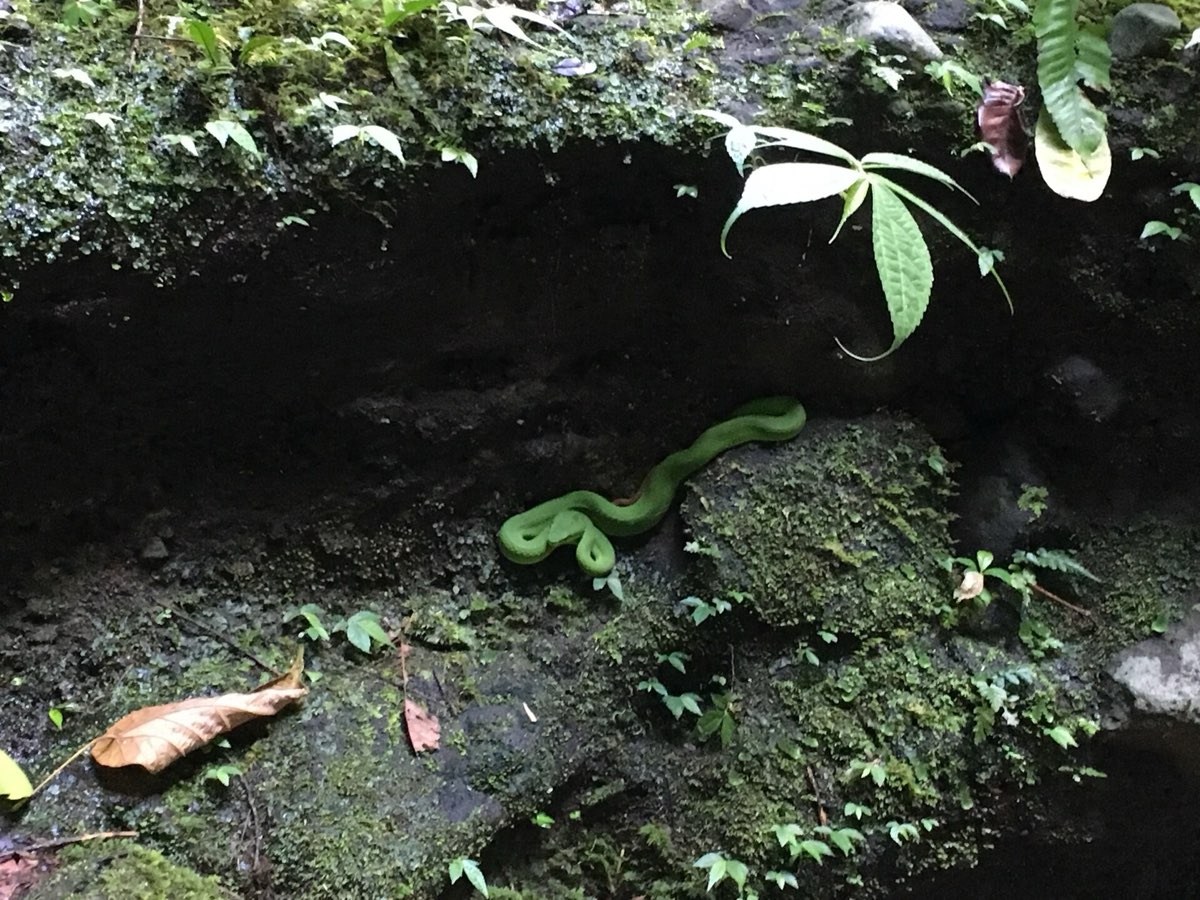 A white-lipped island pit viper, green and easy to miss. Photo: Vlk Obecný / Wikimedia Commons (CC BY 4.0)
Sensible precautions cover almost all of it. Watch where you put your feet and hands, especially in long grass, rice fields and leaf litter, and around woodpiles and ruins. Wear closed shoes on rural walks, and carry a torch at night, when several venomous species are active.
Do not reach into holes, gaps or thick vegetation you cannot see into. If you meet a snake, stop, stand still and let it move away. Do not try to catch, kill or photograph it up close.
For a snakebite, keep still, keep the limb still and get to a hospital fast. The first-aid section below has the full steps.
Sea Life: Touch Nothing on the Reef and Wear Reef Shoes
The ocean around Bali holds a handful of creatures that can hurt you, and a little awareness prevents nearly all of it.
For snorkelers and divers in the clear water off Pemuteran and Menjangan, the reef is a draw. It stays safe as long as you keep your hands off it and your feet off the coral.
Sea Urchins
Black spined urchins sit in crevices and on rocky bottoms. Step on one or brush it, and the spines break off in your skin.
Spines left in the skin can inflame, and ones lodged in a joint can need surgery to remove. Wear reef shoes in rocky shallows and never put your feet down blindly on a reef.
Stonefish
The stonefish is the genuinely dangerous one to watch for underfoot. It lives in the shallow tropical waters of the western Pacific and Indian Oceans. It looks exactly like an algae-covered rock and lies still on the bottom.
Stepping on one drives venomous spines into your foot. The pain is intense and spreads, and the venom attacks muscle, nerves and the heart. A sting can kill.
Reef shoes are the defence, along with never stepping on what looks like a rock.
Jellyfish
Stings range from a mild nettle-like burn to, rarely, something more serious. Many cause a painful, itchy rash without severe illness.
The most dangerous box jellyfish are found in the wider region, from northern Australia to Malaysia and New Guinea. Treat any severe sting as an emergency.
Blue-Ringed Octopus
This octopus is small and highly venomous despite its size. It is found in crevices across the Indo-Pacific, and sometimes in shallow water along the shore.
It bites when handled, and its venom can cause paralysis and death if not treated. Never pick up a small octopus, however striking the blue rings look.
Cone Snails, Fire Coral and Lionfish
These three round out the list of look-but-do-not-touch reef life. One rule covers them and the creatures above: on the reef, touch nothing.
Strong currents and surf are a far more common cause of trouble in Bali's water than any animal. Swim where it is sensible, respect flags and local advice, and keep your hands and feet off the reef.
Mosquitoes: Dengue Is the Risk, and Avoiding Bites Is the Whole Strategy
Mosquitoes carry dengue fever, which is found across Indonesia.
WHO links its spread to high rainfall and humidity. The wet season, which the Bali provincial government puts at October to April, is when mosquitoes have the most places to breed. The best time to visit north Bali goes through those months and what else the wet season changes about a trip north.
The dengue mosquito, Aedes aegypti, bites mostly in the daytime. Dengue brings:
- high fever
- severe headache
- pain behind the eyes
- muscle and joint pains
Most people recover in one to two weeks. It can become severe, and there is no specific treatment, only care for the symptoms. If you develop a high fever during or shortly after your trip, see a doctor and mention you have been in Bali.
The same mosquitoes can carry Zika, which is also found in Indonesia. If you are pregnant or planning a pregnancy, talk it over with your doctor or midwife before you go.
Malaria is a minor concern here compared with Papua. The risk in Bali is low, and avoiding bites is enough. If you are going on to Papua, where the risk is high, take advice on antimalarials.
Prevention is ordinary and effective. Use repellent with DEET or picaridin, especially in the morning and late afternoon. Cover up at dawn and dusk in greener and more rural areas, and sleep somewhere screened or air-conditioned, or under a net.
Centipedes and Spiders: Shake Out Your Shoes and Clothes
Bali has large centipedes and a range of spiders, and they cause far more alarm than harm.
Centipedes. The big ones reach the length of a hand, and their bite is genuinely painful, like a strong sting, with local swelling. They like damp, dark spots: shoes left outside, bathroom corners, and under towels and bags on the floor. Shake out shoes and clothes before putting them on, and you will almost never meet one.
Spiders. Most of Indonesia's spiders are harmless to people. They bite in self-defence when disturbed, so the same habit applies. Check shoes and bedding, and do not reach blindly into dark corners.
See a doctor if a centipede or spider bite causes spreading swelling, difficulty breathing or other severe symptoms, since reactions vary from person to person.
What to Do If You Are Bitten or Stung
The right first response depends on the animal.
Monkey or Dog Bite or Scratch: Wash It, Then Get the Vaccine the Same Day
Wash the wound with soap and running water for at least 15 minutes, as Bali's provincial health office advises. Dab on an antiseptic such as iodine or 70 per cent alcohol. Then get to a puskesmas, clinic or hospital the same day for the rabies vaccine.
Do not wait to see how the wound heals, and do not assume a small scratch is safe. Do not let being on holiday delay it. This applies to bites, scratches, and licks on broken skin or on the eyes, nose or mouth.
Snakebite: Keep Still and Get Emergency Care
Indonesia's health ministry gives this first aid for a snakebite:
- Keep the bitten limb still in a comfortable position, with a splint or sling if you can make one. Every movement helps the venom spread.
- Get to a hospital as fast as you can. Call 119 for an ambulance.
Its guide lists five things to avoid:
- Do not cut the wound.
- Do not try to suck out venom.
- Do not tie anything around the limb.
- Do not apply ice.
- Do not rely on massage, a snake stone or traditional remedies.
A photo of the snake from a safe distance can help the hospital choose treatment.
Jellyfish Sting: Seawater, Never Fresh Water
Wash off any tentacles with plenty of seawater. Fresh water can make the sting worse. Lift any that stay on with tweezers, rather than with bare fingers.
Vinegar and warm water work well on some species, including box jellyfish. Pour vinegar on the sting, then soak it in water of 42 to 45 °C for 20 to 40 minutes. If there is widespread pain, breathing difficulty or any sign of a severe reaction, treat it as an emergency and get medical help.
Stonefish or Sea-Urchin Injury: Hot Water While You Arrange Care
Soak the area in hot water of 42 to 45 °C, hot but never scalding, while you arrange care. For sea-urchin spines, keep it up for 30 to 90 minutes.
A stonefish sting needs immediate medical attention, because it can become life-threatening. Urchin spines often need a doctor to remove.
Centipede or Spider Bite: Wash and Watch
Wash the area and watch for any severe or spreading reaction, and see a doctor if one develops.
When in doubt with any bite or sting, get it looked at.
The Rabies Vaccine: Start It the Same Day
Once symptoms appear, rabies is almost always fatal. Treatment started soon after a bite prevents it. Timing decides the outcome.
When you need it. Any bite, scratch or skin-breaking contact from a mammal in Bali is a possible rabies exposure, and that includes dogs, monkeys and cats. So is a lick on broken skin or on your eyes, nose or mouth.
What the clinic gives. A course of rabies vaccine, starting with a first dose that day. For a bite that breaks the skin or a lick on broken skin, WHO also calls for rabies immunoglobulin or antibodies given into the wound.
How fast. Start the same day if you can. WHO calls for immediate vaccination after an exposure. If time has already passed, go anyway and let a doctor assess it, since rabies symptoms can take some time to develop.
Where. Bali has rabies centres at every community health centre (puskesmas) and at a number of hospitals. In the north, Buleleng's health office runs rabies centres at community health centres (puskesmas) and at the regency hospital, RSUD Buleleng, in Singaraja.
Call ahead to confirm vaccine stock rather than driving on hope, and ask about immunoglobulin too if the wound is deep. If the north cannot supply it the same day, go south without waiting.
Vaccinate first and reassure yourself later. The downside of an unnecessary vaccine is a few shots.
Practical Notes
- Insurance: Travel insurance that covers medical treatment, and ideally evacuation, turns a frightening situation into a manageable one. Carry it.
- In your bag: Repellent with DEET or picaridin, reef shoes, a torch and basic first-aid.
- On rural walks: Closed shoes, and a torch after dark.
- At monkey temples: Nothing loose, no food and no plastic bags.
- After any bite or scratch from a mammal: Soap and running water for at least 15 minutes, then the rabies vaccine the same day.
FAQ
Are there dangerous animals in Bali? There are a few. The ones that matter are stray dogs and temple monkeys, which can carry rabies, plus several venomous snakes and a handful of marine creatures like stonefish, sea urchins, and the rare blue-ringed octopus. None of them make Bali a dangerous place to visit. Most trips pass without any incident, and ordinary care handles the rest.
Is rabies a risk in Bali? Yes, and it is the animal-related risk to understand first. Rabies circulates in Bali's stray dog population and can be present in monkeys. Any bite or scratch, even a minor one, should be treated as a possible exposure, and you should get the rabies vaccine the same day. Rabies is almost always fatal once symptoms appear, and preventable if you act in time.
What should I do if a monkey scratches or bites me? Wash the wound with soap and running water for at least 15 minutes and go to a clinic or hospital the same day for the rabies vaccine. A scratch counts the same as a bite. Do not wait to see whether it heals.
Are the monkeys at Uluwatu and Ubud dangerous? They are wild animals and should be treated as such. The main problems are theft, since they snatch sunglasses, phones, and bags, and scratches that carry a rabies risk. Keep your belongings secured and out of reach, do not feed or touch them, and do not carry food or plastic bags.
Are there venomous snakes in Bali? Yes, including cobras, kraits, and pit vipers, plus docile sea snakes in the water. Bites on tourists are uncommon because snakes avoid people. Watch where you step and reach, carry a torch at night, wear closed shoes on rural walks, and never try to handle or kill a snake.
What sea creatures should I watch out for when snorkeling or diving? Sea urchins and stonefish on the bottom, jellyfish in the water, and the rare but venomous blue-ringed octopus. The rule that covers nearly all of it is to touch nothing on the reef and avoid stepping on anything that looks like a rock. Reef shoes prevent most injuries. North Bali's reefs at Pemuteran and the Menjangan Island marine park are rewarding precisely because the wildlife is left undisturbed.
Do I need to worry about jellyfish in Bali? Many jellyfish stings are painful but not dangerous. Wash off tentacles with seawater, never fresh water, and lift any that remain with tweezers. Vinegar and warm water help with some species. The most dangerous box jellyfish live in the wider region, so seek help at once for any severe reaction or breathing difficulty.
Is there malaria or dengue in Bali? Dengue is the bigger concern. It spreads through daytime-biting mosquitoes, especially in and after the rainy season. Use repellent and cover up. Malaria risk is low in Bali, unlike Papua, where antimalarials are recommended.
What do I do for a snakebite in Bali? Keep the bitten limb still, with a splint or sling if you can, because movement spreads the venom. Do not cut, suck, ice or tie it. Get to a hospital as quickly as possible, and call 119 for an ambulance.
Are centipedes and spiders in Bali dangerous? The large centipedes deliver a painful bite with swelling. Most spider encounters are harmless. Shake out shoes, clothes, and bedding, and the chance of being bitten drops close to zero. See a doctor if any bite causes severe or spreading symptoms.
Where can I get the rabies vaccine in Bali? Bali has rabies centres at every puskesmas (community health centre) and at a number of hospitals. In the north, Buleleng's health office runs rabies centres at its community health centres and at the regency hospital in Singaraja. Call ahead to confirm stock and go the same day. Carry travel insurance that covers medical treatment and evacuation.
Sources
- World Health Organization, Rabies fact sheet (wound washing for at least 15 minutes, exposure categories, vaccine and immunoglobulin), read September 2026
- World Health Organization, Dengue and severe dengue fact sheet (repellents with DEET, picaridin or IR3535), read October 2026
- UK National Travel Health Network and Centre (NaTHNaC), Indonesia (malaria risk in Bali and Papua, dengue, Zika and pregnancy), read October 2026
- Bali Provincial Health Office, Kadiskes Bali berharap masyarakat ikut aktif cegah rabies (wash a bite with soap and running water for 15 minutes, then go straight to the nearest health service, rabies centres, the late-2023 vaccine shortage), November 2023, read October 2026 (in Indonesian)
- Ministry of Health of Indonesia, Begini implementasi One Health atasi rabies di Bali (rabies centres at every puskesmas and at hospitals in Bali, antiseptic after washing, vaccine and serum), March 2023, read October 2026 (in Indonesian)
- Ministry of Health of Indonesia, Buku pedoman penanganan gigitan, sengatan hewan berbisa dan keracunan tumbuhan dan jamur (snakebite first aid and what to avoid, the 119 ambulance number, jellyfish, stonefish, sea urchins, blue-ringed octopus, spiders), 2023, read October 2026 (in Indonesian)
- Siloam Hospitals, Penanganan tersengat ubur-ubur (rinse with seawater and never fresh water, vinegar, lift tentacles with tweezers), May 2025, read October 2026 (in Indonesian)
- Government of Bali Province, Rabies in Bali: a persistent threat to public health and tourism, read September 2026
- Buleleng Health Office, Anti-rabies vaccine stock available again (the rabies centres, including RSUD Buleleng), read September 2026 (in Indonesian)
- The Reptile Database, Trimeresurus insularis, Bungarus candidus, Bungarus fasciatus and Ophiophagus bungarus (distributions including Bali), read September 2026
- Government of Bali Province, Tarubali, Iklim tropis laut di Bali (rainy season October to April), read October 2026 (in Indonesian)
Read next: the Menjangan Island marine park and the reefs at Pemuteran if you are heading into the water in the north, Bali belly and healthcare in north Bali for what to do if you need a clinic, and Bali temple etiquette before you visit a temple where monkeys live.