On this page
- In Brief
- The 7-Day North Bali Itinerary at a Glance
- Days 1 and 2: Lovina, for the Coast and the Dolphins
- Days 3 and 4: Munduk, for the Waterfalls, Lakes and Coffee
- Days 5 and 6: Pemuteran, for the Reefs and Menjangan
- Day 7: The Drive Back, Broken by a Waterfall
- Where to Stay: One Base per Leg
- Getting Around: a Private Driver for the Week
- When to Go: April to October, Best from June
- With More Time: Ten Days, or a Longer Stay
- Practical Notes
- FAQ
- Sources
In Brief
A north Bali itinerary 7 days long fits three bases: two nights in Lovina, two in the Munduk highlands and two in Pemuteran. Day 7 is the drive back to the airport, broken by a waterfall at Sekumpul or Gitgit.
The route runs in one direction, so the drives between bases stay short. Lovina is about three hours over the mountains from the airport. Munduk is about an hour above Lovina, and Pemuteran roughly two hours from Munduk. A private driver for the week carries your bags from base to base.
The 7-Day North Bali Itinerary at a Glance
- Days 1 and 2, Lovina: dawn dolphins, the calm black-sand coast and the sulphur pools at Banjar
- Days 3 and 4, Munduk and the highlands: waterfall trails, the twin lakes and coffee straight off the slope
- Days 5 and 6, Pemuteran and the northwest: the reef off the beach and the boat to Menjangan
- Day 7, the drive back: Sekumpul or Gitgit on the way south to the airport
- Getting around: a private driver for the week
- When to go: April to October, with June to September the most settled
A week gives you three bases instead of one, and you sleep in each place instead of day-tripping out and back. That is the difference from the 3-day north Bali itinerary. For the bigger picture of the region, see the complete north Bali guide.
Days 1 and 2: Lovina, for the Coast and the Dolphins
Lovina is a string of quiet fishing villages with flat calm water and black volcanic sand.
- Base: Lovina, two nights
- Driving: about three hours over the mountains from the airport on day 1, then a short drive west to Banjar on day 2
- In order: day 1, arrival and sunset. Day 2, the dolphins at dawn, Banjar Hot Springs in the afternoon and a slow evening by the sea.
Day 1. The drive up from the airport is long and winding, so most people reach Lovina in the afternoon. Drop your bags and walk down to the water for the sunset. The coast faces north and slightly west, so the evening light over the Bali Sea runs long and soft. Close the first night with a grilled-fish dinner by the beach.
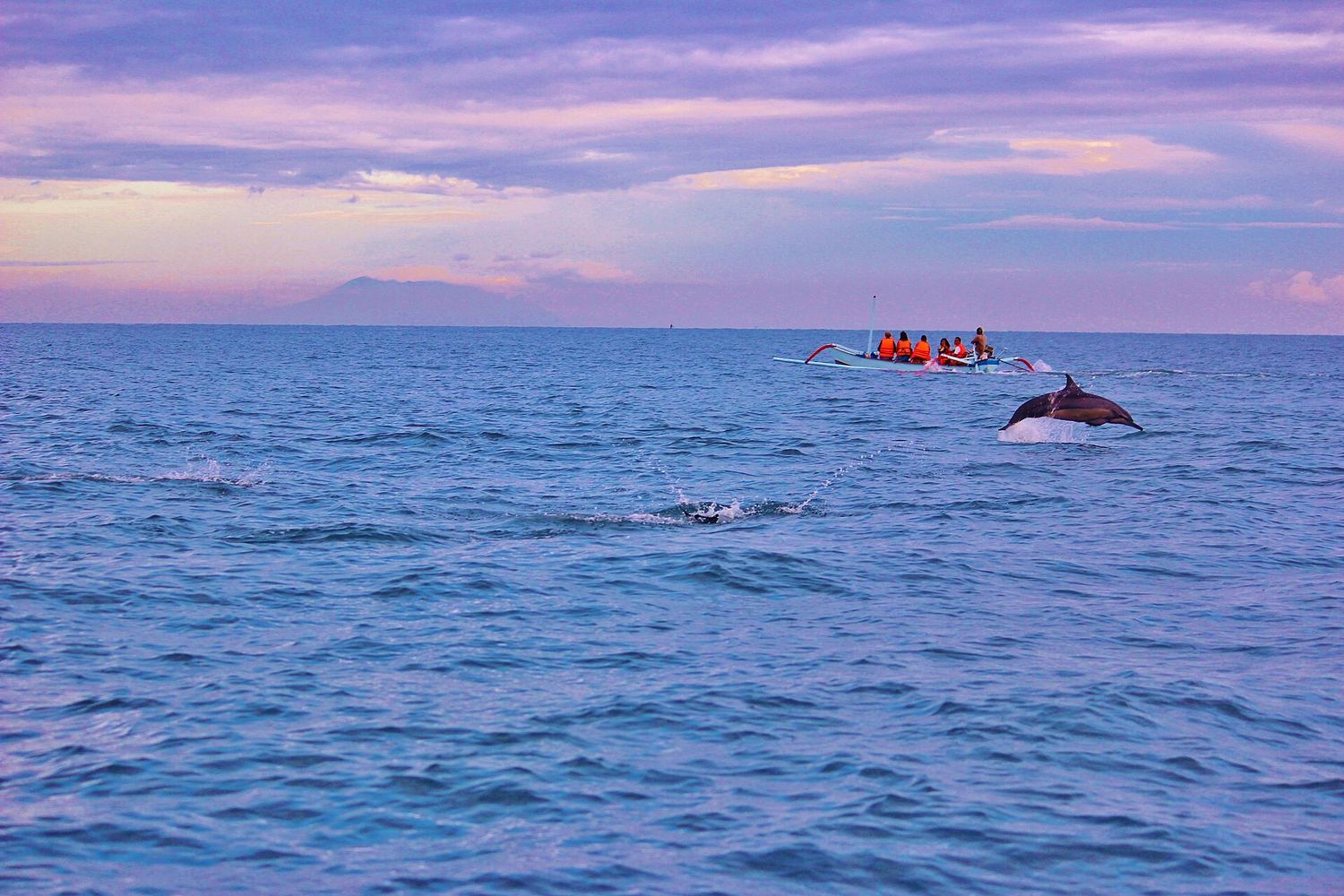
Day 2, at dawn. The wild dolphins are why many people first hear of Lovina, and the trip is worth doing once. Jukung outriggers leave the shore before sunrise and head to where spinner and bottlenose dolphins feed. On a good morning you will see dozens.
The trip is wild and unstaged. The honest breakdown of timing, ethics and how to choose a boat is in the Lovina dolphins guide.
Day 2, the afternoon. You are back on shore by mid-morning with the whole day ahead. Spend the afternoon at Banjar Hot Springs, the natural hot-spring pools in Banjar village a short drive west. Then ease back into one more slow evening by the sea.
The full breakdown of the area, where to eat and where to stay is in the Lovina area guide.
Days 3 and 4: Munduk, for the Waterfalls, Lakes and Coffee
Munduk sits high and cool in cloud-forest country, and it surprises many visitors to north Bali.
- Base: Munduk, two nights
- Driving: about an hour up from Lovina on day 3, then a short way up the road to the lakes on day 4
- In order: day 3, the drive up and a waterfall loop in the afternoon. Day 4, the twin lakes, the Bratan temple if you want it, and a coffee plantation on the way back.
Day 3. Head up in the morning. The road from Lovina climbs through rice terraces and coffee, and the air changes as you go.
Drop your bags and walk. The waterfall trails around Munduk are the highlight, a network of forest paths linking several falls, where the walk between them is half the pleasure. Some falls are a short stroll from the road, and others need a longer trek. The afternoon is enough for one good loop before the mist comes down, which it often does late in the day at this altitude.
Day 4. The twin crater lakes sit just up the road, framed by forested ridges, with viewpoints that open out when the cloud lifts. The old lakeside temple at Bratan is nearby if you want it. On the way back, stop at a working coffee plantation on the slope, where Munduk's beans are grown, dried and roasted in front of you.
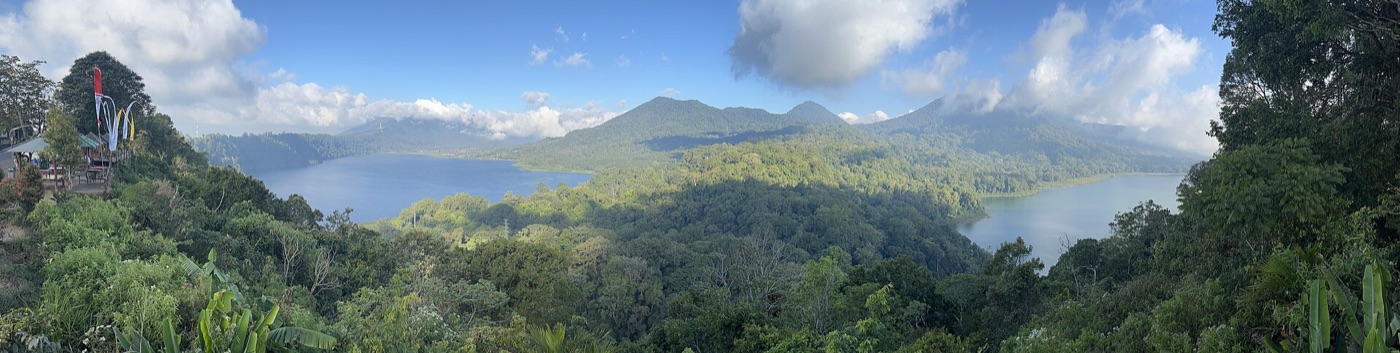 The twin lakes from the ridge on Day 4. Photo: Stefan Fussan / Wikimedia Commons (CC BY-SA 3.0)
Bring something warm, since the highlands run cool in the evenings and the rain comes in fast. For the trails, the lakes and where to stay up here, see the full Munduk guide.
Days 5 and 6: Pemuteran, for the Reefs and Menjangan
Pemuteran is in the far northwest, and two nights here close the week underwater.
- Base: Pemuteran, two nights
- Driving: roughly two hours from Munduk, back down and west along the coast, on day 5. Day 6 is a short boat crossing to Menjangan.
- In order: day 5, a snorkel straight off the beach. Day 6, a morning trip to Menjangan and a last slow swim in the afternoon.
Day 5. Settle in and snorkel off the beach. Just offshore is the Karang Lestari Biorock project, a long-running reef restoration with coral nursery structures in the village's marine protected area since 2000.
The coral and fish are visible in shallow, calm water within swimming distance of the sand. It is some of the easiest snorkeling on the island, and good enough that you may not feel the need for a boat.
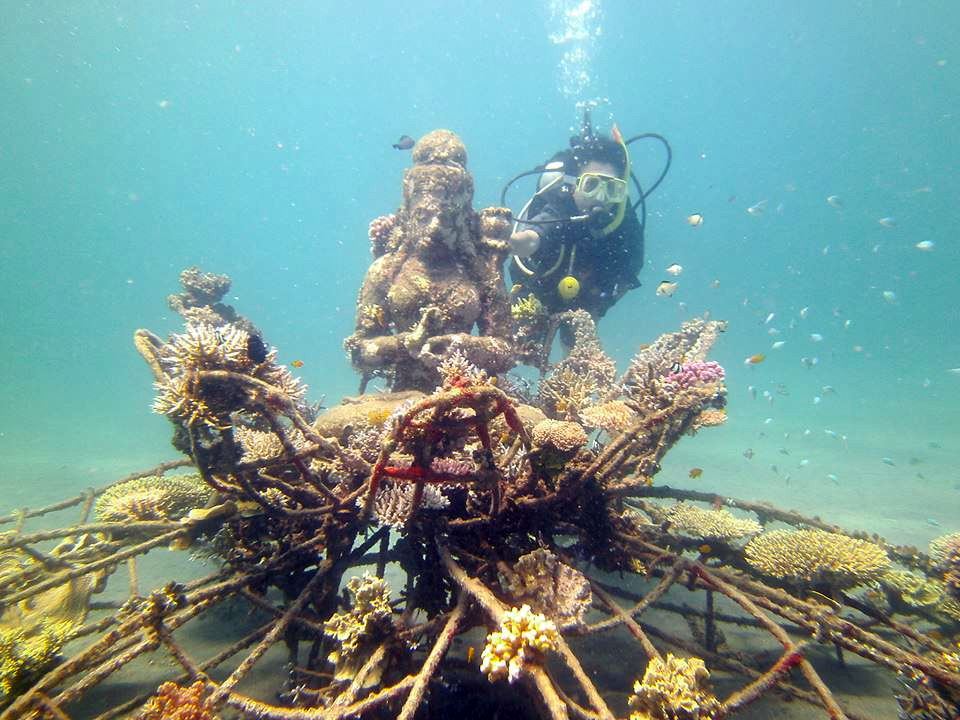 Coral growing over a submerged frame and statue in Pemuteran bay. Photo: Ennio morricone / Wikimedia Commons (CC BY-SA 3.0)
Day 6. This is the boat day. Menjangan Island sits inside West Bali National Park, a short crossing from the Pemuteran coast, and its wall dives and drop-offs draw serious divers north.
Snorkelers get just as much from it, with clear water, healthy coral and quiet. A morning trip leaves the afternoon free for one last slow swim.
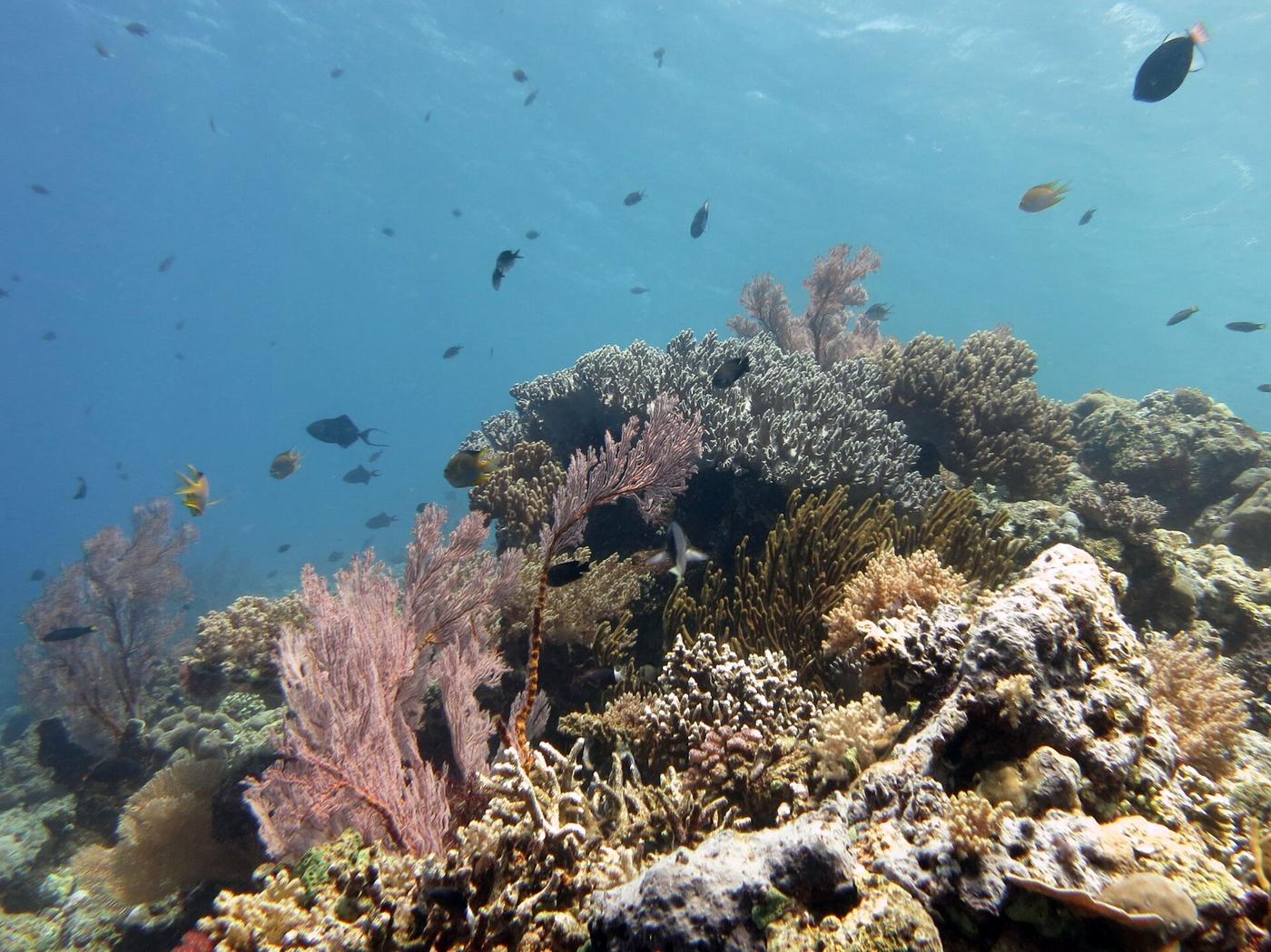 The coral garden at Menjangan Island. Photo: Lakshmi Sawitri / Wikimedia Commons (CC BY 2.0)
The diving, the reefs and where to stay are in the Pemuteran guide.
Day 7: The Drive Back, Broken by a Waterfall
The last day is the drive south to the airport, the only long drive of the week.
- Base: none, you leave for the airport
- Driving: south over the mountains past the Bedugul lakes, with a generous buffer before your flight
- In order: Sekumpul (a couple of hours) or Gitgit (a twenty-minute stop), then on to the airport
The route back over the mountains passes within reach of the north's big falls, so break the drive at one.
Sekumpul, with an early start. Sekumpul Waterfall is one of the most spectacular falls in Bali. It is a cluster of falls in Sawan district, reached on foot down concrete steps. The canyon descent and the climb back out make it a real trek. Allow a couple of hours, and bring a change of clothes for the rest of the drive.
Gitgit, for a lighter day. The trail is short, with no canyon descent, and it fits as a twenty-minute stop on the way down.
From either waterfall, the drive continues south past the Bedugul lakes to the airport. Allow plenty of buffer before a flight, because the mountain roads are slow and the final descent into the south can run into traffic.
Where to Stay: One Base per Leg
The week works because you sleep in all three bases instead of commuting from one.
- Lovina: stay a little outside the main strip. The hillside and the quieter eastern beaches trade walking-distance bars for space, sea views and rice-paddy calm, with beachfront rooms, garden bungalows and private villas to choose from.
- Munduk: look for a valley or ridge view and a fireplace or hot water, because the highlands get cool at night. Eco-lodges and small mountain retreats suit this leg.
- Pemuteran: beachfront here puts the reef on your doorstep. Dive resorts and quiet boutique stays line the bay, most within walking distance of the snorkeling.
The Lovina, Munduk and Pemuteran guides each cover where to stay in full.
Getting Around: a Private Driver for the Week
A private driver for the week is the simplest way to run this route, and for most people it is the right call.
The roads are winding and signage is thin once you leave the coast. A driver who knows the north can stop at a viewpoint, a coffee plantation or a warung you would otherwise pass. The route moves one way, up to the mountains, west to the reefs and south home, so nothing doubles back. The driver carries your bags between bases as you go.
A scooter works inside each base, around Lovina or for short hops near Pemuteran, if you are confident on one. It suits the highland road to Munduk with luggage less well, and the long final drive south least of all. Many people keep a driver for the legs between bases and rent a scooter for the days in between.
For routes, drive times and transport from the airport, see getting to north Bali.
When to Go: April to October, Best from June
The dry season, April to October, is the reliable window, with June through September the most settled.
Seas are calmer for the dolphins and the diving, the mountain views around Munduk open up, and the waterfall trails are firmer underfoot. This is the stretch most travellers aim for, and the one this itinerary runs best in.
The rainy season, November to March, is greener and quieter, with warm afternoons broken by downpours. The waterfalls run fuller and the highlands are at their lushest. In return, dolphin and dive trips are sometimes cancelled in rough weather, and the Sekumpul descent turns slippery after overnight rain. The shoulder months tend to hold up well.
With More Time: Ten Days, or a Longer Stay
If you have ten days, the 10-day itinerary is the slower version of this route. It adds two nights in the south or Ubud first, the crossing as a day of its own and a free day on the Lovina coast.
Some people who come for the dolphins and the diving start asking what it would take to stay. If that is the thread you are pulling, investing in north Bali is the place to start.
Practical Notes
Details below change. Confirm current rates locally before you go.
- Driver for the week: budget for a multi-day private driver who carries your bags between bases. Rates vary by vehicle and season, so agree the whole week up front.
- Dolphin trip: arrange it the night before in Lovina, and pay cash on the morning.
- Banjar Hot Springs entry: a fee at the gate, so bring cash.
- Munduk waterfall trails: entry or parking fees at some falls, cash only.
- Menjangan dive and snorkel trips: dive centres and lodges in Pemuteran run them. Park and boat fees can sit on top of a trip price, so ask what is included.
- Sekumpul entry and guide: managed by the local cooperative, cash only.
- Cash: ATMs are reliable in Lovina and thinner everywhere else. Carry enough for the mountains and the northwest.
- Connectivity: solid mobile data along the coast, patchier in the Munduk highlands and parts of the national park.
- Flights home: allow a generous buffer on Day 7. The drive south is slow and the airport approach can be busy.
FAQ
Is a week enough for north Bali? Yes, and it is close to ideal. Seven days lets you sleep in three different bases, Lovina, Munduk and Pemuteran, instead of day-tripping from one. That gives you the coast, the highlands and the reefs without rushing any of them. With less time you choose between them, and with more you are settling in for a longer stay.
What is the best 7-day north Bali itinerary? Two nights in Lovina for the dolphins and the coast, two in Munduk for the waterfall trails and lakes, two in Pemuteran for the diving, and a final day driving south with a waterfall stop. The route moves in one direction along the coast and up into the mountains, which keeps the driving between bases short.
How do you split a week between Lovina, Munduk and Pemuteran? Two nights each, with the seventh day given to the drive back. Lovina comes first because it is the natural arrival point from the airport, and Munduk second because it is an hour up the hill from there. Pemuteran is third because it sits west along the coast on the way back toward the mountains and the road south.
Is north Bali good for a longer stay? Yes. The pace and the space suit a longer stretch, and some people who come for a week start looking at staying for a season or buying land. The investing in north Bali guide covers that side.
Do you need a car in north Bali? For this route, a private driver is the easiest option, since the roads are winding and the itinerary moves between three bases with luggage. A scooter works well inside each base if you are confident riding, and many people combine the two. See getting to north Bali for the detail.
Sources
- Palm Living, Icon of Lovina: dolphin attraction, read September 2026
- Palm Living, Banjar Hot Spring, read September 2026
- Palm Living, Sekumpul Waterfall, read September 2026
- Karang Lestari Pemuteran, About the Biorock project, read September 2026
- Wikipedia, West Bali National Park, read September 2026

.jpg)


