
On this page
- In Brief
- The Banjar at a Glance
- A Banjar Is the Neighbourhood Unit of a Customary Village
- Where You Will See a Banjar at Work
- Members Are Households, and Their Duty Is Called Ngayah
- The Bale Banjar Is the Community's Living Room
- Sekaa and Youth Groups Form Inside the Banjar
- Leaders Are Chosen by Consensus
- Each Village and Banjar Writes Its Own Rules
- If You Rent or Build in Bali, You Live in a Banjar as a Guest
- How to Be a Respectful Guest
- FAQ
- Sources
In Brief
A banjar in Bali is the neighbourhood unit of a customary village. Bali's provincial law calls it the banjar adat or banjar suka duka, the banjar of joy and sorrow. The law gives it one job: to carry out the social and religious life of its neighbourhood.
In practice the banjar organises ceremonies and turns out for weddings and cremations. It also looks after shared land and buildings, and settles local disputes.
Its members are the households of the neighbourhood, and its leaders are chosen by consensus. It meets in an open pavilion, the bale banjar, and runs by its own written rules, the awig-awig.
The banjar sits alongside the subak, the farmers' water association, and the village temples.
The Banjar at a Glance
- What it is: The neighbourhood unit of a Balinese customary village (desa adat)
- Its legal name: Banjar adat or banjar suka duka, in Bali's regional regulation on customary villages
- Members: The Balinese Hindu households of the neighbourhood, registered in the village rolls (mipil)
- Meets at: The bale banjar, the open community pavilion
- Does: Ceremonies, mutual help at weddings and deaths, shared property, arts and youth groups, local disputes
- Led by: Its head, the kelihan banjar, and officers, chosen by consensus
- Rules: The village's awig-awig and pararem, written and agreed by its members
A Banjar Is the Neighbourhood Unit of a Customary Village
Bali has two kinds of village, laid over each other.
One is the government's administrative village, the desa dinas. The other is the customary village, the desa adat.
Bali's Regional Regulation No. 4 of 2019 recognises the desa adat as a community under customary law. It has its own territory and village temples, its own property and traditions, and the right to run its own affairs.
The banjar adat is its neighbourhood unit. Penestanan, a customary village near Ubud, has two banjar, and the Desa Adat Buleleng, the old town of Singaraja, has fourteen.
The law gives the banjar a short job description: to carry out the social and religious activities of the neighbourhood. Its leaders have five tasks.
- Coordinate with the desa adat
- Apply the village's rules
- Organise the neighbourhood's ceremonies and social work
- Manage the banjar's property and look after its land
- Call meetings and settle customary disputes within the banjar
Visitors often sense how ordered and communal a Balinese village feels, with ceremonies organised without fuss. The banjar is the reason, and it is mostly invisible to outsiders.
Where You Will See a Banjar at Work
The clearest sight of a banjar at work comes on the night before Nyepi, the Day of Silence.
Each banjar makes an ogoh-ogoh, a giant figure that often stands for a negative human trait. The national news agency Antara describes the making of them as the work of the banjar and its young people. On the eve of Nyepi each one is carried around the village or banjar and then, usually, burned.
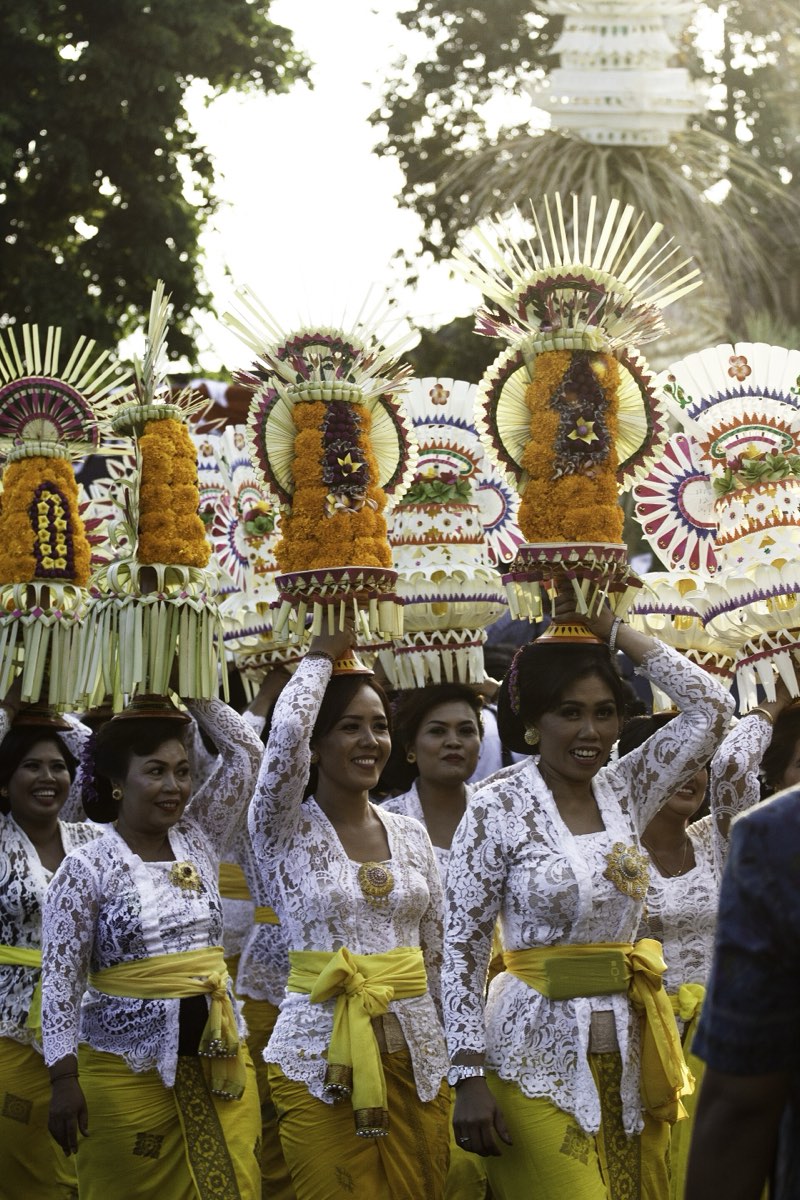 A village turning out in procession, gebogan towers overhead, the kind of moment the banjar organises. Photo: Tijden / Wikimedia Commons (CC BY-SA 4.0)

The rest of the year you see the banjar in smaller things:
- a procession blocking the road
- the gamelan drifting from a pavilion at night
- women making offerings together in a hall for a temple anniversary
- a work party clearing a drain
None of it is staged for tourism, and each is the banjar doing its job.
It also explains a feeling many people have in the north, that life here is closely connected. The villages of Lovina, Munduk and the coast each run on their banjar.
The faith behind it is in Balinese Hinduism explained. The philosophy the awig-awig are written to serve is in Tri Hita Karana.
Members Are Households, and Their Duty Is Called Ngayah
Members are Balinese Hindus registered in the village rolls, a registration called mipil. Membership belongs to a household more than to a person.
Penestanan, with its two banjar and 120 member households, shows how this works. Its rules release a member from banjar duty at 65, or when a spouse dies or the couple divorces.
The duty itself is called ngayah, and it covers labour for ceremonies, turns at shared tasks and contributions.
Mutual help is the other side of that duty. Through the banjar, a Balinese family has its neighbours beside it for the big moments. For a cremation, a wedding or a temple festival the neighbourhood turns out, because each household knows its own turn will come.
The Bale Banjar Is the Community's Living Room
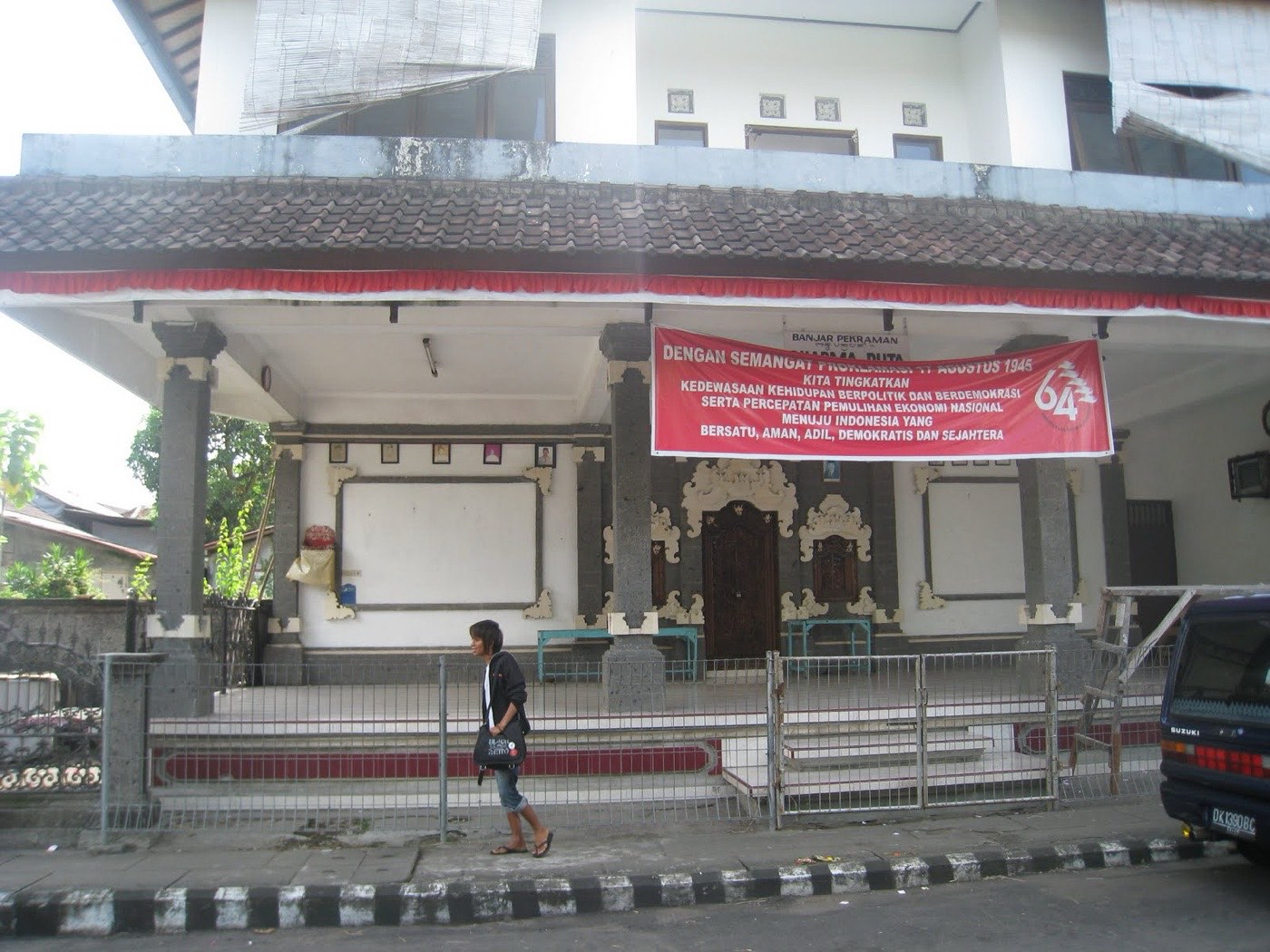
A banjar has its hall, the bale banjar, an open pavilion that serves as the community's living room.
Meetings happen here, ceremonies are prepared here and the neighbourhood gathers here. The gamelan rehearses here too, and the gamelan tradition lives in halls like this one.
Sekaa and Youth Groups Form Inside the Banjar
Groups form inside the banjar around shared interests. Arts, culture and other groups are called sekaa, and the young people have their own organisation, the sekaa teruna or yowana.
The pecalang, the traditional guards who keep order at ceremonies, are formed by the customary village. They have their own page, with more on the pecalang.
Leaders Are Chosen by Consensus
The regulation requires the banjar's leaders to be chosen by musyawarah mufakat, discussion until everyone agrees. Big village decisions go to a full meeting, the paruman.
Penestanan's rules for choosing its village head spell it out. All 120 member households are invited, and the decision is made by consensus.
Each Village and Banjar Writes Its Own Rules
Each village and banjar keeps its own awig-awig, rules its members write themselves.
The Buleleng culture office describes what they contain. They set out members' rights and duties toward the gods, each other and the land, with the customary sanctions for breaking them. Newer decisions are added as pararem.
Desa Adat Buleleng gives an example. When it passed a pararem on public-health rules, the text was drafted with the heads of its fourteen banjar and the youth group. The fines were set in rice.
Together these parts make the human system beneath the ceremonies, the temples and the daily offerings.
If You Rent or Build in Bali, You Live in a Banjar as a Guest
If you rent or build a house in Bali, you live inside a banjar whether you know it or not.
The provincial regulation sorts the people of a customary village into three groups. Registered Balinese Hindu members carry full duties and rights. Balinese Hindus living there without registering carry limited ones.
Everyone else who lives or stays in the village, foreigners included, is a tamiu, a guest. A tamiu has limited duties and rights in the village's social life and in the care of its land and environment. A tamiu has none in its religious life.
In practice the details are left to each village's own awig-awig and pararem, so they vary from one village to the next.
The practical answer is to ask. Your landlord or the kelihan banjar will tell you what the village expects of residents. It may be registering, taking part in a clean-up or making a contribution.
For a long stay on the north coast, Palm Living's long-term rentals are around Lovina. Moving to north Bali covers the rest.
How to Be a Respectful Guest
- Recognise what you are seeing. When the community is at ceremony, you are watching private communal life. Watch quietly, from the edge, and follow local cues.
- Give way. Processions and ceremonies take priority on the road and in the village. Wait, and do not push through.
- Dress and behave for the occasion. Near a temple ceremony, temple dress and the usual etiquette apply.
- Ask. A local guide or host can explain what is happening and what is appropriate, which deepens the experience for everyone.
FAQ
What is a banjar in Bali? A banjar is the neighbourhood unit of a Balinese customary village. Bali's regional regulation on customary villages defines the banjar adat as the part of the village that carries out its social and religious activities. Those are ceremonies, mutual help at weddings and deaths, shared property and local disputes. Its leaders are chosen by consensus.
Who belongs to a banjar? The Balinese Hindu households of the neighbourhood, registered in the village rolls. Membership is tied to the household. In Penestanan, near Ubud, a member is released from banjar duty at 65, or when a spouse dies or the couple divorces. Everyone else living there, foreigners included, is treated as a guest (tamiu) with limited duties.
What is the bale banjar? The bale banjar is the open community pavilion where the banjar meets. The gamelan rehearses there, ceremonies are prepared there and the neighbourhood gathers there.
How does a banjar make decisions? By consensus. The regulation requires banjar leaders to be chosen by musyawarah mufakat, discussion until agreement, and decisions go to a meeting of members (paruman). The rules themselves, the awig-awig and pararem, are written and agreed by the members.
Do foreigners have to pay the banjar? Foreigners and other non-members count as tamiu, with limited duties in the village's social life and environment. Each village sets what it asks of them in its own rules, including any contribution, so it varies. Ask your landlord or the head of the banjar.
Is Banjar the same as the banjar? No. Banjar is also the name of a town and district just west of Lovina, home of the Banjar hot springs. Villages across Bali, Banjar itself included, are made up of banjar in the neighbourhood sense.
Sources
- Province of Bali, Regional Regulation No. 4 of 2019 on Customary Villages in Bali (definitions of desa adat, banjar adat, krama, tamiu, sekaa, pecalang, paruman and awig-awig; the banjar's duties; consensus), listed on the province's customary law portal, in Indonesian, read September 2026
- Desa Adat Penestanan, Pararem No. 01 of 2022 on choosing the Bandesa and village officers (two banjar, 120 member households, release from duty, consensus), in Indonesian, read September 2026
- Buleleng Culture and Tourism Office, Awig-awig, in Indonesian, read September 2026
- Buleleng Regency Government, Desa Adat Buleleng sudah terapkan pararem (fourteen banjar adat, how a pararem is drafted), in Indonesian, read September 2026
- Antara, Mengenal seni ogoh-ogoh, tradisi sakral jelang Hari Nyepi, 27 March 2025, and Makna sejarah tradisi ogoh-ogoh, 23 March 2025, in Indonesian, read September 2026
Read next: the subak rice terraces, the Balinese ceremonies guide and Nyepi, the Day of Silence.