
On this page
- In Brief
- Jayaprana and Layonsari at a Glance
- The Story: A Devoted Servant, His Bride and a Jealous King
- The Legend Is About Faithfulness as Much as Love
- In Buleleng the Story Is Sung, Staged and Told as History
- The Grave Is a Temple Above Teluk Terima Bay
- Pilgrims Come for Blessings, Above All at the Temple's Anniversary
- How to Visit Respectfully
- How to Fit It Into a Northwest Day
- FAQ
- Sources
In Brief
The Jayaprana Layonsari legend is north Bali's own tragic love story, often called the Balinese Romeo and Juliet. Jayaprana, an orphan raised in the court of Kalianget in Buleleng, married the beautiful Layonsari. The king wanted her for himself and had Jayaprana killed in the forest at Teluk Terima.
Layonsari took her own life instead of accepting the king.
The grave became a temple, on a forested hill near Labuhan Lalang at the edge of West Bali National Park. Balinese pilgrims still climb to it to ask for blessings.
Jayaprana and Layonsari at a Glance
- What it is: One of north Bali's best-known legends, a tale of love, loyalty, and a king's betrayal
- Where it happened: The court of Kalianget in Buleleng and the forest of Teluk Terima in the far northwest
- What survives: The grave and its temple on the hill above Teluk Terima, near Labuhan Lalang
- Who visits: Hindu pilgrims, above all at the temple's anniversary, full and dark moons, and Galungan and Kuningan
- Getting there: a walk of about 400 metres from the Singaraja–Gilimanuk road, easiest from a base in Pemuteran
The Story: A Devoted Servant, His Bride and a Jealous King
The King Raised Jayaprana and Blessed His Marriage
Jayaprana was an orphan, taken in as a boy by the king of Kalianget, in Buleleng near the north coast. He served with such devotion that he grew into the king's favourite.
When he came of age, the king told him to choose a wife. He chose Layonsari, the daughter of a village head, and in the tellings the two fell deeply in love. The king gave the marriage his blessing.
Then the King Saw the Bride
The couple came to the palace after the wedding to receive his blessing. The king was struck by Layonsari's beauty and decided he would have her.
On the counsel of his minister, Patih Saunggaling, he invented a mission. Robbers were raiding the western edge of the kingdom, and Jayaprana, days into his marriage, was ordered west to deal with them.
Layonsari let him go with a dread she could not explain.
Jayaprana Accepted the Blade at Teluk Terima
At Teluk Terima, deep in the forest of the far northwest, Saunggaling revealed the truth. The order to kill Jayaprana came from the king.
Jayaprana did not resist. In the tellings, the man who had raised him held the right to take back the life he had given, and Jayaprana accepted the blade.
He was buried where he fell, and the court was told that robbers had killed him.
Layonsari Chose Death Over the King
Layonsari saw through the story. When the king pressed her to become his wife, she took her own life with a kris. She would not accept the man who had murdered her husband.
The king, mad with grief and guilt, turned his weapon on those around him. The chaos that followed destroyed the kingdom.
The Legend Is About Faithfulness as Much as Love
The story is often compared with Romeo and Juliet, but the two carry different weights.
Shakespeare's lovers die because of a feud between houses. Jayaprana dies because he is loyal to a king who betrays him, and Layonsari dies rather than betray Jayaprana.
The Balinese telling is a story about satya, faithfulness, as much as it is about love. That is why people here hold it up as well as mourn it.
In Buleleng the Story Is Sung, Staged and Told as History
It reaches Balinese ears early.
The tale is carried in the Geguritan Jayaprana, a sung Balinese verse work from the north, and from there it spread widely. The regency's population office notes how often it is staged as drama and dance-drama, because the story belongs to ordinary people.
Whether any of it happened is a question the north answers for itself. Buleleng's culture and tourism office writes that in local understanding Jayaprana was a man who really lived.
People from Buleleng tell the whole arc as local history, as something the north holds about itself.
The Grave Is a Temple Above Teluk Terima Bay
This legend has an address.
Above Teluk Terima bay, in Sumber Klampok village at the edge of West Bali National Park, a temple stands over the place held to be Jayaprana's grave. It sits in the protected forest of Teluk Terima in Gerokgak district. The spot is far out along the coast road, just past Labuhan Lalang, the jetty for Menjangan Island.
The temple carries more than one name. Indonesia's national tourism directory lists it as Pura Jaya Prana. Its formal name is Pura Luhur Sari Jayaprana, and it is better known as Pura Teluk Terima, after the bay.
A Grave Is Rare on an Island That Cremates
Balinese Hindus cremate their dead, so a standing burial place that became a shrine is rare on the island. The Bali Aga villages are another exception, and ngaben explains what Balinese funerary practice normally looks like.
Here the grave was built up as a place of worship. Statues of Jayaprana and Layonsari stand beside it, with a broad open wantilan pavilion. The regency records that the grave was first restored in 1950.
Kalianget Keeps a Temple at the Court End of the Story
Kalianget, the village in Seririt district where Jayaprana was raised, keeps its own Pura Jaya Prana. The legend is anchored at both ends of the coast it crosses.
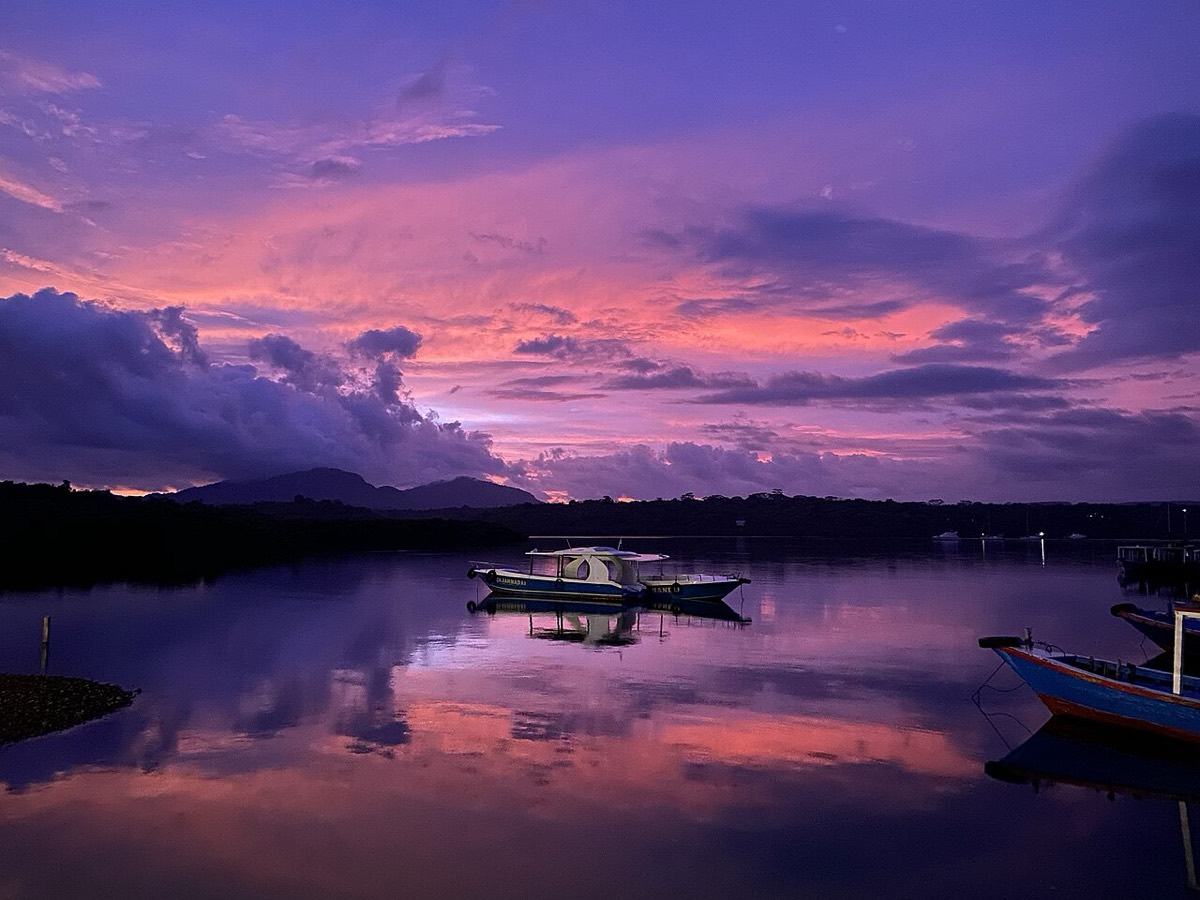 The bay at Teluk Terima, the coast the grave looks down on. Photo: Clarissaudreylia / Wikimedia Commons (CC BY-SA 4.0)

The Climb Ends at a View Over the Bay to Menjangan
The climb is part of the visit.
From the Singaraja–Gilimanuk road a path runs about 400 metres south and up through dry forest, with monkeys in the branches. It rises to roughly 200 metres above the sea.
The temple opens at the top to one of the finest views in the northwest. The still bay lies below and Menjangan sits across the water. On a clear day the volcanoes of East Java stand on the horizon.
Pilgrims Come for Blessings, Above All at the Temple's Anniversary
Pura Jayaprana is a living temple.
Its anniversary, the piodalan, falls on Anggara Kasih Wuku Kulantir in the Balinese calendar, and that is when the crowds are largest. Pilgrims also come on the full and dark moons and at Galungan and Kuningan. How a date like Anggara Kasih Wuku Kulantir works is set out in the Balinese calendar explained.
Most come to ask for a blessing. The regency reads the legend as a symbol of sacred, lasting love between husband and wife. Above all, in the regency's reading, it stands for satya, faithfulness, more than for romance.
One custom runs the other way. In a local understanding the regency itself records, newlyweds avoid driving past the grave together, or ride in separate cars. The care is for the lovers who were never united, so that they are not made jealous.
How to Visit Respectfully
Visitors are welcome with the usual courtesies.
- Dress: Wear a sarong and sash.
- Sound: Keep your voice down.
- Worshippers: Stay clear of anyone praying.
- The grave shrine: Treat it with the care you would give any tomb.
- When to come: Early morning is the best time, for the cool of the climb and the light on the bay.
The temple etiquette guide covers the details.
How to Fit It Into a Northwest Day
Most travellers fold the temple into a northwest day. Menjangan or the national park fills the morning and the climb to the grave comes after, an easy pairing since they share the same stretch of coast.
The temple also makes a natural stop on the long drive between Lovina and Pemuteran. For the wider story of the coast this legend belongs to, read the history of north Bali.
FAQ
Who were Jayaprana and Layonsari? Figures of one of north Bali's best-known legends: Jayaprana, an orphan raised in the court of Kalianget in Buleleng, and Layonsari, the bride a jealous king killed him to take. She took her own life rather than accept the king. The story is often called the Balinese Romeo and Juliet.
Is the Jayaprana story true? In Buleleng it is told as local history. It is carried in a sung verse work, the Geguritan Jayaprana, and in local understanding, as Buleleng's culture and tourism office records, Jayaprana was a real man. The story comes with named people, named places and a grave you can climb to.
Where is Jayaprana's grave? On a forested hill above Teluk Terima bay in Sumber Klampok village, at the edge of West Bali National Park, just past Labuhan Lalang, the jetty for Menjangan Island. A path climbs about 400 metres from the Singaraja–Gilimanuk road to the temple.
Can you visit Pura Jayaprana? Yes. It is a living temple and respectful visitors are welcome outside of ceremonies. Wear a sarong and sash, keep quiet, and give worshippers space. The walk up from the road is about 400 metres, and the view over the bay to Menjangan is worth the climb on its own. Bring water.
When is the temple busiest? At its anniversary, the piodalan, which falls on Anggara Kasih Wuku Kulantir in the 210-day Balinese calendar. Pilgrims also come on the full and dark moons and at Galungan and Kuningan. Visit on an ordinary morning for quiet.
Sources
- Buleleng culture and tourism office (Dinas Kebudayaan dan Pariwisata), Jayaprana & Layonsari (the site in Sumber Klampok, 400 metres from the road at about 200 metres altitude, local belief that Jayaprana was real, restoration in 1950, the anniversary on Anggara Kasih Kulantir), Indonesian, read September 2026
- Buleleng regency, Dinas Kependudukan dan Pencatatan Sipil, Kisah Cinta Jaya Prana dan Layon Sari (the narrative as the regency tells it, the statues and wantilan at the grave, its life as drama and dance-drama, and the newlyweds' custom), Indonesian, read September 2026
- Indonesian national tourism directory, Pura Jaya Prana (the temple's listing, its location in the Teluk Terima forest in Gerokgak district, and the pilgrimages on full and dark moons and at Galungan and Kuningan), Indonesian, read September 2026
- Buleleng regional research agency (BRIDA), Bhakti Penganyar di Pura Luhur Sari Jayaprana (the temple's formal name, its common name Pura Teluk Terima, and its setting inside West Bali National Park), Indonesian, read September 2026
- Buleleng regency welfare office, Bupati Buleleng Hadiri Pujawali di Pura Jaya Prana (the anniversary held on Anggara Kasih Kulantir), Indonesian, read September 2026
- Kalianget village, Buleleng, Sejarah dan Keindahan Pura Jaya Prana di Desa Kalianget (the temple at the Kalianget end of the story, in Seririt district), Indonesian, read September 2026
- Institut Seni Indonesia Yogyakarta, postgraduate library record for Nyanyian Layonsari: reinterpretasi geguritan Jayaprana (the Geguritan Jayaprana as a work from north Bali), Indonesian, read September 2026
Read next: the history of north Bali for the coast this legend belongs to, West Bali National Park for the forest it sits in, and Bali temple etiquette before you climb.