
On this page
In Brief
Ngaben is the Balinese Hindu cremation ceremony. It frees the soul from the body, so the soul can move toward its next life or reunion with the divine.
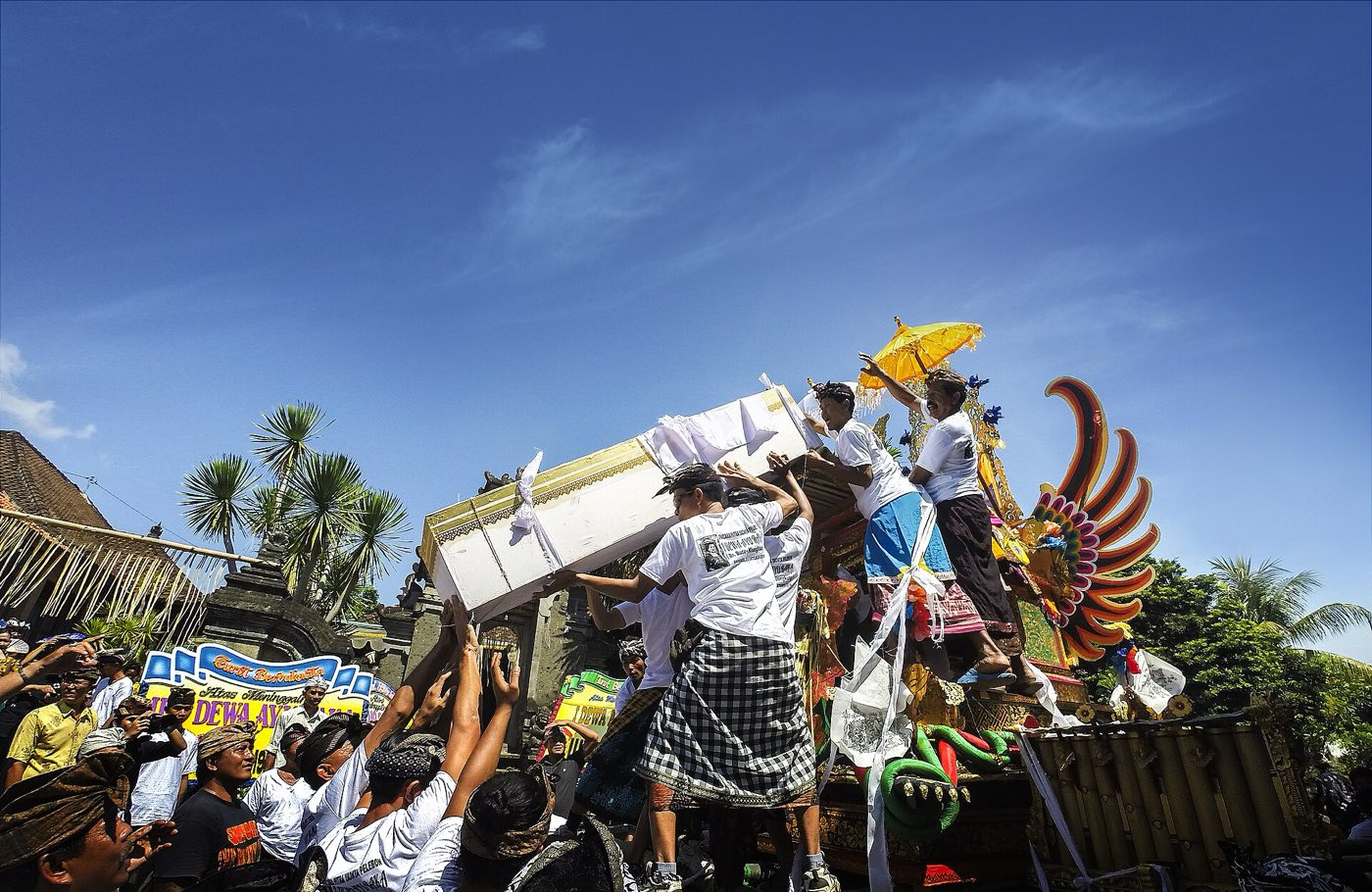
The ceremony is often vivid and even celebratory. The body is carried to the cremation ground in a tall tower, the bade, with the whole community walking with it. There it is moved to a sarcophagus, sometimes a great bull, and burned.
Ngaben is costly, so families often wait or join a mass cremation. Visitors may sometimes witness one, with deep respect.
Ngaben at a Glance
- What it is: The Balinese Hindu cremation ceremony
- The purpose: To release the soul from the body for its onward journey
- The mood: Solemn yet often celebratory, a release as much as a grief
- The tower: The bade, a tall, ornate cremation tower carrying the body
- The sarcophagus: Often an animal form (a bull for some castes)
- After the fire: What remains is set adrift on the water, the rite called nganyut
- Community: The whole banjar takes part, and ngaben is rarely private
- Timing: Families often wait, or join a mass cremation, to meet the cost
- For visitors: May sometimes be witnessed, with the utmost respect
The Body Is Temporary and the Soul Is Eternal
Ngaben begins from how Balinese Hinduism sees the body and the soul.
The body is a temporary vessel. The soul is eternal, moving through cycles of rebirth toward eventual union with the divine. Cremation releases the soul from the body so it can continue that journey.
Done properly, ngaben is an act of love and duty by the family. It is the work of freeing their loved one, with the mourning folded inside it.
So a ngaben holds grief together with celebration, colour, music and community, the joy of a soul set free.
The Buleleng regency's account of the rite places ngaben within pitra yadnya, the offering to the ancestors. It is one of the five yadnya.
Families Often Wait, or Join a Mass Cremation
Ngaben is elaborate and costly, so families often wait.
Some bury the body for a time, until they can prepare a proper ceremony. Others join a mass cremation, where a village cremates many together to share the cost. The practice varies banjar by banjar.
What Happens on the Day, From Tower to Water
When the day comes, the ceremony runs in this order.
-
The bade, the tower. The body is placed in a tall, multi-tiered cremation tower, ornately decorated. The number of tiers and the grandeur reflect status and caste.
-
The procession. The community carries the tower on its shoulders to the cremation ground. The journey is loud and alive, with gamelan playing and the whole banjar taking part.
-
The crossroads. The men carrying the tower deliberately turn and spin it at crossroads. This confuses the spirit, so it cannot find its way back.
-
The sarcophagus. At the cremation ground, the body is transferred to a sarcophagus, often shaped as an animal. Traditionally this is a black bull, a lembu, for some, and other forms for others.
-
The cremation. The sarcophagus and body are burned, releasing the soul.
-
Nganyut. What remains is then set adrift on the water, in the rite called nganyut.
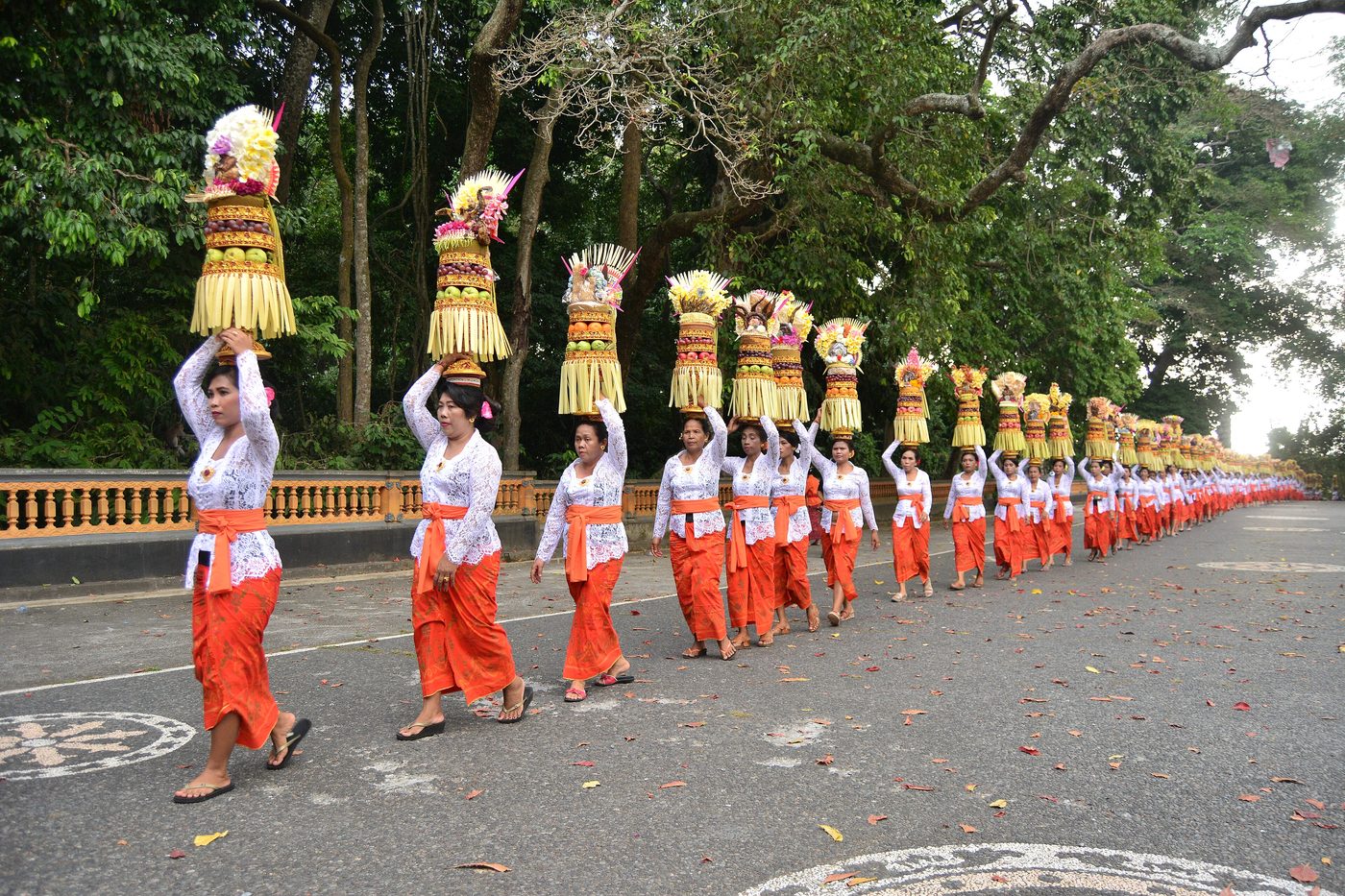 Mepeed, a village procession carrying offerings to the temple ten days after Kuningan. The same village community turns out in force for a ngaben. Photo: Andika Panendra / Wikimedia Commons (CC BY-SA 4.0)

The Cremation Is One Stage of a Longer Sequence
The Buleleng regency's account begins before the fire and carries on after it.
It opens with atiwa-tiwa, the first purification of the body. It then names later rites, pengerorasan and pemukuran, that carry on after the burning.
The purpose throughout is to return the body to the five elements, the panca maha bhuta. It is also to speed the soul, the atma, to the world of the ancestors.
In the quickest form, ngelanus, the cremation and the pemukuran are completed within a day or two.
How to Witness a Ngaben With Respect
Travellers do sometimes come upon a ngaben, as a procession carrying a tall, ornate tower through a village to the sound of gamelan. They may even be welcomed to watch, and the Balinese are often gracious about respectful observers.
It is still a sacred, emotional family event, and the line between witnessing and intruding matters.
- Only attend if welcomed. Don't seek out or crash a private ceremony. An invitation from your host or a guide, or a public or mass cremation that is open, is different.
- Dress as for a temple. Sarong, sash, covered shoulders. Some families appreciate guests in respectful Balinese dress.
- Stay at the edge, be quiet, give way. You are a guest at a profound moment. Never block the procession or the family.
- Photograph only with clear permission, and sparingly. Many moments are not for cameras. When in doubt, don't.
- Follow your guide. A local who knows the family or the village can tell you what is welcome.
The guides to temple etiquette and Balinese Hinduism help you understand what you are seeing.
FAQ
What is ngaben? The Balinese Hindu cremation ceremony, which releases the soul from the body so it can continue toward rebirth or union with the divine. It is often vivid and celebratory as well as solemn, a release as much as a mourning.
Why is a Balinese cremation celebratory? Because Balinese Hinduism sees the soul as eternal and the body as temporary. Cremation frees the soul for its onward journey. So the ceremony carries joy and release, with music, colour and community, alongside grief.
What is the cremation tower called? The bade, a tall, ornate, multi-tiered tower that carries the body to the cremation ground on the shoulders of the community. At the ground, the body is moved to a sarcophagus, often an animal form such as a bull.
Why do they spin the tower? During the procession, bearers turn and spin the tower at crossroads. This confuses the spirit, so it cannot find its way back to the family home. It is part of helping the soul move on.
Can tourists watch a Balinese cremation? Sometimes, and the Balinese are often gracious about respectful observers, especially at public or mass cremations. Only attend if welcomed. Dress as for a temple, stay quiet at the edge, give way to the family, and photograph only with clear permission.
Why do families sometimes delay a cremation? Ngaben is elaborate and costly. Families may bury the body for a time until they can prepare a proper ceremony. Or they join a shared mass cremation to spread the cost across the community.
Sources
- Bagian Kesejahteraan Rakyat, Setda Kabupaten Buleleng, Upacara ngaben dalam agama Hindu (ngaben as pitra yadnya, the offering to the ancestors; the purpose of returning the body to the panca maha bhuta and speeding the atma onward; atiwa-tiwa, nganyut, pengerorasan, pemukuran and the quick ngelanus form), Indonesian, read September 2026
- Photographs: trezy humanoiz (CC BY 2.0) and Andika Panendra (CC BY-SA 4.0), Wikimedia Commons
Read next: understanding Balinese ceremonies, the five yadnya, and Balinese Hinduism explained.